william cordova was born in Pueblo Libre (Lima, Peru), in 1969. Between the ages of seven and eight, he traveled with his family to the United States. He liked to read, write —mainly science fiction stories and poems— and collect comic books. In the early eighties, they moved to Opa-Locka (Florida), a city where there was a lot of violence, so, unconsciously, he isolated himself. As he recalls, “At the age of thirteen or fourteen, I made anonymous political posters and posted them on the street. Although I liked drawing, I didn’t take art classes, among other things because the quotas for those courses at Westview Middle School and Miami Central High School were always full. I took an experimental art class with Maggie Vidal at Miami Central, but I withdrew from it after four months.”1
After graduating from high school, he began studying psychology at Miami Dade Community College, North Campus, following in the footsteps of his mother, who had obtained a degree in Accounting at the same institution. Since he had no money, he worked and took one class at a time. He did not contemplate learning art because, according to him, “I had no examples to show me the possibility of being professional in that field.”2 Interested in what cordova had written in his Art History assignments, his Art Appreciation professor, artist Pat DeLong, suggested that he consider taking a class at the Fine Arts department. cordova enrolled in the Ceramics course taught by Elmer Craig. The experience was decisive, not only because of what he learned but because Craig supported even what he did outside of school.
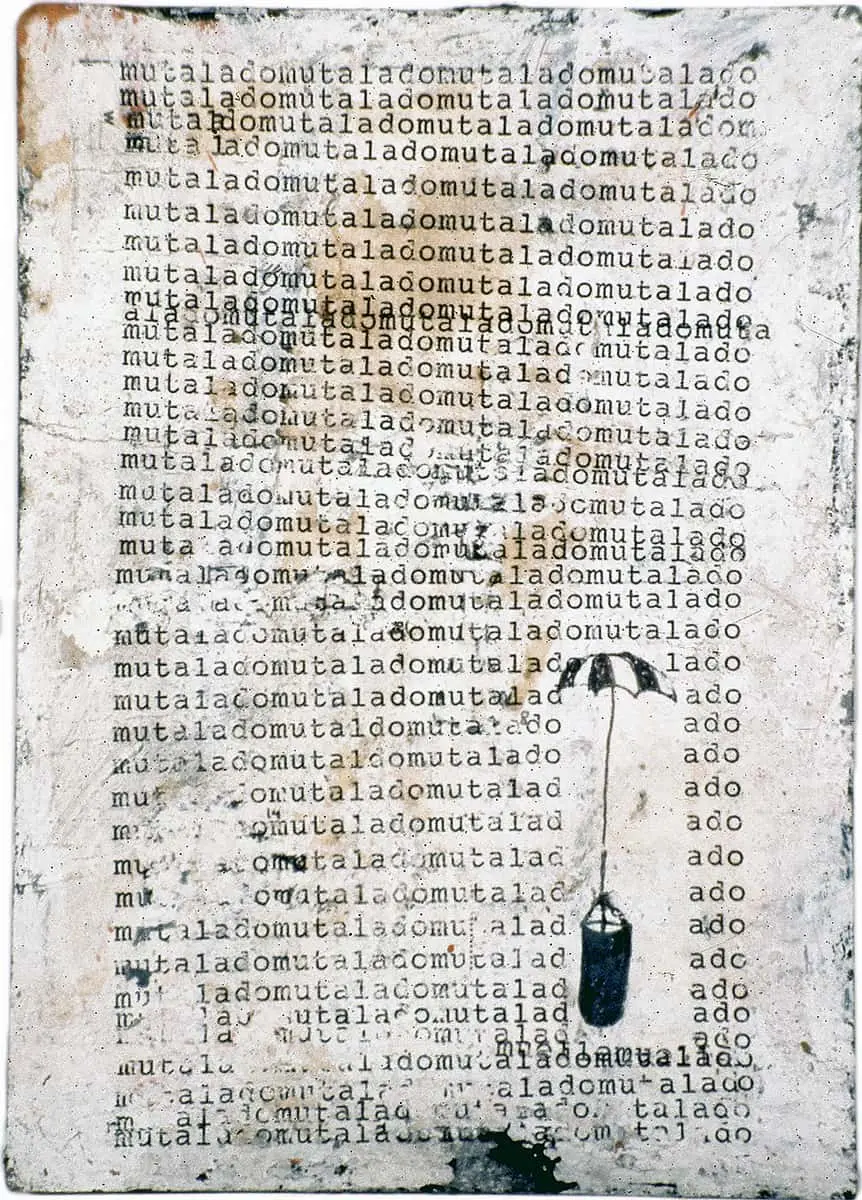
Between 1991 and 1994, he had several professors who influenced his training —including Robert Thiele, Charles Hashim, and Pat Johnson— and recommended leaving Miami. Although he considered applying to the School of Visual Arts in New York, he decided to go to the School of The Art Institute of Chicago, which he could do thanks to the effort and financial support of his mother. There he studied with friends from Miami, such as Luis Gispert and Yanira Collado, and he took courses in video and performance techniques, among others. According to him, “he tried to paint, but it was not his thing.”3 While still a student, cordova presented a project curated by Ed Maldonado at the Chicago Cultural Center. The exhibition Letters for Josefina (1997), whose title was inspired by the book by Spanish poet Miguel Hernández and included 400 postcards, revealed his interest in writing and the marginalized stories of contemporary culture that challenged and transcended the established social order. The use of common materials such as postcards, as well as words and texts with multiple meanings and interpretations, became constant elements in his work. It is also important to highlight his interest in collecting objects and documents as part of the process of retrieving stories and revisiting them from new claiming perspectives.
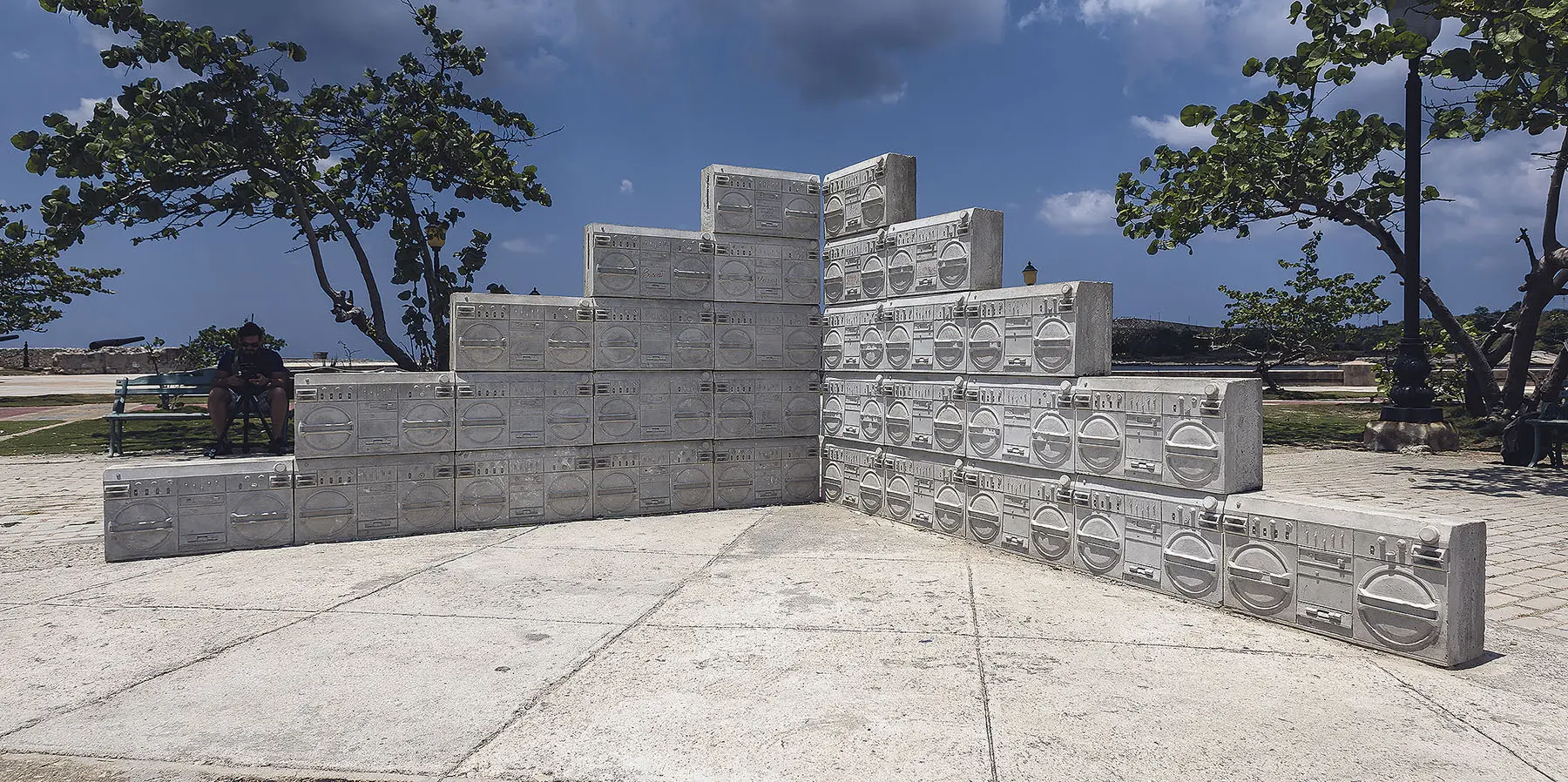
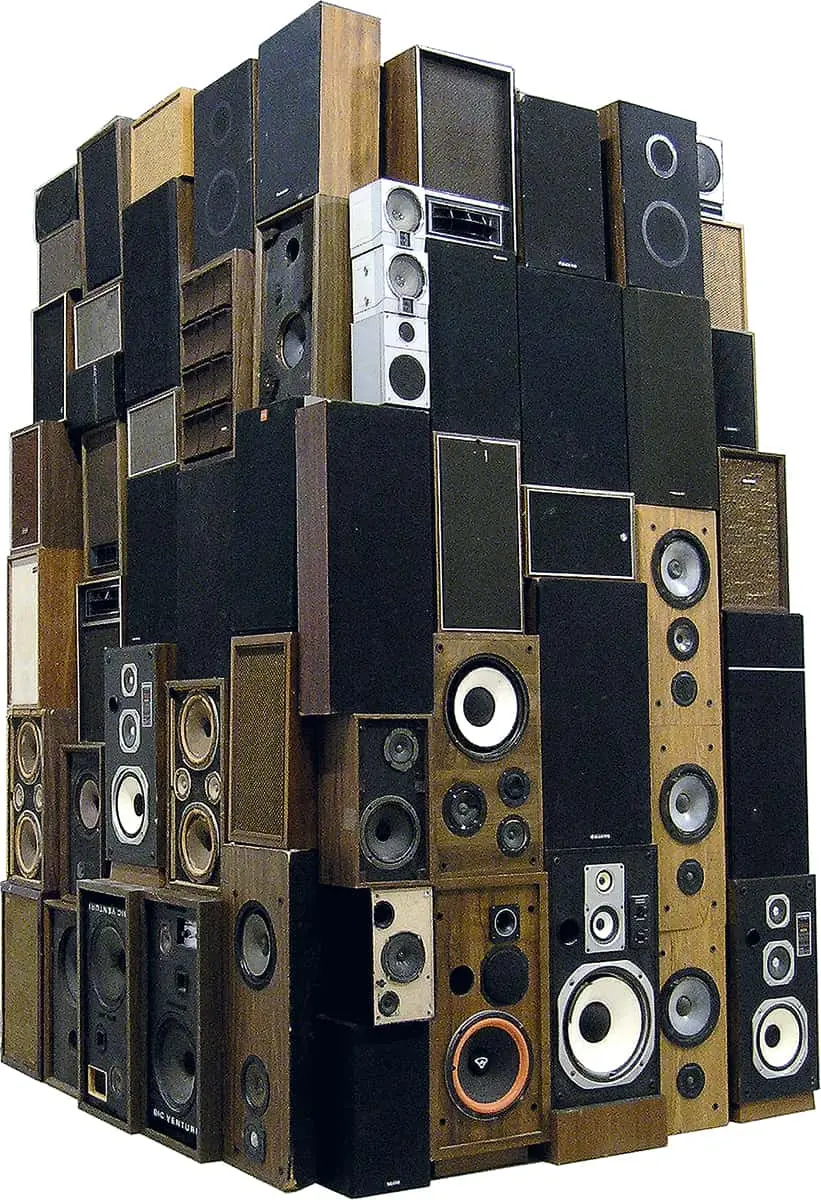
That same year, he presented the solo exhibition No More Lonely Nights, curated by Bonnie Clearwater, at the Museum of Contemporary Art (MOCA), in North Miami (2003-2004). The show consisted of a monumental installation built with scaffolding and a large number of speakers that fit perfectly and remembered the architecture of Inca sites such as Machu Picchu and Ollantaytambo. It also included a series of drawings displayed on the walls of the pavilion that housed the exhibition. The speaker is a representative symbol in his work. As a child, cordova toured the streets of Miami with his father and believed that the speakers left in the rubbish were drums or “cajones.” Later he decided to collect them and to create with them the sculpture he presented at MOCA, which he then included in his master’s thesis at Yale University. The installation Machu Picchu After Dark (2004) refers not only to Inca architecture, but also to collective thinking and the way a person perceives another, how reality is known or unknown, and how that reality is loaded with multiple layers. On the other hand, the speaker symbolizes music, another fundamental aspect of his work, which, together with the texts, allows him to connect with the public. This iconic piece illustrates one of the artist’s constant strategies: to propose themes in which he combines current and historical references, in this case, Andean and African ones, to give them new meanings.
The works on paper included in MOCA’s exhibition were part of a series of one hundred drawings he was making at Yale, based on Rockwell Kent’s book World-Famous Paintings (1939). The publication included one hundred works from Western art history, printed so that they could be torn to be exhibited individually. cordova used each one of them as a basis to make his own drawings and collages, through which he criticized and at the same time, transcended the exclusionary nature of the book. The complete series, titled World Famo Paintings (2002-2005), was presented at the Studio Museum in Harlem and subsequently acquired by the Berger Collection, in Germany.
While pursuing a master’s degree at Yale was fundamental and provided him with countless resources and opportunities, it also showed him some negative aspects, such as experiencing racism in his own flesh. As he recalls, “I went to the hospital with a broken arm, and they treated me like a janitor. They thought I did not speak English and that I was an employee, not a student. I had to wait two hours until they took care of me.”4 Having been discriminated against accentuated his feelings for the causes he addresses in his work.
After finishing his master’s degree, he decided to pursue several artistic residencies, instead of settling in a fixed place. Between 2004 and 2014 he participated in fourteen residences including the A.I.R. Program, The Studio Museum (Harlem, New York, 2004); The Core Program, Glassell School of Art, Museum of Fine Arts Houston (Houston, Texas, 2006); and American Academy (Berlin, Germany, 2013).
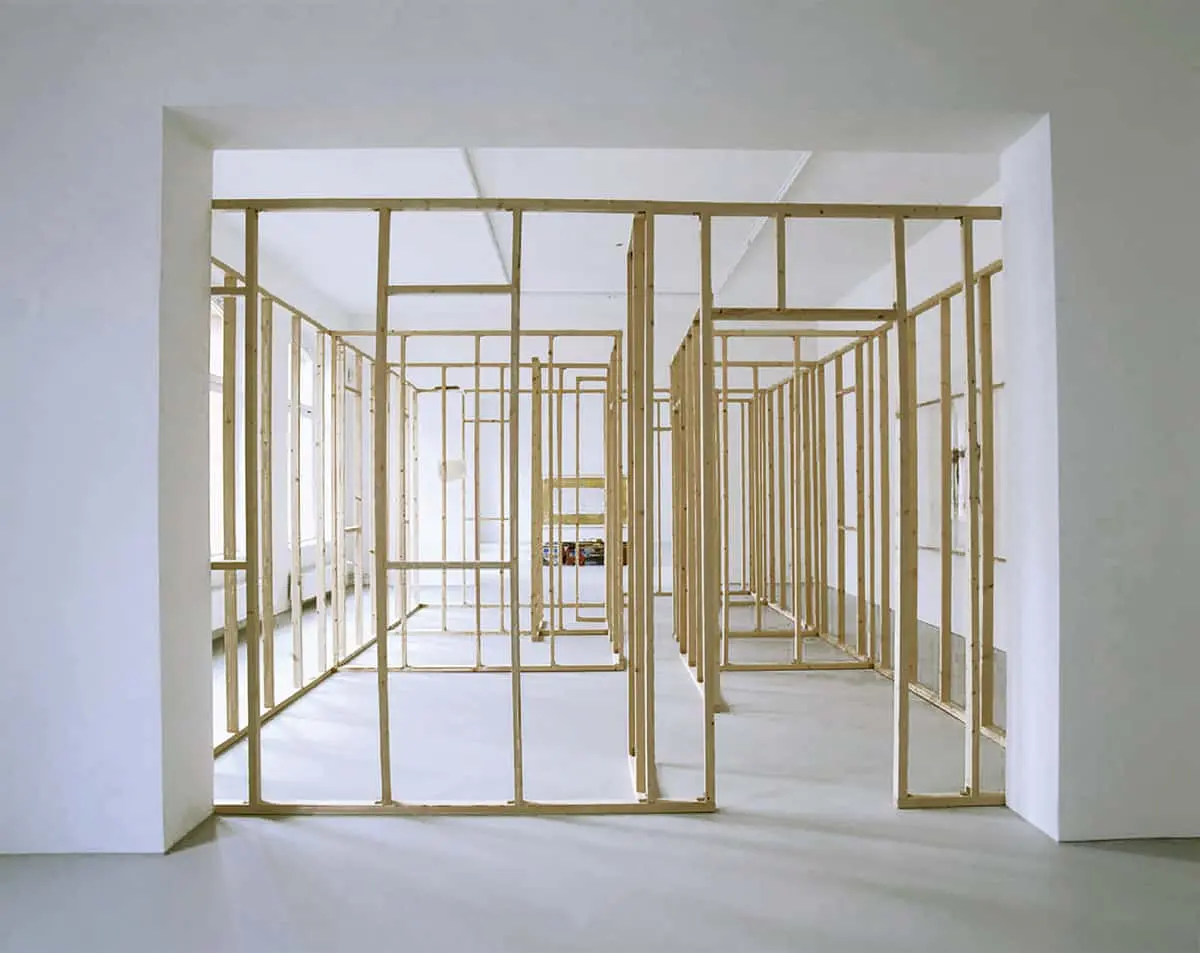
In 2008, he was invited to participate in the Biennial of the Whitney Museum of American Art in New York, curated by Henriette Huldisch and Shamim M. Momin. cordova presented the installation of the house Frank Lloyd Wright built for Atahualpa, Fred Hampton, and Mark Clark (2008). The work was a wooden maze that the viewer could access and in which he combined geometry, architecture, and geography. It also had a spiritual element, although it was not obvious, related to objects placed on a shelf to which visitors had no access. What at first sight was a simple structure had a strong conceptual load. By mentioning Frank Lloyd Wright, one of the most influential architects of the twentieth century, cordova referred to the latter’s interest in nineteenth-century Transcendentalism and his perspectives on justice, spirituality, and the environment, which influenced civil rights movements and environmentalism. When reading the title of the work, the spectator wondered: What does Lloyd Wright have to do with Argentine folk music singer Atahualpa Yupanqui or Atahualpa, the last Inca emperor, killed by Pizarro in 1533, or with members of the Black Panther Party movement Fred Hampton and Mark Clark? They were all activists, and Atahualpa, Hampton, and Clark, like Lloyd Wright, were killed. The five were vilified and the most contemporary was accused of being communist and criticized for their ideals. The installation was a model of the apartment shared by Hampton and Clark, based on a real plan. It was a maze of transformation that, according to the artist, honored the memory of the characters and, on a broader level, invited them to reflect on the significant burden of space. In this regard, cordova recalls a quote from the essay by Octavio Paz, The Labyrinth of Loneliness: “There is nothing worse than a labyrinth without a center.”5
At the end of his residency in Berlin in 2013, he decided to return to Miami and devote himself to his curatorial work. His activities as a curator writer had begun in 1994, but they intensified as he settled permanently in Florida. By then, he had already established a strong network of curators, directors of exhibition spaces, writers, and a large number of artists who, in one way or another, were excluded from the so-called mainstream. Since then, he has dedicated much of his time to organizing exhibitions and projects, creating connections that not only favor artists but also make part of his own practice, although he does not usually include his artwork in them. In the last eighteen years, he has organized more than twenty-five exhibitions in different spaces, including Project Row Houses (Houston); MOCA (North Miami); Cindy Rucker Gallery (New York); Florida A&M (Tallahassee); and Under the Bridge (North Miami).
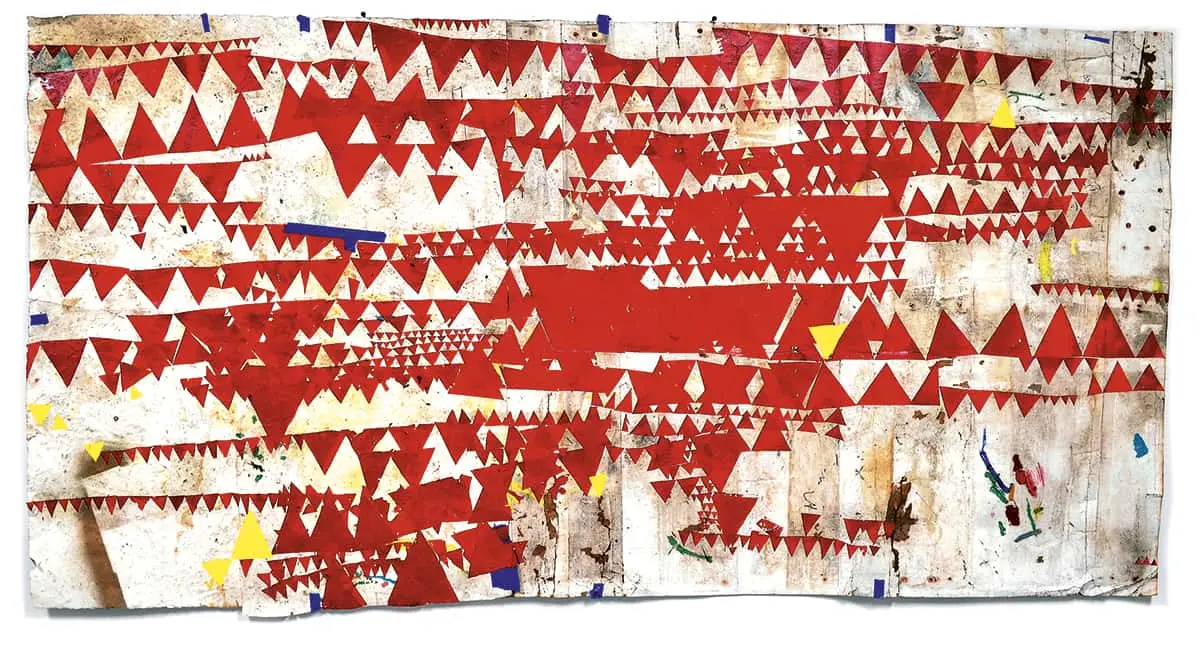
Likewise, he has continued to exhibit his work in group exhibitions such as Pacha, Llaqta, Wasichay: Indigenous Space, Modern Architecture, New Art, at the Whitney Museum of American Art (2018), and the Havana Biennial (2019). Among his solo exhibitions it is worth mentioning Now’s the Time: Narratives of Sout-hern Alchemy, presented at the Pérez Art Museum Miami (2018), a retrospective installation organized in the shape of a spiral, in which he invited the viewer to discover or revisit more than sixty works in different media including drawing, painting, sculpture, photography, video, and installation (1995-2018).6
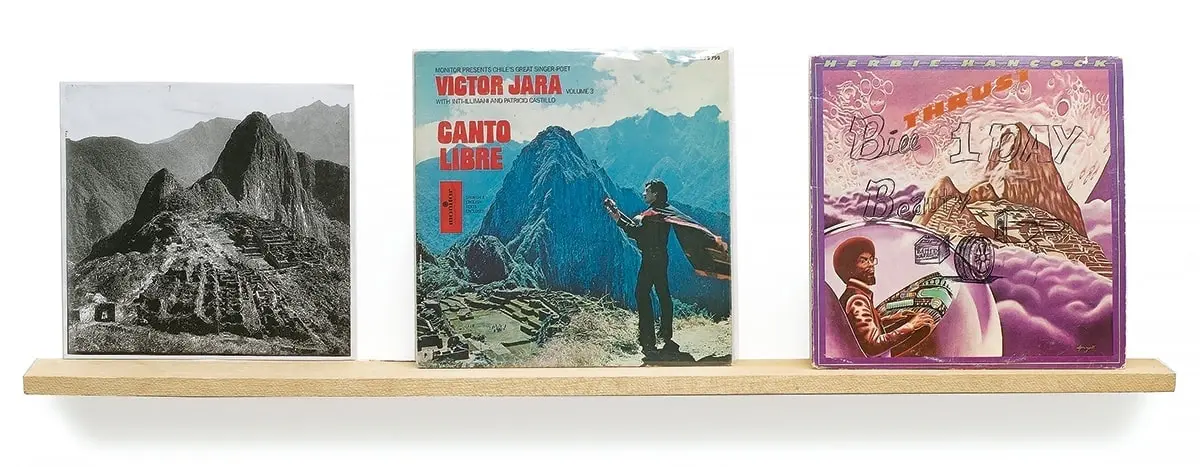
Using the space as part of the work is a fundamental aspect of cordova’s practice, as could be seen in PAMM and pieces currently included in the group show In Plain Sight at Henry Art Gallery, University of Washington. In the latter, he presents two monumental concrete sculptures that synthesize architectural elements of the ruins of Tiahuanaco, in Bolivia; the Day Break Star Indian Cultural Center, in Seattle; and two Black Panther Party offices, also in Seattle. Through them, he establishes connections between spaces and constructions that have extreme symbolic loads. Using the introductory phrase of Jimi Hendrix’s song Voodoo Child —Stand-up Next to a Mountain (2019)— as a title, cordova establishes parallels and relationships between different artistic and historical manifestations.
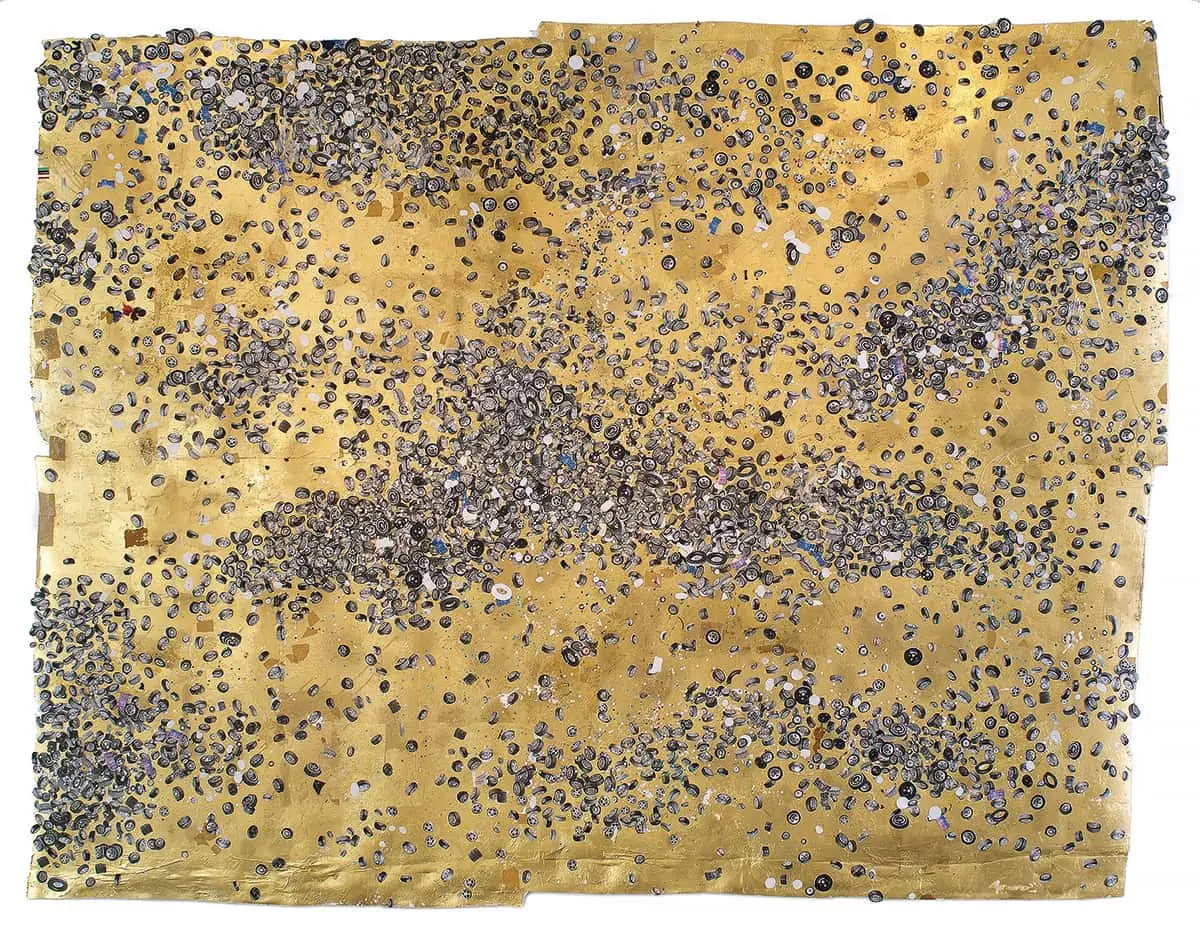
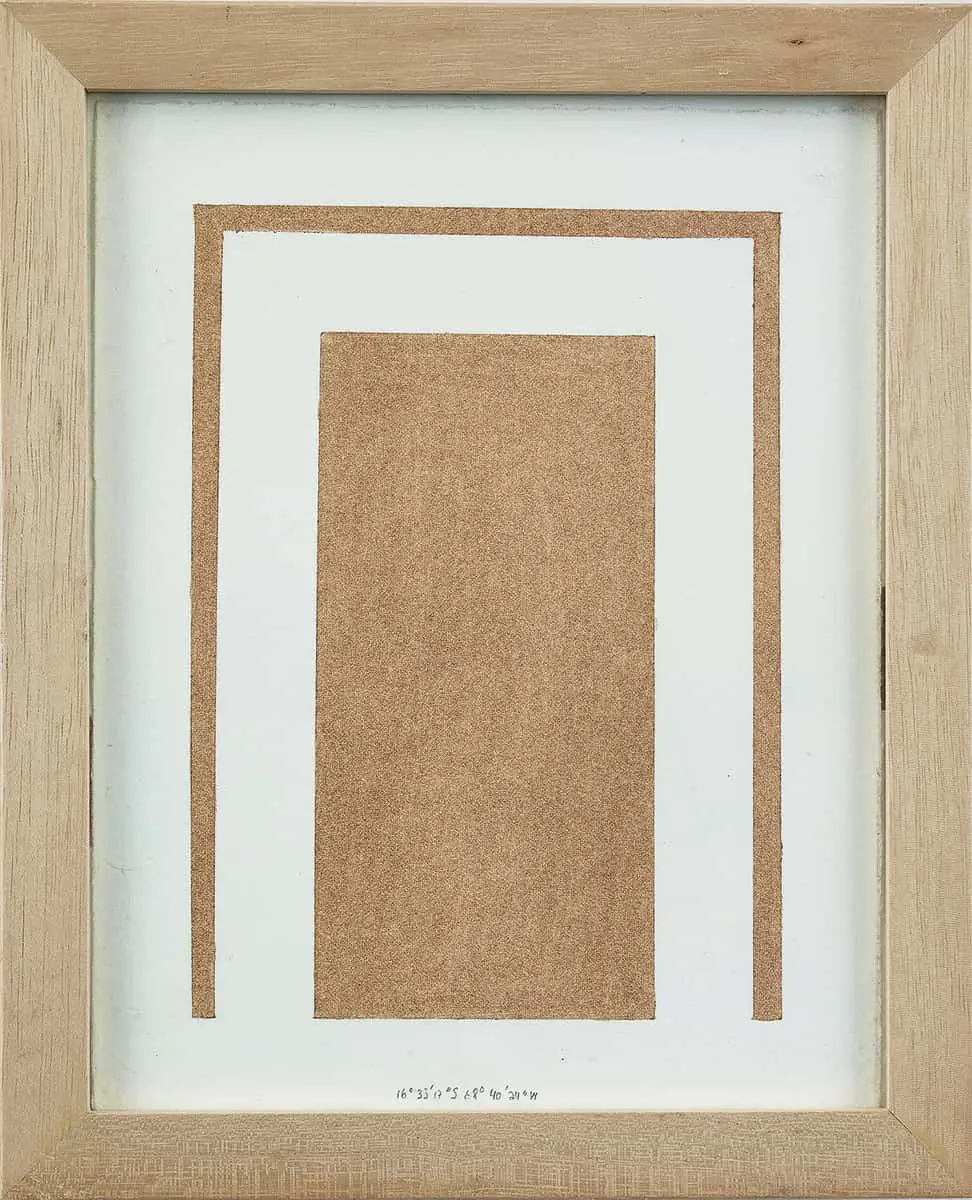
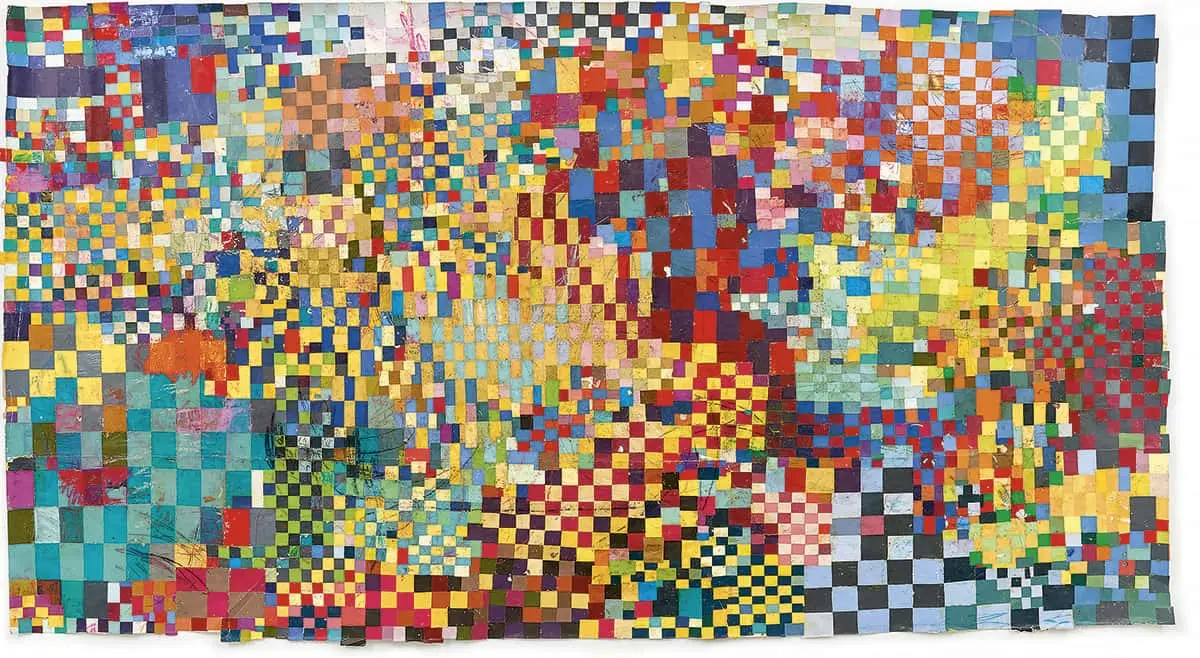
On a pictorial level, he continues to develop a series of collages and drawings on large paper Rumi maki, which, according to him, “is based on the tradition of coding information through patterns and textiles, a process used and based on our civilization’s past and the digital age. Colors have several symbolic meanings, according to geography, culture, and the universe. The title of the series refers to an ancient An-dean martial arts form practiced before the arrival of the peoples of Western and Eastern descent to the Americas. In them, ritual and performance are essential components in the development and formation of their spiritual, cultural, and religious character. The set of collages synthesizes several aspects of sacred geometries linked to the development of architecture, civilizations, and historical narratives. Its form is similar to that of the writings by artist Beryl Korot in Radical Software and the first works made on video.”7
At the curatorial level, he is currently working on several projects, including an exhibition he is organizing with artist Rick Lowe on the occasion of the one-hundred anniversary of the racist massacre perpetrated in the Greenwood district, in Tulsa, Oklahoma, which will take place in 2021. william cordova’s artwork, his curatorial projects, and his contributions as a writer are actively combined in a complex labyrinth in which reflection and transformation based on research, readings, and his own experience prevail.
In the words of Lori Salmon, director of the Institute of Fine Arts Library of New York University, “cordova’s work focuses our attention on the human condition, transforming and reconfiguring materials, lin-king image creation practices —from painting and sculpture to photography and cinema— through a historical trajectory.”8
NOTES
1. william cordova, interview with the author, North Miami, October 2019.
2. Ibid.
3. Ibid.
4. Ibid.
5. cordova, william. Email. October 24, 2019
6. Francine Birbragher. “william cordova.” ArtNexus No. 110. 97-98.
7. william cordova. “Rumi maki.” Email. October 10, 2019.
8. Lori Salmon, “Interview with william cordova,” Yawar Malku (royalty, abduction, and exile), digital catalog, 23.
FRANCINE BIRBRAGHER-ROZENCWAIG
Master’s in Art History and Ph.D. in Latin American History. Art historian and independent curator