As ecological sensibility and environmental concern grow, we have seen in recent months the inflation of concrete signals around the topic of trees. Among them is the global success of German author Peter Wohlleben’s 2017 book The Hidden Life of Trees. There is also the development of Silvotherapy (or “tree-hugging”), a new age practice—inspired by ancient Indian religions and found especially in the United States and Japan—that turns trees, accompanied by meditation and relaxation, into a new way of replenishing energies. Meanwhile, the disastrous dispute about forest burning in the Amazon provoked by Brazilian president Bolsonaro with his French counterpart gave ecology a new push among the French public, increasingly more receptive to environmental subjects.1 Trees, an exhibition at Fondation Cartier (its beautiful French title is Nous les arbres, literally translated as “We, the Trees”), invites visitors to expand their knowledge of the trees around us, to wonder what these living organisms have to say, and to understand the need to protect them if we are to avoid an announced debacle. Beyond its evident aesthetic objectives, then, this exhibition not only connects with a natural-sciences intention but also inscribes into its curatorial project an indispensable and unavoidable political dimension, transforming the tree into a cult icon.2
Forests and their trees have captured the imagination of many modern artists. Among them are Zadkine, who in 1944 called one of his sculptures Le rêveur de la forêt (The Dreamer in The Forest),3 as well as Brancusi, Jean Arp, and later A. R. Penck and Penone, to mention just a handful of names. The exhibition at Fondation Cartier confirms the degree to which today’s artists are sensitive to the degradation of nature by human hands and to the disastrous effects of our desire for “progress.” The most committed among these artists are those from Latin America, and the region takes up the most space here, with fifteen out of twenty-seven artists on exhibit. This Latin American delegation comes mainly from Brazil, Paraguay, Colombia, and Peru. The curators can be commended for not neglecting the first peoples who lived in the forest, the indigenous communities, that continue to preserve their environment against tremendous odds in the face of violent attacks from large multinational mining and logging concerns, and for including Yanomami artists from Brazil as well as Niclavé and Guaraní artists from the Grand Chaco region of Paraguay. The testimony about the forest, its trees, its animals, must be presented by those who dwell in it, those who are under direct threat; they must be full participants, guiding visitors’ reflections with their insider view.
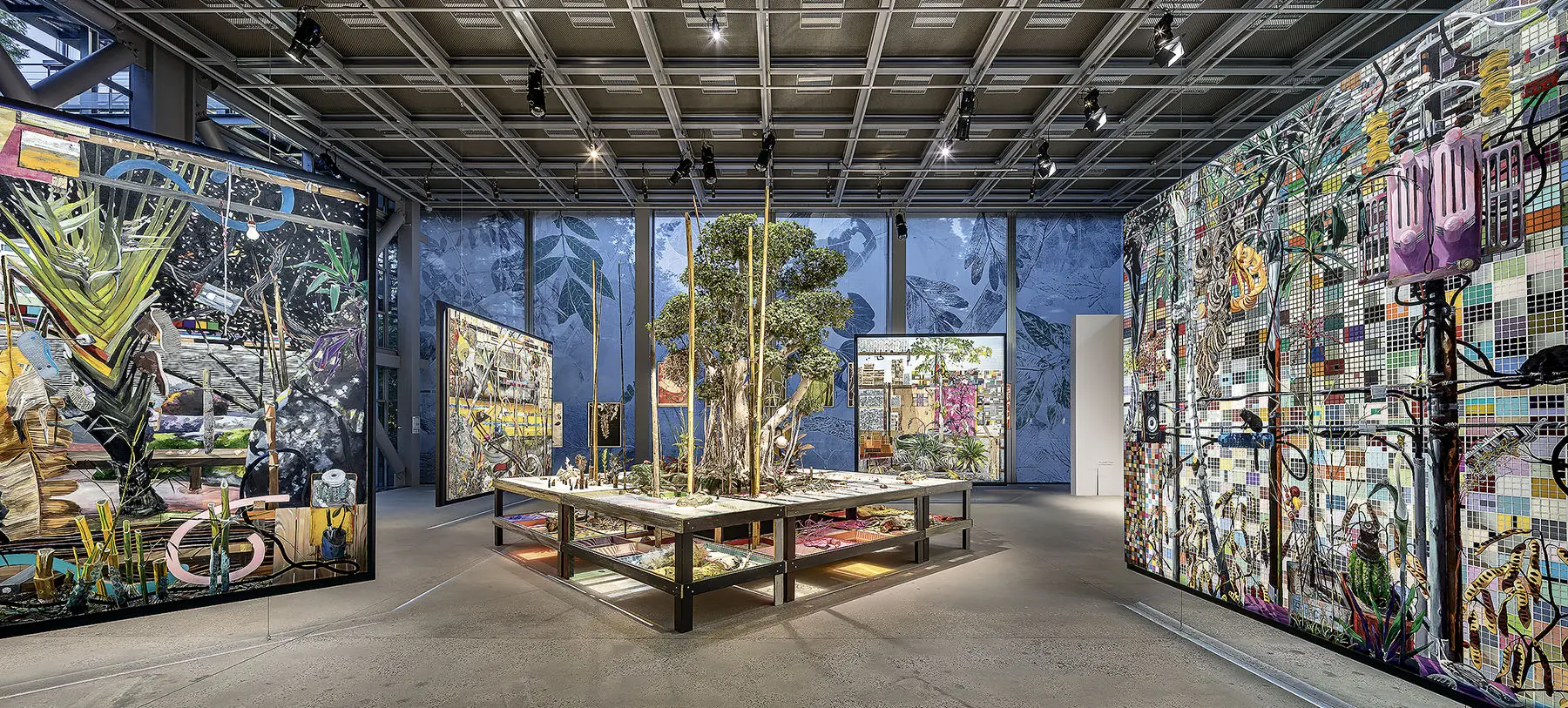
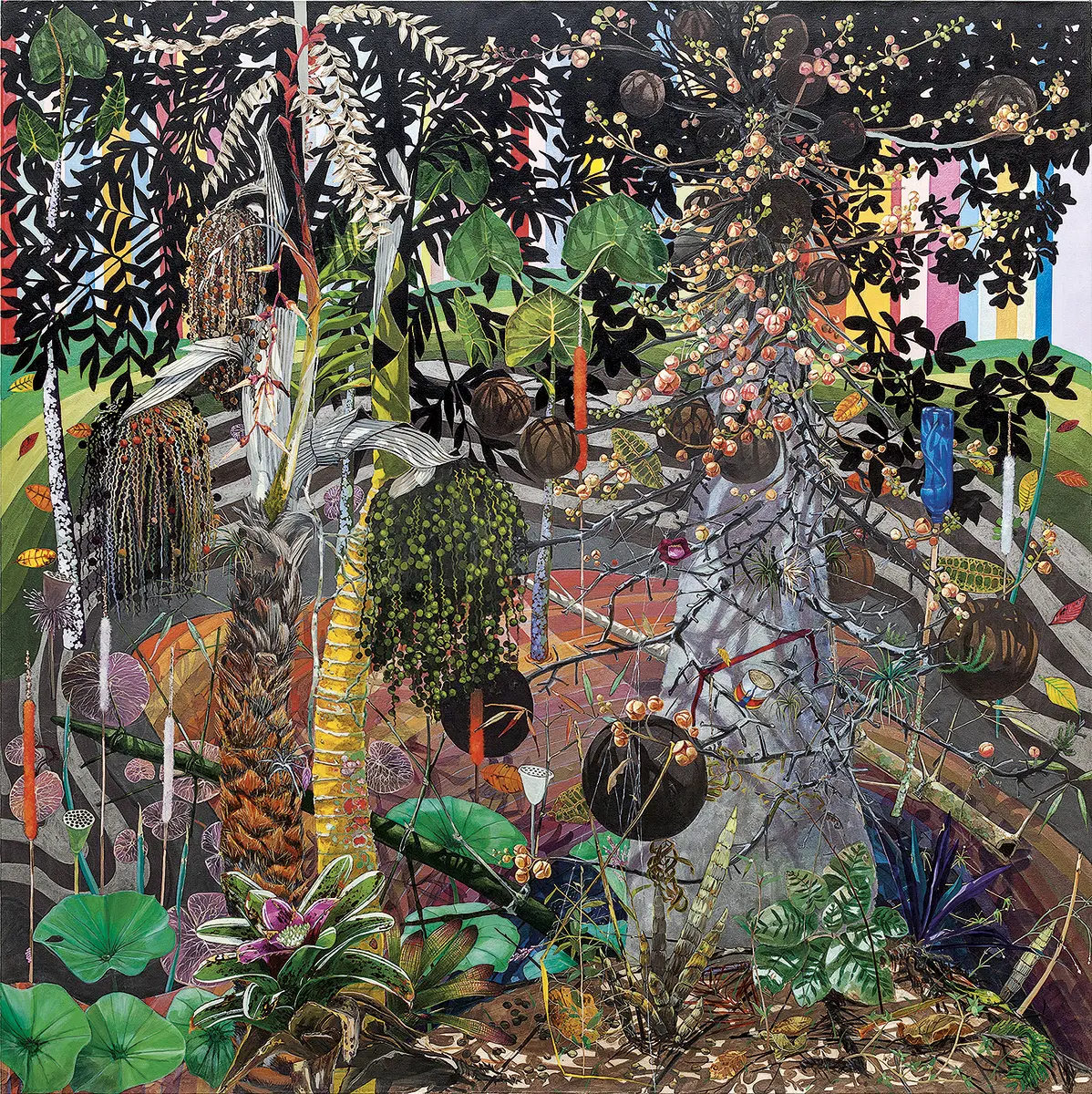
Near the entrance to the exhibition, to the left, in the glass cage that is the first floor of the Fondation Cartier building, Brazil is the most notable presence, along with Paraguay—the show’s two honored countries. Rising at the center of the room, as the axis for a convincing museographic setup, is a spectacular table/herbarium by Luiz Zerbini (São Paulo, 1959), which features plant specimens and shells collected during the artist’s wanderings, arranged on sand-or water-filled receptacles; some of the receptacles are empty, a clear warning against further destruction and the disappearance/extinction of more species. The table is surrounded by four large paintings, also by Zerbini, whose organized pictorial chaos combines the exuberance of the flora and fauna of the Amazon with almost derelict urban vistas, filled with the carcasses of abandoned objects that are the aftereffect of unfettered consumerism (Coisas do Mundo, [Things of the World], 2018). We see twenty-two monotypes by Zerbini (2018, on cotton paper), fragments of tropical nature suspended against the gallery’s glass walls. The selection is impactful not only at the level of aesthetics but also in terms of the meaning and the critique posited by the works: modernity and/or death.
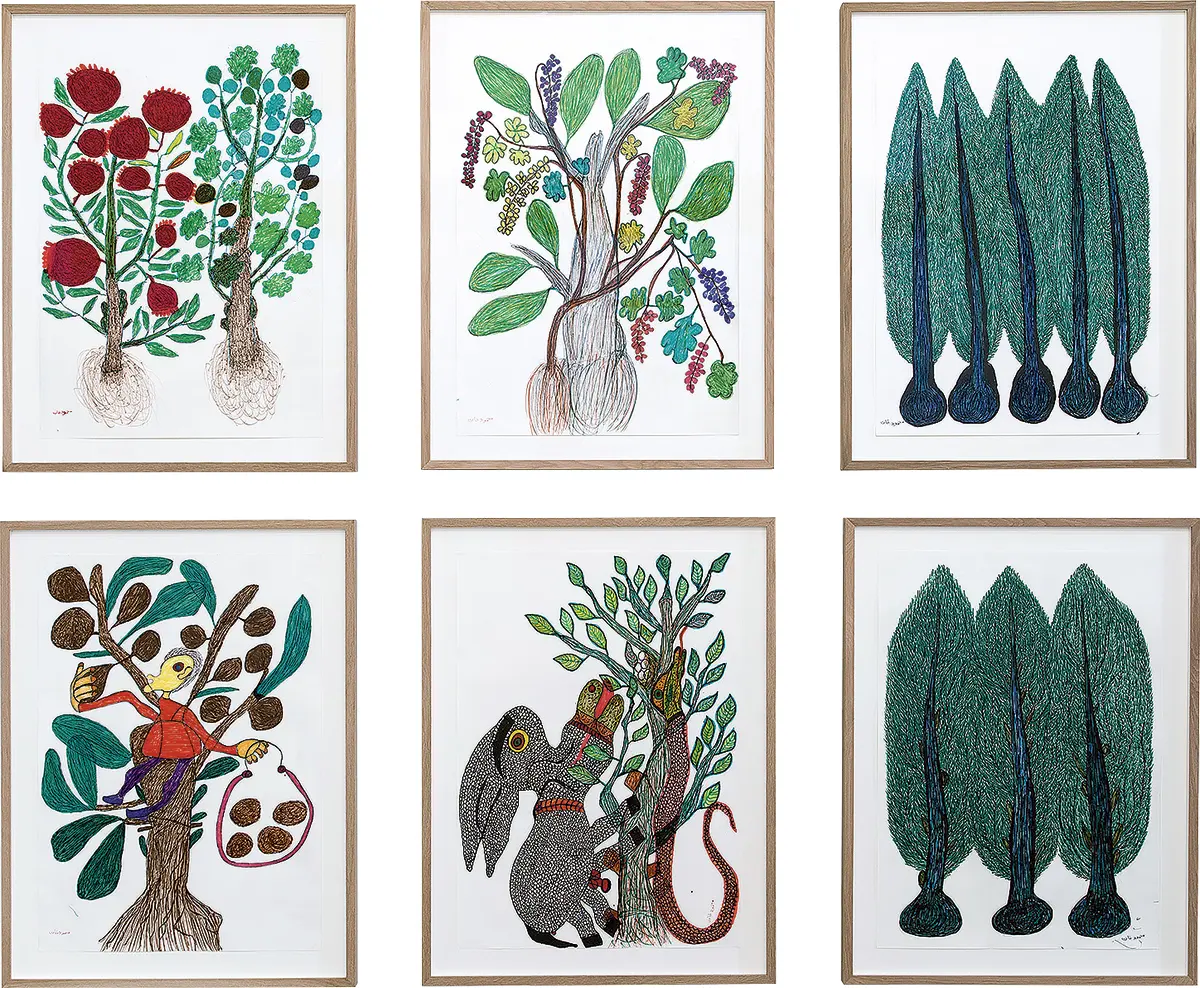
In the same space we encounter Como un pez en el monte (Like a Fish in The Forest, 35’, 2019), the film document created for the exhibition by the Paraguayan photographer-editor team of Fernando Allen and Fredi Casco (Asunción, 1967), featuring an interview with five Guaraní draftsmen whose works (ink on paper, black and white), dominated by geometry and a synthetic mentality, are also on view in the exhibition. The artists speak, in their native language,4 about the plants and animals in their environment, about their beliefs and fears in a forest for which they are currently the last witnesses, and, in some cases, about the role played by shamanism. The color drawings (pencil and markers on paper, 2002-2010) exhibited by the Brazilian Yanomami artist Joseca engage the tree as a playful object, the support of games with its inseparable forest animals. In the middle of this, a delicate oil painting by Adriana Varejão (Río de Janeiro, 1964), representing a tropical plant (Cadernos de viagem: Yakoana [Travel Notebooks: Yakoana], 2003, black and white, Fondation Cartier Collection), appears somewhat lost.
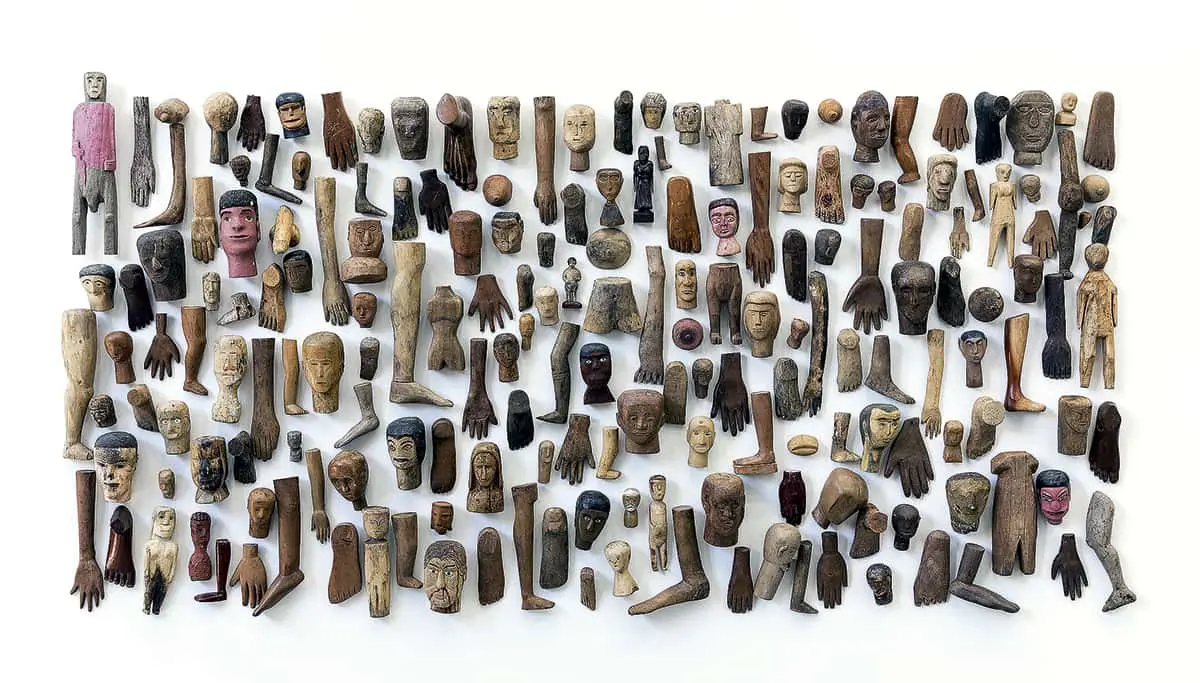
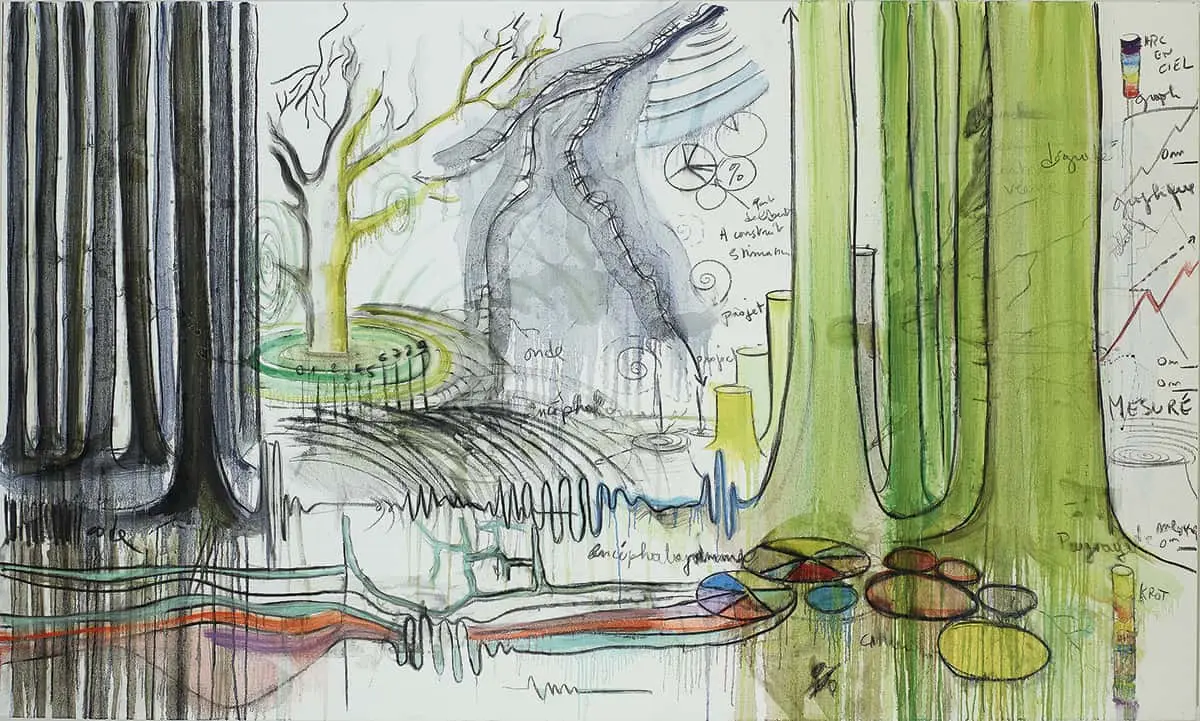
The exhibition space to the right of the entrance to the Foundation, equally in glass, is devoted to Raymond Depardon’s and Claudine Nougaret’s Mon arbre (My Tree, video, 24’, 2019, created especially for the exhibition), where ten individuals provide testimony of their close connection to “their” tree. To either side of the screen, two installations of objects hanging from the walls speak of the forest and human intervention. One features a set of tools by Afonso Tostes (Belo Horizonte, 1965), with sculpted handles that evoke both the bones of a human body and the branches of a tree (Trabalho [Work], sculpted wood and metal, 2019). The other one is comprised of wooden exvotos by unknown artists (1960-1980) from the Galeria Estaçao Collection (São Paulo), representing heads and body parts—mainly hands, legs, and arms—and offered in gratitude for an unexpected cure of “a granted miracle.” These two panels present us with the most profound human side of our relationship with the tree, the side that makes it into humanity’s closest friend, indispensable for our survival. We don’t find in the paintings and drawings exhibited by Fabrice Hybert, nor perhaps in any of the other European artists included in the exhibition, the dramatic sensibility displayed by their Latin American colleagues in their physical and material relationship with nature. Unlike the former, the latter experience the threat more closely and more directly.
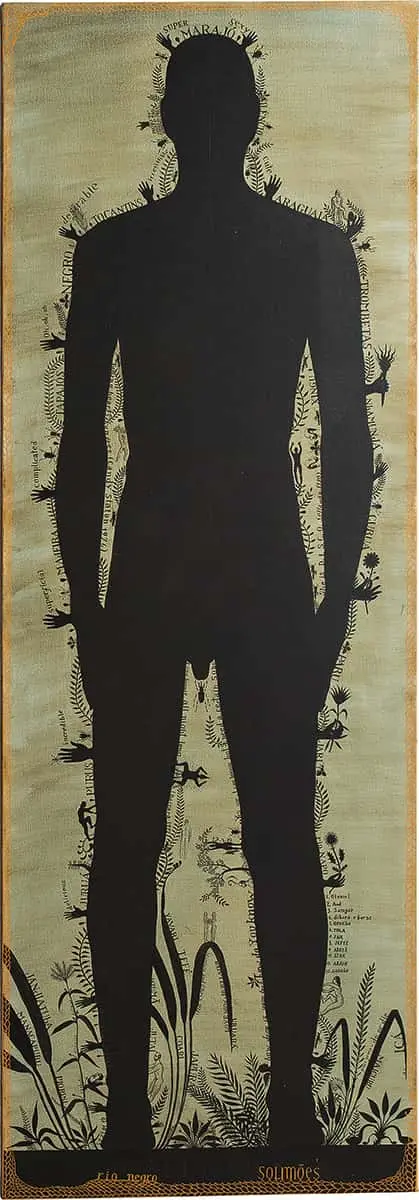
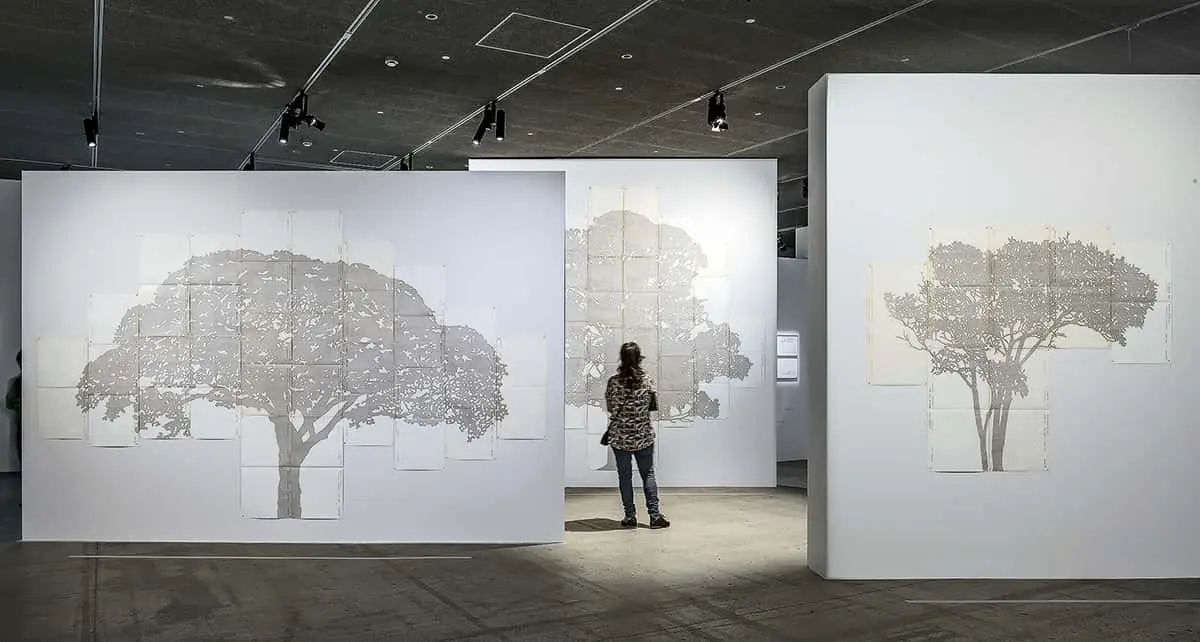
In the ample exhibition space located downstairs, we are welcomed by three large trees by Johanna Calle (Bogotá, 1965), based on land-property registers, from the series Perímetros (Permiteres, 2012-2014, text typed on notarial paper), completed with her series Herbario (herbarium).5 Calle’s work, at once fragile, forceful and so political in its essence, shares the space with four figurative oil-on-canvas works by Alex Cerveny (São Paulo, 1963) that combine autobiographical references with geographical, historical, and literary/philosophical ones—texts or written phrases that pullulate and attach like leeches to the body of the man-tree confronting nature, revealing in that way the environmental issues that are the focal point of every realm.
Next to Cerveny’s paintings, five magnificent, highly stylized Guaraní masks like tropical Brâncuși’s, display single eyes carved in the center of soberly enigmatic faces. At this stage, along the exhibition’s precise and well-executed museography, we realize the degree to which Latin America dominates it, and especially Brazil. A small canvas by Nilson Pimenta (Caravelas, 1956), Derrubada feminina (Felled Down Female, 2010), metaphorically evokes the brutal, bloodthirsty destruction of the forest's tree-women, featuring images of stumps with openings resembling female genital organs.
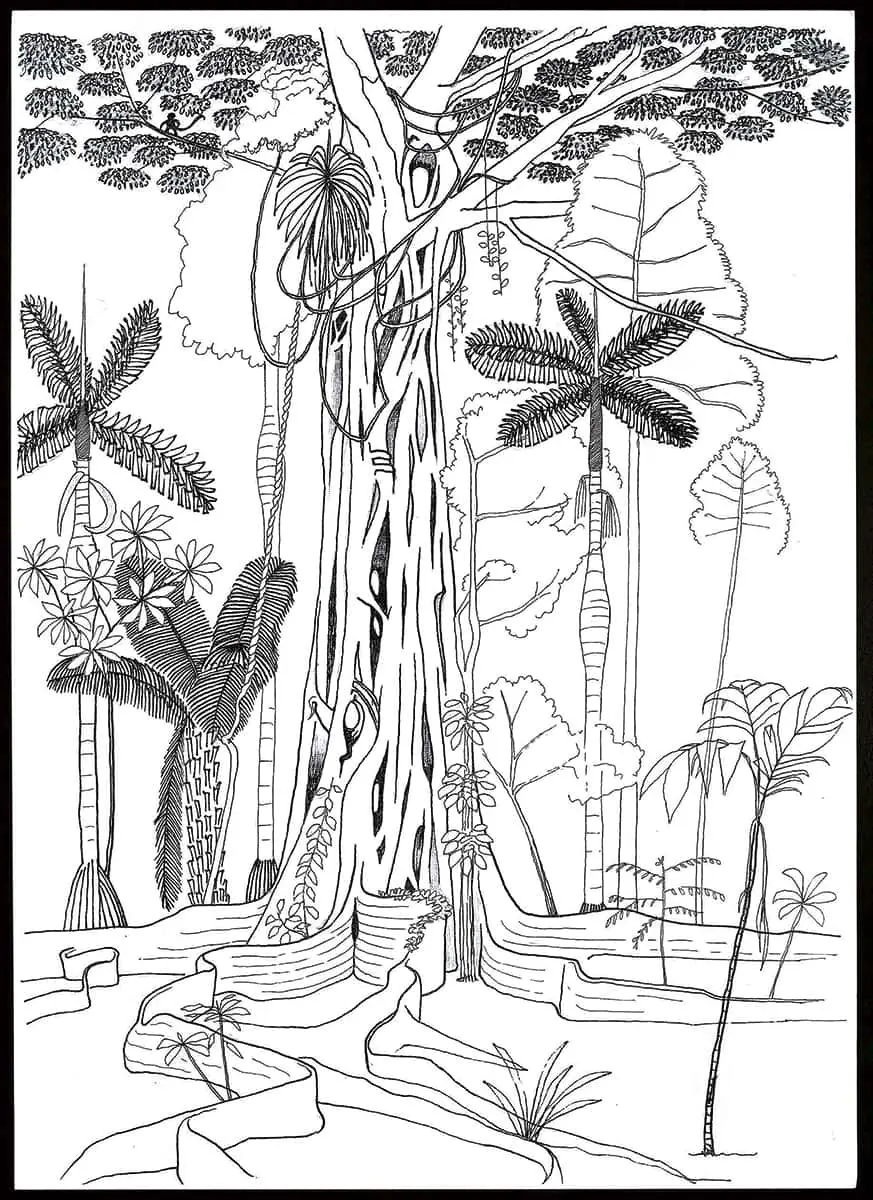
In a different register, that of scientific information, the video Exit (2008-2015) presents a tragic report on the situation, illustrating how deforestation, especially in Brazil, comes accompanied by the disappearance of indigenous communities and their languages. The interview with Stefano Mancuso, the Italian founder of the International Laboratory of Plant Neurobiology, provides explanations of current research. Similarly, the space devoted to the French botanist Francis Hallé (1938), featuring drawings and notebooks, herbaria, etc., incorporates into the exhibition an informative aspect, as was the Fondation Cartier’s intent.
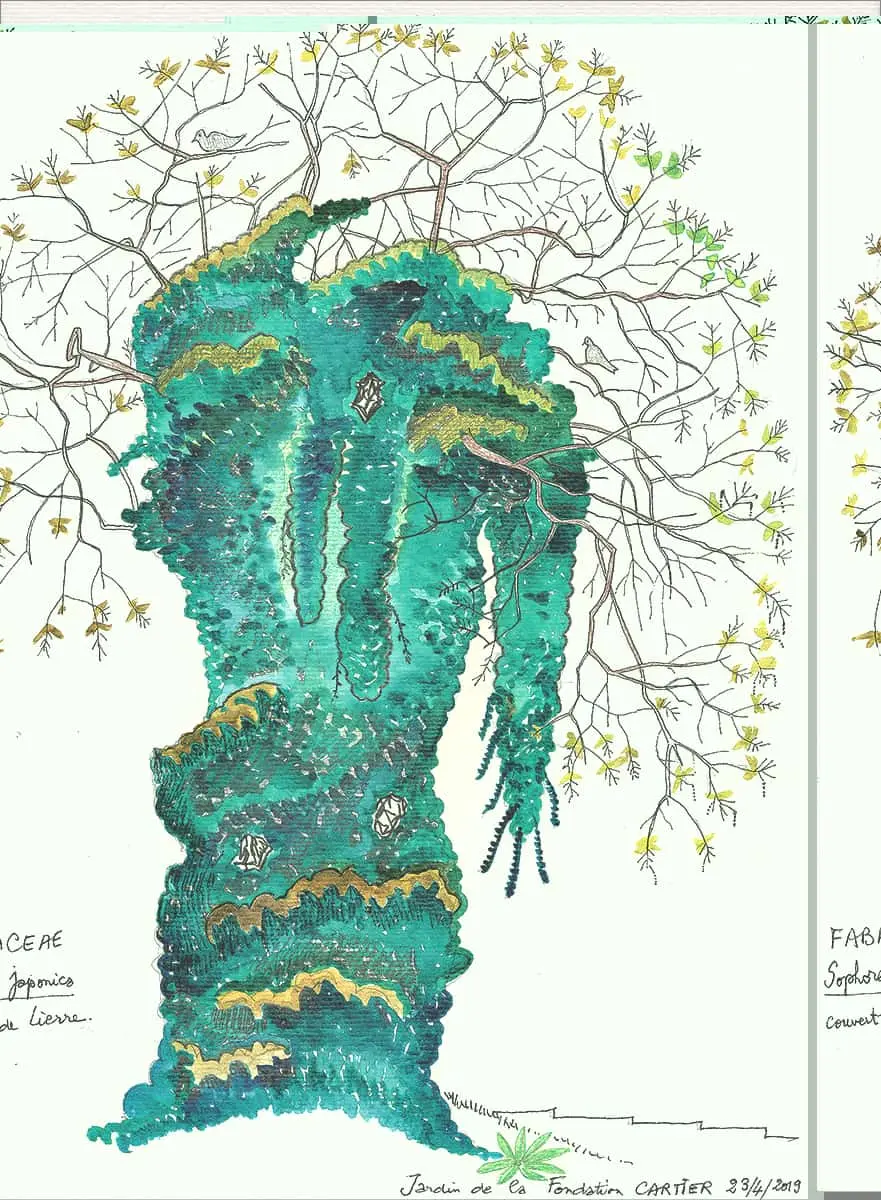
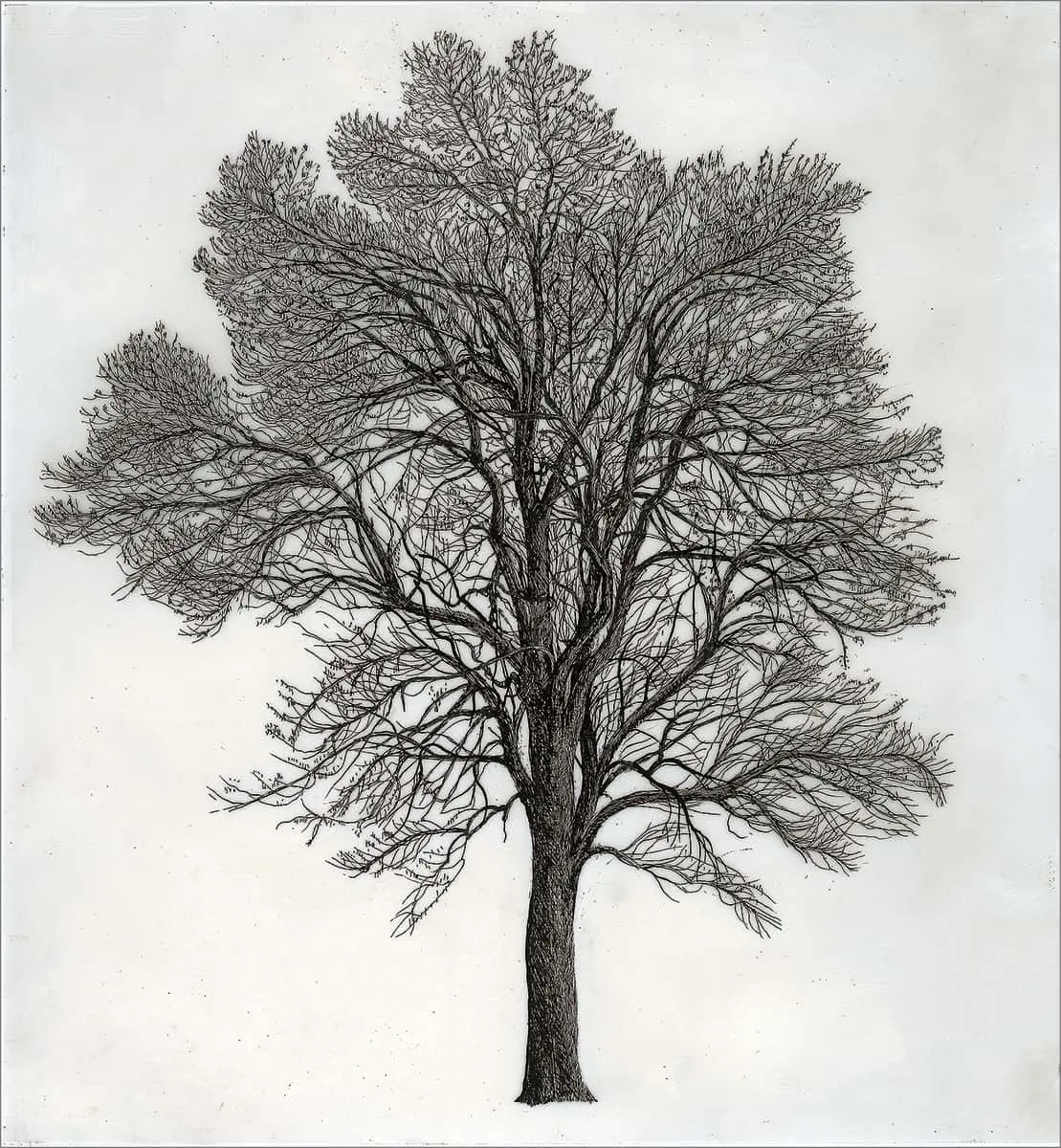
Two Italian artists are also sources of light in this exhibition. They are the architect and designer Cesare Leonardi (Modena, 1935) and his colleague and partner Franca Stagi (Modena, 1937-2008). Their drawings in India Ink on tracing paper (1963-1982), their photographs of a single tree in the same spot through the different seasons of a year, and above all their books (like the one about tree architecture, a veritable bible to which they devoted two decades of research and 550 black and white drawings),6 help us understand that the tree, a beautiful and vulnerable, indispensable and ever-changing living entity, has also been a loyal companion to humankind since time immemorial. With rigor and passion, the two architects were able to bring forth the meaning and beauty of those trees we can no longer see and know.
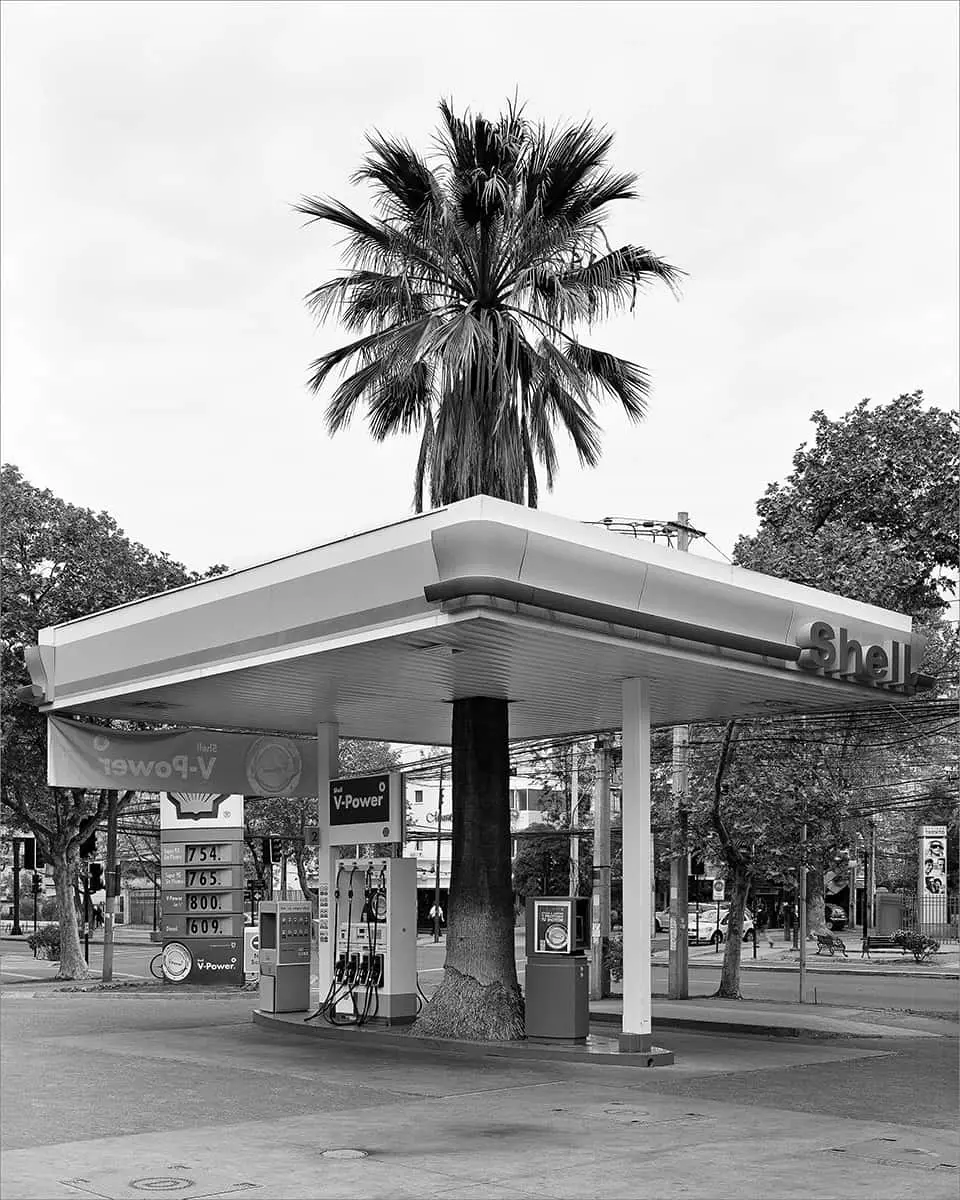
Aside from the two large-format color prints on wood by Santidio Pereira (Curral Comprido, Brazil, 1996), the exhibition continues with a photography section. A series of ten black and white photographs by Sebastián Mejía (Cali, 1980) invites us to gain awareness of another reality: how the natural space of the tropics has become “urbanized” due of the sprawl of modern cities, which not only “domesticate” trees, but imprison them. Mejía’s eloquent photographs speak of a tropical, tree-filled realm, the realm of palm trees, that now exists only imprisoned in concrete and enslaved by the all-devouring city. 7 Cássio Vasconcellos (São Paulo, 1965) masterfully captured the exuberance of the tropical forest and the weight and translucency of the canopy in four beautiful black and white prints from 2015. Titled A Picturesque Voyage Through Brazil, they were inspired by the engravings of Nineteenth Century traveling artists, the Comte de Clarac.
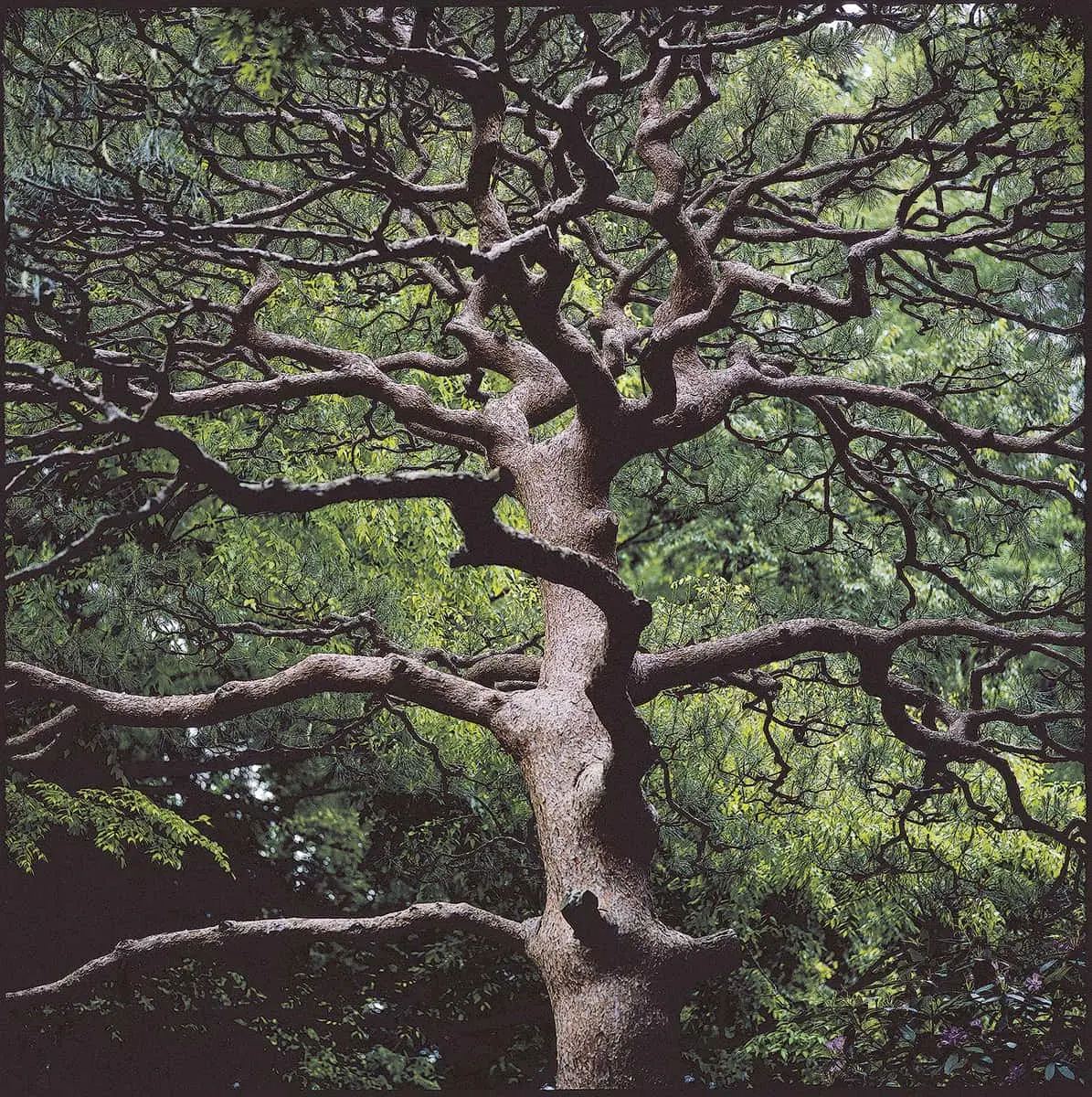
Miguel Rio Branco (Las Palmas, 1946), well known in France after his big exhibition at the Maison européenne de la photographie, in 2005, focuses on a knotty strong trunk of a large tree from Japan, while Claudia Andujar8 (1931, Neuchâtel), somewhat relegated to the back of the space, pays discreet homage to the Amazon rainforest. Projected onto three screens in a vast room, Aromas que trae el viento (Aromas the Wind Brings, 21’, video made for the exhibition), by Paz Encina (Asunción, 1971), is a monolog in the artist’s voice accompanied by the natural sounds of the forest, be the fury of the elements, the singing of birds, or other sounds. It submerges visitors, through the sensations, evocations, and feelings it induces, in the heart of the forest in Paraguay’s Gran Chaco region.
In this remarkable exhibition, the first of its kind in the world to bring together a large number of artists working on the same topic, we can nevertheless lament the absence of one name: Krajcberg (Brazil, 1921-2017), a pioneer in consciousness-raising with respect to the burning of the Amazon, against which he fought until his very last day, both through his art, made using the remains of burned trees, and as an environmental activist. Devoting even a small space to a Krajcberg tribute would have enhanced even more the exhibition’s already considerable power as an aesthetic and museographic event, one capable of bringing together artists, scientists, and citizens around a single objective: protecting the forests and their trees.
NOTES
1. The country with the fourth largest forested territory in Europe (in km2), after Sweden, Finland, and Spain.
2. Such has been the success of the exhibition (between 2,500 and 3,000 daily visits), that the Fondation Cartier decided to extend its run through January 5, 2020.
3. The title of an exhibition at the Zadkine Museum in Paris (September 27, 2019, through January 23, 2020).
4. Paraguay has two official languages, Spanish and Guaraní.
5. Shown for the first time in France at the Maison de l’Amérique latine, in Paris, October-December 2017. A solo exhibition reviewed by Christine Frérot for ArtNexus N°107, December 2017.
6. First published in 1982 and long out of print, it came out in Italian last winter, and a French edition appeared this year.
7. One is reminded of the plastic palm trees in villes nouvelles like Greater Noida, an artificial city built in India in 1989, to decongest New Delhi, with a population of 17 million.
8. Upcoming solo exhibition at Fondation Cartier, January 15, 2020.
*Courtesy: Fondation Cartier pour l’art contemporain, Paris, 2019. ©
CHRISTINE FRÉROT