The art of Dagoberto Rodríguez has always been very cold. It was already cold when he was part of the Los Carpinteros collective, a group that was active in the Cuban art scene at the end of the last century. Los Carpinteros were known for adopting an aesthetic in which Constructivism and Minimalism met under the untruthful guardianship of Étienne-Louis Boullée, the architect of rationalist utopias. Rodríguez’s art remained cold when he decided to separate himself from Los Carpinteros to carve out his own path.
The watercolors, sculptures, scale models, and architecture produced in the last two years confirm it. In them, he turns “the dreams of reason” denounced by Goya into images and artifacts in which there is no place for affections or passion. Such is the control that reason and the impeccable industrial finishes exert on the displays of the imagination that are at the origin of these objects.
The works he exhibits at Ivory Press Gallery in Madrid, under the title Your hands are fine, however, distance themselves from this legacy and this background. In fact, the first thing the visitor finds is a large-format ceramic plate on which an Arabic text has been printed. It is the transcript of a dialogue extracted from Twitter maintained by two anonymous missile operators during the atrocious war in Syria. The translation reads as follows: “Remember Allah, remember Allah. / Have my hands gone? / No, no, nothing happens to them. / Tell me the truth, boy, nothing happens to you? / No, they are fine. / There is no God but Allah.” Extreme beliefs, fanaticism, the raw denial of the most bleeding evidence that characterize jihadist fighters, brutally break into the aseptic and orderly world of Dagoberto Rodriguez and give him a stunning blow of reality. The work that quotes them comes to tell us that there is a ruthless world out there in which men kill and are killed due to their faith in an incomprehensible God to whom, however, they owe absolute obedience. The quality of this piece is not, moreover, a superfluous fact. Although inscribed in a perfect square, it is made of baked clay, a very warm material that, like the text written in delicate Arabic calligraphy, evokes the wonders of what human hands are still capable of doing. The hands that the terrorist has lost by launching missiles, even if his beliefs denied it. The hands of which there was not the slightest trace in so many works by Rodríguez, so perfect that they seemed to be made by machines and robots, with no other intervention than that of the human brain.
The rest of the exhibition is divided into two parts. The first one is an appeal to the monument, in a line reminiscent of the works of Ian Hamilton Finlay, or even certain recent pieces by Carlos Garaicoa. It is made up of marble steles in which Rodríguez has engraved loose phrases extracted from the lyrics of Cuban popular songs as if he wanted to elevate them to the dignity and timeless condition to which all monuments aspire: outstanding and indelible memories.
The second part is composed of ironic pieces that explore some of the contradictions that characterize life in Cuba today, especially in Havana, a place where the slogans of the Cuban Revolution were issued and are still issued —“Country or death,” “We will win,” “The new man,” “The Soviet-Cuban friendship,” and so on— while cars of American origin —that, in 1959, apart from being new and shiny, were a powerful symbol of the American way of life— still circulate. Today, these cars form a sort of rolling museum kept by their owners, whom take care of them and manage to get spare parts to fix then despite the many years that have passed since that remote year of 1961, when the blockade that is still in place began.
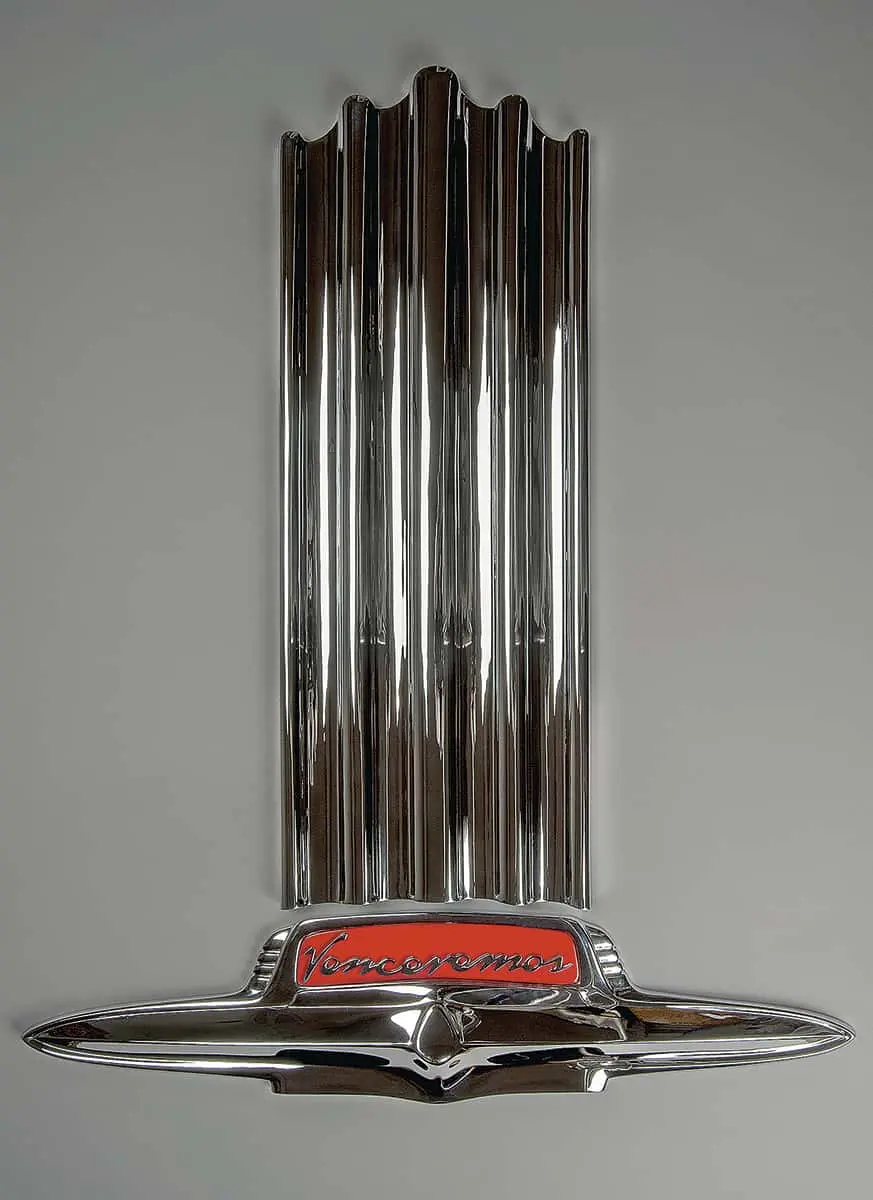
Dagoberto Rodríguez has made several versions of the nickel-plated ornaments of the Cadillac, the Oldsmobile, and the Chevrolet that still circulate through the streets of Havana. He has assembled them with revolutionary slogans to suggest that both, the cars and the ornaments, are museum pieces that belong to the living museum that Cuba has become. The counterpoint of this ironic operation is a pair of stars that Rodriguez has been doing for years, and that obviously refers to both the “single star” of the Cuban flag and the red star that symbolizes Communism.
Diana Cuéllar was the exhibition’s curator.
CARLOS JIMÉNEZ