With Alejandro Martín as chief curator, the 45th National Artists Salon, titled El revés de la trama (The Reverse of the Plot), can be described as a disperse concentration: 166 artists, 10 locations, one general curator, eight associate curators, and approximately 150 events over a month and a half’s run. A peculiar mess, even if not an excessive one. In recent decades, biennials and large-format exhibitions have used the same type of matrix: proposing an open, formal theme under which several independent curatorships can be admitted, and taking advantage of several locations throughout the city to activate urban routes.
Or, to put it another way, unrelated matters are grouped under a single title.
Suffice it to remember Alejandro Martín’s reply when asked in an interview about the show’s general concept: “It is El revés de la trama, which you could say has no independent meaning. The cool thing is that it means something very concrete for each person, and you can see it in the work of the curators. Each one projects it in his particular way.” In connection with that, it should be said that each curator comes to the Salon with his set of issues, a roster of artists, and solutions. There is no common denominator unifying. Moreover, the absence of a common denominator, a center, is presented as positive, a democratic universe where everyone can give an opinion and decide, something very much akin to the emancipation and autonomy proposed by virtual networks and outsourcing.
In the former instance, an individual is well able—at least, so it appears—to publish whatever he or she pleases; in the latter, a worker is well able—supposedly—to manage his or her time as he or she sees fit. Nevertheless, it won’t escape anyone’s notice that such freedom is rather a mirage, as its mechanisms serve to separate, divide, and fragment, hindering the cultivation of dialogue and conviviality and making the formation of a group almost impossible. And without a group, there is no chance of resistance. Thus, the permanent feeling of impotence that characterizes our present. To summarize: more than an invention of the new curatorships, this managerial model is a reflection of the contemporary world and its blockage of group formation as a strategy of social coercion.
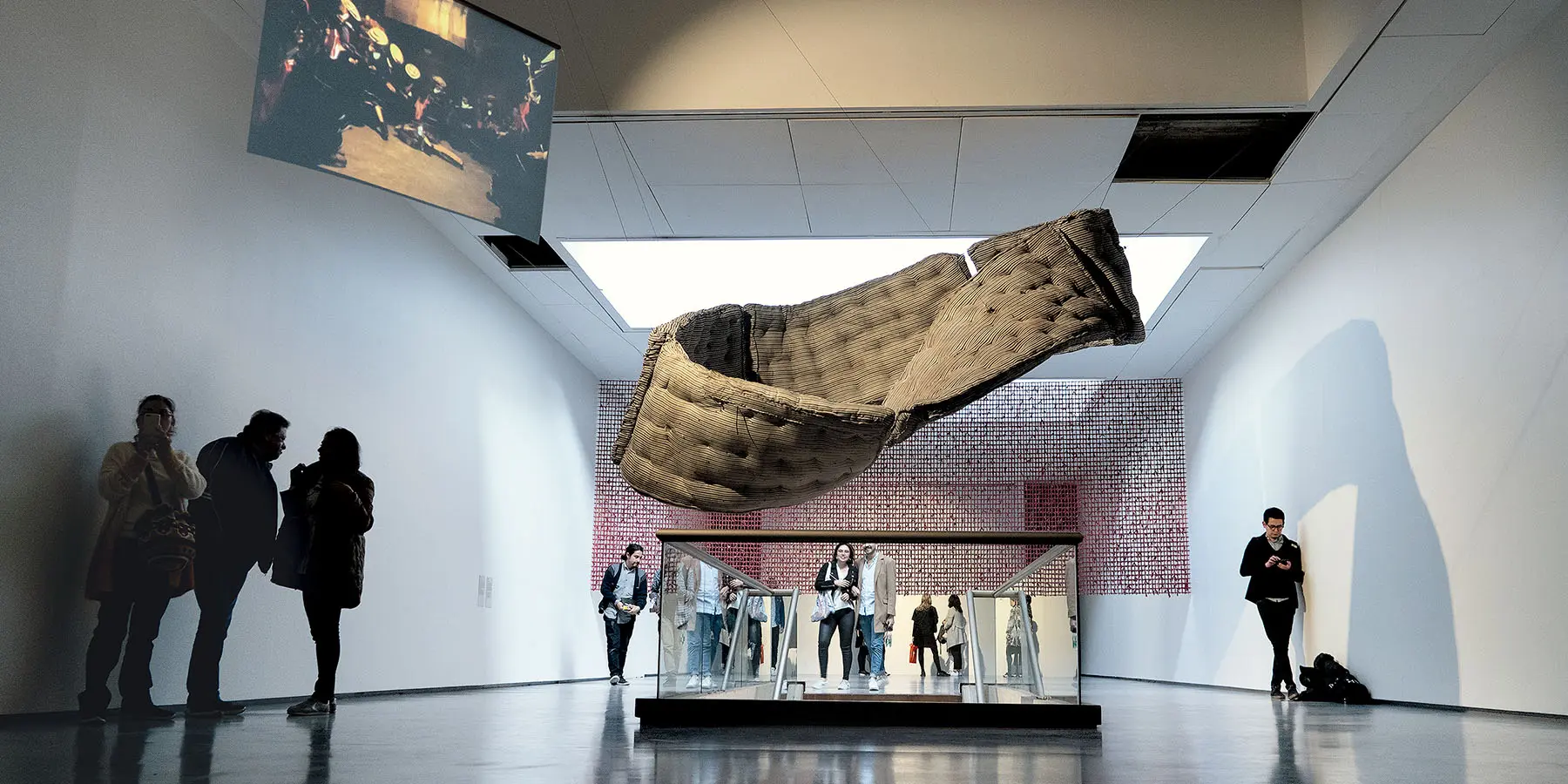
All of this, paradoxically, is in direct contradiction with the contents of the shows. I will take this point by point. El revés de la trama is comprised of nine curatorships, some of which are art shows in themselves while others are publishing programs, living arts, or self-managed collectives that cannot be seen as exhibitions as such. About the former, I will begin by describing two shows that, in their mutual antagonism, function as poles in our route through the Salon. The first one, La fábula de Aracne (The Fable of Arachne), curated by Alejandro Martín himself, features six works by five artists and is on view at the Museo de Arte of Universidad Jorge Tadeo Lozano, a basic white cube. It is a discreet but forceful exhibition, and also, it is worth noting, an exceedingly beautiful one, even if this adjective is outmoded. Based on the story of Arachne, Martín proposes six works with the act of knitting as their connecting thread. Visitors are welcomed by Adrián Gaitán’s Möbius strip, made from mattresses, and placed in the hollow of the stairs. Immediately afterward, they are presented with a kind of fence by Delcy Morelos, which prompts an unusual bodily reaction, both because of its material—a slippery resin in a bloodred hue—and because it forces us to crouch to access the other side of the room. At the two ends of this space, meanwhile, are Julieth Morales’, with textiles and threads representative of her Misak culture from the Cauca region, and Alba Fernanda Triana. The latter presents a work where sounds inaudible to human ears make a string move at high speed, a sound that, while we can’t hear the wave, we can see its motion and the figure it makes through the fluttering string. Finally, in Juliana Góngora’s Ensayos sobre la fe (Essays on Faith), a spider web loaded with compacted, rock-like lumps of sand displays its strength and flexibility for observers whose scale seems to shift while studying it.
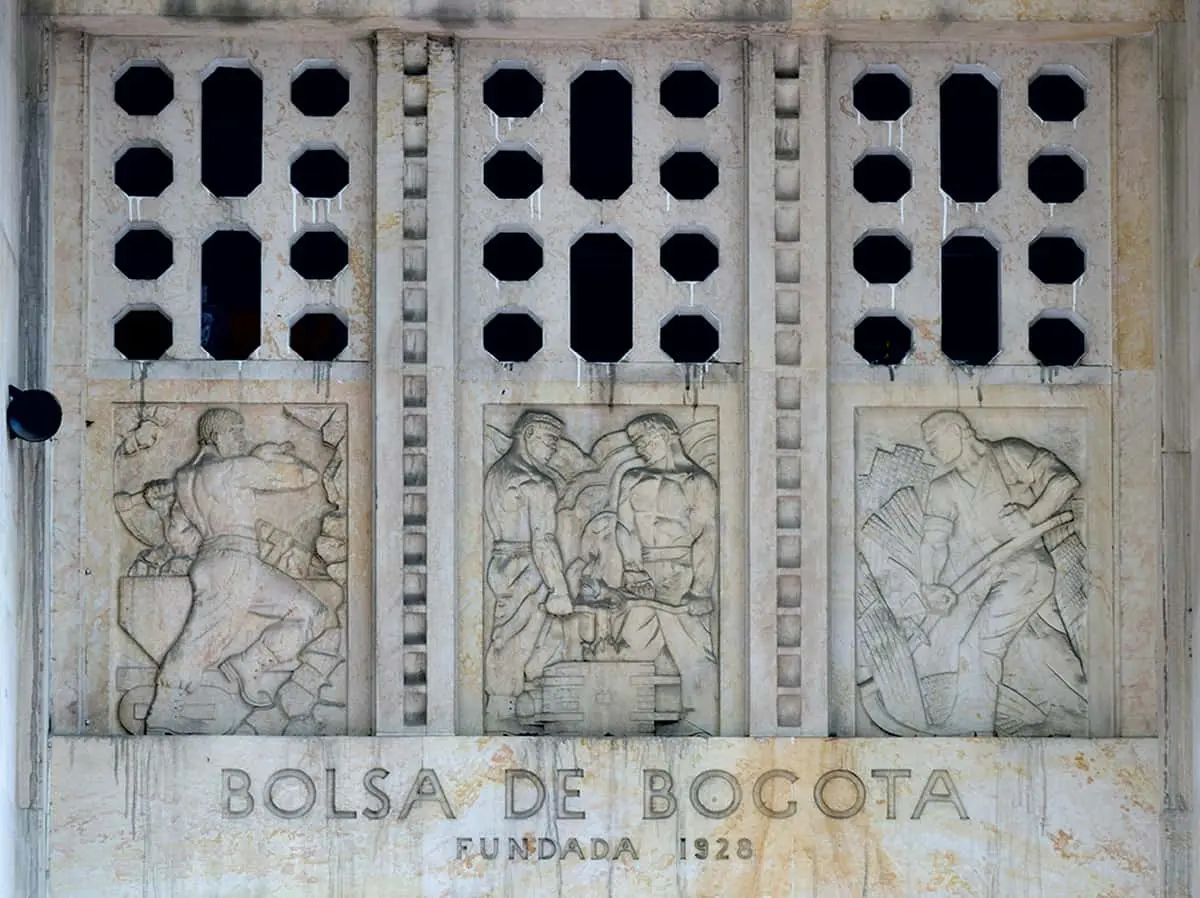
Fifteen blocks down, at Galería Santa Fe, is the central site for Contrainformación (Counterinformation), curated by the TransHistoria team (María Sol Barón and Camilo Ordóñez). I say “central” because this exhibition is broken into three parts: the site described above, a small show at the Academia Superior de Artes de Bogotá, and a route of urban murals in different spots of the city’s center. The curatorship starts with these murals, commissioned by various firms in the early and mid-Twentieth Century to celebrate Colombia’s national project.
The curators’ journey through these places is surprising. The city is rediscovered, and multiple layers of meaning are brought to light. Pedro Nel Gómez’s mural at the former Instituto de Crédito Territorial, Ramírez Villamizar El Dorado at the Banco de Bogotá, and Hugo Martínez's mural at the old building of the Caja de Crédito Agrario are three of the ten murals included. They show how the construction of the nation is linked to the generation of capital, which seems to go against our present, in which the capital is in a fight without antecedents for the reduction of the State.
Meanwhile, the exhibition at Galería Santa Fe functions as a counterpart to those old, forgotten murals. There, a series of contemporary artworks revisit the story of that national project. Feast and Famine, by Mexican artist Minerva Cuevas, is a critique of multinational firms’ meddling in local economies and customs. Quimeras (Chimeras), by Wilson Días, a series of paintings and LP covers produced by local companies, tell of how the private sector built its ideologies about nation, enemies, war, and identity. The exhibition is indeed powerful, yet two aspects detract from its force. On the one hand, the murals were not signalized as announced in the initial project, so they remained hidden for most of the city’s population and for the city itself. On the other, it must be said that the number of works on exhibit was excessive, making a space as spacious as Galería Santa Fe somehow narrow.
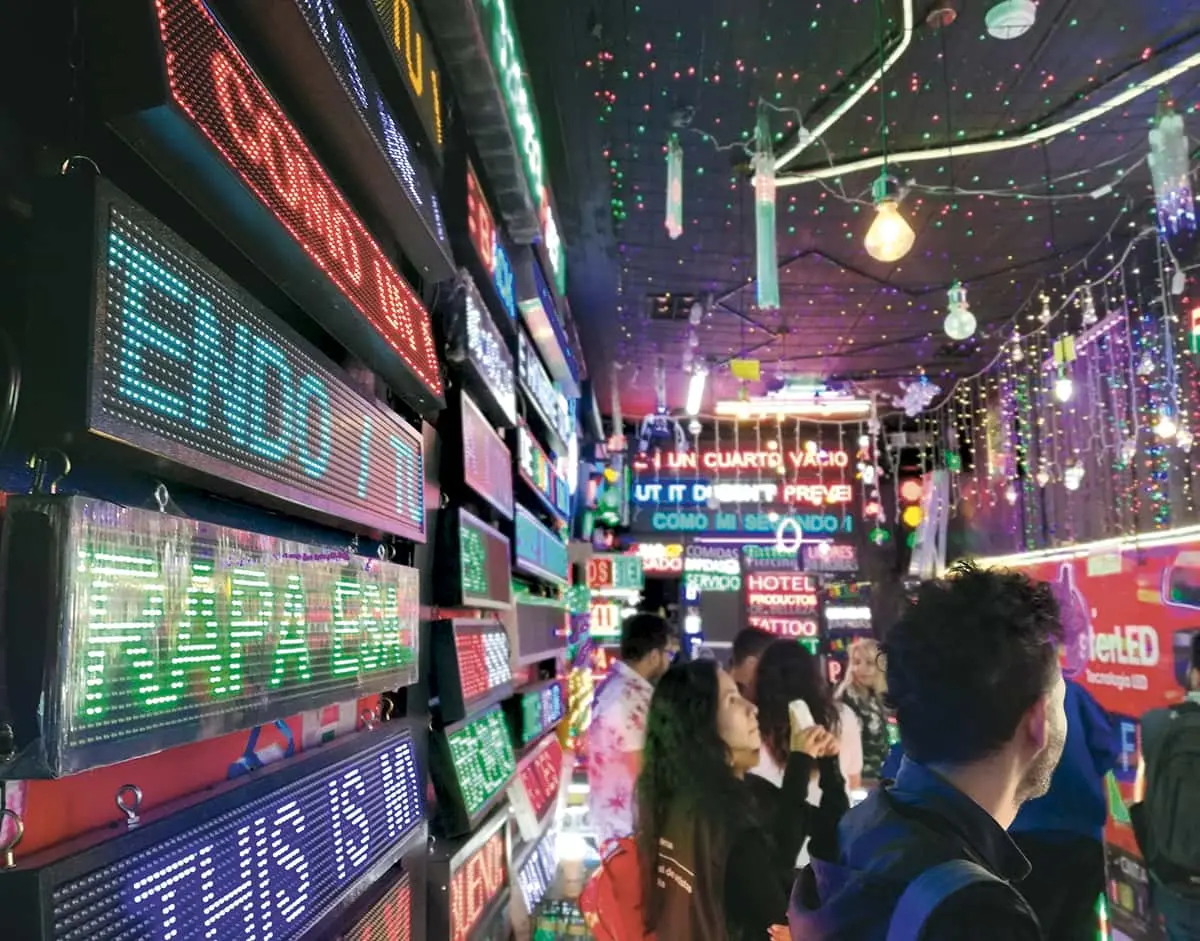
As I said, among the curatorships that transcended the exhibition model, several were intended to integrate other vehicles for art, such as publishing projects, web projects, collective actions, and living arts. Mitopía (Mythopia), curated by Adriana Pineda, involved a series of activities and, above all, proposed a gathering of self-managed collectives, both national and international, into a space for mutual encounter and exchange. Manuel Kalmanovitz’s Llamitas al viento (Little Flames on the Wind) added a publishing branch to the Salon’s network of curatorships. In Instancias (Instances), Ana María Montenegro created a webpage with virtual projects, specially commissioned for the Salon and a specific curatorship of living arts. Among the latter, I shall mention the work of Néstor Marcelo Gutiérrez, who intervened a typical Downtown Bogotá electronics store, setting up a parade of texts and poems on the LED panels on sale in the location. This curatorship by Montenegro, along with Luisa Ungar’s Lenguajes de la injuria (Languages of Slander), shaped the Cátedra Performativa (Performance Academy), the next point in this review.
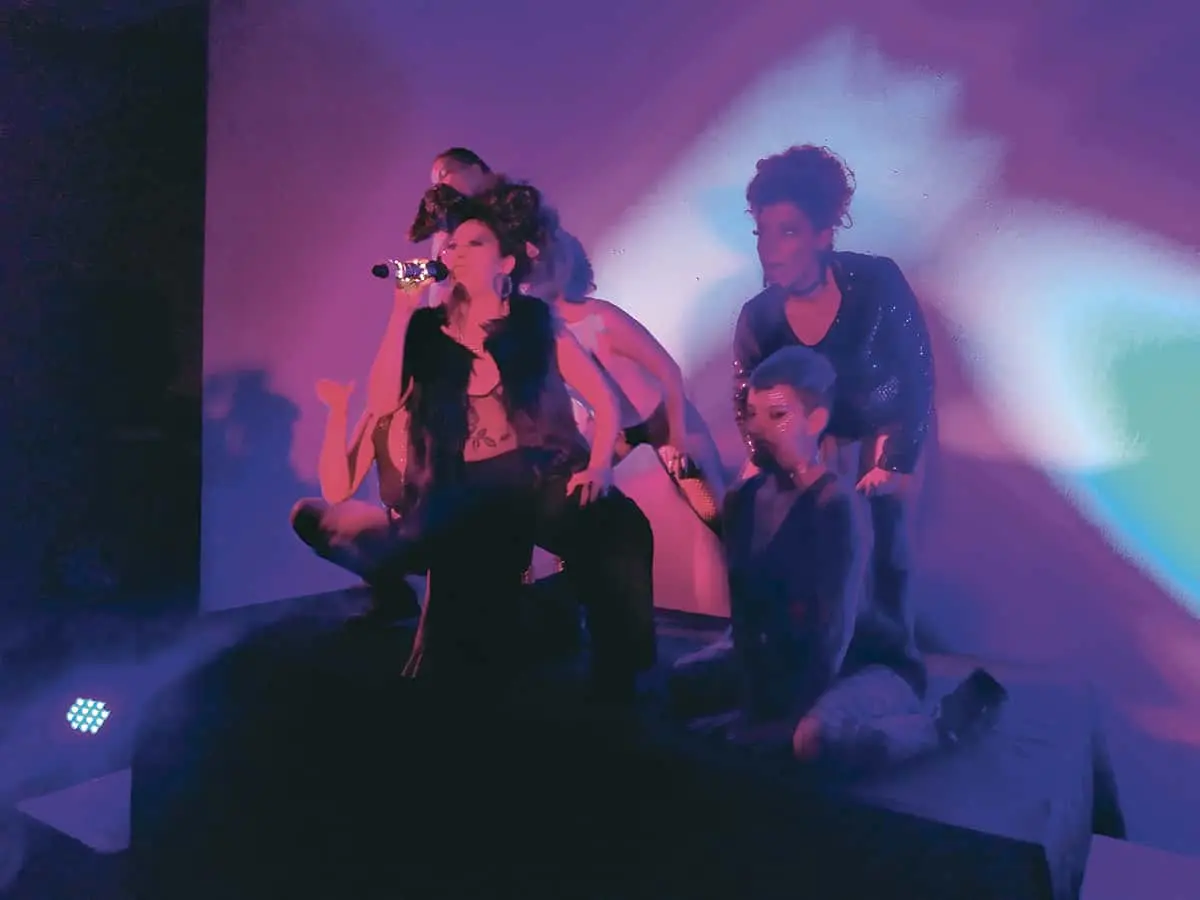
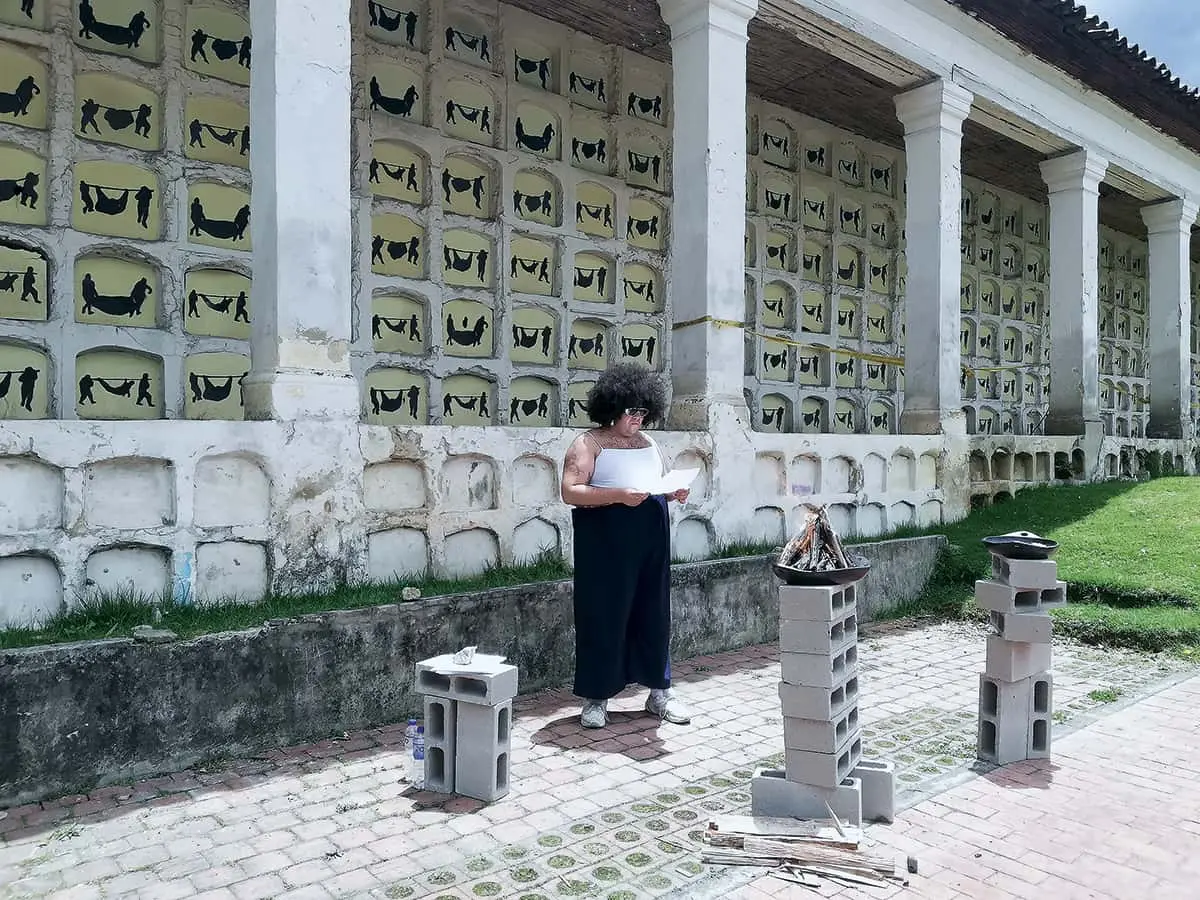
The Cátedra Performativa was organized by Luisa Ungar, Ana María Montenegro, and María Buenaventura (the latter also in charge of the curatorship titled Antes del amanecer, Before Dawn.) Thirty performances were presented during the event, with the voices of women and their emancipation as a foundational component. Thus, we were treated to an action in an orchard-forest by Cristina Consuegra and Juliana Góngora, where threads made of cheese told about an ancestral past. We also had the opportunity to see Brazilian artist Jota Mombaça read documents and processes about disappeared people, impossible decrees, and poems burned in her hands. The performance took place at the Centro de Memoria, Paz y Reconciliación, across from the columbarium intervened by Beatriz González, the latter is a site loaded with history.
Fusilamiento de Padilla (The Firing-Squad Shooting of Padilla), a performance by Ana María Montenegro and Marcia Cabrera, was equally hard-hitting. Five women read documents relating to the trial of Padilla for conspiring against Bolívar, a trial that ended with the accused sentenced to death despite there being no proof of his guilt, merely for being black. Finally, I will mention El grito de la mujer cabra (The Scream of the Goat Woman), by Marcia Cabrera. In the best Quevedo-style octosyllables converged with reggaetón, the artist was able to generate a collective ritual that transformed a dispersed audience into a flowing group, a veritable feat nowadays. At this point, it must be noted that the Cátedra shed light on a process currently ongoing in Colombia, the coming together of the visual arts and the dramatic arts, deriving from the work of Mapa Teatro and the collective-creation tradition of Teatro La Candelaria in the 1970s and 80s. In sum, the Cátedra showed how a new perspective on art is emerging, one that reengages the recent past and blazes new trails both in Colombia and in Latin America as a whole.
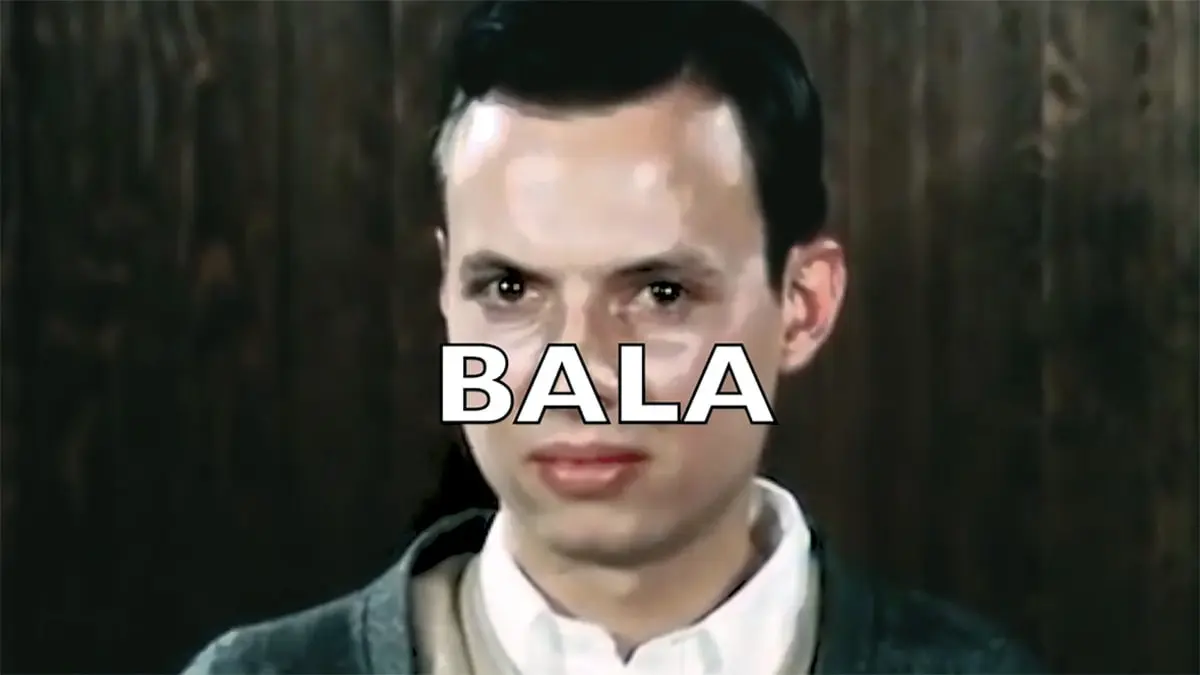
Meanwhile, Universos desdoblados (Unfolding Universes) an exhibition at the Museo de Arte Moderno, curated by Colectivo La Usurpadora (María Isabel Rueda and Mario Llanos), opened pathways that explore an imagined future. Here, one work that particularly grabbed my attention was Sofía Reyes’ video Bala (Bullet), a compilation of images of desolate faces that can induce a markedly melancholic state in its viewers. Nevertheless, Universos desdoblados had staging problems and featured works of irregular quality, some truly extraordinary, some less powerful. In turn, Pastas El Gallo (El Gallo Pasta Co.), curated by Carolina Cerón and William Contreras, was located inside an old, abandoned pasta manufacturing concern, which lent its name to the exhibition. In it, several artists inhabit the dilapidated remains of the past, and, again, what is made evident is how the flow of capital, the march of production, leaves behind a mountain of ruin.
I will end with Arquitecturas narrativas (Narrative Architectures), the second exhibition curated by Alejandro Martín in this Salon, which juxtaposes comic books and the urban grid, two reticles that have guided the amblings and the readings of several generations. In this show, on view at the Centro Colombo Americano—an institution directly connected to the US Embassy in Colombia—artists Lucas Ospina and Power Paola created a mural with explicit political content. They were told that the mural, a protest against United States’ President–Donald Trump–, Colombia’s former president–Álvaro Uribe–and Colombia’s current president–Iván Duque–, had to be erased. It was covered by a layer of white paint, which, it seems, ran out, so that what was left was a kind of glazing. Now, beyond the inadmissible act of censorship, it was interesting to watch the reaction of the curatorial team, and later to read the Ministry of Culture’s response.
With regards to the first one, there emerged, during the public reading of a group letter rejecting the act and a discussion of the event by the curators, a pronounced disconformity with the work conditions in the Salon, the contracts offered, and the effort required to pull it through.
In terms of the latter, in response to the right of petition that obliged the Ministry to make a public pro-nouncement, there was a firm assertion of the fact that the institution—i.e., the Colombian State—only provided resources for a third party to execute the project. Citing the communiqué: “The Ministry and participant public institutions provide the resources for the hiring of the operator, the curatorial team, the artistic director, and the executive director, as well as for outlays related to exhibition spaces, printing, materials, etc.”
Such a laconic, bureaucratic response highlights the problem mentioned at the beginning of this review. A good portion of the exhibition deals with the issue of the State, the lost national project, and, in one way or another, engages with the impossibility of forming a collective and, in consequence, of rebelling. Yet the Salon as such—like our world as a whole—follows a model of outsourcing, which leaves its trace in the curatorships’ very dispersal nature. To summarize, it is impossible for such a trace—which brings forth with itself the breakup, the alienation, the hiring-out of human labor—not to appear. What is significant, I repeat, is how, at the same time, this Salon implies a response, a liberation, a possibility of rising up through a series of extraordinary works of art where it seems that the ghost of its founder is present. We must not forget that the National Artists’ Salon was established by Jorge Eliécer Gaitán in 1940, when he was Colombia’s Minister of Education under Eduardo Santos, eight years before his assassination, a definitive watershed in the history of the country. Thus, being the same, it is already part of another history.
* Photo: Courtesy Press 45 Salón Nacional de Artistas.
JULIA BUENAVENTURA
Art critic and historian focusing on Latin America.