Suggestively titled Open Borders, the 14th Curitiba International Biennial gives continuity to a project launched in 1993 as the Viento Sul Biennial, held in Foz do Iguaçu and intended for the countries of the tri-border region. While today the Biennial is permanently located in Curitiba, it retains a wandering, transnational spirit. So, along with the exhibitions already inaugurated in that city, many more are set to open in Florianópolis, Brasilia, Cascavel, and abroad in Argentina, Uruguay, France, Switzerland, and Russia. This model is one of many being tested at a time when many of the more than 250 art biennials that exist around the world,1 finding themselves in crisis, seek new ways of attracting audiences and sponsors. The collaborations structuring the grand project of the 14th Curitiba Biennial weave local, regional, and international proposals, signaling the magnitude of an event with more than 45 participating countries and more than 400 artists of many backgrounds. The art and the artists will cycle through the different places mentioned above over five months, expanding the universe of reference for each of those art circuits with a salutary pluralism that counterbalances pre-established hegemonies.
Aside from the different geographical locations that are hosting and will host parts of the grand exhibition, other institutional spaces in Curitiba itself have been brought into the fold of the 14th Biennial. Rich connections are established in this way, for example, with the Museu Paranaense, which receives works from the Biennial that dialog with its (historical and ethnographical) permanent collection. Poetically, those works will appear for the most distracted visitors as a regular part of the museum exhibit. This is the case of Animalis Imaginibus (2019) by Mauro Espídola, who created an alter ego as a scientist researching, classifying, and exhibiting butterflies. Based on the bodies of such insects, found dead and pressed against the paper in the manner of frottage, Espídola organizes a collection of new species, christened with suggestive and playful names that call attention to their out-of-place presence.
Adding to the heterogeneous, pluricultural profile already guaranteed by the variously diverse sites where the Biennial takes place are the many curators working in the exhibitions, under the general coordination of Adolfo Montejo Navas and Tereza de Arruda. Among others, they are Sandra Makowiecky, Francine Goudel, and Juliana Crispe (Florianópolis); Adriana Almada and Ticio Escobar (Asunción, Paraguay); Ernestine White-Mifetu (South Africa); Gabriela Urtiaga (Argentina); Massimo Scaringella (Italy); Daniel Faust (Switzerland); Esenija Bannan (Russia); and Lu Zhengyuan and Li Xiangning (China).
Such networks of collaboration, spanning several continents, blur borders and widen perspectives, providing a platform for the presence of a broad range of works and artists. The multiplicity of tongues, names, and artistic languages encountered in the exhibitions can, in some ways, be confusing for visitors; one needs a degree of tolerance for the limitations and contradictions of these kinds of events. The inter-connectedness signaled by the general title of the event can be understood as its frame of reference and one of its most potent aspects because it is as an open-ended, contradictory, and complex project that the Biennial is to be explored and enjoyed.
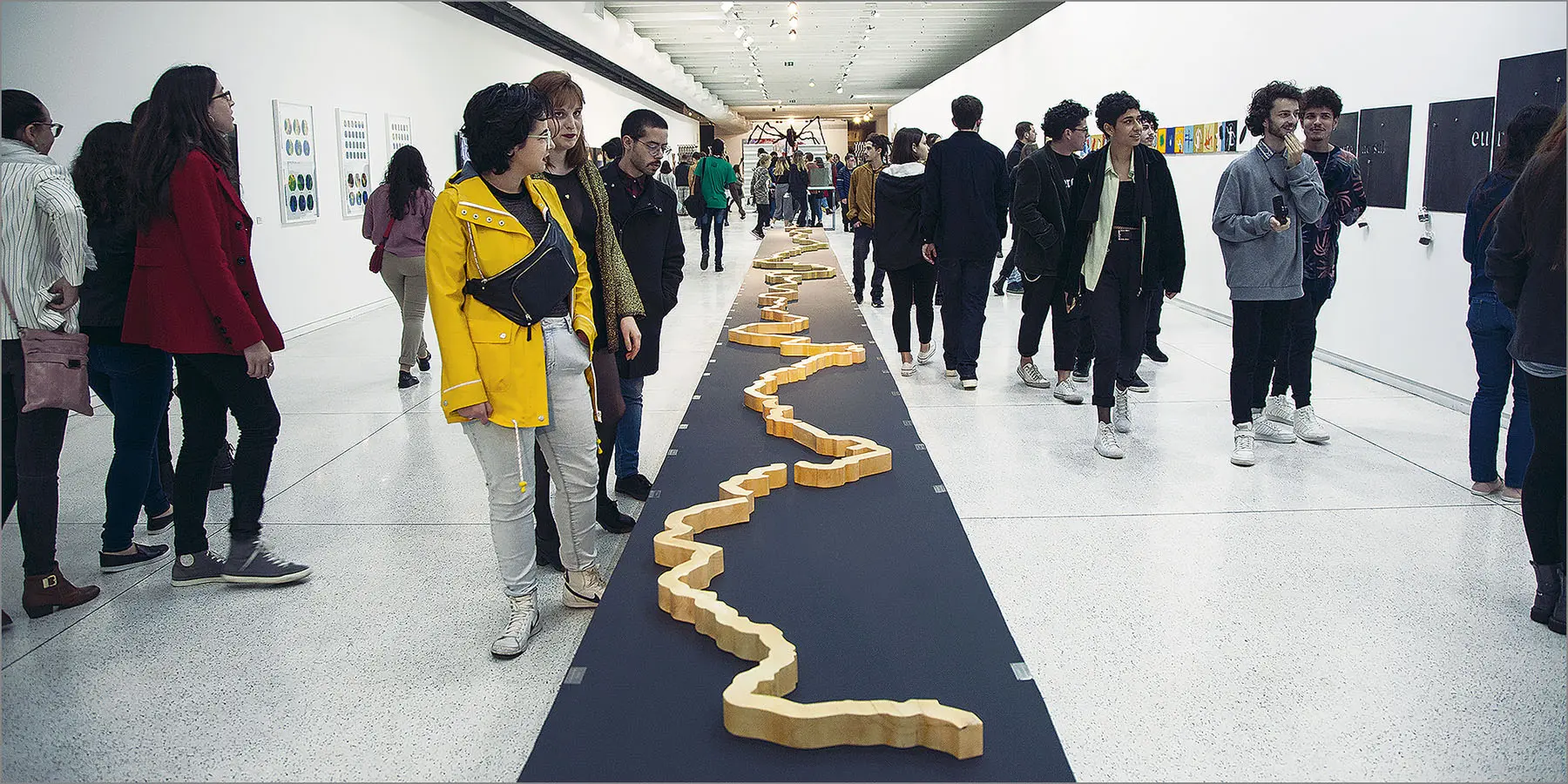
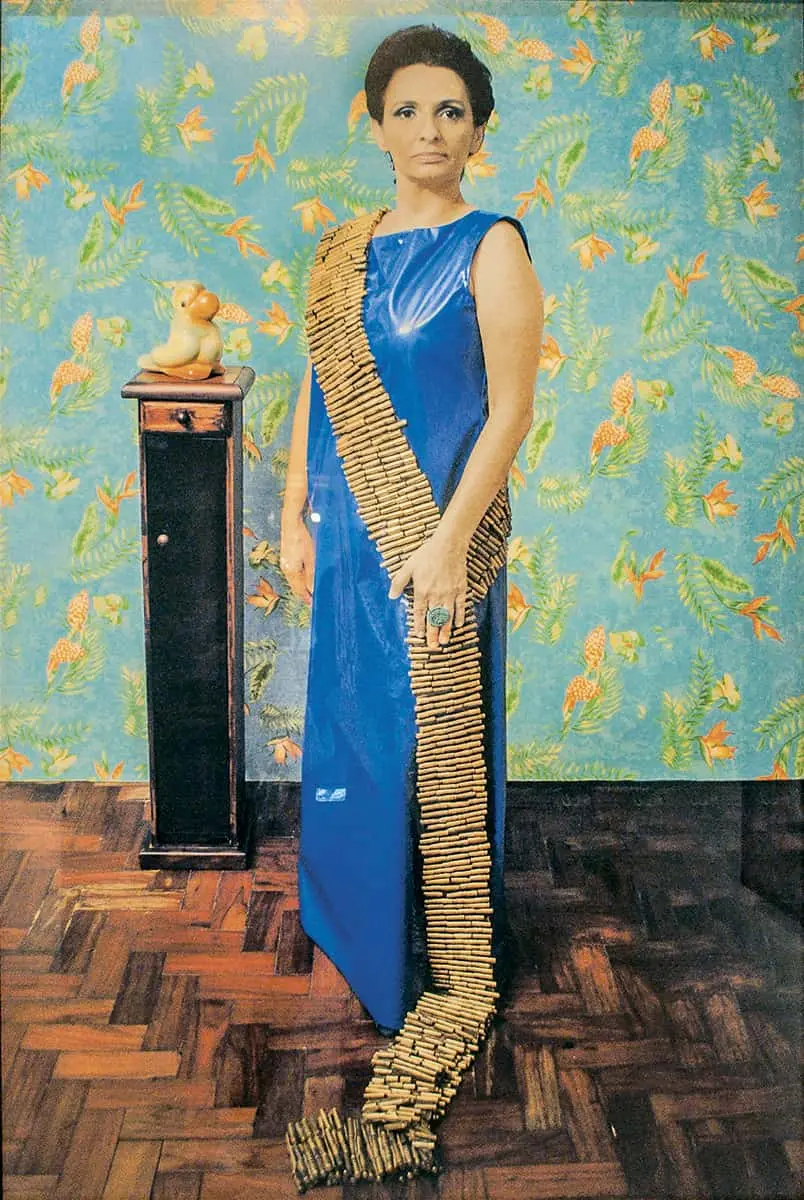
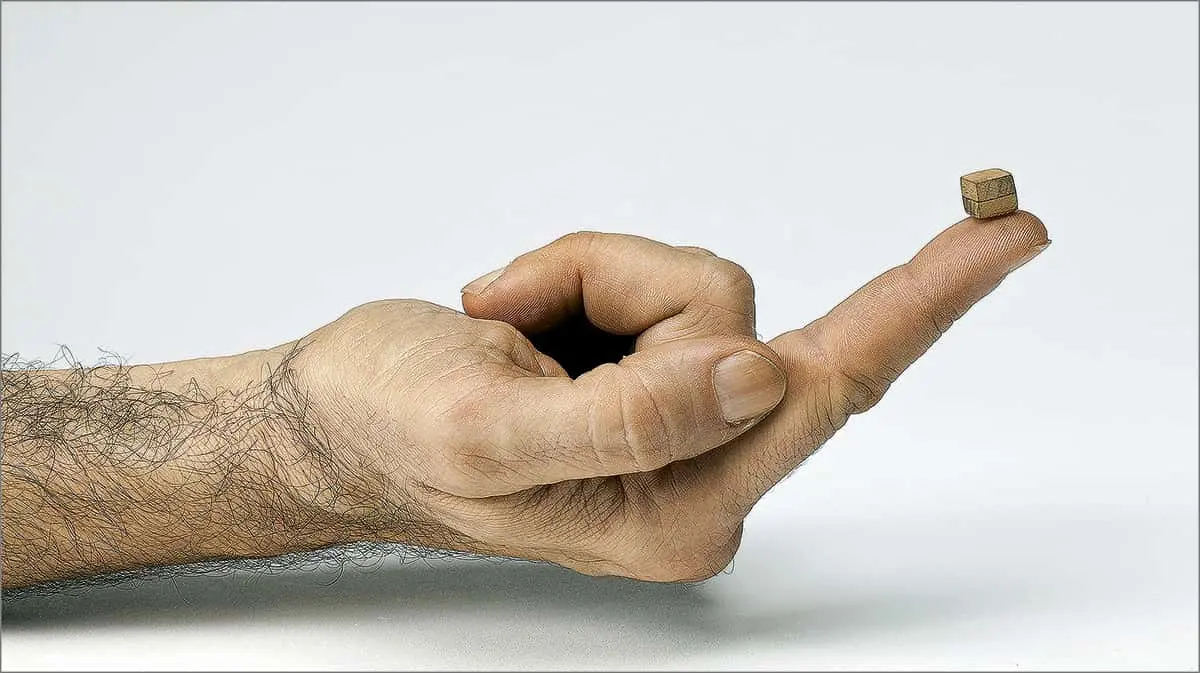
In the selection of artists, the title of the Biennial exploded into a multiplicity of approaches, the most evident of which concerns geographies. It appears almost microscopically, for example, in Cildo Meireles’ series Cruzeiro do Sul (Cruise of the South, 1969-70), comprised of a collection of small sculptures about the Tupi people in the form of tiny cubes in pine and oak wood, which the Tupi consider sacred. Here, Meireles explores the relationship between Western civilization and the indigenous world. It can also be seen in Regina Vater’s Borda (Border, 2019), which features 23 pieces of trimmed wood, forming a 15-meter line on black support. Each piece, identified with a stainless-steel plaque, represents the border between each set of countries in South America. With this juxtaposition and this longitudinal unfurling, the artist shines a light on the arbitrary nature of the political boundaries imposed by power.
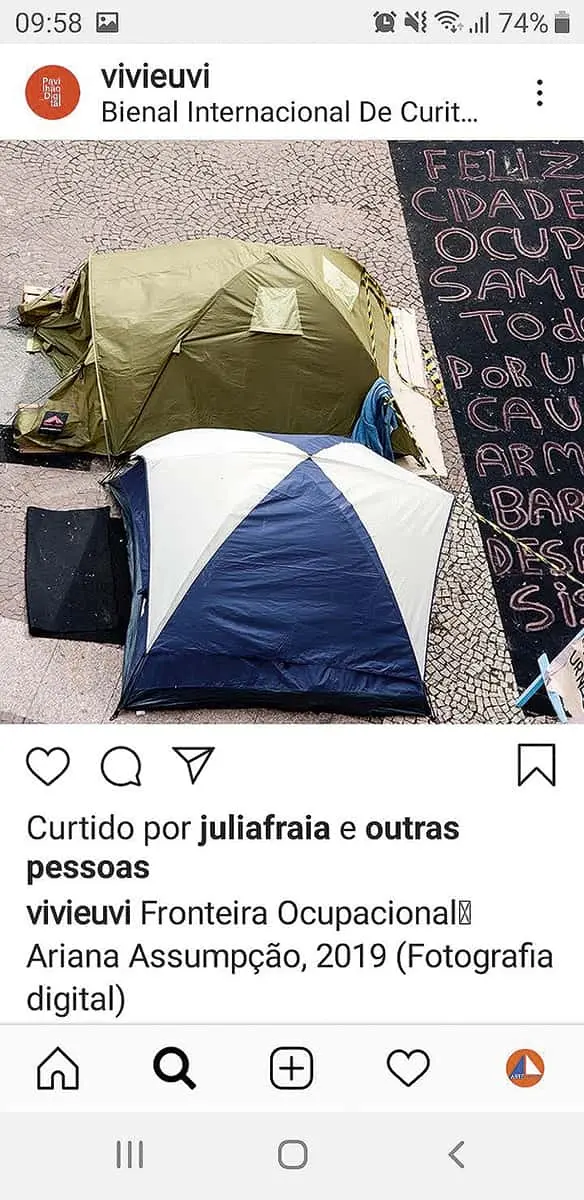
Perhaps the most evident and solidly established theme for most of the works can be seen in such a critique of geographical and political borders. One that standouts along those lines is the Fear/Miedo project (2005) by Antoni Muntadas. He interviews Mexican and American residents of the border between the two countries to show how fear is a component of the imaginary on both sides, without well-defined causes yet clearly the basis for a profound scission between them.
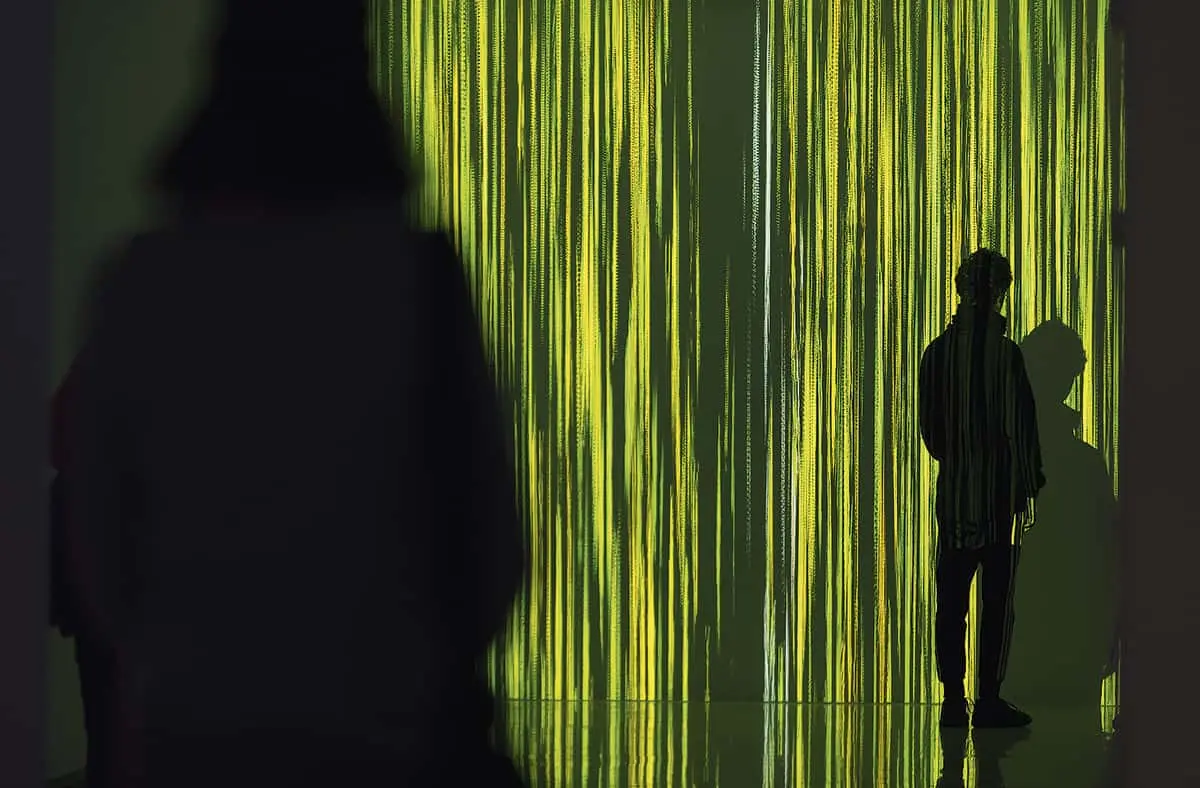
The subject can also be approached through the dissolution of boundaries between the real and the virtual, for example, in Daniel Canogar’s installation Xylem (2016), a digital panel governed in real-time by the algorithms of financial operations ongoing around the world, based on data from 393 global indexed funds. The vertical movements of colored lights, as determined by the algorithms, reflect with precision the funds’ ascending and descending value. Using a color palette representing the world’s main currencies and the raw materials negotiated in the financial markets, the artist transforms the data gathered into an abstract image in constant motion.
The boundaries of the virtual are equally dissolved in the biennials Digital Pavilion, curated by Vivian Vilanova, featuring an online exhibition that can be visited using a QR code or on Instagram through @vivieuvi or @bienaldecuritiba. The artists are filling the stories with works, filters, and interactions, inviting us to reflect, as we navigate cyberspace, on the presence of such networks in our everyday lives and their impact on our subjectivity, our ways of life, and the democratization of access to information. According to the curator, “artists participate in response to an open call in social media, and the ideas contained in their works are accessible to anyone with an online connection, without time or space borders.” The virtual was already a presence in an earlier edition of the Biennial, in 2013, with Web Arte Bienal de Curitiba, also entirely online.2 Such an openness to cyberspace evinces the expansive, barrier—and hierarchy—busting profile that has long characterized the Curitiba Biennial.
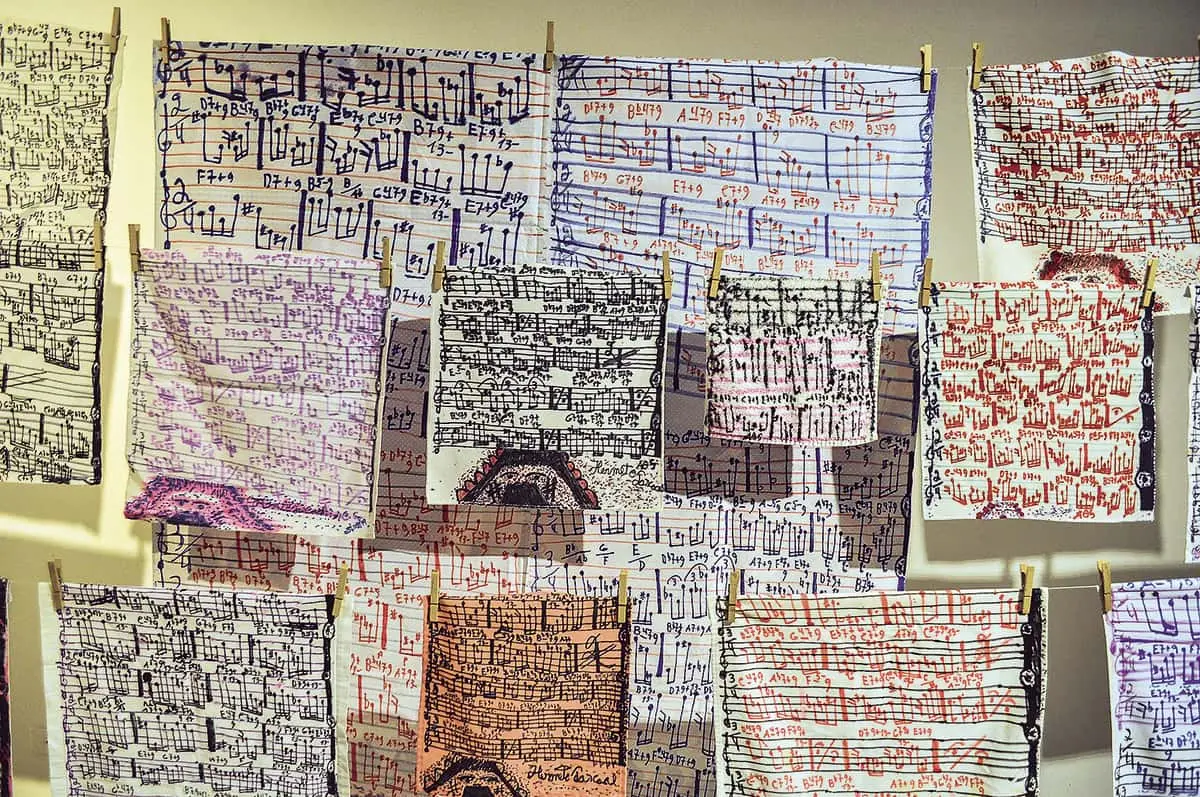
The blurring of boundaries between artistic categories is a contemporary art debate that many artists engage in their work, and it could not be absent here. It can undoubtedly be found in Hermeto Pascoal’s exhibition Ars Sonora. Pascoal—a major figure in Brazilian music, known for his inventiveness and experimentalism—intervenes in objects connected to his own life, combining music and visual art. The wide array of experimental approaches is particularly appealing to the audience, as it provides abundant visual diversity.
Against the grain of these crossovers, in some of the galleries, the exhibitions are organized by country, following the more traditional pattern of the Venice Biennale. That model began to be questioned in the 1980s, and the majority of newer, emerging biennials of the 1990s did away with it, opting instead for auteur curatorship projects that dilute regional and cultural differences under the mantle of the contemporary international style.
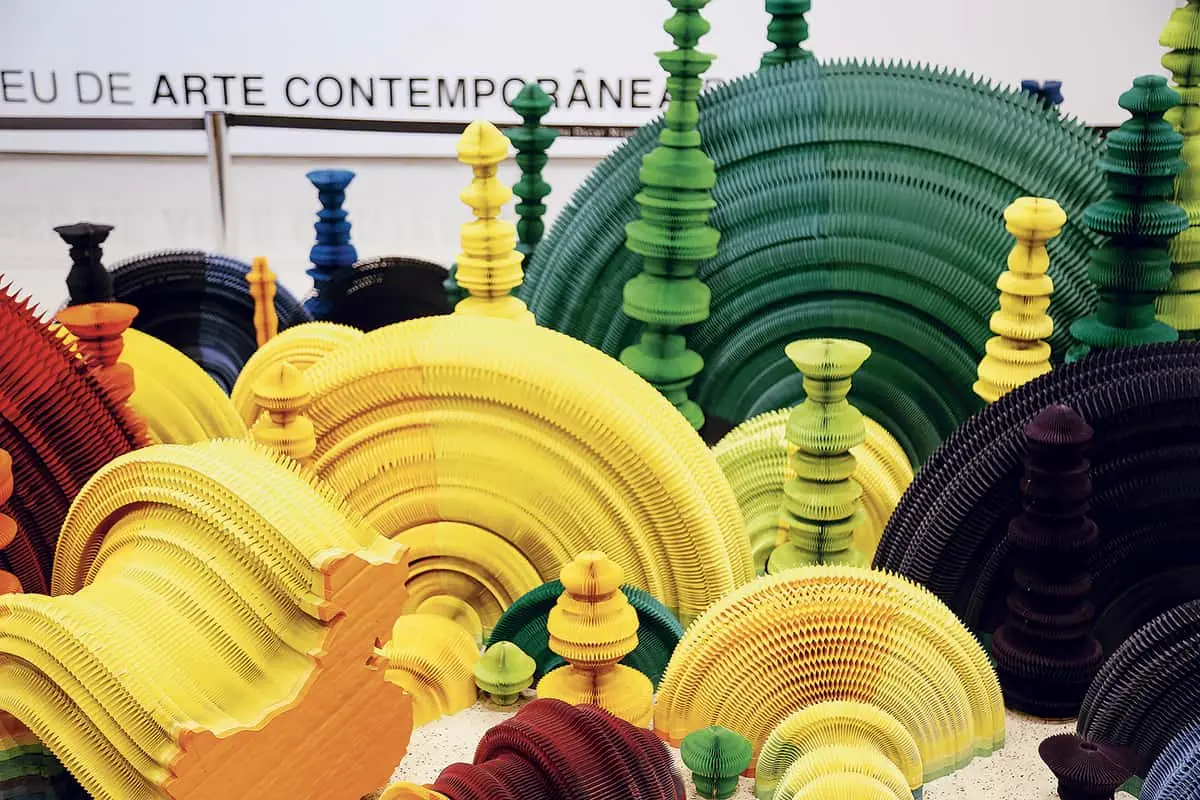
The Curitiba International Biennial adopted the guest-country format already in its previous edition. That type of organization offers practical support to the event’s financial viability, creating opportunities for sponsorship in different countries. Such a structural option is appealing today in the globalized contemporary art space, where local hues are no longer readily discernible. Grouped in the galleries, the artists bring forth specific aspects of their own cultures that can be more easily comprehended by the public. On the one hand, this sectioning can be seen as a step backward; on the other, it can also be understood as countering globalization, as proposed by Néstor García Canclini.3 It asserts local (or national) specificities in one of the main spaces for the internalization of contemporary art: a biennial. This is clearly in evidence in the Chinese selection, with artists who display the markings of a deeply rooted cultural tradition. Li Hongbo, for instance, exhibits Fairytale World (2015), an installation of folded-paper sculptures based on a common Chinese technique, which the artist revisits from a contemporary point of view in terms of their spatial and chromatic configuration.
The guest countries for the 14th edition of the Curitiba International Biennial are the BRICs (Brazil, Russia, India, and China) and South Africa, all of them seeking their integration into the international art system. The Biennial thus contributes to the strengthening of a political axis in the art-world power play between nations. In terms of the art itself, it eschews the pattern of auteur curatorship and those “biennial-focused” artists whose works repeat from event to event in the four corners of the world. The model adopted instead may not be the most highly valorized by critics, especially attentive as they are to the art system’s anointed and most legitimized figures. Nevertheless, it opens up a space less controlled by the dominant centers of art-world geopolitics.
The Curitiba Biennial has sustained, for several editions already, a commitment to performance, and its program includes a week devoted to that artistic practice, curated by the Curitiban artist Fernando Ribeiro. Along with that specific moment, something to also note is Berna Reale’s room, with videos among which Soledad, from 2013, clearly stands out. In it, the artist explores narrow streets and alleys of the city’s out-skirts, a lad in an elegant blue suit and wearing pearls, on a cart pulled by pigs. In the photographs of the series Mulher (Woman, 2011), Reale appears disguised as ironic figures that refer to the images created by Eighteenth-Century travelers, the first producers of national types. Her work brings to the fore matters of power, violence, poverty, and contradiction, from an abundantly critical point of view.
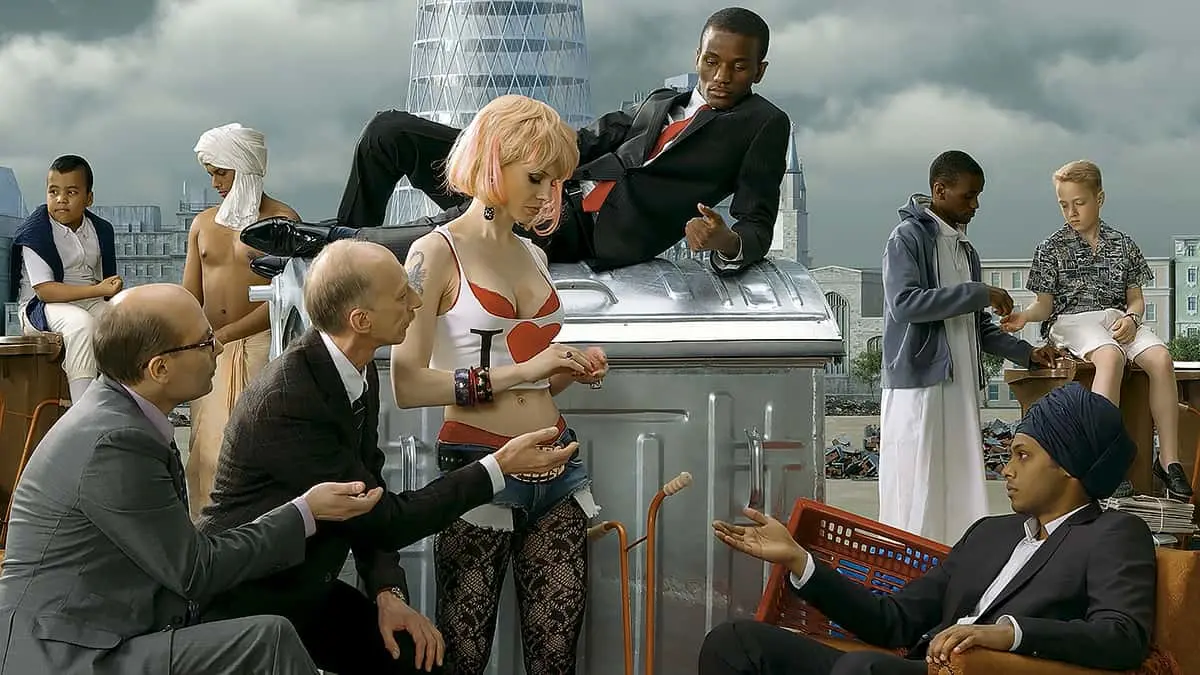
Also, in the line of such photo-performance, the Russian collective AES+F’s outstanding Inverso Mundus (2015) develops the intersection of performance, video, and digital technology into a sophisticated dialogue with the history of art and other cultural icons. The group’s surrealistic, grandiose, intentionally overwrought narratives explore behavioral patterns, vices, conflicts, and contradictions in a contemporary global society.
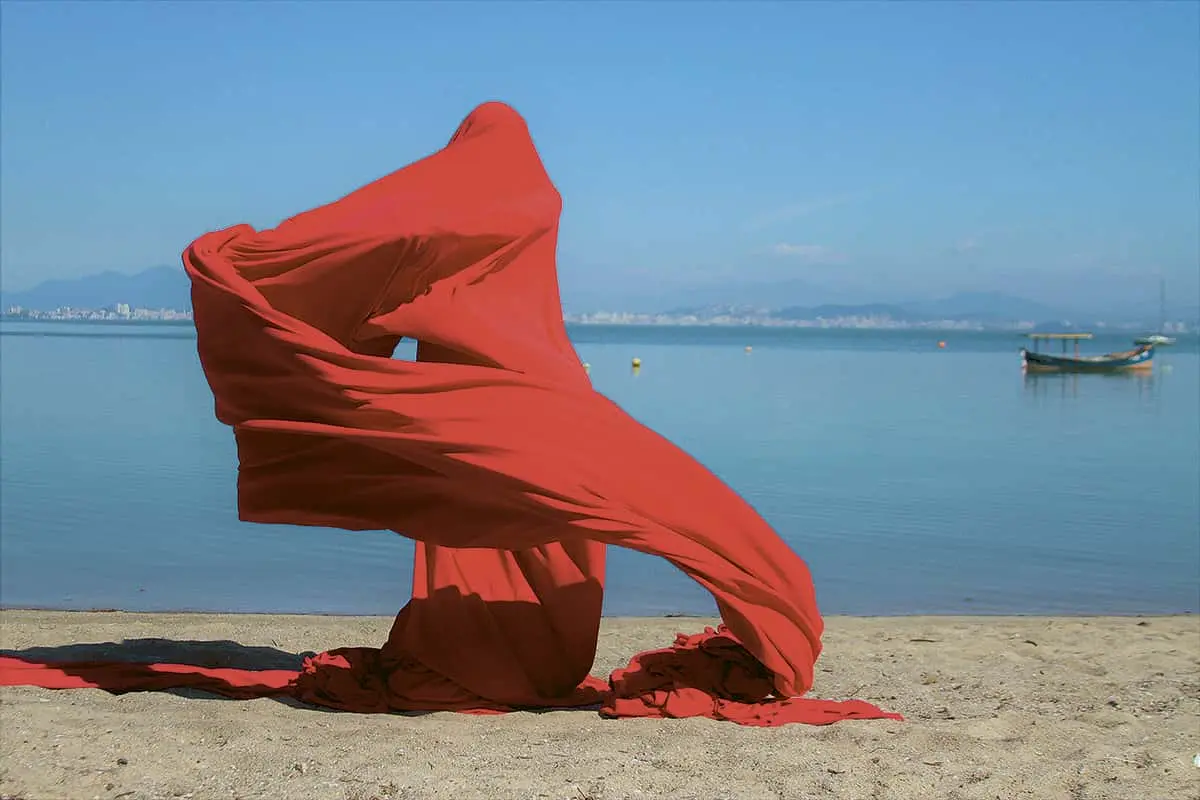
In the realm of live performance, South Africa’s Sethembile Msezane presented House of Reflexão (House of Reflection) as part of the opening activities, receiving members of the public, one by one, for tea and conversation inside a red-tulle tent, to the sounds of music from her country. It offered a kind of pause in time and space for friendly, warm close-quarters conviviality. Meanwhile, a live performance by Franzoi, a follower of Marina Abramović’s ideas about confronting the limits of one’s own body, was featured in the Florianópolis show. In it, Franzoi plunges into the ocean inside a 40-meter red-fabric sack and practically disappears on the horizon, arousing feelings of anxiety and suspense in the audience.
With Ernesto Meyer Pereira as its president for several editions already, the Curitiba Biennial is reinventing itself to confront the never-ending crises that decimate art institutions in Latin America. More specifically, the crisis of biennial events, challenged by the competition of the art fairs that grow and become more established in the contemporary world. The history of this biennial can be felt reverberating in the current edition and is evident in many aspects; at the same time, its future can be said to be in the making now, in a complex, diversified, mobile present of opening borders.
NOTES
1. According to information available on the Biennial’s website, http://www.biennialfoundation.org/home/biennial-map/
2. The specific link for the online exhibition is: http://webarte.bienaldecuritiba.com.br/
3. According to the author, “de-globalization” can be conceived as those actions that, in the general basket of globalization, take advantage of movements that tense and destabilize the process.
MARIA AMELIA BULHÕES
President of the Brazilian Association of Art Critics (AICA Brazil). Professor of the Institute of Arts, Universidad Federal do Rio Grande do Sul