The Miami Art
Museum (MAM) presented Objects of Value between November 2008 and February
2009. The exhibition, curated by René Morales (MAM’s Associate Curator since
2006) coincided with an exploding financial crisis that seems to threaten the
entire world. Morales intended the project to examine “radical challenges to
the principles on which artistic value has been traditionally based” in the
twentieth-century, principles that “have remained unstable ever since,” as
Morales wrote in the well-argued essay that accompanied the exhibition. Many of
the selected works focused on the factors that determine the monetary value of
art—a trend that began in the 1960s and gained momentum in recent times,
spurred by a great boom in the international art market—yet, according to
Morales, the exhibition “differentiates itself from other recent projects in
that it concentrates mainly on economic value in a wider sense, surpassing the
narrow parameters of art commerce.”

The exhibition comprised works from the MAM collection or loaned by various sources in North America and Europe. Featured artists included Janine Antoni, Yael Bartana, Walead Beshty, Chris Burden, Dario Escobar, Felix Gonzalez-Torres, Ed Kienholz, David Lefkowitz, Jac Leirner, Josiah McElheny, Marilyn Minter, Vik Muniz, Wangechi Mutu, Wilfredo Prieto, Santiago Sierra, Simon Starling, Rirkrit Tiravanija, Tunga, and Carey Young. Welcoming the viewer was one of David Lefkowitz’s Corrugated Drawings, which represented almost abstract geometric shapes on corrugated cardboard boxes, with a playful wink toward the “noble materials” traditionally legitimized in art history. Three works by Ed Kienholz (1927–1994) trained an equally entertaining gaze on the art market and on the criteria for aesthetic value. Against a simple abstract backdrop, these mid-1970s watercolors displayed texts declaring their exchange value (For $264; For a Fur Coat) and the artist’s fingerprint alongside his signature.
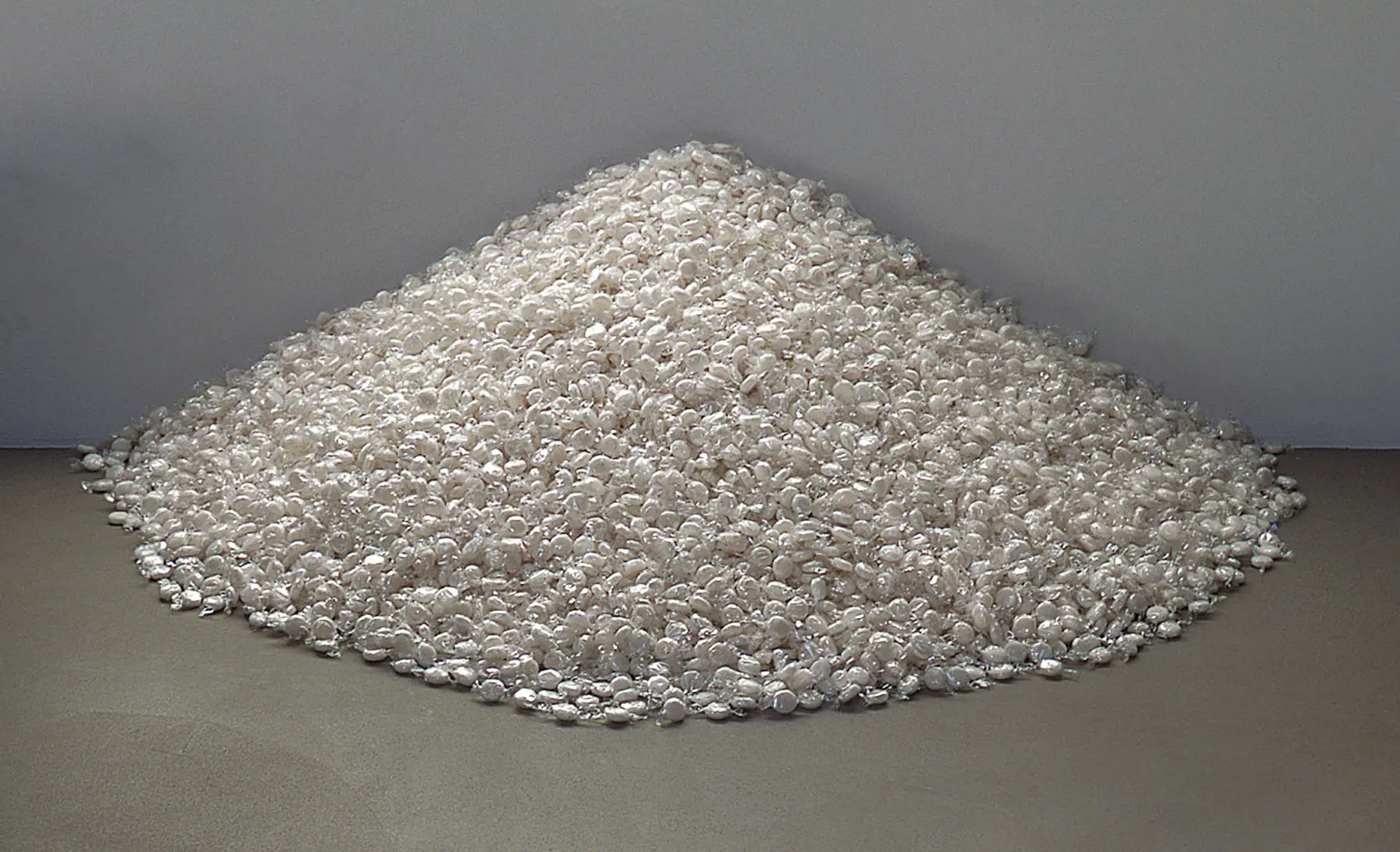
Rikrit Tiravanija’s installation, Wooden Buddhas, was a shrine-like stainless-steel shelf filled with hundreds of Buddha figurines carved in wood, which tell of the vandalism that plagues sacred sites in Laos and Thailand. Tiravanija hired a local craftsman to carve Buddha images to replace those taken by tourists from a grotto in Laos. In this project, the value of the objects transcended the artistic canon and its monetary measurement, reaching into the terrains of the sacred and the emotional. Accessing the same territory, the installation by Félix González-Torres (1957–1996) represented the artist’s father with a pile of candy equivalent to his body weight, located on the floor in one corner; viewers were allowed to take and eat the candy, and the work was “completed” as the total weight of candy decreased in a kind of communion that tangentially signaled the impermanence of life. Janine Antoni approached the subject from a similar perspective in Umbilical: a silver cast of her teeth and her mother’s hand, with a small family-heirloom teaspoon connecting both elements as an emotional bridge of nourishment.
Jac Leirner’s Os Cem, with hundreds of obsolete Brazilian cruzeiro banknotes strung on a steel cable in the form of a snake suggested both the exuberant fauna that thrives in Brazil’s tropical climate and the instability of its monetary system. Yael Bartana’s video Odds and Ends also analyzed economic value: through the astounded gazes of two children, it observed the whirlwind of the market and consumers vigorously fighting to acquire a valuable or scarce product, the identity of which remained unknown.
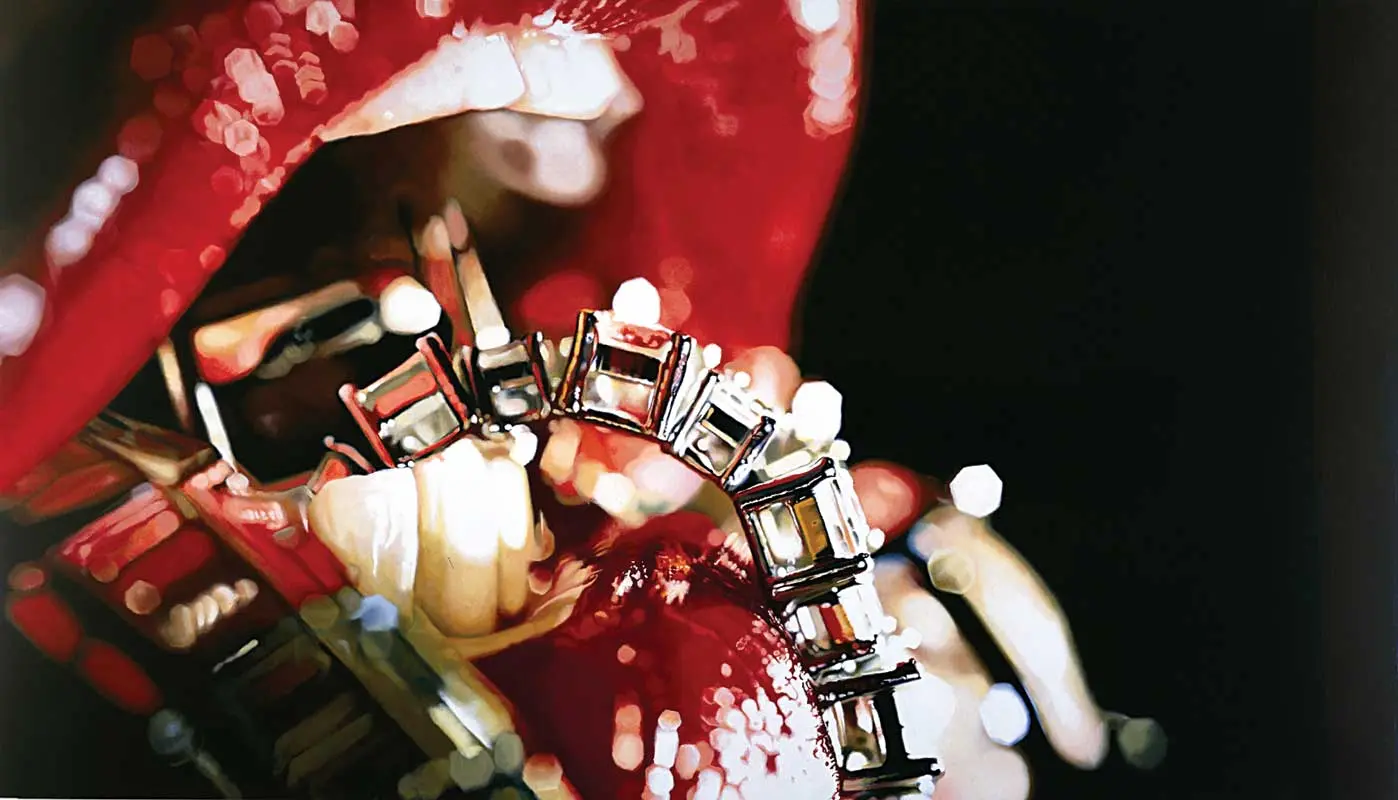
Alfredo Jaar’s light-box photograph (at the scale of bus- or subway-station advertisements) reflected the hard working conditions of gold mines and suggested an ambivalent connection to the fashion world with the youthfulness of the models, the glamour of their tight musculature, the dirt that covered their bodies and faces, and the lighted frame that supported the image. Marilyn Minter, who has also created large billboards for site-specific works in urban locations, was represented by one of her typical enamel-on-metal paintings, finished with her own fingers. The image of sensual female mouth devouring jewels characterized the artist’s several-years-long analysis of the relationship between sex, fashion, femininity, and the marketplace.
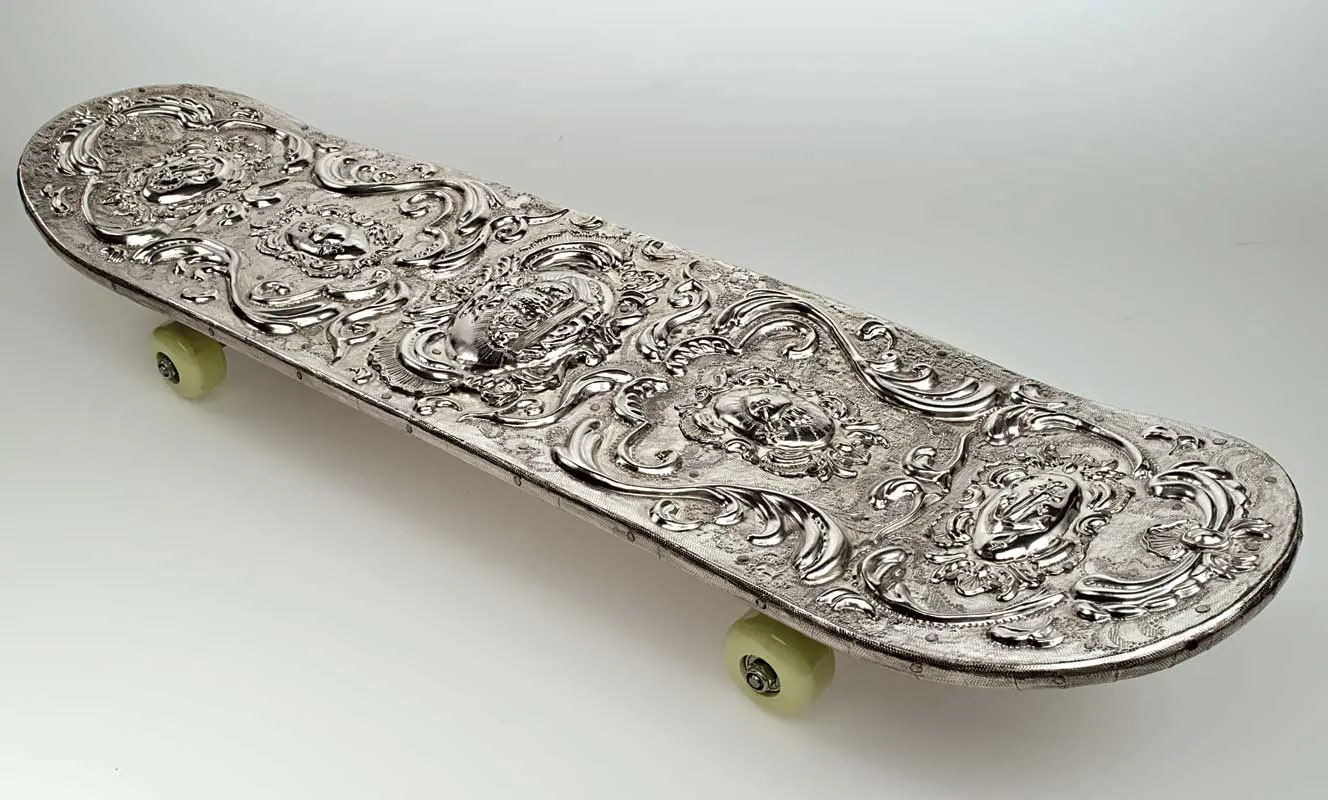
Brazil’s Tunga exhibited a wall installation of tin and bronze wire that evoked a lock of blond hair held in a comb, a dual allusion to the archetypical Caucasian hair color and socio-economic hierarchies. Similarly, Darío Escobar’s silver skateboard covered in baroque shapes referred to Spanish American colonial culture, as did his reworkings of contemporary consumer objects (McDonald’s cups, Nike sports shoes, etc.,) that wove subtle allusions to cultural neo-colonialism.
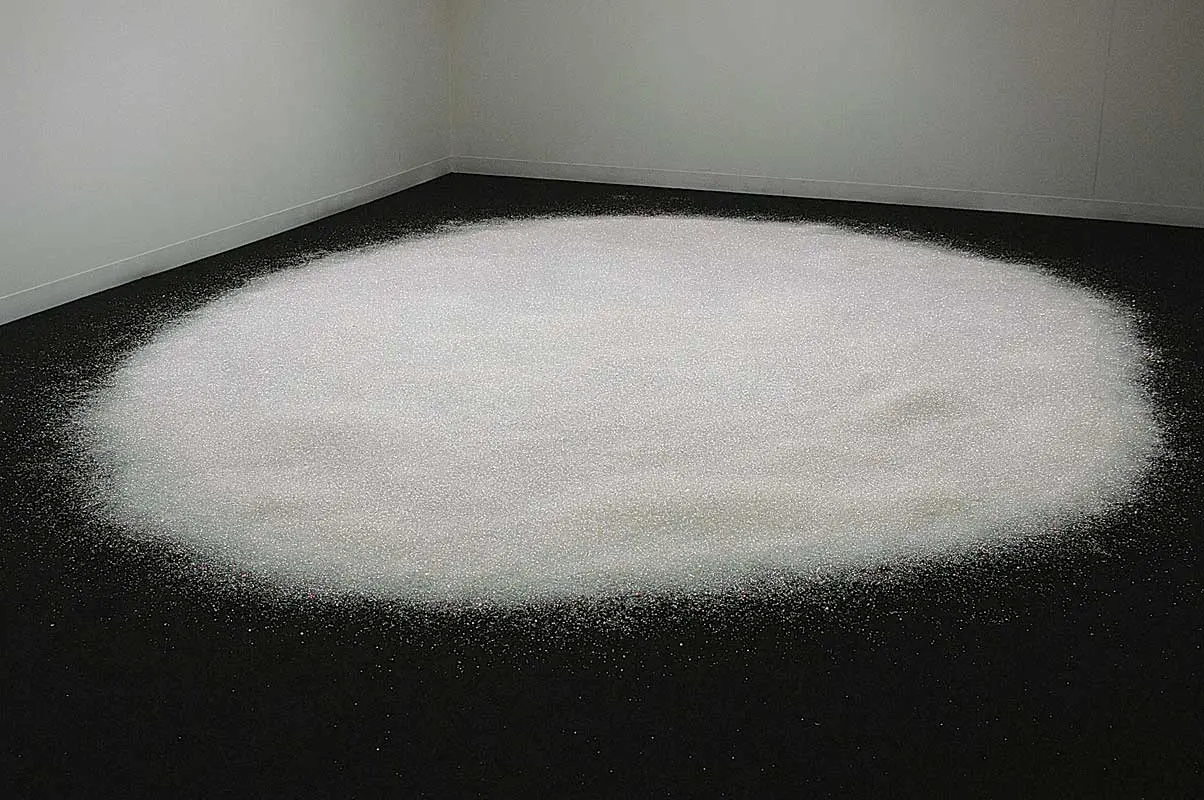
Presented in a space adjacent to the main gallery was a kind of diamond project room, with several works devoted to the gleam and luster of precious stones and metals. A large part of Vik Muniz’s work reveals the paradoxical connections between the eternal and the ephemeral and the sphere of the social and the sphere of the aesthetic. His two works included here were portraits, made of diamonds, of female celebrities produced by the Hollywood star system, who were thus connected to the glamour and value of the stone. These works had a virtual dialogue with One, Wilfredo Prieto’s installation (placed directly across from the Muniz works, on the black carpet covering the floor) of a heap of gleaming crystals that supposedly hid a real diamond.
This prompted one to reflect on the dynamic that rules the “star system” in the art world, in which a new, shining figure can ascend overnight while artists with very solid careers remain on the dark side of the art universe. Inevitably, a project centered on the symbolic value of objects and the different criteria used to measure them will raise this issue: how museums, universities, auction houses, curators, critics, and specialized media construct the cultural and monetary value of a given artist’s work, an auratic and often arbitrary process that is traversed with extra-artistic factors.
RAFAEL LÓPEZ-RAMOS