A War of Signs
Roland Barthes, described as a sociologist, metapsychologist, social critic, historian of ideas, and cultural journalist,3 also wears the hat of a structural semiologist. In Mythologies, one of his less abstruse collections of critical writing, he provides the outlines of a critique that will be useful in general terms for the definition of Raymundo Sesma’s work. For Barthes, the components of a “sign” are Janus-like, a combination of the signifier or plane of expression (form), and the signified or plane of content (meaning).4 According to Barthes, there is nothing more to be said; any comment becomes tautological. Barthes’ argument specifies that however “natural” processes of birth, death, work, laughter, and play may seem, as was done in the photographic exhibition, known as Family of Man, which circulated from New York to Europe in the 1950s,5 they are always perfectly historical. By introducing “historical/sociological” factors, like the notion of inequitable distributions in the world that provoke “injustices,” Barthes exceeds the strict formal structures of Sassurean semiology. How children are born, what mortality rate prevails, and what future is open to a given child, cannot be buried within an eternal lyricism about the process of birth. The same goes for death. Should we celebrate its essentialism? Or should we consider its historical causes; its possible amelioration through the cessation of war; the equitable division of resources to prevent hunger and death by starvation; the liberating policies of equality for women in all aspects of life, including reproductive rights, the development of universal and non-profit medical treatment; the proliferation of psychological intervention for the mentally ill; the abjuration of torture; and so forth?
If the “sign” is always a matter of historical and cultural convention, as Terry Eagleton argues,6 if language is a constructed system of verbal communication open to interpretation, then the same can be said of visual symbolism and the signs it uses to convey historical (and even polemical) meaning. In fact, through processes of estranging (or challenging) the accepted meanings of words and visual signs, they become poetic, cinematic, or theatrical instruments for defamiliarizing social ideologies, and thus calling into question what everyone has taken for granted, what is conceived of as “right,” or “natural.”This was a successful tactic used, for example, in Brechtian theater.
A similar process develops in the installation and video work, the “theater” of Raymundo Sesma. Indeed it is one of the foremost methods widely used in twentieth-century Latin American literature such as the short stories of Jorge Luis Borges or the novels of Gabriel García Márquez, to mention but two examples. Simile, metaphor, irony, satire, fantasy, allegory, and paradox—the so-called “magic realism”—have long been employed by Latin American writers as well as painters and printmakers dedicated to social criticism in order to complement documentary, testimonial, and denunciatory forms of art. In Sesma’s case, the formal language is updated to that of electronic media and other postmodern aesthetic devices such as installation, performance, texts, and body art, all used conceptually. The issues are left open-ended, and subject to varied interpretations. In contrast to a good deal of European and North American modernism and postmodernism, formal experiments are never an end in themselves.
#img
The Resolution of Signs
”For me, both the past and the present are very important. I feel a necessity to use images from the past—which are the property of all humanity—and translate them into the present by fusion...by resignifying them”.
Raymundo Sesma. Extremae Unctionis, 1994-1999. Detail of the video-installation.
Raymundo Sesma7
By dividing his artistic and personal life since 1980 between Milan and Mexico City, Sesma has achieved a rhythm between the past and the present that must be considered central to his formation and to his philosophical and artistic lives. The powerful impact of the past resonates in both countries to a degree that mandates their consideration and incorporation into the intellectual life of the artist.
Sesma was born in 1954 in the state of Chiapas where the descendants of the ancient Maya form a large percentage of the population. Leaving at an early age, his childhood was spent in Puebla, a city known for centuries for its rich colonial heritage, its Talavera-poblana ceramics and tiles, and its Chinese influence in porcelain, inlaid woods, and textiles. Complex, ornate, and highly-colored tile buildings and even gold-trimmed interiors and ritual ornaments are characteristic of Puebla, as is its regional costume, the china poblana, or “Chinese princess.” Politically conservative and devotedly Catholic, Puebla for many decades defied the Mexican constitutional proviso against public religious processions and manifestations. Though Sesma is a progressive personality dedicated to popular causes, there is little doubt that the cultural core of the city left a deep impression.
From the root of his Italian sources, Sesma draws on an updated classicism and the use of the Latin language. He also reflects the constant presence of ancient Roman architecture and sculpture as well as Renaissance visual sources like Leonardo da Vinci’s Last Supper in Milan, which was translated into a contemporary performance work. These permeate the landscape and his consciousness. By the incorporation of languages in his works (Braille, aphorisms, Leonardo’s reversed-writing notebooks) he melds the past with the present, the European with the Mexican.
Catholicism and its forerunners had a host of sacred numbers starting with the trinity, the three Graces, the three fates, the three furies, the three magi, the four evangelists and the four beasts of the apocalypse, the four mirrors of knowledge, the seven arts, the seven sacraments, the seven deadly sins, the seven sorrows of the Virgin Mary, the ten commandments of the Old Testament, the twelve tribes of Israel, the fourteen stations of the Cross, the twenty-four elders. For the Extremae Unctionis, the work presently under consideration, Sesma choose ten personages representing ten victims of violence. Are all ten scenes intended to perpetuate the eternal agony in diverse situations? Must we not also consider the implications of The Last Judgement that extends from sculpted medieval church tympanums to the famous painting in Rome by Michelangelo? The damned and the blessed as concepts are echoed in the whole sacrament of Extreme Unction.
#img
Extremae/Unctionis: The Unction of Extremities
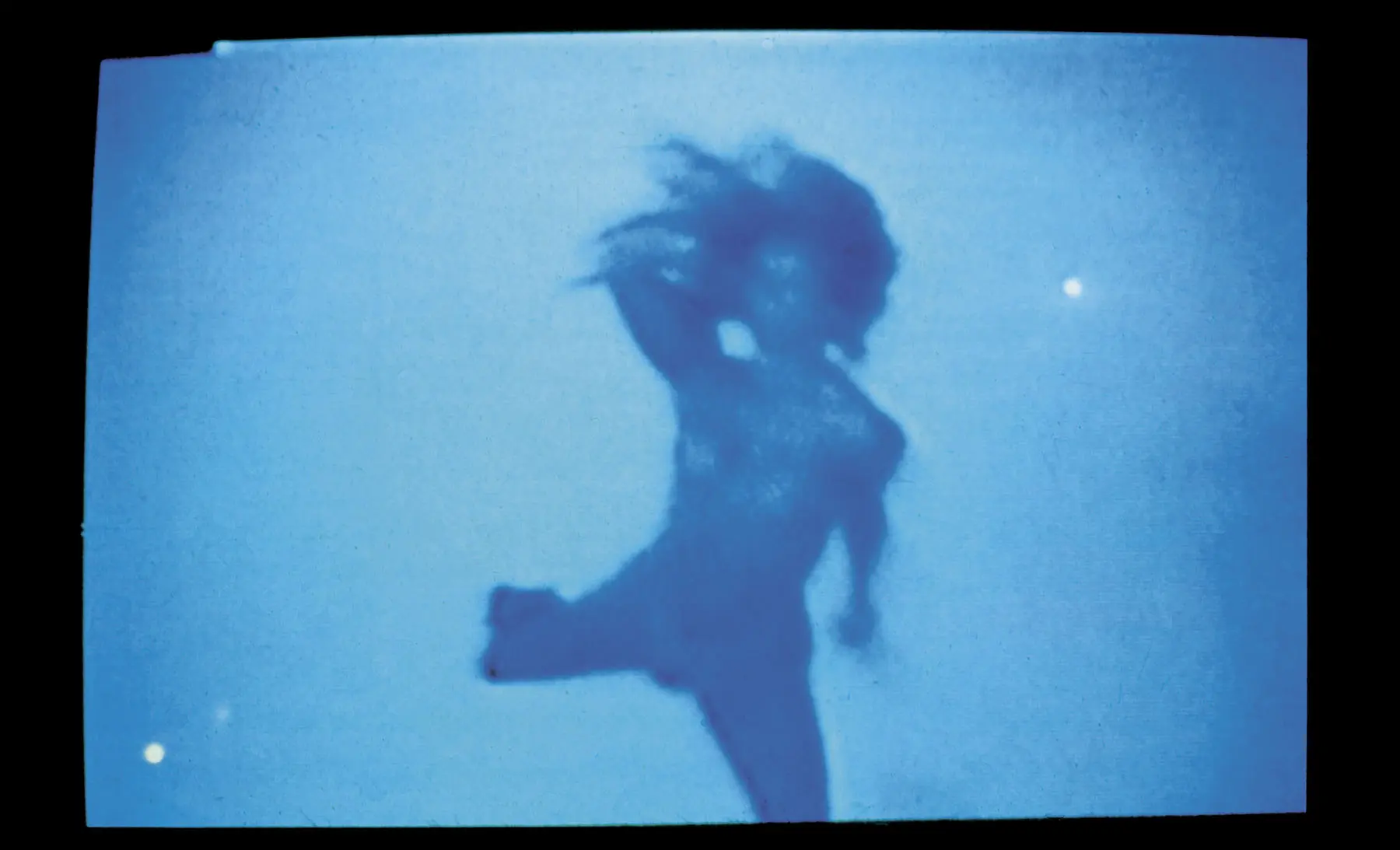
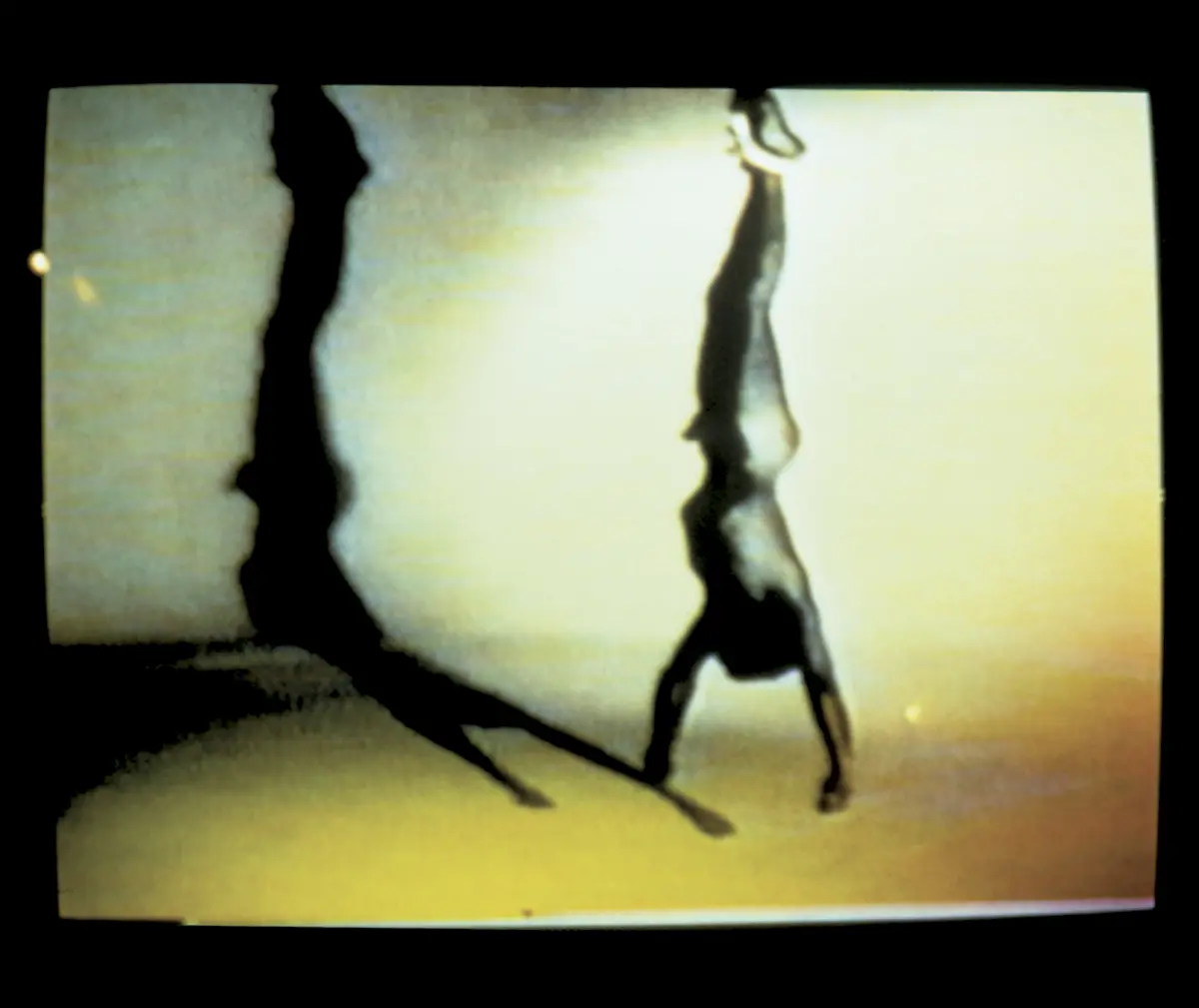
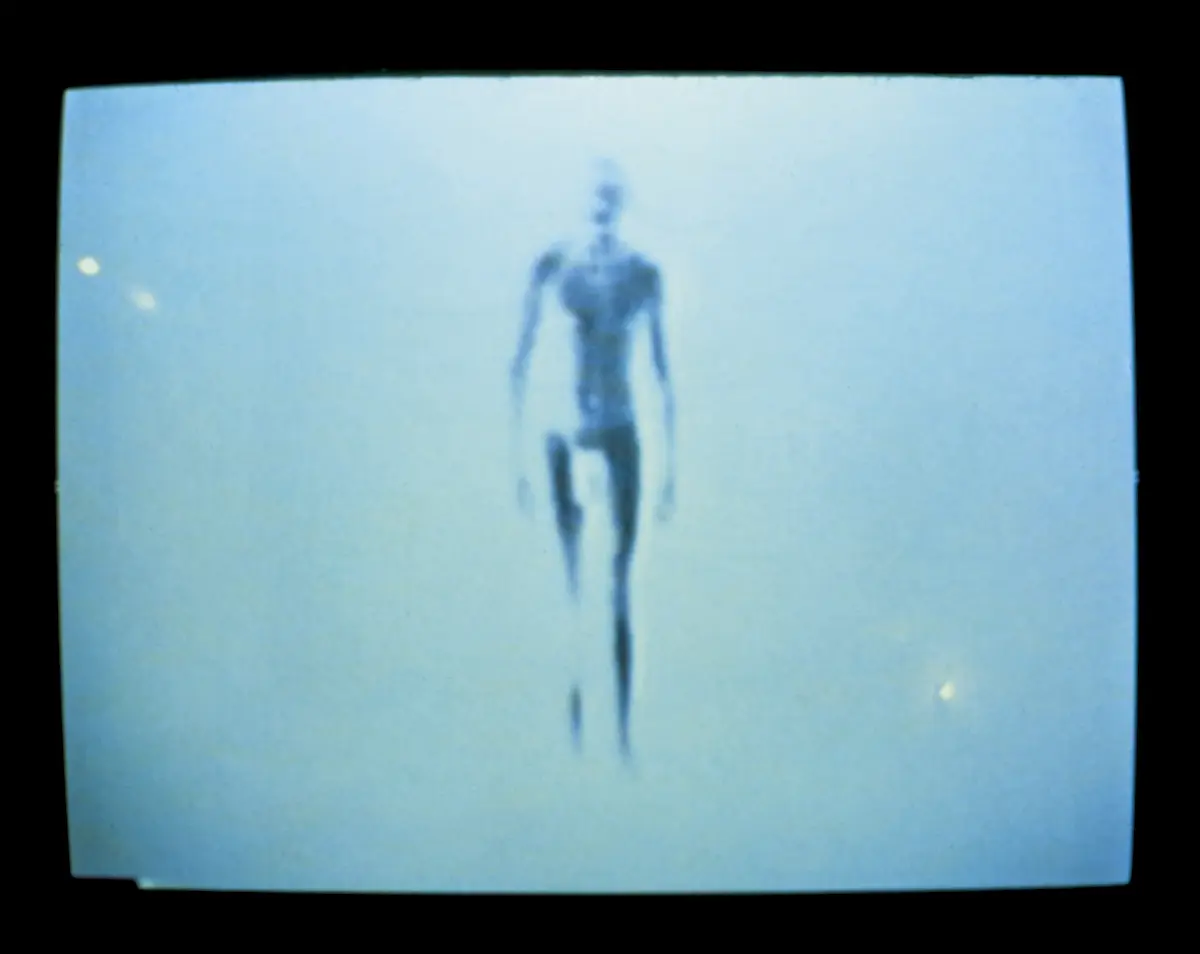
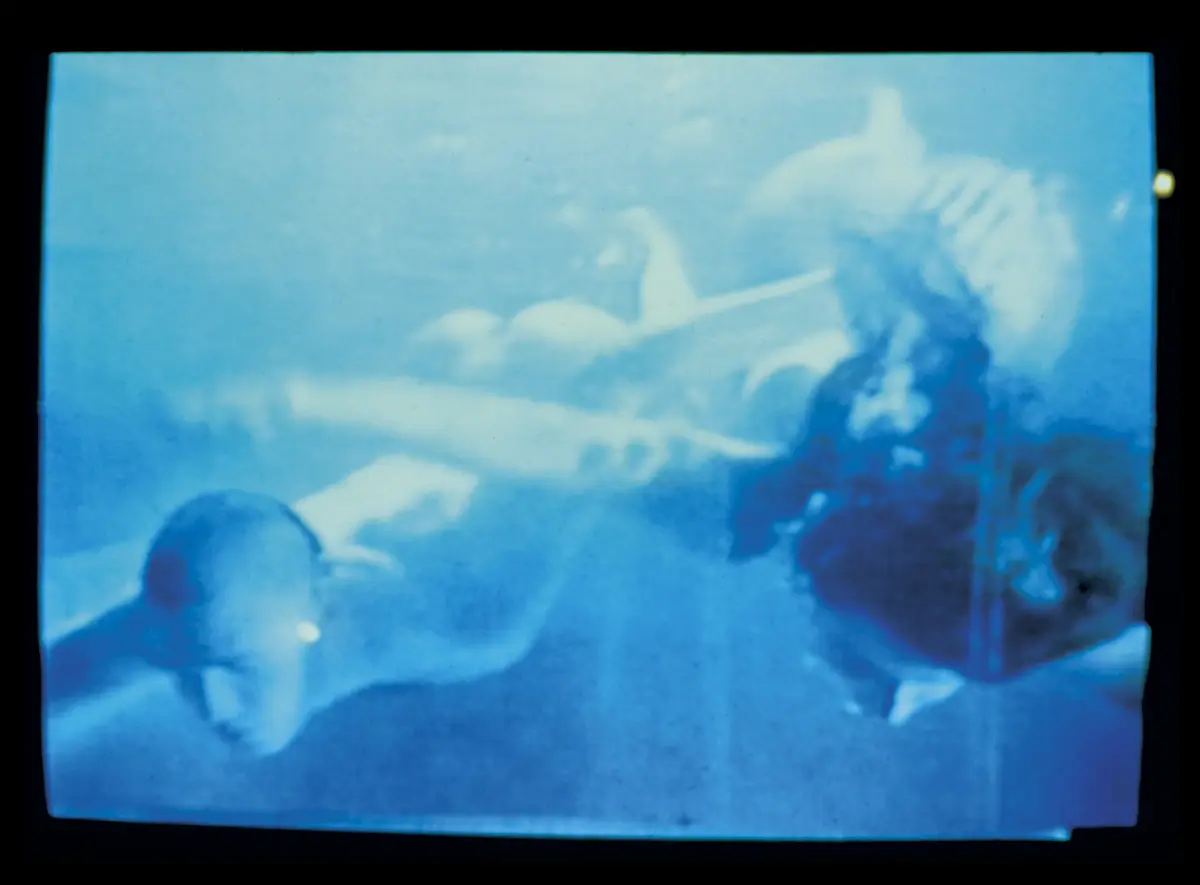
With the Latin title Extremae/Unctionis (which extends the meaning to “by, or through the agency of Extreme Unction”) Sesma explores another aspect of his ongoing preoccupation with death in the twentieth century. Ten kinds of death and dying occupy the visual stage, and each kind undergoes a series of metamorphoses from its inception to its termination. The “frames” of the digitalized video follow the contortions of a single body, with one exception when two bodies are engaged. The bodies are unclothed and represented in slow motion, which gives the impression they are immersed in amniotic fluid like a fetus, which establishes the initial paradox. Every figure is anguished; every figure contorts the body or the face to express this anguish either to escape it or to embrace it. But what does the fusion of birth and death (or dying) suggest? Perhaps precisely that contradiction, a recognition that every birth inevitably leads to a process of dying and death, albeit slowly. As these two aspects of mortality seem to be linked paradoxically, the poetics of the situation suggest metaphysics rather than the physics of the mortal. We are faced with the need for speculative contemplation.
As a painter, Sesma during the digitalizing process, not only slowed the figures so they seemed to float or swim in their prescribed space, but enveloped each one in an environment of subtle color configurations or in tones of color-derived grays. As they move, they not only set up vibrations of color or tone, but the figures themselves separate into subdivisions that link and unlink the body and sometimes its shadow as parts of complex flat patterns. Many of the forms remain fixed in central space, while others float within and without the frame, creating fragments of abstracted shapes. Yet all of these aesthetic devices subliminally add to the philosophical and historical meditation that is central to the meaning.
To these complexities is added sound: the ongoing recital by a male voice that itself splinters into echoes and reverberations of the sacrament of Extreme Unction. With this addition, it becomes absolutely necessary to focus more closely on each of the ten figures—to determine what their movements suggest, what symbolism, and what historical forces, knowingly or not, the artist has embedded in this work.
#img
The Anatomy of Violence: Body and Spirit
Raymundo Sesma. Extremae Unctionis, 1994-1999. Detail of the video-installation.
”The body is a highly contested site. Its flesh is both the recipient and the source of desire, lust, and hatred. The body is our common bond, yet it separates us in its public display of identity, race, and gender”.
Daina Augaitis8
Even before the emergence of “body art” in the 1960s—an aesthetic form in which artists used their own bodies as sculptural material—there was an ongoing debate about the difference between the naked and the nude first invoked by Kenneth Clark in his book of the same name.9
If the naked was defined as the body stripped of its clothing, therefore exposed and vulnerable, the nude in Western art was clothed in its own skin tempered by artistic conventions so as not to appear to be naked. The poses, and the activities, were acceptable in public spaces as “art,” and offended none trained in viewing nudes. It is also argued that the emergence of the “naked” in body art was prompted by the hippie attitudes of the sixties, the precepts of the feminist movement, and the appearance of the AIDS (SIDA) epidemic, in which vulnerability became part of a political agenda. For the hippies and for feminists the unclothed body was a signal pointing to the liberation of the body from patriarchal and authoritarian constraints and regulations.
Sesma’s proposition is tangential to body art in that he never uses his own body, and the naked versus nude proposition depends on his subject matter. In the case of Extremae Unctionis, the figures are definitively naked. Vulnerability, objectification, and victimization require the signification of nakedness, not nudity. Removing their clothes does not idealize them, it exposes them. One image focuses on a naked male figure hit by a bullet. As he doubles over, a white profile of his body (the soul? the spirit?) slowly detaches itself, falls to the ground, and disappears. The corporal body develops a shadow that becomes more pronounced as the figure repeatedly clasps his chest, pulls himself erect, and doubles over again. Violence via a single bullet, or the repeated shots of a firing squad, is suggested.
A mutilated woman strangling to death is one of the images. Displayed is the figure stretched out on a cloth that wrinkles beneath her as she moves. She gasps, spasmodically turns her head and arms, bends her legs repeatedly, cries, pleads, screams soundlessly, and extends her arms in symmetrical patterns. It becomes apparent that she lacks one leg from the knee down, that her mobility (physical or psychological) is impaired, that the anxiety and anguish are so pronounced as to impede her breathing—her ability to function—and she is suffocating in despair.
#img
Another figure presents a young man tied at the ankles, suspended upside down, and turning slowly in his torment. There is a recollection of those Christian martyrs who were crucified upside down, seeming by this inversion to suffer even more terribly than the traditional method of crucifixion, itself a barbarous form of execution. Or the echo of a racist lynching like those of black men in the United States during the early twentieth century who were not only hanged but castrated, burned, and tormented. An even more contemporary model that suggests itself is the “dirty wars” against populations in Central and South America from the sixties to the eighties when “inquisitions” with their tortures were revived, prisons were full, death squads eliminated persons by the most brutal means, and the word “disappeared” was changed from a verb to a noun: Los desaparecidos.
A short and stocky male figure is next seen lighting a match that presently flares into a flaming fire that envelops his body. This strongly evokes those Buddhist monks who voluntarily and publicly offered up their bodies in flames to protest the excesses of the Vietnam War. The several priests who carried forth these actions illustrated by their self-sacrifice (suicide) both a socio-religious and moral position, and a reminder of the dreadful new weapon —napalm— used on Vietnamese villagers. The most significant memory of this weapon was its tendency to stick to living bodies, particularly those of children, horribly ravished by the flames. A more remote, but related historical memory —the most terrible of the excesses that marked the twentieth century was that of the atomic devastation that burned two cities and thousands of their inhabitants in Japan in 1945, presumably to end a war that was already over, and to experiment with the deadliest weapon of mass destruction ever invented. An obscure type of suicide is the deliberate self-drowning of a man and a woman whose flesh-toned bodies float through the water as bubbles ascend slowly from their submerged anatomies.
In the face of these agonies, a single figure, restricted to the head and shoulders of an elderly blind woman praying distraughtly and fervently, is a Western equivalent of the Buddhist monk. Prohibited by strong Catholic injunctions from taking her own life in despair or protest, she exhausts her energy by appealing to a higher power for relief or redress. The ninth personage is a woman driven to madness by her struggle to offset constant obesity due to overeating, while the final figure is that of an adolescent boy constantly walking forward very slowly without arriving at any given location. The figure is highlighted in such a way that it appears emaciated, drained of all energy. On one hand, it could signify all children suffering from malnutrition; on the other, it resembles the powerfully existential bronze men by Giacometti in the 1940s, like Walking Quickly Under the Rain.
Finally, the sacrament of Extreme Unction is juxtaposed somewhat ironically against this panorama through the voice not only repeating the words in Latin but echoing itself in multiplied voice-overs as a continuous pattern of sound paralleling the actions. Is its purpose redeeming? Can the Extreme Unction even be applied to the various human situations it accompanies? Does it become a universalizing experience for the motley collection of problems that have led to such terminal and deadly results? Is it to be considered a panacea or an ahistorical essentializing of human anguish?
In order to more fully comprehend Sesma, it is perhaps cogent to return to the paradigm established by Roland Barthes at the opening of this essay: the notion of universality versus historicity. Like many intellectuals influenced by the aesthetic and conceptual history of the European artistic avant-garde, Sesma subscribes to “universalism.” Without History, says Barthes, the given universals of birth and death become tautological. Another example is the madness of a woman due to her perception of obesity. Prescribed attitudes in our coercive consumer-oriented society mandate youthfulness and slimness at whatever cost in order for a woman to appear “perfect.” Limited largely to young white middle-class women in industrially developed societies, identity and self-worth are subject to physical appearance ordained by the fashion, film, and cosmetic industries. Women thus develop self-destructive psychological/physical illnesses, and fixations such as bulimia and anorexia in an attempt to conform to a physical “norm.” Beyond that, women appear to be the only reported victims of the obesity paradigm. Men, by contrast, focus on hair loss, inadequate height, flabby musculature, impotence, etc. The same might be extended to the woman who is disabled by the lack of a limb, or symbolically, by any lack that society considers irremediable.
Raymundo Sesma. Extremae Unctionis, 1994-1999. Detail of the video-installation.
Among the male figures, death by bullet wound, by crucifixion and torture, by a young boy who can barely navigate himself through the world, must also be seen historically. Every century, every millennium in human history, has applied imperatives to human practices as well as to human existences depending on its power structures and social means of control. The highly industrialized and highly developed technocracies of the twentieth century have simply increased the quotients of death and destruction exponentially in the name of profitability. In this sense, we must see Raymundo Sesma’s “theaters of destruction” as firmly rooted not only in his own century but even in his own segment of that century. The final ironic note to be considered is that of the exercise of the sacramental Extreme Unction itself. Leaving its language in the original Latin (despite the Catholic Church’s decision some thirty years ago to abandon the unintelligibility of its religious services by mandating their presentations in living languages), Sesma has multiplied its audibility through repeated voice-overs, while blurring whatever remains of the sacrament’s communicability. What has been considered eternal, has become universal, which has become historical. The anatomy of violence reconstructed in Extremae Unctionis becomes a portrait of our contemporary world looking backward over the twentieth century. Immortality, as suggested by the title of this work, has been turned back on itself to reassert the unfailing mortality of the human species, redeemed by its utopian—and therefore spiritual—actions of redemption through resistance. In Extremae Unctionis, that spiritual action is symbolized by the Buddhist monk, a historical resistance to a collective action.
*All images illustrating this article are photos by Roberto Edwards.
NOTES
1. Roland Barthes, Elements of Semiology cited in Ursula Meyer, Conceptual Art, New York: E.P. Dutton & Co., p. vii.
2. Michael Crane, American Renegades, exhibition catalog, CU Art Galleries, University of Colorado at Boulder, 1992.
3. Susan Sontag, “Preface” to Roland Barthes, Writing Degree Zero and Elements of Sociology, Boston: Beacon Press, 1967, p. xi. I accept Barthes’ semiology to the extent that he deviates from its strict structural interpretations by reference to politics, sociology, and history. I have similar reservations about poststructuralism when it concludes that the pluralities of deconstruction can eventually lead to a total lack of meaning. The structural is authoritarian; the latter is solipsistic.
4. Barthes, Ibid., p. 39.
5. The Family of Man, curated by Edward Steichen, New York: Museum of Modern Art, 1955.
6. Terry Eagleton, Literary Theory: An Introduction, Minneapolis: University of Minnesota Press, 1983, p. 135.
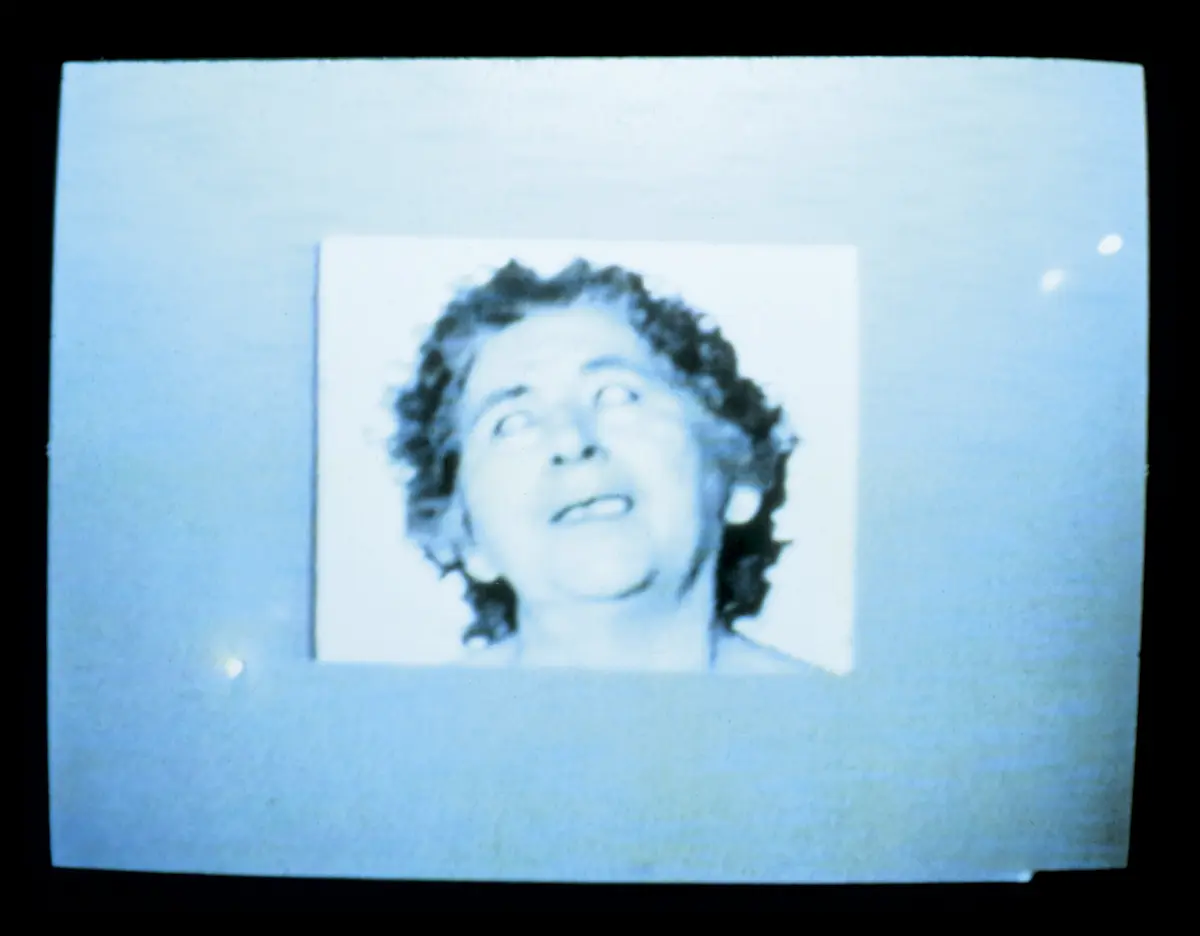
Raymundo Sesma. Extremae Unctionis, 1994-1999. Detail of the video-installation.
7. Interview with the author in Santiago de Chile, November 27, 1994.
8. Cited in William A. Ewing, The Body: Photographs of the Human Form, San Francisco: Chronicle Books, 1994, p. 324.
9. Kenneth Clark, The Nude: A Study in Ideal Form, Garden City, New York: Doubleday & Co., 1959. See Chapter I “The Naked and the Nude.” For a more contemporary comment on the same subject see John Berger’s Ways of Seeing, New York: The Viking Press, 1973, Chapter 3.
SHIFRA GOLDMAN
Art Historian and researcher for the Latin American Center and for the Art History Department of the University of California, Los Angeles.