Exhibition·June 11, 2026·Paris, France
Leandro Erlich Retrospective
Grand Palais
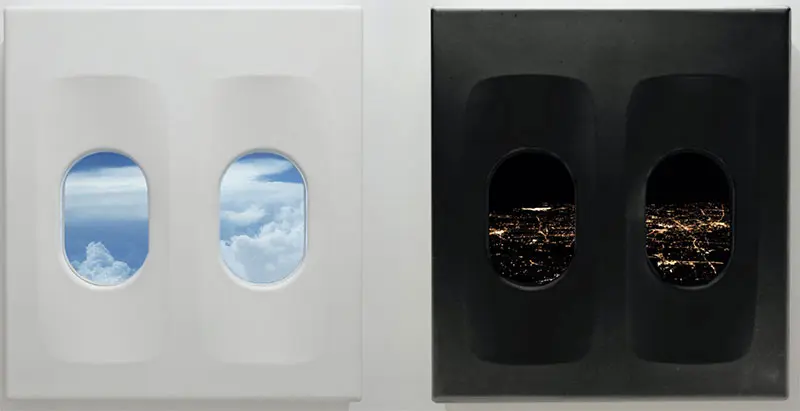
Leandro Erlich. Right: El Avión, 2011. 39.4 × 5.5 × 43.3 in. Left: Night Flight, 2015. 39.4 × 5.5 × 43.3 in. © Leandro Erlich
The Grand Palais presents the most important retrospective of Leandro Erlich in Europe until September 9.
“Reality and perception are inseparable for me. I find it interesting that much of what we call reality is actually something constructed by society,” says Erlich. The exhibition brings together iconic works and new creations that explore the boundaries between perception and reality through everyday architecture, mirrors, reflections, and immersive installations that transform the familiar into extraordinary experiences.
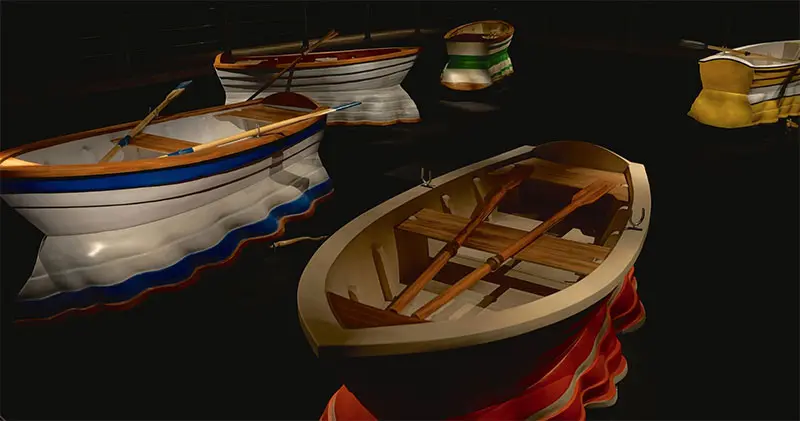
It features 14 monumental works that combine installation, sculpture, and architecture, including pieces like 'Port of Reflections.' In a dark room, they appear to face at least six floating boats on the water, although there is no water and only three boats in that space. Other works, such as "The Cloud" and "The View," in which the viewer seems to look out a window to observe neighbors in their daily lives.
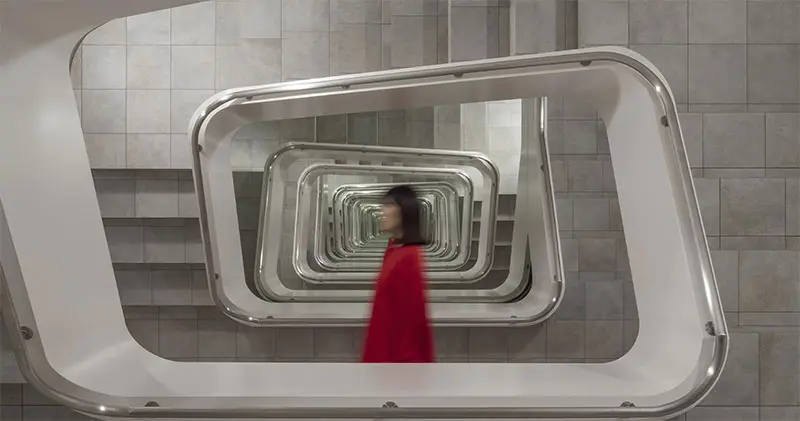
On the upper floor, Erlich's creative trajectory from 1990 to 2026 is traced through 41 models and photographs of his most significant urban installations, such as "Le Cabinet du Psy" and "Swimming Pool." The exhibition even showcases projects that have not yet been realized. In 'Elevator Maze,' the artist presents several elevators with open doors, but some mirrors inside are actually empty frames. Additionally, works exploring mirrors, reflection, and perception as tools for constructing reality are on display, including "Infinite Staircase" and "Bâtiment" from 2004, created for Paris's Nuit Blanche, where visitors can walk across the facade of a building. On the other hand, "Changing Rooms" is a mirror maze inviting exploration, and 'Window and Ladder" features a metal ladder ending in a suspended window.
For over thirty years, Erlich has developed an artistic practice that invites the imagining of new realities and the expansion of 'the sense of the possible.' His works demand active participation from the audience, who become co-authors of situations that challenge logic, gravity, and our certainties about the world. As Duchamp stated, 'it is the viewers who make the works'; in Erlich's case, the visitors' actions ultimately complete the works.
French curator Fabrice Bousteau comments that Erlich's works generate 'an aesthetics of attention, action, and the absolute inversion of what we believe to be real,' regardless of our culture, origin, or age. Far from passive contemplation, his installations offer collective experiences where the audience lives through strangeness, wonder, and the possibility of inhabiting the impossible.
Erlich creates unique theatrical devices. Influenced since his adolescence by filmmakers like Hitchcock, Coppola, Antonioni, Visconti, Chaplin, and Fritz Lang, he develops a body of work in which each visitor participates in a cinematic, collective experience in which the impossible seems to become real. His installations act as open stages, where each action generates new narratives and every spectator is a protagonist.
The exhibition also reveals political and social aspects of his work. From Proyecto Obelisco in La Boca (1994), where he imagined a replica of the iconic monument in a working-class neighborhood of Buenos Aires, to interventions like The Democracy of the Symbol, Maison Fond, and Order of Importance, Erlich reflects on architecture, public space, migration, the climate crisis, and current urban changes.
Born in Argentina in 1973, Leandro Erlich currently lives and works between Paris, Buenos Aires, and Montevideo.
“Reality and perception are inseparable for me. I find it interesting that much of what we call reality is actually something constructed by society,” says Erlich. The exhibition brings together iconic works and new creations that explore the boundaries between perception and reality through everyday architecture, mirrors, reflections, and immersive installations that transform the familiar into extraordinary experiences.
It features 14 monumental works that combine installation, sculpture, and architecture, including pieces like 'Port of Reflections.' In a dark room, they appear to face at least six floating boats on the water, although there is no water and only three boats in that space. Other works, such as "The Cloud" and "The View," in which the viewer seems to look out a window to observe neighbors in their daily lives.
On the upper floor, Erlich's creative trajectory from 1990 to 2026 is traced through 41 models and photographs of his most significant urban installations, such as "Le Cabinet du Psy" and "Swimming Pool." The exhibition even showcases projects that have not yet been realized. In 'Elevator Maze,' the artist presents several elevators with open doors, but some mirrors inside are actually empty frames. Additionally, works exploring mirrors, reflection, and perception as tools for constructing reality are on display, including "Infinite Staircase" and "Bâtiment" from 2004, created for Paris's Nuit Blanche, where visitors can walk across the facade of a building. On the other hand, "Changing Rooms" is a mirror maze inviting exploration, and 'Window and Ladder" features a metal ladder ending in a suspended window.
For over thirty years, Erlich has developed an artistic practice that invites the imagining of new realities and the expansion of 'the sense of the possible.' His works demand active participation from the audience, who become co-authors of situations that challenge logic, gravity, and our certainties about the world. As Duchamp stated, 'it is the viewers who make the works'; in Erlich's case, the visitors' actions ultimately complete the works.
French curator Fabrice Bousteau comments that Erlich's works generate 'an aesthetics of attention, action, and the absolute inversion of what we believe to be real,' regardless of our culture, origin, or age. Far from passive contemplation, his installations offer collective experiences where the audience lives through strangeness, wonder, and the possibility of inhabiting the impossible.
Erlich creates unique theatrical devices. Influenced since his adolescence by filmmakers like Hitchcock, Coppola, Antonioni, Visconti, Chaplin, and Fritz Lang, he develops a body of work in which each visitor participates in a cinematic, collective experience in which the impossible seems to become real. His installations act as open stages, where each action generates new narratives and every spectator is a protagonist.
The exhibition also reveals political and social aspects of his work. From Proyecto Obelisco in La Boca (1994), where he imagined a replica of the iconic monument in a working-class neighborhood of Buenos Aires, to interventions like The Democracy of the Symbol, Maison Fond, and Order of Importance, Erlich reflects on architecture, public space, migration, the climate crisis, and current urban changes.
Born in Argentina in 1973, Leandro Erlich currently lives and works between Paris, Buenos Aires, and Montevideo.
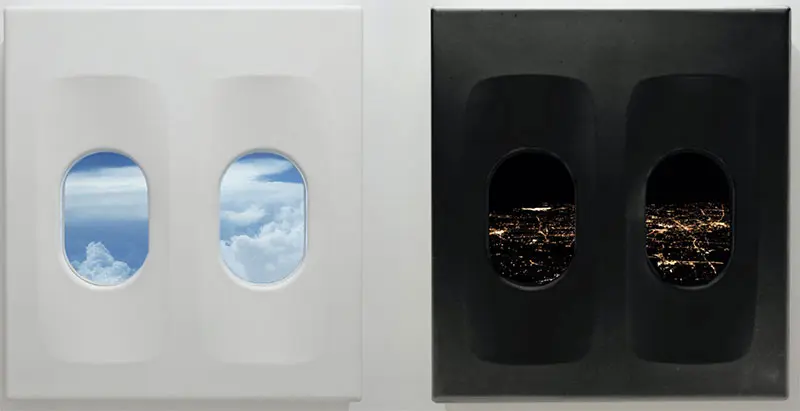
Leandro Erlich. Right: El Avión, 2011. 39.4 × 5.5 × 43.3 in. Left: Night Flight, 2015. 39.4 × 5.5 × 43.3 in. © Leandro Erlich
Sumiask the archive
Want to explore more about Leandro Erlich Retrospective?
Access 50 years of the artnexus archive through Sumi, the AI assistant.
Gallery