In her recent exhibition at Museo Tamayo, Valeska Soares (Belo Horizonte, Brazil, 1957; Soares currently lives and works in New York) returned to two of the most significant themes in her recent production: gardens and mirrors. Soares was invited to inaugurate the Intersticios program of site-specific works in the forest that surrounds the museum, and attentive to the demands of space and situation, she chose an area that, as she put it, “wanted this piece."1 The artist used reflective acrylic sheets to build a “lake” nearly forty meters in diameter. Her site was a clearing in the woods from which a path ran to one of the museum’s glass doors —which in turn reflected the architectural space of the building’s façade and formed the entrance to the work. During the rainy season, a giant puddle forms in this clearing, and this becomes Soares’s guiding concept. The lake’s amoeba-like shape was dictated by the outline defined by the trees themselves. It creates a new element in the landscape which to a large degree adds a touch of artificiality to the found situation, and as part of it creates this new and temporary piece.
A more dramatic element based on different specificity—in this case, Mexican culture—is added to the “ambient” character of this project. A small glass arbor was built in one of the lake’s extremes, and inside this arbor, a large cake was hidden; the cake had the measurements and characteristics of a bed. The gigantic dessert was specially ordered by the artist from one of Mexico City’s most traditional pastry shops, Pastelería Ideal; its entire preparation and baking were supervised by Soares, who also intends to publish a series of works using her record of the process. The use of such iconography refers to cultural celebrations and to Mexican women’s initiation rituals, such as the quinceañera or the traditional wedding. The bed was hyper-realistically rendered, with sugar capitonées, pillows, and borders. Its presence within the glass bubble contributed a disturbing element to the piece introducing a bed on which no one can lie, and a bed cake that no one can eat—and would only be seen through the glass. The work’s ephemeral profile denotes, in that fleeting consciousness, a hybrid form that borrows material and spiritual elements from both objects in order to fuse them into a third one, without a clearly defined material status. Perhaps its fate is to become food for the garden’s ants, in the manner of Sin título (Preserva), a 1991 sculpture by Soares, made with red roses wrapped in cotton that with time rotted away and was eaten by insects. We see it not only as a human construction invented for the purpose of containing nature and representing the landscape but also as an autonomous microcosm, its relationships of scale altered to accommodate insects. This disarticulation brings us to the concept of antropofugismo.2
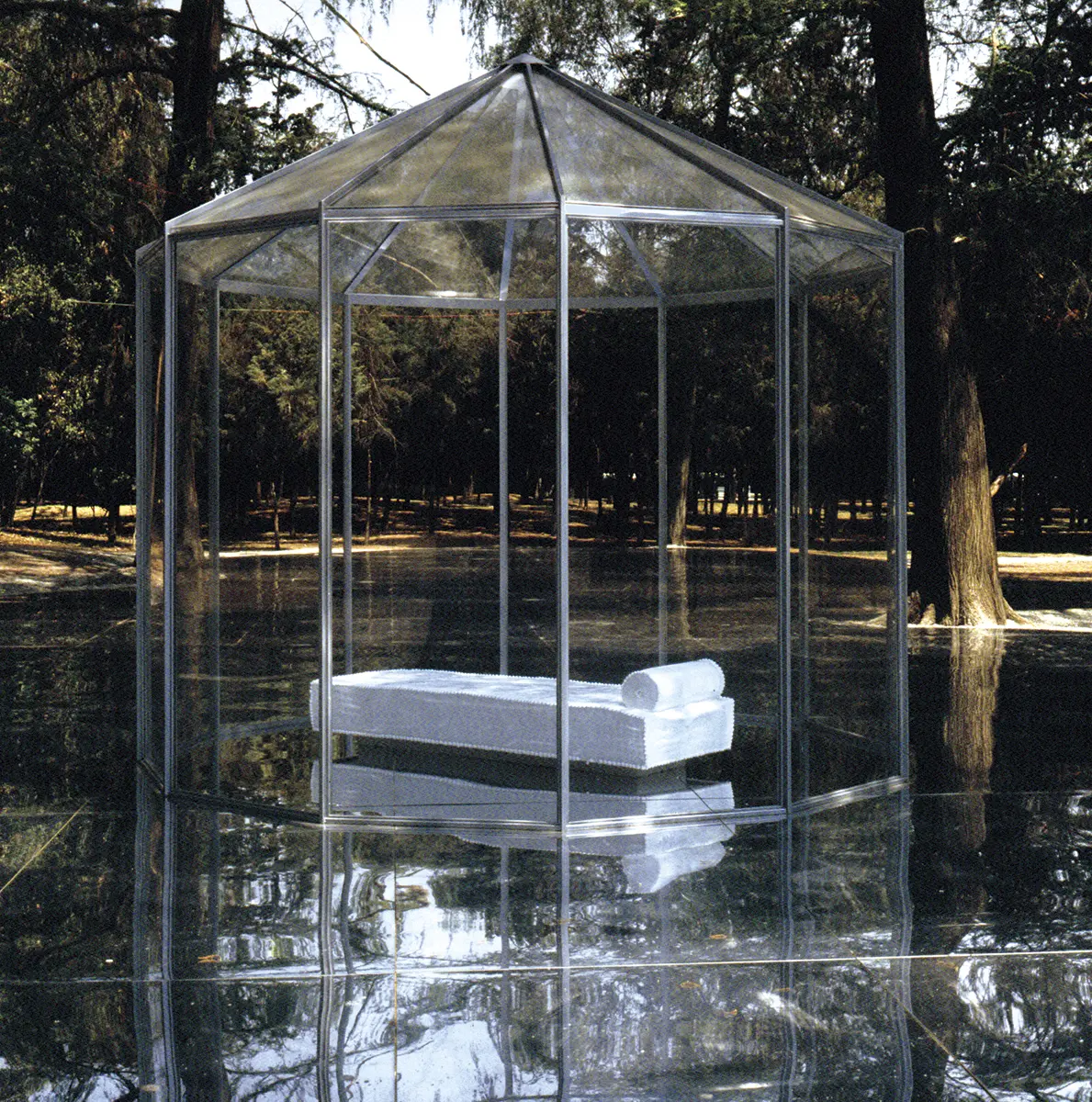
Titled Pure Theatre, in reference to a song by the popular Cuban singer La Lupe, Soares’s installation assumes its dramatic character as a psychological experience for the viewer. Its element of fiction, its dream-like, clearly fantastic quality, nevertheless possesses undeniably realistic connotations. The viewer, transported initially towards the dream-like structure evoked by the repertoire of images, engages in a real experience with the apparatus installed around the museum. The reflecting surface becomes a large field of narcissistic possibilities for the viewer, who is able to walk barefoot on the piece and can find novel ways to interact with it. Its nature as a museum object brings also to mind the historical use of those spaces in art. As the critic Cuauhtémoc Medina has noted in his review of this show, “Is it impossible to teach the public that spaces are not doomed to serve as a platform for hypocritical civics lectures or for the pseudo-modernist phallocentrism of the sculptors’ guild?"3
Mirrors, optical apparatuses that are also symbols of human vanity, enter Valeska Soares’s art as part of different strategies and they represent a variety of roles, always while working as allies (be it material or conceptual) in the creation of fiction that correspond to the work’s concept. These are fragmentary, nonlinear fictional narratives. As in the Mexican lake, the interplay of reality and fiction (between what the viewer sees and experiences and what supports these two actions, be it fiction, desire, or thought) is central to the functioning of any Soares piece. Last year, for her show at the Fortes Villaça gallery in São Paulo, Soares created an installation based on a story by Italo Calvino, “Cities and Desires 5,” from Invisible Cities.4 Zobeide, the city described in the story, is the materialization of a dream shared by many men: a woman runs through the city, they pursue her, and she escapes. Incapable of catching up with her in the dream, the men build a city identical to the one in the dream, but with walls to enclose her. However, “none of them, either asleep or awake, saw the woman again."5
Soares’s 2002 installation Détour may be considered a translation of the same original short story into another language, as for example, the notion of inter-semiotic translation used in literary criticism. The artist turned the hall into a semi-circular mirror so that the viewer’s image was repeated at the intersection of the different angles, and the viewer confronted the photographic image in a sequence of arches. The audio was created with five tapes that reproduce simultaneous versions of the same story by different storytellers, who were invited to tell the story of Zobeide from memory. The work articulated presence and absence, dream and reality, memory and fact, and created “a cycle of desire and forgetting.”6 Finally, Soares finds in Calvino’s narrative an opposition between attraction and aversion, also marks of her own narratives: “Recent arrivals couldn’t understand what attracted people to Zobeide, an ugly city, a lie."7 Her own work Sin título (From Strangelove) was a 1996 installation created for the Lumeiar Sculpture Garden, which comprised sixteen birdbaths in glass and lead hung from the ceiling and filled with wine and poison.
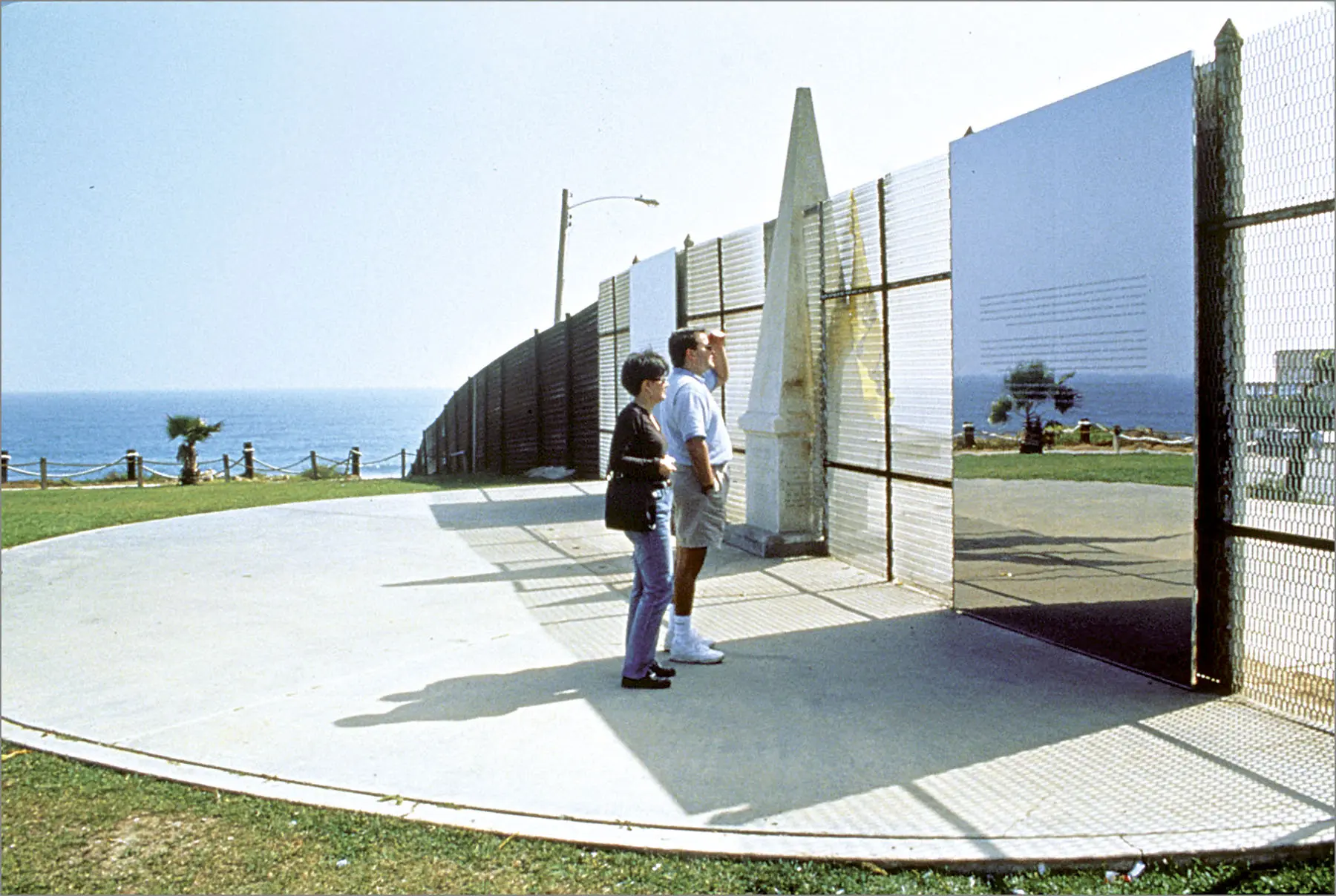
The use of mirrors and the appropriation of Calvino’s narrative universe were already a part of the project Soares created for InSite 2000, Picturing Paradise (2000). The artist adapted an original project to a site on the Mexican–U.S. border where a circular area extends the border into both territories. At each side of the border, she erected large sheets of reflecting stainless steel. These “mirrors” widened our view of one side, creating the impression that both countries overlap, and thus through illusion, her work expanded the border. Moving closer to the mirror, the viewer found his or her own image and a quote from Calvino, which reinforced the impossible transposition of signals. Soares has said, “And of course, what you are actually seeing is the same side that you are on, reflected from another space that you cannot cross into."8 In that project, the reference is to Valdrada, another of Calvino’s Invisible Cities built on a lake that both reflects it and acts as its double. Soares uses this text to comment on the relationship between San Diego and Tijuana. “Sometimes the mirror increases the value of things. Sometimes, it cancels it. . . The two Valdradas live the one for the other, looking permanently into each other’s eyes, but without love."9 In what almost constitutes a critical comment on the piece, the U.S. Border Patrol placed a disclaimer next to the Calvino quotation, stating that it did not reflect the views or opinions of the U.S. security forces. Fiction and truth.
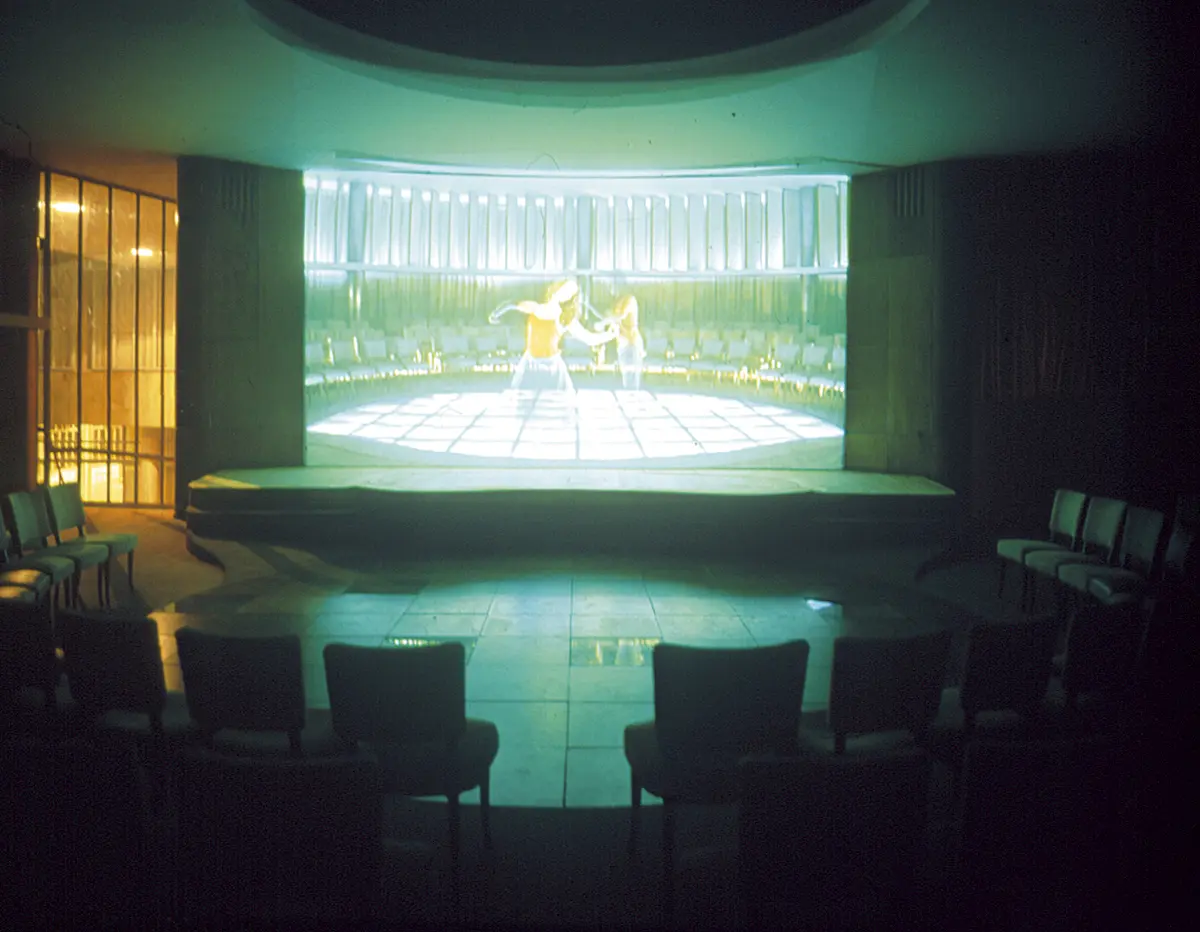
Tonight (2002), Soares’s first video installation was commissioned by the Pampulha Museum of Art for a retrospective of the artist’s work, and similarly employed a strategy with mirrors. Working with the history of the museum building itself, originally designed in the 1940s by Oscar Niemeyer for the Pampulha Casino, Soares recorded and exhibited her video in the old boîte area, nowadays devoted to artists’ projects. The video was shot from the balcony, looking over the dance floor. There, a number of dancers, selected from Belo Horizonte’s traditional night clubs, danced alone to Burt Bacharach’s rendition of Tonight. Soares’s digital edition superimposed different groups, and her camera was always in the same position. This created fortuitous encounters between somewhat blurry images of the solitary dancers, whose ghost-like quality echoed the hall’s strong nostalgic atmosphere. A large projection surface was created in the balcony so that the real space seemed to be doubled or reflected; the video, along with the music played in a loop. The dance troupe used in this work was formed by six men and two women, who alternated in the same role (in homage to Luis Buñuel’s 1977 film, Cet Obscur Objet du Désir). In this appropriation, a single woman is “shared” by several partners, awakening profound chimerical feelings and arousing sensations such as desire, projection, and inadequacy.10
Like mirrors, gardens are a frequent presence in Valeska Soares’s work, and they provide the opportunity for a complex interplay of opposites based on the classic dichotomy of nature vs. culture. According to Soares, “It seems there was always an interest in dealing with not necessarily gardens, but with ideal spaces that referred back to how we construct ideas of paradise ... Most spaces we experience as “natural” have been constructed as sculptures, but on a larger scale.”11
Vanishing Point (1998), a large sculpture that originated from a series of other works, is perhaps the most complex of Soares’s works in this sense. It comprises a group of stainless steel tanks made in the shape of elements from classic European gardens and laid out like mazes. Each tank’s interior is filled with an aromatic substance (a solution of women’s perfume) and the smell permeates the entire exhibition. The initially pleasurable sensation, however, quickly turns into repugnance and nausea: pleasure and pain. The classic format of French or Italian gardens is transformed into a mere container for the aroma of the plants that could populate it: memory and forgetting. The solution in the tanks slowly evaporates, interacting with space, and impregnating it: presence and absence. After being on view for one day at the Pampulha Museum, the solution also became a cemetery for insects that were attracted by the scent and the reflection: seduction and intoxication. The physical space at Pampulha added new elements to the work and established an erotic relationship with Niemeyer’s sensual architecture. Soares’s stainless steel echoed the aluminum column located at the center of the maze, her acute angles contrasted with the building’s curves, and her surfaces reflected themselves as a large wall of mirrors.
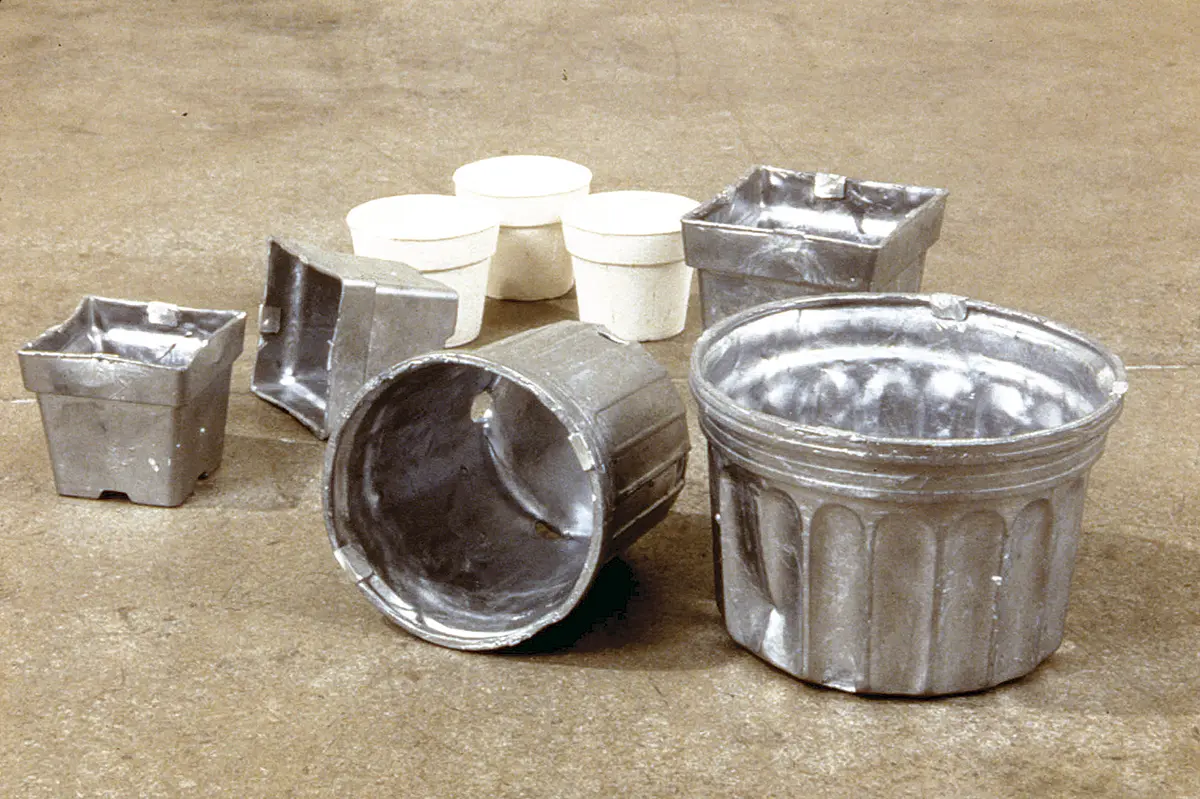
Untitled (From Vanishing Point), presented at Christopher Grimes Gallery in Santa Monica, California, in 1998, is another complex installation that works on the theme of the garden. Here, however, Soares also explores the idea of the lost paradise. After moving to New York City, the artist had replicas of the 123 pots and plates that used to be in her personal garden, made in wax, porcelain, and aluminum. The pieces were placed on the floor, in groups, and they alluded to the loss of the garden in which the originals were located. The distinction between nature and culture as it applies to the vocabulary of art was also at work here. As Adriano Pedrosa points out, this work strongly refers to traditional sculpture by means of its technique and materials.12 However, Soares’s installation is a direct commentary on the sculpture’s pedestal—the pots and sculptures—while the plants are absent.
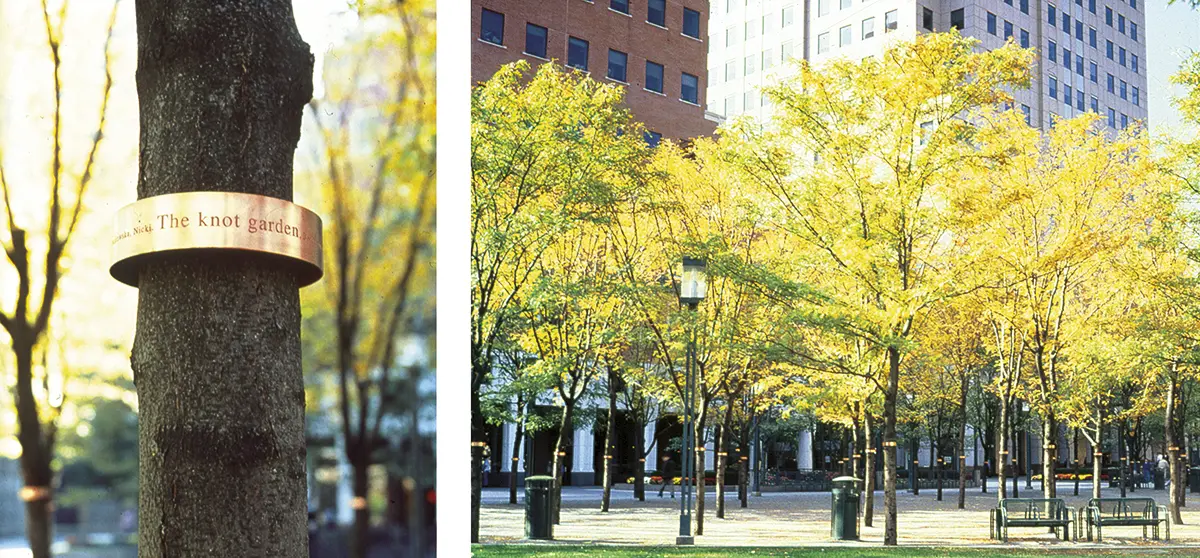
Along with the notion of fiction, literature itself plays an important role in Valeska Soares’s work, as demonstrated by the artist’s two works based on bibliographies. As in her works inspired by Calvino, the visual text is not only self-referential but also refers to other texts, in a process that cannot be explained as mere postmodern intertextuality but is fiction in itself. Histories (1998), the first of these works, use a list of eighty literary works in English, Spanish, French, Portuguese, and Italian, all of which include the word “garden.” “Each title makes reference to a garden, but they are not necessarily books that deal with gardens per see."13 The bibliography was compiled by Adriano Pedrosa and published, with a text by Soares, in the catalog Historias.14 Initially a bibliography, the list becomes a text with poetic autonomy, a text that can be read on its own as a history of the use of gardens in literary titles; it is interesting to observe the different approaches to the idea of the garden that are discernible in each title. Soares’s work is formalized by a series of copper rings on which the titles were carved. In 1998 the artist installed these rings on trees, at eye level, as part of a Public Art Fund project in New York City. This intervention created a kind of open-air text that the public could read as they walked through space.
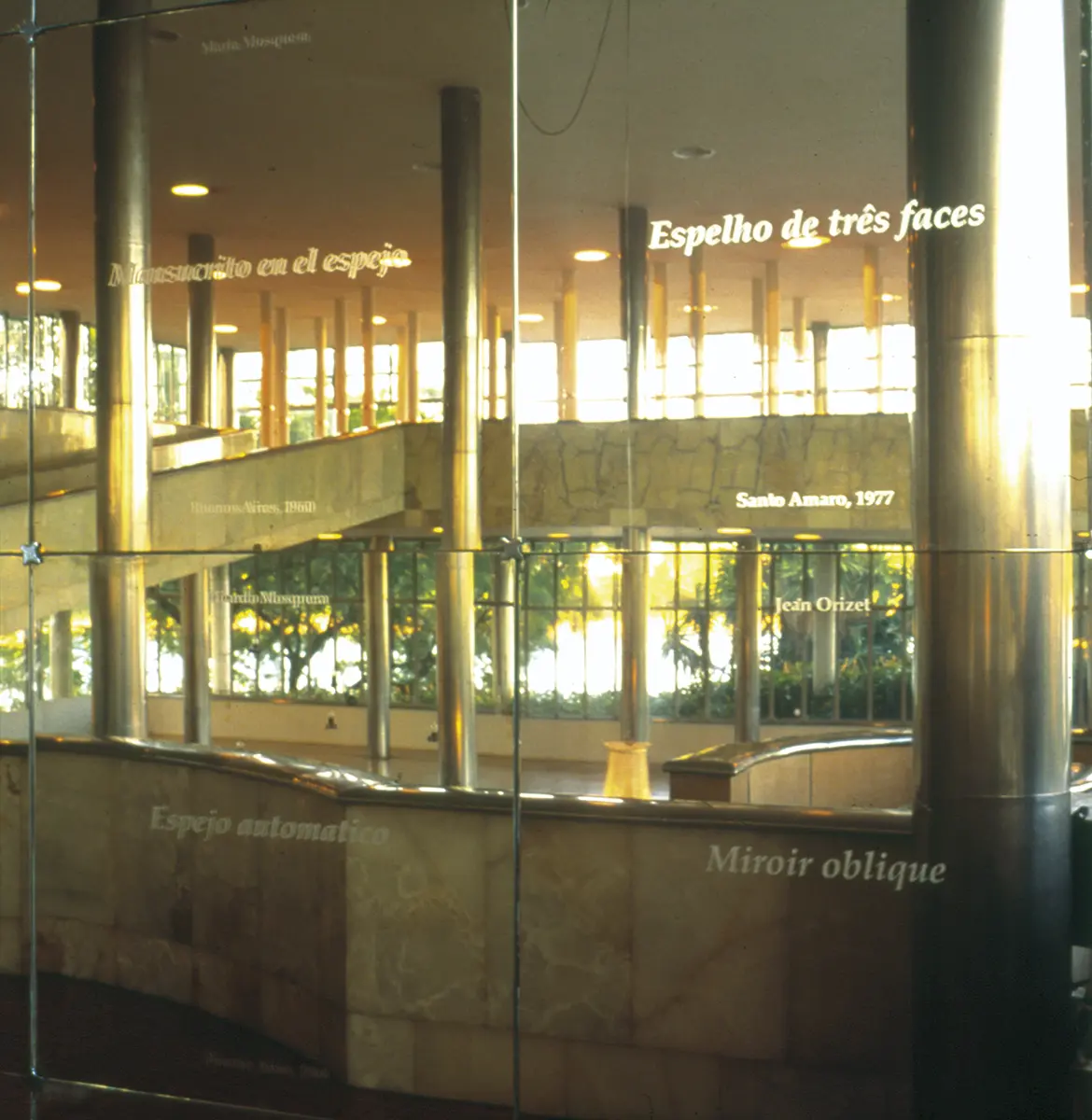
A similar bibliography on the word “mirror” was created by Soares and Pedrosa using the same procedure: Pedrosa identified titles in the same languages, and Soares applied them in colorless opaque vinyl squares, one title per square, on a large wall of mirrors at the Pampulha Art Museum. It was an interesting minimal composition supported by the existing structure.
Literary forms are also evident in the way in which Soares organizes her artistic production into “fields” of works that are titled as derivations of previous works. The replicas of her garden objects derive from her stainless steel and perfume garden (From Vanishing Point) as if they were stories in one single, still-in-progress book (From Sinners, From Strangelove, From Fall, From Intimates, and so forth). In this vein, the image of the invitation to her show at the Tamayo Museum becomes an unfolding of puro teatro—the prophetic image, created before the show, of a child riding a bicycle over a large reflecting puddle, the whole framed by two trees that resemble a balcony’s curtains.
In his story "Two Metaphysical Animals," included in The Book of Imaginary Beings, Jorge Luis Borges describes the Statue that Feels. It is an imaginary animal introduced by Etienne Bonmot Condillac as a refutation of Descartes's theory of innate ideas. This hypothetical statue is given only one sense initially, the sense of smell, and on the basis of this it will develop, in sequence, the faculties of understanding—attention, memory, comparison, judgment, reflection, and imagination—and from that point, the faculties of will—attraction and aversion.15 Like the statue in Borges’s bestiary, the meanings of Valeska Soares’s sculptures multiply from their very constitution, being open to the viewer’s own interpretation. This is a kind of sculpture that at times seems not only to breathe but to feel.
NOTES
1. Valeska Soares in personal communication with the author, April 2003.
2. For the concept of antropofugusmo (man’s escape) and the geography of gardens based on it, see also, Julio Cortázar, “Geografías,” in Historias de Cronópios y de Famas, trans. Gloria Rodríguez (Río de Janeiro: Civilización Brasilera, 1972), pp. 78–79. In this story, the narrator transcribes a manuscript that includes a vast and intricate geography, which, “hypothesis or fantasy, would correspond topographically to a small garden on 628 Laprida Street, Buenos Aires.” It is an inventory of the landscape from the point of view of its insects, “demonstrating that ants are the true queens of creation.”
3. Cuauhtémoc Medina, “El Ojo Breve—Géneros de espejismo,” in Reforma, 5 March 2003.
4. Italo Calvino, “Las Ciudades y los Deseos 5” As Cidades Invisíveis, trans. Diego Mainardi (São Paulo: Compañía de las Letras, 1998), pp. 45–46.
5. Ibid., p. 45.
6. Soares, personal communication, April 2003.
7. Calvino, “Las Ciudades y los Deseos 5,” p. 46.
8. Valeska Soares, interview by Vik Muniz, Bomb Magazine 74, Winter 2001, p. 50.
9. Calvino, “Las Ciudades y los Ojos 1,” As Cidades Invisíveis, pp. 53–54.
10. For the Freudian concept of deep strangeness as applied to Soares’s work, see Adriano Pedrosa, Valeska Soares, exhibition folder, (Belo Horizonte: Pampulha Museum of Art). “If often her works assume beautiful and seductive forms, with intimations of the erotic, an attentive gaze will reveal disturbing elements in them.”
11. Soares, Muniz interview, p. 51.
12. Adriano Pedrosa, “Valeska Soares,” Poliester vol. 7, no. 24, Winter 1998–99, pp. 46–47.
13. Soares, Muniz interview, p. 51.
14. Valeska Soares, Historias, exhibition catalog, text by Adriano Pedrosa (São Paulo: Galería Fortes Vilaça, November 1996), pp. 40–41. With respect to the title of the show, Pedrosa says: “Unlike the more limited English word 'histories,’ the Portuguese word histórias, much like the French histoires and the Spanish historias, may be used to identify both fictional and non-fictional texts, thus designating the historical, the anecdotal, and the literary at once.”
15. Jorge Luis Borges, “De los Animales Metafísicos,” El Libro de los Seres Imaginarios, trans. Carmen Vera Cirne Lima, (São Paulo: Editora Globo, 1989), pp. 11–12.
*This image is courtesy of Christopher Grimes Gallery. The others are courtesy of Galeria Fortes Vilaça.
RODRIGO MOURA
Assistant curator at the Pampulha Art Museum, Belo Horizonte.