Materializing in over seventy-five gallery and museum spaces, this year’s L.A. International Biennial opened with a rolling sequence of reception parties beginning with a chic Vernissage at the Los Angeles County Museum on July 8, 2003. Coinciding with the Museum’s launch of its Modigliani and the Artists of Montparnasse exhibit, the evening event also featured a spectacular outdoor video installation by Vello Virkhaus and eclectic music by Los Angeles DJs Jason Bentley and Akiko. Each sequential night of the opening week presented gallery receptions in different parts of town, climaxing on Saturday with a celebration in the city’s Chinatown District that highlighted gallery exhibits, music, acrobats, dim sum, and Bordeaux wine. Currently in its sixth season, the 2003 extravaganza presents works by 200 international artists from thirty countries at established Los Angeles venues for the duration of five to six weeks. While predominately featuring European art, twenty percent of the exhibitors profiled Latin American art, and roughly fourteen percent highlighted work from Asia.
This year found artists raising epistemological questions about art’s relation to reality, addressing social and political injustices, or concocting poetic visual riddles that elliptically explored the meaning of life. From the Pacific Asia Museum in Pasadena to the Santa Monica Museum of Art near the sea, the question of art’s relationship to reality was a reoccurring theme. Between these sites, at Ace Gallery on Wilshire Boulevard, the New Crop Havana show profiled works by nine artists, including memorable pieces by Harold Vázquez, Jose Emilio Fuentes, and the artist team Los Animistas. Vázquez presented a video that exposed the tensions between academic painting and reality, deconstructing the conventions of portraiture developed in the Italian Renaissance. Centering his video camera on a female subject asked to pose for a portrait for an extended period of time, Vázquez’s work highlighted the contrived freezing of motion and time inherent in traditional portrait paintings.
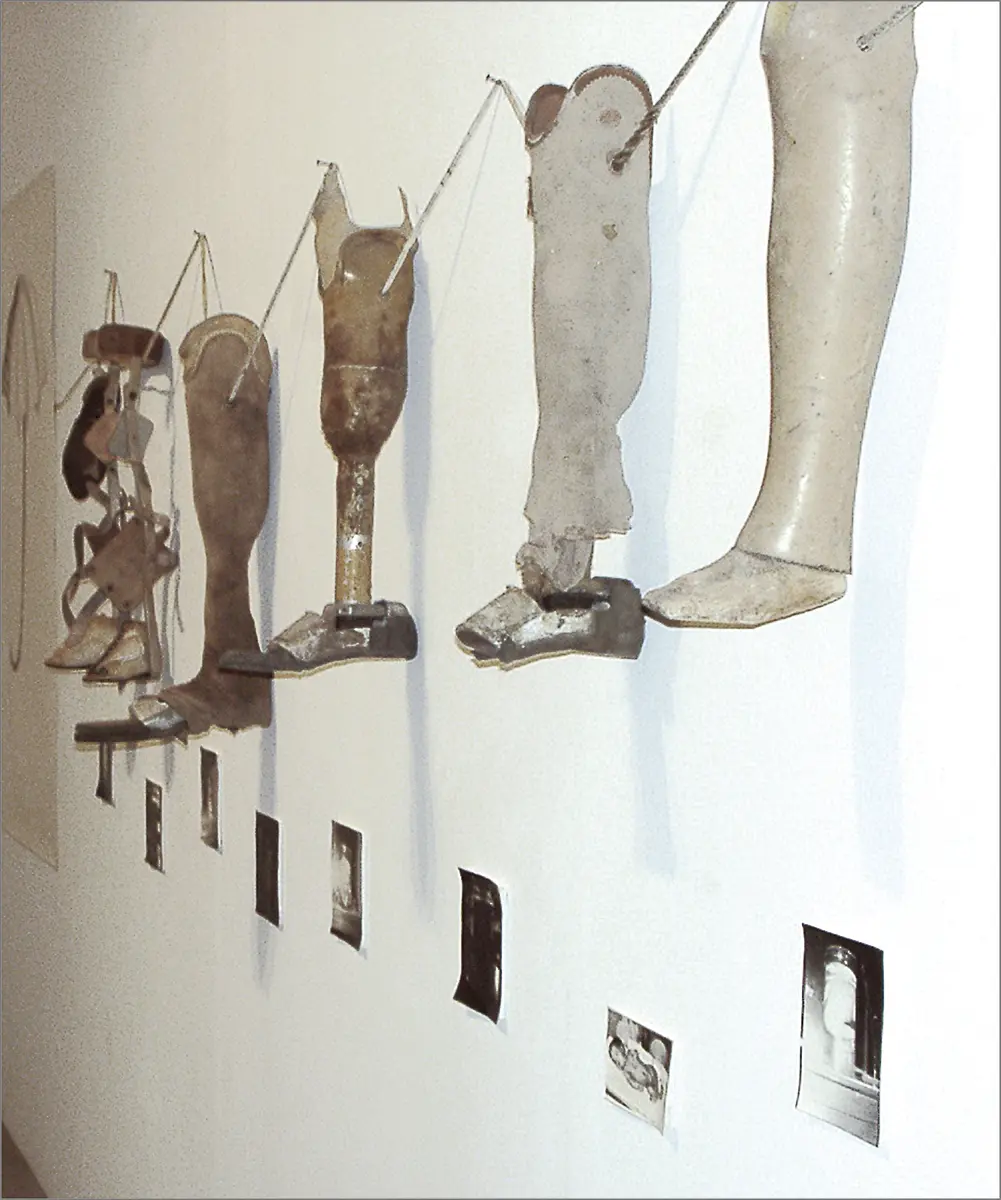
A nearby Fuentes installation profiled an array of child-sized artificial legs, braces, and shoe feet with bone studs. Exhibiting medical prosthetic devices as abstract sculpture, Fuentes raised poignant questions about medicine’s lack of interest in mimetic reality, an area ironically studied for centuries in art academies. Highlighting differences in the interpretation of reality, this work underscored the unfortunate chasm that still exists between medical and artistic knowledge and their diverging social applications.
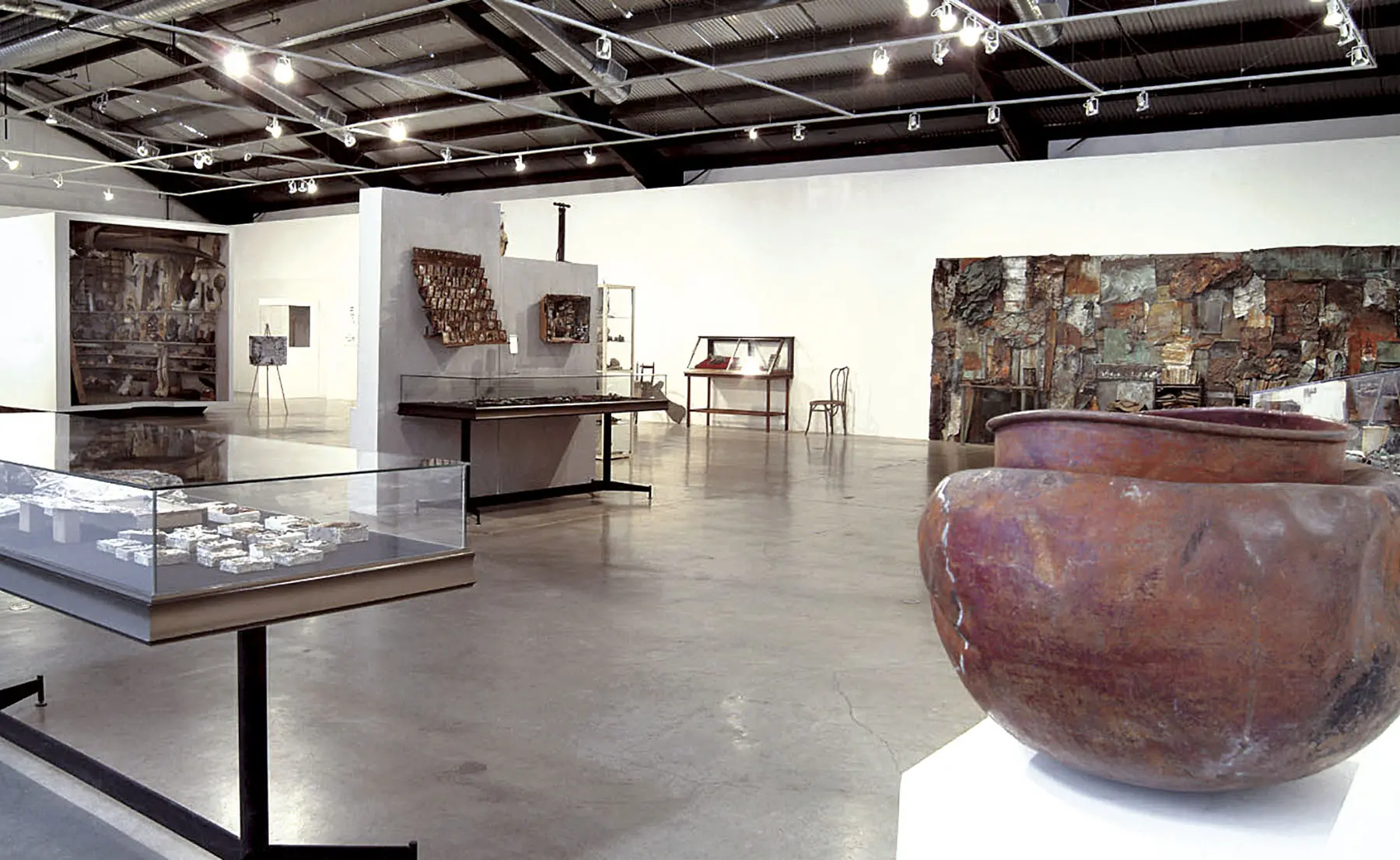
Los Animistas approached related themes in ways that conversed with the Rosamond Purcell exhibit that was profiled across town at the Santa Monica Museum of Art. Conflating reality and illusion, Los Animistas presented a table set for a festive celebration replete with such delicacies as a taxaidermically- stuffed turkey, real (and rotting) pineapples and coconuts, real cigars, and plastic grapes. In addition to raising questions about the relation between simulated things and the real, this installation also blurred the traditional gendered boundaries that for centuries have separated women’s work of preparing and presenting such feasts from men’s preservation of such celebrations through artistic means such as painting and photography. Exploring similar themes, Purcell’s multiple installations interchanged real objects, stuffed creatures, and naturalistic hand-crafted replicas and inventions of animals, reptiles, and even rocks. Her mammoth installation entitled, Recreation of Olaus Worm’s Room, included such finds as a preserved bird, the skull of a deceased creature, and a fabricated unicorn head made to resemble a stuffed, animal trophy head. Here the thin line between illusion and reality often seemed to disappear.
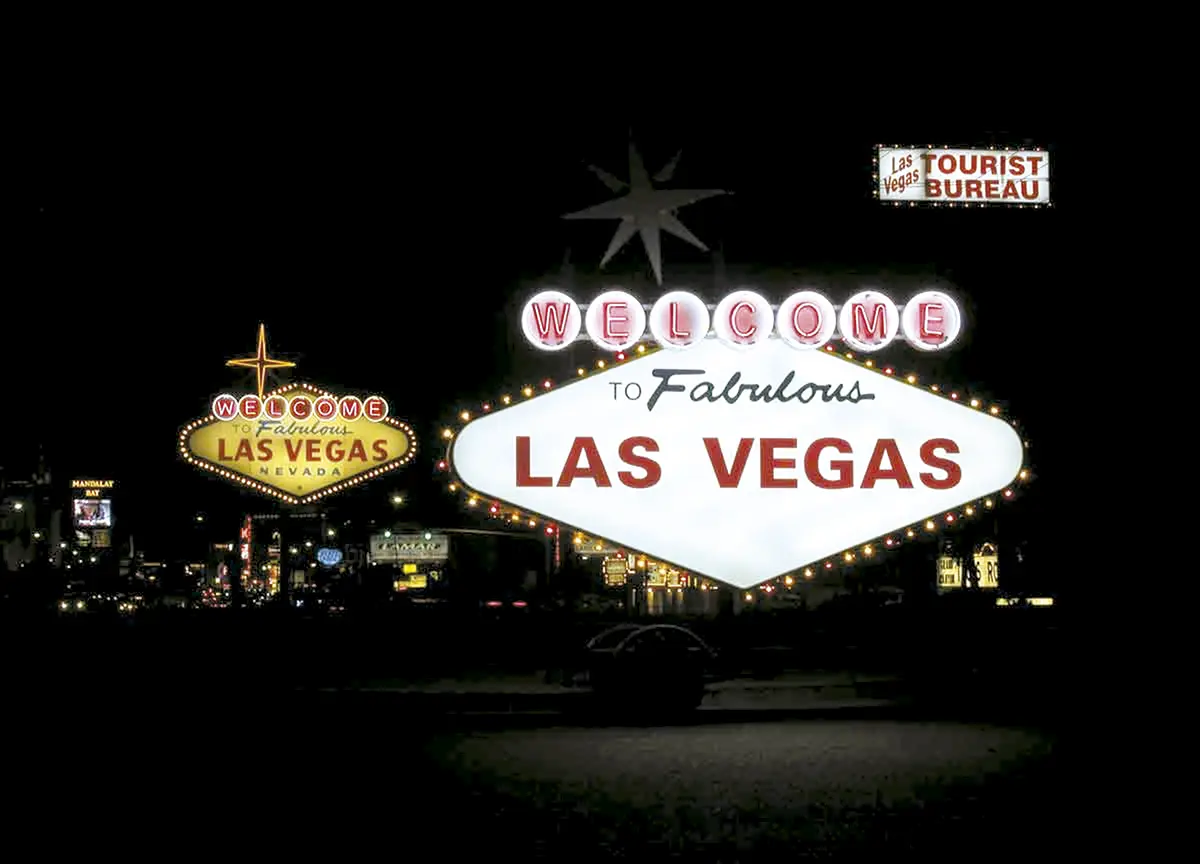
Raúl Cordero’s intervention project, titled the Hello/ Goodbye series, profiled documentary photos and videos at the Iturralde gallery. Three years in the making, this project explored the provisionality of landmark signs and symbols. While he could have chosen any number of subjects for this study, he decided to replicate the renowned Welcome sign of Las Vegas, Nevada, one of the most famous marquees in the world. Replicating the Las Vegas sign, Cordero took it with him as he drove through an array of towns in Europe and later in the United States. Setting up the sign upon arrival, he would make the necessary adjustments so the sign would read in situ Welcome to Ghent, Welcome to Brasschaat, Welcome to Zulte, Welcome to Barstow, and so forth. The Andy Warhol-esque “fifteen minutes of fame” thus generated for each relatively unknown town would then be captured on film before Cordero and the marquee sign would vanish just as inexplicably as they had first appeared. In this manner, Cordero wryly underscores the fickle relation between artifice, the illusion of glamour, and the more often than not banal reality of locals situated in the middle of nowhere.
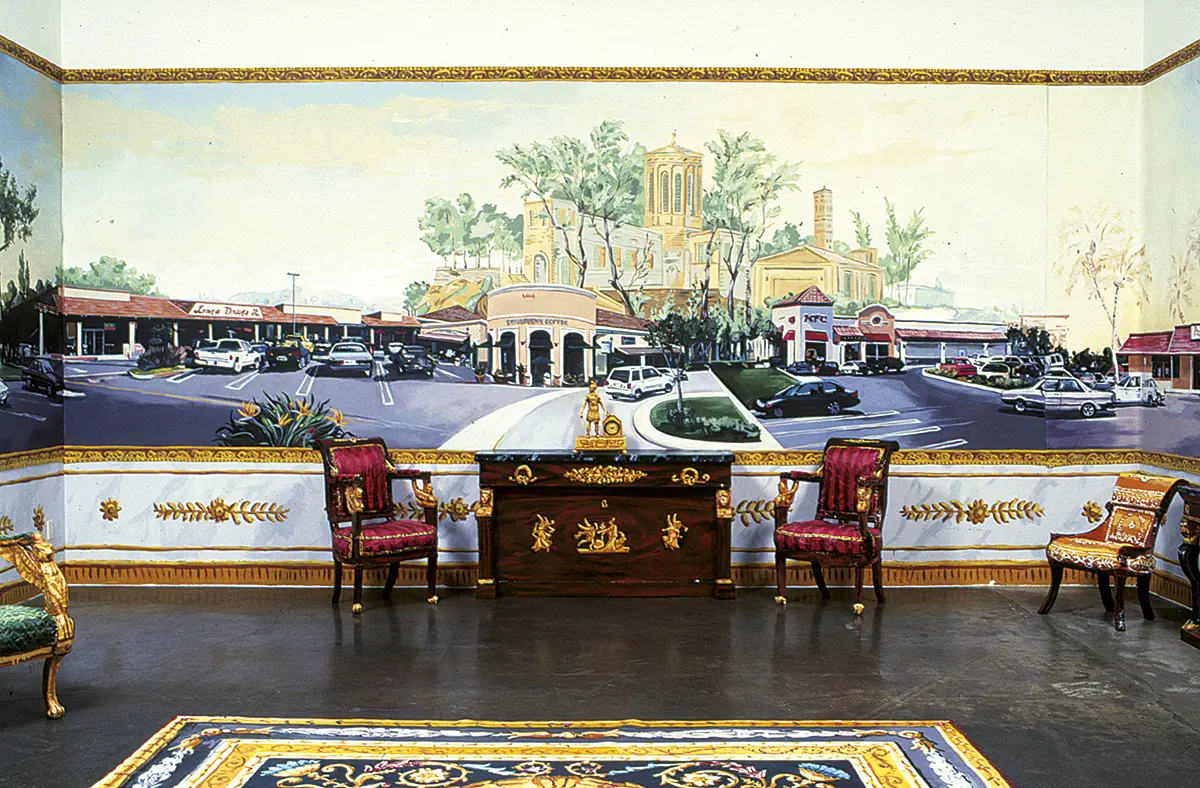
Related interests in visual signification and the economic engines of consumer society formed the focus of Jean Lowe’s show at the Rosamund Felsen Gallery. Her study, however, focused on consumer demand for replicated French Empire furnishings. Like the critiques of globalization inherent in the works of Pedro Álvarez or the Calimocho Style artist team of Eduardo Abaroa and Ruben Ortiz Torres, Lowe’s papier mâché renditions of Empire furnishings use an aesthetics of “bad form” to underscore the muddled and debased sensibilities of a market that feasts on replications of the real. Suggesting that consumer markets construct convoluted interpretations of reality, her works allude to the dystopian possibility that replicas of real things have come to supplant the understanding of authentic realities.
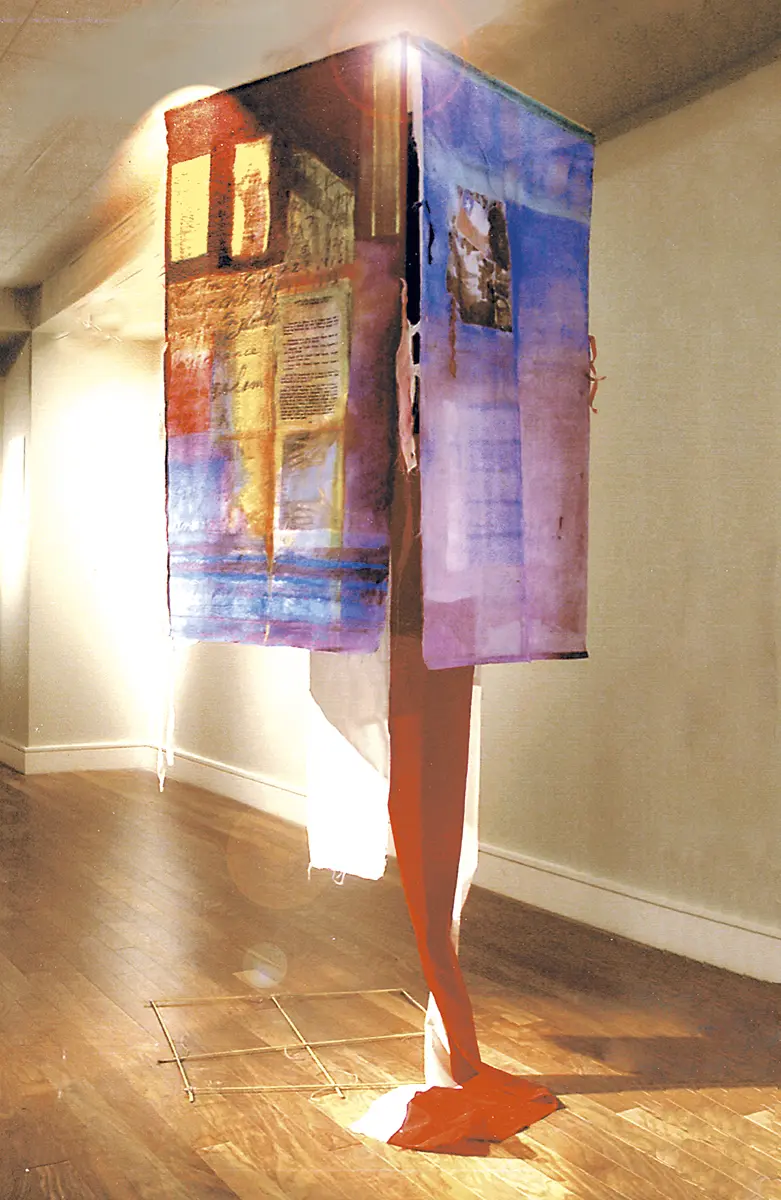
A group show entitled Light among Shadows, curated by Robert Hite and profiled at the 18th Street Art Center took issue with the hip postmodern exhibitions that questioned art’s efficacy in addressing reality. Predominately featuring artists from South America and the United States this group of works focused on issues of social justice, critically reflecting on the news provided by mass media sources. Included in the show were documentary photos by the renowned Chilean photojournalist Marcelo Montecino, collage and assemblage works by the Chilean-American artist Francisco Letelier, as well as works Ariel Dorfman, and Ivo Vergara of Chile, Naul Ojeda of Uruguay, Carlos Fuentes of Mexico, and Robert Hite and William Attaway of the United States amongst others. Francisco Letelier’s Continent of Vessels and Remains continued to address the injustices of political deaths, galvanized by the memory of his father, the Chilean diplomat Orlando Letelier, who was an outspoken critic of the dictator Augusto Pinochet and who was killed in a 1976 car bombing in Washington, DC. Contextualizing the focus of art, these works addressed social injustices while attempting to imagine a more human world.
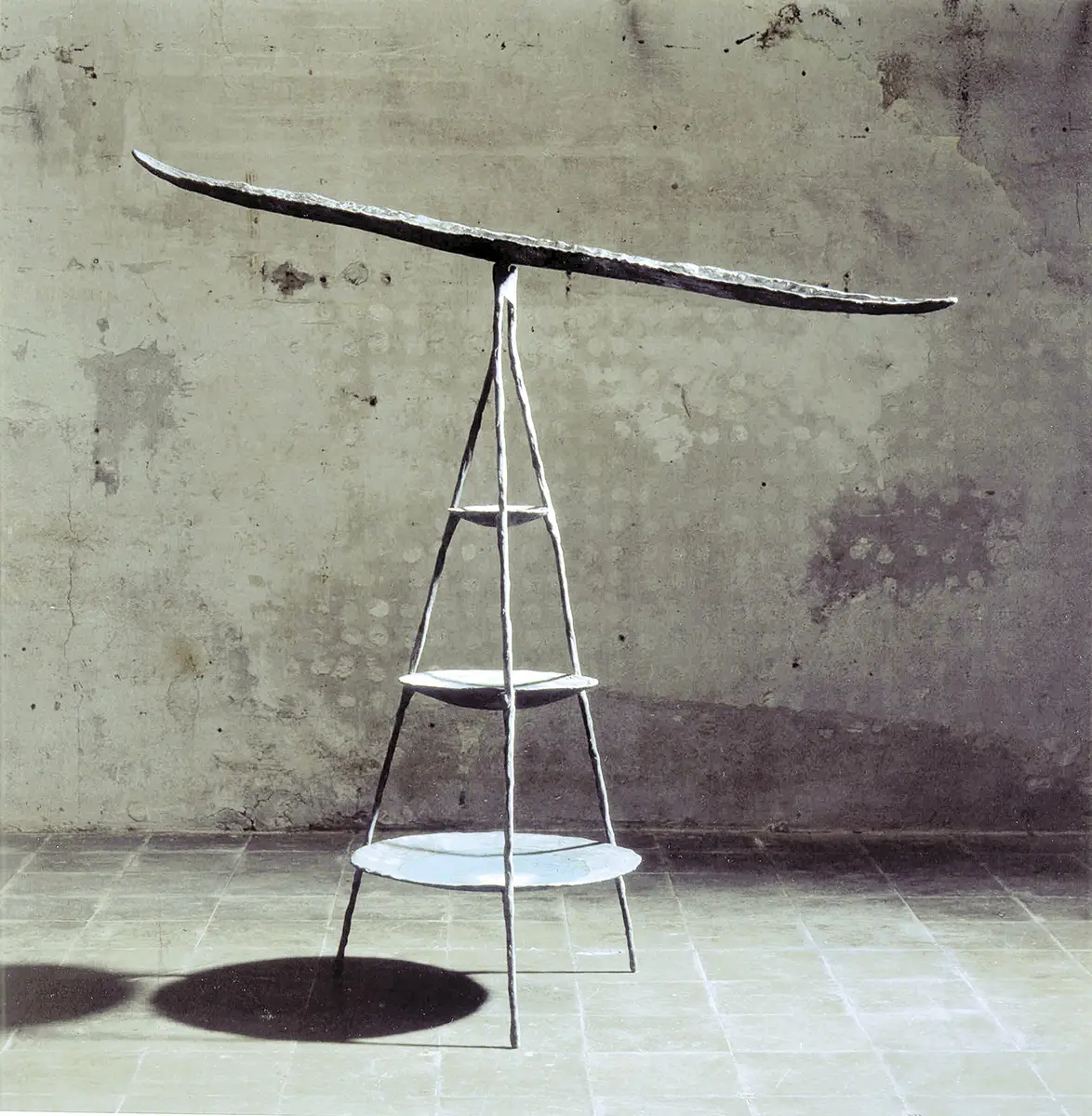
Determining the relation between things has always been a baseline for interpreting both art and life. And it was the interpretive complexities inherent to visual notations, gestures, and signs that captured the imagination of another group of artists showing at this Biennial. Both Víctor Vázquez of Puerto Rico and Milagros de la Torre of Peru, for example, profiled works at the Couturier Gallery, presenting enigmatic, poignant pieces whose innuendoes were rich and complex. De la Torre presented extremely small black and white photographs framed in large white mats that highlighted objects such as a pair of high heels, a pair of women’s silk stockings, or a white wire hanger set against black backgrounds, endowing ordinary things with an extraordinary silence of poetic significance. Vázquez, whose works peripherally suggest an acquaintance with the harshness of life, profiled sculptural works that captured and transformed found objects such as books, chairs, shoes, feathers, rosebuds, baby powder, and dirt into art. These works pit the specter of death against the ephemeral brilliance of existence.
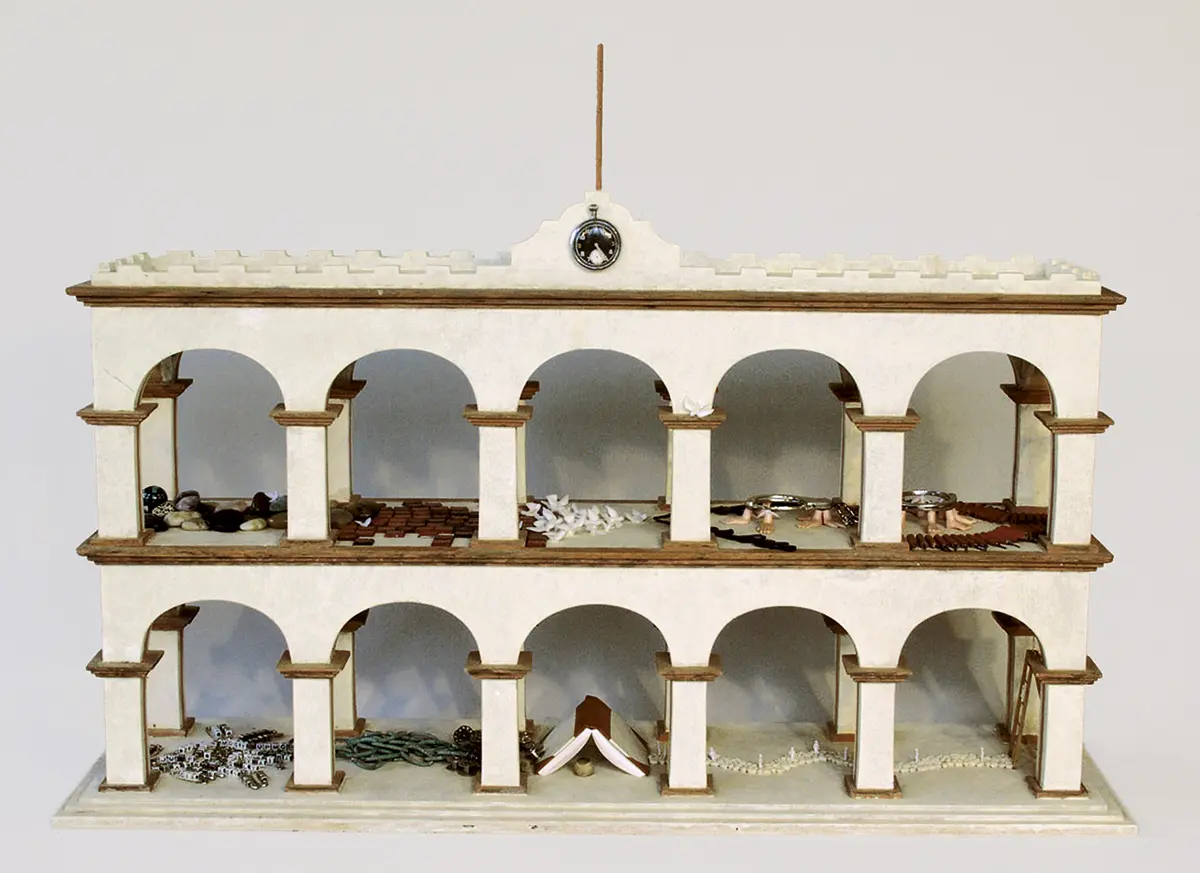
The lyrical sculptures and photos of Guatemalan artist Lissie Habie at the William Turner Gallery were equally haunting. Conversing with the literary development of Magic Realism, these works spun compelling narratives approaching life’s inexplicable oxymorons. Her sculpture The Democracy Portal (El Portal de la democracia), for example, presented a bi-level Roman-styled building that juxtaposed the ideals of human knowledge and freedom with allusions to war, rubble, and human imprisonment.
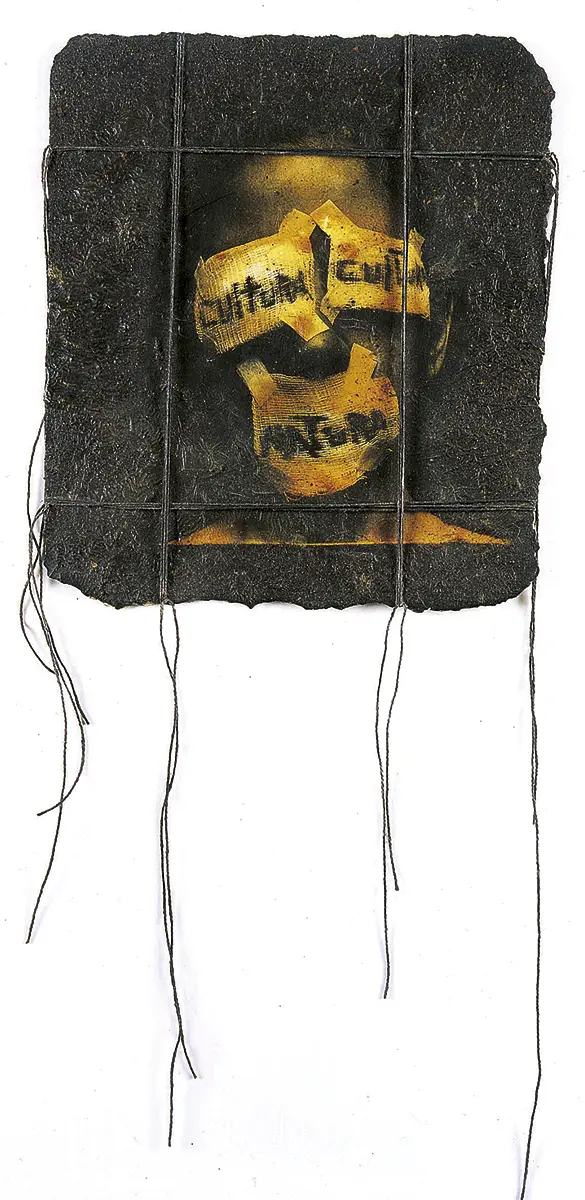
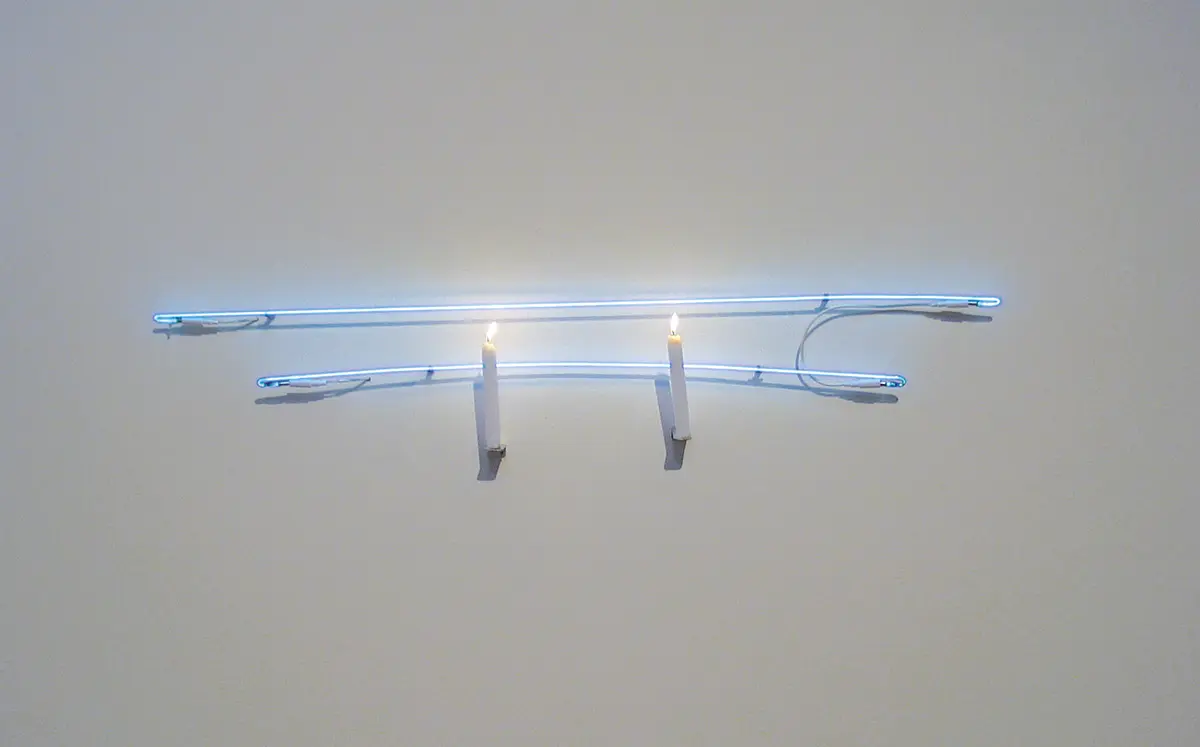
An array of European artists, including the Spaniard Riera I Aragó and the Italians Luigi Carboni and Pier Paolo Calzolari explored related themes, creating works bespeaking the tensions between dreams and disillusionments, optimism and tragedy, social progress and deprivation. Riera I Arago, who profiled paintings and sculptures at the Tasende Gallery, creates simplified, even child-like images of airplanes, boats, and submarines. While recapturing a state of innocence, these works ironically query the concepts of technological and historical advancement. At the Patricia Faure venue, by comparison, Carboni’s paintings drop viewers into an imagined terrain of dense undergrowth, which perhaps functions as a metaphor for the lost Eden, and for humanity’s larger metaphysical uncertainties. The sculptures of the Arte Povera artist Calzolari, also at the Faure Gallery, were some of the most powerful works in the Biennial. Framing the light of a small candle with three large tobacco leaves and a small neon halo, his Untitled (Occhio di Dio) sang an ode to the brevity and brilliance of existence.
Offering an overview of current trends in the international art world, L.A. International lived up to its purpose. Profiling artists new to California and some new to the United States, the Biennial offers opportunities for the development of cross-cultural dialogues, in ways that often proved unexpected, insightful, and encouraging.
COLLETTE CHATTOPADHYAY
Lives and works in the Los Angeles basin. She is a member of the Paris-based International Association of Art Critics and writes for Art Nexus, Sculpture, Artweek, and Art Asia Pacific. Chattopadhyay lives and works in Los Ángeles.