The Latin American sales for this season definitely point to a recovery in this market and stability that it has not had in years. The principal lots at both auction houses brought good results and new records for some artists.
The first auction of the season was at Sotheby’s where the cover lot, The Guitar Player by Mario Carreño sold to a telephone bidder for $400,000, a new world-record price for the artist, and well above the estimate of $175,000/$225,000. This colorful work from 1944 represents the artist’s best and most coveted period and had attracted considerable interest from both dealers and collectors prior to the sale.

The top price at Sotheby’s went to Rufino Tamayo’s classic Sandías, a beautiful watermelon still life that had been estimated at $800,000/$1,000,000 and sold for $875,000. Mexican art sold extremely well at this auction, continuing last fall’s trend of a comeback for Mexican collectors. The work Red Bell de Jour, by artist Víctor Rodríguez, was a highlight of the Mexican performance this season. It sold over the estimate ($10,000-$15,000), establishing a record for the artist at $15,600. The more traditional nineteenth-century Mexican works usually purchased by Mexican collectors did rather well at the sale. La Familia Mexicana by José Agustín Arrieta is a case in point; it carried an estimate of $175,000/$225,000 and sold for $150,000 (two of his classical Naturalezas muertas estimated at $60,000/$80,000 sold at Christie’s for $50,000 each). Pelegrín Clavé’s portrait of a society lady brought $40,000 (est. $60,000/$80,000).
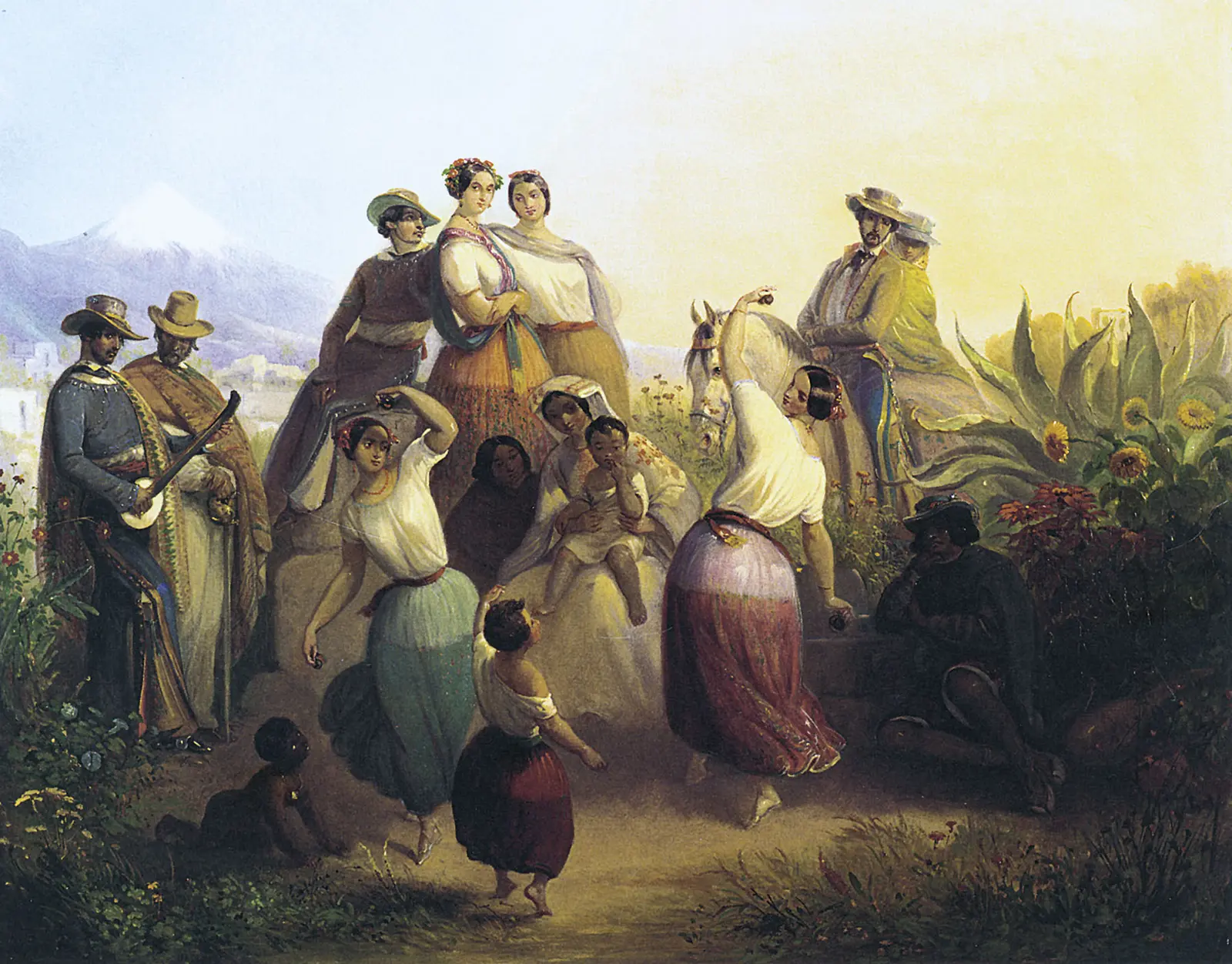
European artists that traveled in the Americas during the nineteenth century are also part of this market and Sotheby’s had some interesting lots in this area that achieved considerable success, especially considering how difficult these sales have been in recent auctions. Pierre Ribera’s Jour de marché à San Gabriel, estimated at $30,000/$40,000, sold for $42,000. German artist Johann Moritz Rugendas, a classic artist of this style, was represented with two works. His Vue de Lima was estimated at $40,000/$50,000 and sold for $35,000; his much more colorful La danse was estimated at $60,000/$80,000. The latter is a great display of the exoticism that European collectors expect in depictions of the Americas. This representation of a Mexican landscape belongs to his later period, when Rugendas had already returned to Europe where he recreated the recollections of his travels in the Americas to suit European notions of colorful folklore. According to the catalog note, this was the re-working of a painting done in Brazil and featured seductive native beauties of mixed racial heritage dancing with Spanish castanets and wearing costumes that bore more resemblance to those of Spanish or Sicilian peasants than to what was worn in Mexico at the time. No doubt this transposition of Spanish Seville to the tropics struck a cord, and La danse sold for $100,000.
Some modern painters are traditionally collected in Mexico, almost to the point of exclusivity; Ángel Zárraga, for instance, had great success at the auction when his Desnudo de frente sold for $200,000, high above the estimate of $100,000/$150,000. This success is particularly important as a market barometer because as recently as last fall pictures by this artist with a similar theme and from the same period of his work failed to sell consistently. Another Zárraga painting with a voluptuous female nude was offered by Christie’s; Bañista en el peñon blanco was estimated at $100,000/$150,000 and sold for $130,000. Acordadas y Zapatistas by José Clemente Orozco, an iconic image from Mexico’s golden age of muralism was another great success selling at $160,000; the estimate was $150,000/$200,000.
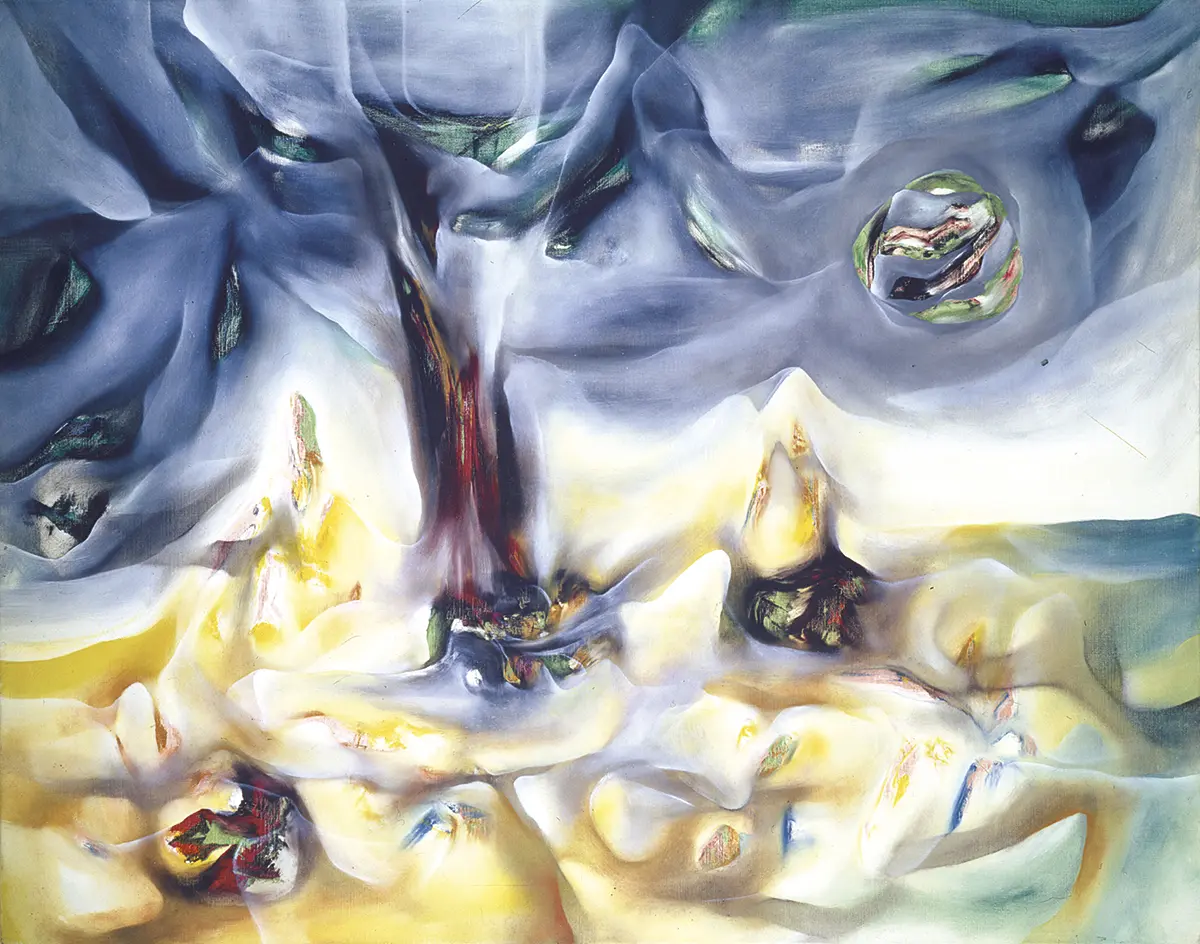
The highlight of Christie’s sale was also the catalog cover: Matta’s Endless Nudes, a wonderful depiction of his morphological landscapes. It carried an estimate of $1,000,000/$1,500,000 and sold for $1,500,000, following a long telephone battle between several eager buyers who pushed the price to the $1,000,000 level within seconds of the opening bid. Another important Matta, The Morphology of Desire had an estimate of $700,000/$900,000 and sold for $650,000. This picture had been offered recently in the market and still managed to find a buyer at auction, reflecting the market’s strength. Composición (1944), from the same period in Matta’s oeuvre, sold high above the estimate at $185,000 (est. $100,000/$150,000). In this case, it is understandable that in addition to the high quality of the works offered, the market is responding to a re-evaluation of the artist following his recent death last year.
A noteworthy disappointment at Christie’s sale was the beautiful landscape by Eugenio Landesio, La hacienda de Colón. The picture had an attractive estimate of $800,000/1,000,000 since the work of this artist in Mexico is exceedingly rare and would be considered the jewel of any distinguished collection of traditional Mexican art. However, it had export restrictions that would not allow the work to leave Mexico, a factor that very much limits potential buyers, even if the sale is within the country of origin.
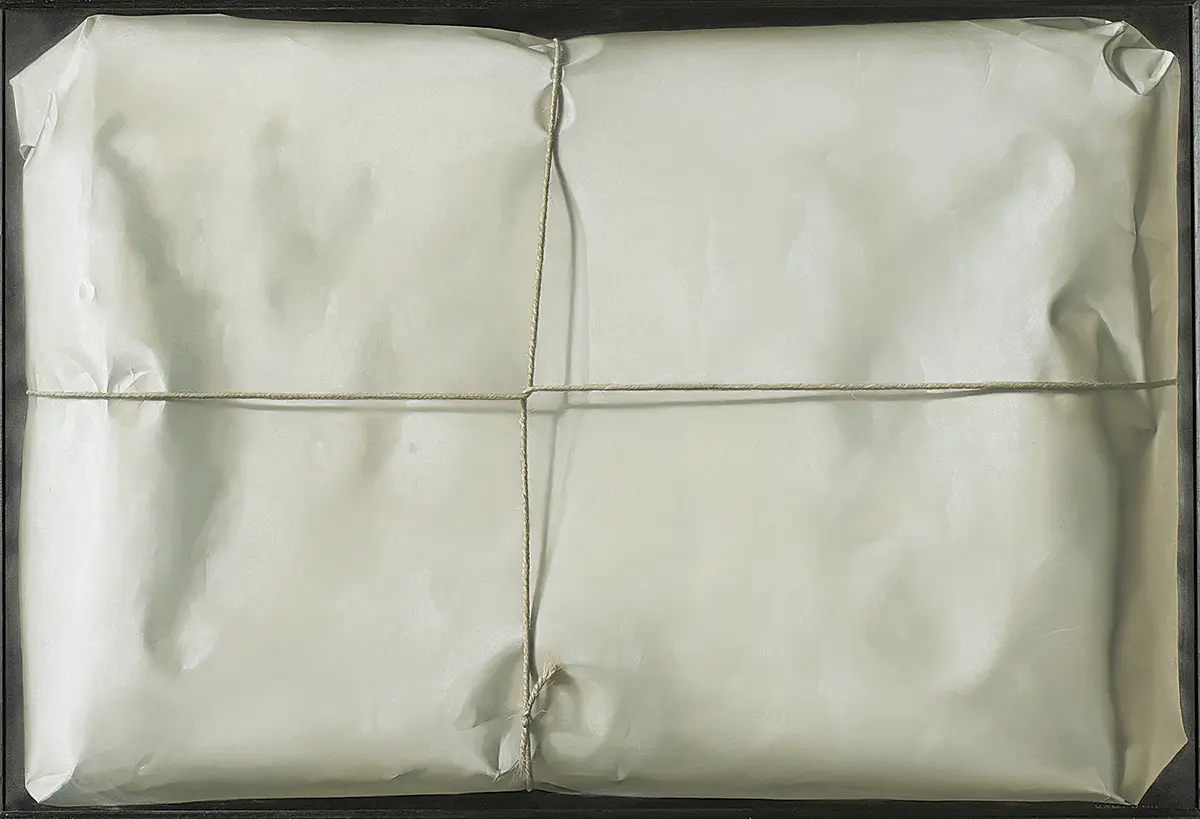
Works by Claudio Bravo sold unevenly at both houses. Heated competition at Sotheby’s brought the price of his beautiful Mystic Package above the estimate of $325,000/$375,000 to sell for $430,000, a world record for a work on paper by this artist. It went to a non-Latin buyer, indicating the trend established last year of his “package” pictures consistently being acquired by international collectors. The other important work by Bravo offered by Sotheby’s in the evening sale, Visus Tactus, was estimated at $300,000/$400,000 but failed to find a buyer at $240,000.
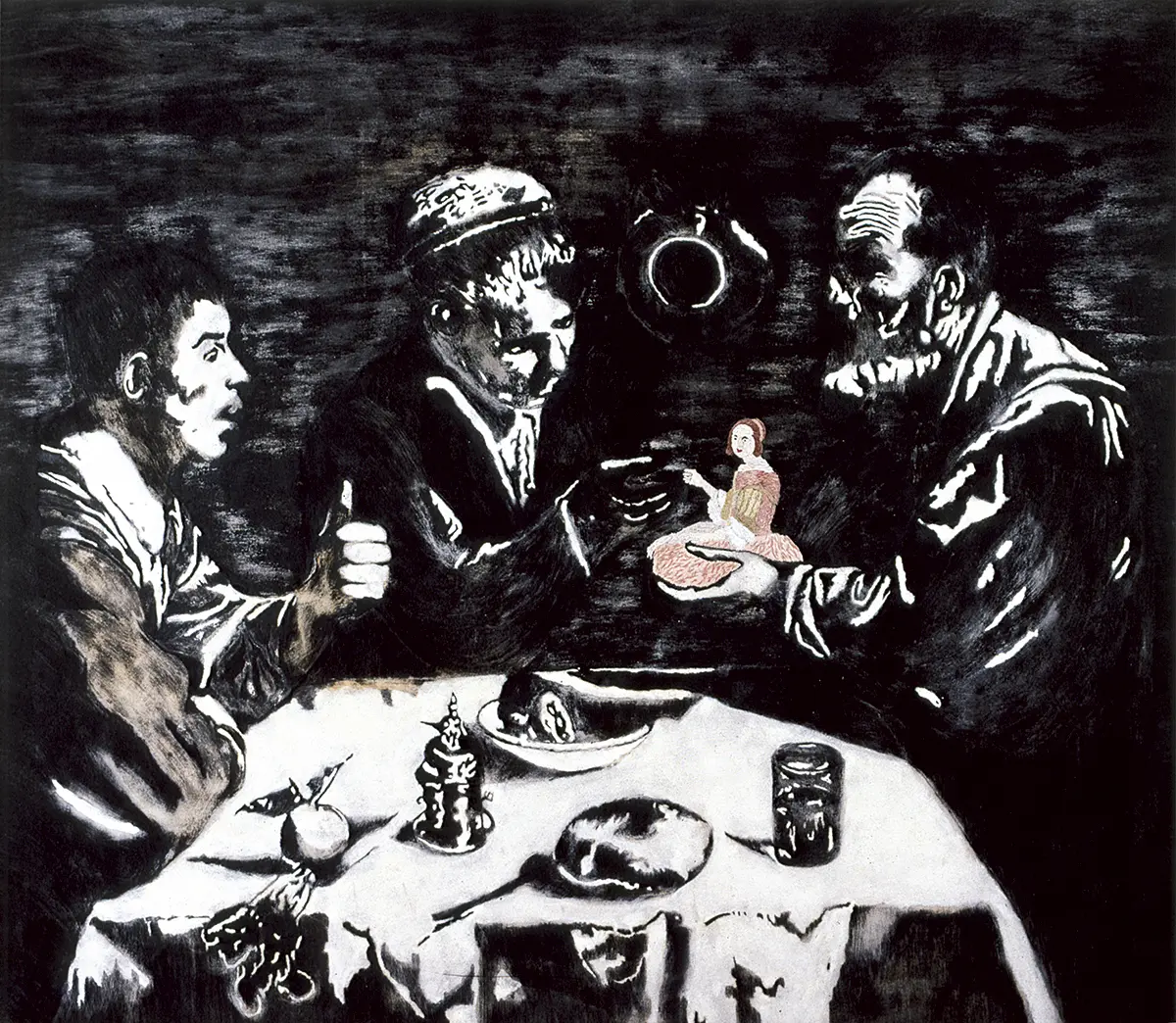
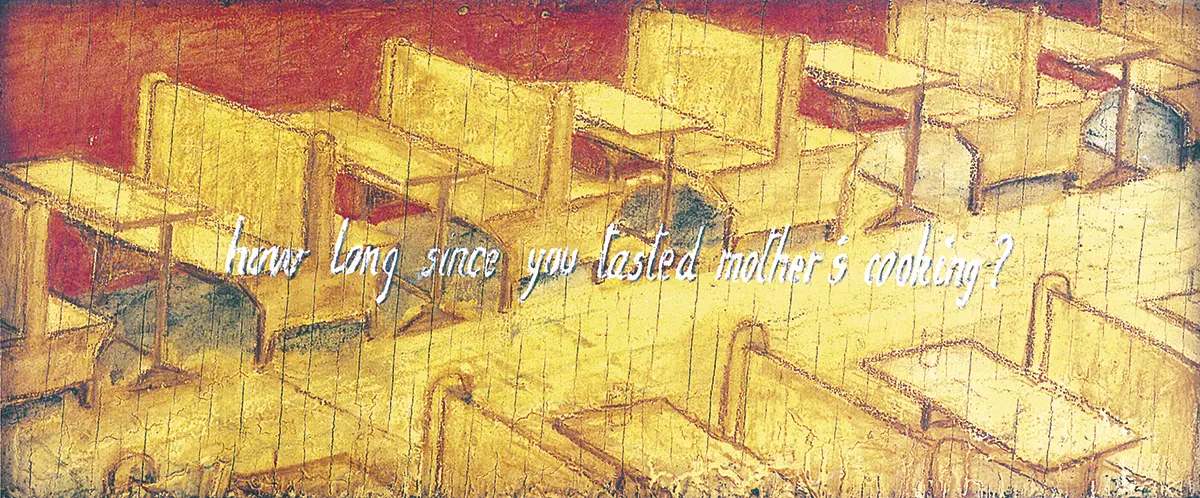
Christie’s included an interesting selection of contemporary Latin American works at the evening sale. Mira Schendel’s work was designated in two lots. Sem titulo, number 45, was a pair of beautiful abstract still life drawings; it was estimated at $5,000/$7,000 and found a buyer at $6,000. The next lot, number 46, was also a pair of drawings with the same designation, sem titulo, but in the more familiar linear abstractions that are her trademark. A more representational piece, it sold at the high end of the estimate for $9,000 (est. $6,000/$9,000). Another beautiful abstraction from Brazil, this time from Sergio Camargo with the preferred sem titulo designation so favored by artists of that generation, was offered at $15,000/$20,000 and sold for $19,000. Younger artists fared well too. Walter Goldfarb (born 1964) had an interesting old master appropriation titled Give Her Drink with echoes of Caravaggio and Velázquez. It was estimated at $22,000/$28,000 and realized $22, 000. Francis Alÿs, an artist who was featured at several contemporary galleries in this year’s edition of Art Basel, sold above the estimate for $15,000. How long since you tasted your mother’s cooking? had been estimated at $8,000/$12,000 and represented a nostalgic view of an old-fashioned school room. Enrique Martínez Celaya, an artist who has received favorable reviews in current contemporary international publications, made his auction debut with Quiet Night (Dirt), an interesting sculpture of a man’s head that recalls the wooden sculptures of Baselitz. It carried an estimate of $15,000/$20,000 and found a buyer at $12,000.
Sotheby’s: Total: $7,849,200. Lots offered: 153
Christie’s: Total: $5,702,796. Lots offered: 157
ALBERTO BARRAL
Art advisor, New York.