Downtown Mexico City is peppered with architectural styles that are as contrasting as they are isolated. One could say that baroque, neoclassical, and modernist architectures hold hands at some intersections, bridging historical and stylistic gaps and firmly joining the present. On the street where I live, close to Alameda Central, I can see the solid images of architecture that put me in mind, and that I can use as a metaphor to explain Roberto Cortázar’s work.
On wide, ample Bucareli Avenue, west of my house, you can see the Vizcaya building, a monument to early-twentieth-century neoclassical architecture, with its modernist-infused, undulating gray wall. Up until a few years ago, Cortázar’s studio was located there, in a large apartment with more than ten big rooms, high ceilings, and a central courtyard framed by stained-glass windows in simple and attractive geometric designs. An immaculate, well-kept place with white walls and hardwood floors, the apartment’s large windows admitted plenty of light and its balconies were an invitation to peek out at the building’s interior walkway.
Buildings like that can be found in any cosmopolitan Latin American city —Buenos Aires, Santiago, Guadalajara, and Mérida. They were the norm for the prosperous, cultured classes, who were European in their aspirations. And indeed the art of Roberto Cortázar (Mexico City, 1963) shares that flavor and follows the classical, unbroken European tradition that exerted such an attraction on Latin American rationalism during the nineteenth and twentieth centuries.
I am now on Tacuba Street, standing in front of an equestrian statue known as El Caballito, which portrays the ineffective Spanish monarch Charles IV and is located in the same square on which two modernist buildings converge. The Palacio de Minería dates from the eighteenth century; its Doric columns and frontispiece pay homage to neoclassical architecture, while its interior design falls prey to the mannerisms of the French Empire period. The five-story façade of the Palacio de las Comunicaciones, from the early twentieth century, reminds us of Bernini’s baroque architecture, in seventeenth-century Rome. Both buildings were part of the city’s cultural landscape during most of the last century. They are loci of power and authority that demand respect and prestige by virtue of the very quality of their construction, as well as the stylistic quality of their design. Similarly, in the work of this painter —who by the way grew up in the southern state of Chiapas— two lines of thought coexist: on the one hand, the undulating sensuality of bodily forms, and on the other hand the rationality of lines and proportions.
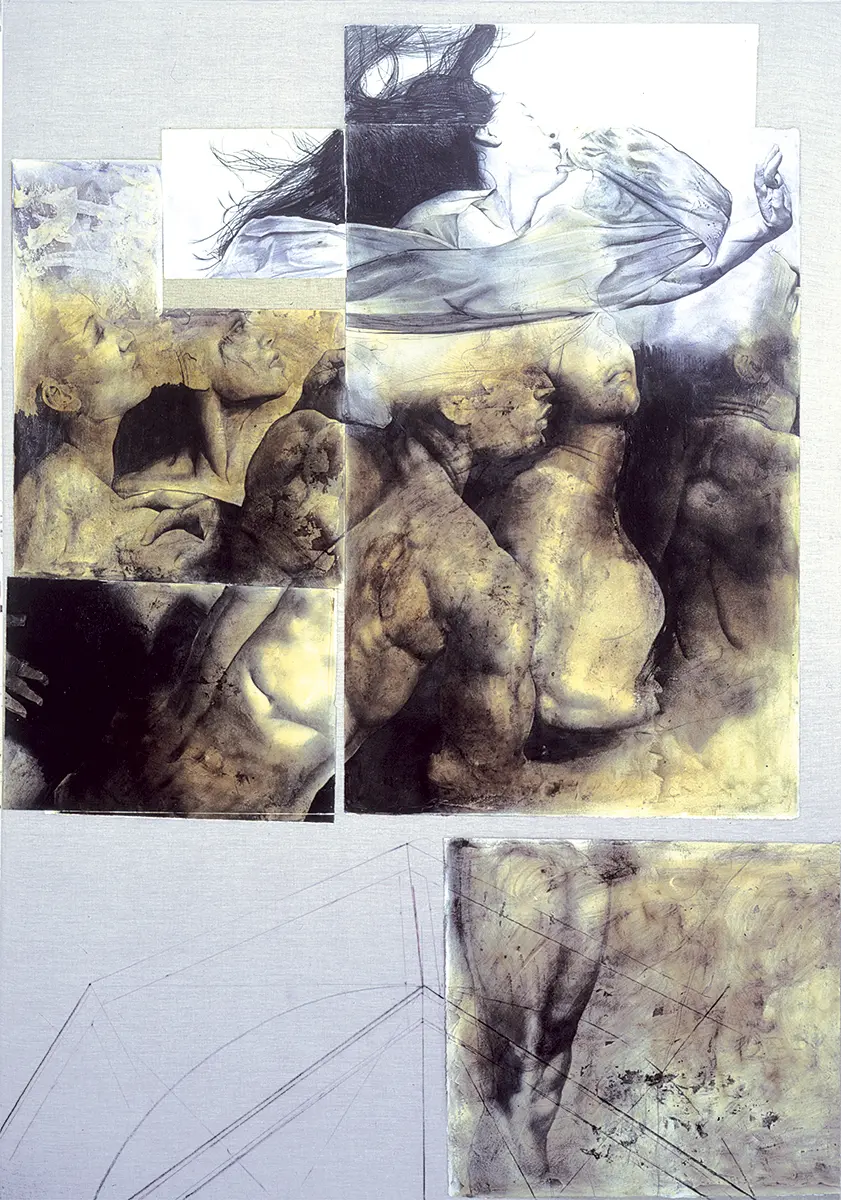
The perception of two historical styles in the present time, in a tangible and inescapable reality, turns Cortázar’s drawings and paintings into a symbol of the relationship between power and the individual within the country’s (and Latin America’s) political, philosophical, and aesthetic regime. The absence of an element to balance that rationalism, something like myth and magic, is what gave those societies their authoritarian inflexibility, which we can describe as patriarchal. Institutional architecture, as opposed to the vernacular, does not appear to engage in a dialogue with society but to overtake it. In contrast, seventeenth-century baroque and twentieth-century modern architecture establish more points of contact between the popular and the mythical, paving the way for a multiplicity of meanings and associations that are playful as well as ritualistic. In a way, Cortázar’s precocious career has followed that path between the purely rational and the mythical, unveiling the classical perfection of the figure to reveal an evocative surface, one that is influenced by postwar informalism.
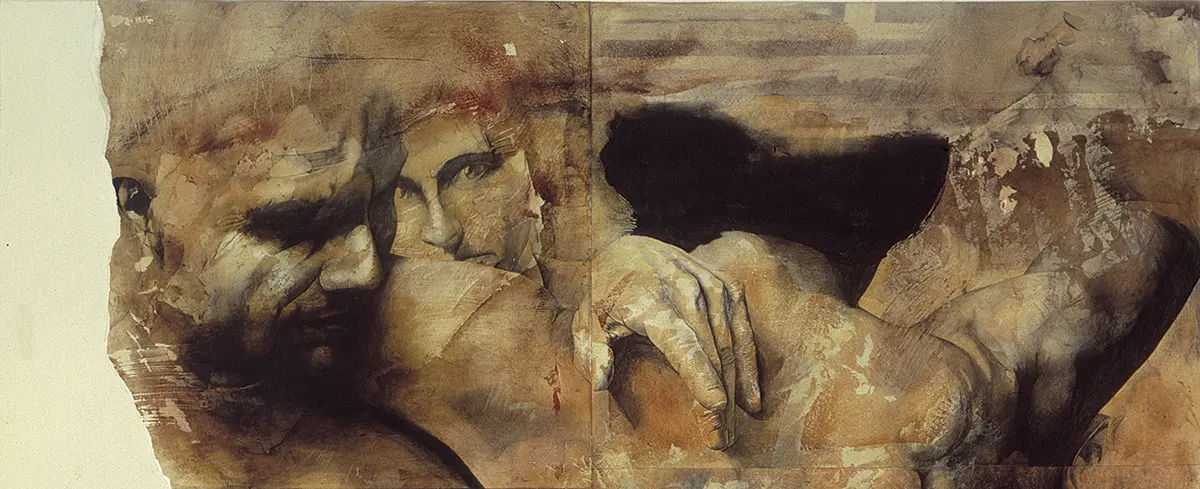
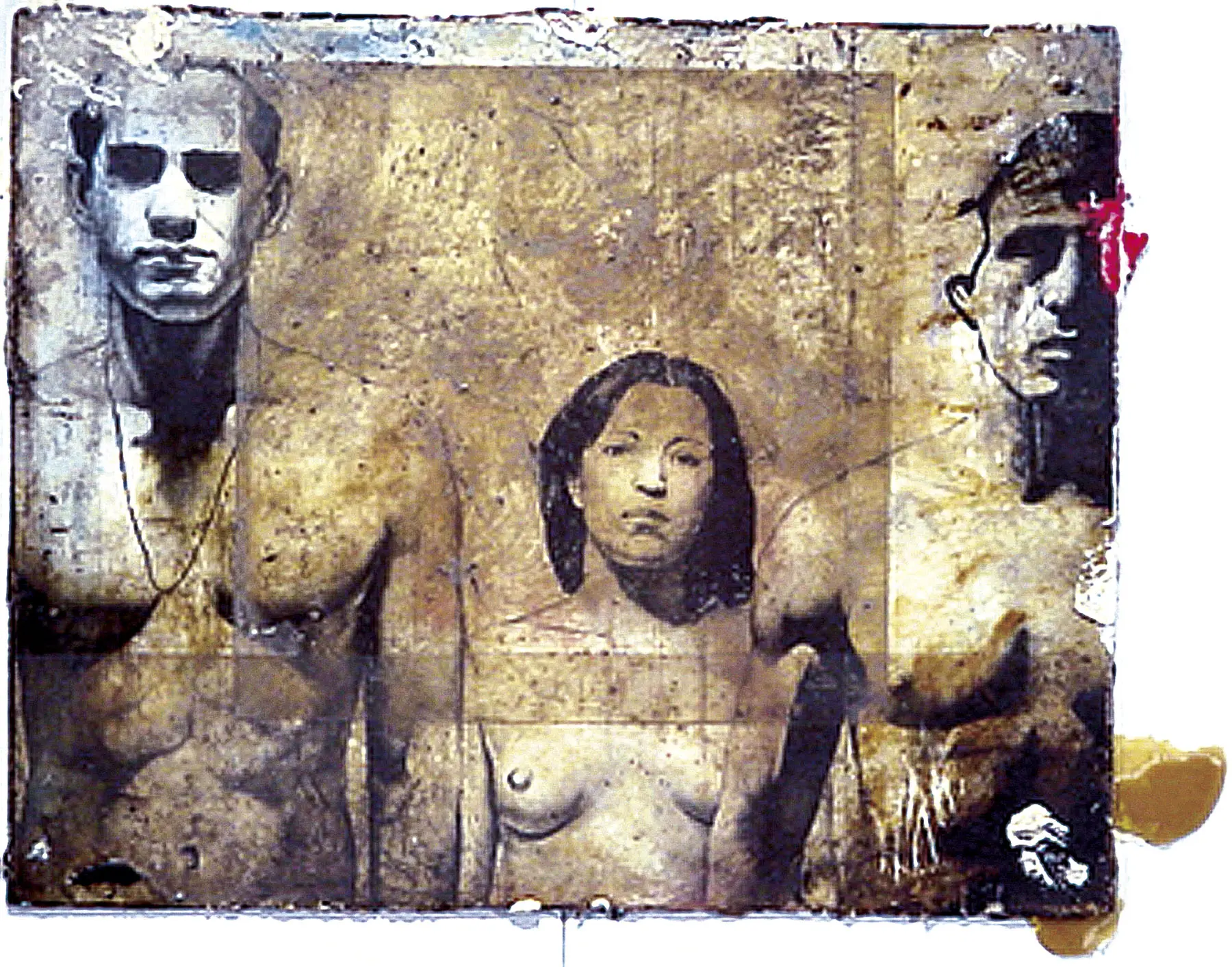
I am now facing the Chapultepec aqueduct arches, one of the first Spanish constructions in Mexico City. Only some thirty solid arches survive, each about three meters high. Surrounded by modern buildings on a heavily trafficked avenue, these arches are a memory of a way of life, of a fundamental relationship to water, the symbol of life and constant rebirth. At the end of the aqueduct, the fountain that people went to for the water that was carried from far away also survives. It seems to me that there is a resistant, permanent meaning in the simplicity of these arches, in the nobility of the stone that supports them against the adverse winds of History. Mexico City can be seen as the image of a Madonna who has suffered the severing of its waterways. Her aquifer arteries have become sewers. The aqueduct is the last refuge of an instrumented femininity. And it is at this point that I find a connection with the female figure in Cortázar’s paintings. In his baroque-like graffiti-covered boards, which he began producing in the 1980s, Cortázar revealed a romanticism that was smitten with the female figure. Interestingly, those painted women were not symbols of weakness, which might be expected in a macho society, but figures of strength: they remind us of a trusting Judith, a fickle Salome, and a loyal Saint Katherine, and they symbolize the artist’s admiration for sadomasochistic female archetypes.
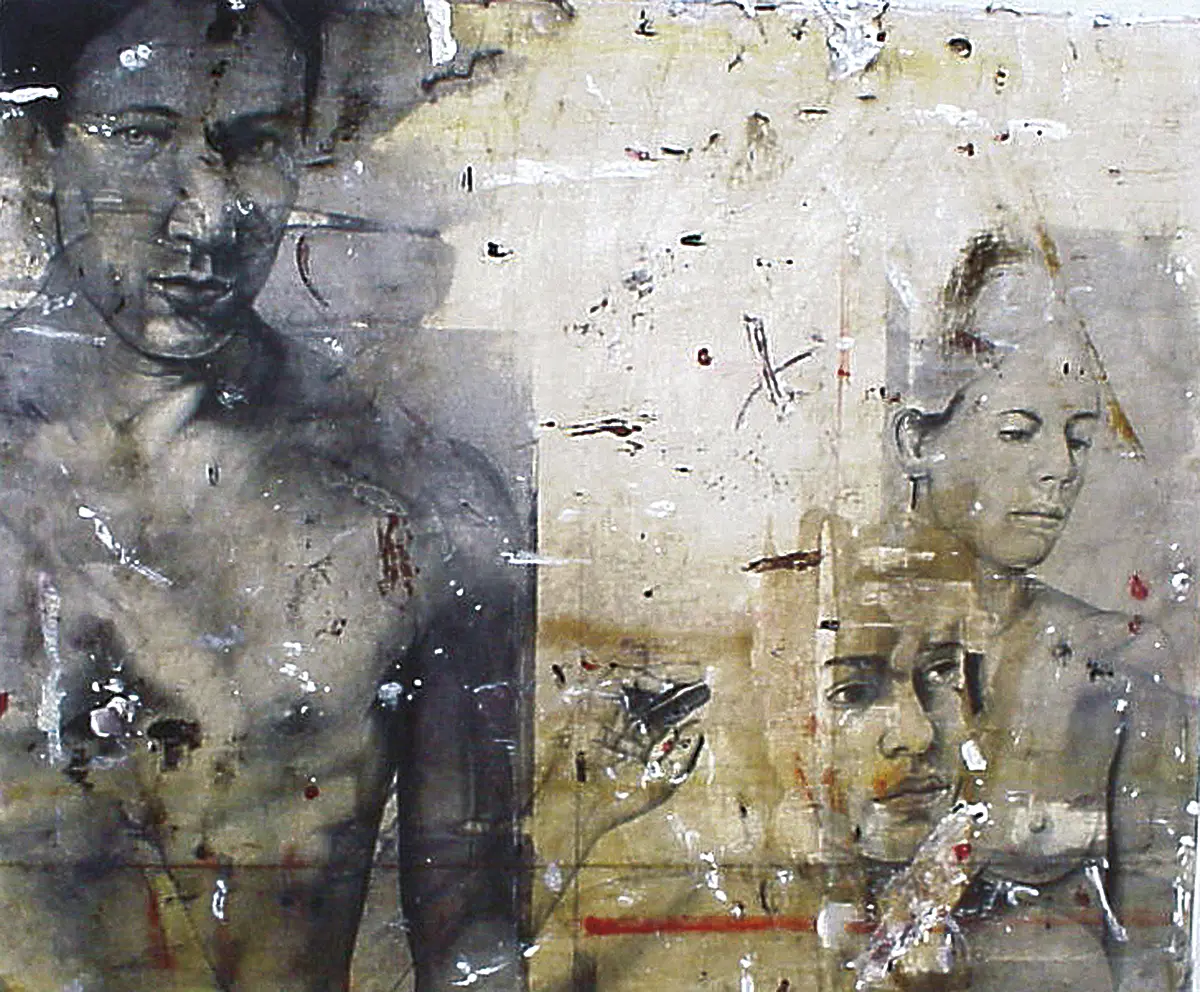
Along with these academic female figures —not devoid of a certain indigenous exoticism, with sophisticated features (high cheekbones, Oriental eyes, Modigliani-like profiles) and posed naturally, at a life-size scale— we find the male figures of Cortázar’s earliest period, just after graduating from the La Esmeralda school, when he was barely eighteen years old.
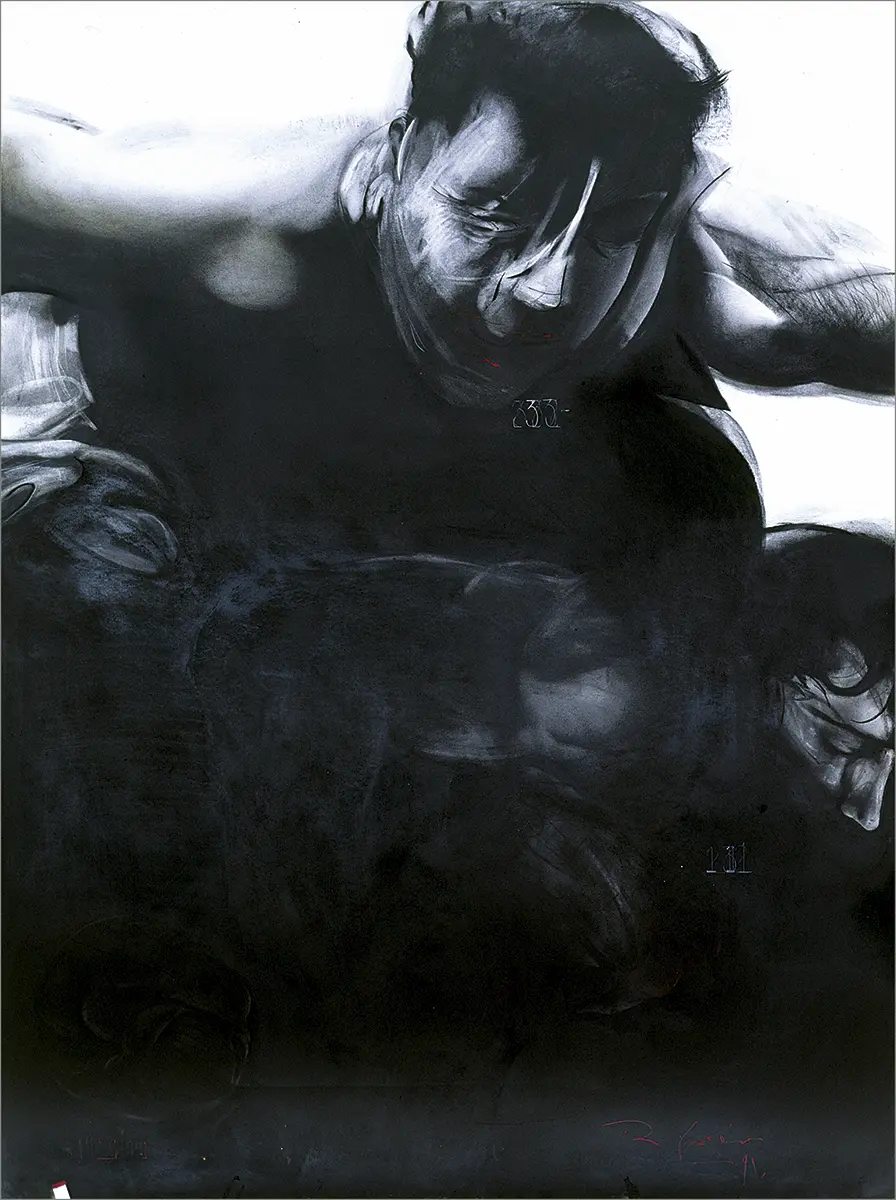
His taste for a classical way of doing things, combined with baroque and romantic obscurantism, drove Cortázar to seek powerful images of mourning and suffering in the decadent underground of culture; such were his works dedicated to Saturn, the father who devours his offspring. The metaphor of the anthropophagic culture, which sees potential enemies and critics in its young and assumes the need of an ogre who would sow the seed of his own destruction throughout the world, exerted an enormous attraction on Cortázar. His male figures appear to be focused on the external, lacking autonomous life, as if in flight from their own emotions. They are the refuge of rationality and of aesthetics of power, alienated from reality and historical time, and thus reiterate the artist’s intention to go all the way back to classical Greece, the beginning of Western civilization.
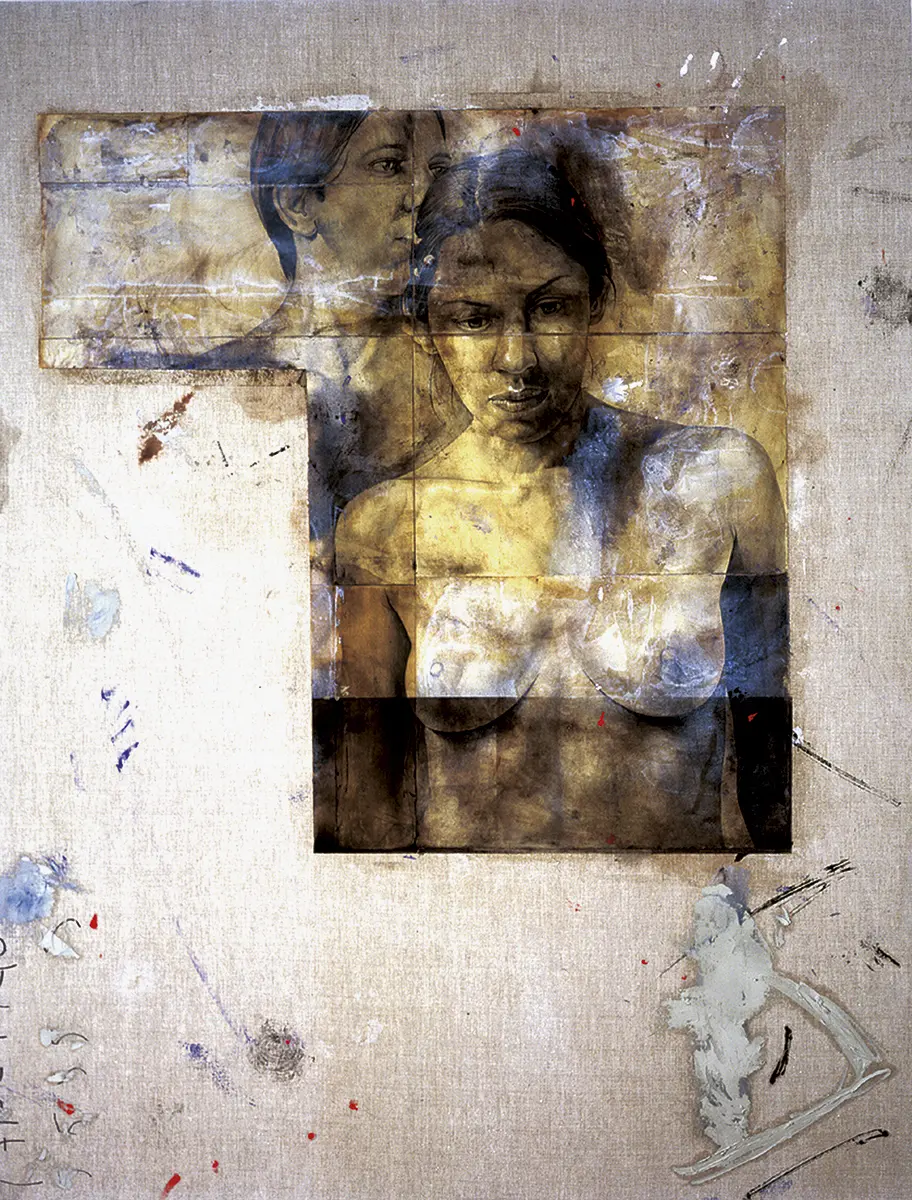
The influence of modernist Mexican painters such as Saturnino Herrán and Julio Ruelas is clear in Cortázar’s semi-nude paintings, except that in Cortázar we rarely find the object or the surrounding atmosphere that gave the figure specific temporality. In his way, Cortázar works with figures that inhabit culturally unsanctioned spaces, that move in an atemporal, abstract limbo, which allows him to use purely pictorial elements, strong impastos, and material collages that underscore the two-dimensional character of the work. In his more recent paintings, this denial of the painting as a window and its construction as a wall splashed with accidents, is partially negated by the use of thick baroque frames, carved and graffiti-laden, weighty and fragmented, that add a decorative element to the work’s concept, a kind of two-dimensional, transparent architecture of the imaginary, a palimpsest of shadows and realities in ruins, like those in Juan Rulfo’s novel Pedro Páramo, which epitomizes in literature Mexico’s aesthetic and cultural values.
The central park in the Santa María la Ribera colony, one of the first neighborhoods designed and built for the upper classes during the Porfirio Díaz regime in the late nineteenth and early twentieth centuries, has in its center a Moorish kiosk, the legacy of Mexico’s participation in the International Exhibition in Paris. It is somewhat strange that this architecture of half-point arches and intricate geometric designs was chosen to host Mexico’s delegation to one of the iconic events of European modernity. Mexican culture was dressed in a portable but alien costume in order to present a face that was not it's own. Seen today, in this park surrounded by modern restaurants and shops, the kiosk seems prescient of that tendency to pile up styles that characterize a Mexican sense of aesthetics, always moving between hiding and revealing.
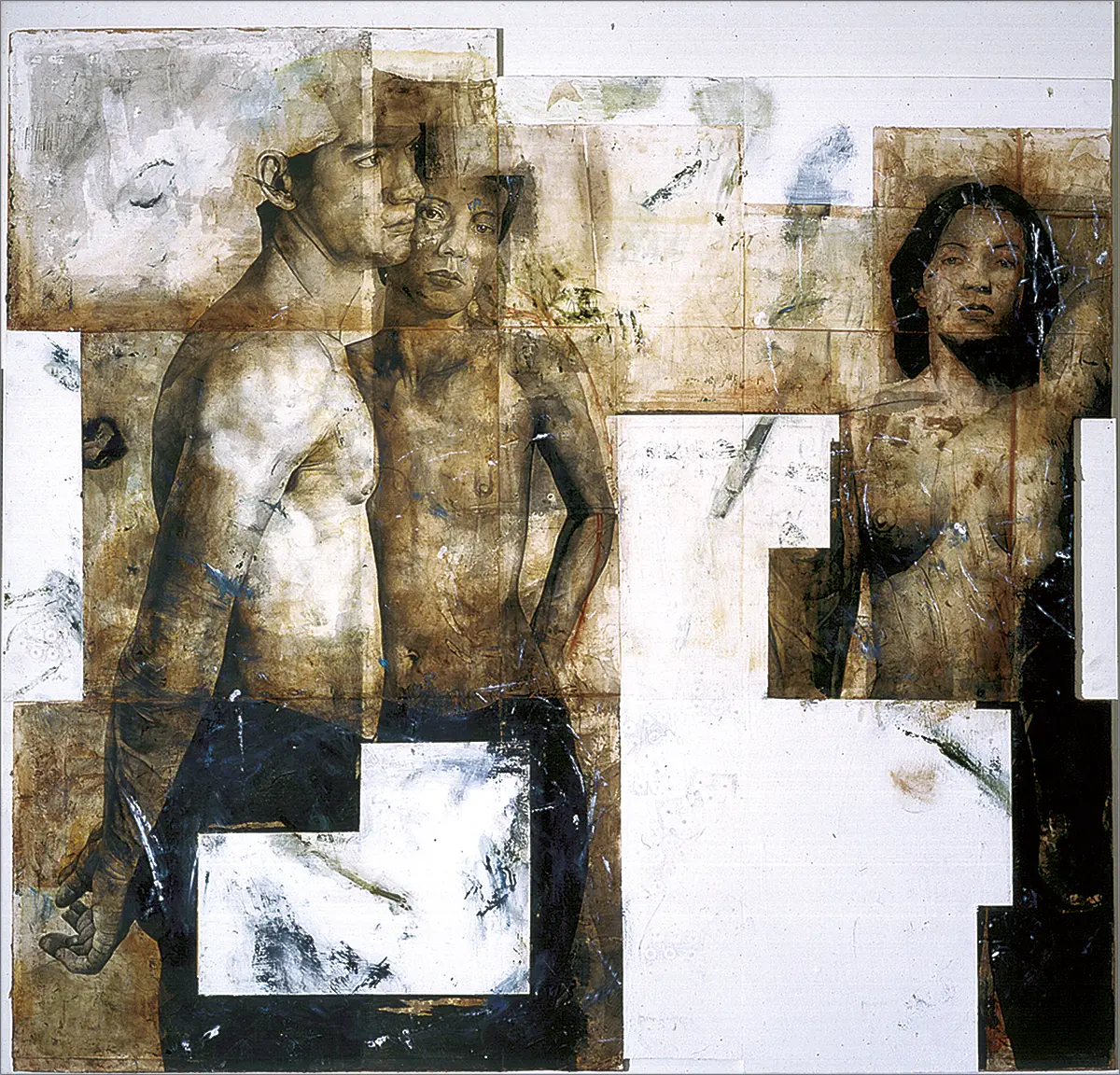
Roberto Cortázar’s 1995 exhibition at the monumental Palacio de Bellas Artes, another symbol of our urban architecture and a mixture of art deco, art nouveau, and baroque styles, was titled Postmodernismo y Romanticismo (the sequence is revealing of the artist’s trajectory). The themes that organized the exhibition account for the philosophical vision through which Cortázar narrates the history of his times. The sections of this fifteen-year retrospective carry titles such as Practice of Faith, The Twentieth Century, Flight Test, and Man Learns to Die. Styles follow one another in quick succession from Bible-inspired images to secular figures, all of them united by an erotic dedication to the avocation of the painter. This eroticism emanates from the absence of the loved subject; it is the product of unsatisfied desire, which will bring the viewer to the truth of eroticism, in the sense ascribed to it by Georges Bataille: the end of the erotic is death, the necessary twilight of the obsessively-sought communion. It is this element that Cortázar emphasizes in his mature work: learning to die is the secret of life —an essential romantic idea.
The will to follow the romantic path, marked by exotic and strange influences where the eroticism of the Orient mixes with the West’s Christian passion, spiraling from life to death, death equaling rebirth, fuels this artist’s ideas. Cortázar is interested in the construction of a language of his own with the fragments of various styles, and the primacy of painting and of image over text that characterizes our baroque culture. Like it or not, Latin American art and culture are characterized by a historical continuity that is not present in the region’s political or economic systems. In the realm of culture, our societies have maintained a salutary independence and selective regard for what comes from abroad, generating an empirical eclecticism. As Gerardo Mosquera points out, Latin American art looks at the world from Latin America, and is tied to its ground like a building’s façade is to its foundation, and like these are to the human.
* All images illustrating this article are courtesy of Praxis Arte Internacional, México.
JOSÉ MANUEL SPRINGER
Professor of La Esmeralda School, Publisher of the Magazine Replica21, and art critic.