At 80, the renowned Colombian architect and designer have been the object of several homages and recognitions; his invaluable production and his contributions to architecture and graphic design, his recuperation of popular expressions and of pre-Columbian design, and his academic work have all been of great importance. This retrospective exhibition, accompanied by a magazine and presented at Galería Mundo, is a fitting conclusion to this series of events and gives the public, especially the new generations, a wide panoramic of the work of Master Dicken, as the artist is commonly known.
Galería Mundo is one of the new exhibition spaces to emerge in Bogotá after the crisis of the late 1990s. It recuperates an architectural space in the Torres del Parque that was designed by the distinguished architect Rogelio Salmona, and at the same time it revitalizes an area of the city that has traditionally been a site of cultural activity. Mundo’s director and curator is Carlos Salas, also an artist. Salas organizes exhibitions of works by important figures in art, architecture, design, and criticism, and along with each exhibition he publishes a magazine of the same name. The magazine, already in its eighth issue, is designed to highlight images, so much so that it occasionally sacrifices reading and lessens the depth and content of many of its articles and reviews.
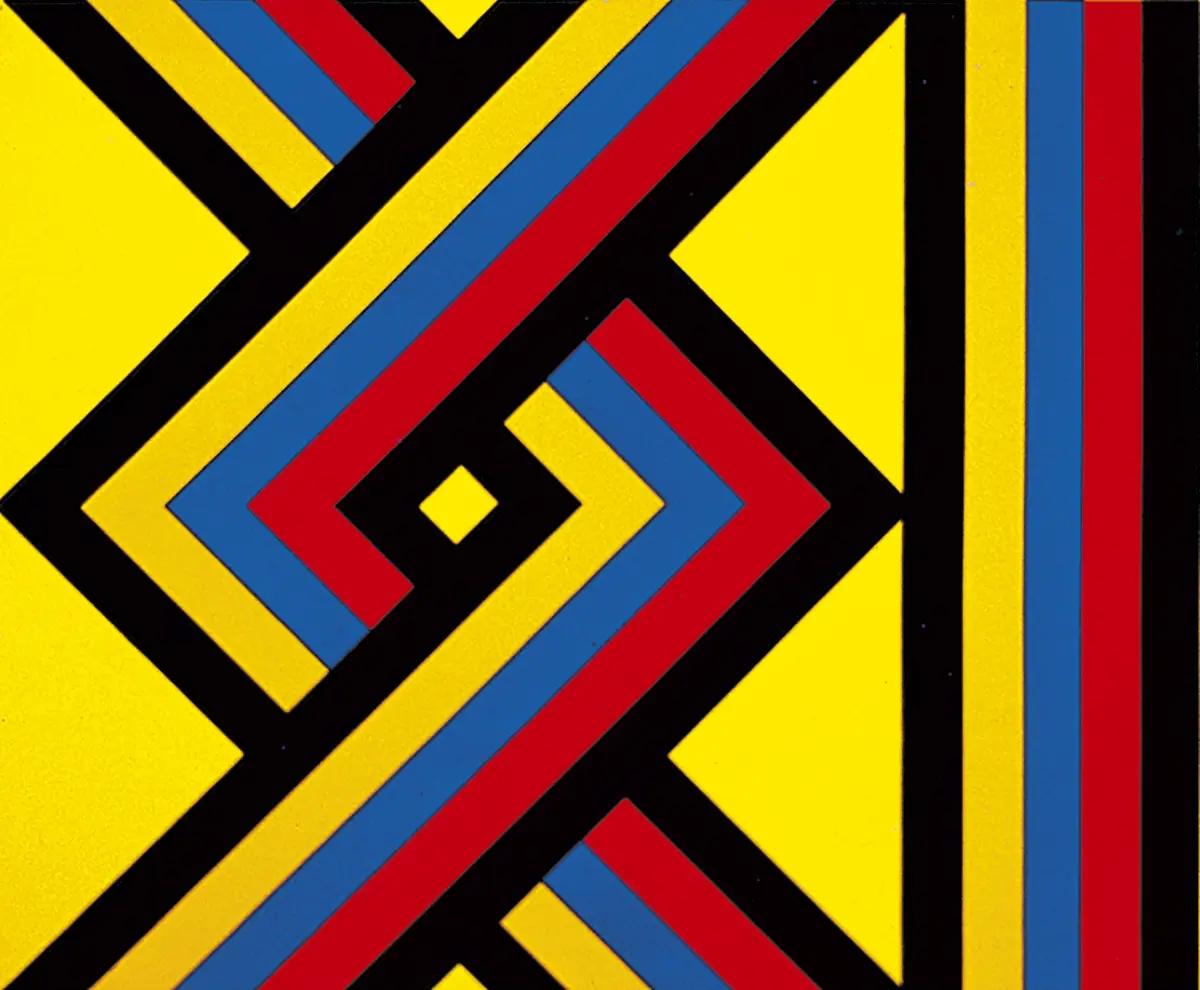
The space given in this case to Dicken Castro recounts a multifaceted oeuvre in architecture, design, research, and teaching. The two small halls emphasize Castro’s work in graphic design, represented by a selection of logos and icons created for various corporations and national events since the 1960s; de-contextualized, these express in a coherent manner a style characterized by simplicity, synthesis, and formal and conceptual directness. Many are the product of Castro’s interest in pre-Columbian design, expressed in ceramics and metalwork and transferred to graphic applications. Also on exhibit is a graphic proposal inspired by the multicolor decoration of those rural and inter-municipal buses known in Colombia as chivas; this proposal was created for the First OP Graphic Design Salon in the early 1980s, at the Bogotá Museum of Modern Art, and it comprises a series of panels recreating fragments of forms, typographic elements, and symbols, which can be articulated in a modular fashion to create murals.
Other facets of Dicken Castro’s work are reviewed in the magazine; as usual, the editor has gathered a number of commentators with an intimate knowledge of the topic —in this case, people who are close to the artists both personally and professionally, as collaborators. The publication highlights Castro’s architectural work. Castro belongs to an important generation of architects educated during the 1940s, who absorbed and adapted the ideas of Le Corbusier, Frank Lloyd Wright, Alvar Aalto, and Mies Van der Rohe; their proposal is equally characterized by simplicity and the use of simple materials such as bricks. Special mention should be made of Castro’s research on the use of guadua and bamboo by farmers and urban dwellers in the country’s coffee-producing region. The magazine then presents a selection of projects in photography, billboards, stamps, coins, illustrations, travel sketches, and brands and symbols from a book by Castro’s disciple, Orlando Beltrán. In general, the articles included highlight the master’s special charisma, and the simplicity and generosity of his personality, in contrast with the quality and great significance of his work.
FREDY CHAPARRO