In 1976, the Argentine artist Juan Pablo Renzi (1948-1992), in an interview done by the critic Jorge López Anaya for the newspaper La Nation, spoke about his "return" to painting. Renzi was one of the leaders of the most belligerent groups of the politicized vanguards in Argentina during the sixties. He interrupted his pictorial practice in 1968 and made the following comments:
We returned to painting but did so in an entirely different way: no longer as totalizing or messianic, nor as a general project to modify reality, history, or society, but rather with the thought that art was just a personal tool that could have some sort of transcendence but which lacked those transformative possibilities.
This conceptual shift signified an opening toward a work whose characteristics were quite different from those that had driven his earlier work when he belonged to the vanguards of Rosario which, from 1965 to 1968, marked the culmination of the drawing together of the artistic and political vanguards in Argentina in that decade.
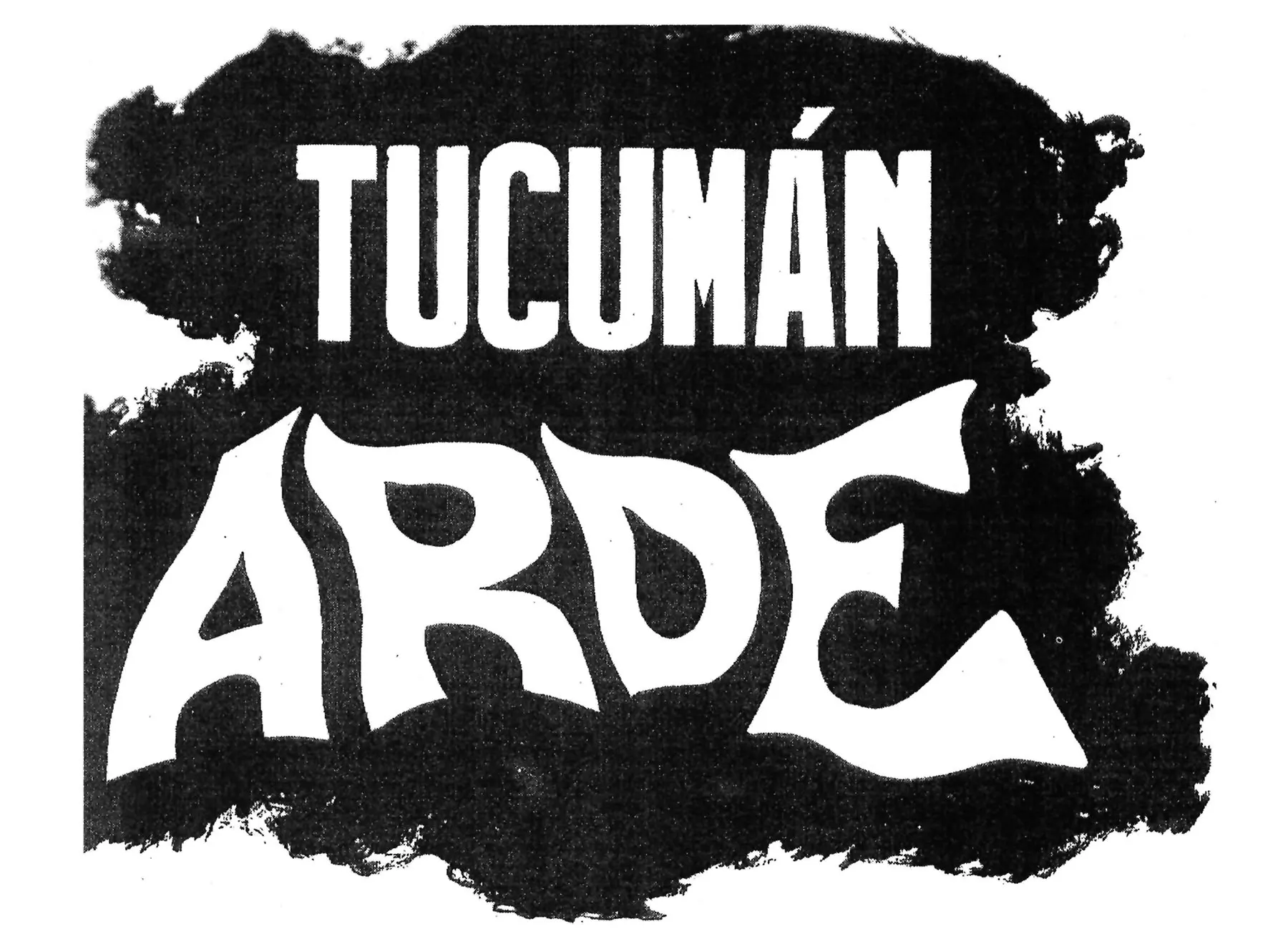
For in November of 1968, in the headquarters of "The Argentines General Confederation of Workers (CGT), "1 in the city of Rosario (Santa Fe, Argentina), a show entitled Tucumán Arde (Tucumán Ablaze) had its opening. This show constituted "the greatest collective work of the politicized artistic vanguard ever."2
This action in which the artists from Rosario violently broke the aesthetic and institutional norms of the times was a product of an active exchange not only with artists in Buenos Aires and Santa Fe but also with union leaders, students, and political militants.
Tucumán Arde takes its place as the acme of artistic and political effervescence which gave way, beginning in 1965, to important rallies that marked milestones in the process that was rapidly progressing.
The artistic praxis of these young people confronted the public with the prevailing ideas but also was driven by that desire "to modify reality, history, and society" to which Renzi spoke.
What were these milestones?
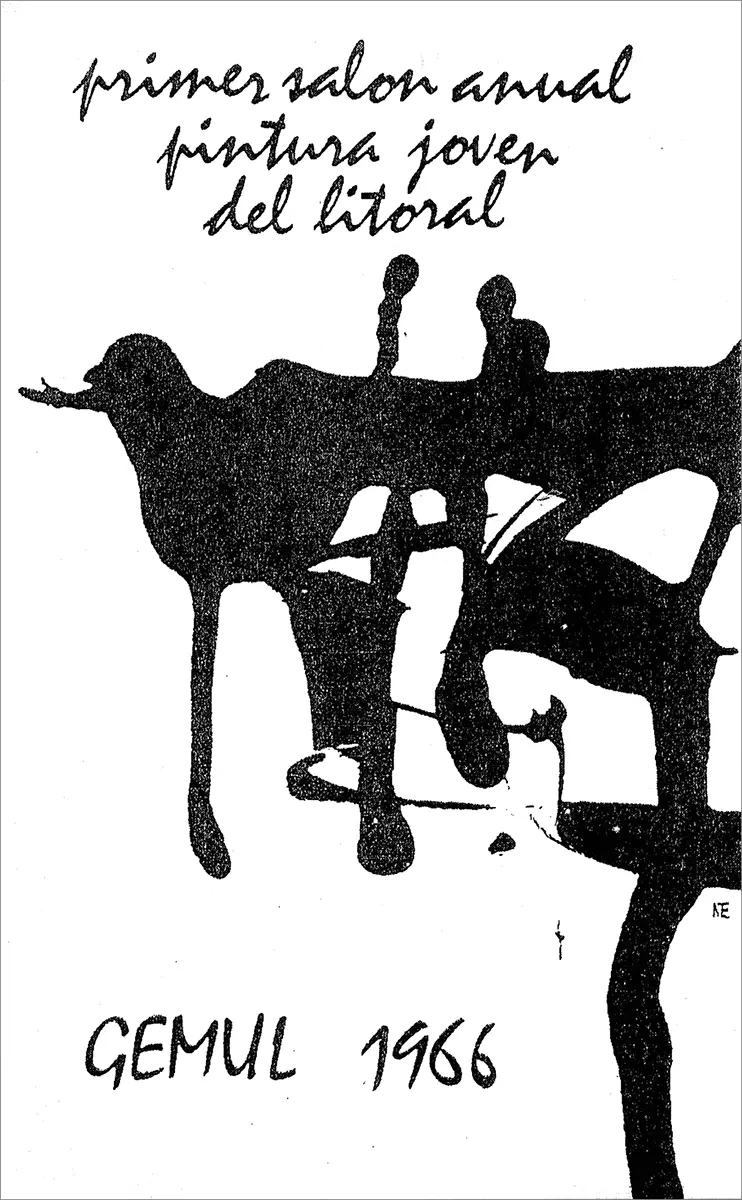
A glance back finds the fact noteworthy that a group of painters practically "took possession" of the Gemul Salon in Rosario (1966). This was considered the first in a series of scandalous triumphs in the face of a surprised and irritated public3.
In this "First Gemul Salon of Young Painters of the Coast", ambient installations were presented as objects and painting-objects in a blatant break with the tradition of easel painting. The artists who came to form the command group were Graciela Carnevale, Noemi Escandel, Fernandez Bonina, Lía Maisonnave, joined by Aldo Bertolotti, Eduardo Favaro, Carlos Gatti, and Juan Pablo Renzi. They joined forces with the Studio Group which, since the beginning of the sixties, had played a pivotal role in the artistic life of Rosario.
The Studio Group was composed of Osvaldo Mateo Boglione, Rubén Naranjo, and Jaime Rippa.
In that same year —1966— the artists published what was known as the Anti-Marmalade Manifesto, questioning the stagnant forms and practices of "institutionalized" art.
In this Manifesto the artists —who were already beginning to match action to their theoretical reflection— utilized general, not politicized arguments, directed essentially toward "defending" a serious, profound, creative, and revolutionary painting that always would offer the spectator new possibilities of knowledge and emotion.
"What was it they were calling marmalade? ...A type of painting that, flourishing a 'modern' appearance, represents the most recalcitrant of academic attitudes."
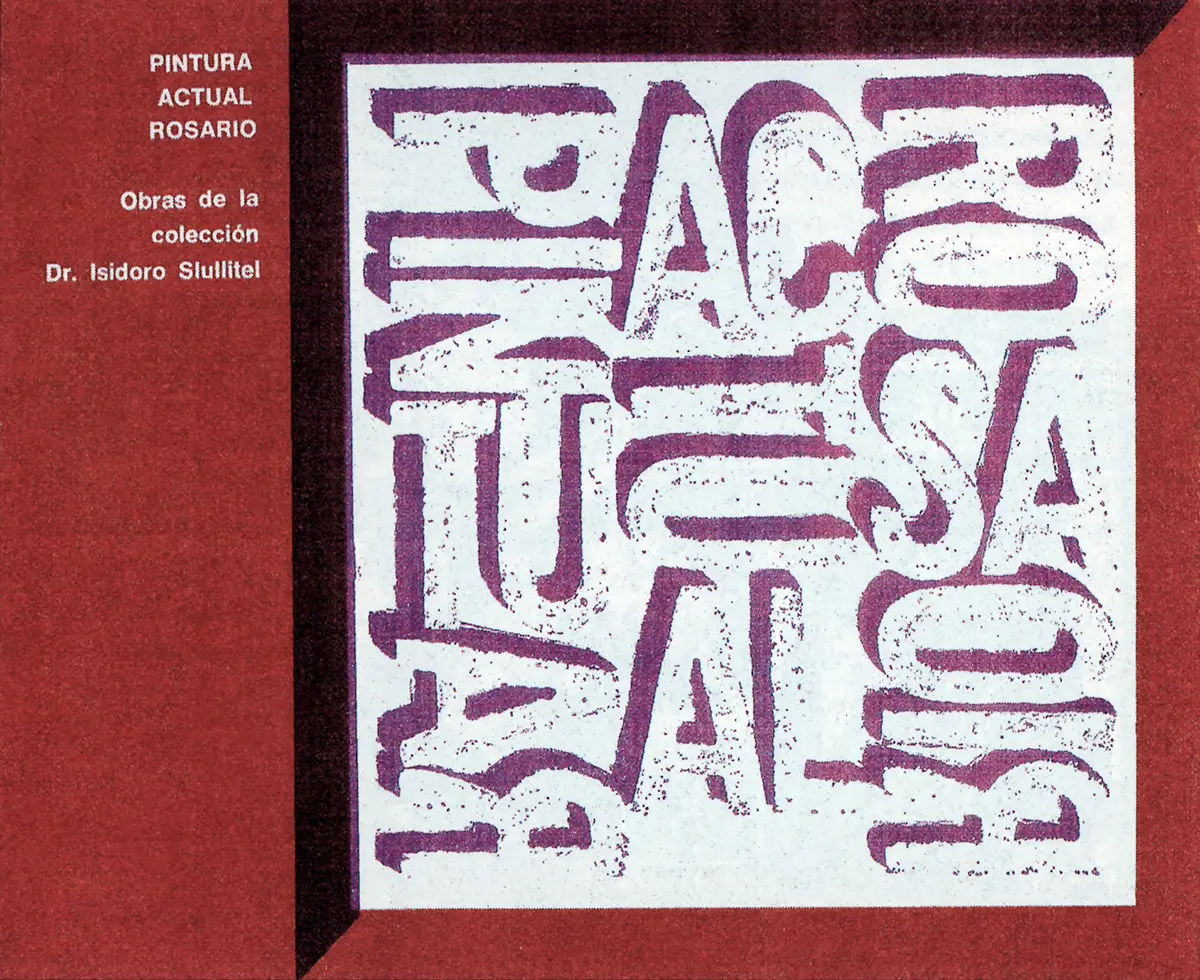
In 1967, following their intention of placing themselves outside the traditional norms, these artists held the show "Contemporary Painting from Rosario" with works from the Slullitel collection in the two most important museums of that city. In addition, they hold in the Quartier Gallery the show "OPN1 (Unidentified Small Object)", which manifests the importance the art object had for the group.
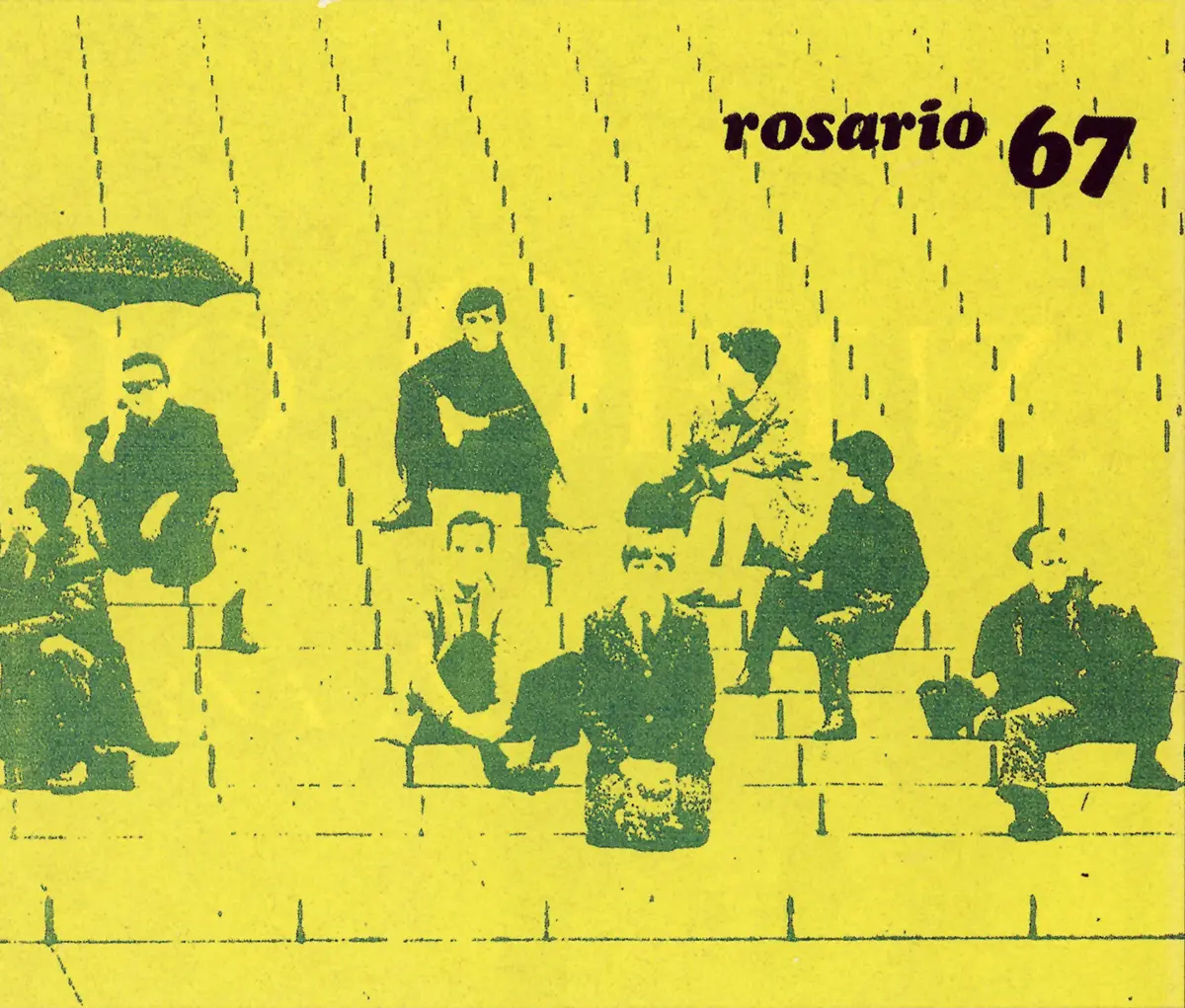
They continued their action in 1967 with two overwhelming incursions into Buenos Aires: Rosario 67 in the Museum of Modern Art (MAM) of Buenos Aires and Primary Sculptures II4 in the Hebraic Society of Argentina. Both shows were held within the context of the "Week of Advanced Art in Argentina", organized by the Di Tella Institute, and constituted "the biggest revision of art of the vanguard attempted to date in Buenos Aires."
They finished the year of their renewing presence by participating in Mar de Plata in the exhibition Art in the Air, sponsored by MAM and two local airlines.
Up to this point, the more or less provocative action by these artists was based on formal innovations that implied a rupture with traditional forms, sapped of life or stagnant, and tended toward a new positioning in the artistic field. Their defiant attitude with respect to the "institution", which would only be heightened in the year to come, provoked an impact in the milieu in which they acted, the action of these artists being linked to a desire to tighten the connection between art and life. If internationally this had begun with futurism, in Argentina it had just started at the end of the fifties.
In 1968, they radicalized their positions. in May, they organized the cycle of experimental art sponsored by the Di Tella Institute. In line with their rebelliousness, they decided not to participate in the salons and returned the money given to them by the Institute in the form of a subsidy.
In one week this commentary appears:
"Alone, conscious of the consequences of a double-edged resignation (that which distances them from the sources of power and, simultaneously, from the only perspective for restoring their works given their lack of a market), the members of the Rosario vanguard now place themselves on exhibit."5
In June of 1968, they were invited to the Braque Prize, organized by the French embassy in Argentina. Consistent with the position they had taken, they refused the invitation with arguments made explicit in the Manifesto It is always time not to be an accomplice:
"Our NON-participation in this prize stems from an attitude that is part of a broader desire NOT TO PARTICIPATE in any act (official or seemingly unofficial) that might signify complicity with all that is represented by various levels of the cultural mechanism utilized by the bourgeoisie to co-opt all revolutionary processes."
Here their will is made manifest to move from action in the cultural and social realms—as was the case up until then—to the political realm6.
Once more the weekly Primera Plana covers them to indicate: "The Rosario vanguard sought to change the studies established for acquiring a degree, they threw out fame in favor of life, they prepared to take to the street in order to take charge of their liberty."7
When the Braque Prize was held in Buenos Aires, provoking this polemic, tumultuous events occurred, led by Buenos Aires artists like Pablo Suarez, Rodolfo Jacoby, Ricardo Carreira, Margarita Paksa, and Eduardo Favario from Rosario, who were arrested by Federal Police.
On the occasion of a lecture given by the critic Jorge Romero Brest, Juan Pablo Renzi wrote the script for a work titled An Assault on the Lecture of Romero Brest.8 The incursion of the artists from Rosario at this event was considered a "collective action".
In August of that year the convocation was held for the First National Meeting of Vanguard Artists. This offered a forum for theoretical writings like León Ferrari's "El arte de los significados" (The Art Of Significates); Ricardo Carreira's "Compromiso y arte" (Commitment and Art); Juan Pablo Renzi's "La obra de arte como producto de la relación conciencia ética-conciencia estética" (The Work of Art as Product of the Ethical Conscience- Esthetical Conscience relationship), and Nicolis Rosa's untitled paper.
The meeting took place in the Center for University Studies over the course of a weekend, during which dissident artists and professors worked to establish the outlines of future action.
Terms acquired a polemical and politically committed charge at the meeting in a decisive fashion.
Renzi explains the possibilities for the "new" work of art:
The work must be created outside the institutional bourgeois network. Collective works of action and violence as an aesthetic language may be the beginnings of new work. [To produce] a kind of work that produces effects similar to a political act.
For his part, León Ferrari signals in his paper The Art of Meanings:
"Art will not be either beauty or novelty; art will be efficiency and disturbance... Our work consists then in seeking aesthetic materials and inventing laws to organize them around meanings, their efficiency of transmission, their power of persuasion, their clarity, their inescapable character, their power to compel the media to publish denunciations, their nature as a focus of diffusion for scandal and disturbance."
The artistic and political belligerence continued to increase, culminating in Tucumán Arde, a highly committed vanguard action that sought its insertion into the society within the context of a reordering of the relationships between art and the artist and society itself.
Assuming an anti-establishment role with an even greater political commitment, the young people of Rosario openly surpassed the artistic field from which they had begun to rally when, in November 1968, they set in operation Tucumán Arde in the headquarters of the workers' trade union of Rosario and then in Buenos Aires. The merely experimental vanguard had been left behind and had acquired a decisive presence with the idea of aesthetic subversion ought to be accompanied by social and political transformations. The path these artists had chosen was emphasizing the factor of rupture to the point of limiting situations like this one.
On the other hand, having voluntarily marginalized themselves from prizes, grants, or any type of institutional support or assistance naturally led them to a work whose revolutionary charge largely surpassed the theme by objectifying itself in an "effective and disturbing" work that inserted itself directly into the political action. Tucumán Arde was an operative articulation of the vanguard artists of Rosario with sectors of the workers' union movement.
According to a statement signed by Maria Teresa Gramuglia and Nicolas Rosa, the artists traveled first to Tucumán with a wide range of documentation regarding the economic and social problems of the province and a detailed knowledge of all the information the media had produced regarding the problems of Tucumán. This last report had previously been submitted for critical analysis in order to judge the extent of the distortion and degradation sustained by the information.
This processing of such information was manipulated in various instances in ways that tended to promote a discouraging process regarding the image of reality in Tucumán as elaborated by the mass media.
The artists made connections with works in the plants and in agriculture, with union leaders, students, teachers priests, workers, etc. They held interviews and meetings in the plants and towns outside the city to discuss the problems of the people of Tucuman. Using tape recorders, they collected oral documentation as well as took photographs, and made films.
They finished by holding a round table concerning the socio-economic situation provoked by the closing of plants, the insensitivity of institutions and official culture toward the problems of the people of Tucumán, and the participation of artists in social struggles. Many newspapers showed interest in this initial stage of the artists from Rosario, titled Art and Mass Communication.
The newspaper Noticias from Tucumán notes some of their assertions:
"We want to spotlight... the divorce that exists between culture and society and society's conflicts. We will not convey this simply through our own personal impression but rather, with the very materials we collect in the region."9
The Gaceta from Tucumán comments that these artists led an interesting experience that could be called "New Techniques in Expression" since it goes "beyond the simple visual display of works realized with a certain aesthetic orientation to become a research essay and an investigation into the cultural environment."10
La Tribuna from Rosario had its say, stating: "This work, proposed as a collective experience, contemplates the participation of artists from a range of disciplines whose new proposals led them to make use of a common work that will be developed through the media with elements taken from reality."11
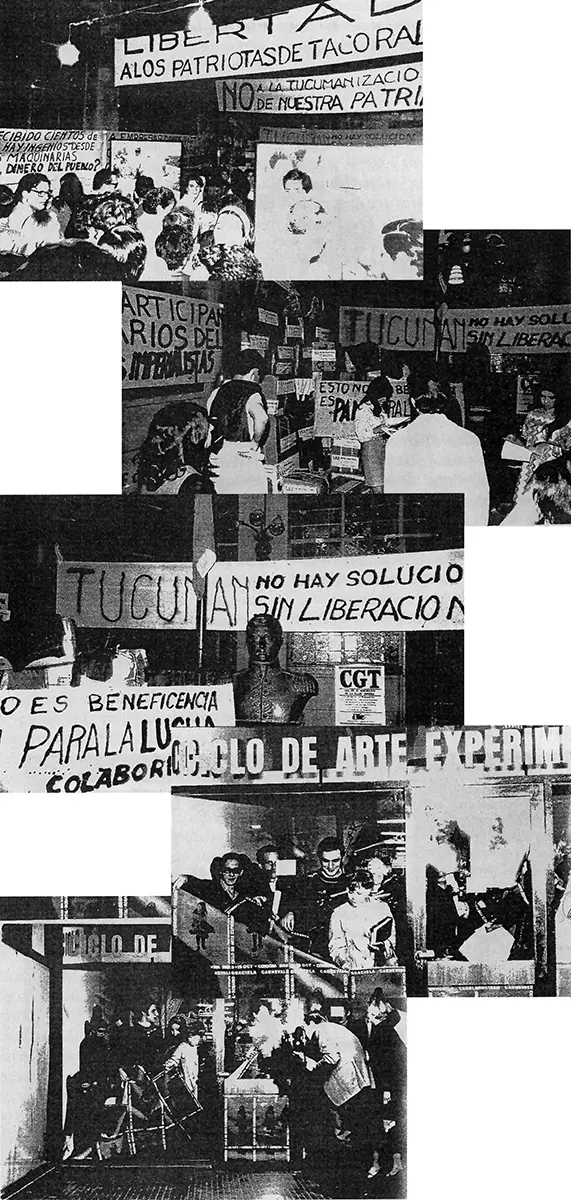
With all the material collected in situ, they prepared the definitive show that was inaugurated on November 25 as a way of relating the research of the artists with the worker's organizations, supporting their political action and with the intention, furthermore, of assuming the role of propagandists and activists for the social struggle of Tucumán and of creating an alternative culture that, proposed as an orchestration of violence and subversion, will wear down the official apparatus of bourgeois culture.
The intention was to turn the exhibit into a permanent political act. They plastered the walls with large photographic murals, handmade posters, and bands of fabric bearing slogans; they transmitted recorded tapes, projected films, and audiovisuals, and distributed mimeographed statements. They sought a meeting with the spectators and a chance to argue with them.
Texts of the interviews done and of the posters on display were handed out to the audience as well as a report was written by the sociologists M. Murmise, S. Sigal, and C. Waisman from the team at the Center for Research in the Social Sciences.
Days later, the show was inaugurated in Buenos Aires, a message was received that it had to be closed down immediately or the CGT would be seized.
The same material was used in this show as in the show in Rosario, the posters with the inscriptions "Visit Tucumán, Garden of Poverty," or "Tucumán, There's No Solution Without Liberation" invading the elevator and hallways. Audiovisuals and a film were also projected.
A declaration made on the occasion of the show in Buenos Aires, signed by the Visual Artists of the Vanguard of the Committee for Artistic Action of The Argentines' CGT, stated:
"We wish to restore words, dramatic action, and images to those places where they can carry out a revolutionary role, where they can be useful, and where they can become weapons for the struggle."
"Art is all that which mobilizes and agitates: Art is that which radically rejects this lifestyle and says, 'let us do something to change it.'" In the official organ of the CGT, an explanatory article was published entitled "Why Tucumán is Ablaze".12
Artists had never carried out such a novel, committed, and complex intervention. The theoretical reflection, the connection between art and politics, the documentary recording, the orchestration of publicity, and the campaign carried out in the media were various approaches to implementing this unprecedented event in the country.
"Revolutionary art proposes that the aesthetic act is like a knot in which are incorporated and unified all the elements that compose human reality: economic, social, and political, like offerings from various disciplines that eliminate the division between artists, intellectuals, and technicians, like a common action tending toward the improvement of the entirety of the social structure. That is to say, total art."13
As Ana Longoni has quite accurately indicated, the itinerary taken revealed many cracks over time. As the aesthetically and politically radical nature of the group increased, disagreements and discord emerged.14
There existed among the artists — above all, after the closing of the workers' union center in Buenos Aires— the belief that the intention that had inspired the work had now been consummated.
This intense fusion of art and politics in an anti-establishment action fits within the climate of political and ideological rebellion, not only among students but also among other social subjects who constituted —independent of the undeniable local conditions— a worldwide phenomenon. On the other hand, as Octavio Paz has stated, there existed strong utopic elements in the field of ideologies, the heritage of long modem history.
The fact should not be ignored that if the vanguards of Rosario were the protagonists of this event, one of the most significant in Latin American art in the sixties, they had a no less significant presence in the art of the country in their actions preceding that event. Examples of this are the initial structures of Graciela Escandel, Eduardo Favario, Norberto Puzzolo, Lía Maisonnave, Fernández Bonina, Noemí Escandell, Aldo Bortolotti, and Carlos Gatti, exhibited in Buenos Aires in the "Week of Advanced Art" or those of Rubén Naranjo, Emilio Ghilioni, Rodolfo Elizalde, Jaime Rippa, Juan Pablo Renzi, Osvaldo Boglione, and Martha Greiner in the Cycle of Experimental Art in Rosario.
One must consider that in the provocative action by the Rosario group there were participants from Buenos Aires and that in this city, events like the protest rallies and the arrests that accompanied the inauguration of the Braque Prize of 1968, as well as the broad convocation the Van Riel Gallery held for the Homage to Viet Nam in the sixties, were more of the many milestones created by the climate of rebellion and criticism, culminating in the singular and important event of Tucumán Arde.
NOTES
1. General Workers' Confederation. This was the combative wing of the workers' trade union,
2. Ana Longoni, “Tucumán Arde: encuentro y desencuentros entre vanguardia artistica," in Cultura política en los años 60. Editorial Oficina de Publicaciones del CBC, Universidad de Buenos Aires, 1997.
3. Primera Plana. Buenos Aires, July 9,1968, No. 289.
4. In homage to the first exhibit of the movement, which took place in 1965 in the Jewish Museum of New York. Primera Plana. Buenos Aires, October 3, 1967, No. 249.
5. Primera Plana. Buenos Aires, July 9,1968, No. 289.
6. Guillermo Augusto Fontoni points to the politicized happenings of the "Parallel Biennial” in Cordoba as one of the first identifications with politics. "Rosario: opciones de la vanguardia," in Cultura y política en los años 60. Editorial Oficina de Publicaciones del CBC, Universidad de Buenos Aires, 1997.
7. Primera Plana, Buenos Aires, July 23,1968, No. 291.
8. Lelia Driben, El Periodista, November 11,1968.
9. October 24, 1968.
10. September 17, 1968
11. October 22, 1968.
12. Buenos Aires, December 12, 1968.
13. Robho, 2nd trimester of 1971, Paris, No. 56 published a long article devoted to Tucumán Arde.
14. Ana Longoni, see note 2.
NELLY PERAZZO
President of the National Academy of Fine Arts, Argentina, Consultant to the Ministry of Exterior Business Relations and Culture.