Ways of Understanding the Caribbean
The show Central America and the Caribbean: A Black and White History, curated by Virginia Pérez-Ratton, director of the MADC in San José, Costa Rica, served as a national representation of the countries of that region at the São Paulo Biennial, thanks to the initiative of the event's organizers.
The other show is Insular Caribbean: Exclusion, Fragmentation, and Paradise, curated by María Llüisa Borrás and Antonio Zaya, which was presented as a co-production at Badajoz's ME1AC and Madrid's Casa de America, and later traveled to Paris and Berlin. The titles of both show already articulate the split between both perspectives, and at the same time, they state the geographic definition of what is Caribbean, thus grounding the methodology of this curatorial work. On one hand, in Central America and the Caribbean: A Black and White History, the integration of Central American countries with the islands, based on the cultural fragmentation and on historical connections with geography, also constitutes a strategy of confluence in order to deal from a convergent perspective with problems common to the different countries in the region within the mechanisms of distribution (though also of comprehension) of the international artistic apparatus.
The exhibition, which adheres to the use of photography through multiple perspectives, offers a very synthetic panorama of the most relevant concerns and discursive formulations of the area. Not all of the countries are represented, but that synthesis allows the questions that are raised to be addressed in greater depth. We must keep in mind that the show is located in the Biennial's section on national representations. By adopting a global and concentrated vision, focused on the use of multiple and versatile photographic resources, we may establish, from a perspective of vitality and unrest, the incessant avant-garde experimentation of languages that speak to the more immediate problems. We may thus place the artistic output of the region within a perspective that coincides with international lines, yet in an original way that is charged with its own personality. Each of the works marks the boundaries of a specific and complementary territory, the totality of which builds a solid and coherent image.
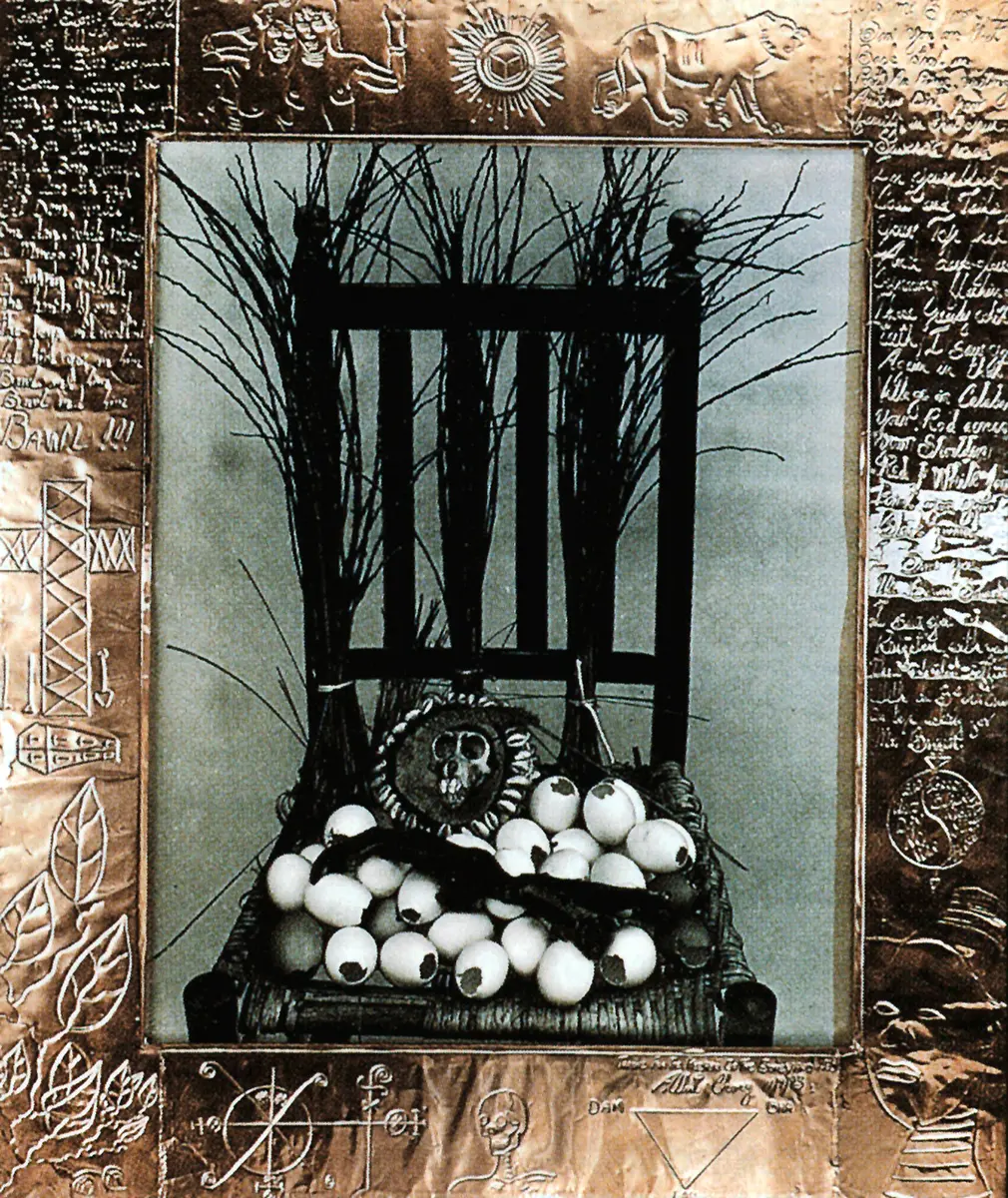
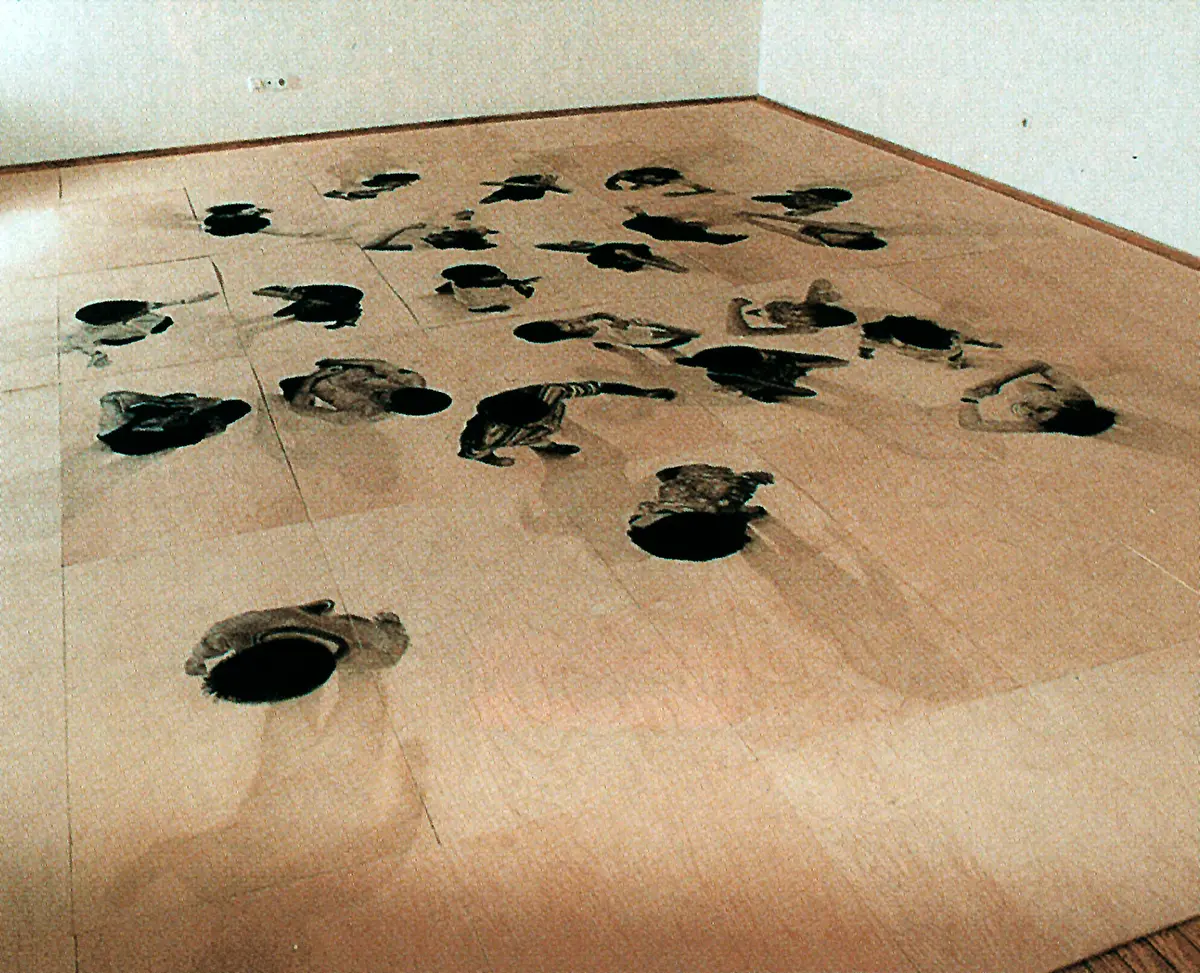
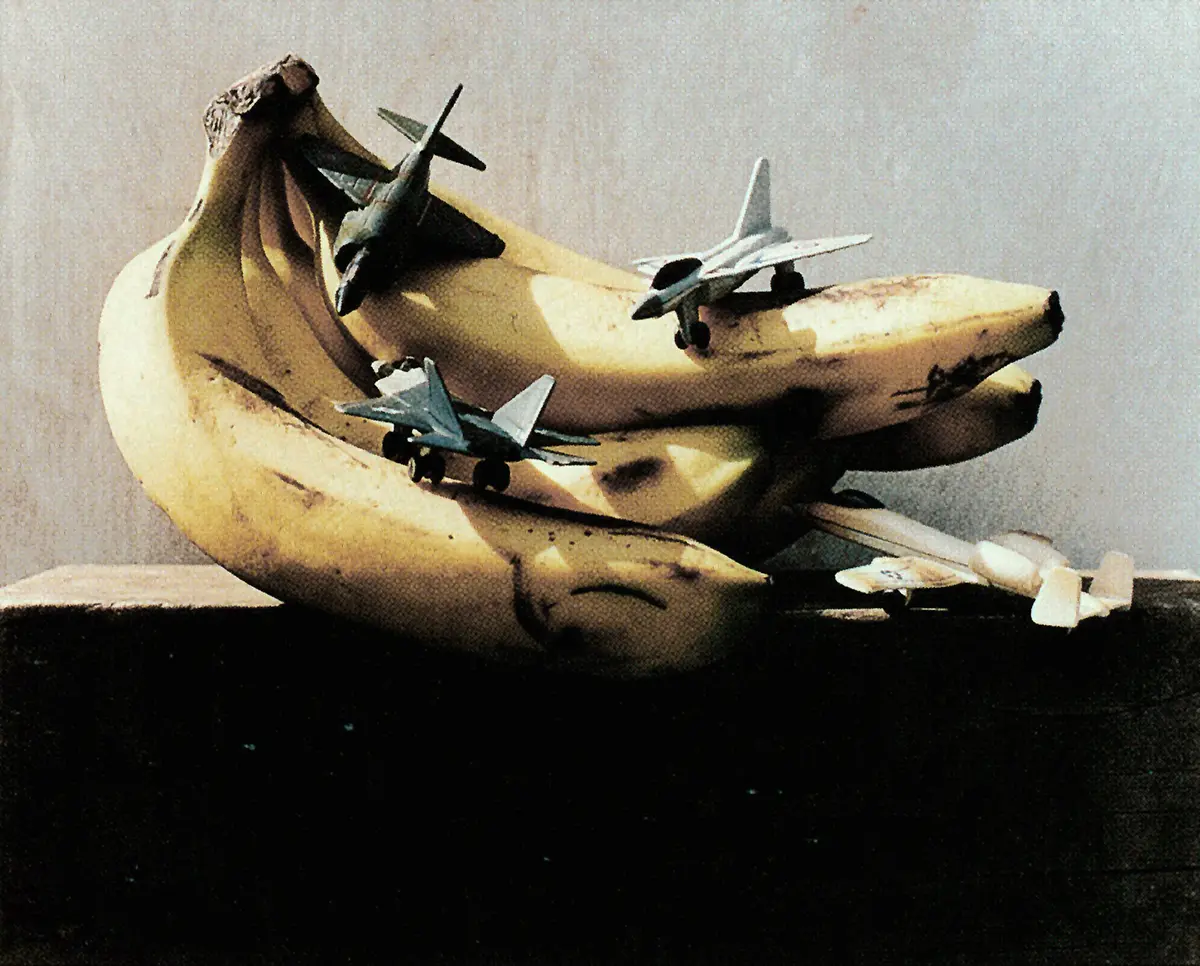
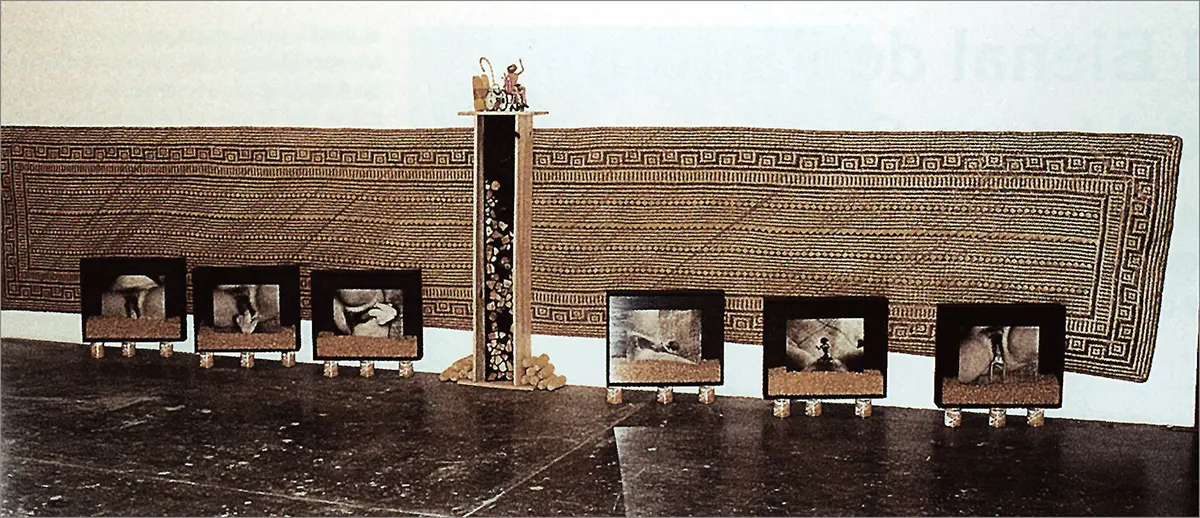
Photography is a resource with which to speak of a Caribbean reality from the breach of Technicolor themes. But it is also a way of exploring the possibilities of a medium in full expansion. Indeed, the photographic dimension of the show is enlarged across different technical territories: it encompasses everything from a drawing of dancing bodies on wood, seen from above with photographic fidelity (the work of Allora & Calzadilla of Puerto Rico), to the volumetric construction of x-rays by Ernest Breleur (from Martinique); from the casual snapshots on the streets of Santo Domingo (negatives in black and white developed on color paper with the entire range of the basic colors) by Martín López, or the snapshots of the Guatemalan Moisés Barrios, "constructed" as visual poems on identity; from the Síndrome bananero (Banana syndrome) to the delicate photographs of the Chocoe Indians by the Panamanian Sandra Eleta, or the boxes of light by Abigail Hadeed, who displays the musical vigor of the panyards of Trinidad, above and beyond mere documentary, or photographs of altars of personal and traditional memory placed on chairs by the Jamaican Albert Chong. Photography, and its possible interpretations, are also present in the poetic installation of boxes of abstract lights with foam-rubber screens by the Haitian Mario Benjamin; in the disturbing video on women's makeup that turns the woman into a victim of abuse, in a soft oscillation between black/white and color by the Costa Rican Priscilla Monge; in the objectual and photographic installation by the Cuban Carlos Garaicoa on ruins and their ubiquity; in the installation charged with irony by the Nicaraguan Raúl Quintanilla; and also in the retrospective works of the Salvadoran Luis Paredes and the Honduran Regina Aguilar. On the other hand, Insular Caribbean adheres to the dispersed archipelago of the Antilles, including Guyana.
Its plastic setting encompasses a diversity of both technical and thematic that, although it is a reflection of the region's variety, tends more toward dispersion which, in certain cases, is accentuated to the point of confusion by the excess of works and artists (43 artists are reviewed in the catalog, although in the two exhibitions presented to date, in Badajoz and Madrid, participation was reduced because of space limitations). The installation especially highlights the aspects most closely connected to the religious Afro- Caribbean traditions and, obviously, to Carnival, with paintings collected outside of the installation.
Both shows share the presence of certain artists (Albert Chong, Carlos Garaicoa, Ernest Breleur, Allora & Calzadilla, and Mario Benjamin). However, the reading of these compositions is not always as clear as it was in São Paulo.
The proposals of the Cuban artists constitute one of the most solid and conclusive kernels, like Armando Marino's installation, Pedro Álvarez's pictorial triptych, the montage of Los Carpinteros (The Carpenters), and the works of Carlos Garaicoa, Sandra Ramos, Abel Barroso, and the photographs of René Peña (Tania Bruguera, who is included in the catalog, had intended to participate in a performance piece, which in the end did not occur). We must also underscore the work of the Dominicans Tony Capellán, Jorge Pineda, and Belkis Ramírez; the Puerto Ricans Charles Juhasz and Dhara Rivera; Marc Latamie from Martinique; Annalee Davis from Barbados; Verónica Ryan from Montserrat; and the work of Peter Minshall, who turned toward the performance collective at the Trinidad Carnival (through The Callaloo Company) in a way reminiscent of certain attitudes of Hélio Oiticica.
But diversity, although constituting an excellent source of information, at times minimizes the comprehension of a complex reality, tending to privilege the elements most closely tied to the popular and religious tradition in its purest state. However, the contrasts are marked by the most elaborate proposals: the paintings of the Haitian Duval-Carrié or Albert Chong's photographs, before the magical and intuitive pieces of Goudin-Thébia (Martinique) or the assemblies of Pierre Barra (Haiti) who, according to the information in the catalog, does not function as an artist proper, although his compositions are an example of an artistic sensibility tied to the religious, something very frequent in the Caribbean. In this sense, we could indeed desire a critical vision to clear up not only the phenomenon (very frequent in Cuba and Haiti) of the presence of elements from Afro-Caribbean religions in artistic works but also, and more importantly, how these presences are to be evaluated, distinguishing between ritual itself and artistic elaboration of the ritualistic, between what is evocative and what is illustrative; to be sure, a distinction between truly artistic work and a truly religious work. The intense racial mix and secularization do not affect African legacies and western legacies in the same way.
Painting is perhaps one of the more debatable sectors in this show. With two exceptions, no relevant pictorial line can be readily specified. The first exception is Pedro Álvarez's fine trajectory, both witty and resolved, as we have seen in his most recent pieces, using reproductions of paintings from the Prado Museum as a fragmented background for painting new ghosts and dreams of the Caribbean. The second exception is the work of Chris Cozier (Trinidad), fragments painted over fragments. In a certain way, the works of Armando Mariño, although in part pictorial, situate themselves on a plane of ambiance and objectual installation, and it is precisely in that contrast between painting and ambiance where his force resides. Something similar occurs with Belkis Ramírez's piece, which possesses a pictorial sense, though the resources are subjected to objectuaiity and active reading of installation; and even Breleur's work, which in this context places itself closer to painting and installation than to photography. It is the installations that best encompass the problems, both in form and content. And from here, from this auspicious climate, we must evaluate the clearest proposals of this show.
Geography of Paradise
Geography is always a labyrinth of concepts for taking on culture: it unites and separates, it generates exceptions. But when it is used to explain the Caribbean, it becomes a mess of contradictions and nonsense.
The Caribbean as a geographical and cultural area has always been presented in an aloof and problematic way, as a fragmented space whose vitality has tended to go unnoticed on the international scene, as well as within the Latin American panorama (with the exception of the plastic arts in Cuba, which has enjoyed privileged visibility due to countless and complex reasons).
Even as a geographical demarcation it has been the object of discussion: state borders do not correspond to cultural characteristics, and geographical borders seem incomplete, depending on the perspective of cultural analysis or historiography that is applied. The mental geography of the Caribbean is divided between a "here" that is lived with a certain pain, but also with a certain hedonism, and a "there" about which people dream and which is located in the United State and Europe.
What characterizes the Caribbean, from its geographical perspective and beyond all its conditionings, is the historical dispersion, the multiplicity of cultural and racial influences, fragmentation, the contrast between communication and isolation, the precariousness and temporariness of social projects, of identity. Above all, it constitutes the casual and disordered experiment of the most profound mixture and hybridization (cultural, linguistic, and racial). It is a matter of an ethnocultural mix over which superimposed an extraordinarily complex historical and political reality. The Caribbean is formed like an "imperial frontier"1 on which different colonial European strengths battle to affirm their power, and where the political experiment opens in Haiti, under the influence of the French Revolution and with the creation of the first independent republic where slavery is abolished, and where those who were brought as slaves rule. In the Caribbean (both in the islands and on the Central American isthmus), imperial and neo-imperial interventions by the United States follow one another until they consolidate their influence and their own "overseas" territories. Even today, some old British, French, and Dutch colonies remain, and the intellectual legacy of Martí and the Cuban Revolution weighs heavily, as does the utopian myth of that other Cuban Revolution.
Obviously, this survey offers a complexity of difficulties for analysis, similar only to the immense wealth of suggestions that it opens. But beyond the disquisitions that mark the boundaries of cultural, historic, and geographic territory, the titles of both shows propose subtle deviations of perspective which tend to characterize that terrain: Paradise before a Black and white history.
The Caribbean (and especially the insular version, in a very marked way) has been systematically associated with the dream image (for Europe) of Eden and paradise lost. Already in Columbus's first visions, as well as among those who followed him, the surprise of the encounter unleashes the imagination. The images of islands resplendent with vegetation and inhabitants are associated with mythical tales of Greco-Roman literature, with the adventures of books of chivalry. And out of these fantasies, an idyllic image is constructed, which (almost simultaneously) the rapacious colonizing action will take charge of transforming into the hell of slavery through the economic exploitation of the plantation and the mine.2 The idea of paradise continued to be nourished by the benevolence of a climate without great seasonal variances (without the rigors of winter, for example), with the sensuality of vegetation, and with the "exotic" color of popular festivals, whose vitality kept carefully hidden (especially before the eyes of those bent on not seeing beyond their Edenic preconceptions) the hard reality of a precariousness grounded in economic and racial inequalities.
It is in recent decades, that vision of paradise has been revealed through tourist brochures. Printed on coated paper with lavish images in bright, four-color reproduction, we find scintillating white-sand beaches and turquoise waters, happy bodies that expose themselves to the sun in bathing suits of the latest fashion, thus exciting desire and the promise of tourist packages of an ambiguous and promising "everything included" at luxurious and very private resort hotels, far from the bothersome contact with a precarious and conclusive reality of each of the "repeating islands."
But even in those ghettos of luxury, we find the local color of music and dance. Seen from the inside, Caribbean paradise may reside within the miracle that consists of knowing how to have fun in the face of precariousness, and how to construct a more inhabitable atmosphere in spite of all the circumstances. In that sense, Caribbean paradise situates itself within the people in their ways of surviving a permanent "in spite of." To be sure, it is a paradise of restricted use or low intensity, at the most, in the manner of Benítez Rojo, a paradise "in a certain way."3 What is thought in the "here" of Caribbean geography can never be the same as what is thought in the "there" of that same mental map (infinitely more comfortable, relaxed, and privileged).
It seems clear that the Caribbean can be a paradise, but only "in a certain way," and that way is in black and white. When 1 says "in a certain way," alluding to Benítez Rojo's efficacious formula, I am referring to that aspect of a private club turned upside down, which the Caribbean has historically maintained. While some may enter and leave as they wish (as they have always done), others were taken by force and are now prohibited from leaving. But even for those who chose to come long ago, it is now difficult for them to enter and leave.
A large part of the art produced in the Caribbean has had the lucidity to encompass all these problems (and many others) by returning to strategies in which the narrative and the discursive unite, forming equally multifarious languages that reinterpret work forms on the international forefront and adapting them to the themes and conditions of their immediate surroundings, following the logic of their own interests and concerns. In my judgment, this way of working allows ease and an absolutely original radicalness that has little if anything to do with epigonic and imitative attitudes of American and European models, which occasionally have attempted to evaluate the region's plastic art. Basically, to simplify a bit, what could characterize Caribbean art (as well as a sector of Latin American art) before American and European art is the different way in which the ebb and flow between tradition and the avant-garde are administered. A tradition that in the Caribbean is very plural: hybrid, learned and popular, mythic and pagan, social and political. The contents are presented and narrated based on a logic less predetermined by its own language, leaving (as in Caribbean rhythmic music) more disturbing hiatuses and silences, giving a smaller role to the formal aspects, and pending more on the evocative, discursive, and narrative effectivity of the themes.
The internal logic of the work is situated more in the narrative and thematic effectivity than in the formalism and/or coherence of languages. In this sense, any language used with this attitude remains systematically subverted, or better yet, enriched and transformed.
Interpretations of Paradise
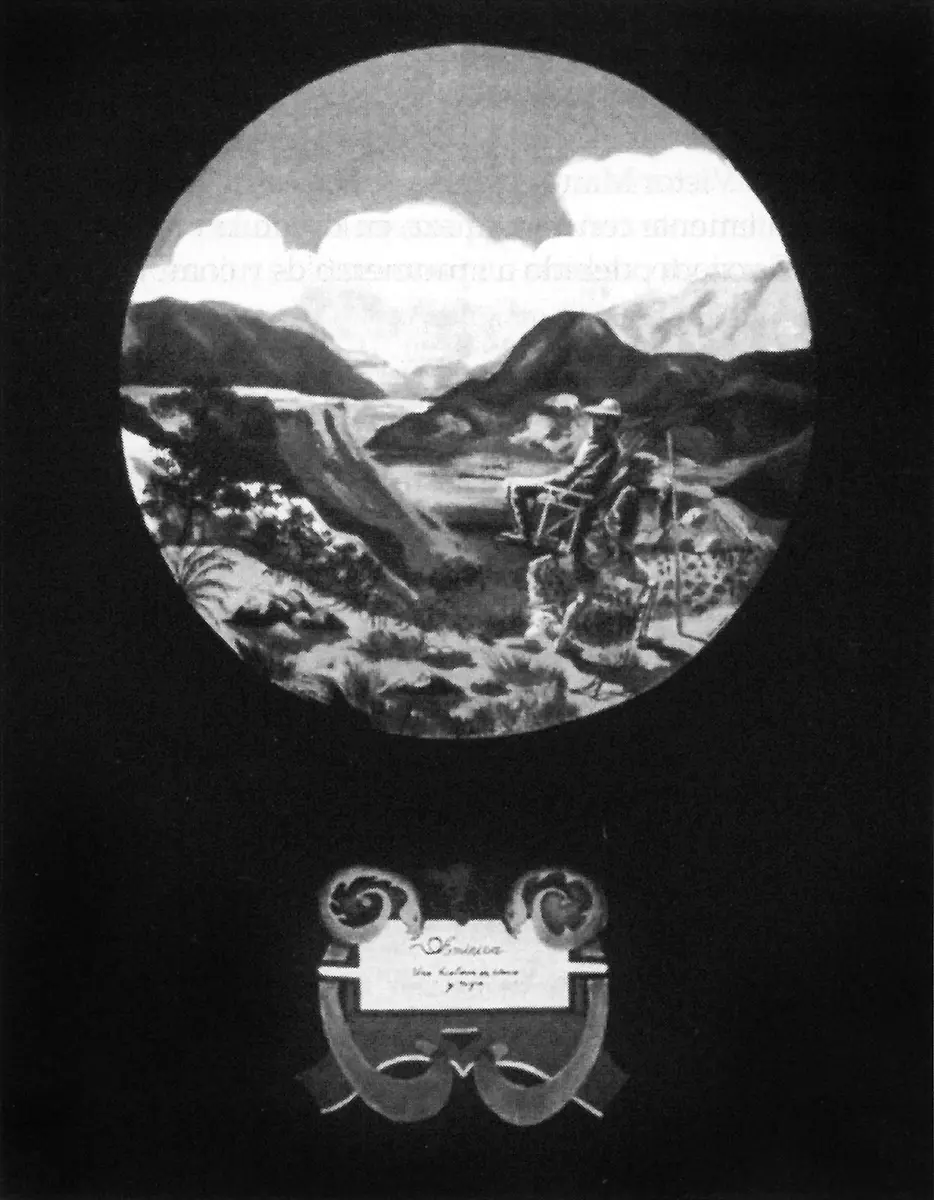
The theme of paradise has been treated in different, but complementary, ways by two artists tied to the two exhibitions that have unleashed these reflections: the Costa Rican Joaquín Rodríguez del Paso and the Dominican Marcos Lora Read. Although Joaquín Rodríguez del Paso does not actually participate in the São Paulo exhibition, one of his pieces, América, una historia en blanco y negro (America, a black and white history, 1995), gives the show its title and presided over the entrance to the same show at the biennial. This picture belongs to an extensive series in which the artist recovers the genre painting of travelers through American lands between the end of the eighteenth and the beginning of the nineteenth centuries. His purpose is to narrate the flip side of history through exotic landscapes and luxuriant jungles in black and white, while the European explorer is led on the backs of indigenous transporters, or while the aborigines dedicate themselves to diverse tasks. Under the image enclosed within an oval or a circle, the title appears inscribed on an affected coat of arms with baroque overtones. A paradise of exoticism, depending on how it is carried out, and from where. More recently, Rodriguez del Paso has created a series of paintings articulated in diptychs in which an overflow of vegetation of sensual and luxuriant flowers, described with great chromatic detail, appears partially covered with careful "linguistic" smudges, proper to paintings with German roots (Polke, Richter). Each part of the diptych complements the other as unpolluted vegetation appears next to one that is blemished. Paradise in/behind the cutting edge. Identity can only situate itself critically and legitimately in those new languages of new racial mixes.
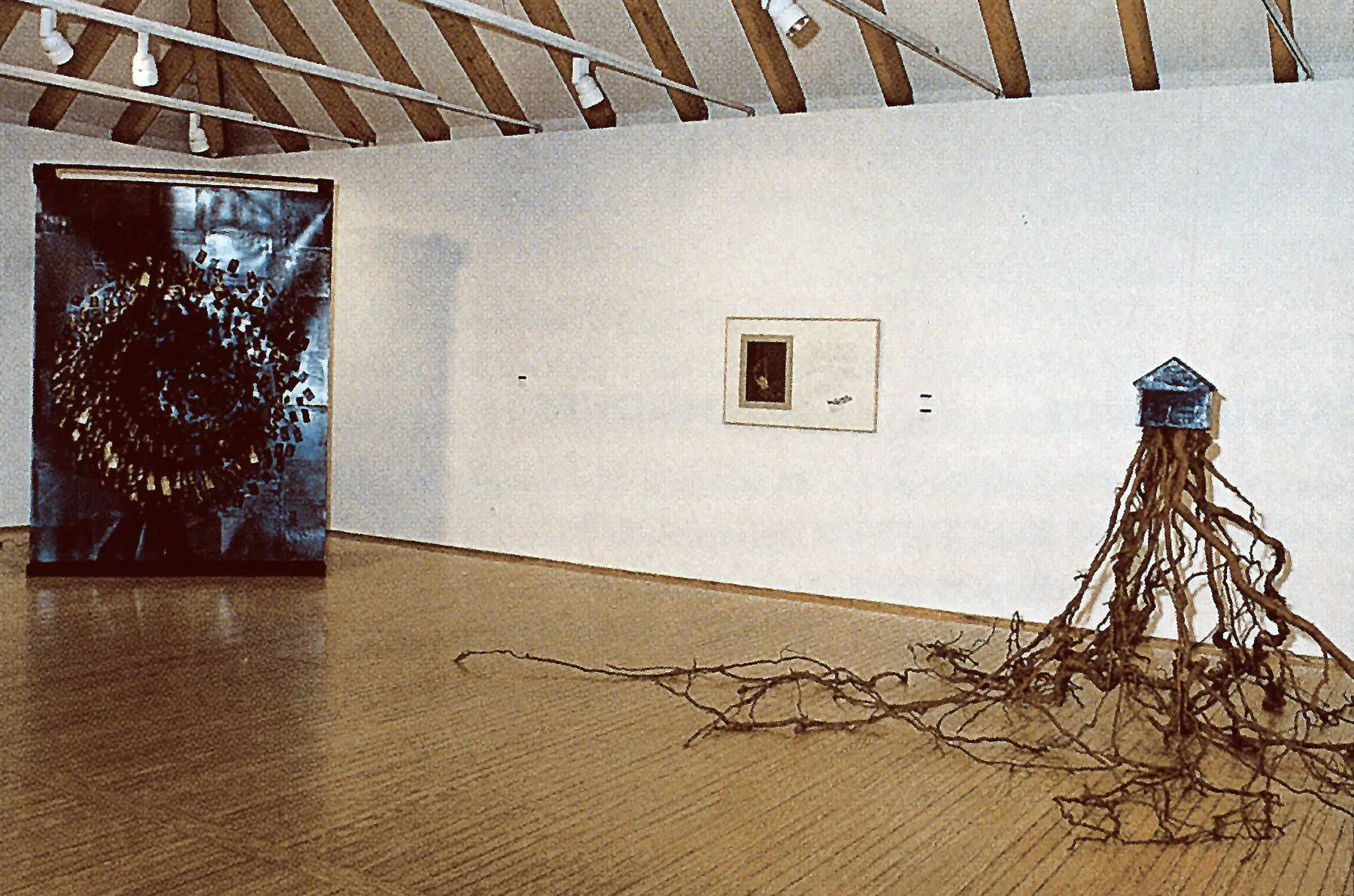
Marcos Lora Read, on the other hand, although his work is presented at the Madrid and Badajoz shows, does not realize the initially anticipated installation due to diverse problems of a technical nature. However, I am interested in pointing out an already-known piece by this artist in order to precisely state some of the questions about the idea of the Caribbean as paradise. That piece is La calimba (The branding iron), presented last April at the MADC in San Jose, Costa Rica. La calimba is a composition that speaks to slavery through the names of the first black slaves who arrived in the Caribbean, through the iron used to brand them. The central part of the installation is made up of some shelters constructed by pneumatic chambers sewn together and held up by sticks, like those on the beaches that shelter the people who wish to abandon one paradise for another paradise, in spite of the difficulties of an uncertain voyage to Puerto Rico (and indirectly to the USA) from Santo Domingo. On the wall behind the shelters, there are enlarged photos of superimposed visas extracted from passports: the Caribbean has turned into a rat hole to which multitudes have been drawn by force to work; and from which there is now, because of high unemployment, no easy escape. History and the present are interwoven in a loop of upside-down metaphorical returns, while the popular (or, more precisely, the circumstantiality of social precariousness) becomes an encountered support, intermixed with arte povera connotations. But all this serves to speak of contents (definitely dramatic), far from merely linguistic formalisms.
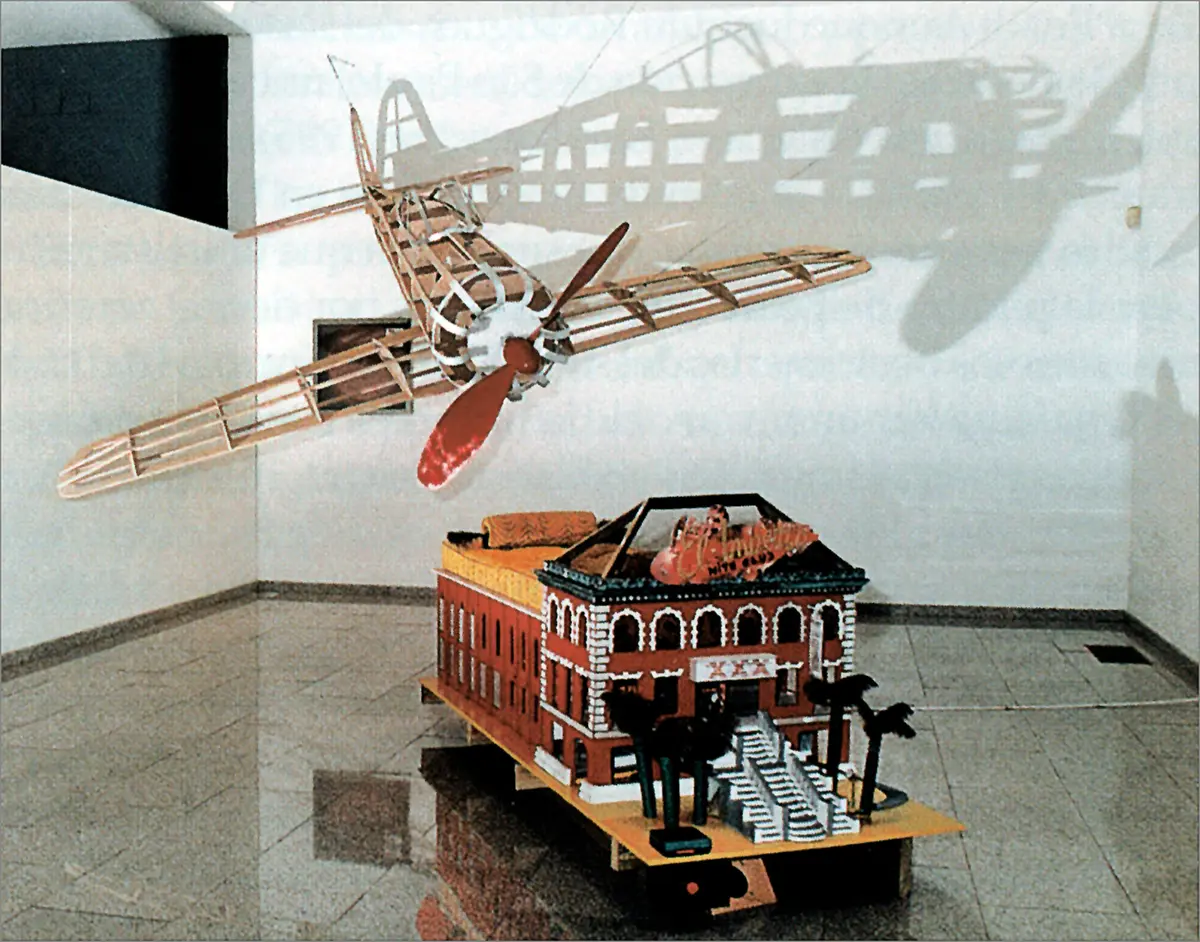
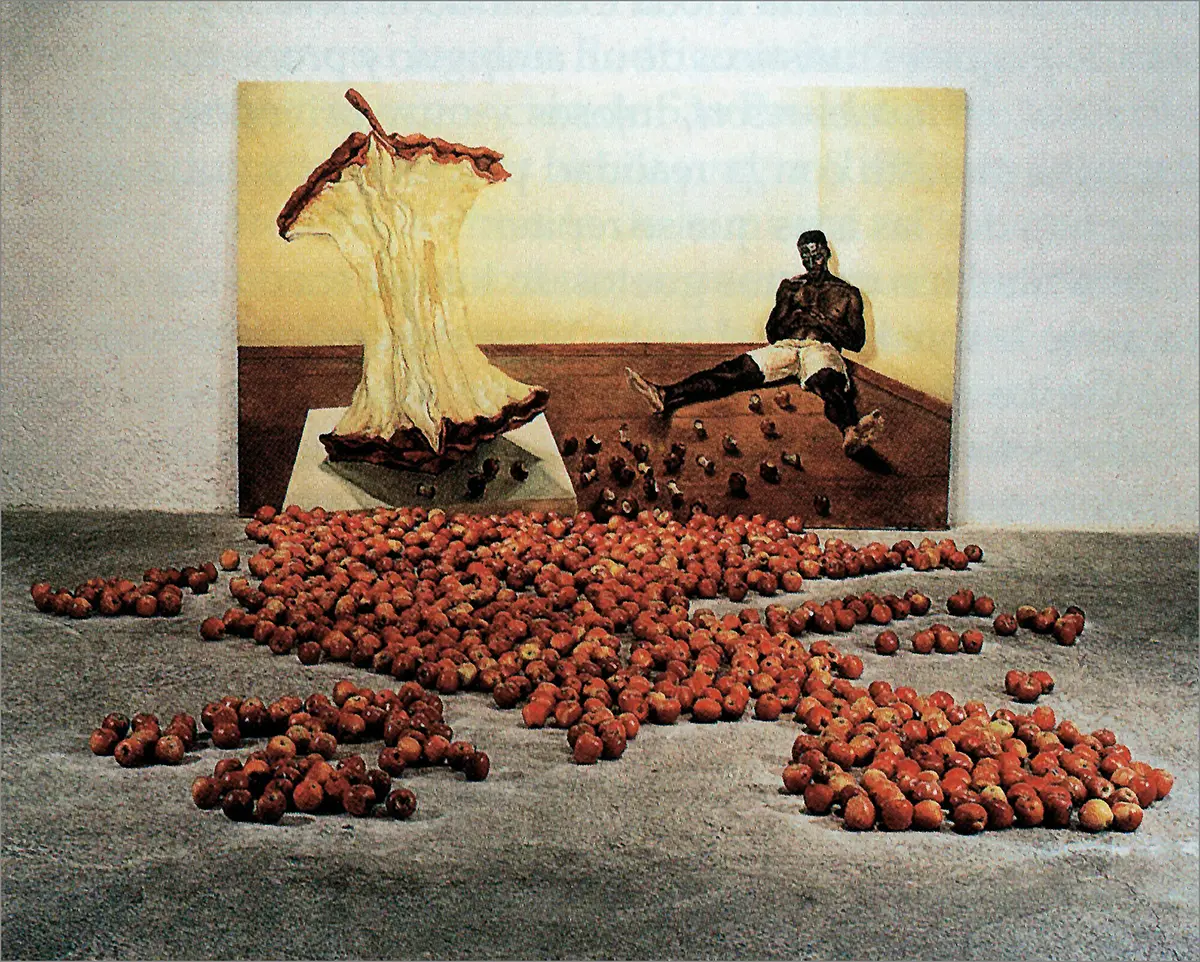
In an incidental way, and with a certain dose of irony, Armando Mariño's work Harteazgo (Bellyful of art, 1997) offers some interesting contributions in this respect. The installation (presented in Badajoz, and previously in Madrid's Galería Ángel Romero) is shaped by an immense map of Europe built out of apples which are unfolded across the floor. One picture represents a black man, dressed only in some tom underwear, resting in the comer of a room whose center is occupied with the remains of a giant apple which we presume was just devoured by the man. The figure in this painting is familiar to those who have followed Marino's pictorial work over the last several years, for in different scenes he has appeared as a prototype of the man traditionally excluded from the salons, museums, and "banquets," and who finally arrives and occupies these spaces and, above all, these personal experiences.
In this piece, the "banquet" seems to consist in the cartography of the "there," a European cartography, as a banal paradise that causes indigestion when devoured by the avidity of one who desires the unattainable behind a tradition of forced renunciation. In a certain way, this work seems to sum up a metaphor of desire that rises from the Caribbean through everything "there," in conjunction with deception and its resulting flatulence.
Pedro Álvarez also treats the area of desires and dreams through the idea of paradises lost or never found, with their interiors beautifully decorated in the style of the '50s, or with scenes extracted from consumerist advertising relocated in a tropical landscape (Cuban style). What dominates in his paintings, however, is a powerful flow of historical references that return to a popular tradition re-elaborated by a parallel learned tradition: Landaluce and Víctor Manuel García are interlaced with pop, and more recently with Velázquez, in rereadings of readings.
Carlos Garaicoa presents a survey of ruins, and his fragments allow us to reconstruct avenues and histories of deterioration, where life continues, though in another way. The mins and rubble describe a world that is sinking in absolute precariousness. The fragments allow us to reconstruct ironic "gardens''4 or miniature glass cities that are like the survivors of a shipwreck, as occurred in his piece at São Paulo. More brutal is Raúl Quintanilla's proposal where, as seen in the title of his composition for São Paulo, El sueño de la razón produce monstruo (The dream of rations produces monsters), the scarcity of food leads to desperation, in spite of the com that supports the photos of monstrous illuminations of Barbie dolls (with indigenous ceramic heads), sexually penetrated by com cobs. The Caribbean artist redefines the notion of paradise, correcting the distance and the reach of desires and dreams between the "here" and the "there" of his geography. But also considering the temporariness of the references (historical, traditional, popular, religious...) that are systematically recycled and integrated into a process more specifically baroque or neo-baroque than postmodern proper.
Identity as everything or nothing
Identity, in the last extreme, is where the nerve of Caribbean sensibility may be located. Considered as an unresolved and unresolvable problem, it has frequently constituted a bastion of the ungraspable. But it has especially been the axis around which the most brilliant and profound essay tradition, not only the Caribbean but also Ibero-American, has developed.5
We are what we are, what we are not, what we wish to be, what we do not wish to be, and what we are forced to be. We are everything and we are nothing. How can we answer the question of whether or not a Caribbean identity exists? And more concretely, whether Caribbean art has an identity?
As a fragmented territory capsized toward the insularity of the interior, identities tend to particularize and decant themselves. The Caribbean appears as a global Mediterranean where each point can be all the shores at the same time, with no contradiction. In spite of the difficulties in communication, artists and ideas are in constant motion, but that particular nomadism is generally directed toward the exterior, toward Europe or the United States. The reciprocal unfamiliarity between islands and countries is greatly extended in the entire region, both on the isthmus and on the archipelago, as well as between the two. In this sense, the problems are similar. Information and communication do not circulate equally in all directions. Miami has become a privileged center of communication, and not only because the domestic air connections pass through it. That gateway to the United States is contemplated from the Caribbean as an exit, as the place where there is a success, recognition, and a lot of models. But on top of that, Miami is a center of Caribbean art where many myths, desires, and realities are polarized. Caribbean nomadism has been characterized as not losing contact with the homeland. But unlike what happens in other cities of the "diaspora," like New York, London, Paris, and Madrid..., in Miami, a very real Caribbean is lived, perhaps because it is a very unreal city.
Identity is an awareness that rises from mutual (re)discovery and surprise. But it is also a process tied to work and its expansion, with a direct relation to the environment and references to contemporary culture.
Thus, the work of Moisés Barrios has concentrated on the symbolic possibilities of the banana tree, a historical, political, and cultural metaphor of Guatemala as the prototype of a banana republic. His painting has tended to deconstruct the symbols of modernity through pop-style resources in the reproduction of international art magazine covers with images of banana trees, or by using the amplified texture of the banana tree to speak of abstraction and color. At São Paulo, he presented Proyecto cafe Malinovwski (Malinovsky Coffee Project)—photos constructed and presented on automatic development support—, where he carries out a humorous, critical, and ironic revision and rereading of the myths of the avant-garde and the aesthetic modernity of this century, always with the help of the banana tree. Identity as argument and process of affirmation of other readings. Perhaps the identity of Caribbean art, and in general of the Caribbean creative sensibility, beyond its contradictions, racial mixes, shared problems, isolation, rhythm, music, Carnival, syncretic religions, and balancing acts between popular and erudite, tradition and avant-garde, is best defined by the lines that Lezama Lima dedicated to the Cuban painter Víctor Manuel García: "Light and grave like breathing, He showed us in his painting, That the essence of Platonic architects Is in the segregation of the snail: Suck earth and loosen thread."
NOTES
1. Juan Bosch, De Cristóbal Colón a Fidel Castro. El Caribe, frontera imperial (From Christopher Columbus to Fidel Castro: The Caribbean, an imperial frontier), 1970.
2. Sergio Buarque de Hollanda, Visão do Paraíso (os motivos edénicos no descobrimento e colonização do Brasil) [Vision of paradise (the edenic motives in the discovery and colonization of Brazil)] (São Paulo: Editora Brasiliense, 1994). Although principally circumscribed to images of Brazil, this work systematically encompasses the psychology of the European discoverer before the New World territories, making reference to the mythical elements, as well as to those that refer to health and disease.
3. Antonio Benítez Rojo, La isla que se repite (The repeating island) (Barcelona: Cassiopea. 1998).
4. I am referring to the Japanese Garden and the Cuban Garden presented at the 1997 Havana Biennial.
5. The inquiry into identity appears in all Ibero-American countries (including Spain— with its different linguistic and cultural settings—and Portugal). Mexico, Cuba, and Brazil are the countries that have witnessed the greatest flourishing of this essay formula that fulfills a political function, as was the case with Marti (or more recently, in the Francophone area, in Fanon, Césaire, and Chamoiseau). The literary aspect is no different, as seen in Paz. The literary aspect proper reaches particularly suggestive limits in Severe Sarduy ["De dónde son los cantantes" (From Cuba with a song), which is complemented by his essay "Barroco" (Baroque)], as well as in the Trinidadian V.S. Naipaul (of Indian origin and English language), in Derek Walcott, in the Brazilian João Ubaldo Ribeiro ["Viva o povo brasileiro" (An invincible memory)] and in the Portuguese Saramago ["A jangada de pedra" (The stone raft)]. An entire universe of connected cultures.
SANTIAGO B. OLMO