The Denys Puech Museum in Rodez, a city of 40,000 inhabitants in southeast France, was established at the beginning of the century by the sculptor of the same name. The museum's permanent collection, donated by the artist, includes his own work, sculptures from the period, and regional paintings (landscapes, bucolic scenes, portraits). This kind of donation was fairly common at the time, and it was in this way that several French museums got started in the nineteenth century. Refurbished ten years ago, the Puech museum now presents exhibitions of contemporary art. It is interesting to note that a centralizing tradition in France is at both the political and cultural levels. However, the recent regionalization policy has to some extent changed things, resulting in the emergence of other artistic centers outside Paris and France's other major cities, such as Lyon and Marseilles. Many medium-sized cities, often located in rural regions and relatively distant and isolated from the cultural centers, are confronted with a veritable challenge in creating a contemporary art policy accompanied by the necessary promotion. The lack of a public (most interested people are in the major cities) combined with the absence of galleries, the small number of collectors, and the low level of art education make such promotion more difficult. The challenge involves educating the public, as well as creating a sense of diversity and maintaining a certain level of quality with an eye to contemporary developments.
The Rodez Museum is working towards these objectives and seemed to fully achieve them in this exhibition titled Roundtrip, which was presented last summer. The idea of the show resulted from a convergence of two factors which provided the main axis of the event: the presence in the city of an artist from New Mexico, Fernando Benítez, who works in Rodez and in Santa Fe, and the existence of a representation of the Virgin of Guadalupe (brought from Mexico in the seventeenth century and placed in the cathedral of Rodez), only one of two such works existing in France (the other being the virgin in the Cathedral of Notre Dame in Paris). Twelve artists were invited to work and exhibit in three places in the city: in the museum, in its workshops, and in La Menuiserie, a new space for contemporary art. All of the artists, with the exception of Reginald Gammon, were aged between 27 and 48 and worked in New Mexico. The wide variety of expressions used from conceptual art (installations) to paintings, objects, collages, and photography closely linked with the Hispanic and black traditions, reflected the cultural and artistic mosaic that makes up New Mexico. What was undoubtedly interesting about this project was its desire and ability to provide a kind of bridge, not only from New Mexico itself but also —in this and other contexts— from the United States towards the French province. It also reflected the importance of the circulation of images in the development of art history. To present work by a number of artists whose expressions are very different is always a conceptual and aesthetic risk: the decisive factor is to ensure visual coherence for the visitor through the emergence of a unifying concept. A visit to the three exhibition sites proved to be a journey of initiation which included, beyond the aesthetic element, four dimensions: a religious element (mystical and iconoclastic), an urban element (social and every day), an element of intimacy (the female world), and an exploration of identity (embodied in references to the Hispanic and black cultures) — some of which were fused together in some works.
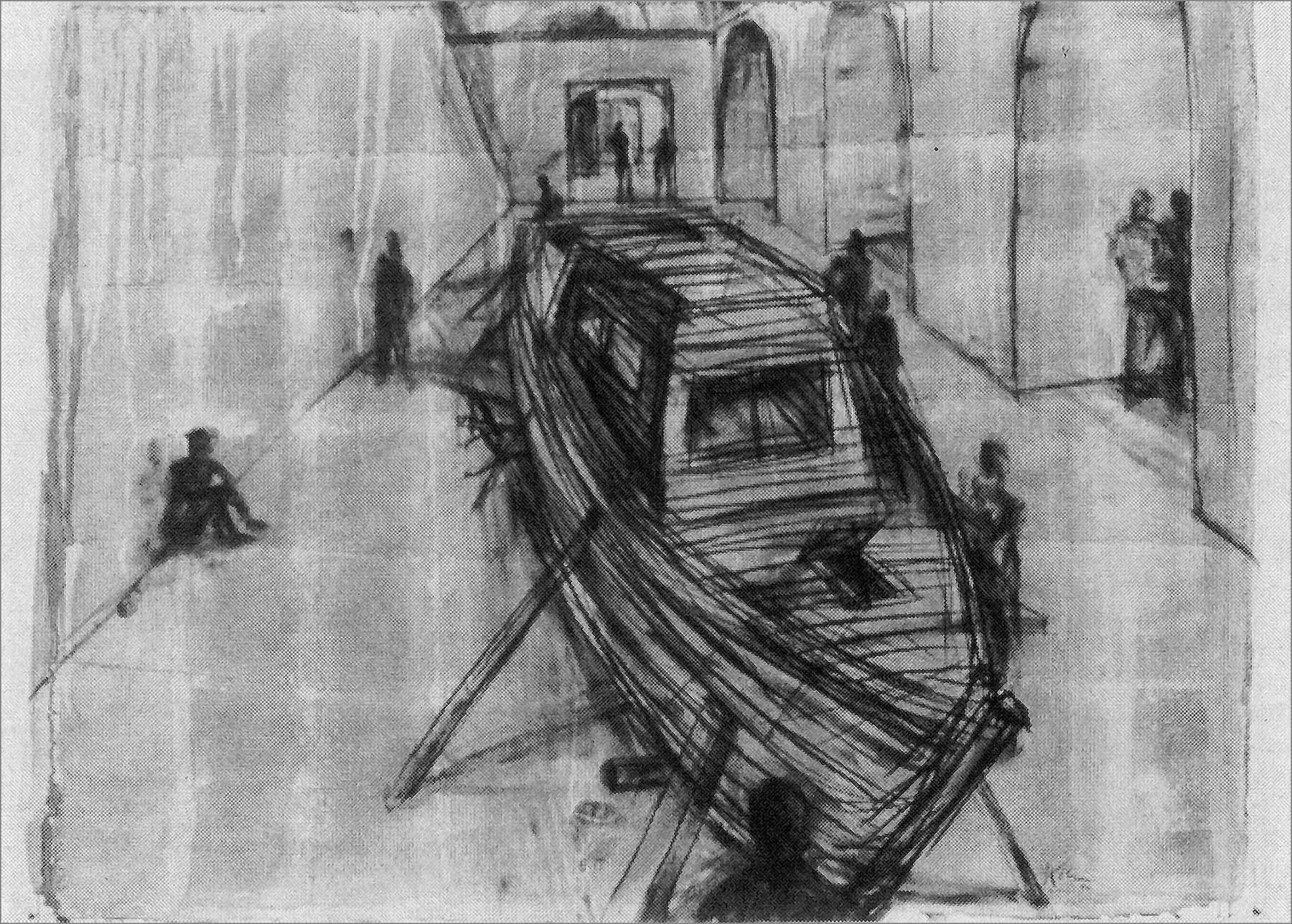
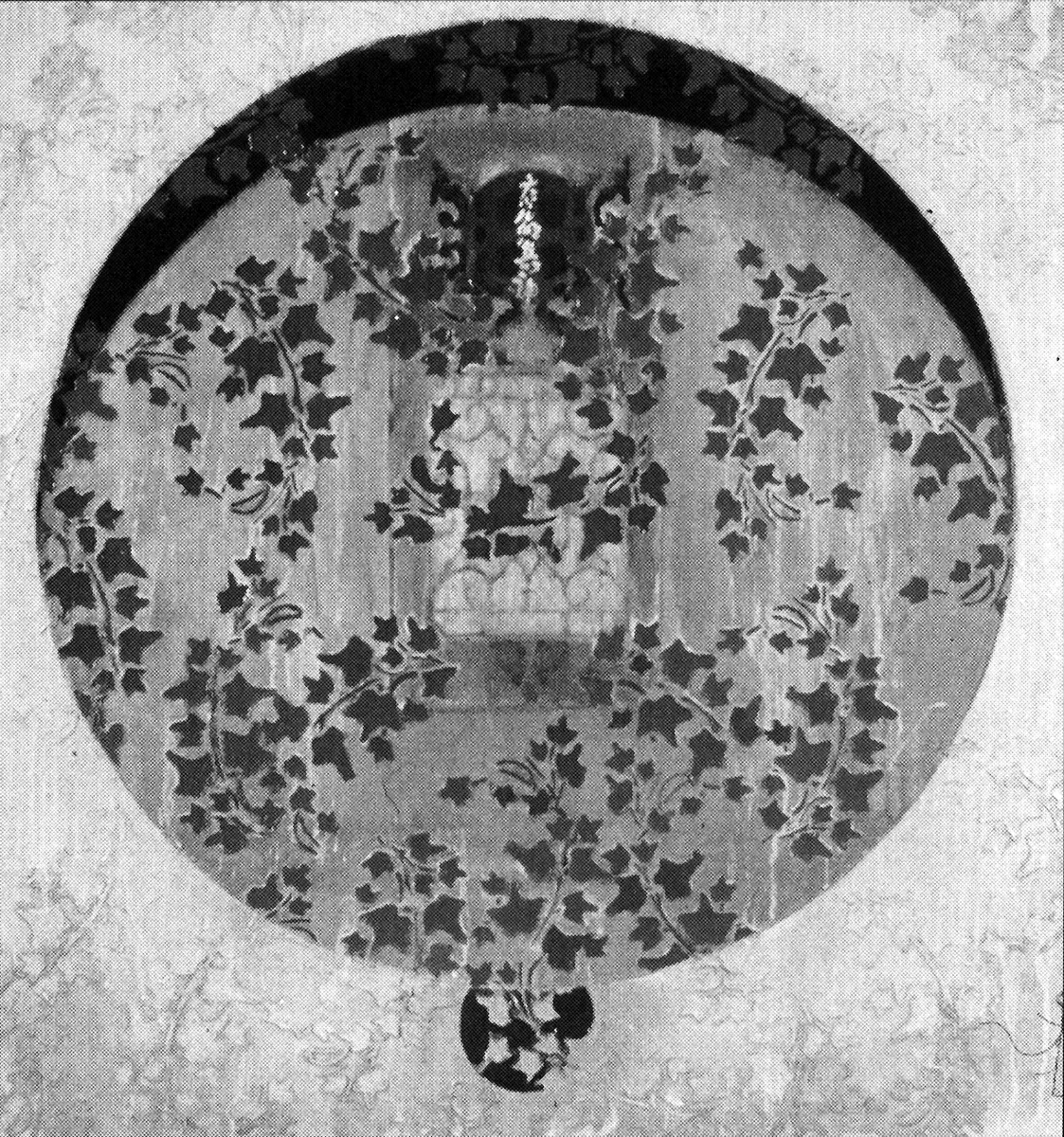
John Tuccillo (1963, Missouri) presented two wall works that referred to the contemporary urban landscape, distorting objects with his wooden fencing into trompe-l'oeil works, half sculpture, and half painting. The street was also present in the work of Reginald Gammon (1925, Pennsylvania), an African-American artist whose work —oscillating between denunciation and the reconstruction of identity— is reminiscent of Chicano figuration without the pictorial violence characteristic of Chicano art. The oil works by Deborah Gavel (1954, Ohio) created an esoteric and intimate atmosphere, with a kind of pictorial halo surrounding a central rail. The pictures delicately questioned the frontiers separating the pictorial and the decorative, contrasting what is hidden with what is seen, the void with a sense of plenitude, conjuring up an air of mysticism and mystery. Raphaelle Goethals (1958, Brussels) works on the subject of the void, with transparencies obtained through the use of wax, to establish a dialogue, within a sensitive kind of geometry, on the imbalance between an overriding space and a series of calligraphic signs. Other spatial and material universes seemed to be related to the latter, including the paintings by Keri Ataubi Greeves (1971, Wyoming) and those of Sally Condon (1950, Maine), in their abstract exploration of matter and memory.
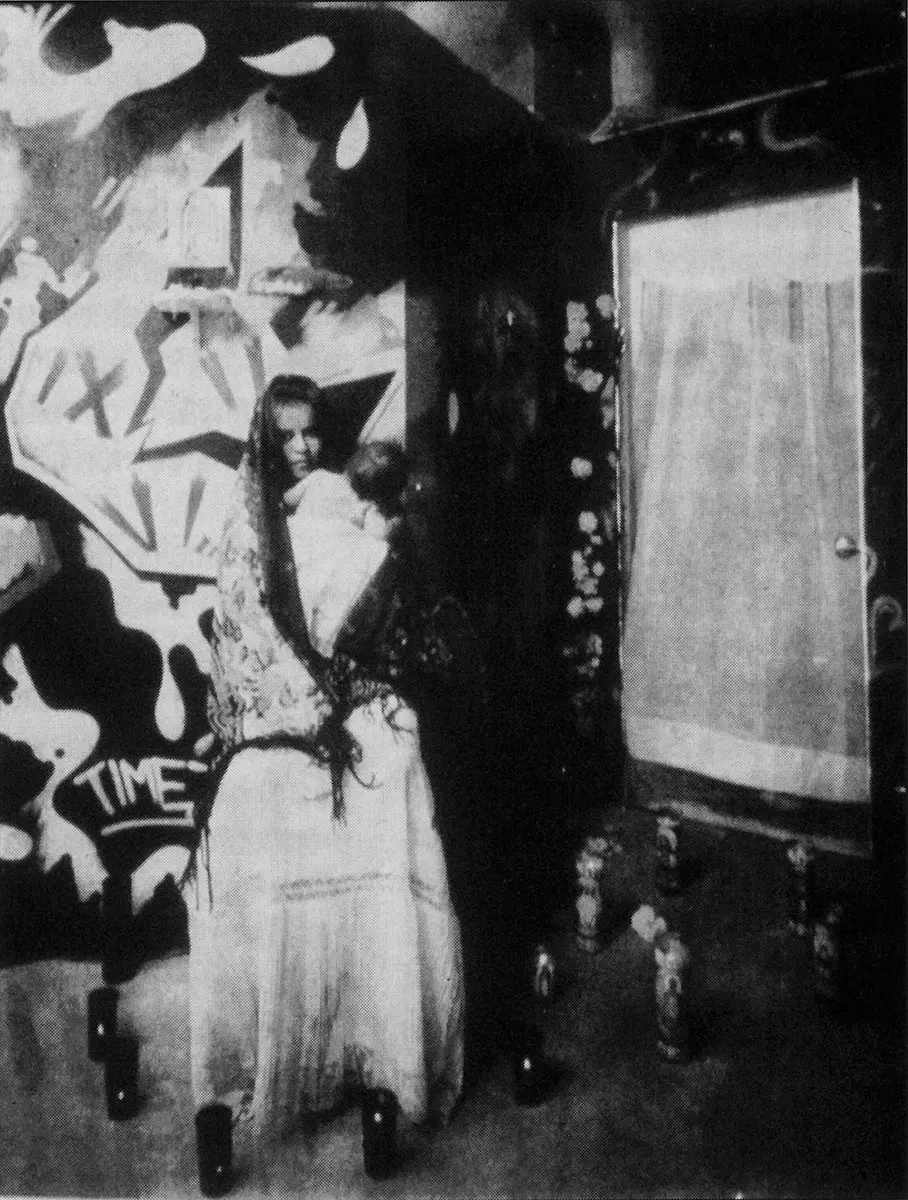
The main effect in the principal room of the museum on the first floor was caused by two works that were placed opposite each other. On the right, was an installation, or altar, by Delilah Montoya (1955, Texas). The Guadalupaniook as its a reference to the Virgin of Guadalupe, an omnipotent and omnipresent symbol of Chicano identity. Made up of photographs and objects, the work included in its center a huge black and white photograph of a man —presumably a prisoner- seen from behind with his hands handcuffed, his shoulder tattooed with the virgin of Guadalupe (colored by the artist). The photograph was surrounded by a frieze of other representations, tattoos of the Virgin of Guadalupe surrounded by bunches of red roses done on fragments of other bodies. On the floor, on a white lace tablecloth with the Aztec calendar, other effigies of the virgin were displayed along with candles, red roses, flags, stones, and angels. Evocative of the cultural problems and claims of the Chicano population, the photograph is a rather theatrical reconstruction of the Chicano aesthetic and cultural universe. In this altar, as in the 18 (calotype) photographs in the basement, two kinds of readings were made possible through two symbolic fields—the real and the metaphoric, realism and dream.
To the left, the work of Fernando Benítez created another strong focal point. A series of ecstatic portraits (Heads, both oil on canvas), the figures looking back, was placed irregularly around a central figure, a young girl half shrouded in white. Child with Thoughts (oil on canvas, 1997) is both a clear and complicated image that calls into question the concept of representation and identity, the double and the other. In a sober and almost sculptural pictorial style, reminiscent of baroque mysticism, Francisco Benítez also interrogated the past through a reading of art history (Caravaggio, Zurbarán, the Latin American baroque) in conjunction with the weight of the present.
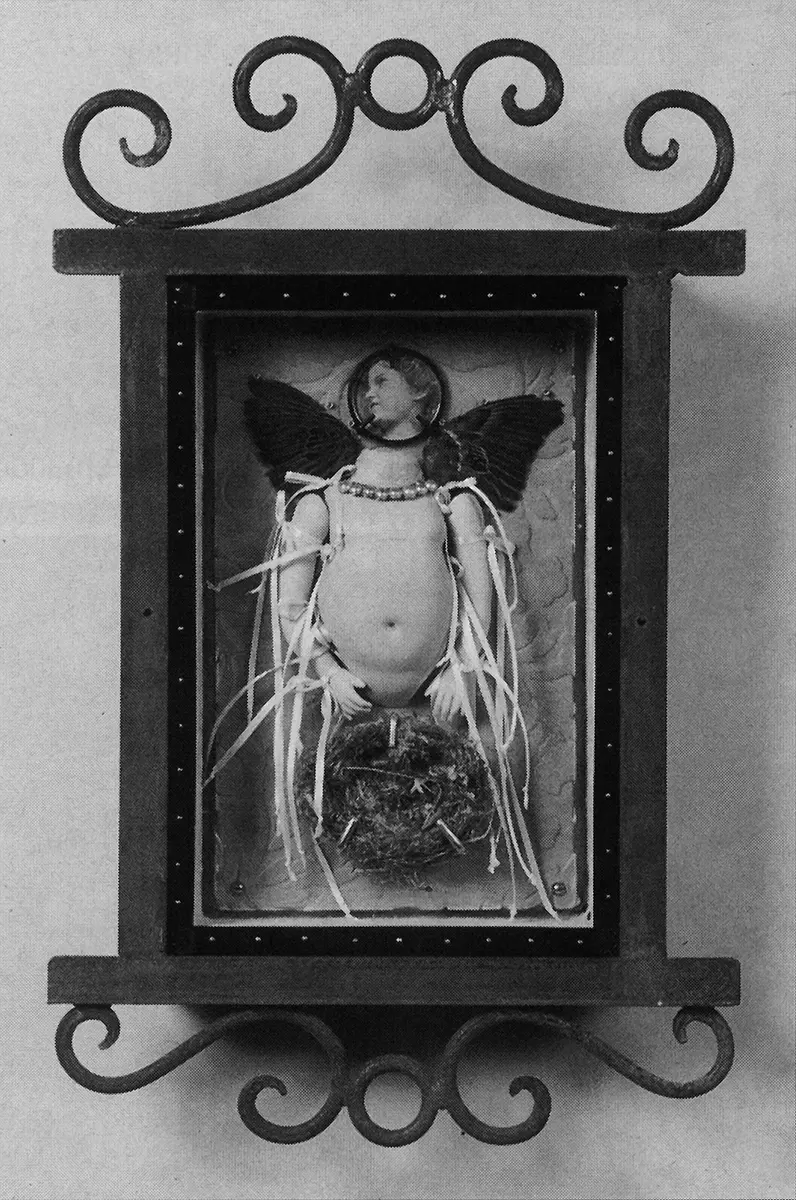
Works by Judith Scariano (1961, Wisconsin) offered a sense of intimacy focused on nature. The boxes, collages, and objects by Laura Telender (1964, Minnesota) explored the female universe. Equally metaphorical, the installations by Janet Maher (1954) in La Menuiserie and Christine Wallers (1963, Illinois) in the basement and main staircase of the Museum reflected the search for landscape seen as culture, including earth, stones, slate, and paper. This interest in traces and marks left behind helped create a "sense of place"—that of the self seen as an intimate space and that of the shared collective space, an idea of space that transcended the exhibition as a whole and which opened up onto the world at large.
CHRISTINE FRÉROT