Both artists are associated with the neo-concrete movement —in the case of Pape, as a founder member, along with the Brazilian artists Hélio Oiticica and Lygia Clark, and in the case of Neto, as a descendant of the movement—, and their meeting here had its high points and particularities: Neto's work appeared more spontaneous and ludic in comparison with the (con)textual elaborations by Pape, whose context was lost in their transfer from the Amazon to the urban aridity of Mexico City.
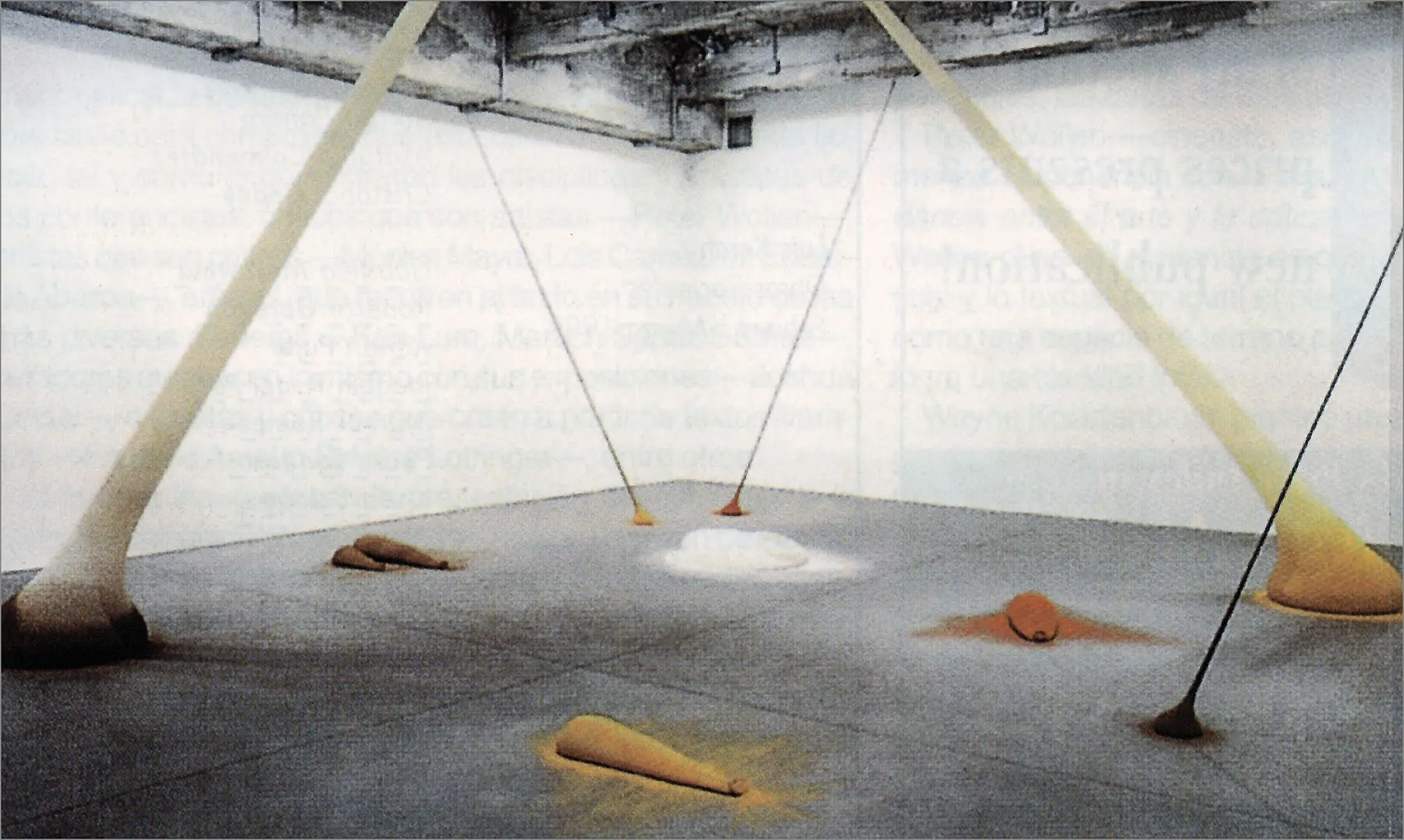
The starting point of the neo-concrete movement, which emerged in 1959, was the impact of the work on its surroundings, encouraging the interaction of the spectator. It shared with action art and process art the concept of temporal (im)materiality, a central idea of conceptual art down to the present. Hence the use of situations to emphasize the qualities of the materials. Neto uses polyamide stockings full of gray powder, which he stretches up to the ceiling or releases and bunches together, according to a pre-determined action, to modify the sense perception of the spectator. As the spectator zig-zags between the bulky network set out at floor level with enough room to move between, or in random, vertical arrangements, taking care not to step on the traces of powder which give a kind of aura to the surroundings, the works evoked a twofold kind of memory: that of the gesture of the artist and that of the visitor, which has been accumulated and which acts on the works and space. At the back there was a dash of yellow —color and smell at the same time since this piece is filled with saffron—, reminding us that the world is not only made up of dichotomies (black and white), but multiple, like our perception of it. Neto endeavors to approach space as matter through which, by means of a process-based reflection, the spectator is integrated into the work.
In Mexico, where the neo-concrete movement is not very well-known, the semantic reflections proposed by the work of Lygia Pape are more difficult to understand. Her long career as a member of various groups —Frente (19531955), Concreto (1956), and Neoconcreto (1957-1963)— reflects her need for experimentation in the sphere of body art, action art, tropicalism, and the new cinema, in which she explores such concepts as synaesthesia and organolepsis (simultaneous excitement of the senses).
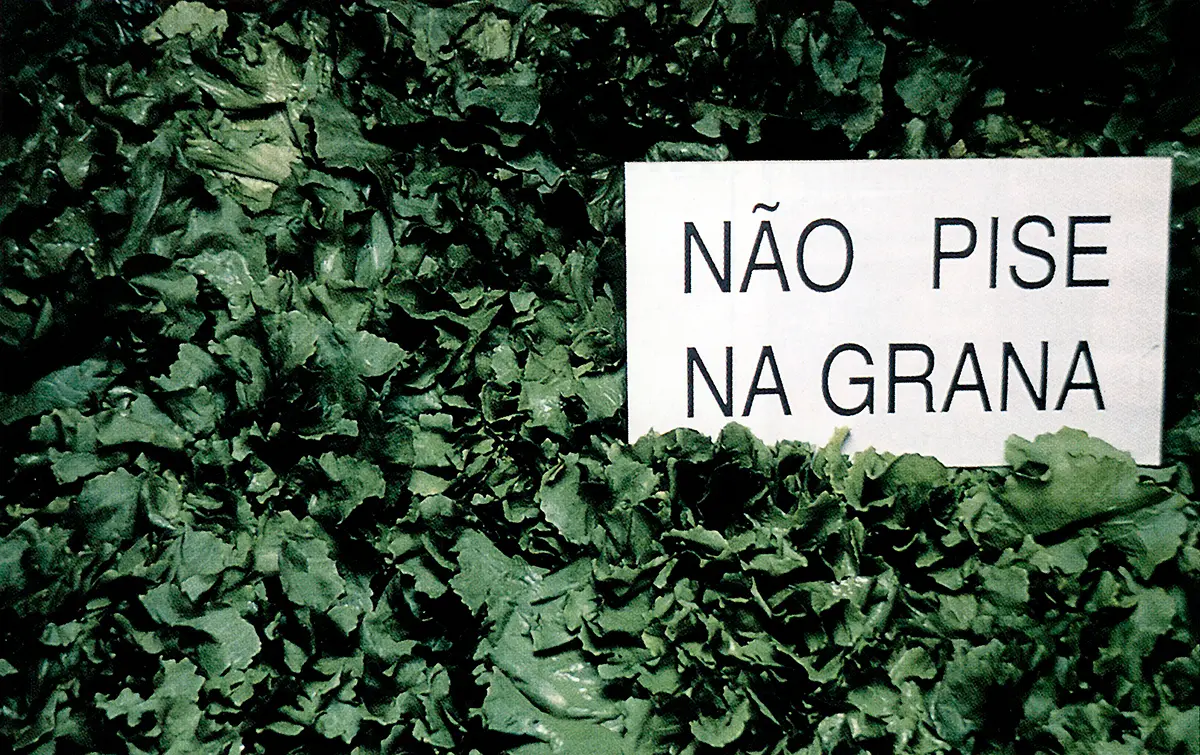
Her installation titled Não pise na grana (1966) focuses precisely on the decomposition of cabbages in an enormous brick box, on which she has placed a sign with the title of the installation in a wordplay on grana (grass, and also “coins” in Portuguese). The smells emanating from the work and the various color changes that it undergoes during the exhibition are metaphors of the absurd prohibitions based on the circulation of food supply/ money values in our society. In Alba de plata (1977), consisting of flour (in this case, of maize, which is a staple in the Mexican context) on which blood drips, alongside a machete, some of the effects are lost since the piece seems to lack any contextual references to make the message more impressive than obvious, and which could help establish a link with the denunciation made by the smell against domestic violence (which the work seems to deal with).
However, there was one work that gave real quality to the rest of the show and it was, in my opinion, the best piece by this artist: Telaraña, in its 1998 version, is a subtle, almost imperceptible network of threads set in one of the corners of the white room. As the spectator is forced into following its forward and backward structure, and the reflection of light on the golden threads, the work warns us of the impossibility of completely capturing with our senses anything at all, except through the dynamism of this kind of obligatory movement which integrates the experience of the spectator.
In Telaraña Pape embodies the metaphor of our (non)senses and once again uses the language of the material to make reference to construction, both artificial and seductive, of personal and cultural symbolism and its ideological implications.
ANA ISABEL PÉREZ
Researcher for the Museo National del Virreinato and Independent Curator.