New York is currently experiencing an opportunity to reassess Abstract Expressionism, especially in the works of Mark Rothko and Jackson Pollock. That these two museum retrospectives are taking place under the banner of Major Art Historical Events, and have been well received by the general public and even the most conservative of critics, seems to nail the lid on the coffin for this type of art. Vigorous abstract painting, full of bravado, machismo, and spirituality, appears once and for all to be truly a thing of the past.
And then there is the current suite of paintings by Juan Gómez in his first one-man show at Audiello Fine Art. Gómez, a native of Colombia and recent graduate of New York's School of Visual Arts, makes a surprising move for a young, well-educated artist: rather than working in a neo-conceptualist or pseudo-folk-derived manner, Gómez takes a stand as an abstract painter.
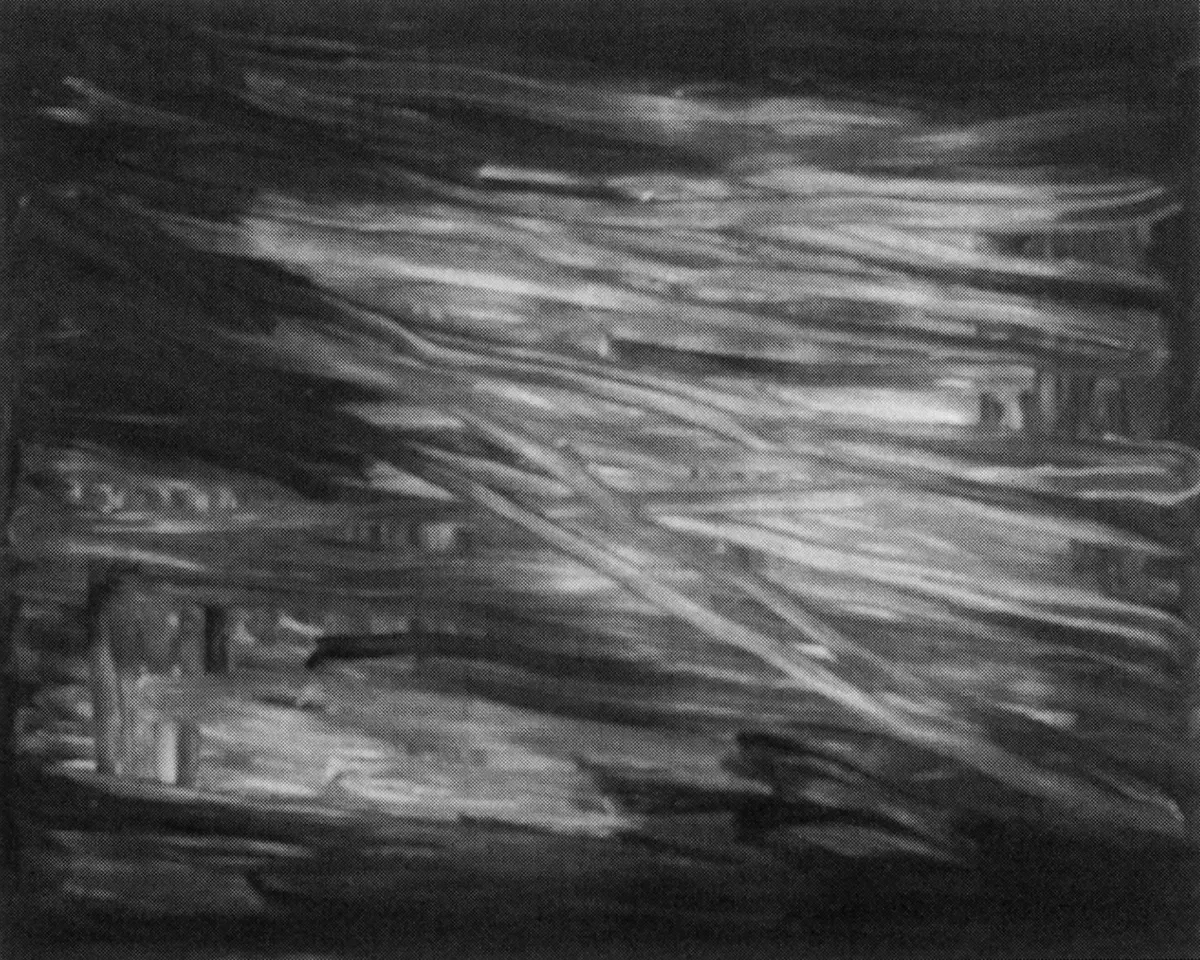
For the past few seasons, there has been much talk about the resurrection of painting. Nothing however was said about a return to the sort of gestural, lyrical abstraction that first put New York on the international art map a half century ago. Yet Gómez manages to make an aesthetic that was long ago dismissed as having descended into a cliché suddenly seem fresh and worthy of consideration. His works are fairly large in scale and stroke, and the arc of his sweeping brush seems to blend colors on the surface of the canvas. The overall tone of these pictures is a dingy grey-brown, perhaps in reference to the urban setting in which they were made, but they are broken up with swatches of strong bright reds, yellows, and whites. For all the spontaneity of the gesture, these paintings have a constructed look to them, with horizontals and verticals playing off each other with a tautly organized manner. The blurring of colors and frozen gesturality are almost reminiscent of Gerhard Richter’s abstractions, except that Gómez appears to paint without a trace of irony or concern about art historical baggage.
It is too soon to tell if Gómez will manage to invest a new validity into the action painting of the past or if he is going to quickly add his name to the list of also-rans. The course he has chosen leads very easily into the decay of mannered self parody. But for the moment it is possible that he may be creating new prose and poetry from a heretofore-dead language.
JOHN ANGELINE