Last November Iván Rickenmann presented an exhibition titled Broken Sky at the Diners Gallery. The canvases shared the same space, which was dominated by painting and drawing. This solitary, cold, and in a sense, peaceful space was contemplated and studied from various angles and points of view. In this way the artist allowed the spectator to gain an unusual and interesting understanding of how space can be perceived and appropriated. The glazed tiles suggested a bathroom, and the treatment given to them evoked the passage of time and the way it ravages things.
This abandoned place was covered with a patina which took the shine off things, making them almost monochromatic and dirty looking.
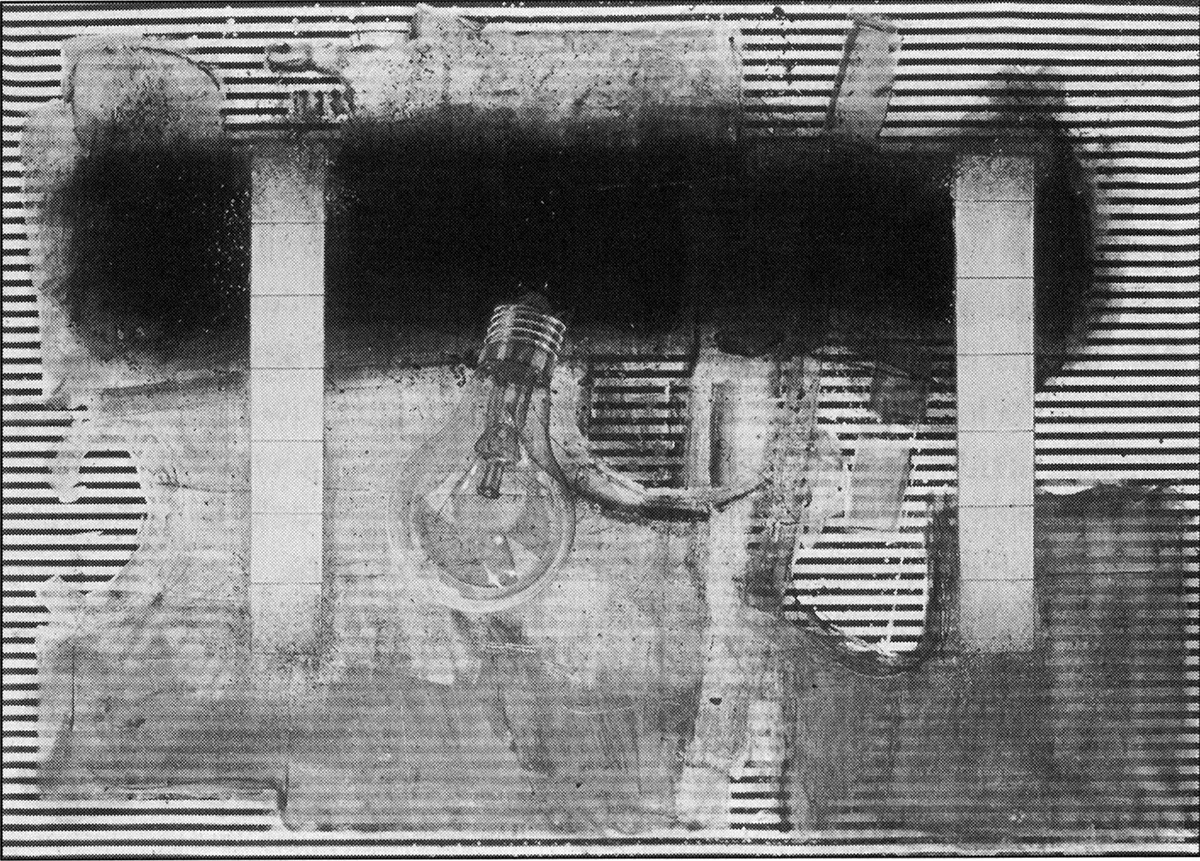
This time the artist's eye could be compared to the lens of a photographic camera which roamed over the space and finally settled on the corners and narrative details which were as interesting as the general vision of the place since they too were full of stories which time had inevitably transformed. Between the lines created by the floor tiles, there were human ghosts, people who had abandoned and left behind the places in which they had once lived.
Looking at these pictures gave one the impression of visiting a house on the verge of collapse: the visitor had to walk slowly and carefully. The pictures encouraged us to ask what had happened in this place. It was therefore a solitary and silent visit, full of revealing surprises hidden in the corners.
In formal terms, the details of the empty urban spaces on the canvases were made up of various elements harmoniously grouped together, in which no element predominated over the others, and where each element complemented the rest. There were small square tiles that revealed the inevitable passage of time, alongside borders and objects which reminded the spectator that everything decays once it has fulfilled its function —like the light bulbs which, although not broken, no longer provide any light. The borders of stripes and lines of contrasting color are the elements that bring us back to the present, creating areas of tension within the work and disrupting the tendency towards a monochromatic effect.
MARCELA MEDINA