Under the auspices of the National University of Colombia, the Ministry of the Environment, the National Federation of Coffee Growers, Ecopetrol, and Aces, the Museum of Art of the National University presented during the months of June and July an exhibition titled Fragility, Art and the Environment, which gathered together some 50 artists from different parts of the country with work produced in the past or the present, the only condition being that there should be a relationship with the environmental theme.
The show, coordinated by Manuel Romero, Gustavo Zalamea, and Juan Alberto Gaviria, was accompanied by a three-day seminar that included the presentation of papers by specialists in the field and the participation of some artists. The goal of the project was to generate a debate on the fragility of our environment and the position that art adopts with respect to the situation. As Manuel Romero pointed out, "art is a producer of images. Images in general are instruments that allow us to gain an understanding of the world and guide the relations which we establish with it. Thus maps and anatomies structure the physical and conceptual movements we make through space with our bodies."1 In this way, the images presented in this exhibition made up a kind of map, a visual journey of the senses that allowed the visitor to perceive the intimate link that some contemporary artists establish between ethics and aesthetics; in this specific case, the ethics of human behavior as they relate to the problems of the environment. Thus the exhibition as a whole became an exploration of its different component images, which reflected the various attitudes and views explored by artists concerning the present reality of our habitat.
The montage of the main works physically occupied all the spaces of the museum; use was made of the interior and adjacent gardens, the foliage of the trees and their trunks, the broad spaces of the patio, the surrounding corridors, and the two exhibition rooms. However, the works were very carefully laid out in each of these places, with proper distance kept between each work, so that at no time did the show create a sensation of fatigue or saturation. On the contrary, the visit led the spectator pleasantly from one work to another, weaving a unified discourse based on the various media and languages used by the participants. The role played by the curators and the installation facilitated the dialogue that the artists wanted to establish with the various ways of approaching the subject and with the spectator.
On entering the museum patio, the visitor came face to face with an enormous assemblage by Alvaro Franco, a very young artist, constructed with wooden guacales (a kind of oblong crate) used for transporting fruit, that was used, like in children's game, to create a shovel. The work was titled Wooden Spoon and Counterbalance. This large work occupied a good part of the patio and was surrounded in the corridors by work of a documentary nature, maps, photographs, and texts referring to various group or individual projects reflecting on the environment. On an upper wall in the patio, where for a long time the com plants of Antonio Caro had hung, there was now the legendary signature of Manuel Quintín Lame, also done by Caro. On entering the main room, the visitor found the manual work (so defined by the artist) of Humberto Junca, titled Soft to the hands, an advertising slogan for a brand of laundry soap. This was a work done directly on the wall, in which the bar of soap took the form of a piece of white styrofoam (polystyrene) and the foam was worked with delicate silvered sequins surrounded by a stain in a very flat blue.
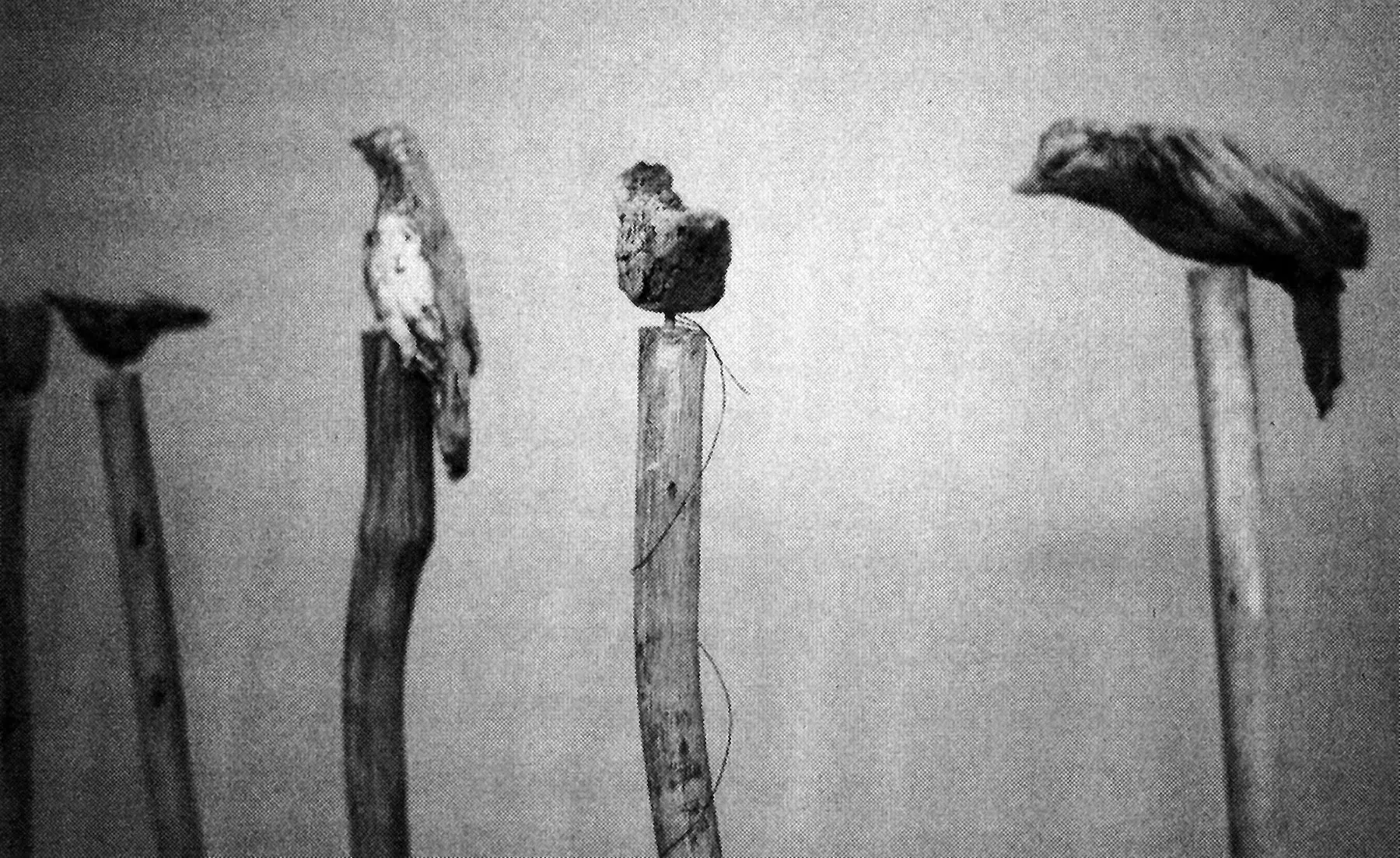
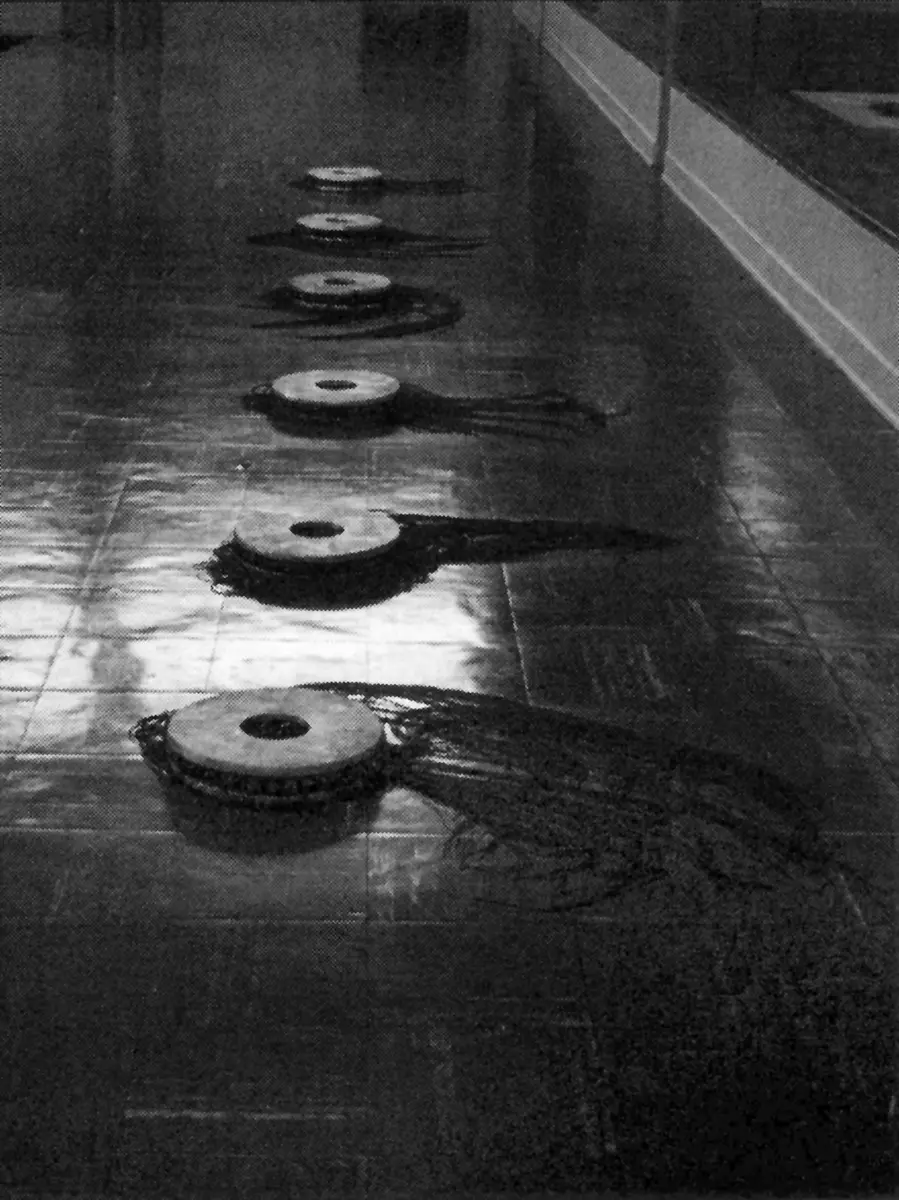
Inside the main room, in the central space, was the work of María Consuelo García —a fragile cot constructed like a nest that evoked a number of associations with the sense of affection and the fragility of life. At one end of the room were the ceramic iguanas of María Combariza, an artist who also presented three other equally delicate and poetic installations in other parts of the museum. On the floor, the visitor could see paintings by María Elena Bernal, who explored the theme of puddles, which form part of her exploration of natural and urban landscapes.
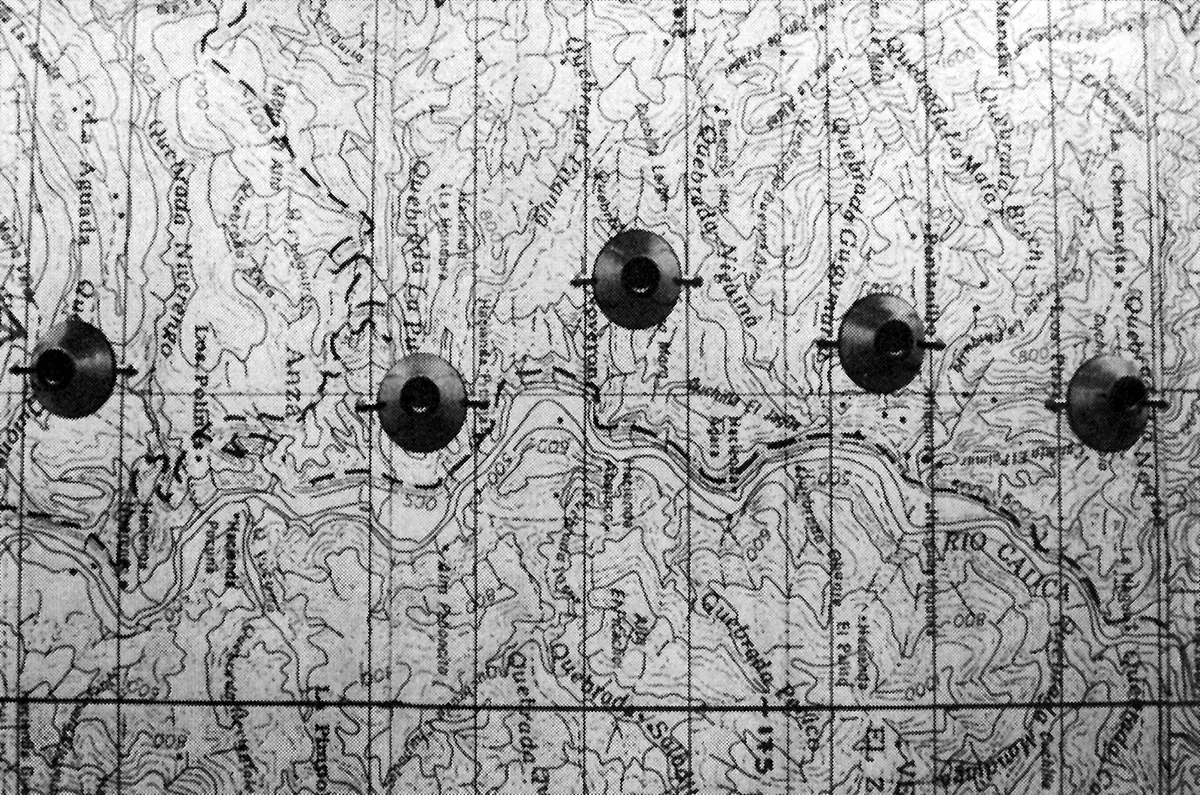
Other artworks were placed around this central space, including an installation by Patricia Lara, an artist from Antioquia, who presented a good piece consisting of a map on the wall that showed the path of a number of streams, in which images of the streams could be seen behind viewfinders, reflecting the intervention of engineering on the world of nature.
Among the important pieces were the works by Alicia Barney, who has consistently worked on the theme of ecology. Various pieces were included in the show, some of which were presented at a documentary level, with photographs and texts; all reflected the seriousness and ethical commitment of her art. One consisted of a wooden table with two red chairs placed at the two ends, on which the visitor could sit and look at a collection of various newspapers from around the country featuring reports from the 1980s on ecological disasters and other environment-related issues.
María Angelica Medina presented her weavings and some of the skirts rolled up and vacuum packed between steel-framed glass. These works reflected the presence of the body, the theme of one's personal image, and the relationship with time. The pieces were conceived within a very intimate perspective characterized above all by the artist’s attitude to art and life.
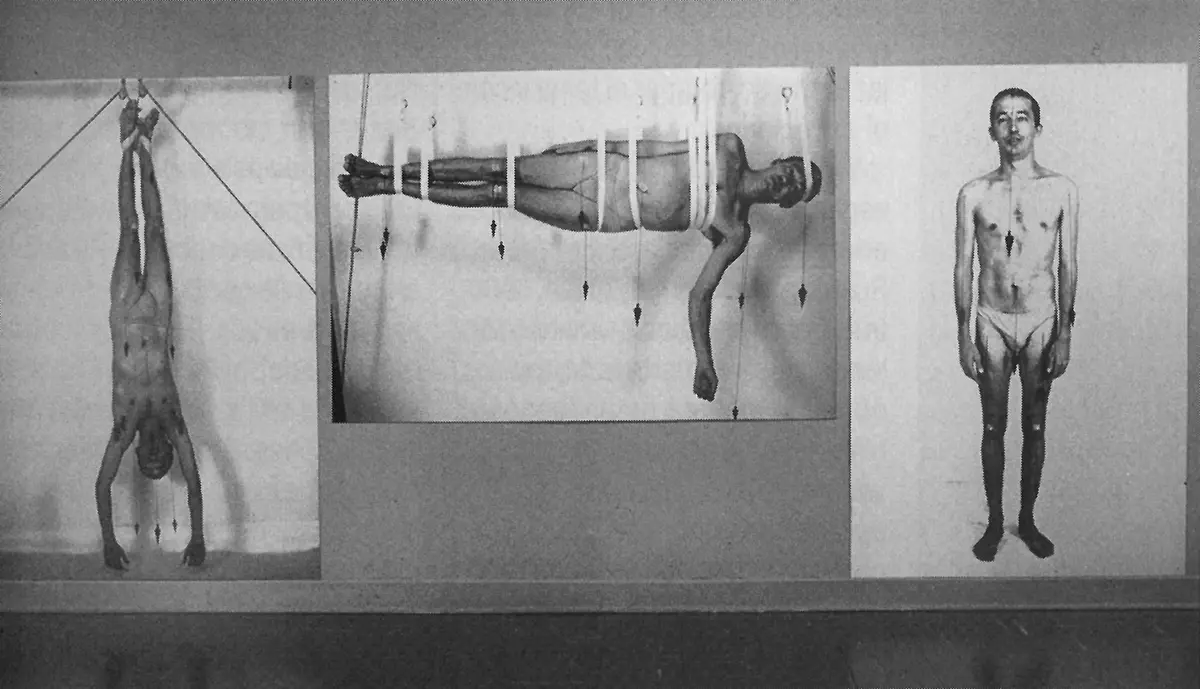
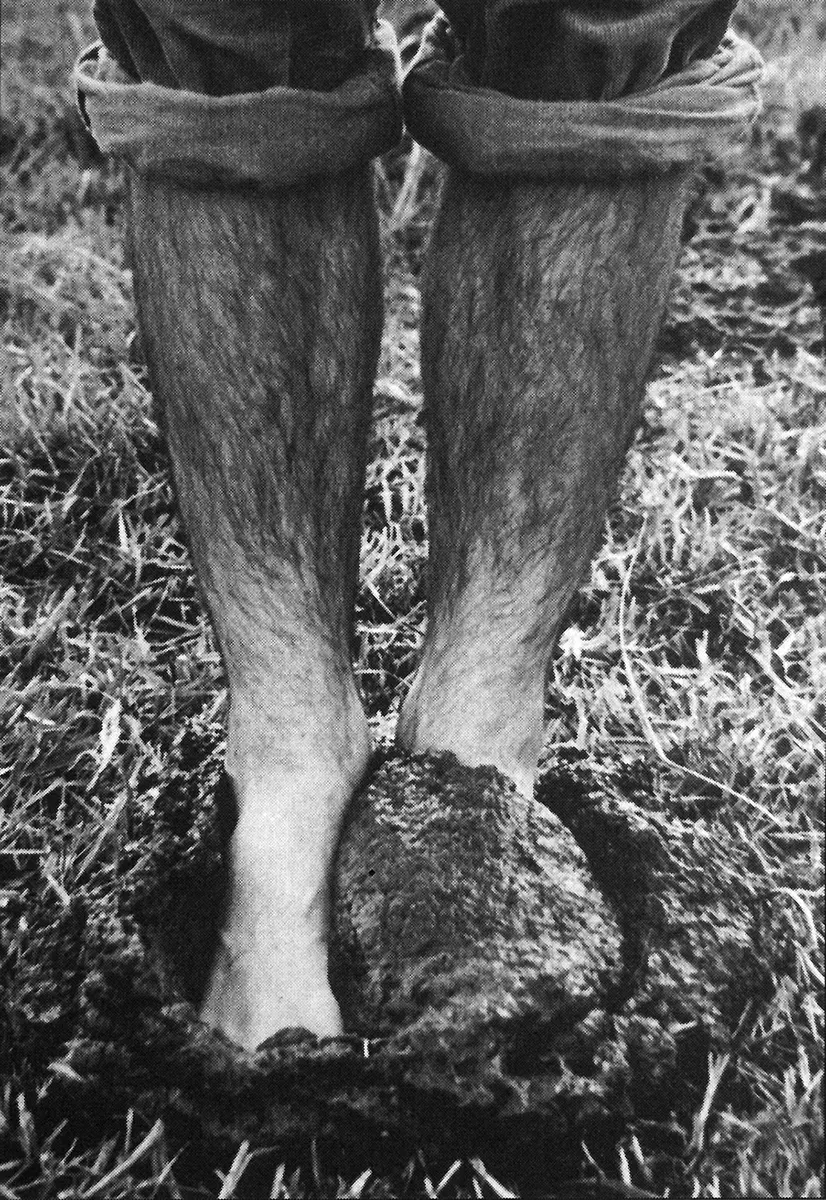
Photography was doubly present in the show as both a document and as a work in itself, as in the case of Juan Pablo Fajardo, who presented his Domestic Series, and Andrés Fresneda, who exhibited a work titled The Politics of the Home. Fajardo is concerned with reflections on the gardens of urban residences, while Fresneda explores the interiors of homes. Adolfo Cifuentes also presented family photographs, retouched with color, and framed. In front of these, he placed glass vases holding artificial flowers, and one vase with real flowers that wilted little by little during the course of the exhibition. Juan Fernando Herrán exhibited a small format photograph with a metallic frame, which showed the legs of a bare-footed man on the trampled, damp earth. Some artists who presented performances, such as María Teresa Hincapié and Gloria Pérez, also included a photographic record.
In the case of the Hincapié, these allowed the spectator access to various stages of her work, along with texts which highlighted the intentions at each stage that were incorporated into her most recent project, Towards the Sacred. Gloria Posada also presented photographic recordings of two works titled Everyday the others and Territory to Hummingbirds. The group made up of Gonzalo Cano, Paul Lashmet, and Lisa Andrew presented a series of photographs of Caracas Avenue in Bogotá, one of the most congested and polluted streets in the city, for both the eyes and the ears. The avenue was observed during the day and at night.
Germán Martínez showed impressive work. On a wooden base that was set low to the ground, he placed ordinary pale green bars of soap, pink-colored bottles of shampoo, hand cream, sky blue fabric softeners, jars of lacquer, and liquid black shoe polish, the contents of which spilled on to the wood. As in all his work, this piece was characterized by its refined and subtle sense of finish highlighting dramatic events as the various elements were arranged to suggest the silhouette of a corpse.
Some artists presented paintings, including Luz Angela Lizarazo, Carlos Jacanamijoy, Raúl Cristancho, Olga Lucía García, and Rodrigo Facundo explored with considerable wit and humor such themes as The jungle and the desert, in painting-objects in which she assembled a variety of materials and meanings. Facundo for his part presented one of his evocative and suggestive images, created with pictorial and printing media, The King of the Jungle, which contrasted an urban figure, with a hat and dressed in a suit, with animals.
There were also some audio installations, including a work by Gustavo Bejarano; videos, including one by the Ku group that is made up of Manuel Santana and Graciela Duarte, who for some time now have been exploring through participatory work with ordinary members of the public the meaning of the art-a question that this time, on the basis of a questionnaire, focused on the relationship between that meaning and the environment.
The works of Miguel Ángel Rojas and Antonio Cadavid proposed other forms of participation. The work of the former stimulated all the senses of the spectator. Titled Tomorrow I'll tell you, this small format piece combined dried fish and delicate white and pink silk flowers. Its size made it necessary for the spectator to get close to the work which, surprisingly, smelled strongly of fish, thus producing an unusual olfactory and visual experience. Cadavid hung green and red apples on the main tree in the museum garden, packed in bags of ecological material, so that the installation looked like the tree of paradise. The apples could be gathered by the visitor but not without an initial sensation of fear since upon being touched, most of the fruits produced a loud noise.
The most outstanding impression of the show was the respectful seriousness with which the overall theme was treated-a with respect for the spectator, the works, the artists, and the subject matter. This enabled the show to gather together within the same space works by very young artists alongside other, more established artists, all working in very different media. The selection was based on a careful study by the coordinators, that enabled the visitor to enjoy a reflective experience in which the body, clothing, the home, the street, the factory, the river, the furrow, the jungle, the sea, thoughts, words, matter, and images, feelings, sensations and movements.2 became the starting point for inquiries by the artists into aspects of experience that are common to all of us who live in a fragile world lacking any certainty.
NOTES
MARTA RODRÍGUEZ