Up until recently, to speak of Central American art was not only something strange, but also incomprehensible for the rest of the continent. Bélgica Rodríguez explained the situation quite succinctly when she pointed out that critics and historians, after dealing with Venezuela, generally skipped over Central America in order to arrive at Mexico. Nevertheless, in recent years it seems that such a tendency —or possible condemnation— has begun to diminish before an imminent moment of growth. Recent initiatives have plotted the coordinates for a new map of Central American art, and they have assured that this art is richer and more profound than a region worthy only of being passed over.
When we speak of artistic activity in Central America, we do not discover a very long history. What’s more, in the face of insufficient information, the memory of a single biennial has persisted over the years: the biennial celebrated at the beginning of the seventies, whose shadow remains in our collective memory. On that occasion, the panel of judges, formed by Fernando Szyszlo, José Luis Cuevas, and the now legendary Marta Traba, granted transcendental prizes to certain countries, while leaving others empty-handed. That was enough to create an uncomfortable ambiance and to discourage the development of important artistic movements of the time.
However, nostalgia for anecdote and a competitive tone was finally overcome through encounters like the First Painting Biennial of the Isthmus, celebrated in September in Guatemala. After this first edition, the Biennial was recognized as an activity that, in the near future, could generate an important function in the art of Guatemala, El Salvador, Honduras, Nicaragua, Costa Rica, and Panama. In this sense, the effect of the decision made by judges Michael Mezzatesta, director of the Museum of Art at Duke University, and Celia Sredni de Birbragher, director and founder of ArtNexus, to question the benefits of awarding first, second, and third prizes, was the key to avoiding that storehouse of past corruption. The will to break from this traditional, competitive scheme gave the Biennial a lesson in simplicity by which to evaluate art more fairly, and not from the perspective of the good, the bad, and the ugly.
The question is clear: what do we gain from these hierarchies? After years of measuring our relationships through the fragmentation of interests, of titles of colonial origin, of general captaincies, of being the more or less civilized, the more or less violent, we must take a step toward cohabitation and more stimulating exchange. Thus, the decision to award three first prizes and three honorable mentions, suggests that the Biennial was off to a good start. In addition, six institutions, recognized for their contribution to the cultural development of their respective countries, were united for the first time through this organization which began in April 1997: the País Foundation for Education and Culture (Guatemala); the Honduarte space (Honduras); the Promérica Bank (El Salvador); the Ortiz Guardián Foundation (Nicaragua); Empresarios en el Arte (Costa Rica; and the Fernández Pirla Foundation (Panama).
In addition to the enriching group experience (as opposed to mere competition), the first biennial is an important survey of the painting of this generation, not very well known beyond its borders, and not very well known among one another. In their group vision, we may still perceive general concerns with culture and nature associated with festive color, as well as the fact that Central America is the last bastion of magic realism painting. However, we also find works that stand out for their attempt to abandon themes and labels of the exotic. Among these is the interesting work by the Panamanian artist Fernando Toledo, titled El gran inquilino (The great renter), the composition titled Clea, by the Costa Rican painter Adrián Arguedas, a work by Honduran Xenia Mejía titled Inspiración personal (Personal inspiration), and El hueso de Olivero (Olivero's bone), a work full of humor realized by the Panamanian artist Roosevelt Díaz.
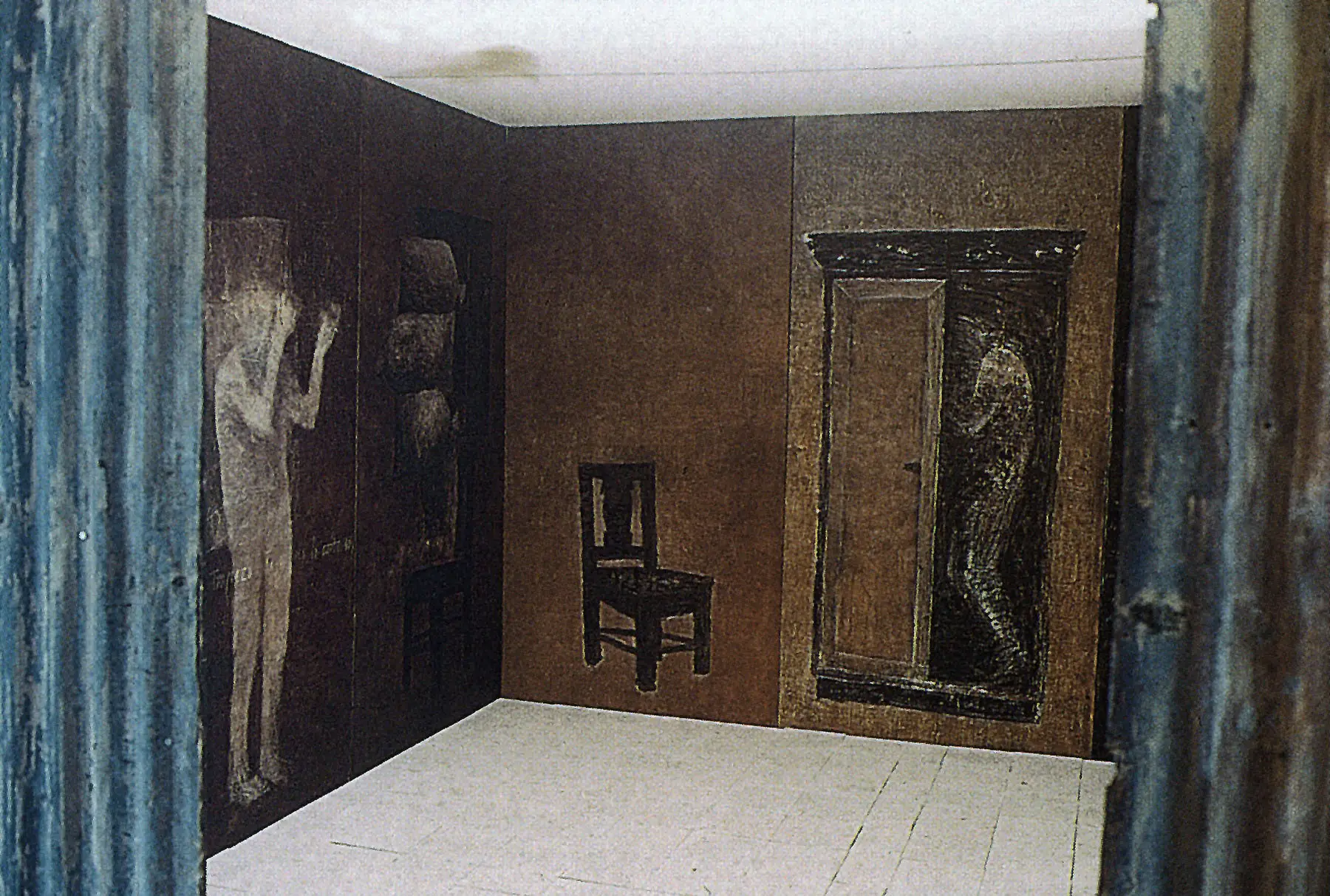
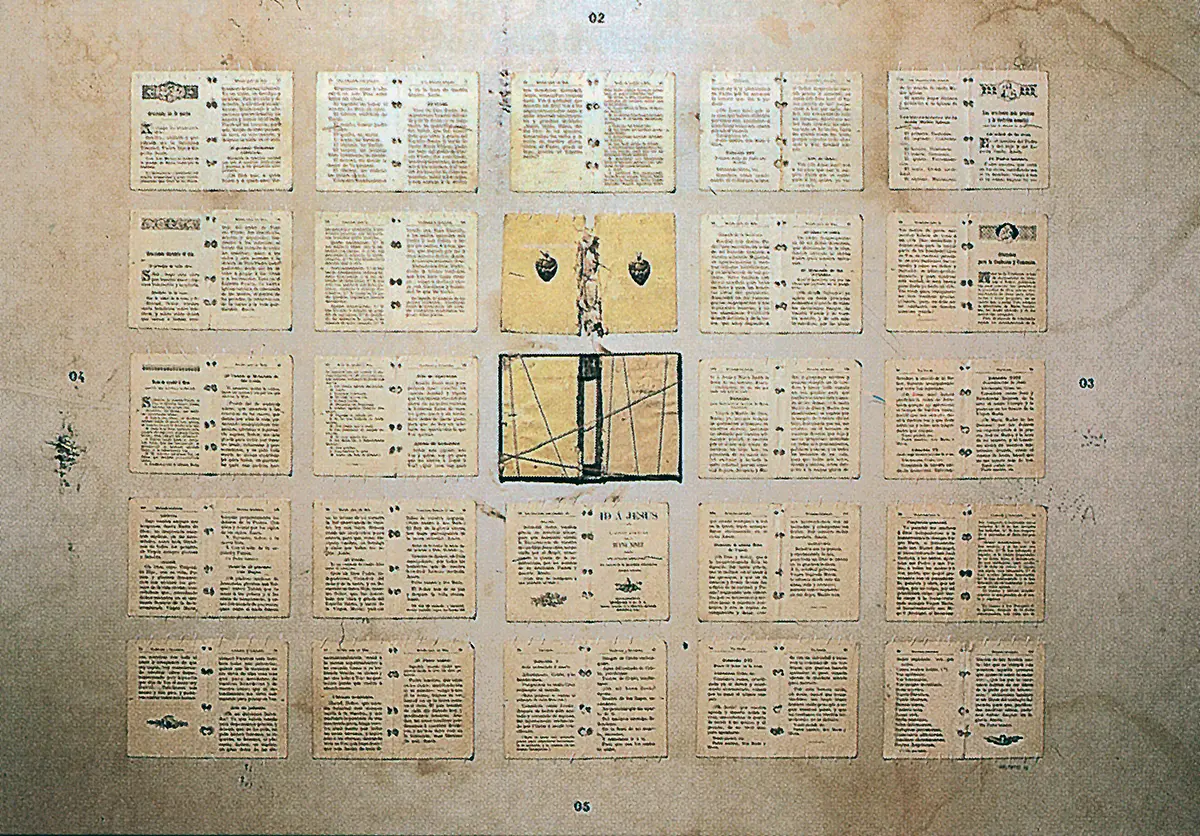
Precisely at a moment in which Latin American art was being incorporated into a global art (while continuing to speak of its particular histories), awards tended to lean toward works that express this standard. First prize was shared by the installation titled Rogatorio (Supplication), by the Guatemalan Francisco Auyón; Oración de la manana (Morning prayer), by the Salvadoran artist Walter Iraheta; and Tan cerca y tan lejos (So close and yet so far), by the Honduran artist Armando Lara Hidalgo, a work which follows a more traditional line of easel painting.
With his composition, Auyón joins a line of artists who raid the medium of installation, without completely abandoning the traditional medium of painting. Rogatorio proposes as its space of reflection a home in the slums, that common image of indigence. The work reproduces a small room with zinc plates. The interior walls have been covered with paintings of recognizable scenes of the context to which they refer. However, without the common problems and complexities of poverty, the miniature hut is more like an ascetic space, with its impeccably white floor and ceiling. This leads to confusion between illusory reality and reality itself. Walter Iraheta proposes a near disappearance of painting through a collage of extra pictorial elements. In Oración de la mañana, the artist organizes a series of loose missal pages, used for following Mass, for confessions, and for communions—all of which immediately relate the work to the weight of our shared religious history and the persistence of myths.
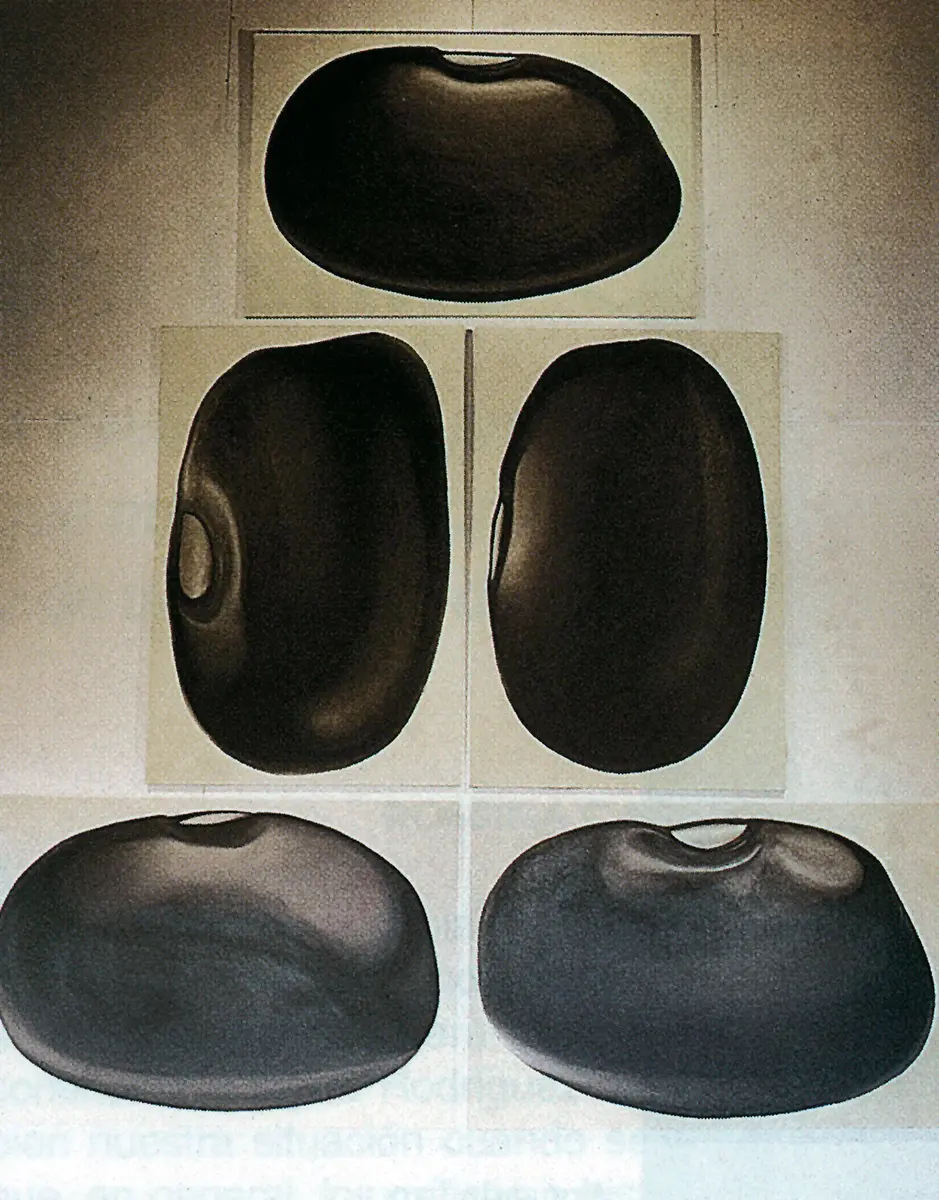
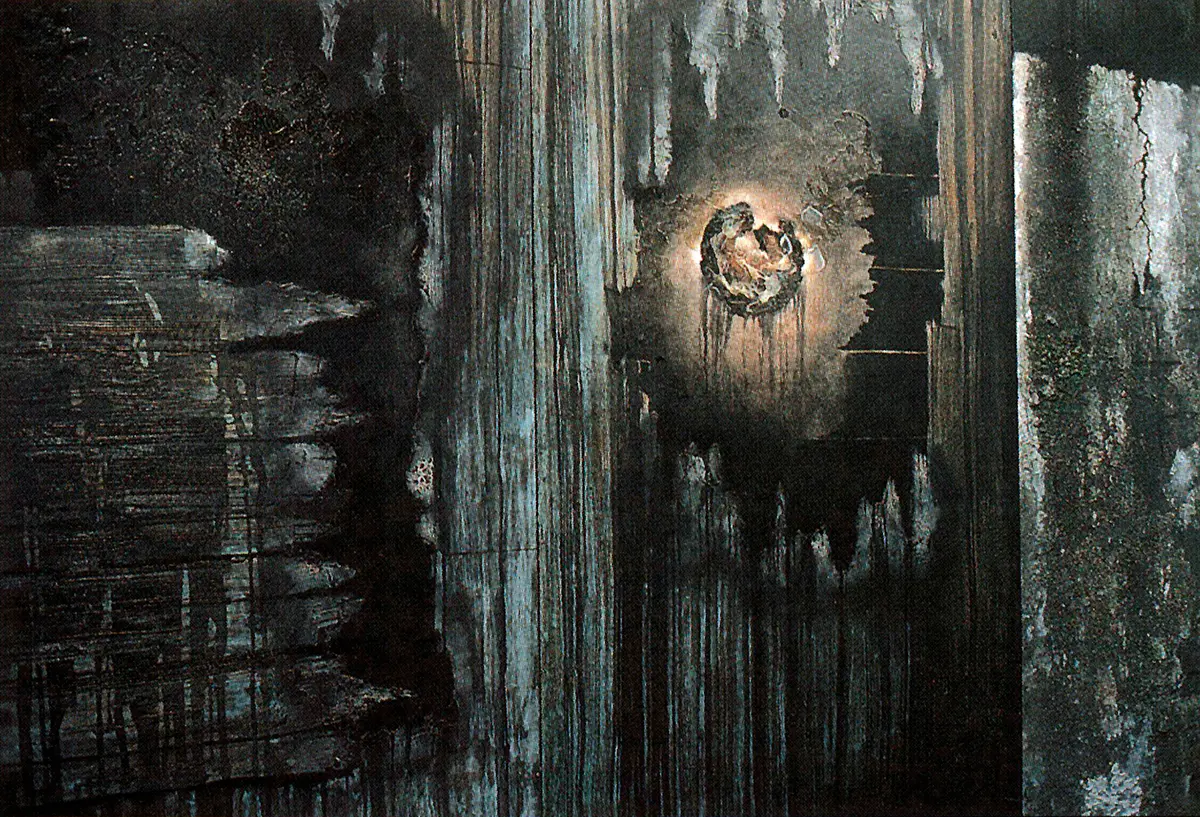
One of the three works selected to share the honorable mention award was Pirámide (Pyramid), by the Guatemalan artist Arturo Monroy. In this piece, we find the suggestion of more sophisticated concepts and the use of simple lines, almost Zen-like. In his work, the classic icons of tropical and third-world countries —beans and bananas— have been carried to great lengths in order to inspire interpretations in different directions. One of these may be the simple astonishment before the super dimension of daily elements or the suggestion of that most personal and current need to see ourselves confronted or devoured by our own stereotypes, especially those that allude to our condition as agricultural and traditional countries. El crepúsculo del ídolo (The twilight of the idol) and Ofrenda y sacrificio (Offer and sacrifice), comprised of six canvases measuring 140 cm. x 120 cm. each, by the Honduran artist Santos Arzú, were also awarded an honorable mention. The group of works uses the concept of super dimension as part of a strategy to confront us with common images of our context. The perforated walls and the reproduction of stamps of materials like brick and wood become an obvious reference to and reflection of what we cannot escape.
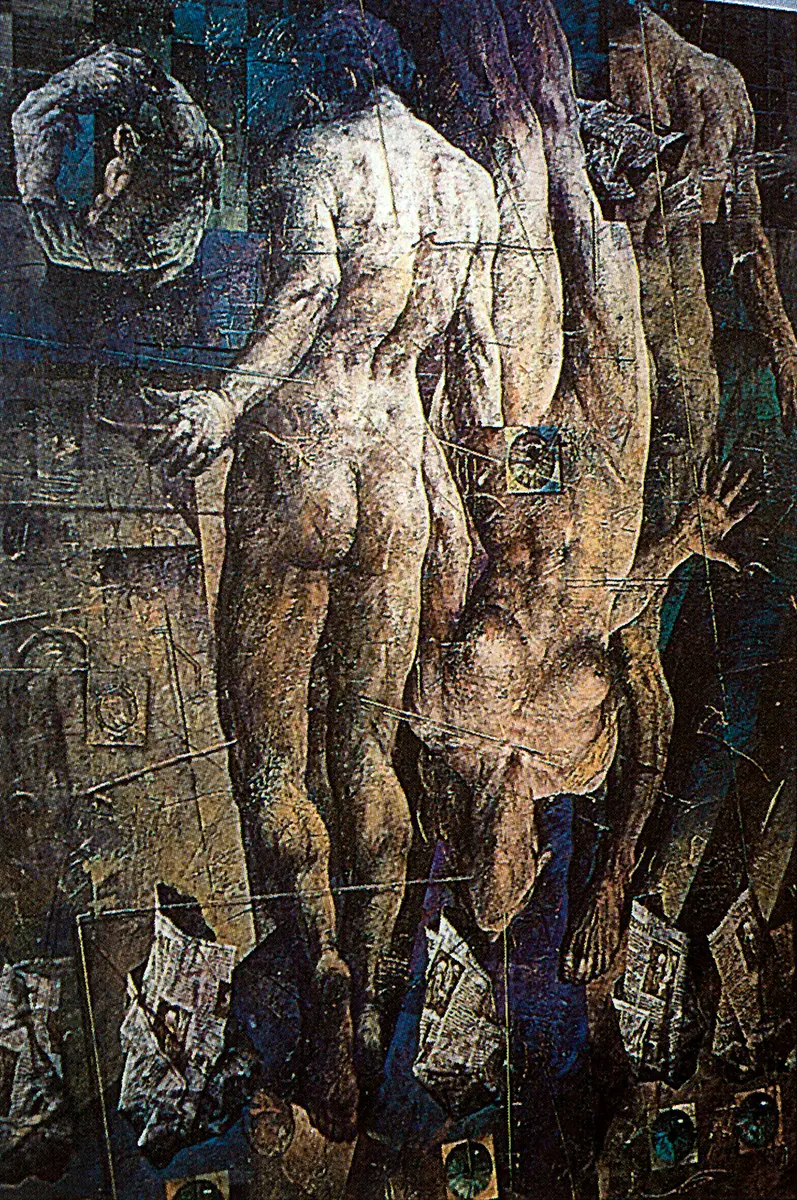
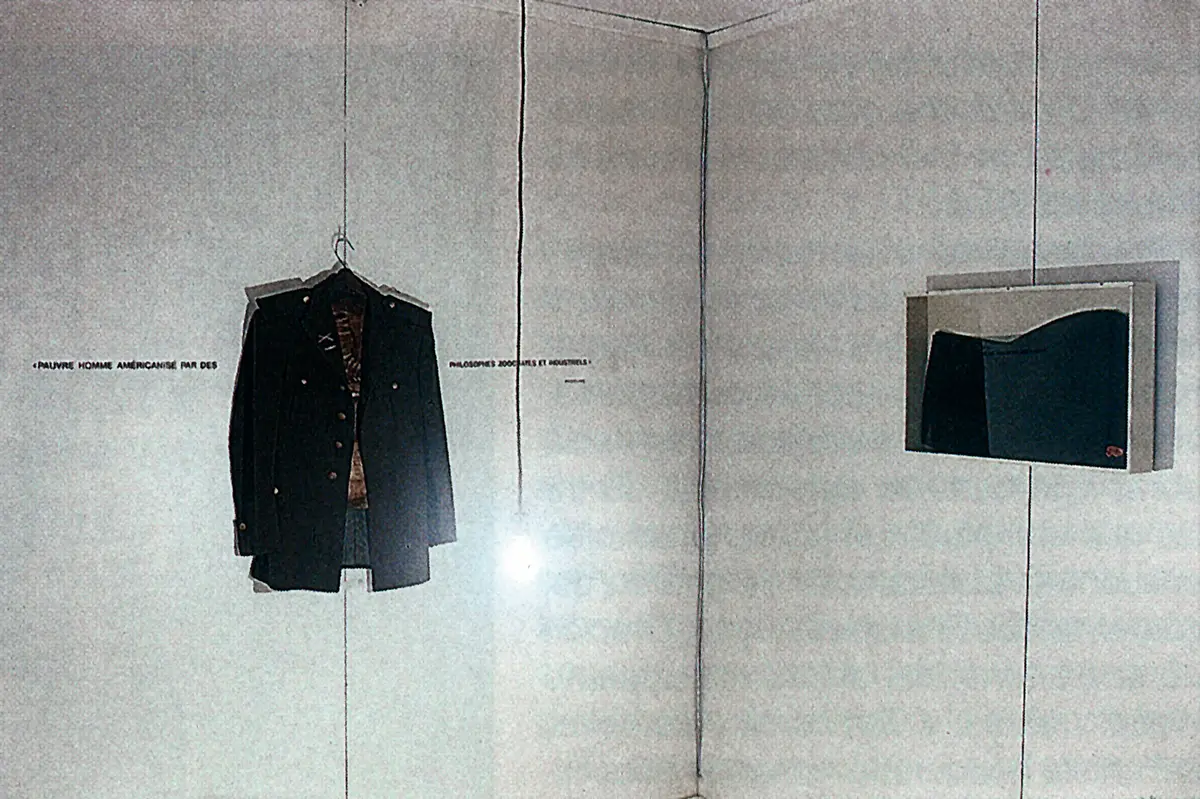
Between the borders of painting and installation, we also find the work of Darío Escobar, a Guatemalan artist who belongs to a new generation that has appropriated, in a creative and unprejudiced way, the constitutive elements of western art. However, this influence is fused with the paraphernalia of traditional religious objects like ex-votos, the esthetics of old books, and burned and hidden papers that intimate labyrinths of memory. In his works La lección de anatomía (The anatomy lesson) and Sin título (Untitled), presented at the Central American Biennial, we find an important step toward a more defined poetics and a conceptual message that hints at the lacunae in our knowledge, especially through the presence —or participation— of Baudelaire’s phrase, “Pauvre homme Américanisé par des philosophes Socrates et industries." (“Poor man Americanized by Socratic and industrial philosophies. ”)
The summary of achievements is introduced by the confirmation that the First Painting Biennial of the Central American Isthmus is becoming an indispensable factor in escaping general isolation. What is also becoming ever more indispensable is a forum for reflection on our contributions and our blunders. Given the ability to view ourselves as an important entity in which efforts and resources are pooled, the Biennial may seriously posit a rote that implies a dynamic discussion around art and the implementation of educational initiatives. In recounting these achievements, we confirm that painting in Central America continues to have an important effect, even though there exists a diversity of concerns and styles. But what is also flourishing is a need to raid different artistic genres, something generally disqualified in these countries as something improper despite the fact that assemblages, installations, and environmental montages have been present on our artistic map for some time now. Thus, the confirmation is set in motion where we find ourselves facing a normal process of globalization and a normal dose of resistance, defending preconceptions of what should be the artistic identity of a country or region.
To fulfill the promise of celebrating the second edition in Costa Rica in the year 2000, the Painting Biennial of the Central American Isthmus consolidates the opening of a fundamental space. Through this first experience, it becomes obvious that our region has a greater need for an encounter and a forum than for a race course and obstacles. In fact, experience sums up all those initiatives, both artistic and extra-artistic, that tend to reopen the borders of communication among countries on the isthmus, borders which closed at a moment when three of the countries were undergoing extreme political and social crises. The initiative tells us that the time is ripe for crossing the great water— as the I Ching illustrates—in order to confront ourselves and recognize our histories through art.
ROSSINA CAZALI
Curator and collaborator of the cultural section of the Guatemalan newspaper El Periódico. She is the co founder of the Proyecto para el Arte Contemporaneo Colloquia (Project for Contemporary Art Colloquial in Guatemala.