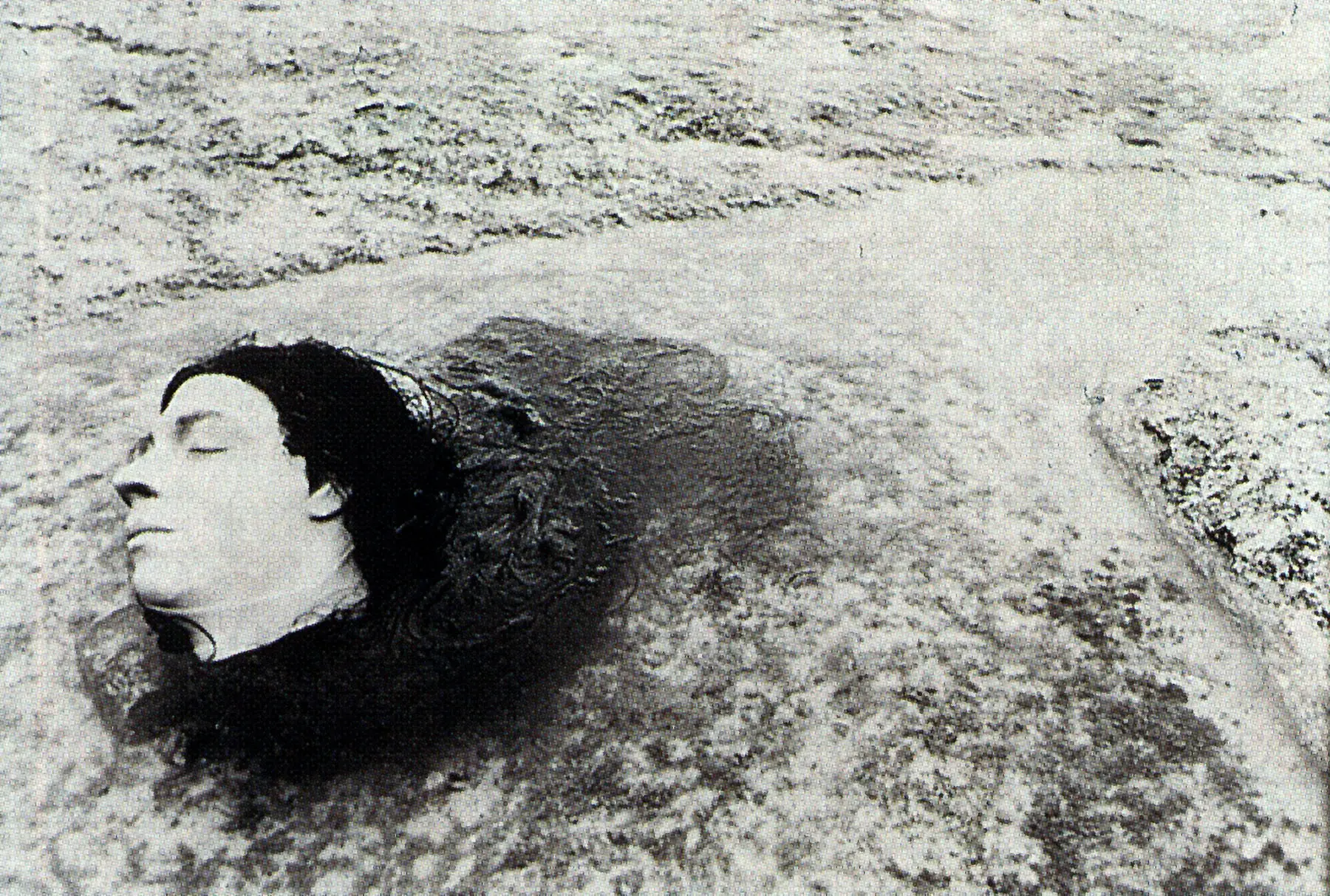
Am.ne.sia, the exhibition presented at Christopher Grimes Gallery and Track 16 Gallery, Santa Monica, CA, begins with a suite of Tunga's large-scale black and white photographs of himself, walking along a rocky shoal abutted by placid surf, and littered with a series of shallow tide pools and streams. Detached and resigned, Tunga swings like a bolo1 a lifelike maquette of his head, as if to launch his intellect, and with it any rational block to instinct and intuition, into the enveloping, waiting sea. An adjoining photo shows the head resting serenely within a pool; eyes closed, its long hair fanning out like an anemone, while Tunga is barely perceptible just above the rocky bowl passing indifferently the opposite way.
Tunga seems to know that while amnesia might represent a pathological disturbance, a hint toward a repressed archive, or even (gasp) "a form of systematic erasure of historical record" it is the quality of reverie that amnesia bestows and not the semantic parsing of the exhibition catalog which seems eager to lend the word a talismanic, if not grail like quality. For Tunga, amnesia is simply a poetics of lingering —a melancholy daydream in which Freud argued, that which is lost is not abandoned; the grieving subject entombs the object within, neither relinquishing nor separating from it: "In grief, the world becomes poor and empty, in melancholia, it is the ego itself."
If amnesia suggests a narcoleptic coma from which we periodically awaken, the question is not how the cognitive mechanism itself works, but what we finally awaken to, and how we then cope. In this light, Tunga's gesture of literally tossing the mind/body split aside appears naked, defiant, and optimistic—privileging emotion and physicality as a compass through what feels like the undifferentiated data stream of daily life: the attenuation of all events into bits of information. It is a theme picked up by all 16 Latin American artists in this mammoth two-gallery show, two years in the making. When most group shows resemble the diversified portfolio of a large mutual fund, an aesthetics of managed risk whereby one work's singularity is offset and diminished by an opposing aesthetic in order to appeal to the widest sensibility (and commercial tastes), Am.ne.sia privileges idiosyncrasy and a wide domain of formal strategies, a credit to Christopher Grimes' curatorial skill.
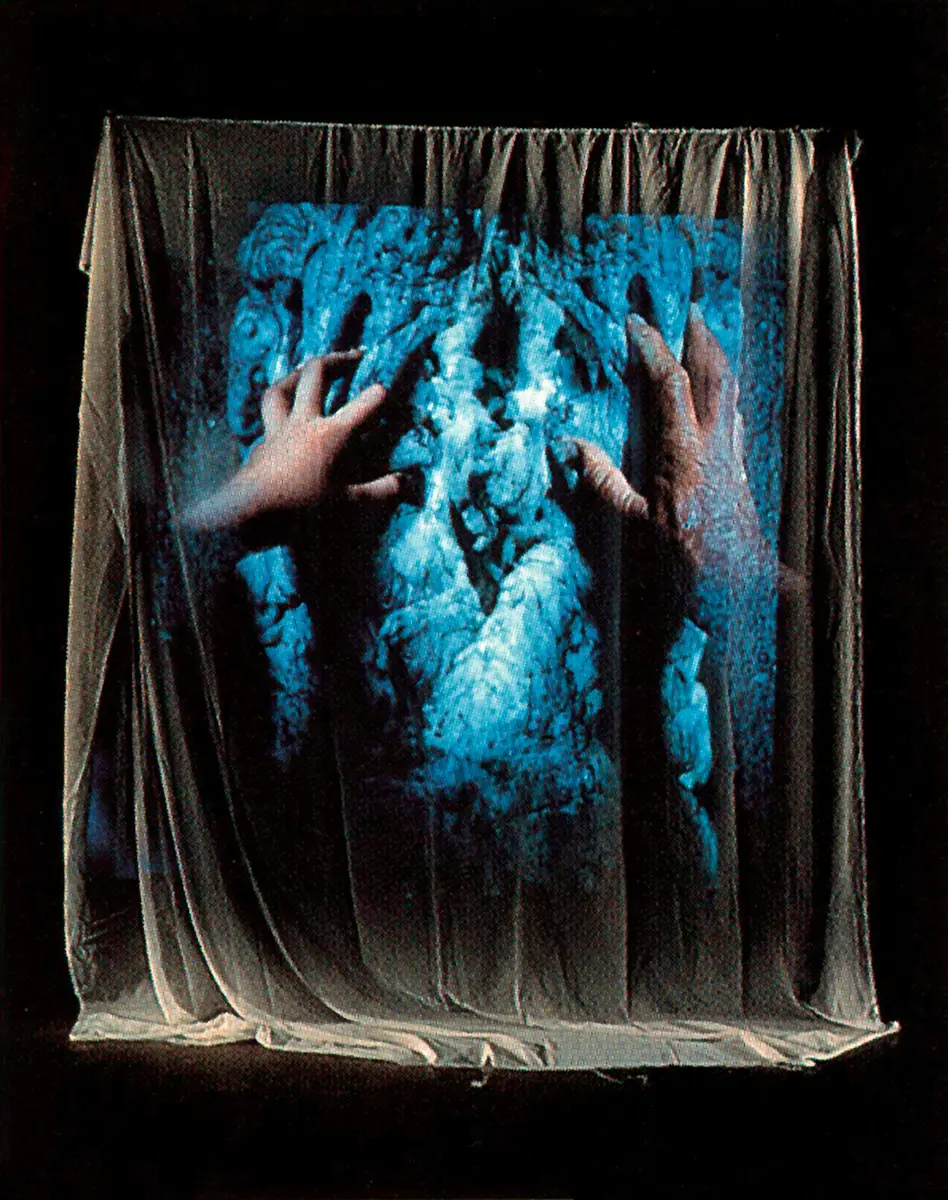
Miguel Rio Branco's Door into Darkness (1996), a continuous translucent slide projection with a soundtrack given its own shadowy, sepulchral room features images from the grotesque to the serene pausing to enunciate themselves then gently morphing into the next frame. Rio Branco seems interested in what Gabriel Orozco describes as "the liquidity of things-how one thing leads to the next," the relatedness of objects established through proximity rather than narrative. A lion jumping through a ring of fire within the theatrical trappings of a circus tent carries the same sacred charge as the grime of a back alley. Rio Branco processes everything through a mythic filter, drenching it in crimson shades and sooty ash, although the hushed reverence seems a little forced, succumbing to what Peter Lunenfeld describes as, "the black room fetish, the desire to transform portions of the galleries, museums, or found spaces into videotexes, darkened pseudo-cinemas for the contemplation of the video artwork."
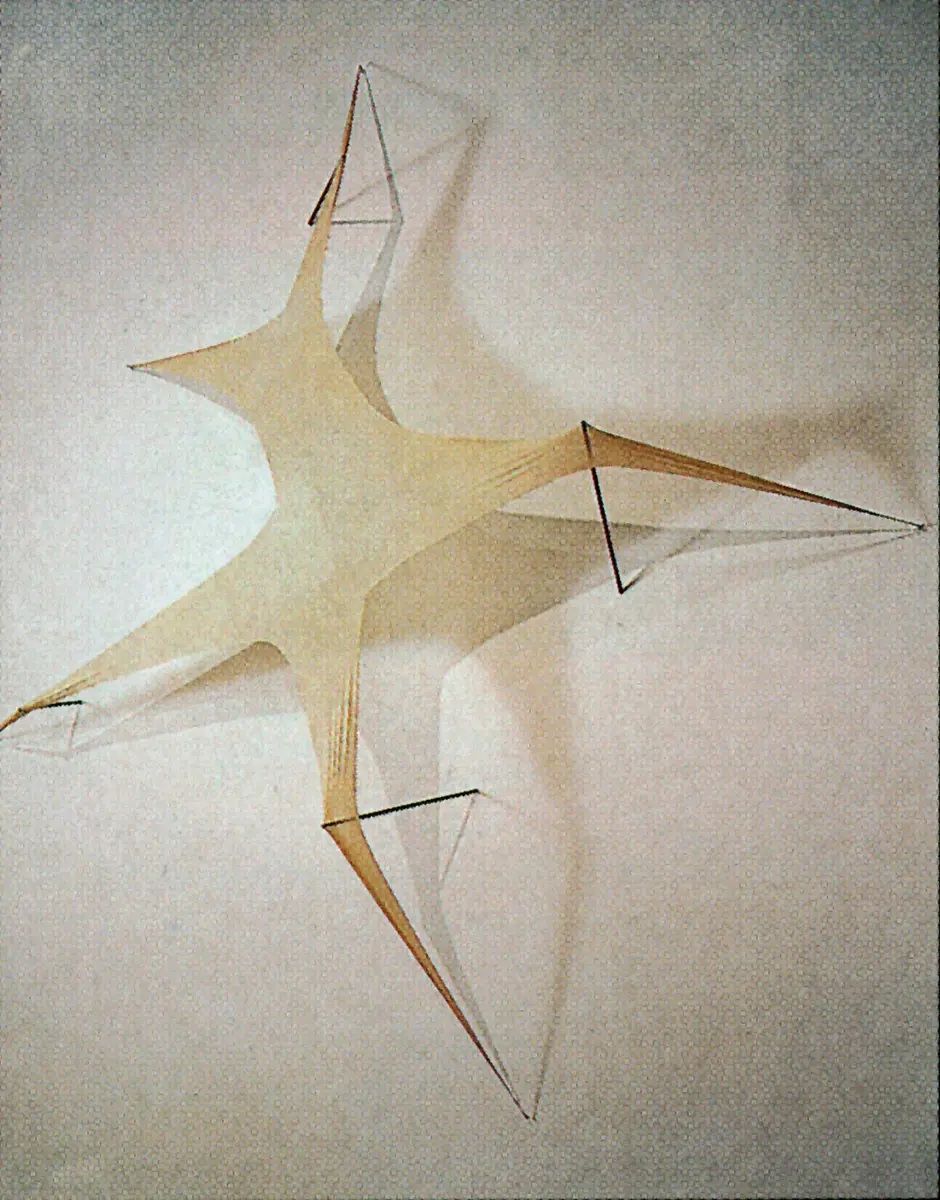
Beauty being an advertisement for itself, Ernesto Neto downplays his production values making a virtue of limited means, a display of his own self-imposed rigor in material form: simply an iron slab plunked down onto a large swath of silky fabric, twisted into a whirl of pleats and folds, Metal/Tecido looks like a portal into another dimension, a tunnel drilling down into the gallery floor, inviting us to burrow through the ruffled membranes, the geologic sediment of our own past. In his hands, even the contents of the average gallery-goer's pockets could be transformed into something memorable.
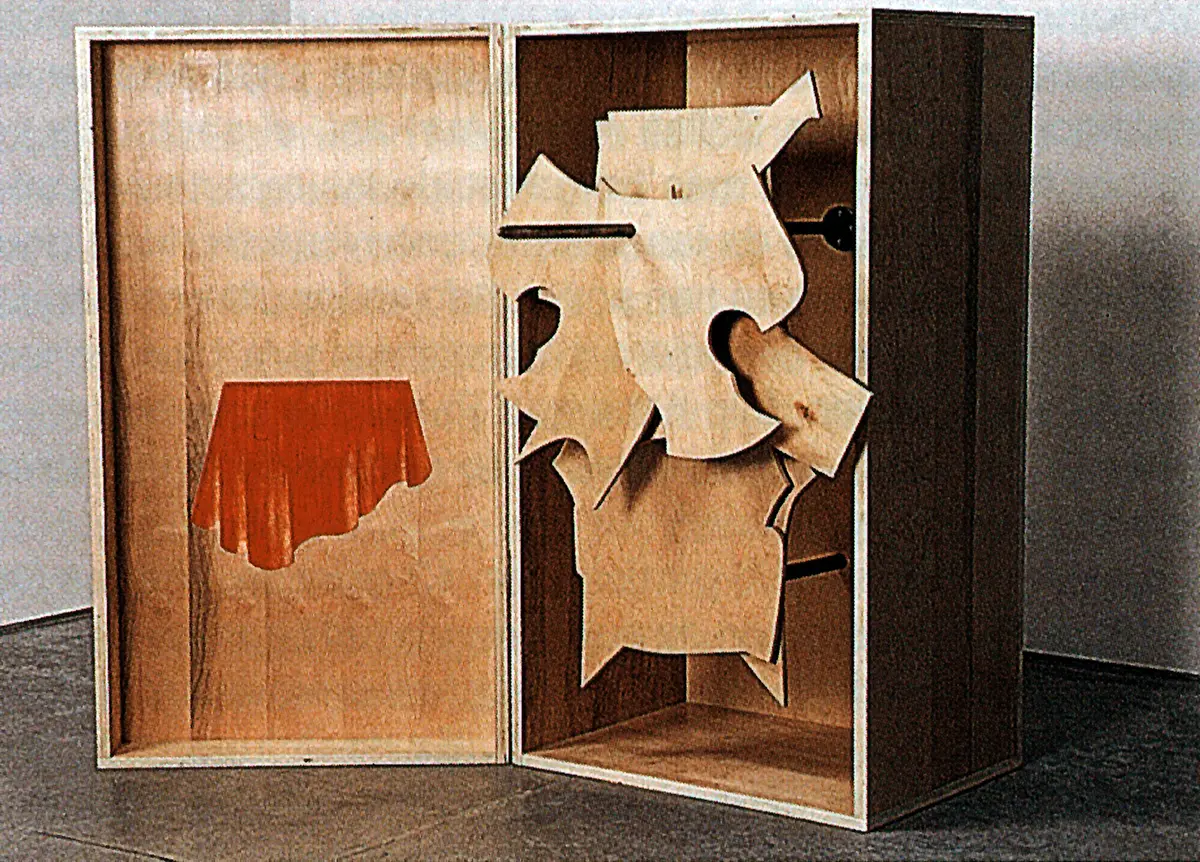
What is it about boxes, containers, and cartons in the art that inevitably beg associations with Duchamp's Boite-en-Valise (rarefied company to be sure, but generally a strained comparison that rarely makes use of the portability component as institutional critique)? The notion that ideas or goods can travel in tidy boxes questions the need for conventional gallery display, or at least gets us thinking in that direction. José Gabriel Fernández' El Coslurcro de Luces, a wooden box tipped on its side, door ajar, revealing a jigsaw puzzle of a bull's anatomy or perhaps the bullfighter himself, skewered by a long metal sword offers itself as a transcontinental cultural myth. It presents itself as a capsule history: of codes, rituals, and enlivening nuance, that once transformed into a totalizing cultural emblem, is banalized into cliché, and mass marketed as rote romanticism. If El Costurero recoups the dignity of a vandalized cultural form, it does so by stripping it down, dredging it forth in its most reductivist, component form, as if from the soft-edged, inchoate memory of a long-since idealized dream.
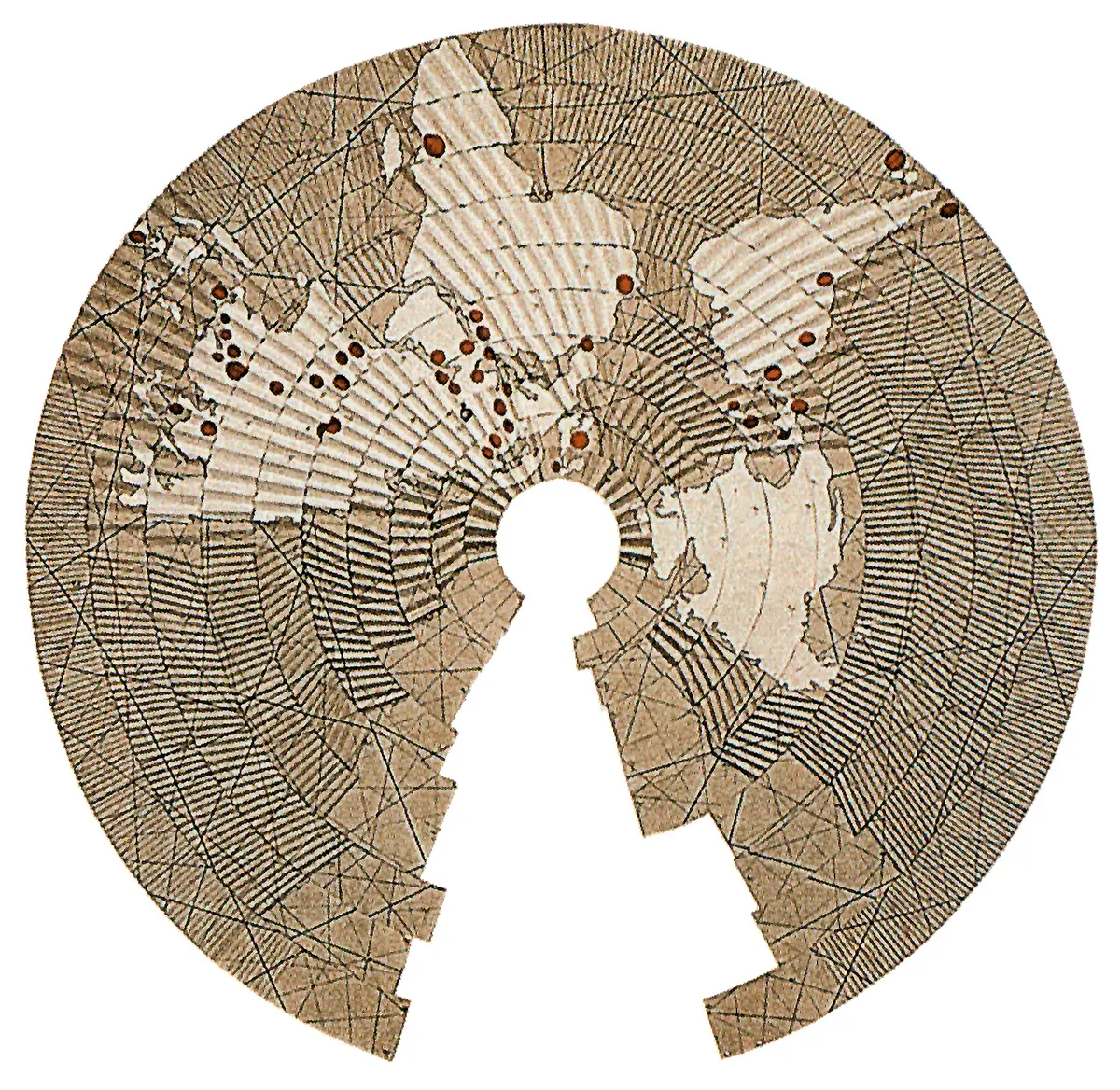
The concentric wrinkles and indentations of canvas in Miguel Ángel Ríos' Pleats and Borders, radiate outward like rhizomatic tributaries, the rhumb lines from nautical charts veined as a shattered lattice, canceling and erasing the directional flow, leading our eyes to rest on imperfect, red circles that dot the barren, white land- masses. Indicating sites of border conflict, the dots seem arbitrarily placed, obeying the same mutating, internal logic as the rest of the flattened-out, topographical map. I'm taking the aerial Longview (that Ríos provides), which is that the earth, or at least its populated spaces, is remote, tiny, self-important, and bent on an endlessly self-renewing series of low-intensity conflicts-nationalism aside, violence is still the norm. A fact that the willful blurring of boundaries through the use of pleats and folds neatly reinforces.
Where was Alfredo Ramírez during the wave of late 80's body art, or even 60's performance, that trotted out viscera and gloried in the splendors of raw meat? He would have embarrassed the best of them. His Columna, a bronze rib cage dangling overhead from the ceiling and powered by a freon generator that produces a thick layer of icy sediment on its spine, slowly dripping to the gallery floor, suggests a clock in its measured ticking of the lifeforce, here made material, and subject to an eventual decay as elemental and tangible as evaporation. Neither glossy replicant, nor primitive Stelarc cyborg, Columna uses none of the cheap Mardi Gras tactics of the 60s to cast off shame, or caution with assorted "mechanization equals dehumanization" homilies. Its spine is split down the middle like a piece of lumber, bent away from itself like a two-headed snake gazing in opposite directions—one to the past, and one to the present. It's a dialogue they call amnesia if I remember correctly.
NOTE
1. Translator's note: Bolo, the large knife used in the Philippines.
DAVID HUNT
Editor at Flash Art International, based in Milan. He writes frequently about contemporary art and culture for many publications.