From September to November, the Yerba Buena Center for the Arts in San Francisco presented a multidisciplinary arts festival that considered the shared influences of Mexico and the United States. The visual arts component of A Mexican Presence consisted of two exhibitions: Labyrinth: A Day of the Dead Exhibition and ¡Mexcetente!: Hybridity and Travel in Art from Mexico City and Beyond.
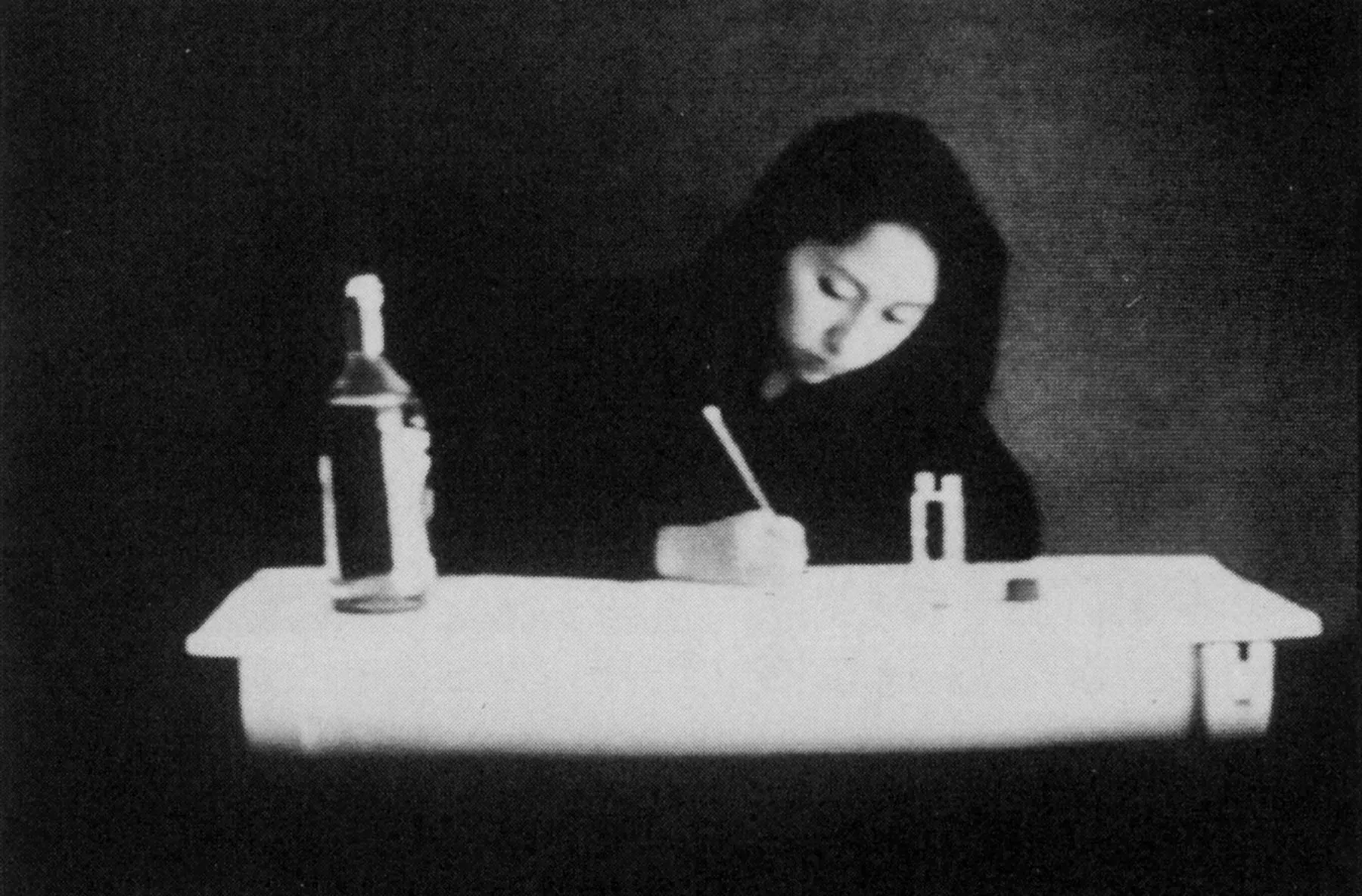
The young artists included in ¡Mexcelente! appear, like their twenty-something peers worldwide, primarily interested in material wealth, illicit substances, television, and rock music. Daniela Rossell’s color photographs of upwardly mobile Mexican women, Rich and Famous (1991- to present), illustrate the universal desire to keep up with the Jones’s. Drunker (1995-1997) features a video of artist Minerva Cuevas as she throws back successive shots of tequila while writing, with increasing difficulty, "I drink to talk, I’m not drunk, I drink to feel, I’m not drunk, etc." An hour later, the bottle is empty and Cuevas is very drunk. Framed on the gallery wall is the written document of her inebriation. Drunker tries to take its proper place in the artistic canon among the transformative/performative acts of Nauman, Burden, Ray, et al, but what one ultimately comes away with is a reminder of why it’s a bad idea to get drunk on tequila.
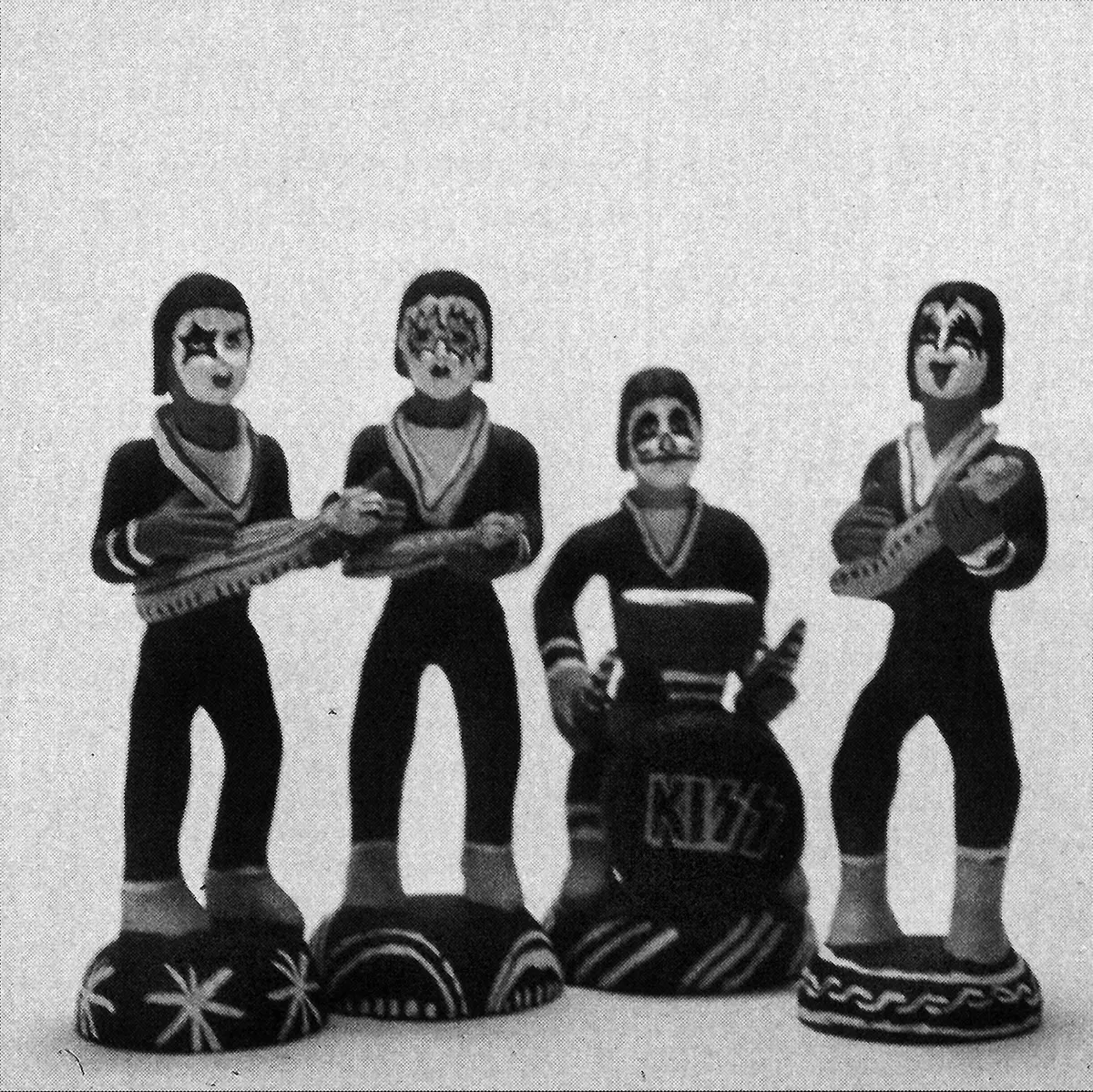
This fascination with altered states is the focus as well of Francis Alÿs’ Narcotourism, a series of photographs of the artist walking through Copenhagen, which he did for seven days straight, each day under the influence of a different illicit drug. The body in action is the subject of Daniel Guzmán's video Remake, in which he recreates the performances of his predecessors based purely on second-hand descriptions of those works. In this piece, curator Rene de Guzmán's curatorial premise of cultural migration is most successfully articulated. But the inclusion of Daniel Guzmán's other work —a series of explicit pencil drawings and a quartet of folk art figurines presented as a tribute to the 70s rock band Kiss titled Kiss My Ass — is a bit of a stretch.
The stereotypical Mexican-ness of Guzmán's colorfully painted Kiss figurines is what I anticipated when entering Labyrinth, a "maze" of works created specifically for the exhibition by 55 local artists. But Labyrinth was a surprise. Certainly, the folk traditions one tends to associate with Day of the Dead celebrations were in evidence but curator René Yáñez succeeded in putting a new and meaningful twist on a seemingly conventional genre.
The Day of the Dead celebration recognizes death as part of life and so too, does Labyrinth. Much has been written about the museum’s function as the bearer of memory, an institution that works to immortalize death. While Adorno and a host of others have emphasized the negative aspects of such a function, describing the museum as a mausoleum, a space of death, Yáñez sees this capacity as beneficent and shows in Labyrinth that museums are indeed able to speak to a living culture. Within these museum walls, the dead are immortalized in a way that resonates with the visitor. This is exemplified in works like Nick D. Gómez's elegiac Entre Agua y Cielo (Between Water and Sky), an homage to Luis Barragán, one of Mexico's most influential architects. Appropriating the primary colors and clean geometry that were the signature elements of Barragan’s architectural oeuvre, Gómez's reflecting pool is a touching tribute to an important figure. Julie Alland's Accounting Recounting incorporates traditional Jewish symbols of mourning in remembrance of those lost in the Holocaust.
Francisco Gómez appropriates the geometry and sentiment of the religious tableau in Luminous, an installation of light boxes projecting images of fire, air, and water. Gayle Tanaka's The Time of Your Life, a work comprised of two descending columns of digital alarm clocks, each flashing incorrect times like so many dysfunctional VCRs, reminds us of the arbitrary nature of time. The work of Gómez, Tanaka, and other Labyrinth artists like Jeff Kao and Jenny Hacker, made clear conceptual art’s debt to the religious tableau. Several more traditional versions of the Day of the Dead altar, such as those of José Montoya and Tomás Montoya's The Lady and the Bootlegger, Thomas Guerrero’s Unknown Muse, and Raquel García Arriola's Mi Abuelita, were also on display.
The themes of cultural identity and exchange were further explored in A Mexican Presence’s series of lectures, performances, and the film/video program El Super Show de Puro Pop! Television from Greater Mexico curated by Jim Mendiola.
ALLISON ARIEFF