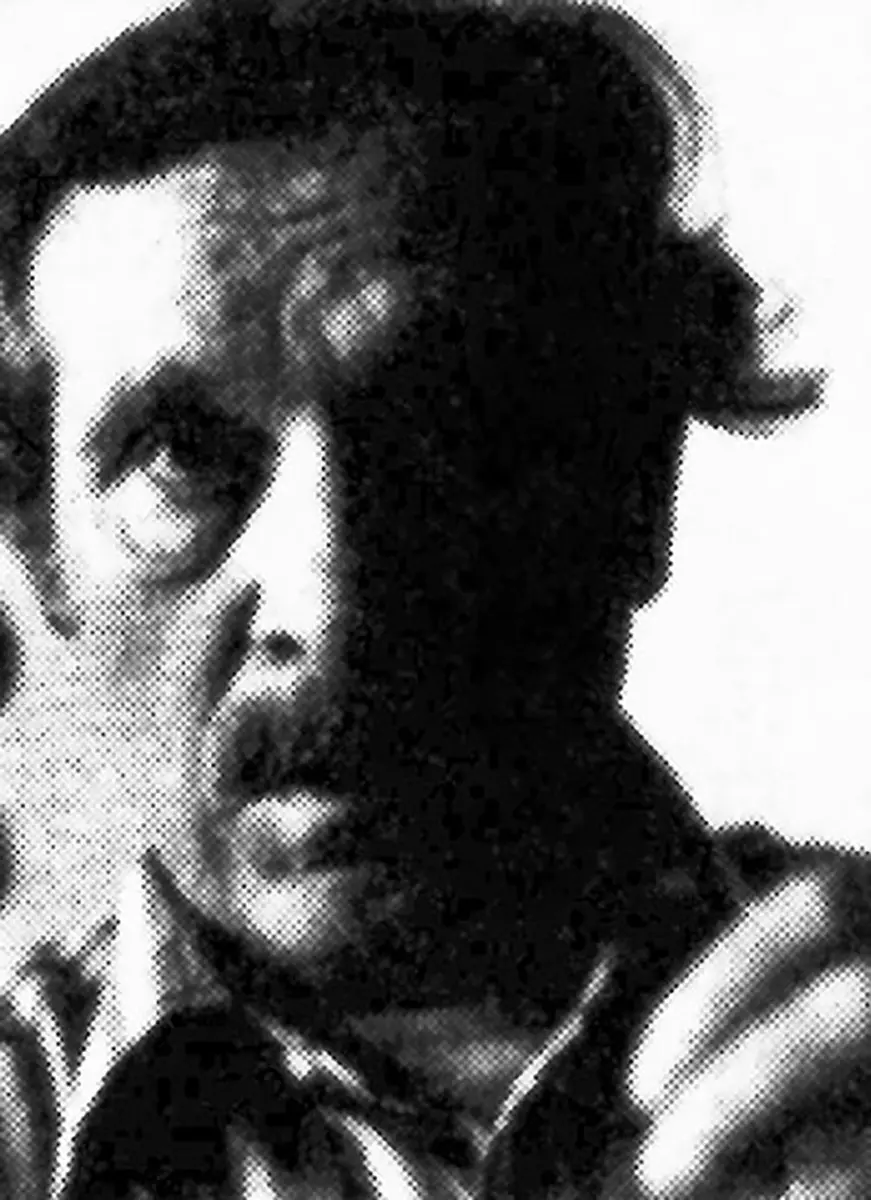
Gerd Leufert (1914-1998) was one of those adopted Venezuelans who arrived in the country in the 1950s. His name is usually associated with the world of design for three reasons: before Leufert, design, in the strict sense of the term, existed only in the work of Larry June; the status of his own work; and the persistence of the concepts he expressed in it. However, in Venezuela, his recognition as a designer proved difficult, and he was barely acknowledged for the integrated artist that he was.
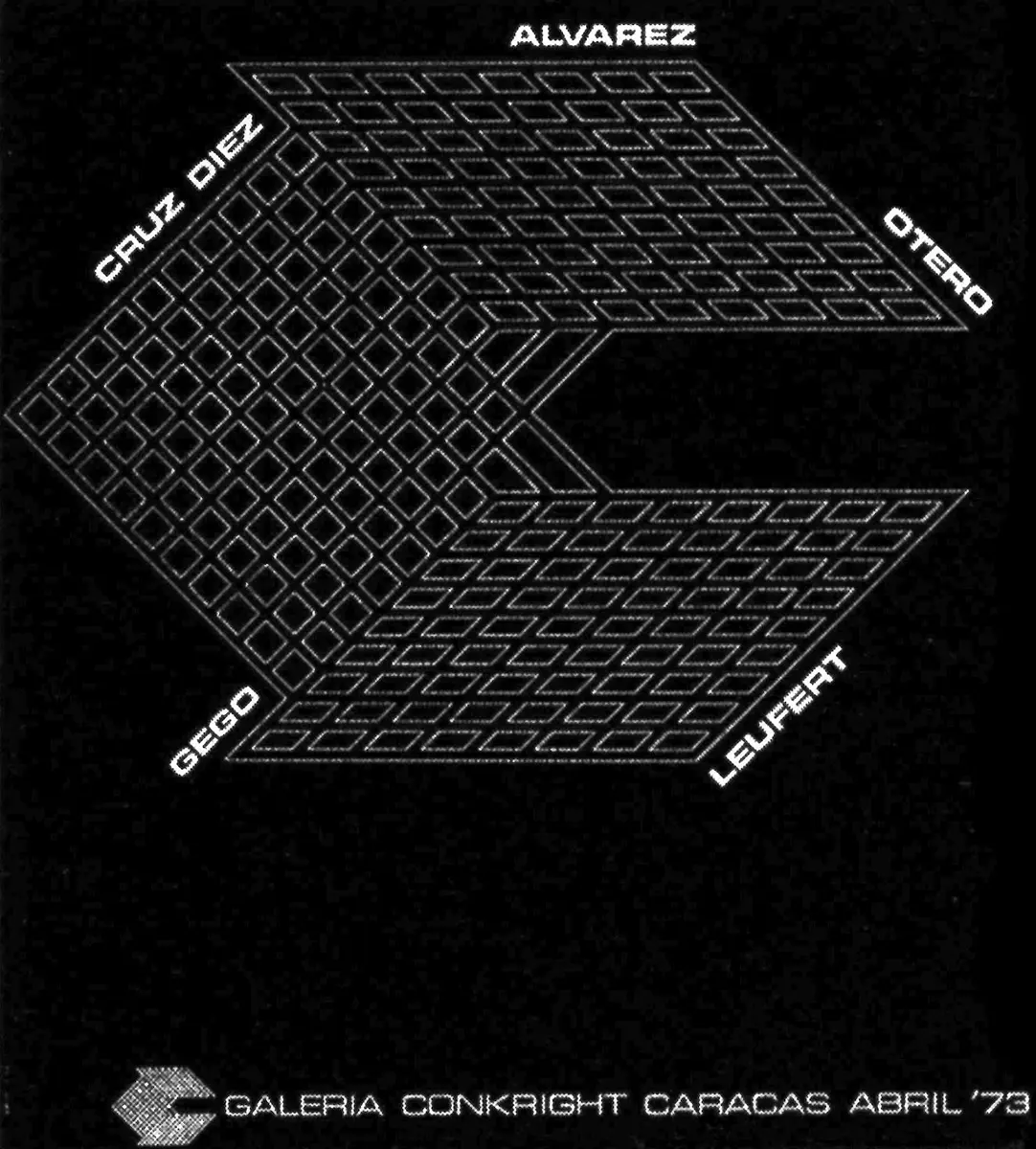
Of Leufert’s work as a designer, there remain many emblems and logos closely linked with our everyday life, such as those of the Caracas Hilton, the Simón Bolívar University, the International Airport of Maiquetia, and the Museum of Art of Maracay, name a few. Leufert was also the author of the Trinidad alphabet (1972). His specific work was collected in his book published in 1976 and in his exhibition catalogs, particularly those of the Museum of Fine Arts of Caracas. His posters could form the subject of an exhibition, one that would reveal his use of a work discipline that became a model of its kind. Leufert’s work as a designer also includes his experience in the conception of postage stamps in 1974. This period was the only time the country produced a decent and artistic postage stamp.
But Leufert was also a painter, something which is often forgotten. He was a painter of many merits whose work-for example his black and white canvases from 1959-1961- distinguishes itself from the ordinary kind of geometric painting and run-of-the-mill figuration of the period. Leufert worked on canvas and on wood, with rollers and palettes, and did monochrome works that revealed an interest in texture and the different depths of artistic language. Those black and white canvases revealed an understanding of the fundamental aspects of painting based on white as form, color, line, and space. The series of works has the general title AM, and shows a few points of color not only on the margin but also in the deep and subtle textures of the canvas. Thus Leufert established his links with research being carried out by Otero, Pardo, and Nedo. When we look back at these white works, they seem to imply a contemporary understanding of the work of Reverón.
One of the pictures, completely black, has in its center a cobalt point and a very fine, long blue line illuminating its concentrated obscurity. The overall texture is grainy, dispersed, and sometimes concentrated, either on the surface or above, behind or below. Another work, entirely white, seems to depict the idea of a square in its luminous vastness. It is a square in space, like air, in the depth, geography, and relief of matter itself. This work in itself would merit serious consideration of Leufert in our study of Venezuelan painting. But he also explored the use of signs, as in his series titled Nenias (1969). Using large and concentrated formats, a flat single color (generally black), and puncturing the wall, the works focus on the question of language and its inclusion in contemporary debate.
In the 1970s he held an exhibition of frames that were literally in space. This heralded a period in Venezuela in which conceptual elements would come to dominate the plastic arts. Years later, in 1990, he surprised us with his photographs like Penthouse B that examined the concept of space with constructivist rigor, revealing his private world —his and that of Gego— and transmitting a beautiful, passionate, contemporary, and Franciscan sense of art.
Everything about Leufert was like that—discrete and impressive. His painting and photography confirm a sense of the absolute from the realms of silence.
JUAN CARLOS PALENZUELA