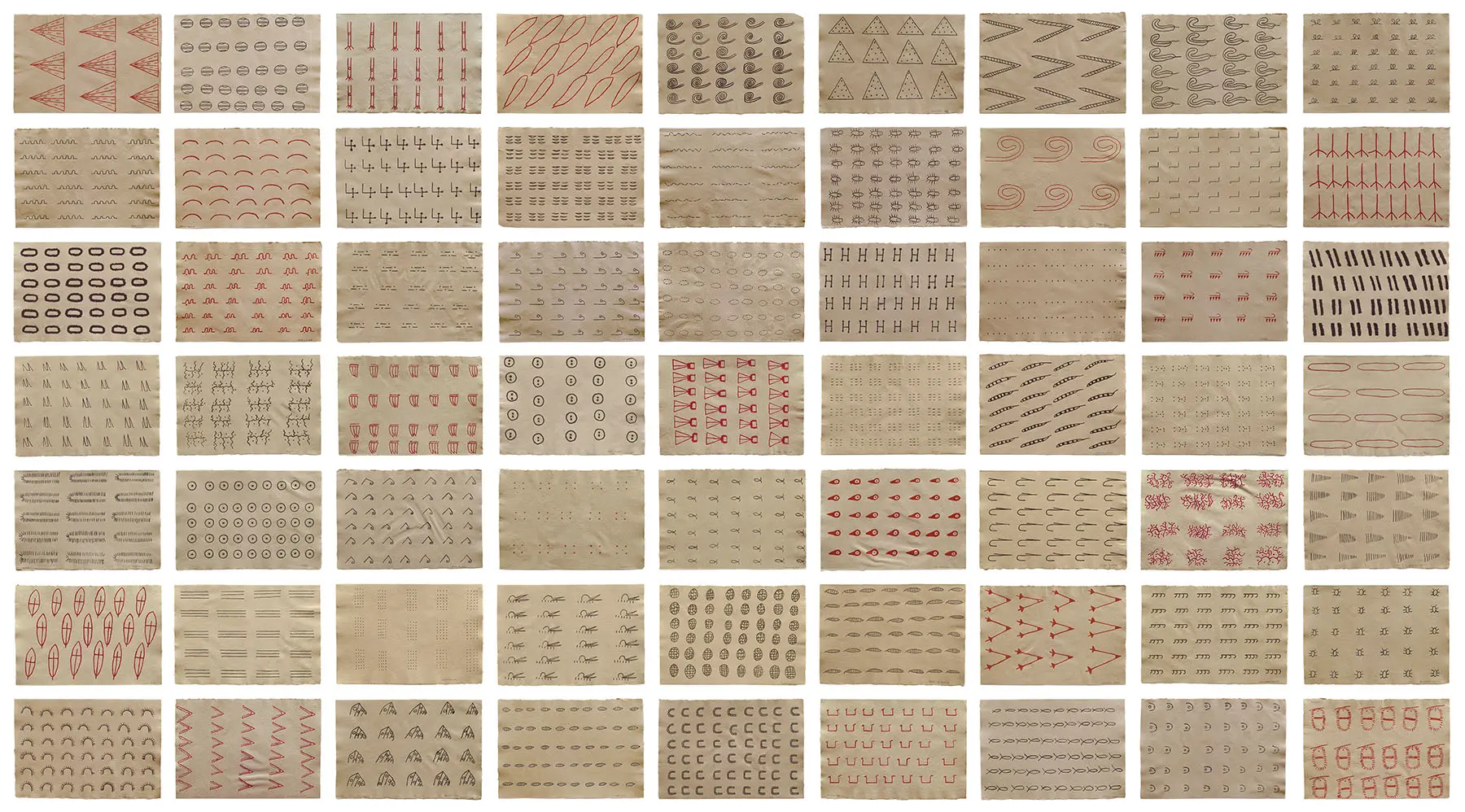
Cannibal Metaphysics, Eduardo Viveiros de Castro evokes the indigenous moment in contemporary anthropology, namely its radical transformation by ascertaining the potential contributions of Amerindian cosmologies to Western thought. This indigenous turn has reached Venezuelan art through the subtle hand of Sheroanawë Hakihiiwë, offering a new perspective that reassesses its visual-arts narratives. Notably, it opens a hermeneutic potential that could be called—echoing anthropological voices— an “indigenization of modernity:” at once unexpected return, kairós, and turn of the screw.1
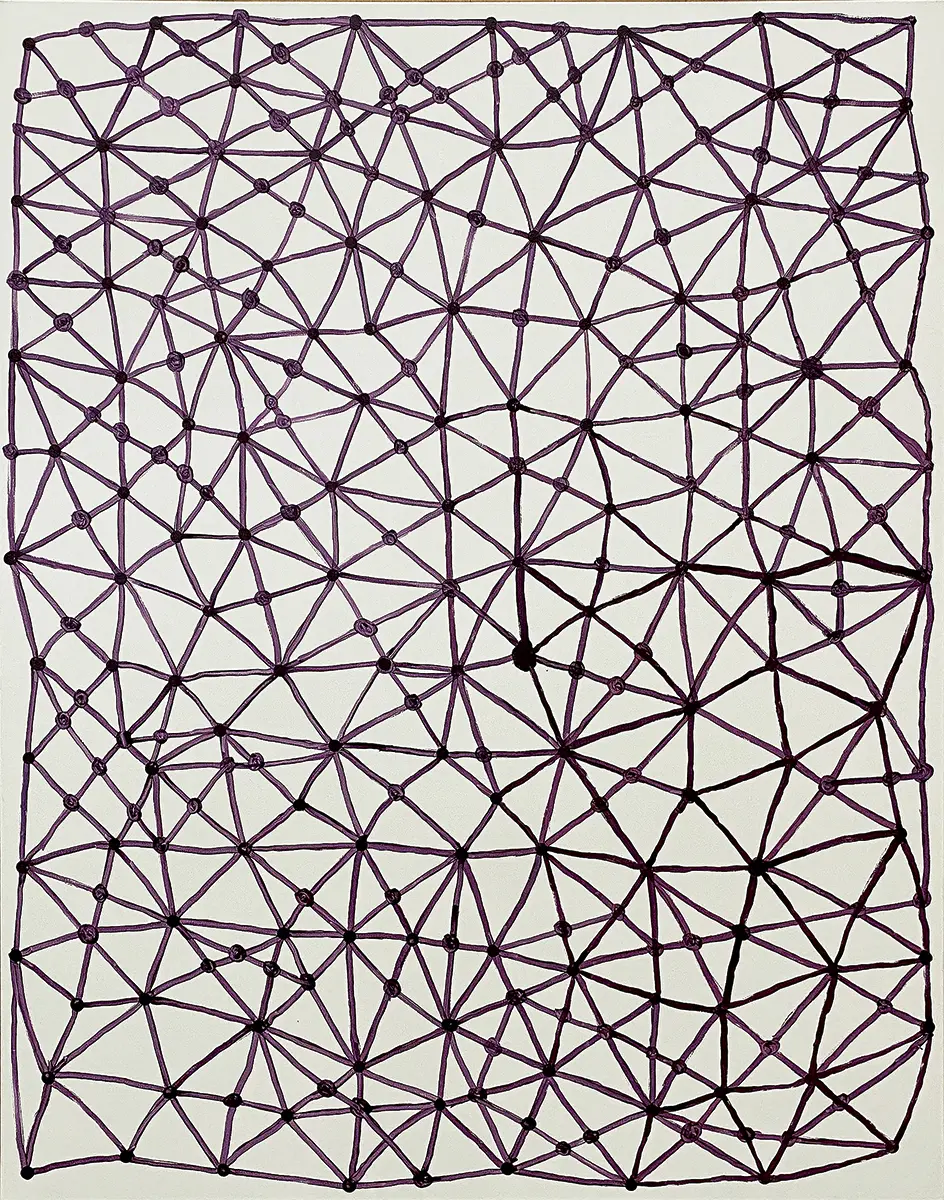
The indigenous turn in Venezuelan art that Sheroanawe personifies is therefore not trivial, nor is it a repetition of anything that has ever occurred before. It is an unprecedented fact in the history of art in Venezuela. Until the emergence of Sheroanawe, not one of its narratives has featured an artist from the ancestral ethnicities who occupies a central and decisive place in the nation’s symbolic arsenal.
Certainly, great pioneers like Alfredo Boulton, J.M. Cruxent, Fernando Arellano S.J., and Miguel Arroyo contributed to formulate a history of our ancestral arts, emphasizing their formal and instrumental wealth, and the magnificent array of their allegorical and schematic resources. But what was missing, as far as my limited knowledge allows me to affirm, was the name of a single artisan or artist that could be cited as the intentional protagonist of a body of work.2
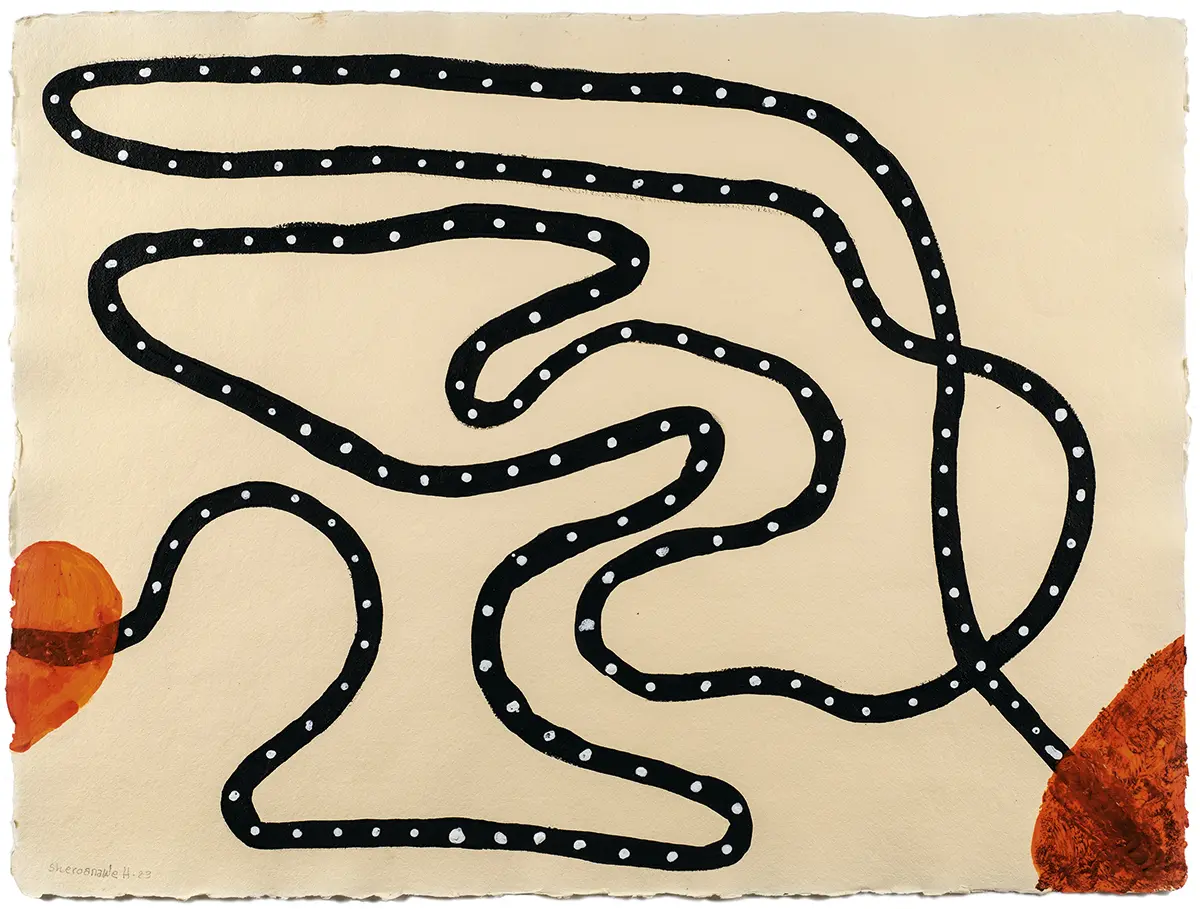
This clarification, of a technical nature, is important to assess Sheroanawë Hakihiiwë’s contribution to the present artistic landscape, given his work’s higher intelligence and magnificent formal materialization. With him, a previously indeterminable past, an ancestral heritage that predates us as a nation—both historically and chronologically, as well as phylogenetically— has been brought forward to the heart of the actual artistic controversy. This heritage still shapes us, works within us, molds us, informs us, becoming fully and undeniably contemporary. The question that this work silently brings is as consequential as its beauty: What was it like to exist in these lands before us? How did it feel to have been here, in these terrestrial coordinates, even before history?
Hakihiiwe’s work has come to disrupt the commonplaces that have governed the writing of Art History in the country. It introduces an element of de-artification, suspension, and inactivation, as well as suspicion, into the key factors of a history too often restricted to the opposing terms of implantation (foreign) and assimilation (vernacular).
The mere certainty of an ethnic origin is however not enough to assess the importance of Hakihiiwe’s work. I have heard, in the petty chamber of national envy, some disdainful comments tinged with unintentional ideological and racial superiority regarding the surprising international reception of Sheroanawe’s work. Eppur si muove: very few Venezuelan artists can boast of having in such a short time exhibited their work in hugely prestigious international contexts.3 And all of this is not, as some paternalistic naysayers claim, merely due to the fact that Sheroanawe, a member of the Yanomami community, lives in a time of global enthusiasm for indigenous issues.
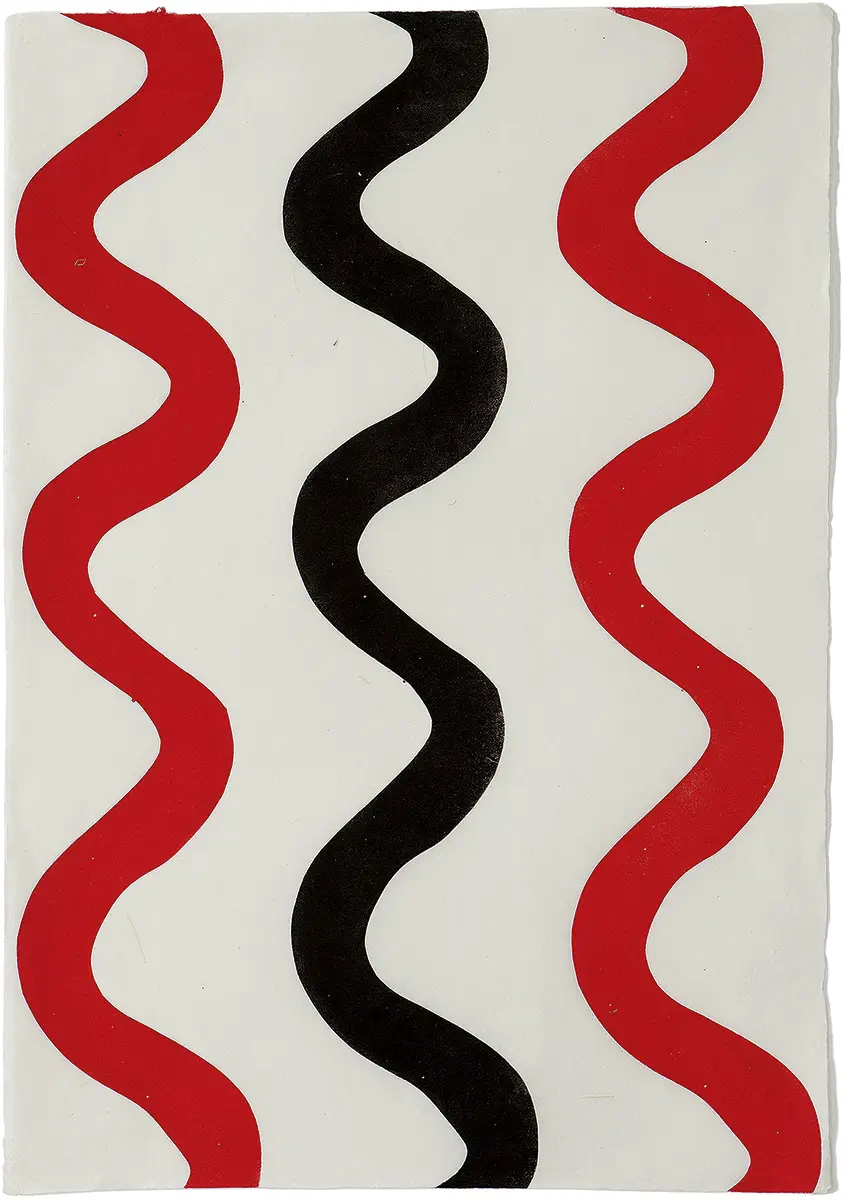
His work shines above all with its subtle and eloquent resources, exciting graphic skill, and multiplying figural richness, which stands among the brightest examples of repetitive and serial language in Venezuelan visual arts, at least since Jesús Soto invented his square rotations, Alejandro Otero composed his orthogonal structures, Víctor Valera conceived his fascinating murals for the Ciudad Universitaria (University City) of Caracas, or, perhaps more allegorically related to nature, Roberto Obregón organized his masterful dissections of the rose.
Supposedly knowledgeable spectators would be wise to operate in modesty, step back from our robust arrogance, and listen to the subtle music that lies like a coded message in the resounding lightness of Hakihiiwe’s works. They are marked by the cosmological keys of an Amazonian culture whose study by brilliant anthropologists coincides with the epistemic turn of the discipline itself, as it is forced to accept a lesson in humility: namely, that “all anthropology is the transformation of the anthropologies that are its object,” as stated by Viveiros de Castro.
These keys include: multiplicity, or more specifically, a symbolic agency of multiplicities; the constitutive, informative, and pregnant power of figural affinities; the certainty that every pairing or juxtaposition is nothing more than a specific case of the multiple: “analogical models, continuous deformations, perpetual imbalances, dualities that split into triadic semi-dualities and break, without warning, into a multitude of transversal axes of transformation.”4 A cosmology based on non-genital kinships, where each body—vegetal, human, or mineral—can become a subject originating from an instance of human principle. This is a revolutionary inversion of Western logopoeia, which is only concerned with the notion of the soul. The Amerindian cosmology and Sheroanawe’s work consistently emphasize the multiplicity of bodies; but, above all, as a methodological principle of figural presentation, his work explicitly demonstrates a foundational truth of modern mythology, as Claude Lévi-Strauss articulated in the 1970s: that similarity does not exist; it is merely a singular case of difference, where difference tends toward zero.5
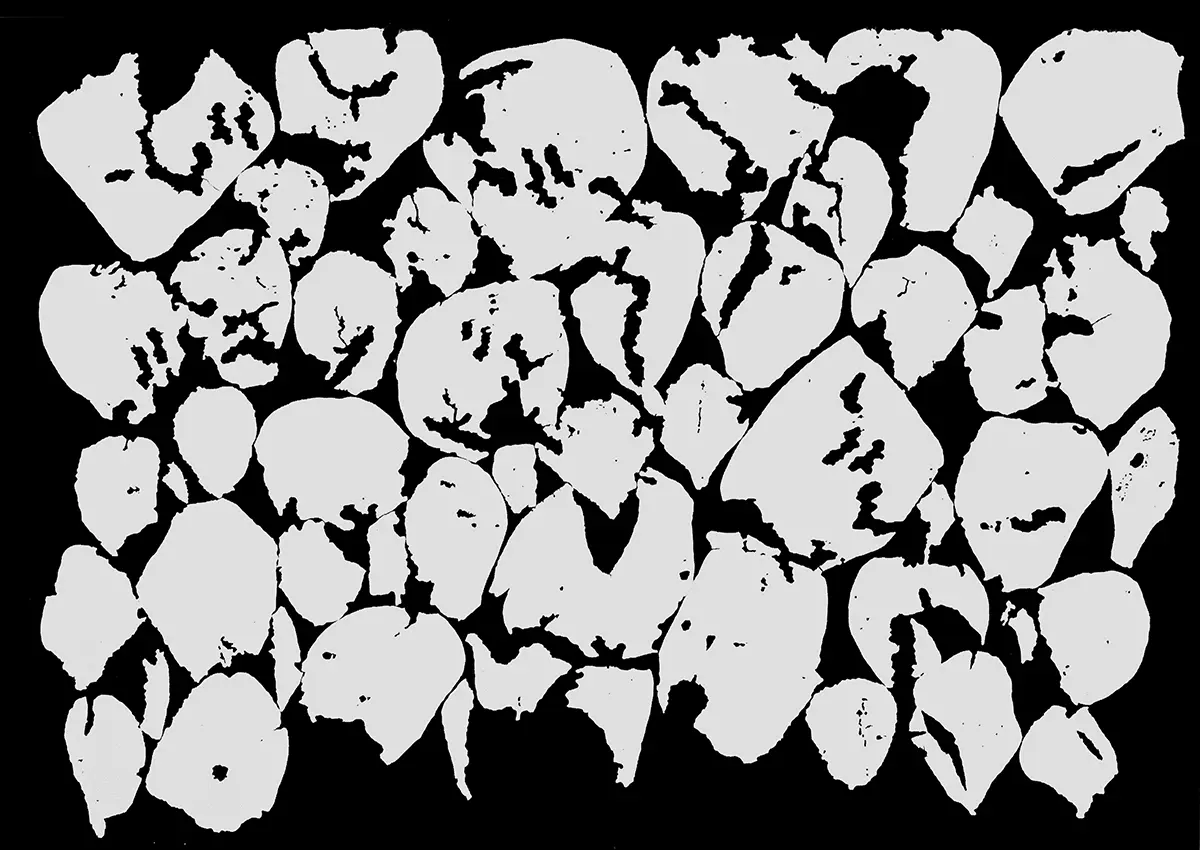
One could therefore dwell on the implications of the pattern of repetition and design of figural groups in Hakihiiwe’s work. Here, the ontology of forms seems to determine the aesthetic outcome—and not the other way around—where seriality is exercised poetically and experimentally each time, using the minimal difference as the principle of similarity and, more consequentially, as a definitive trait of ontological identity; that is, as a reason to live.
But let me first outline another hypothesis in order to consider the implications that Sheroanawë Hakihiiwë’s work might have for the reassessment of our visual arts history, since it embodies a true kairós moment in Venezuela. Strictly speaking, it did not fit into any of the established national art chronologies until now. It did not arise, like the painters of Escuela del Tocuyo or colonial Caracas, from the arrival of Sevillian painting workshops in the tropics; nor, like Martín Tovar y Tovar and his followers, from the Madrid lessons of the Madrazo family; nor like Arturo Michelena, from French academicism; nor, like Armando Reverón, from Creole miscegenation and the rapidly abandoned passage through Catalan modernity; nor, like Soto or Otero, from the assimilation of international Parisian modernism; nor, like Gego, from Germany, and from the migration and typological recontextualization of reticular forms; nor does Sheroanawe, like Bárbaro Rivas, come from the social—illiterate—margins of urban Venezuela.6
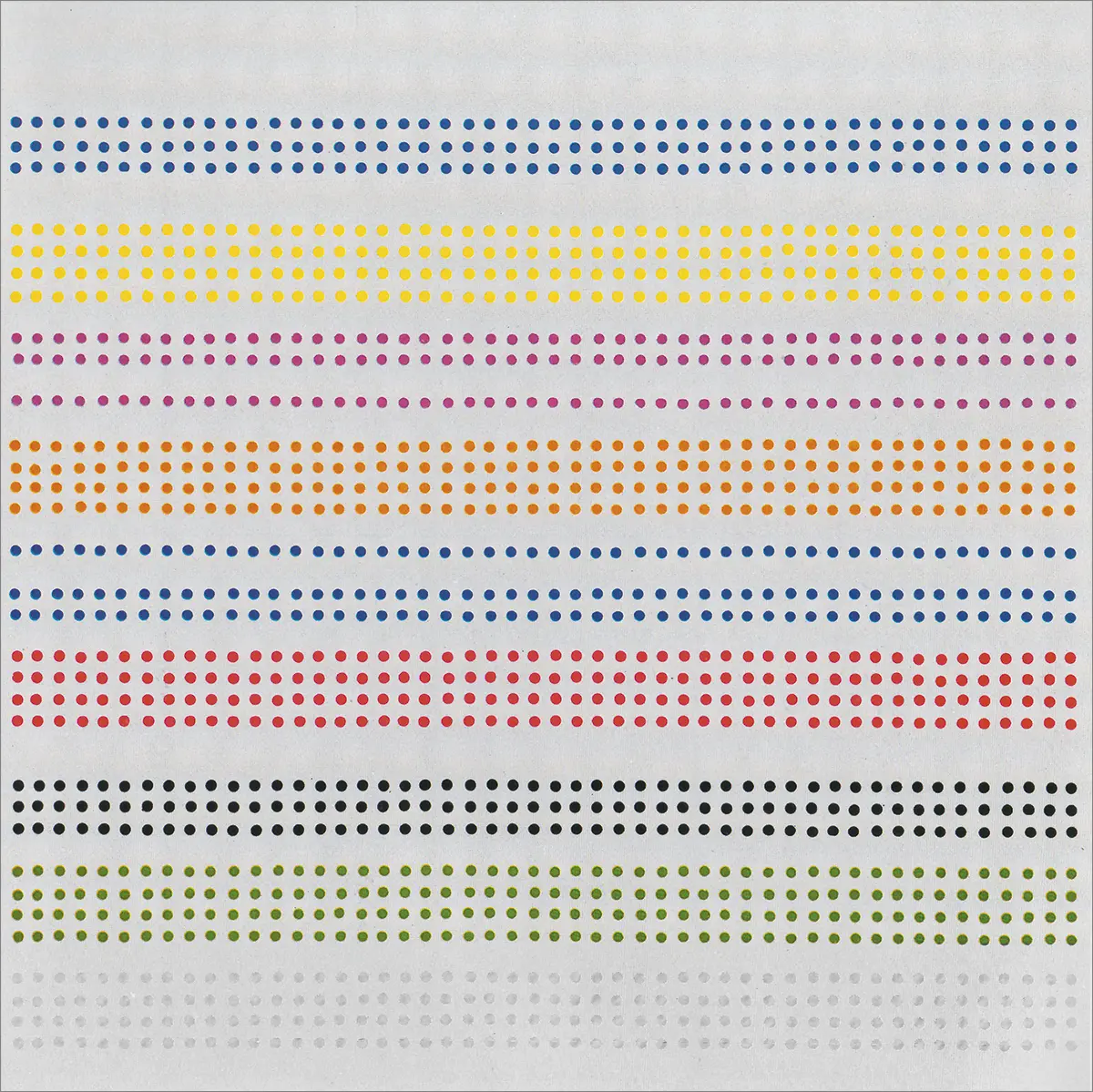
Those are the keys of Venezuela’s Art History that I’ve been interested in exploring. In other words, those keys related to certain liminal passages; specific boundaries conquered by the intrusion of works that produced a moment of abrupt, disenchanting, critical, non-canonical memory, generally arising from isolation or exception. Arturo Michelena returned to his homeland in 1889, was acclaimed as a supreme academic artist in the French salons, made the down-to-earth epic painting Vuelvan caras (About-Face!), and ended up, years later, portraying the illuminating and melancholic figure of Francisco de Miranda in La Carraca prison: a portrait of Eurocentric Venezuela confined in its abysses; an anti-heroic and failed image of the nation’s epic foundation.7 Armando Reverón returns to Venezuela from Barcelona in 1915, painting in the Andalusian style of Zuloaga and Muñoz Degrain, or in the nocturnal and Noucentiste manner of Anglada Camarassa, only to later embark on his slow journey of forgetfulness; the labor of indifference towards the world (of art); the prodigious construction of an involuntary, bodily, captivating modernity in painting; yet sown with shadows, thickets, and melancholic veils.8 Gego arrived in Venezuela in 1939, fleeing Europe in flames and the anti-Semitic Holocaust, laden with technical illusions, and began to cross the boundaries of art to unleash—by the sheer force of knotting, and by her aerial and corporeal grids—the Gordian knot of canonical geometric abstraction with a prodigy of metallic clouds, of shadows and iron coils, margins, and matrix remains.9 Finally, Bárbaro Rivas never arrived; he rather emerged like nature in hiding, to perform the faun’s leap in the contour of the siesta, as Lezama puts it; a spontaneous leap charged with ‘duende’10and similar in this aspect to Sheroanawe: a carrier of ancestralities that precede the past, which, in Rivas’ case, are also oral, Western, biblical; useful for producing, through the exclusive force of intuition, the most illuminating body of narrative painting ever conceived in Venezuela.
What, then, to make of the rise—not arrival or return—but the emergence of Sheroanawë Hakihiiwë on Venezuela’s contemporary art scene? How to describe the passage of his work across the boundaries and liminal frontiers of artistic practice, to offer the ancestral gift with which he has enriched our contemporaneity? How to explain the prior breath that his work brings to the present in the form of figural intensities, transfiguring multiplicities, and transformative repetitions?
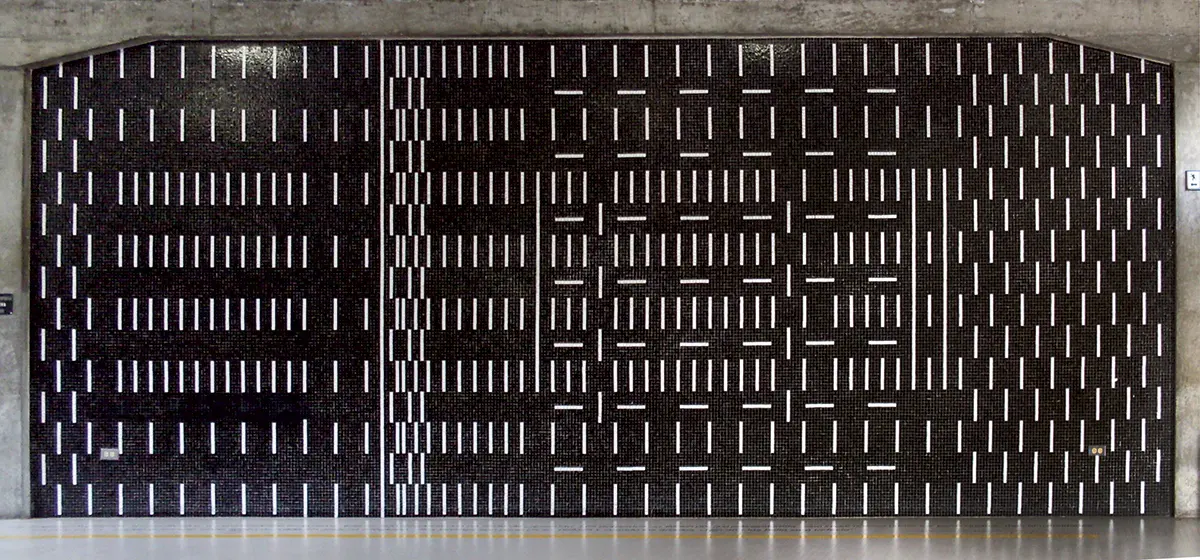
No one in Venezuela expected the invention of a body of rhetoric painting so utterly systematic—surpassing all our academic painters of the 19th and 20th centuries—by an illiterate artist, Bárbaro Rivas, furthermore a dweller of the margins and, as such, excluded from citizenship by the enlightened project of the lettered nation; the one which states, if not in its founding texts, then in its constant practices, that citizenship can only be achieved through the written word; that is, through formal education. The citizenship of the lettered reason, in whose resounding failure not only the foolish homeland but also the nameless multitude of the excluded are drowned by a republic of nominalist instructions, especially in the Bolivarian and authoritarian metastasis imposed on Venezuela by the Chavista regime.
Understand this: Rivas’ modern pictorial art, depicting the most consistent repertoire of rhetorical painting in the nation, emerges directly from the voice, with a radical economy of text and word; without the mediation of the lead of language, as José Bergamín would say.11 This non-textual passage from voice to image also makes it possible for the excesses in his work, for his unexpected modernity: larval figurations, tectonic landscapes, delirious spatiality, sublime color, unfiltered narrative, both simultaneously distorting and effective. Necessary.12
I dare say that Sheroanawë Hakihiiwë embodies a concluding chapter of what Rivas already meant for Venezuelan arts: the interior, unexpected, unpredictable genius; the artist emancipated from all implantations and comparisons with the foreign, also in the wake of Reverón. The analogy is even more convincing when we realize that the work of Sheroanawe, as well as the basic keys of his graphic and figural repertoire, come directly from the body, just as Rivas’ rhetorical painting came from the bodily and embodied voice. Yanomami painting, not just Hakihiiwe’s work, finds its source in the ancestral practices of body paint. There, on the very skin of the Yanomami people, lies the figural grammar of the artists of this ethnicity, like Sheroanawë Hakihiiwë in Venezuela, or like Orlando Nakeuxima Manihipi-theri in Brazil, among others.
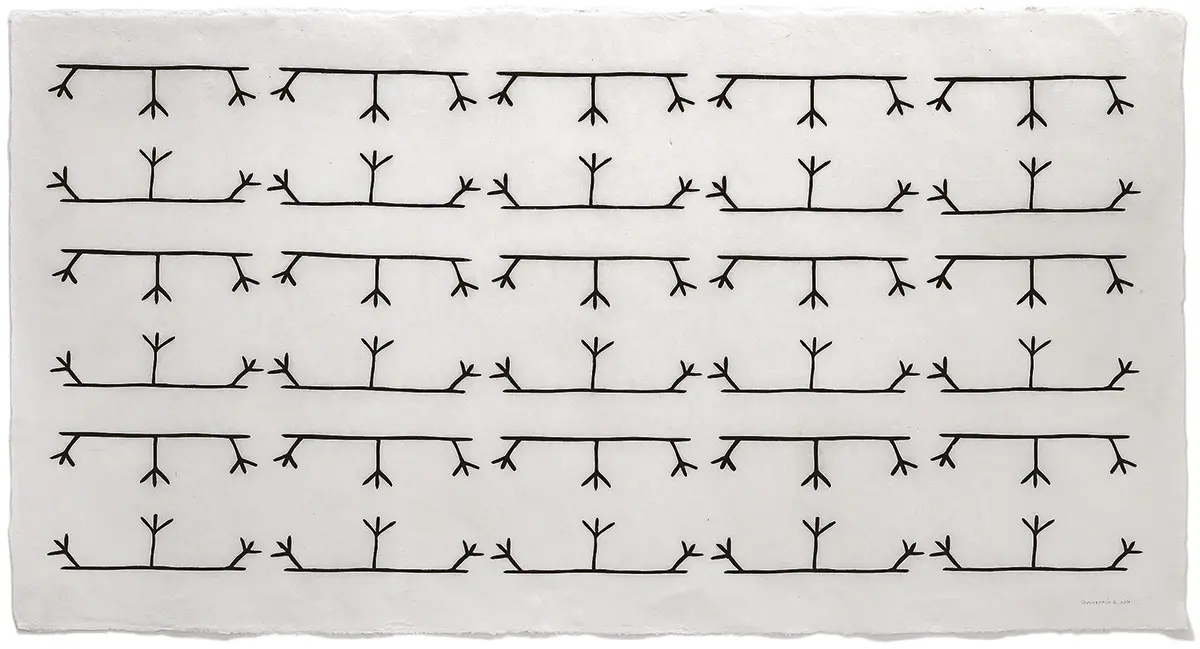
The implications of this are enormous. Not only does it dismantle the humanistic model of representation, which requires an ideal agency, the primacy of concetto—substituting for the written word—or the transition through the texts, while the oral voice becomes a direct image in Rivas, in Sheroanawe bodily figuration finds its other body on paper, a mirror body—katoptron—which paradoxically projects no specular image, nor any representational reflection; an opaque body becomes transparent so that only the marks, the strokes that are not in essence images for the Yanomami, will shine there. If in Rivas the image is a redeeming distortion, in Sheroanawe there is no image stricto sensu: “The Yanomami were unfamiliar with drawing, at least as we understand it,” according to Laymert Garcia dos Santos. Or better: their culture embraces forms of expression that involve the conception and execution of graphic marks, like body painting, ornamented baskets, and other objects. But as anthropologist Bruce Albert—who has an in-depth understanding of the life and thought of the Yanomami people—observes, such graphic marks are considered “traces or marks; not images”.13
However, no one can deny that Sheroanawe’s works function as images. But it would be wise to keep suspecting that, in spite of this, they may not be images in the strictly conventional sense. Perhaps, to use Gilles Deleuze’s concept, they are diagrams: schematic systems that, while seducing us as images, do not adhere to the historical jurisdiction—for us, necessarily Western—of the imago.
In his last series of classes, published as notes by his students, Deleuze wondered about the philosophical contribution of modern painting. His answer, the diagram, emphasized the articulation or collision of two situations, chaos and germ, in every diagrammatic instance. This means that in every schema, a germinal idea emerges and is born, emancipating itself through the diagram from the scriptural and mental chaos in which it was lodged. According to Deleuze, the diagrammatic hand is always a tentative hand, and its effect, if not its intention, is to “undo resemblance”.14
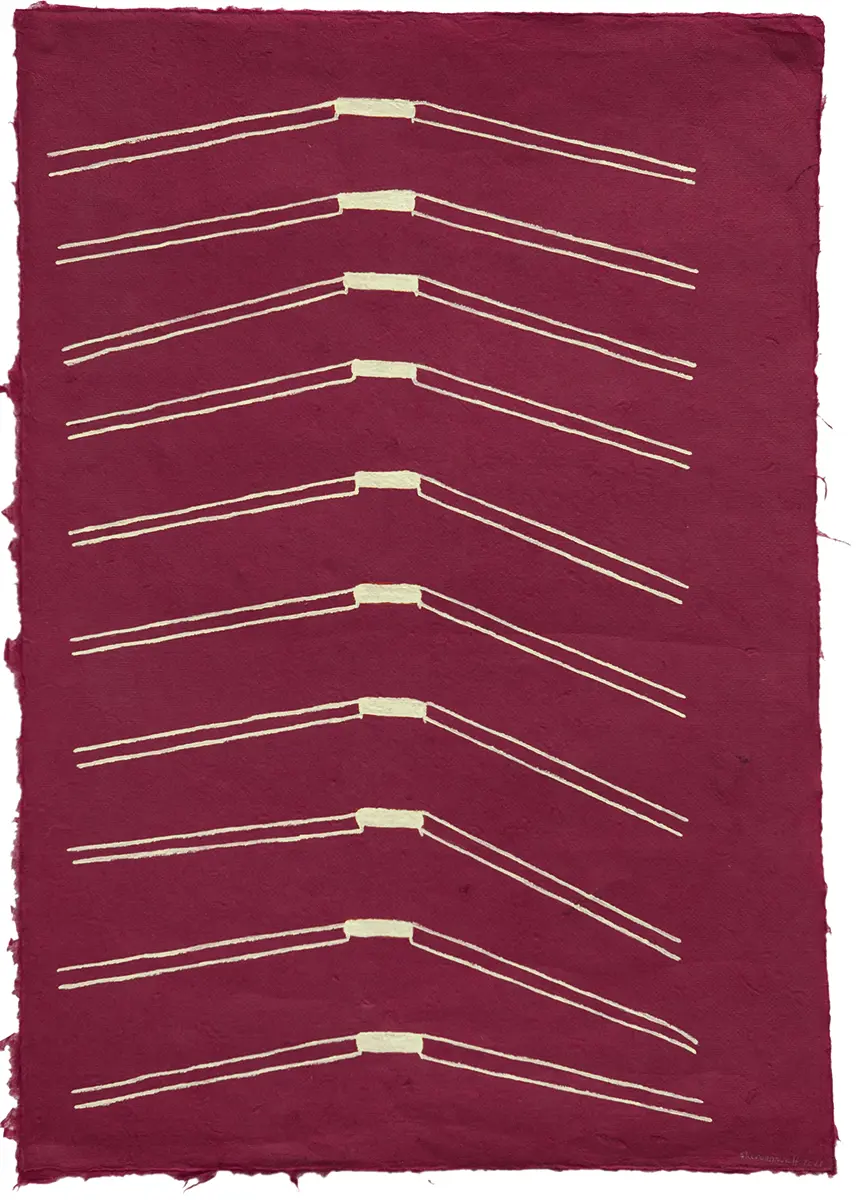
Sheroanawe’s works escape the regime of the image because they do not lend themselves to the confusion of appearances; to the perplexity of the illusory. Some will say that this is characteristic of all “abstract” art. But there’s more, because unlike all modern abstractions, Hakihiiwe’s work contains no indication of pointing towards the realm of the ideal: his gaze is directed solely on the real, on Physis. Wary of fatuous designations, one could say that his is a diagrammatic naturalism, and that what is marked, traced, painted or drawn, and also what is there, literally multiplied, belongs to no other realm but that of reality.
Sheroanawë Hakihiiwë’s work is definitely not—and cannot be for cosmological reasons—optical, retinal. We are not dealing here with the antagonism, within the Western art regime, propounded ad nauseam, between the retinal crowd—partisans of sensation—and the conceptual crowd—partisans of reason and ideas.
No: born from a world where likeness does not exist, where only difference exists embodied in countless body-subjects, in fields of intensities manifested as marks, Sheroanawe’s art cannot be retinal: it is, yes, a vision, but a cosmic vision, a cosmic polis. His graphic repetitions do not fit into a productive logic; they are not fields of simulated productive energy, as in Kinetic Art. On the contrary, they are silent and underproductive, purely poietic musical scores: they come to bring, from a deafened and unfathomable anteriority, from the aorist itself, from the anterior-erstwhile that precedes all past and whose resonance presently, to us, is simply what is. Contrary to the entire Western regime of the image—which has always been an image of what is lacking, an image-tomb of what is absent, a substitution for its non-presence, a necro-image—the cosmic vision in Sheroanawë Hakihiiwë’s work is neither thanatic nor memorial. Each trace, each sign, each blot, each scheme or diagram is part of a living field; a territory where there is nothing else, no other metaphysics, but life: transient and transfiguring life, proliferating life; the ultimate reason for shaping this magnificent work, ceaselessly, as a repeated, multiplied form.
NOTES
1. See Marshall Sahlins, quoted by Eduardo Viveiros de Castro (2017) in Cannibal Metaphysics. For a Post-Structural Anthropology (Minnesota: University of Minnesota Press, p. 88.
2. Indigenous themes and forms have no doubt been present in Venezuelan art, notably in late-modern and contemporary practices, but through imaginative or lyrical recreations and social realism (Pedro Centeno Vallenilla, Héctor Poleo, César Rengifo), indigenismo proper (Francisco Narváez, Armando Reverón, Alejandro Colina), or as a source for formal appropriations and objects of citation, which points to a series of milestones in this regard: the work of Barbara Brändli and Thea Segall, who together with Brazilian Claudia Andújar, form the great trilogy of modern photographers who turned their gaze to the Yanomami community; in the realm of contemporary art, the graphic system of Nenias by Gerd Leufert, paradoxically an artist of Lithuanian origin whose graphic evocation of ancestral forms marks the beginnings of contemporary wall-painting in Venezuela; more recently, some artists from the 1970s generation—Alexis Gorodin, Milton Becerra, María Elisa Castro, and Victor Hugo Irazábal—as well as those from the new millennium—Christian Vinck and Marco Montiel-Soto, among others—who have turned to the symbolic arsenal of the native or pre-Columbian ethnicities. However, to the best of my knowledge, in no case has there been an artist of indigenous descent who has achieved the international prominence and national significance of Sheroanawë Hakihiiwë.
3. Some of the most recent events where his work has been exhibited, always with the careful support of Luis Romero and the Abra Caracas Gallery, are: Triennale di Milano, Fondation Cartier pour l’art contemporain, The Shed in New York, XXII Sydney Biennale, LIX Venice Biennale, Kathmandu Triennale 2077, Denver Museum, Kunsthalle Wien, and Centro Andaluz de Arte Contemporáneo. His works have been acquired by MoMA, British Museum, Austin Museum, MALBA-Colección Costantini, Fondation Cartier pour l’art contemporain, Denver Museum, Art Gallery New South Wales Sydney, Colección Patricia Phelps de Cisneros, etc.
4. Viveiros de Castro, Cannibal Metaphysics, p. 213.
5. Claude Lévi-Strauss (1971), “L’homme nu” en Mythologiques IV, París: Plon, p. 32.
6. I’m referring here to prominent figures in the canonical narrative of Venezuelan art, such as the academic painters trained in Madrid, Paris, or Rome, like Martín Tovar y Tovar (1827-1902) and Arturo Michelena (1863-1898); the foundational figures of Venezuelan artistic modernity, like Armando Reverón (1889-1954), Jesús Soto (1923-2005), Alejandro Otero (1921-1990), and Gertrud Goldschmidt, known as Gego (1912-2004); and finally, the most significant of Venezuela’s spontaneous artists, Bárbaro Rivas (1893-1967).
7. Vuelvan caras—commissioned to celebrate the epic feat of José Antonio Páez, a leader of the independence movement and Venezuela’s first president after the dissolution of Gran Colombia—represents earthly and vernacular shrewdness, in contrast with the sophisticated and Europeanized intelligence of the heroic Miranda, immersed in the melancholy of failure. Both are mythical stereotypes of Venezuelan nationality. See Luis Pérez Oramas, “Arturo Michelena: vueltas a la Patria y representación de la historia,” in J.L. Parra and Rafael Romero (1998), Genio y gloria de Arturo Michelena, Caracas: Galería de Arte Nacional.
8. See Luis Pérez Oramas (1992), “Armando Reverón y el arte moderno” in Armando Reverón (1889-1954). Exposición antológica, Madrid: Museo Nacional Centro de Arte Reina Sofía.
9. See Luis Pérez Oramas (2003), “Gego, Laocoonte, las redes y la indecisión de las cosas,” in Gego. Obra completa 1955-1994, Caracas: Fundación Cisneros.
10. On the ‘Lorquian’ notion of ‘Duende’ see: Federico García Lorca: Juego y teoría del Duende [Ed. José Javier León](Sevilla: Athenaica, 2018) English traslation: https://www.poetryintranslation.com/PITBR/Spanish/LorcaDuende.php
11. See: José Bergamín: La decadencia del analfabetismo in: José Bergamín: Obra esencial [Ed. Nigel Dennis] (Madrid: Turner, 2005), p.19.
12. These theses are further elaborated in Luis Pérez-Oramas (forthcoming in 2024), Bárbaro Rivas: la pintura a voces vivas, Caracas: Fundación ProArte.
13. Laymert Garcia dos Santos (, 2012-13), “Projeçoes da terra-floresta: o desenho-imagem yanomami,” in Moacir dos Anjos, ed., Pertença. Caderno 8, São Paulo: Sesc-SP e Associação Cultural Videobrasil. I am thankful to Gregório Soares Rodrigues for pointing out this beautiful text.
14. See Gilles Deleuze (1981), “Los cinco caracteres del diagrama,” lecture, April 28, in Pintura. El concepto de diagrama, Buenos Aires: Cactu, 2007, p. 101.
* Courtesy: Galería ABRA / Luis Romero
** Courtesy: Galería ABRA / María Teresa Hamon
LUIS PÉREZ-ORAMAS