Every work of art is metaphorical insofar as it produces images that bear resemblance to aspects of the world in which it arises. Since the “world” is very difficult to apprehend, the importance of art through metaphor is enormous.
Before delving into our subject, it is important to determine the name of our epoch, since the term “contemporary” does not say much. Every era has “been” contemporary.
Neither modern nor postmodern, our time is defined by an in-between of the two. The term ‘metamodernism,’ coined by the Dutch theorists Timotheus Vermeulen and Robin van den Akker, alludes to this pendular situation.
‘Meta’ does not indicate a beyond, but refers to the concept of Platonic metaxis. In the Symposium, Socrates asks Diotima of Mantinea what Eros is, and she replies that he is neither mortal nor immortal, but something “in the middle” (metaxis), between the divine and the mortal beings.
The term ‘metamodernity’ means “to be in the middle,” between modernity and postmodernity, between the rejection of Truth (with a capital T), characteristic of postmodernity, and the return of modern utopia in the form of microutopias. It points to a moderate search for a better world, unlike the optimism of the great modern utopia.
Metaphors of Violence
The predominance of metaphors of violence and of the ecological crisis in contemporary art is not surprising. In response to the undesirable conditions of today’s world, some artists depict them blatantly, while others respond with images of resilience or envision microutopias.
Our globalized world is defined by inhumane violence. Among the most terrifying examples of violence is the myth of Marsyas, the daring satyr who is the victim of Apollo’s revenge. According to this myth, Athena created an oboe from a bone, but soon despised it because her face became distorted when she played it. Marsyas found the instrument and became its foremost performer. He felt so proud that he decided to challenge Apollo. The winner would be allowed do whatever he wanted to his rival. The vengeful Apollo won and chose to flay Marsyas alive.
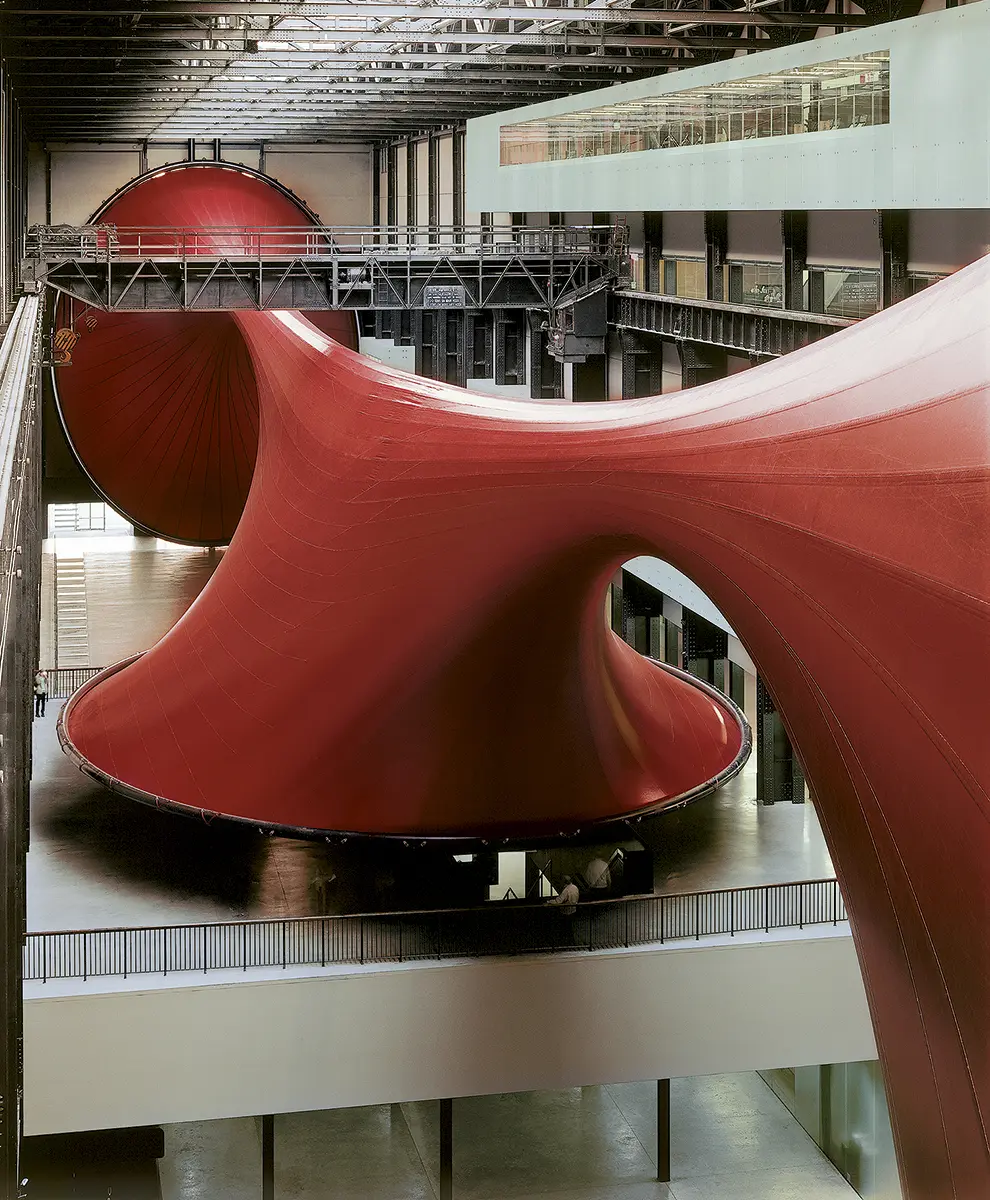
Reinterpreting the myth with an installation that occupied the Turbine Hall of London’s Tate Modern in 2003, Anish Kapoor created a huge dark-red plastic membrane invading the entire space, which evoked Marsyas’ flayed skin and scream of pain.
Avoiding any figurative element, Kapoor relied on the color of blood, the expansion of the material, and the immensity of space. With these resources, the work became a more than eloquent metaphor of excessive suffering.
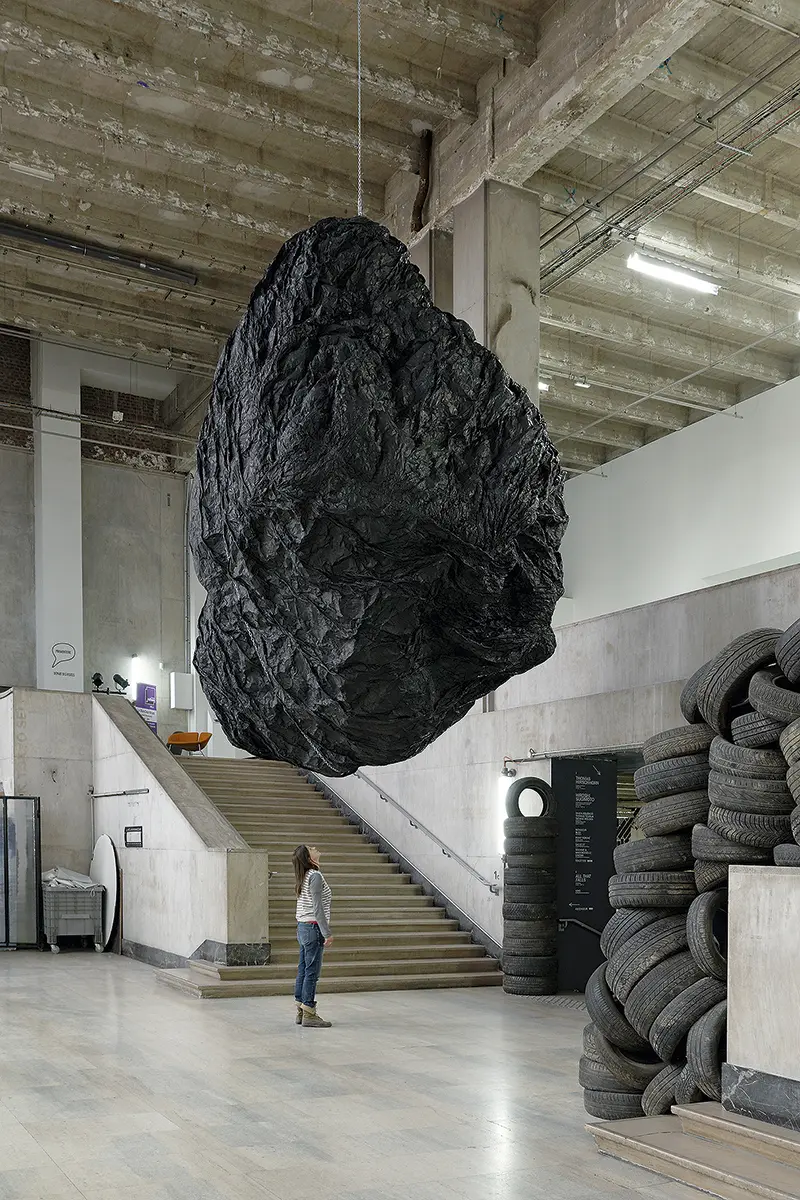
Excessive violence also takes shape in Eduardo Basualdo’s Teoría. La cabeza de Goliat (Theory. Goliath’s Head), hosted in 2014 by the Palais de Tokyo in Paris, and four years later by the Salón Mayor of the Usina del Arte in Buenos Aires. Its appearance was that of a gigantic rock hanging from the ceiling and threatening the viewer below it. With another installation, this time at the Museo Moderno in Buenos Aires in 2022, Basualdo consummated the threat. Human silhouettes buried by a kind of black lava and a huge wave were metaphors for an even greater destruction. Interestingly, “evil” lies not only outside, but within ourselves, as the title of the exhibition indicates: Pupila (Pupil).
A set of drawings that were seen upon entering the room alluded to the collapse of vision and the consequent disruption of the mental space we live confined in. Unstructured eyes advance towards the interior of the head indicating that the greatest violence resides within ourselves, that is, in self-violence. We are our greatest enemy.
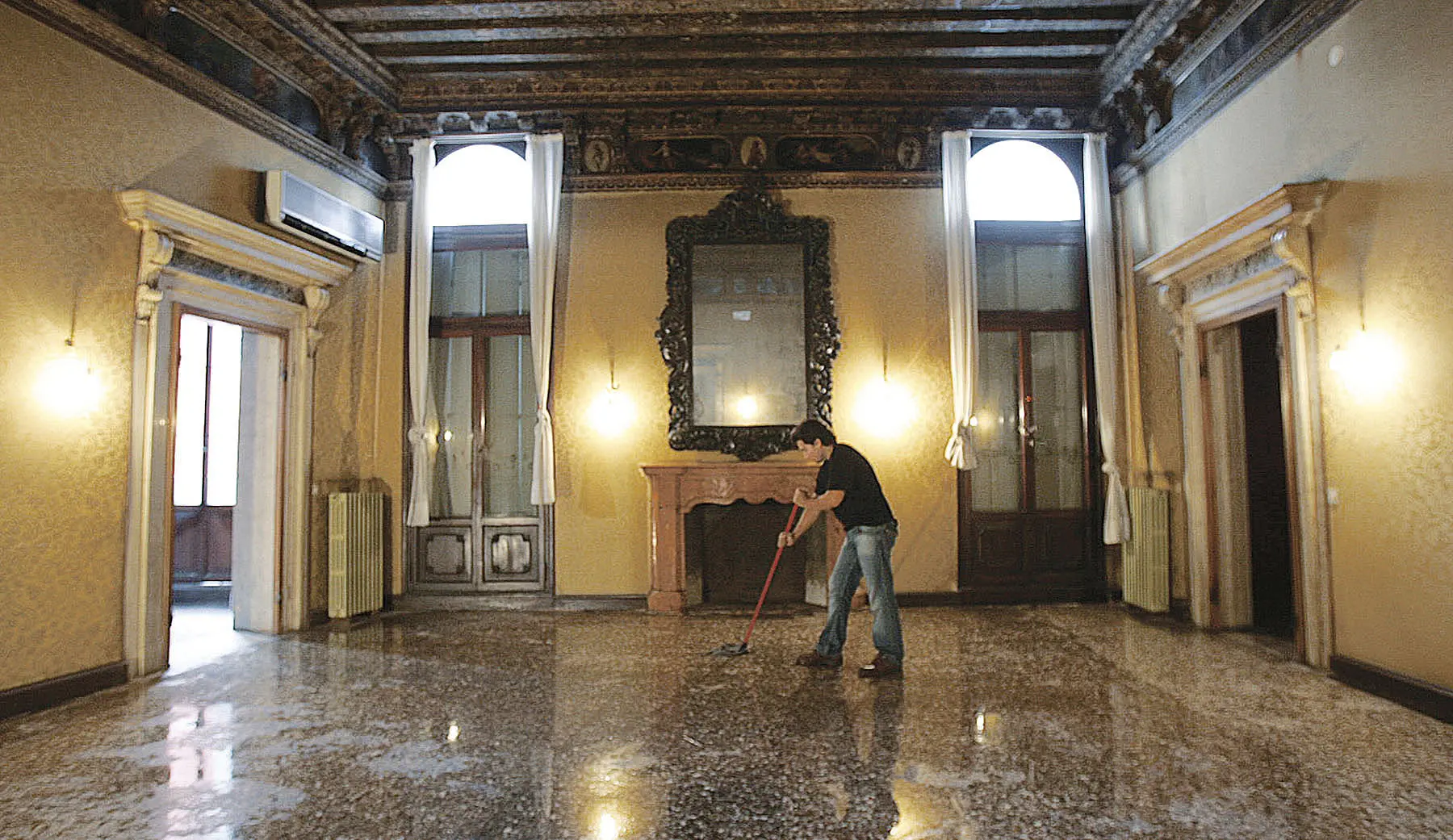
With Teresa Margolles, extreme violence is regionally situated. The title of her installation ¿De qué otra cosa podríamos hablar? (What Else Could We Talk About?), presented at the 53rd Venice Biennale in 2009, takes us to a current problem in Mexico, her native country. This time the subject is the death of innocent people in the midst of conflicts between drug gangs. In an almost ritualistic way, the floor of the installation was continually being mopped with blood mixed with water. When the spectators walked in, they “stepped on blood” or what was left of it, thus desecrating the most precious thing we have: life.
Margolles not only resorted to metaphor, but specifically to synecdoche, bringing blood from the very place where the killings took place. By synecdoche I mean that the blood was a real part of the whole. And the energy infused by the reality of that element served as a powerful metaphor for aberrant violence.
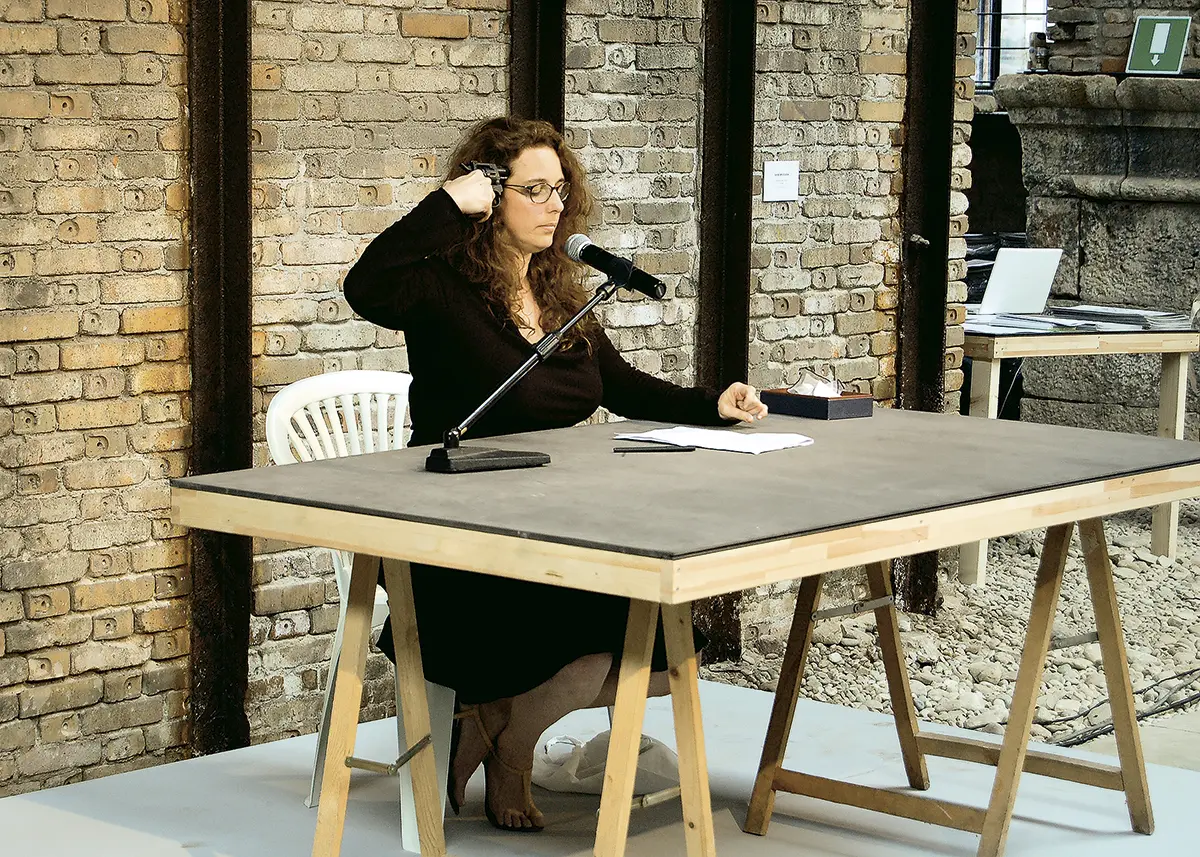
Since violence is so extreme today, Tania Bruguera believes that it is not enough to represent it. It must be presented directly. We must take action. And although she did not seek death, but rather the awareness of what extreme violence means, the performance Autosabotaje (Self-Sabotage) could well have led to an absolute sacrifice.
Autosabotaje (Self-Sabotage), the conference-performance at the Emergency Pavilion during the 53rd Venice Biennale in 2009, turned out to be a metaphor for our vulnerability. Bruguera sat in front of a table reading her reflections on political art and the role of artists in the social context. A 38-caliber pistol and 9mm bullets were lying on the table. During the first break of her lecture, she took the gun, placed a bullet in it, spun the drum like in a game of Russian roulette, and aimed it at her temple. She then pulled the trigger and, with all the luck on her side, no bullet came out.
Metaphors of the Edge
Linked to metaphors of violence are those that emphasize the idea of a human condition bordering on the subhuman. The title Shibboleth, chosen by Doris Salcedo for her intervention at Tate Modern in 2007, could be related to the violence exercised on marginalized sectors such as immigrants; sociologically borderline sectors that do not make it “to the other side.”
Salcedo was the first Latin American artist invited to participate in the site-specific commissions by the Tate Modern for the Turbine Hall. Her austere but no less impressive intervention consisted of an irregular 167-meter crack in the ground, which differentiated those who imagined or tried to cross it in the narrower 30-cm sections and those who just looked at it and thus got to see a metal mesh embedded in the fractured stone blocks. The title would lead us to think of the first option.
The word shibboleth (‘an ear of grain’ in Hebrew) was difficult to pronounce for the Jewish tribe of Ephraim. When asked to say shibboleth, they would tend to pronounce it “sibboleth,” thus revealing their provenance. The term became a password used by the Gileadites (a tribe from region of ancient Palestine), who would allow those who mastered the pronunciation to pass to the other side of the Jordan River; those who could not, risked death. “Then they took him, and slew him at the passages of Jordan: and there fell at that time of the Ephraimites forty and two thousand,” we read in the Bible.
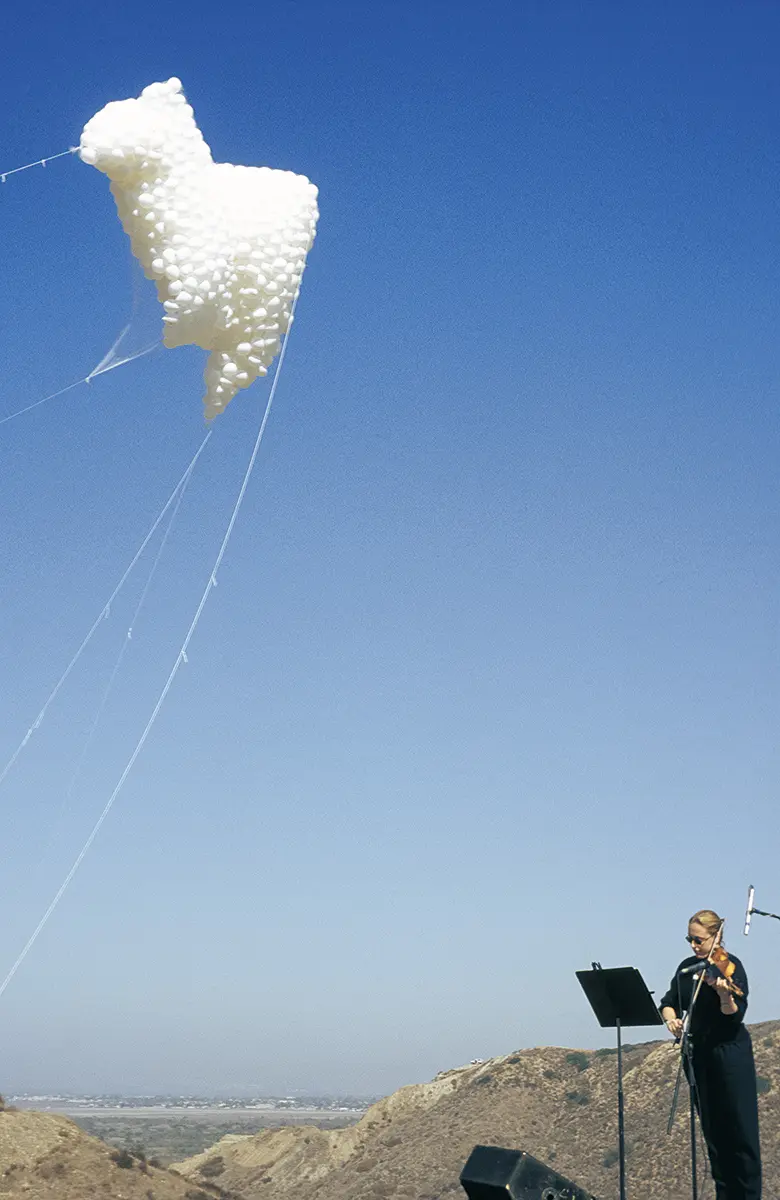
To cross to the other side is the dream of many, as Alfredo Jaar recalls in La nube/The Cloud (2000). His intervention on the Goat Canyon Fence points to the hopeful journey of thousands of people who migrate daily from Mexico to the United States. It can be seen as an ephemeral memorial to those who died in the previous ten years (1990-2000) attempting to cross the border. A cloud formed by balloons rising in the sky is a metaphor for freedom, but also for the loss of ideals and our own vulnerability.
Insecurity is the central theme of Luciana Lamothe’s installation Metasbilad. It connects us to the extreme challenge to which a growing number of social outcasts, immigrants, exiles, and refugees must submit themselves to, not metaphorically but literally.
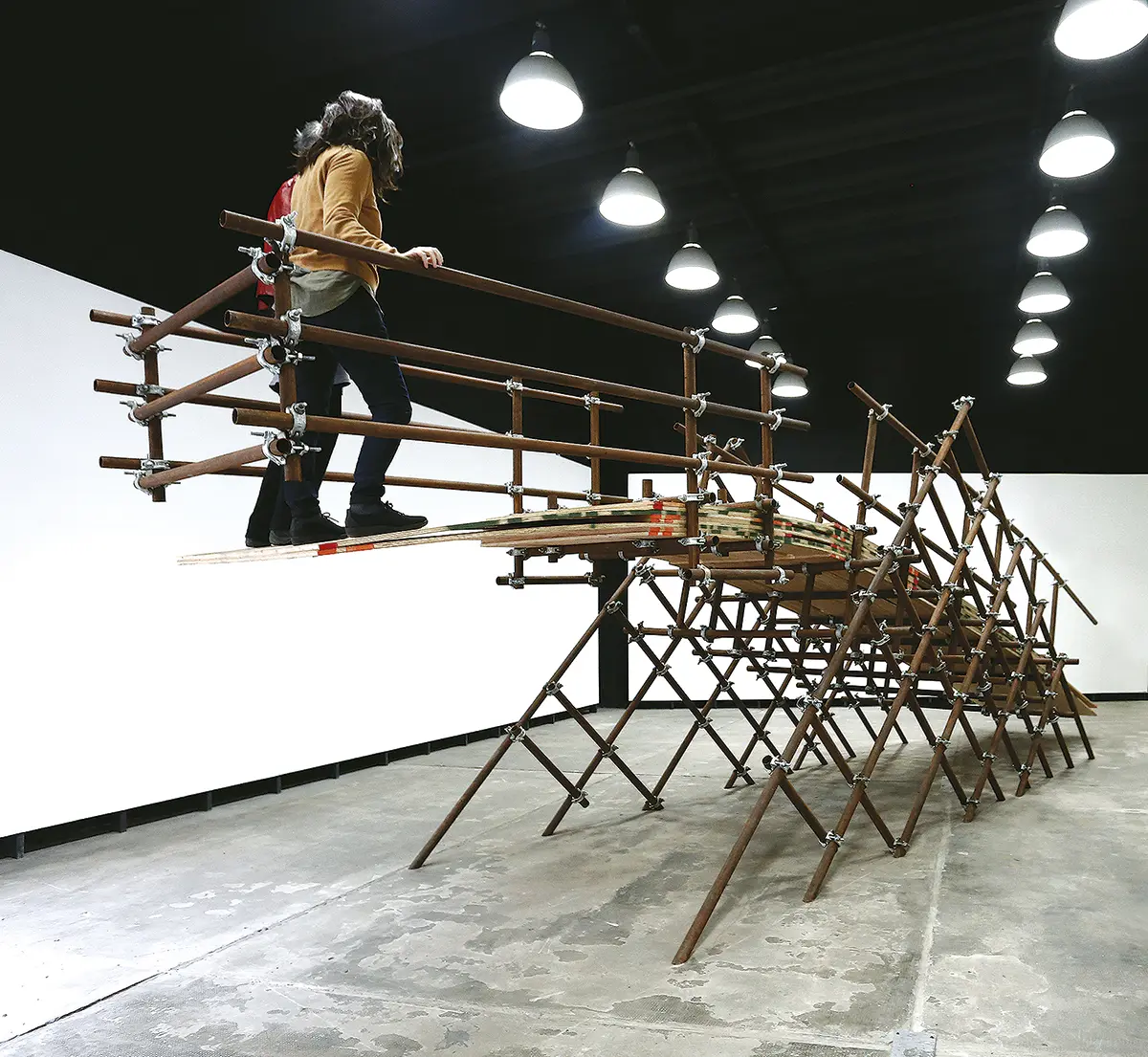
Metasbilad places us on the edge of the experience of being supported and, consequently, of potential danger. To what extent does the ground on which we walk on support us? This is the question that the work asks the visitor. It is made up of a structure that impresses both for its size and its instability. The title is an abbreviation for the word ‘metastability,’ which Gilbert Simondon borrowed from chemistry to refer to a system that alternates states of equilibrium and disequilibrium in relation to external variants.
The visitor’s body constitutes the main part of the work. As we climb and walk on a platform made of scaffolding and wooden planks, we notice that our footsteps, movements, touch, and vibrations interweave with the materials. Between vertigo and stability, between fear and the pleasure of participating in a hazardous game to which we voluntarily submit to, Lamothe metaphorizes our living on the edge, in extreme situations, barely sustained.
Metaphors for the Ecological Crisis
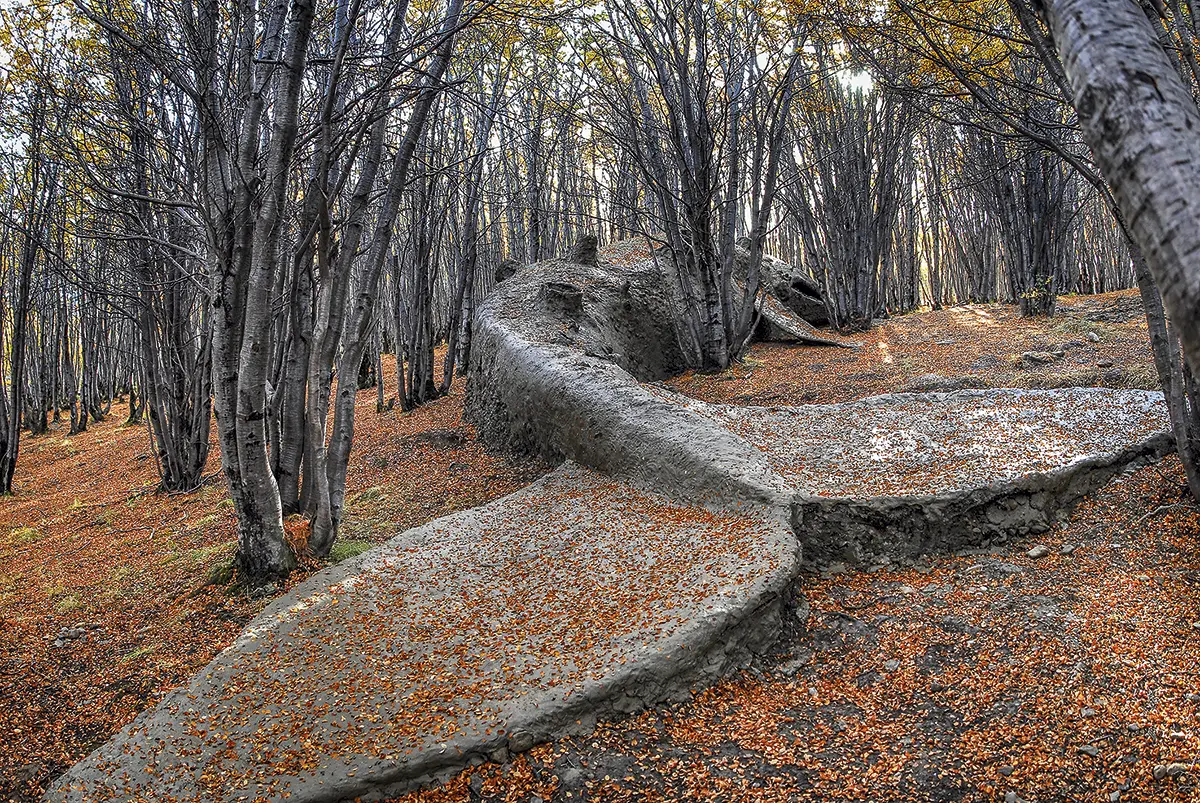
Mi familia muerta (My Dead Family) is the metaphorical title chosen by Adrián Villar Rojas for his enormous 27-meter-long sculpture placed in the Yatana Forest, at Ushuaia, and surrounded by native species.
The “dead” family takes the form of a whale. The last surviving marine giant as metaphor for nature despoiled. Craters and volcanoes accumulate on the whale’s skin, suggesting scars and sores. Due to people hunting them for food and sport, as well as destroying their natural habitat, whales are suffering total abandonment. Added to these factors is the underwater noise produced by ships, icebreakers, and oil platforms, which is causing an increasing number of cetaceans to lose their sense of direction.
The baleful appearance of the whale was contrasted with the beautiful landscape of Ushuaia, the southernmost city on the planet. This extreme geographical experience was compounded by the extreme metaphor that testified to the annihilation of life, synecdotically denoted by the word ‘family’ in the work’s title.
The imposing work of Villar Rojas was part of the Second Biennial of the End of the World (2009), curated by Alfons Hug, who chose the title “Intemperie” (Exposed to the Elements) to account for the global climate change affecting the most remote corners of the world. Among them are the polar regions, where the ecological disaster can be clearly seen.
To create new relationships with the planet, the Intermundial Holobiente (Holobiont “Inbetweenery”) presented a non-anthropocentric work at documenta fifteen in Kassel (2022), in order to make visible non-human entities that have full right to our attention.
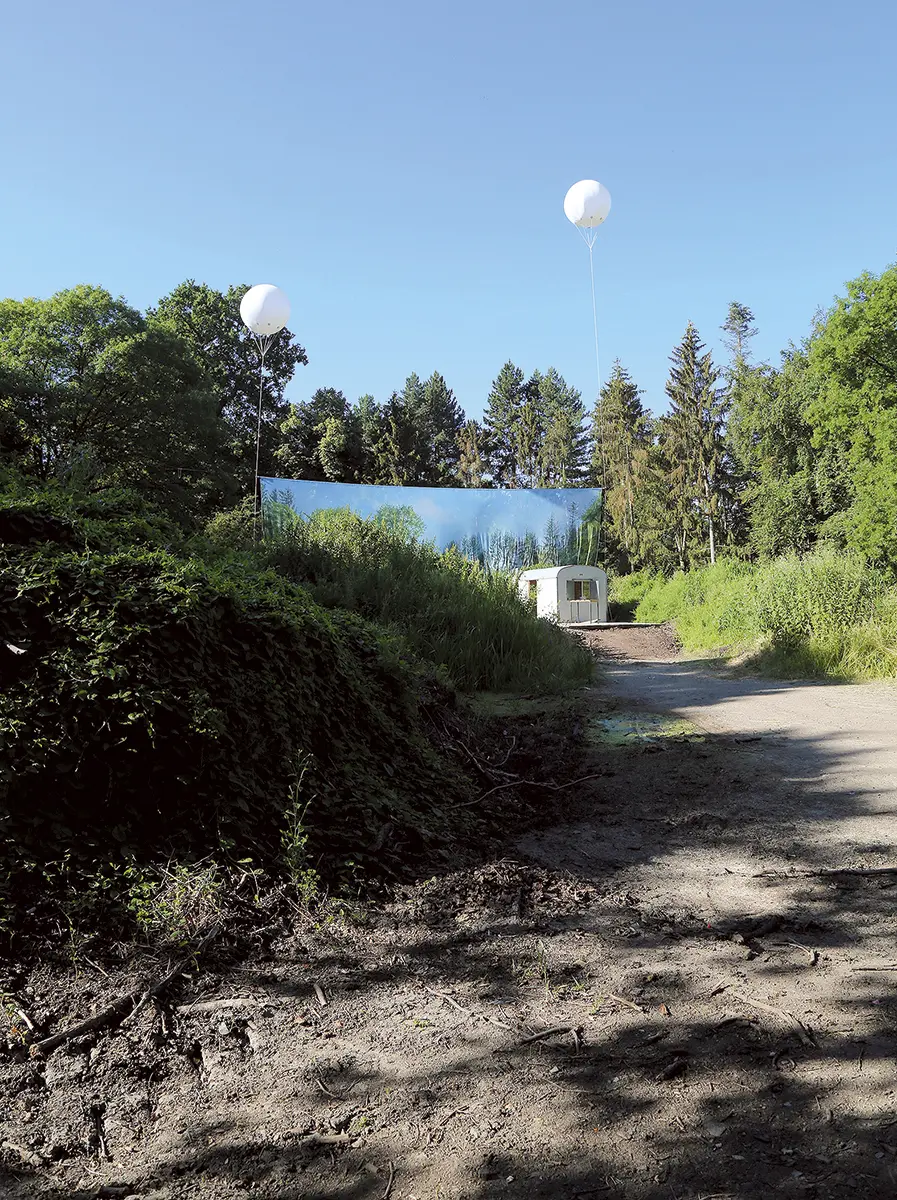
The collective—made up of artist Claudia Fontes, writer Pablo M. Ruiz, and philosopher Paula Fleisner—chose the compost heap at Karlsaue Park to present their Theaterschlag, a technical term used in theater to describe a sudden and dramatic turn of events. Such a situation served as a metaphor for the changes in nature caused by human actions.
The surrounding landscape was represented by a large translucent curtain. The varying light and shifting clouds created a dynamic model-copy relationship. The instability was increased by the fact that the fabric was supported by two helium balloons subjected to the wind. This visual device was complemented by Erica Bohm’s Fantascope, made up of two pinhole cameras that recorded the scenes in solarigraphs.
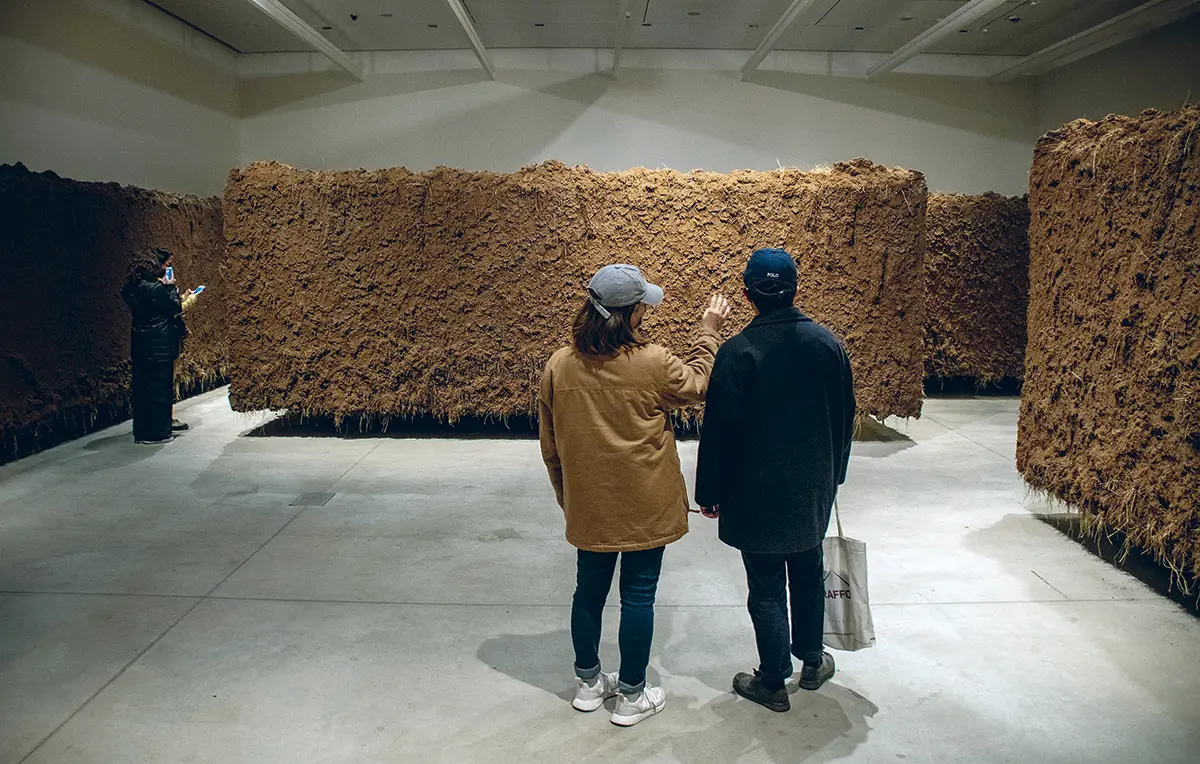
The presentation of the Intermundial Holobiente included The Book of Ten Thousand Things. Created polyphonically in collaboration with fourteen artists and writers from Argentina, it invites us to imagine new forms of coexistence with everything “non-human.” For her part, Delcy Morelos proposed a new relationship with the earth element in a mega-installation deployed in 2022 at the basement of the Museo Moderno in Buenos Aires. It immersed us in a strange world, where not only the visual impact of huge blocks of earth was felt, but other senses were also activated, such as the sense of smell, since cinnamon, coffee, and cloves were added.
This artist, also featured at the 2022 Venice Biennale, points to the anesthesia of our senses. It is necessary that we see and feel the earth again and to respect Pachamama as the elemental source of life, following the example of First Nation peoples. The artist invited us to listen in silence to the sound of the earth, participating in a kind of ritual that allowed us to find the transcendence of the soul. El lugar del alma (The Place of the Soul) was, precisely, the metaphorical title that Morelos chose for her installation.
Microutopian Metaphors
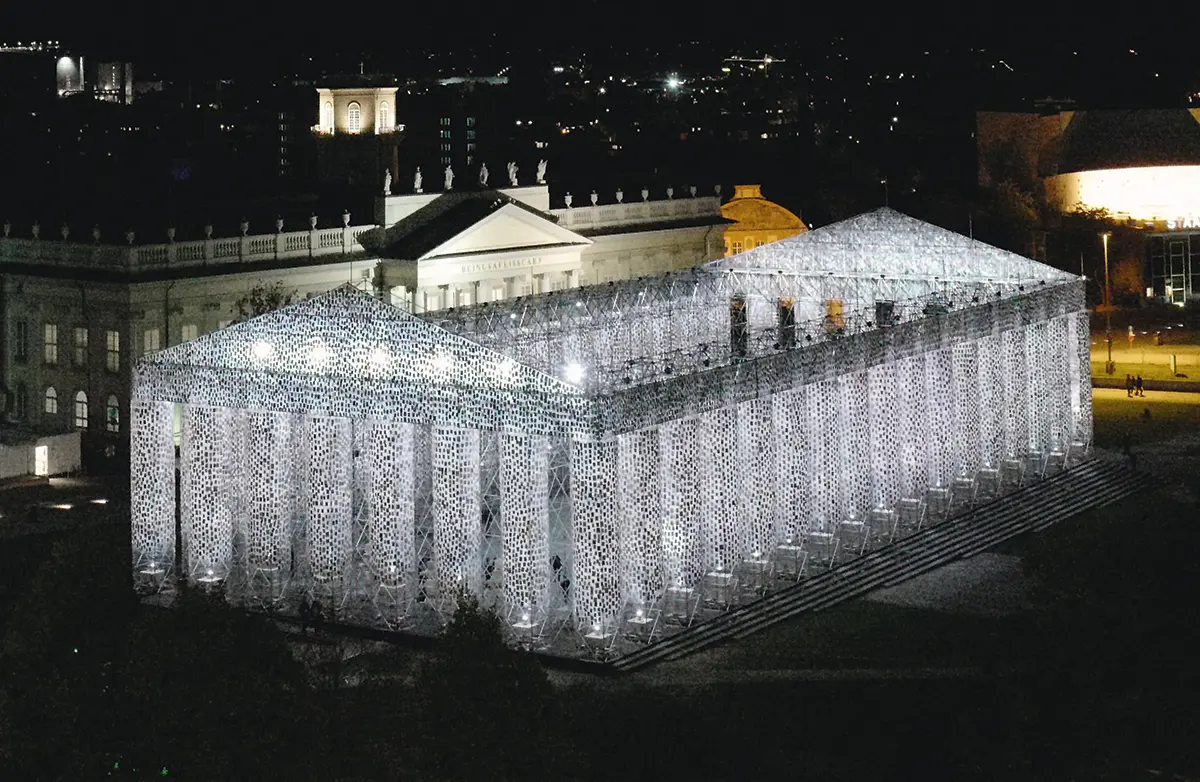
Marta Minujín’s Partenón de libros prohibidos (Parthenon of Books), exhibited at documenta fourteen, in Kassel in 2017, consisted of a full-scale replica of the great temple of Athens covered with 100,000 books from all over the world, which are or have been banned. Located just meters from the Museum Fridericianum on Friedrichsplatz, it is significant that in 1933 on the same square, the Nazis burned books they considered to be “degenerate.”
Minujín’s installation also involved the public, who donated and received copies of what could be considered as an antimonument, an anticelebratory construction. But no less true was its optimistic outlook since it declared the redistribution of books to be a symbol of shared culture and peace. We can then interpret it as a metaphor for being-with (Jean-Luc Nancy); as a microutopia of integration.
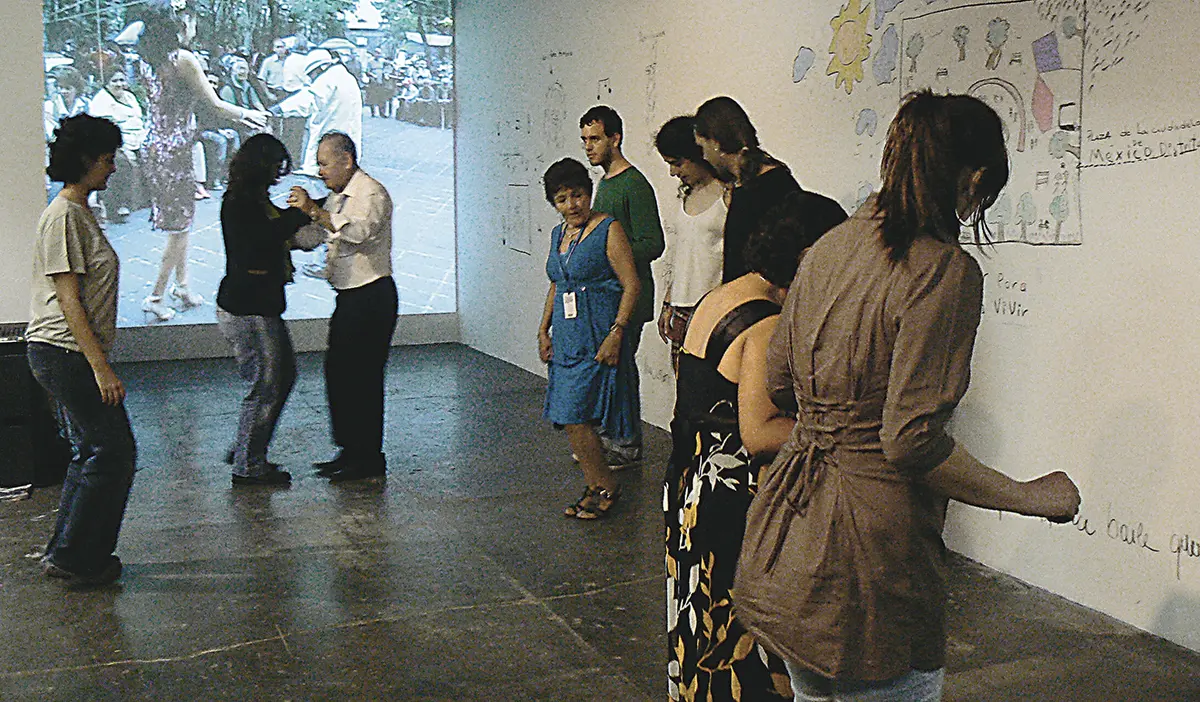
Un lugar para vivir cuando seamos viejos (A Place to Live When We Are Old) by Ana Gallardo, presented at the 29th São Paulo Biennial in 2010, is also a microutopia of integration sustained by being-with. This performative and video-recorded work-in-progress gave evidence of resilience. It showed that time is not the same as age. While the latter is a bureaucratic or sociological concept, the idea of time can be removed from age, relating it not to what is lost, but to something new that is gained.
In 2022, at the Parque de la Memoria (Remembrance Park) in Buenos Aires, Gallardo presented Escuela de envejecer (School of Aging) to reflect on the invisibility of women when their bodies are no longer useful to the productive system. Actions and performances consisted of different types of operations whose objective was to fulfill the wish to feel young, often hindered by patriarchal mandates and all kinds of social, political, and religious prejudices.
Conclusion
As we said at the beginning, it is very difficult to possess one image of the world, and yet each of the analyzed metaphors contributes to build that image through the artists’ main task: to find similarities between their works and aspects of the world. From this interplay of relationships, an effect of strangeness emerges, which is characteristic of the hyperbole of the metaphorical image, helping to overcome a state of generalized anesthesia that makes the world invisible.
Metaphor thereby allows us to move from an impoverished perception to a renewed ability to see, without which no change is possible.
ELENA OLIVERAS