Puerto Rican artist Marisol Plard Narváez comes from a background in photojournalism. She presented her thought-provoking exhibition, Turistification, at El Kilómetro, a local Santurce gallery. The exhibit ran from May 25 to June 24, 2023, shedding light on the paradoxical reality of workers in Puerto Rico’s bustling tourism industry. While tourists are essential elements within the artwork series, they remain obscured, drawing the true focus towards the individuals encountering these framed objects at the conclusion of their vacation stay.
While studying at The Art Institute of Chicago, Plard Narváez was impressed with “everyday life practices” in Visual Arts. Taking this theory as a script, she used her phone’s camera and shot images that she later inkjet-printed on Velvet paper. The curation of the 98 selected photographs was thoughtful. Some of the works were arranged in a grid reminiscent of a social media feed. Even though, inspired by a preciosity thread that studies consumption and capitalism, the artist insisted on corrupting the technical in her work’s production. With a voyeuristic element, exhibition’s attendants were immersed in the intimate spaces where Plard Narváez worked as a domestic worker since 2017, specifically within an Airbnb accommodation in Old San Juan.
When Plard Nerváez lost her job as a Visual Art’s professor, a group of 12 women took her in. Through conversations in their homes, the artist had an urge to make visible the narrated women’s stories. These new friends taught her how to realize a dignified job: domestic work. She did not nurture from anthropological lens, in fact, she entered their lives and became part of the community to survive her own adversities. Her work does not inform on “the beautiful,” it comes from what bothers her, what affects her.
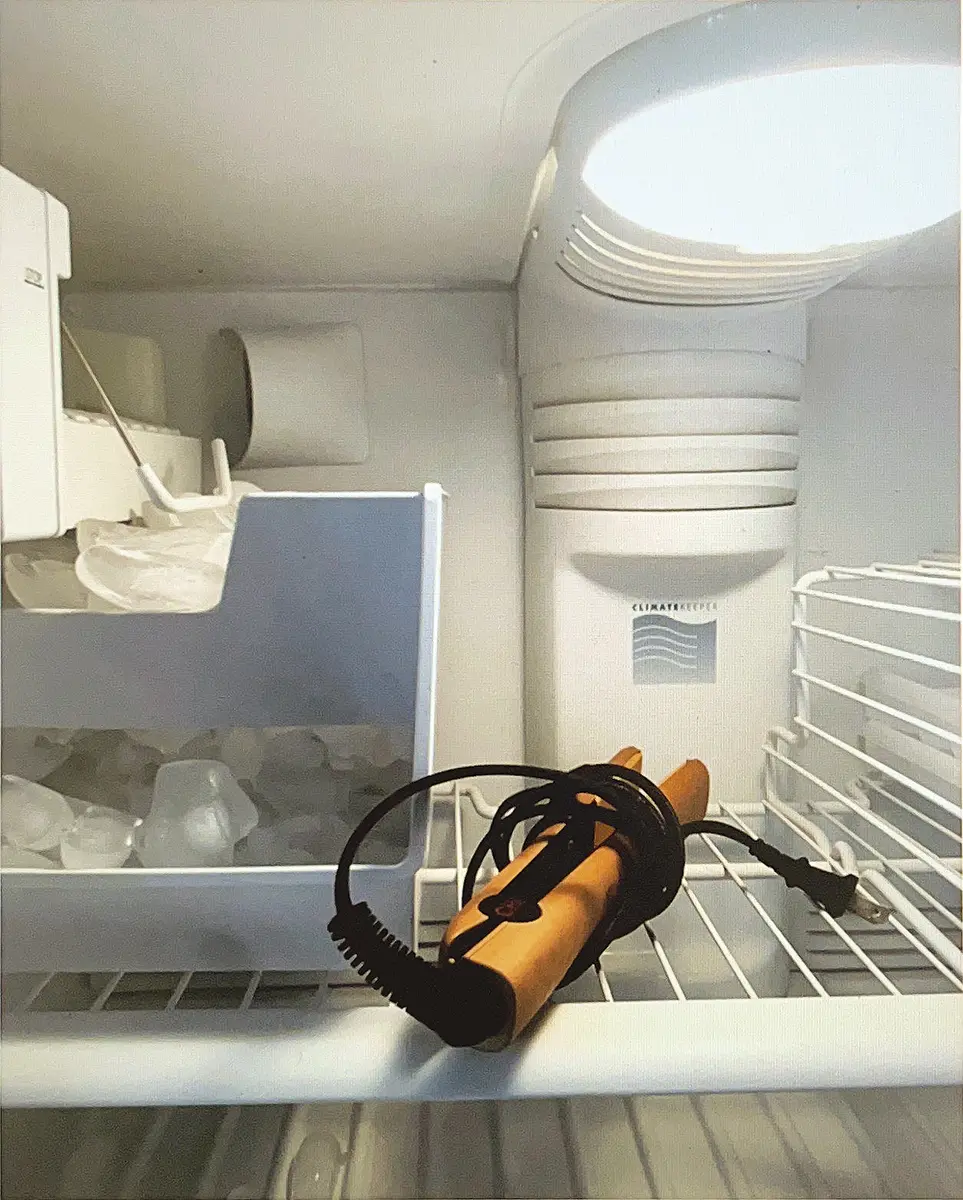
The 2020’s artwork, Untitled (Hair straightener), comments on the tourists’ footprint, what is left behind: the objects and the narratives that surround them. The bronze hair straightener has been found inside the freezer. Was this an attempt to cool it off? Was it left behind on purpose? One may never know why it got there, but the visual composition offers a commercial aesthetic. The intense pitch black and color offered by the stylist object pops out from the cold white that keeps it hidden. From disgusting bedsheets, half used perfumes and alcoholic beverages to tips consisting of a couple pennies, the hair straightener is just one of the many surprises Plard Nerváez finds in her job.
Turistification effectively prompts contemplation on the impact of tourism on Puerto Rico’s socio-economic landscape. While the industry brings undeniable economic benefits and job opportunities, it also poses significant challenges. The surge of visitors places strains on the island’s infrastructure and environment, impacting its natural beauty and rich cultural heritage. The focus on mass tourism often results in overlooking the well-being of local communities and the preservation of their unique identity. Particularly as the aftermath of natural disasters and the disruptive impact of the COVID-19 pandemic serve as stark reminders of its vulnerability.
Amidst the grandeur of the tourism industry, the exhibition highlights a group whose struggles often go unnoticed – domestic workers. Predominantly women, they undertake essential roles in households, caring for children, maintaining cleanliness, and preparing meals. Despite their invaluable contributions, the profession remains burdened by societal stigma, further exacerbating their marginalization. By placing the spotlight on the workers in Puerto Rico’s tourism sector, Marisol Plard Narváez’s exhibition sparks essential conversations about the industry’s impact and the urgent need for equitable and sustainable practices.
The artist expects the viewer to pose a series of questions: What does an artist have to do in this country in order to survive? Who is affected by the tourist industry? Are we conscious of our consumerism? More than a critique to the gentrification or the inconsideration of tourists, this exhibition endeavors to honor and provoke empathy with and for the domestic and tourism industry workers, who more than often are the same people. It is a tribute to those 12 women. If there is a thought to develop after visiting Turistification it must be: What does it mean to say, “I live where you vacation?”
ANA HILDA FIGUEROA DE JESÚS