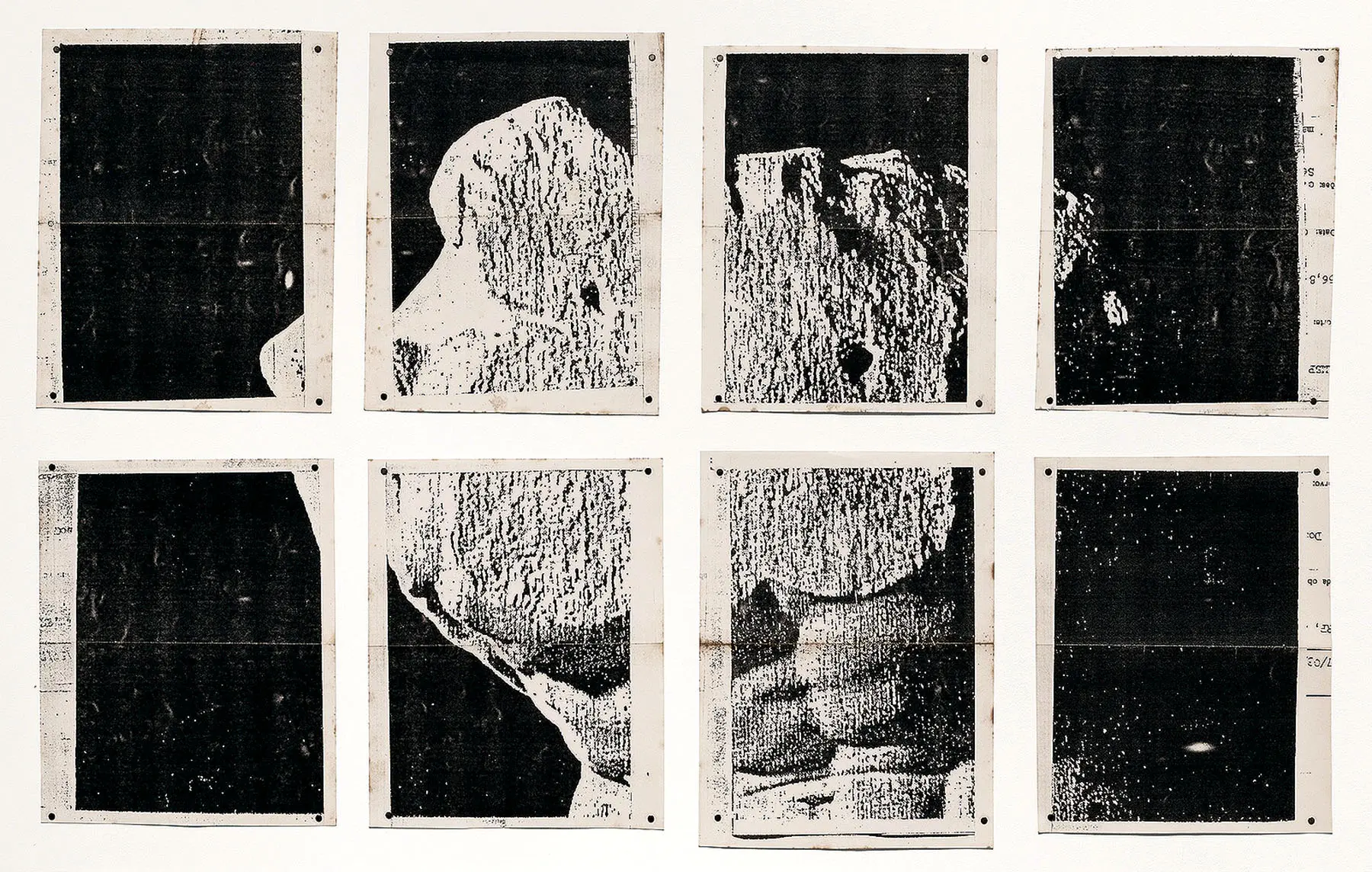
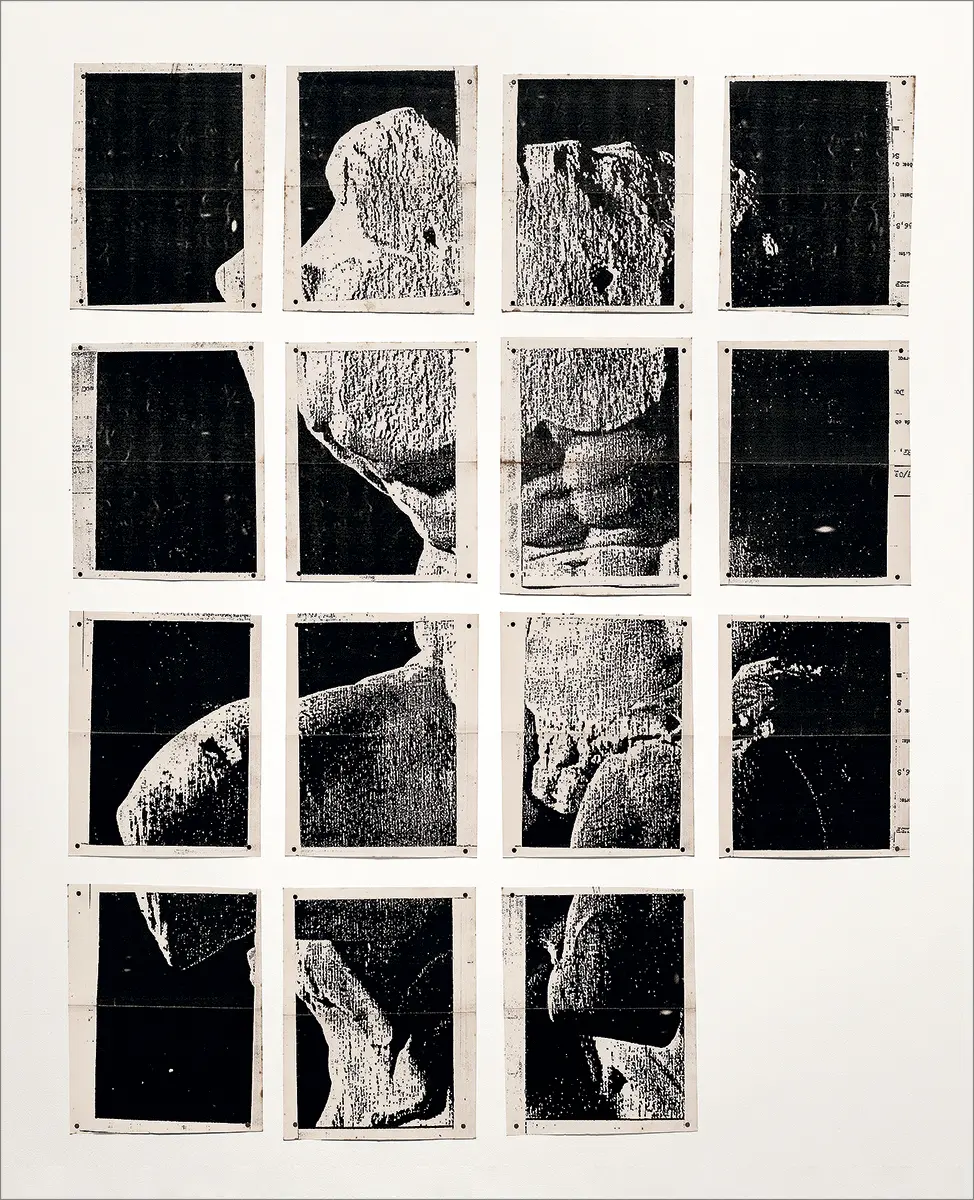
Multimedia artist Hudinilson Urbano Jr (b. 1957, São Paulo; d. 2013, São Paulo) is known for his experimentation with the fusion of a variety of media as the basis for collages, assemblages, stencils, and posters that challenged mass media while taking advantage of its visual messages to serve his own artistic purposes. In 1977-78, he became one of the pioneers of Xerox art in Brazil, often using photocopies of his own body and images drawn from gay pornography magazines to produce fragmented, duplicated, and distorted images. Considered one of the most significant Brazilian artists of his generation, Hudinilson came of age during the military dictatorship in Brazil. It was its atmosphere of repressive, homophobic politics that certainly contributed to placing himself at the margins of social and artistic behavior. Hudinilson Jr.: Tension Zone at ICA (Institute of Contemporary Art, Miami) is the first exhibition of his work in a United States museum. Curator Gean Moreno describes the exhibit as an “introductory survey of a figure who is increasingly becoming an important reference point for younger artists for his artistic output but also for his anti-establishment attitude and participation in experimental collectives, workshops, public interventions, and exhibitions.”
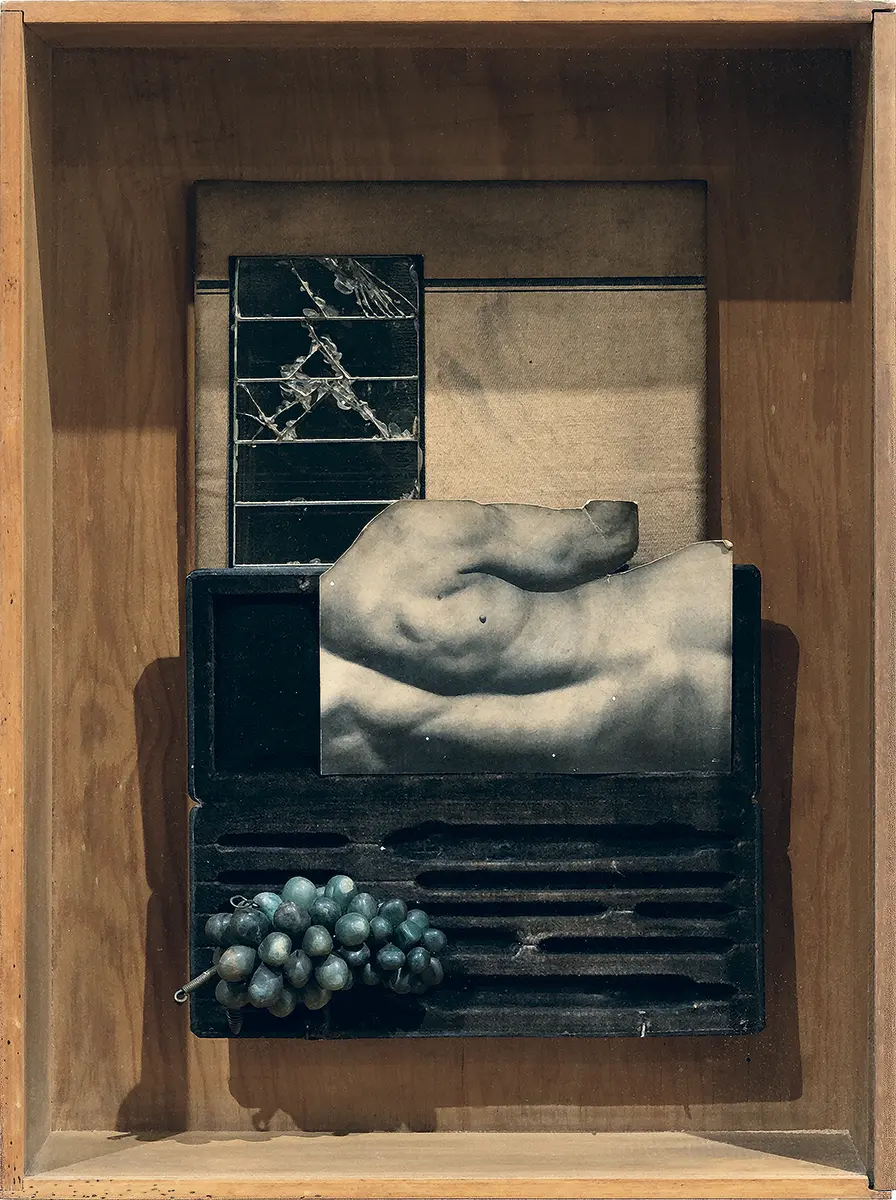
Considering the breadth of his work and its diverse materials, the exhibition retains a focus on process and the viewer is introduced to the artist in a very personal way as he continuously explores the means to express his innermost thoughts. It is as if we are caught looking through a peephole as he reveals himself in graphic detail. We see his heroes (Narcissus, not surprisingly) and other classical bodies in an abject view of his world fraught with confusion. In addition to drawing, photography, and photocopying, collage techniques were key to the construction of some of his most intriguing works using found objects, magazine cutouts, and other unrelated items. A wooden box, Untitled, 1984, included gemstones, a pencil holder, a broken mirror, and a book cover. Its surreal combination featuring a magazine cutout of a partial classical sculpture (?) of a reclining male figure, is a fitting introduction to a similarly contorted approach seen in many of the works on exhibit – especially of the male body. Is it a refusal to see himself as the whole person under such circumstances that limits his creative production to the fragmented and distorted? It may be, but there are no boundaries to the creative exploitation of materials.
A tireless collector of images from mass publications, Hudinilson Jr. filled over one hundred binders (his indispensable Caderno de Referências/Reference Notebooks) throughout his life drawing upon his vast collection of scraps of photographic prints, newspaper and magazine cutouts, photocopies, and documents on paper. A small selection of the books in the exhibition is key to understanding the course of action, that is, in a way, a finale to the many series of drawings, some of which are installed close to the books, allowing points of reference that make sense of his collecting objectives. With his vast collection of materials, he made remarkable quantities of collages, assemblages, stencils, and posters with images central to his oeuvre, often assembled in and for his books.
Hudinilson received the most recognition for his photocopy and/or Xerox constructs that elevated a menial (and still then new) machine product from business commercial to art. Often using his own body to create machine-generated images, he ventured into new territories of artistic invention with the sensibility and sensitivity reserved for all his works, despite the sometimes difficult and graphic subject matter. His scrutiny of the human body resulted in works that are sensual descriptions of human flesh, posture, and mass media expressions that exploit man’s sexuality. Using minimal strokes and brushwork, and done with ink, pastels, spray paint, and oil on linen on Eucatex, matrix paper, and Xerox copies, there is a sense of continuity from the works of the late 1970s to the most recent works from the early 2000s conceptually, despite the range of media. For an exhibit challenged by such diversity and a long frame of reference and production, the curator has successfully created a path through time and place that introduces an artist often unfamiliar to the local community with provocative results.
*Photo: Zachary Balber. Institute of Contemporary Art, Miami
CAROL DAMIAN, PH.D.