In his recent exhibition, titled EN2023 (IN2023), Emmanuel Nassar provided an insight into his Brazilian pop artwork, featuring eighty carefully selected pieces from his more recent and previously unreleased production, as well as other works created throughout his career. This solo show offered an opportunity to grasp the artistic universe of this artist from Paraná, considered the pioneer of Brazilian Pop Art.
EN2023 (IN2023) was conceived around the creation of a large panel: an installation spanning a 3.60-meter-high wall that occupied the entire exhibition space and extended to the gallery’s outdoor area. The conception of this panel engaged with the artist’s creative diversity through works that are characteristic of his style. Nassar combines metal sheets with various materials, and imbues them with meaning by selecting, crafting, and editing vibrant colors, shapes, and content.
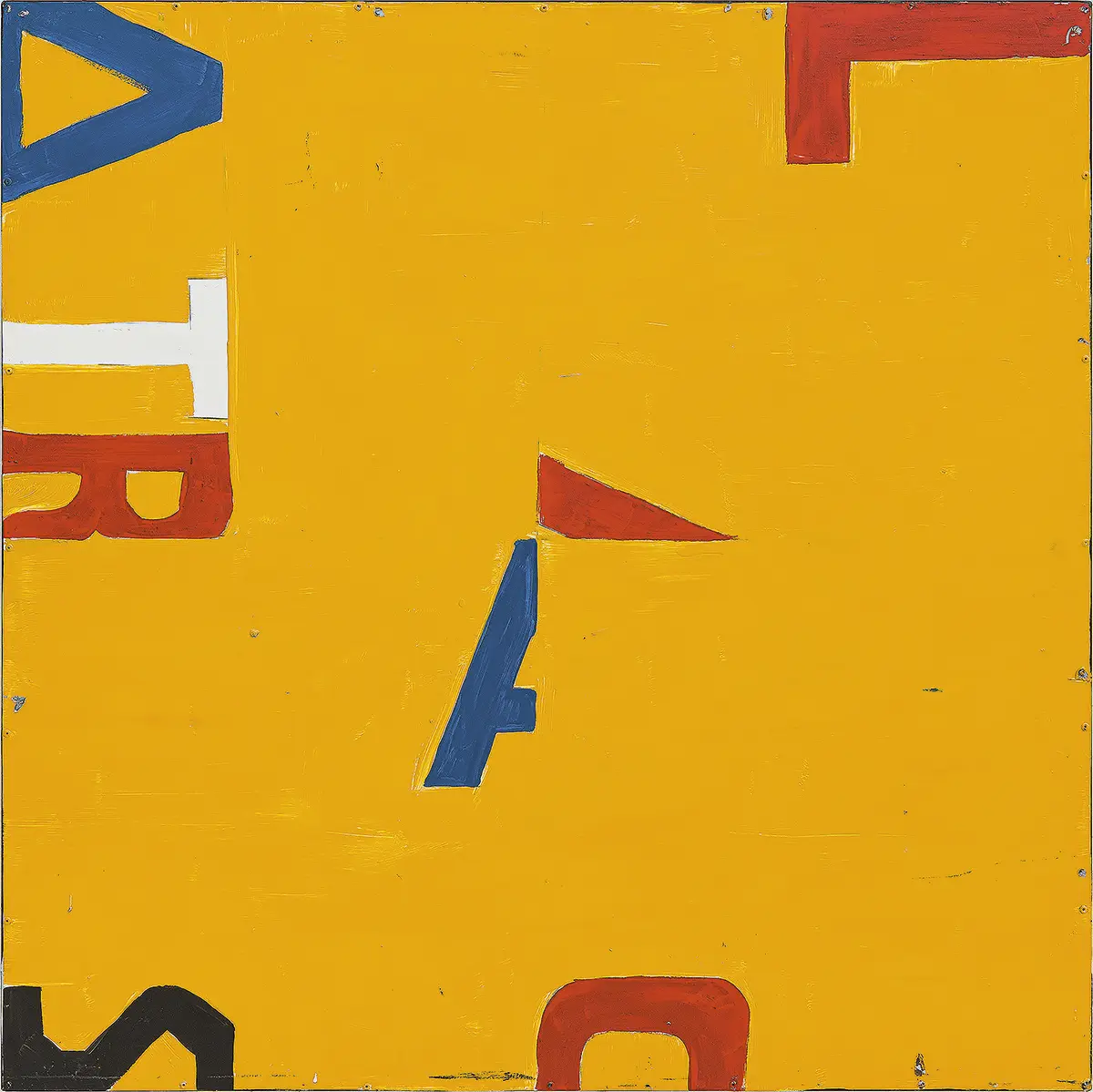
The artist produces a unity, a harmonized whole from selected fragments that he reinvents. They’re like puzzles for which Nassar brings elements together and seeks symbolic results through his research and collection in the streets.
Old painted iron scraps, structured and redefined, incorporate popular elements, signs, billboards, logos—in essence, the resonant dialogues of the streets, a diachrony between the popular and the impact provoked by the marks of global capitalism. In the artist’s hands, these elements establish archetypal relationships, bridging the awareness of knowledge with the most popular forms of expression.
Nassar is a manipulator. As an artist, he considers himself fortunate to be able to propose, deconstruct, and discipline the world because, according to him, his work exemplifies the illegal practice of all professions. He can act as an engineer, a journalist, a psychologist, a poet, a sociologist, an architect, an anthropologist. The artist is a bit of everything, and he thrives on the freedom to investigate, appropriate, and exhibit, creating new interpretations of the world.
The arrangement of Nassar’s works in this show allowed for critical discussions on technique, progress, poverty, underdevelopment, abundance, and the relationship between accumulation, consumption, waste, and inequalities.
Harmonizing different works—through techniques, objects, and diverse materials found on the streets, wells, or garbage bins—and interpreting them creates a sort of order within chaos.
Emmanuel Nassar seizes finished things that invite him to intervene and complete them through the search for meanings, forms, and combinations. He is a flâneur artist who seeks solutions for abandoned, discarded, and forgotten things, connecting and seeking to arrange geometrically and poetically all that he encounters. A large installation preserves the autonomy of each work while establishing unity in the composition composed of 56 metal sheets that occupied the main exhibition space. In a second room, smaller works created a sense of movement in a journey between the inside and outside, ambiguously reinforcing the author’s proposal: the assembly of a game formed by the aggregation of meanings.
Recycled plates, many originating from advertisements, are “reinterpreted” and painted; some emphasize messages, graphics, typography, and geometry. In this interplay between the popular and the erudite, craftsmanship and advertising, Nassar navigates by challenging the logic of consumption.
The aesthetics of Emmanuel Nassar’s Pop Art retains the essence of Brazil, its Amazonian origins, its riverside repertoire, enhancing regional popular culture. The artist transforms precarious, discarded, and corroded sheets into a refined aesthetic, reconciling what appears contradictory and providing understanding of the popular, almost sanctifying it.
The roots of all his work are the Amazonian origins of this artist from Paraná who grew up observing the ornate fishing boats of the locals, popular commerce, and Belém’s market and its influence on the beginning of his professional career in advertising. He studied architecture and learned to create form, color, and life by understanding the everyday and the need to express himself. Emmanuel Nassar subverts the concept of authorship by respecting what was already created before, and in the materials that he uses, which have their own stories and preserve a certain kind of memory. He always intervenes and appropriates something to transform it into what it now is. He establishes a new order on metal sheets painted with vibrant colors, adorned with company logos and brands, or constructed from pieces of wood collected from detritus.
He always starts with what has already been.
HÉLCIO MAGALHÃES