The Museo Tamayo Arte Contemporáneo opened its doors 42 years ago. It has been an undoubtedly emblematic space ever since, both for its architecture, masterfully designed and executed by Teodoro González de León and Abraham Zabludovsky, and for its collection and the exhibits it has presented in over four decades.
Sheltered by the Chapultepec woods, its basic elements are reinforced concrete, granite, and the wood of its flooring. The museum does not feel invasive in its forested surroundings; it sits in harmony with the landscape. After ascending the building’s stairway and crossing the concrete threshold, one encounters generous exhibition spaces and a large, luminous central patio ensconced between the geometric play of the staircases.
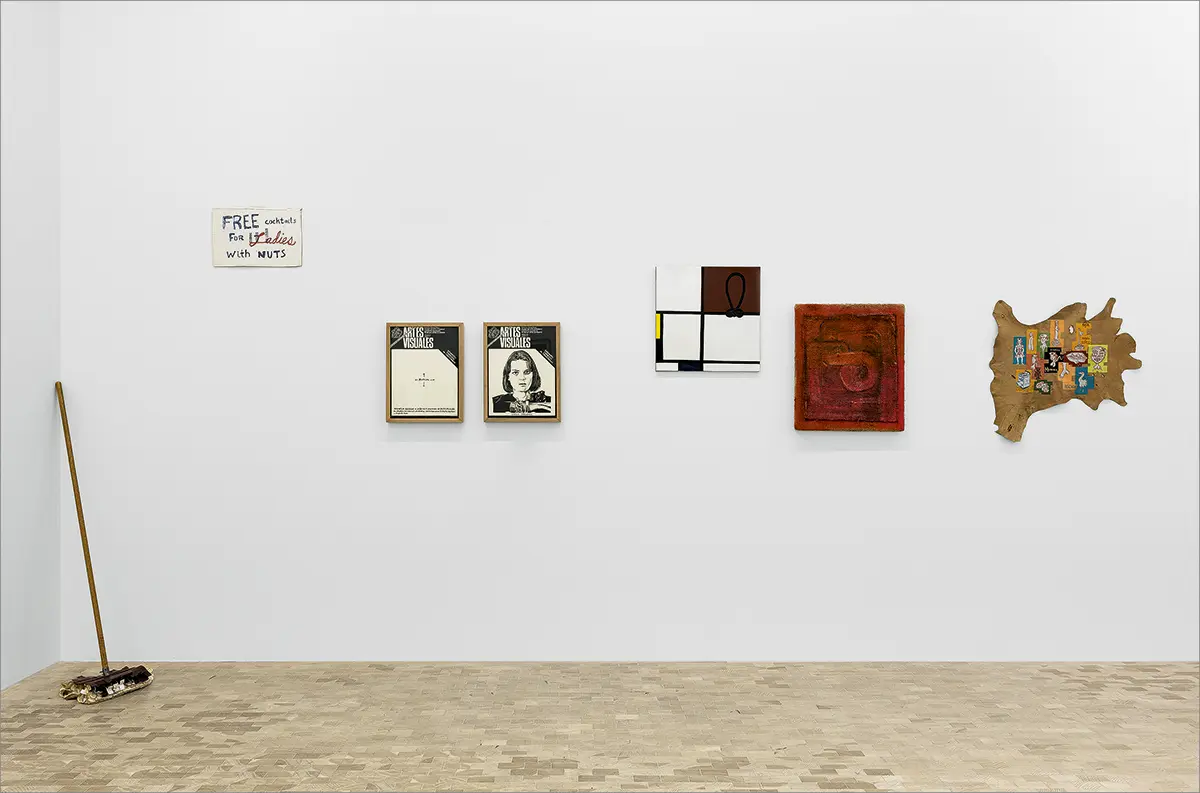
The exhibition Cultivar. Homenaje a Carla Stellweg (Cultivate. Homage to Carla Stellweg), curated by Pablo León de la Barra and Andrea Valencia, opened on May 17 in one of the galleries that surround the patio. It is a well-deserved tribute to a living pillar of Mexican art, in particular of its internationalization. The show is a journey through Stellweg’s career and her contributions to Mexico’s art world.
Let’s begin at the beginning. Carla Stellweg was born in Bandung, Indonesia, in 1942, the child of Dutch parents. When she was 16, the family moved to Mexico; Carla’s father was an agronomist who specialized in tropical crops and had found work in the country. Some years later, Carla Stellweg studied Art in The Hague, The Netherlands, and received a Master’s Degree in Art History from Universidad de las Américas in Mexico City.
Her career began working with the museographer and cultural promoter Fernando Gamboa, one of the founders of the Instituto Nacional de Bellas Artes y Literatura. Alongside Gamboa, Carla Stellweg curated selections for important international exhibitions, such as Expo67 in Montreal, Expo70 in Osaka, and the Venice Biennale, among many others.
By 1973, Gamboa was at the helm of the Museo de Arte Moderno, and together with Stellweg launched Artes Visuales, one of Latin America’s earliest publications dedicated to avant-garde art.
Artes Visuales became a point of reference for research and analysis in the arts, and, being bilingual, helped bring Mexican and Latin American artists to international attention. It is renowned to this day for its support of conceptual art and for touching on topics previously unexplored in Mexico, as with its 1976 issue on feminist art, based on a seminar they organized the previous year, and its issue on Chicano art, which eschewed muralismo—the only well-known aspect of the phenomenon at the time—to instead provide a much broader and novel view. In sum, Artes Visuales, in circulation between 1973 and 1981, brought new artists onto the scene and launched important debates about conceptualism and related topics, like performance art and the use of the body as a political terrain.
After her period at the Museo de Arte Moderno, Carla Stellweg participated in the planning for the Museo Tamayo Arte Contemporáneo and its launch. For practically a decade before the Tamayo’s inauguration, Stellweg accompanied Olga, Rufino Tamayo’s wife, to museums and galleries, helping identify works for the collection that the couple sought to put together. It was intended as an international selection to be exhibited alongside the work of the Oaxaca native, once the institution that today pays homage to Carla Stellweg, considered Mexico’s premier art curator, was fully operative.
Stellweg’s presence in the Museo Tamayo is significant. Not only was she a key driver behind the collection, she returned at pertinent points, and for its anniversary presented a panoramic review of its contributions and its importance in the history of Mexican art.
The narrative of her career continues, however. In 1982, Stellweg moved to New York City and began her life as a gallerist. She established Stellweg Séguy Gallery, active from ’83 to ’85; later, from ’89 to ’97, she headed Carla Stellweg Gallery, devoted to painting, photography, and conceptual art, and focused on the promotion of mid-career and emerging Latin American artists. It was always important to Stellweg that conceptual artists gain visibility in New York, to dispel the notion of nationalism as a key element in Mexican art and to showcase artists working with universal issues and cutting-edge styles.
In later years, Stellweg worked with several other art world institutions in Texas and California, where she remains active as editor, writer, and cultural promoter. In 2010, the Stanford University Library acquired her archives, collected over forty years as an indispensable figure in the promotion of and research into Latin American art. A different part of her archive, with artist’s books, mail art, and various documents, was acquired in 2015 by the Museum of Moder Art (MoMA) for its Latin American Archive and Library.
Along with her work as a curator, gallerist, and promoter, Stellweg is a teacher and remains connected to many artists whose work is on display in this space: Guillermo Santamarina, Maximiliano Siñani, Alejandro Díaz, Fernando Bryce, G. T. Pellizzi, Cisco Jiménez, and others.
Through one of the museum’s picture windows, contemplating the trees around it, I consider the show’s title and realize it is a reference to Stellweg’s agronomist father, who always said to her: “Culture is cultivation.”
ISAURA RUIZ