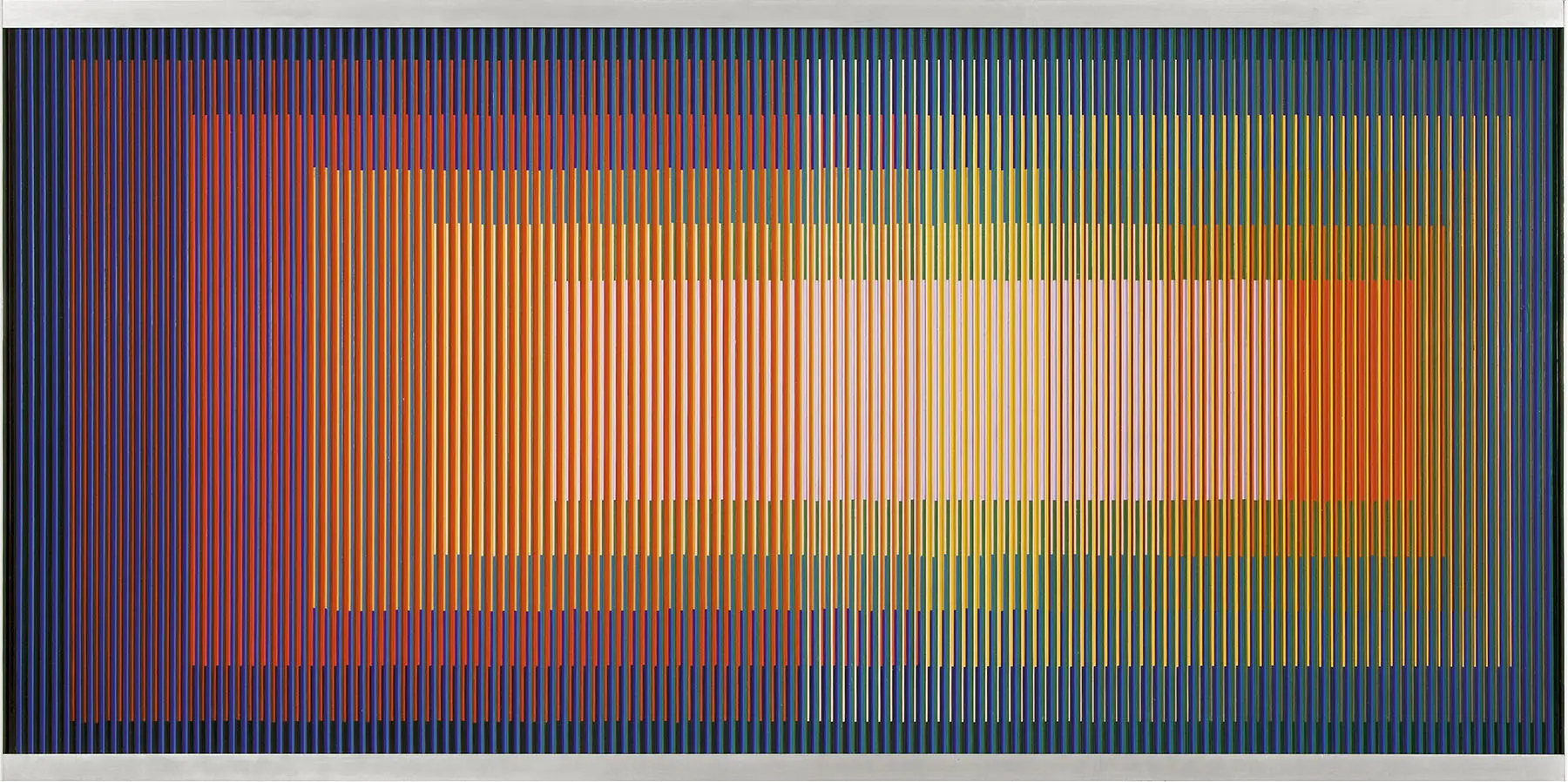
Jesús Soto was born on June 5, 1923 in Ciudad Bolívar. Two months later, on August 17, Carlos Cruz-Diez was born in Caracas. Both would be 100 years old this 2023, which is why, in Venezuela and other countries, exhibitions and tributes are being held in re-cognition of these two important promoters of Kinetic Art on a worldwide scale.
I said re-cognition, since it is well worth reviewing, once again, the main tenets upheld by both artists to understand what identifies them as two of the greatest representatives of Kinetic Art, and why, at the same time, they present interesting differences.
The Beginnings
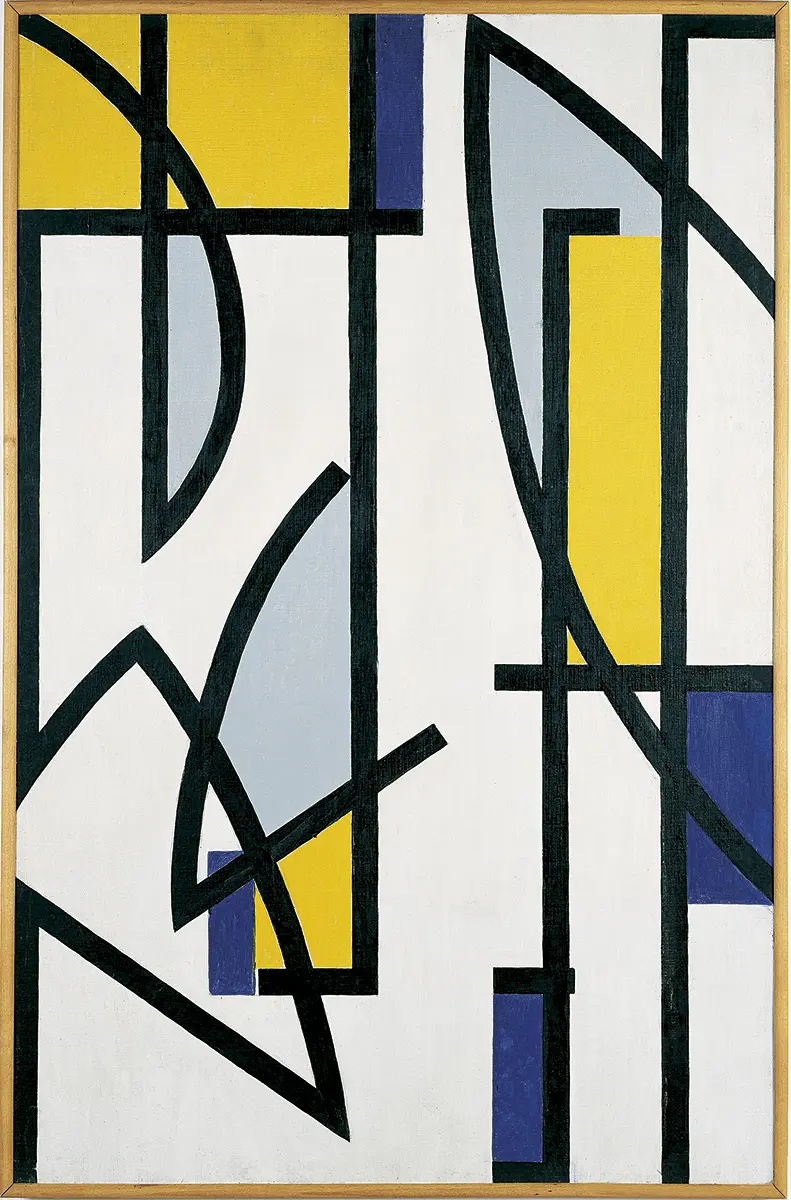
According to their respective testimonies, both were conscious, ever since their formative years at the Escuela de Artes Plásticas at Caracas, of the importance of the innovative artists and movements of the late nineteenth and early twentieth centuries. Indeed, the changes in direction that modern art took since Impressionism and the early twentieth-century avant-gardes, like Cubism and the initial Abstractionism, were deeply analyzed by Soto and Cruz-Diez. They felt it was vital for them to assimilate their objectives, reaches, and limitations in order to renew and surpass the formal and conceptual innovations that those predecessors had masterfully bequeathed them. This desire to “go beyond” was pointedly expressed in various writings and interviews. When asked by Gloria Carnevali about the connection between Impressionism and his own work—based on light and “atmospheres of color”—Cruz-Diez answered: “I believe that my work is coherent with its time and, as such, it follows a historical sequence. My entire generation has been greatly marked by Impressionism and subsequent movements; marked by a historical acceleration that derived from the constant questioning of emerging concepts. This is one of the major differences between modern painting and painting from the past. It’s not just my study of Impressionism that is present in the conceptual framework on which I build my work, but also Malevich’s Suprematism, Cubism, and the postulates that Gabo formulated in 1920 on the subject of integrating real movement into the artwork. My study of the propositions made by the Impressionists and Malevich has led me to conclude that there is something anomalous at the core of their intentions; a contradiction that cannot be resolved with the visual means employed by them. In this sense, my work is a logical consequence of examining those propositions and, precisely because of this, it denies them.”1 Jesús Soto, on the other hand, said that it was through the work of Cézanne and the Cubists that he sought to eliminate any trace of figuration. Later on, he acknowledged that Impressionist painting might have had some influence on his pursuit of pure vibration.
Paris-Caracas-Paris
Soto
In 1950, Jesús Soto traveled to Paris, the original source of the renovating changes in modern art. He was well aware that his research was directed towards the constructive movements, and focused his attention on the ideas of Mondrian, the De Stijl group, Malevich, and the Bauhaus legacy. Paradoxically, all these references made him reflect on an abstraction that could be freed of the confines of form and based on the interactions of various artistic elements to create dynamic effects.
Mondrian in particular had a great impact on Soto because he was able to visualize the process that took him from figuration to abstraction, and to grasp that by painting Broadway Boogie-Woogie (1942-1943) Mondrian had invented a perceptibly dynamic artwork: “(...) When I saw the ‘Boogie-Woogie’ series, I realized that he had already tried to make his works dynamic in order to move beyond two-dimensionality. Once I discovered this, my concern with Mondrian was over and another process began; this time based on music and artists like László Moholy-Nagy.”2
Moholy-Nagy certainly theorized about movement in art and, in 1930, created Light Space Modulator, a motor-driven mobile work. And music was truly of special importance to Soto. He began his musical studies in Venezuela and took lessons with Alexandre Lagoya in Paris. His analysis of the works of Bach and Schönberg’s twelve-tone system allowed him to define the importance of structure and time in his work, leading him to codify a language of his own. In other words, for Soto the key to the twelve-tone system consisted of “a network of relationships achieved through interchangeable values.”3
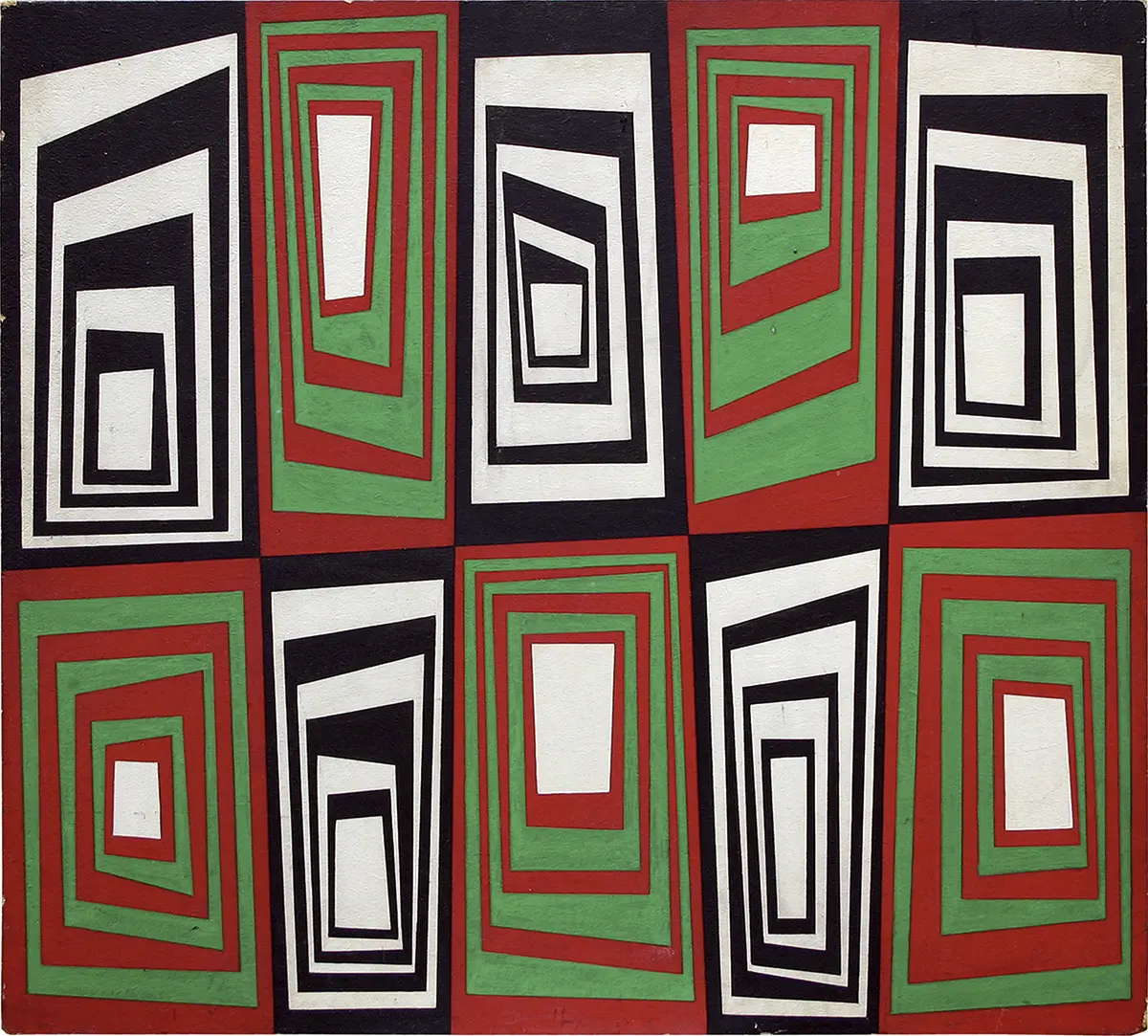
A combination of all these references awakened his desire to overcome stasis in two-dimensional works with the dynamic and serial compositions he created in the early years of the 1950s: Composición dinámica (Dynamic Composition, 1951), Repetición óptica No. 2 (Optical Repetition No. 2, 1951), Progresión (Progression, 1952), Metamorfosis (Metamorphosis, 1954), and Espiral (Spiral, 1955), among others.
In 1955, Soto’s work was included in “Le Mouvement” (The Movement), a landmark group show at the Denise René gallery, which formalized Kinetic Art as an internationally established movement.
Cruz-Diez
Without neglecting his interest in pure art, Carlos Cruz-Diez switched his major and graduated as a professor of Applied Arts and Manual Arts. Simultaneously, he began working in advertising and graphic arts. Over time, he gained a vast experience as a designer and illustrator in various newspapers and prominent magazines; an experience that would greatly impact his later work as an artist because thanks to the graphic industry he consolidated his multiplying-image method as part of his creative process. Before he made his first trip to Europe in 1955, and after returning to Caracas in mid-1956, he stood out as one of the most important graphic designers in the country. He was also working on his first mural projects and abstract paintings, including those with organic forms, like his Parénquimas (Parénchimas) series, or optical works such as his Construcciones (Constructions), Animaciones sobre el plano (Animations on the Plane), and Objetos rítmicos móviles manipulables (Manipulable Rhythmic Mobile Objects).
During that trip in 1955, he reconnected with Soto and together they visited “Le Mouvement” (The Movement) exhibition. This marked his first contact with Denise René, a relationship he would resume upon returning to Paris permanently in 1960.
Kinetic Art vs. Abstraction
When Cruz-Diez returned to Europe for the second time, he had decided to close his design studio in Caracas, settle in Paris, and dedicate all his time to art. His investigations on color were already very advanced. He had initiated his first Colores aditivos (Additive Colors) and Fisicromía (Physichromies) in 1959. His ideas were well-defined. Primarily, he intended to work on “the concept of color as an unstable and continuously changing situation” for the viewer’s perceptive field.
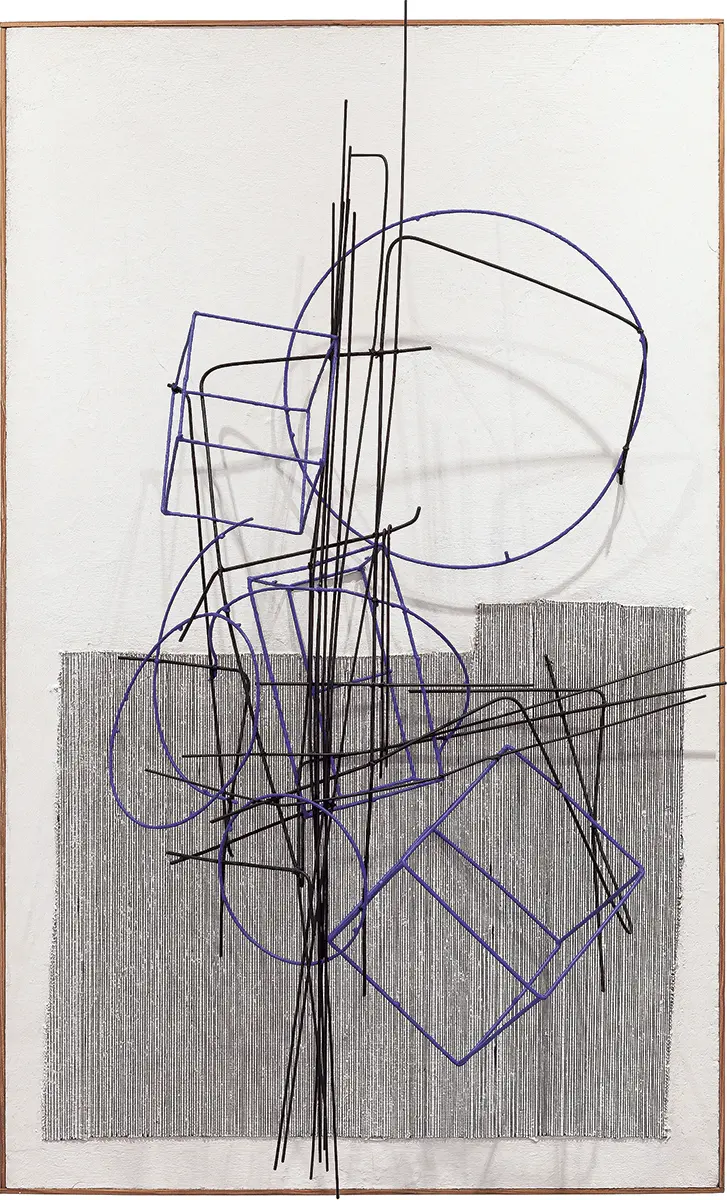
Soto, in turn, had advanced a significant portion of his quest, such as the displacement of points, cubes, and plexiglass pieces, where transparency and the overlay of linear patterns create a moiré effect and optical vibrations. In the 1960s, he conceived his first Escrituras (Writings) and the so-called “baroque works”: recycled logs to which he added wires to create patterns and vibratory effects. He also initiated his Progresiones (Progressions) and his first Penetrables.
Both of them, therefore, had concrete ideas on the directions their respective searches were taking them and agreed on finding ways to free some visual elements from the subjection to form. Cruz-Diez essentially worked on this through color. Soto, through the serial coding of lines and squares combined with transparency and light.
They had something else in common: they distanced themselves from the concepts associated with geometric abstract art. According to their findings, the use of geometric shapes does not determine its abstract nature. Soto was very clear about this: “Upon my arrival in Paris, all art was being produced through forms that reminded me of the ones I had used to create figures or landscapes. Even the geometric artists didn’t seem like abstract artists to me. I saw compositions of diamonds, triangles, polyhedrons; a whole series of elements that pointed to a figurative reality, and I was sure that figurative painting employed the same composition system of the so-called abstract painting. For me, that wasn’t abstraction, but simplified figuration.”4
Cruz-Diez was equally emphatic: “It’s ridiculous to label me an abstract painter. I’m a painter of realities. I align myself with Kinetic Art, which is the art of concrete reality. Kinetic Art is an expression of this era.”5
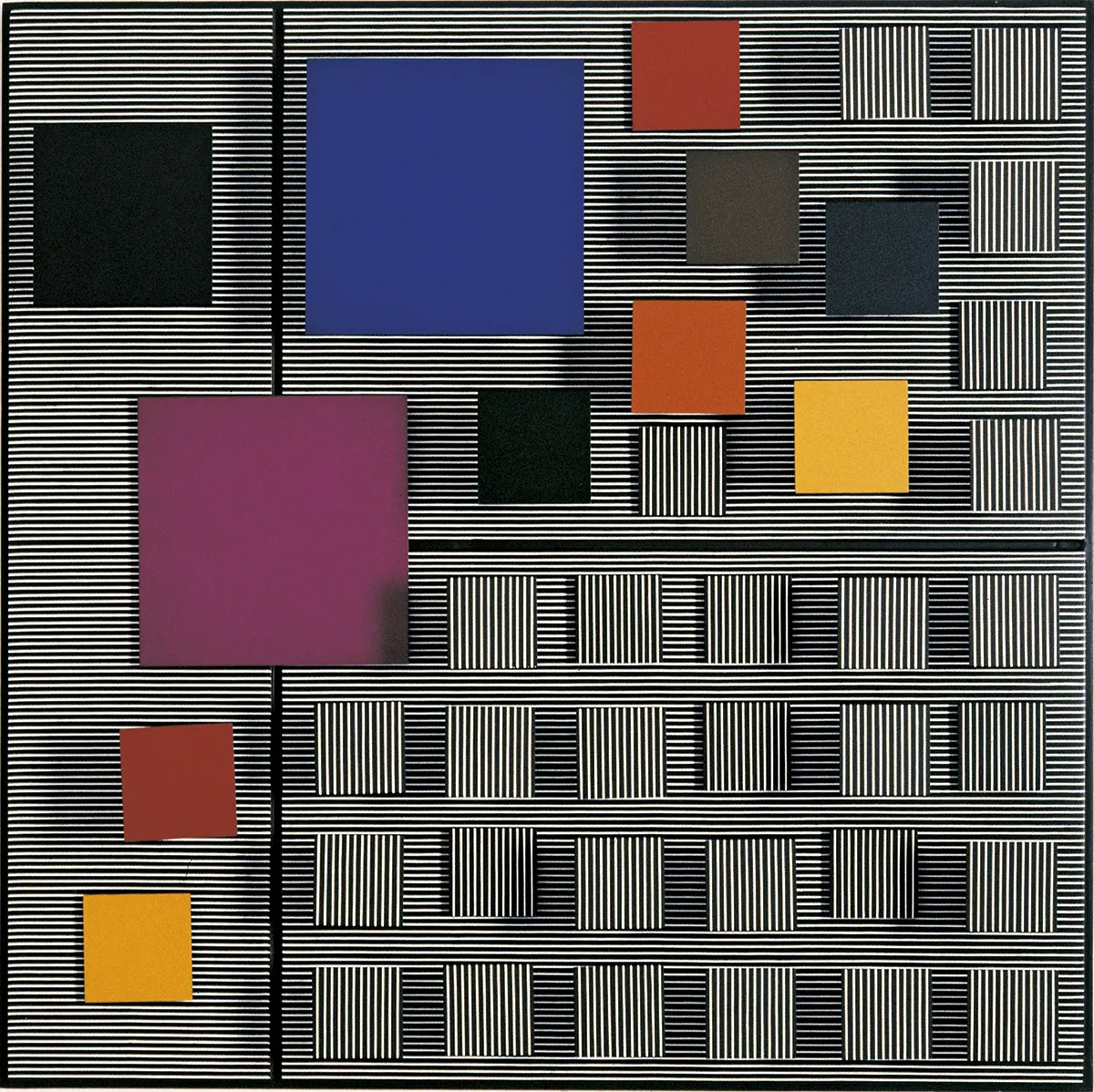
Both of them reevaluated preestablished concepts. However, despite Soto’s pursuit of formal autonomy, he concluded that true abstraction could be achieved through the square. For him, the square is “the only shape that is not found in nature because it’s a purely human invention.”6 In Ambivalencias (Ambivalences), a series he began in the 1960s, Soto worked with squares of varying sizes, creating vibratory effects due to their contrast with a background of linear patterns. The dynamism of these works is undoubtedly perceptive and relational. Later, his search tended toward immateriality. Cruz-Diez believed instead that Kinetic Art is the concrete presentation of reality in real time and space. Through color, he created unstable situations and, consequently, broke with the form-color correlation, both in physically “materialized” works [Colores aditivos (Additive Colors), Fisicromías (Physichromies), Inducciones (Inductions), and other series] in realms of color-light; that is, spaces of color in their maximum purity and saturation.
Soto: Time and Immateriality
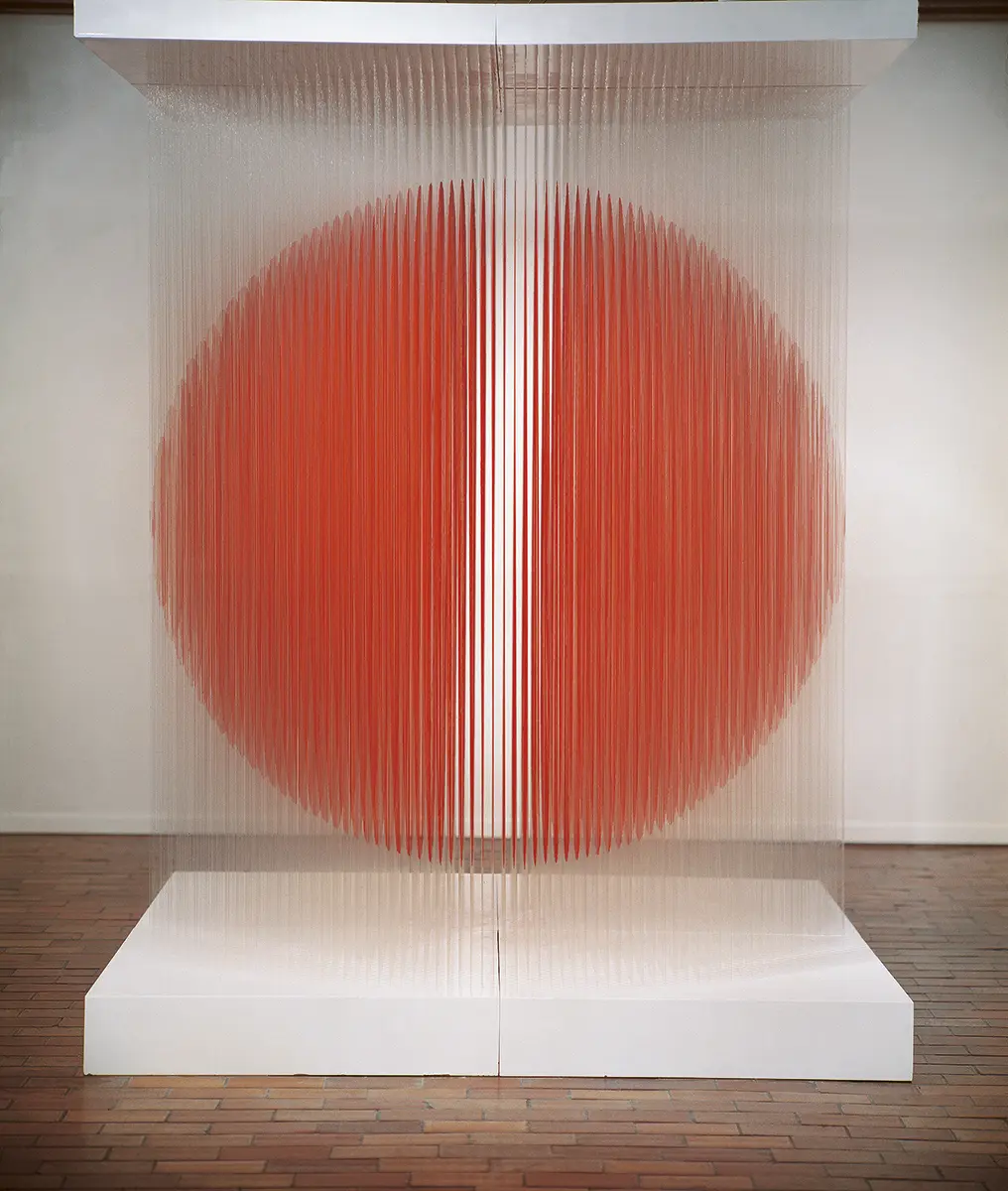
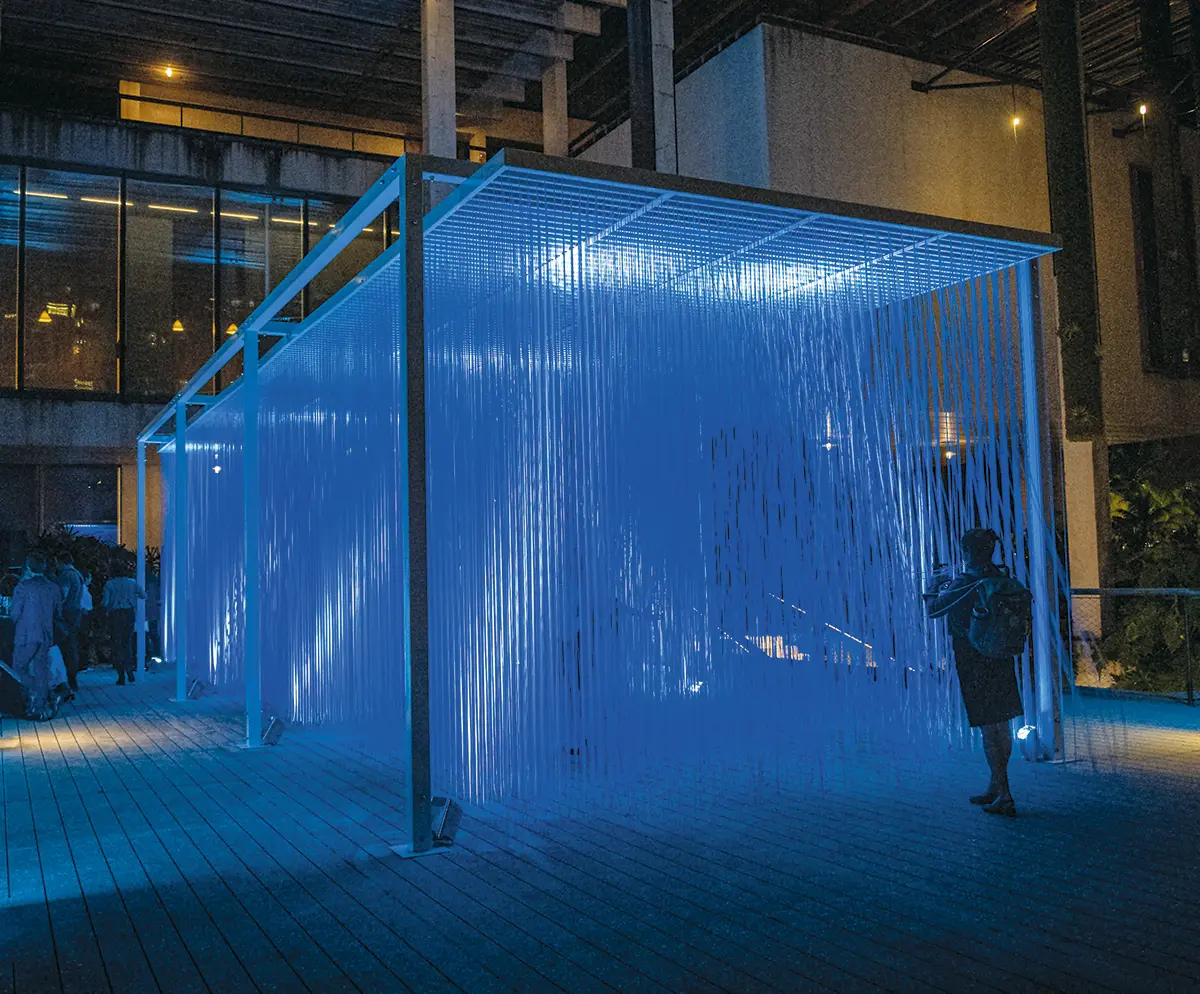
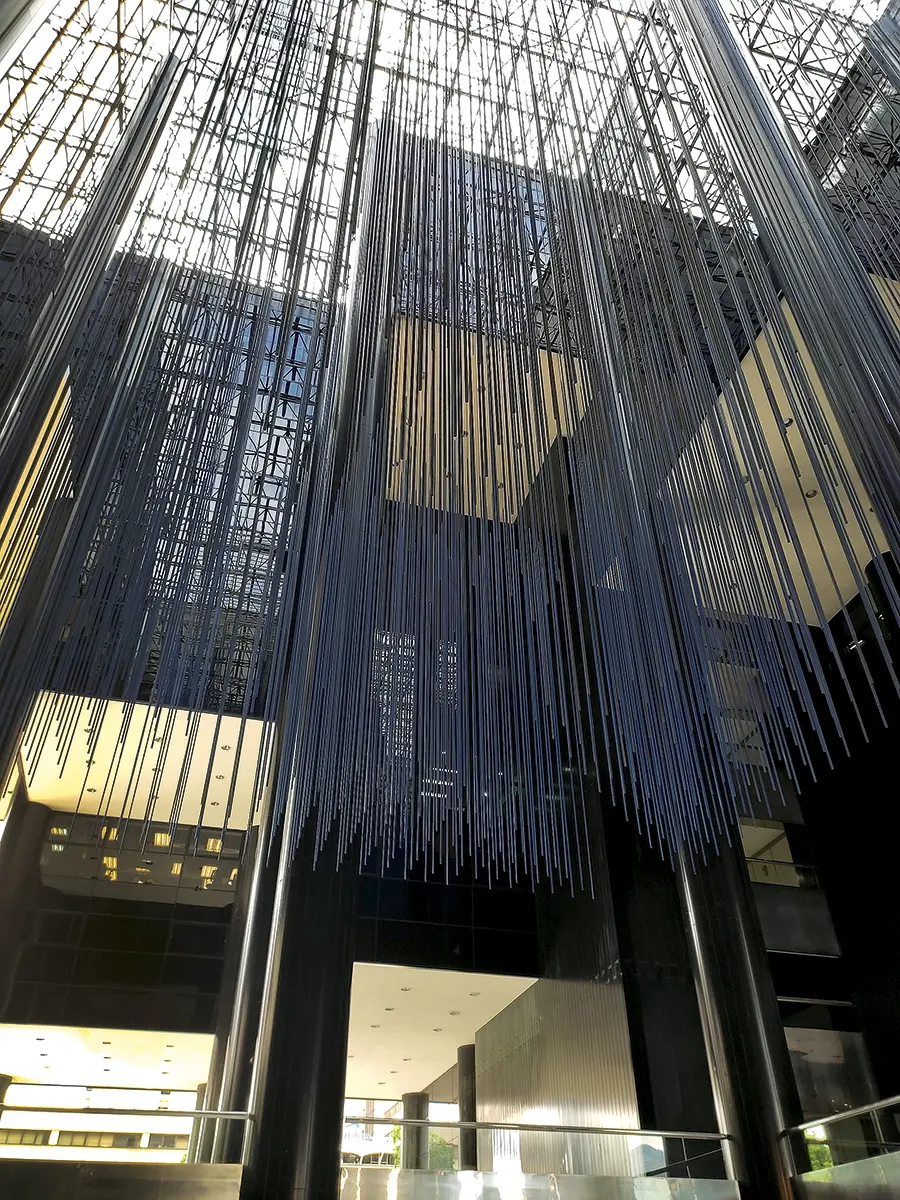
Soto’s interest in time stemmed from the idea of simultaneity, a concept he borrowed from the Cubists. Juxtaposed and superimposed patterns in transparency create different situations in the artworks, depending on the viewpoint. This occurs with the transparent cubes in virtual volumes made with suspended nylon threads, and even with the Penetrables. On the latter series, the artist explained why they constitute a space of light: a “total plenitude of vibrations, where the viewer can feel the body of space at the time of its displacement. The void exists nowhere.”7
Cruz-Diez: Kinetic Art through Color
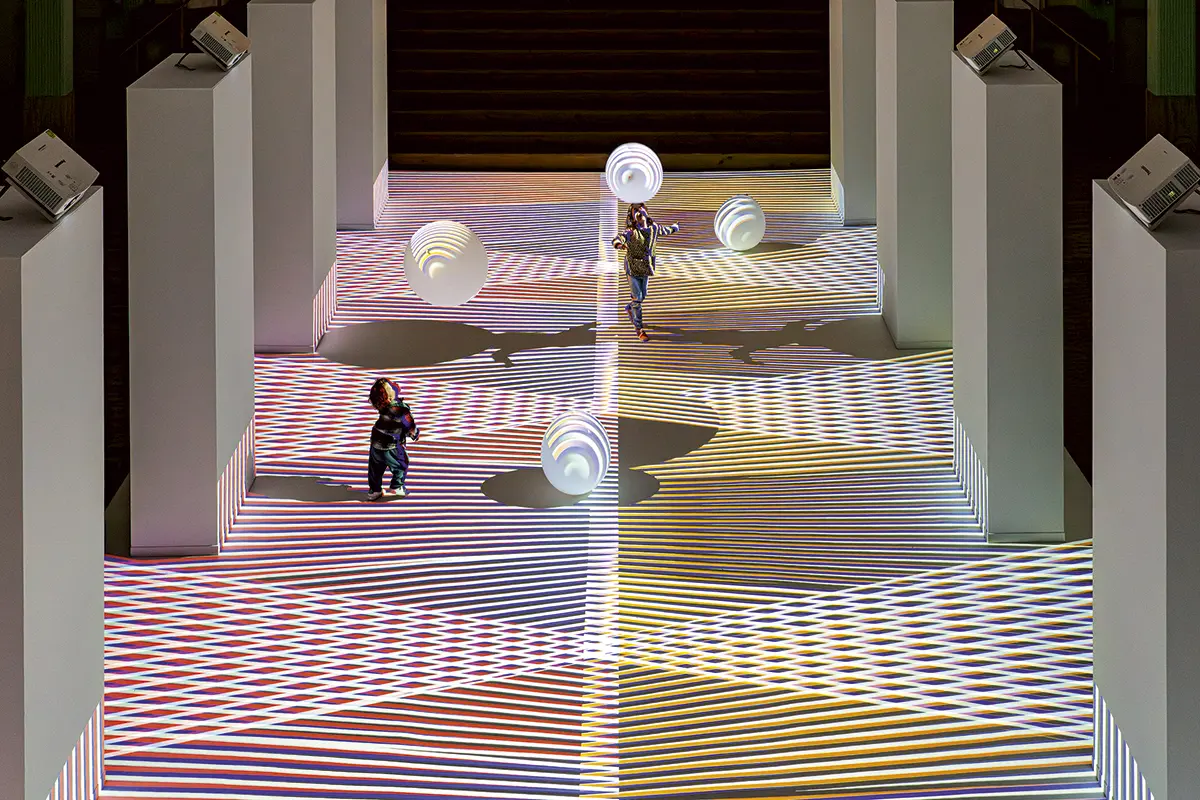
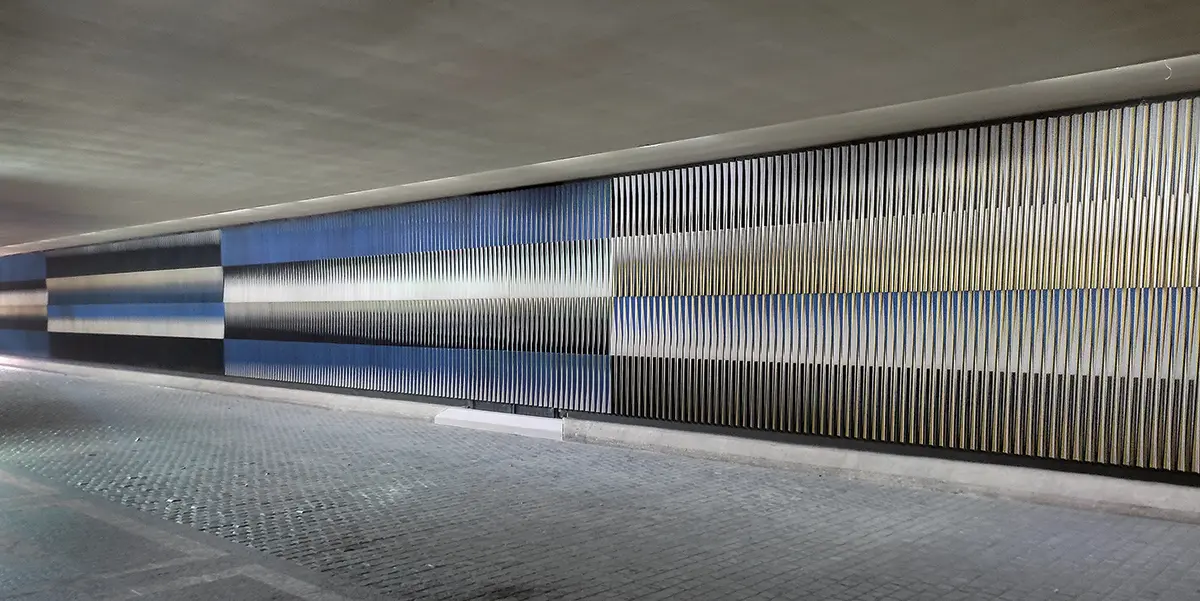
With Colores aditivos (Additive Colors), Cruz-Diez managed to produce a retinal effect whereby one can perceive a third color not physically present in the artwork, but created through the systematic juxtaposition of lines of contrasting colors. The point where these lines intersect produces what the artist called a critical state, a tension, and a vibration, which in turn generates modules of chromatic situations: one of the main objectives of Cruz-Diez’s Kinetic Art. On the other hand, Fisicromías (Physichromies) is a series of works that are perceptibly dynamic and respond to the spectator’s movements: vertically arranged reliefs on a two-dimensional surface present different colors on the sides and edges, causing the appearance of the artwork to change according to the viewer’s position.
In brief, the Colores aditivos (Additive Colors) and Fisicromías (Physiochromies) series constitute the conceptual, sensory, and formal platform with which Cruz-Diez succeeded in separating color from form. In these series and in later ones, such as Inducciones cromáticas (Chromatic Inductions) and Cromointerferencias (Chromo Interferences), he created equally dynamic and unstable situations that break with the traditional concept of a frontal and singular view of the artwork.
Subsequently, in his Transcromías (Transchromies) and Cámaras de cromosaturación (Chromosaturation Chambers), light became the essential source to generate color. The viewer experiences color through transparency in Transcromías (Transchromies) and as chromatic atmospheres in Cámaras de cromosaturación (Chromosaturation Chambers).
Architecture and Urban Space: A Challenge to Scale
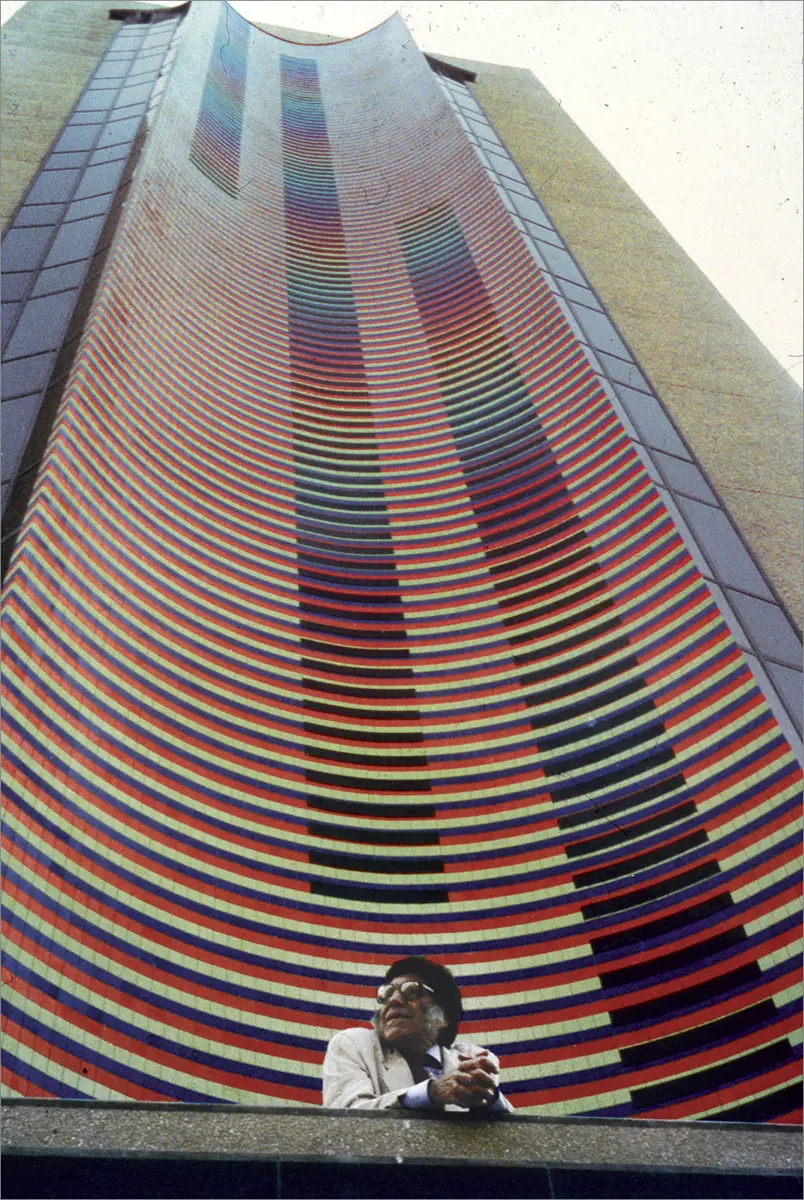
Soto and Cruz-Diez successfully challenged scale on numerous occasions by integrating their works into architecture and public spaces. They transformed space itself into a catalyst for transformable situations through light, transparency, and color. Both of them, each according to their personal research, succeeded in making space a collectively perceptible event. Hence, the monumental nature of their works conceivably lies not only in their size or engineering solutions. They were artists of universal stature, whose works also touched the fibers of a particular Venezuelan identity. A remarkable feat accomplished through time, shared experiences, and the awakening of a particular sense of belonging.
NOTES
1. Gloria Carnevali (1981), “Mi estética es la eficacia de una evidencia,” interview with Carlos Cruz-Diez for the exhibition catalogue Didáctica y dialéctica del color, Caracas: Museo de Arte Contemporáneo Sofía Imber; reissued in El color sucede (2009), Madrid: Fundación Juan March, p. 69.
2. Ariel Jiménez (2005), Conversaciones con Jesús Soto, Caracas: Fundación Cisneros, p. 46.
3. Diana Arismendi (2023), “La música que siempre lo acompañó,” in Papel Literario - El Nacional, Caracas, July 23, p. 2. Online: https://www.elnacional.com/papel-literario/la-musica-que-siempre-lo-acompano/
4. Jesús Soto (1967), “Soto habla de Soto,” in Revista Imagen, Supplement 3, Caracas, June 15-30.
5. Carlos Cruz-Diez (1967), “El cinetismo no es una moda. Es la captación de un mundo nuevo,” in La República, Caracas, August 4.
6. Soto, “Soto habla de Soto.”
7. Daniel Abadie (1983), “Entrevista a Soto,” in Soto. Cuarenta años de creación, Caracas: Museo de Arte Contemporáneo Sofía Imber, pp. 24-27.
SUSANA BENKO