In early September, the 35th São Paulo Biennial—the second oldest biennial in the world and the largest contemporary art event in the Southern Hemisphere and the Americas—opened its doors. In the days leading up to the opening, the city was bustling with strong energy. Numerous parallel events in galleries, independent spaces, and museums were crowded with international visitors, and the local atmosphere was contagiously enthusiastic in a moment that felt significant.
coreografías de lo imposible (choreographies of the impossible), this edition of the biennial, was curated by a team composed of Manuel Borja-Villel, an art historian; Grada Kilomba, a multidisciplinary artist, writer, and theorist; Diane Lima, an independent curator, writer, and researcher; and Hélio Menezes, an anthropologist, critic, and researcher. A heterogeneous group that, from the beginning, declared their method of working as horizontal, without the hierarchy of a chief curator or the homogeneity of a collective, and proposed a way of choreographing that takes into account their different backgrounds, education, and areas of activity. The exhibition indeed brings together a wide variety of artists and collectives that highlight the team’s curatorial diversity.

The proposed route in the mythical Ciccillo Matarazzo Pavilion, thanks to the architectural design by Vão studio, starts from the top floor, and from there it involves several ascents and descents on the stairs, engaging our bodies in choreographies that aim to “construct spaces and times of perception that challenge the rigidity of Western linear temporality.” Right from the beginning, linearity is broken without concessions.
The entire exhibition is imbued with the will to question and challenge hegemonic temporality, undoubtedly something crucial in order to imagine an existence that steers us away from planetary self-destruction. In a territory like Brazil—one of those places where Africa and the Americas are intensely intertwined with cultures, beliefs, diasporas, or black and indigenous ancestries—time is measured, inhabited, and understood in ways that completely escape the chronology brought by Europeans. And it is from there that this biennial is woven.
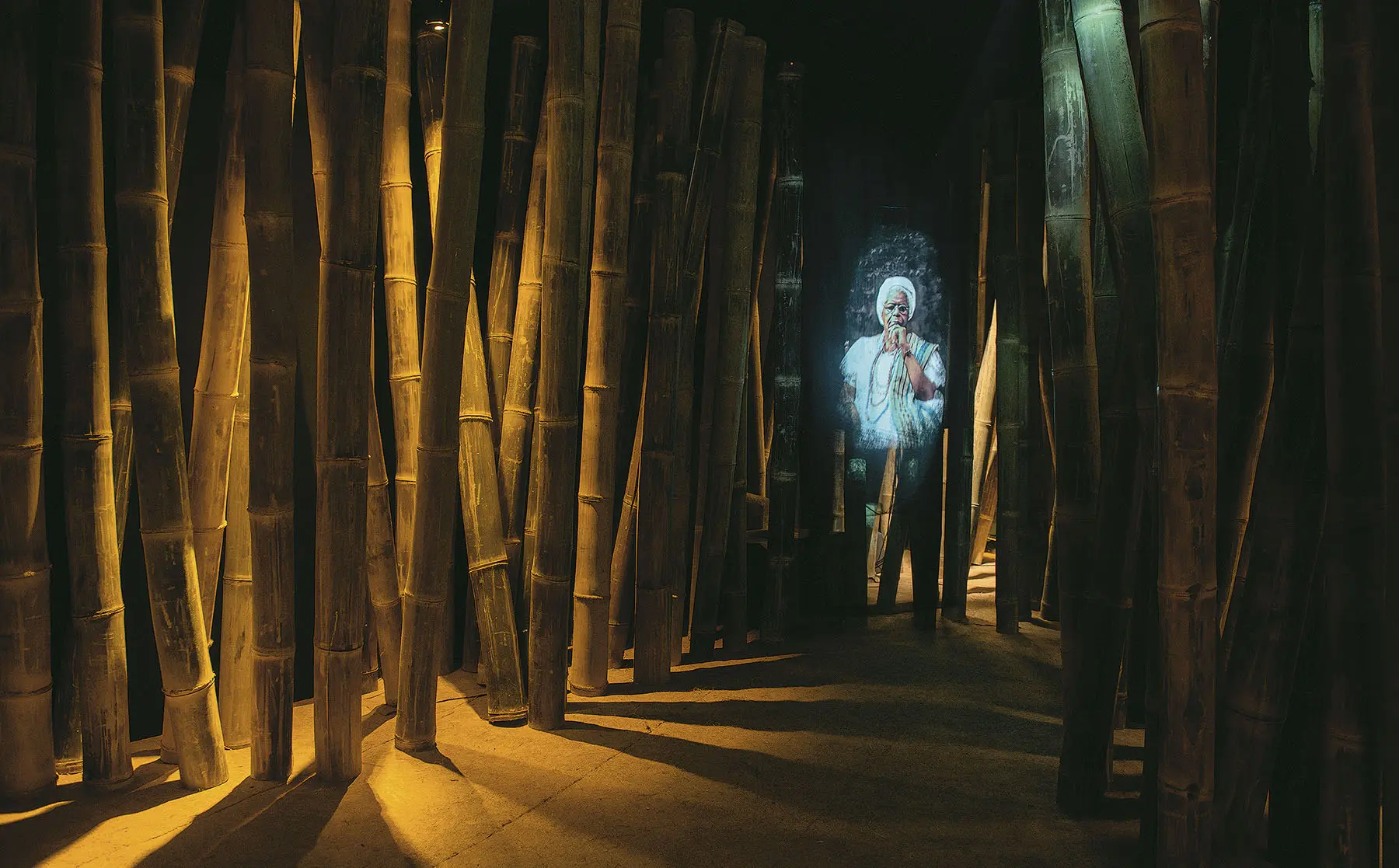
I’ll try to thread a path through some of the present works. Very early on, our bodies are inevitably affected as we walk through the immersive installation by Ayrson Heráclito and Tiganá Santana. The work is a tribute to the forest: a place populated by ancestors turned into material and inanimate lives; an offering to the forces of nature that make our existence possible. Mirrors, lights, shadows, and sounds envelop us in an atmosphere that takes us to an infinite wooded area inhabited by African, Afro-Brazilian, and indigenous entities, where our perception begins to attend to sensitive issues tinged with ancestral knowledge.
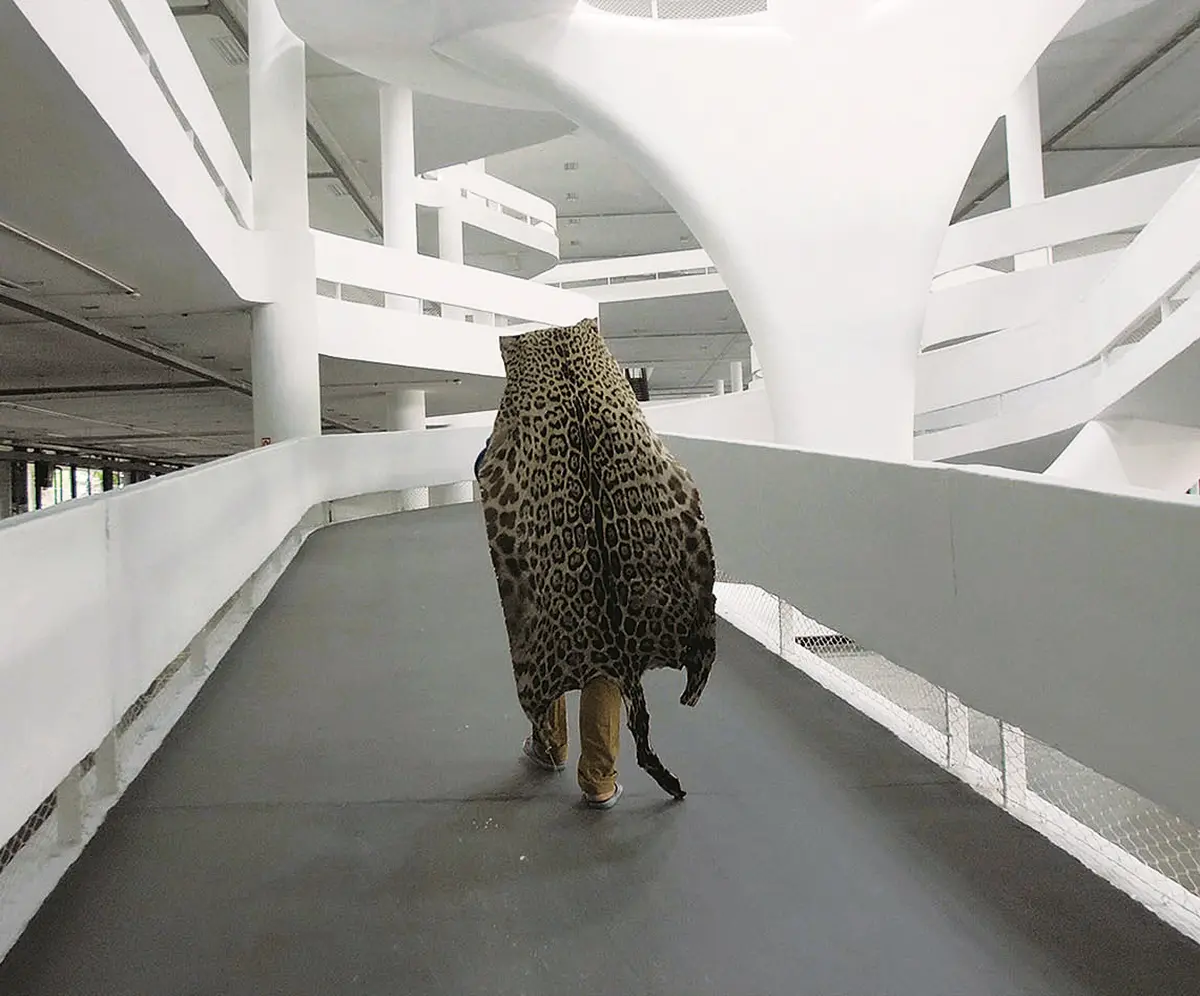
Ancestral knowledge like the jaguar in Mayan culture, which has the ability to transcend space and time, enabling communications and connections between the worlds of ancestors and the living. In the video XAR – Sueño de obsidiana (XAR – Obsidian Dream, 2020-2022), by Guatemalan artist Edgar Calel with Brazilian filmmaker Fernando Pereira dos Santos, the artist wears the skin of a jaguar while walking through the biennial pavilion, offering a glimpse of how this place, originally occupied by the indigenous people who inhabited this territory, may have looked like. Between dreams and memories, Calel’s ritual promenade around the pavilion constitutes a transmutation between humans and non-humans that transcends space and time, and is also a tribute to community.
Linear time emanating from European notions of progress and no return is shown to be incompatible with the conceptions held by the indigenous cultures of the Americas. Based fundamentally on mythical visions reinscribed in everyday life through ritual, indigenous time is approached by the exchange of knowledge and affections. Denilson Baniwa’s delicate yet powerful work reveals the possibility of harvesting and eating as acts of sharing and reshaping memory. Baniwa works with archival material, emphasizing and attacking accelerated time, while opting instead for listening, waiting, and reflecting.
As theorist Leda María Martins, whose thought on spiral time is very present in the biennial, points out, in certain cultures, time is a place that inscribes knowledge generated in gestures, movements, choreographies, the surface of the skin, rhythms, and tones of voice. A whole plethora of knowledge, from the most concrete to the most abstract, is restored and reviewed through paths other than writing: a dynamic of oral and corporal inscriptions, and graphemes performed by bodies and voices in motion.
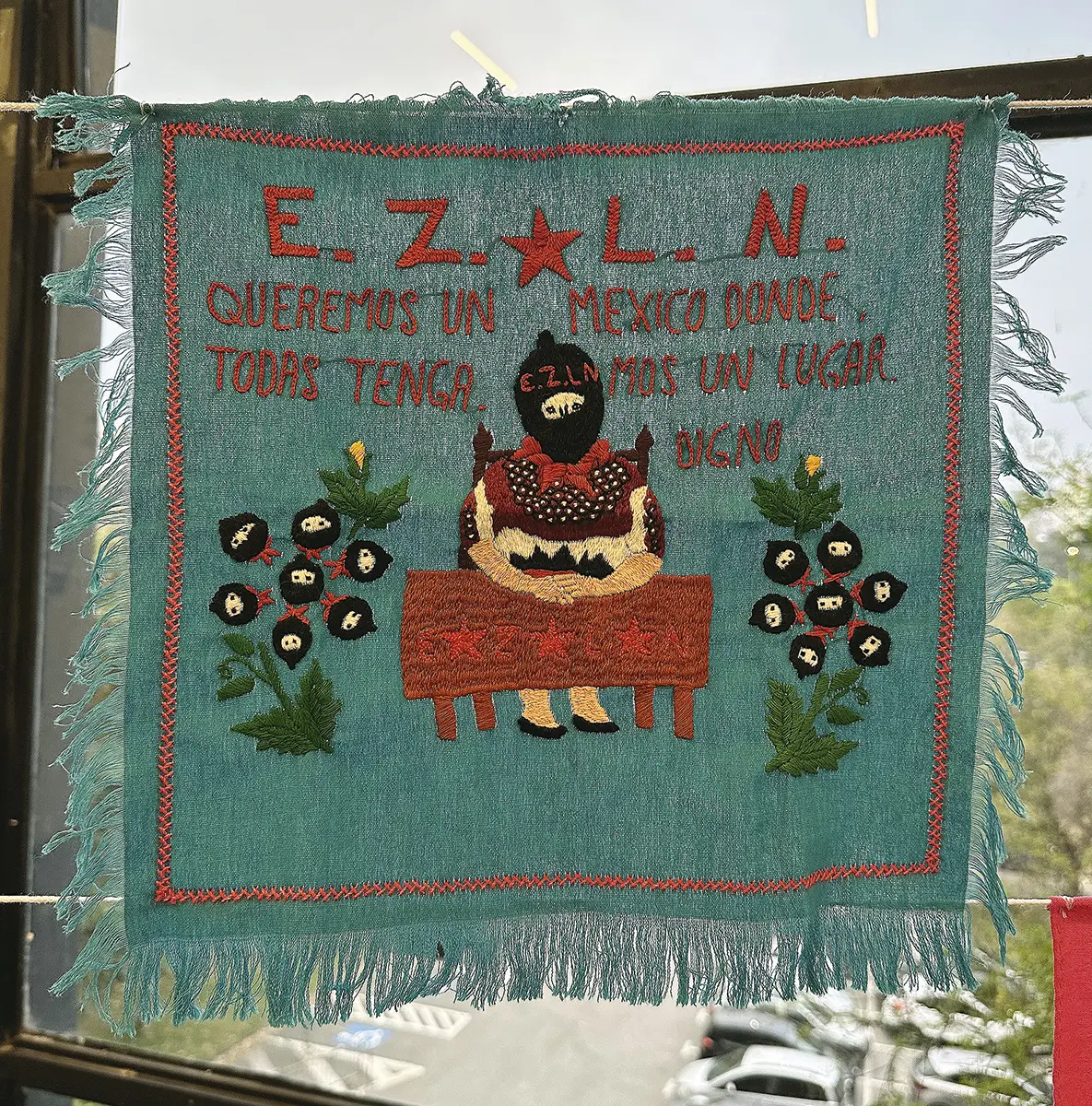
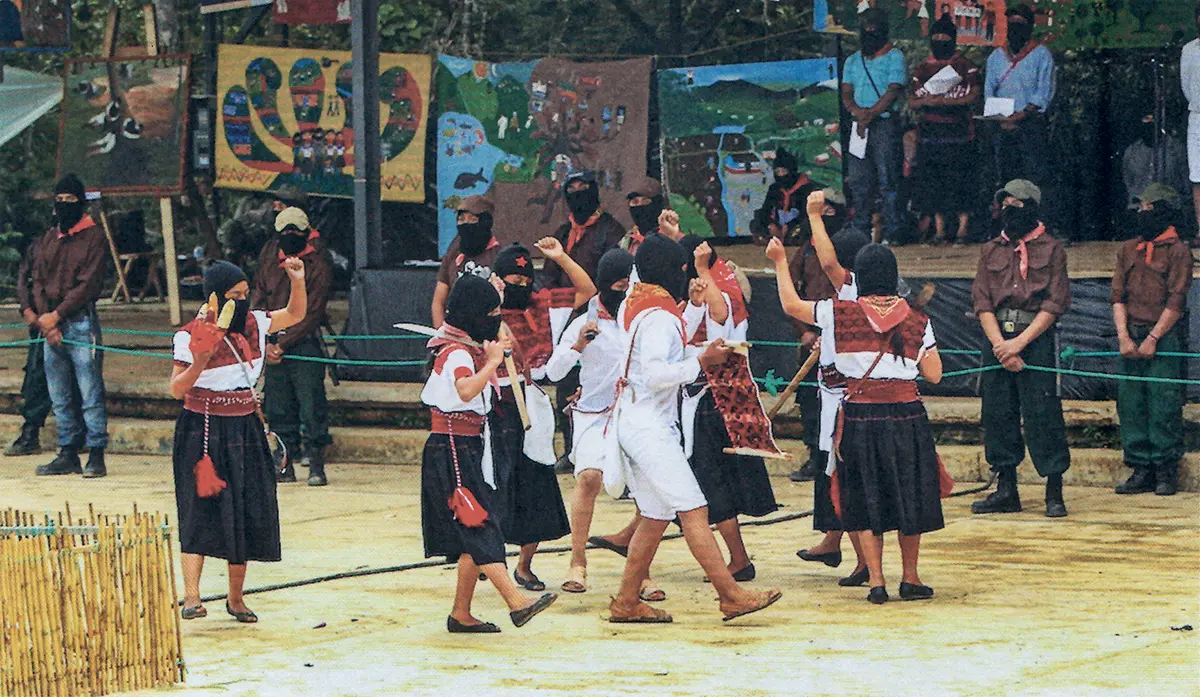
Bodies that generate forms like those created by the Zapatistas, who, after a period of silence, suddenly emerged again from the jungle. Forty-eight thousand people began to move spirally through several municipalities in Chiapas in 2012, referring to the end of the Western world according to the Mayan calendar, and welcoming the beginning of something new. The spiral is also the snail: the form of Zapatista governance. The installation by the Grupo de Arte e Investigación Política (GIAP), a collective that produces publications, exhibitions, and conferences on Zapatista aesthetics and autonomy, and which since 2017 also organizes residencies for artists and researchers in Chiapas, brought to the biennial a series of embroideries, paintings, dances, and actions by the militias, which highlight the performative poetics of Zapatismo, as well as forms of construction of that other possible world.
Zapatista bodies understood, from the beginning, the performative power of their actions. To appear and to disappear, movements and forms, endings and beginnings. Movements that are rituals in their ability to shape time. The ritual is that strange and enduring presence that generates exceptional time and space, and where attention and perception transform into an instance that denies one single position by accepting different possibilities for actions both fluid and interchangeable.
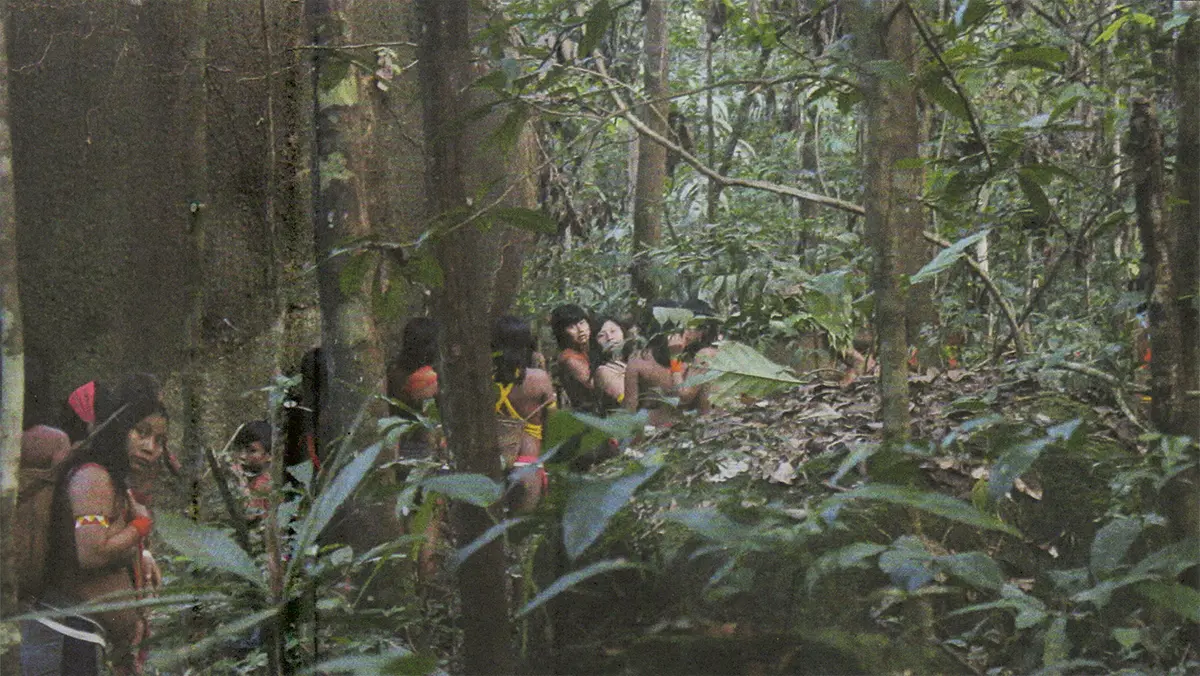
The audiovisual project by Aida Harika Yanomami, Edmar Tokorino Yanomami, and Roseane Yariana Yanomami narrates the intimate stories of the Yanomami people from the perspective of two of their rituals. In a moment of struggle against extinction, the Yanomami people’s connection with dreams and their cosmologies forms a belief system about the conservation of worldly existence. These beliefs serve as powerful weapons through which life and the possibility of having a future emerge.
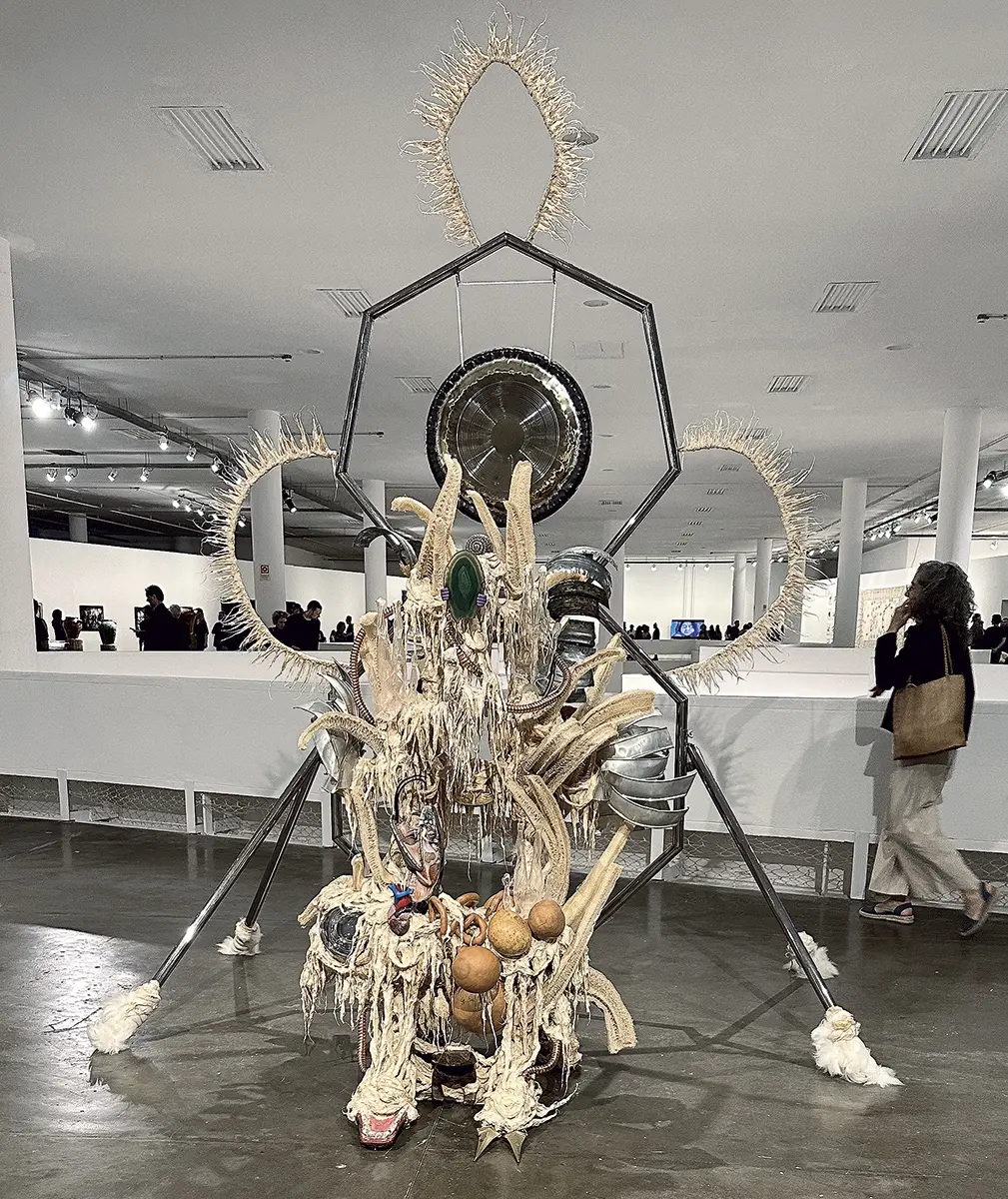
Faced with the pressures of relentless capitalism and ruthless extractivism, there is a choice: to resist in their territories or migrate in search of new horizons. Guadalupe Maravilla’s large-scale sculptures confront us with strange forms assembled with moldable materials and musical instruments whose vibrations can create therapeutic spaces. Based on Maravilla’s own traumas as a migrant between Central America and the United States, these “healing machines” open portals to communicate with ancestors through a collective ritual.
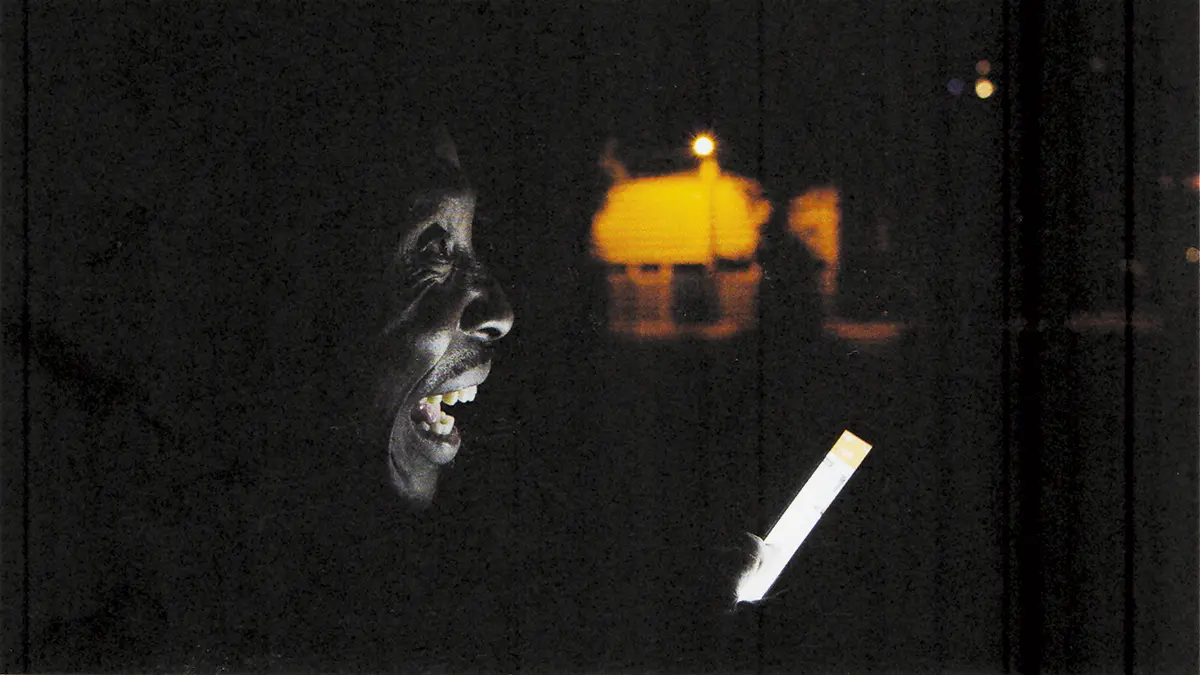
The film presented by Raquel Lima also traverses a history of trauma through words, bodies, and erasure. On the island of Santo Tomé in the Gulf of Guinea, the cracks in colonial houses reveal the presence of black bodies that were commodities. The artist’s words create an ontological dimension that proposes other ways of narrating everyday life and history; a worldview that choreographs meanings across different times. No past can be erased, but perhaps its traces can be transformed.
As Denise Ferreira da Silva points out in one of the catalogue’s essays, “Blackness is a threat to sense, a radical questioning of what comes to be brought under the (terms of the) ‘common’. If the ordered world secures meaning because it is supposed to be knowable, and only by Man, if that world is all the common can comprehend, then blackness (re)turns existence to the expanse: in the wreckage of spacetime, corpus infinitum.”
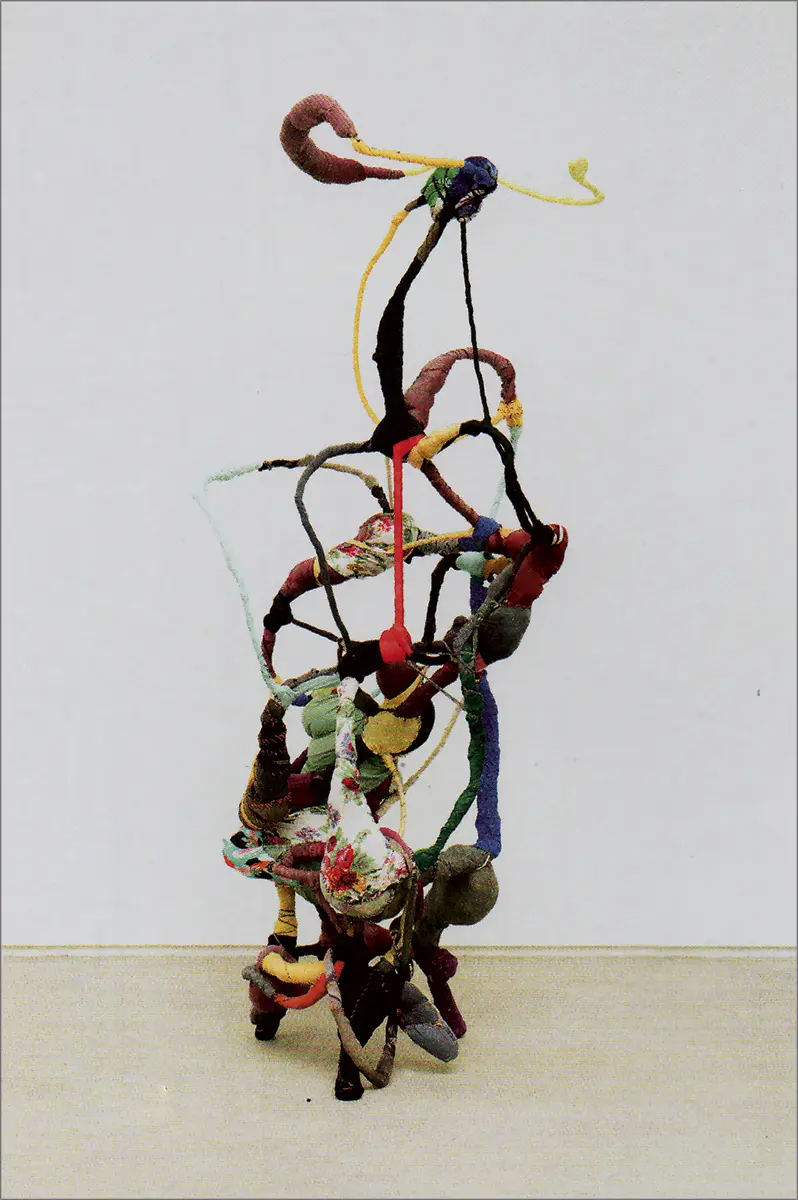
Sonia Gomes’ sculptures somehow challenge that existence, containing stories and affections in every twist of the fabrics, threads, and twisted, sewn, hooked, and transformed wires that compose them. The material, which still holds the ritual movements, relates beyond representation to the bodies around them, condensing the intertwined time and memories of Black women’s millennia-long resistance.
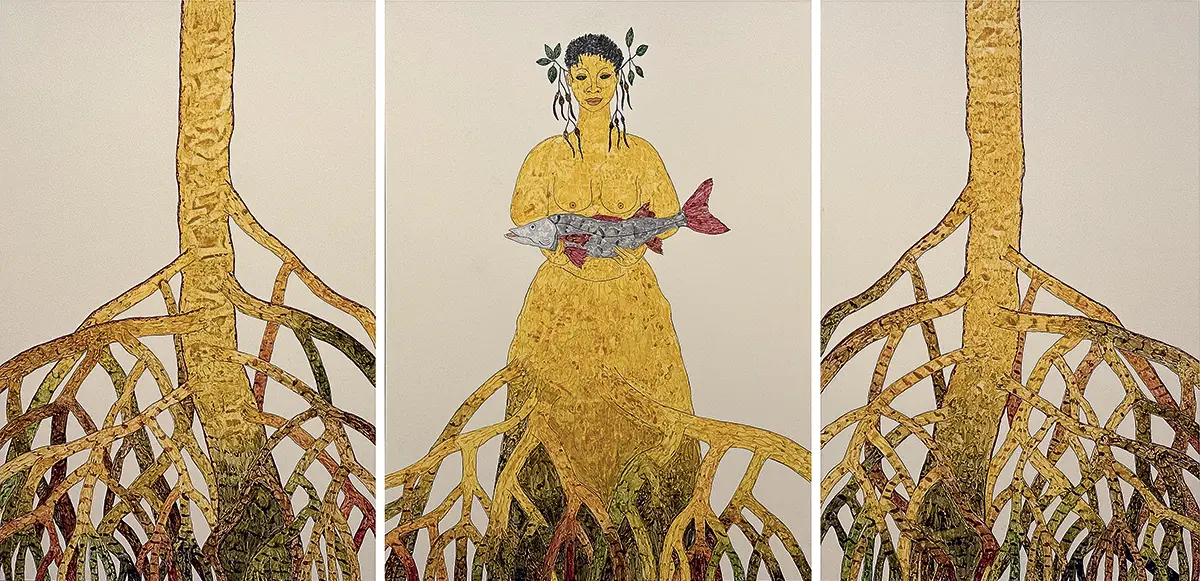
Rosana Paulino’s wonderful paintings confront the violence of racialized female body stereotypes, imagining natural body-beings that construct other archetypes and reclaim expropriated affections and psyches. The memories of Black women’s resistance take shape and are made manifest in the choreographies of the impossible. Bodies merge with plants and animals, rooting themselves in crops to absorb the wisdom entangled in deep ancestry. Emerging as totems of rituals, these figures draw from Afro-Brazilian religions, connecting with the Afro-diaspora and allowing exchanges between worlds.
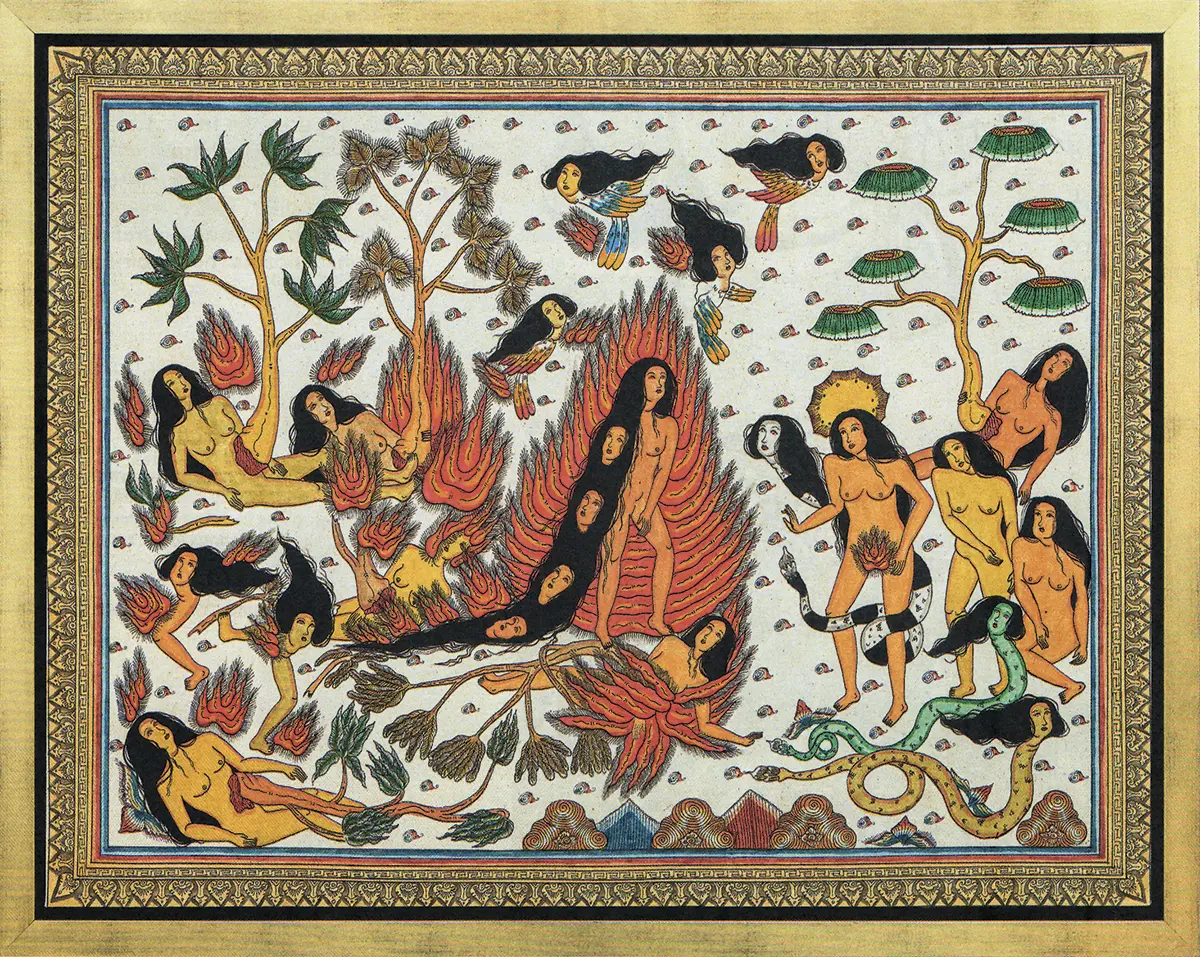
In Citra Sasmita’s delicate installation, following the centuries-old Kamasan painting style of Bali, but reworked in a contemporary language small figures, mythological women, muses, goddesses and creatures that are half human and half beasts come to life in complex choreographies. An ancestral and contemporary dance takes place between the undulating forms of the fabrics in space and the hybrid bodies that inhabit them.
Beings in Wifredo Lam’s paintings evoke the forces of the orixás. Human, animal, and plantlike hybrid forms generate a decolonial force rooted in the environment. Lam’s work delves into changing nature, ontological intersections, and passages between material and immaterial worlds.
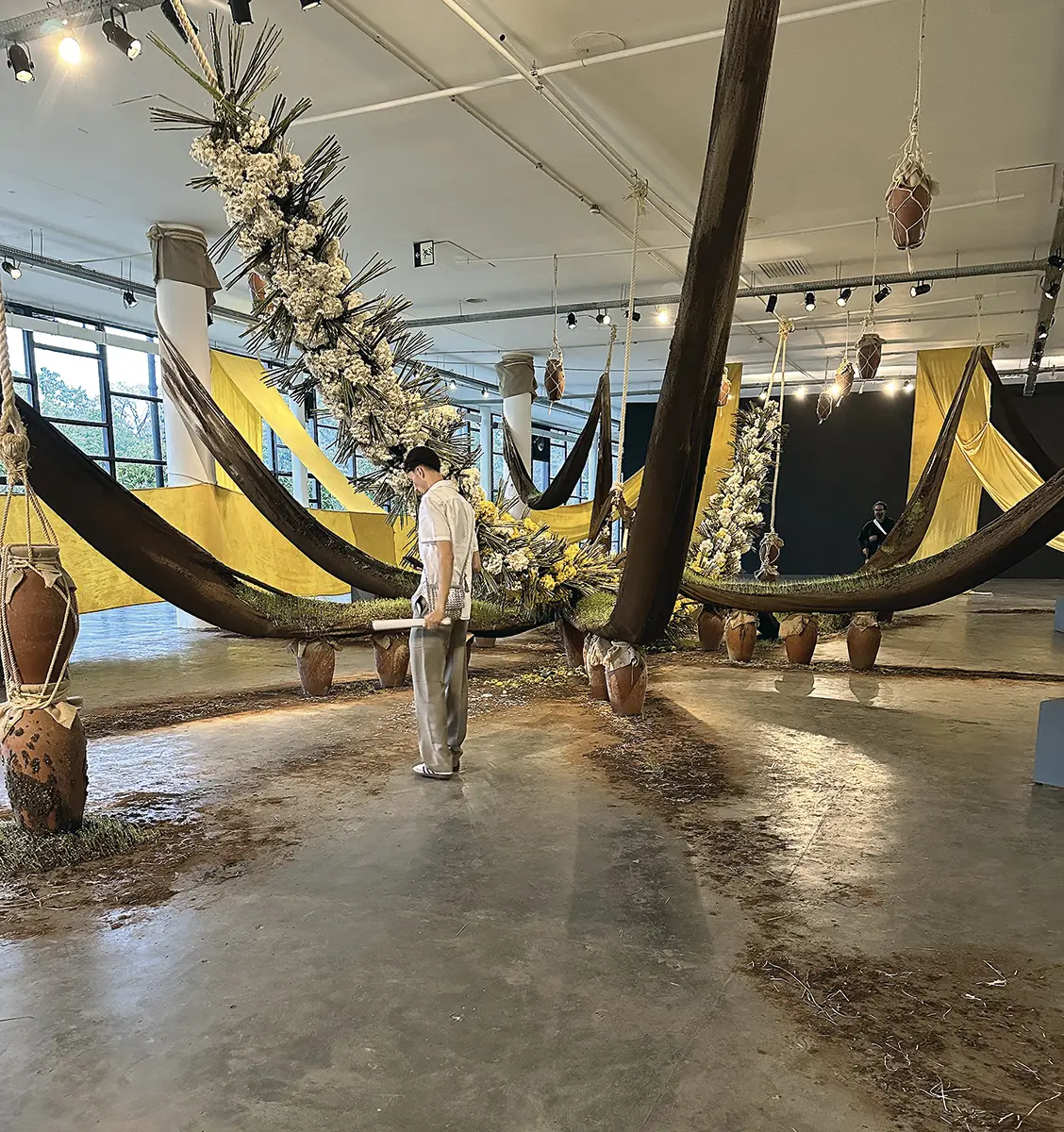
We enter this very interstice with Daniel Lie’s installation-entity, challenging notions of temporality through processes of degradation/transformation of the organic materials it comprises. Lie creates a space where the protagonists are the effects of time passing on materials and the eventual generation of new lives derived from relationships between organic agents. Sinuous earthly forms full of life draw in space a natural entity that seems to grow from the center outward. The forms of matter become a totem of uncontrollable possibilities.
And a form, again the spiral, is the image that opens The Living and The Dead Ensemble’s film. The creative process of this transnational collective is based in part on travel. Haiti-France, forest-beach, past-future, revolution-crisis; poetry, performance, cinema, music, and theater, merge with variable and blurred intensities. The spiral evokes ghosts, also immersing us in that liminal space between the living and the dead. After this displacement between worlds, temporalities, and countries, the music and dance performed by the collective summon the body to burn and invite us to glimpse (im)possible utopias in the flesh of these works.
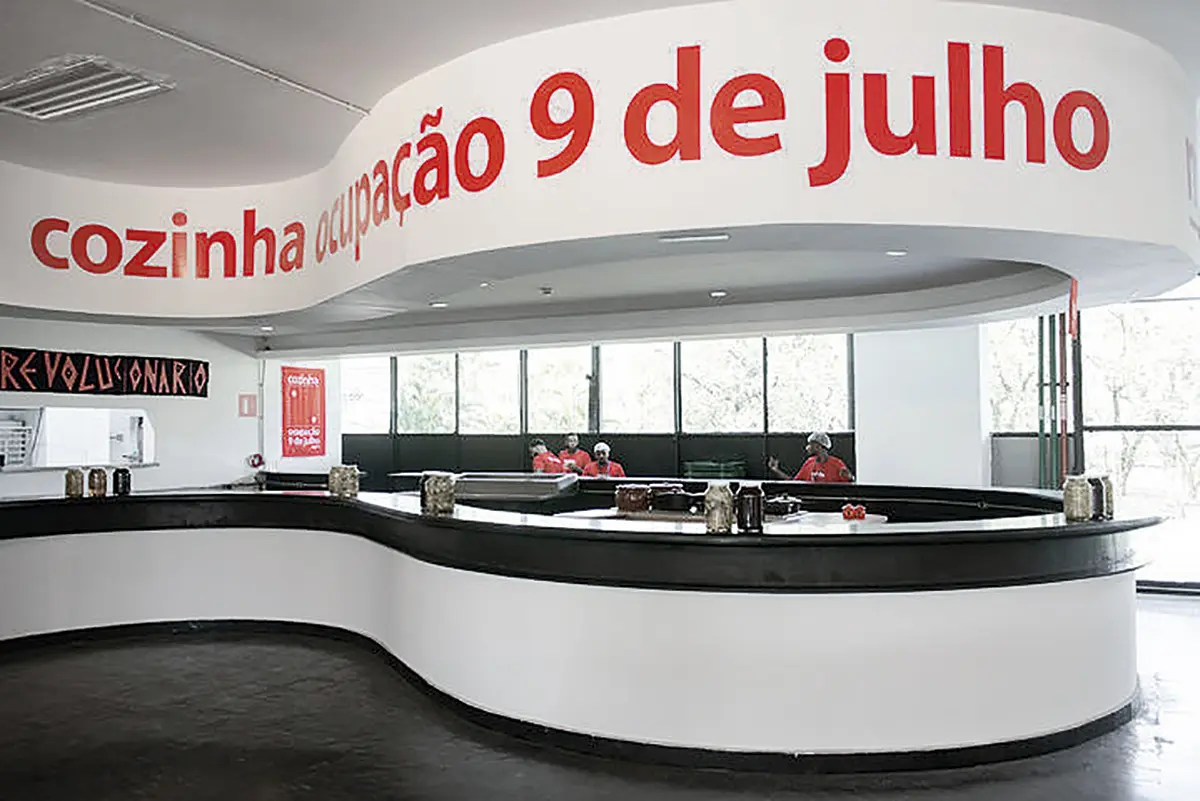
The biennial also hosts various collective resistance projects that unfold in different temporalities, formats, and covenants. Structures that work and imagine utopias in the day to day of their practices. Life’s resilience against the onslaughts of capital. For example, Cozinha de la Ocupação 9 de Julho, born from a building occupied by almost five hundred people from the Movimento dos Sem Teto do Centro - MSTC takes care of feeding visitors and workers at the event; Quilombo Cafundó, an Afro-descendant rural community established by Joaquim Congo and Ricarda on the lands they inherited after liberation from slavery; the Archivo de la Memoria Trans, created in Argentina and seeking to protect, build, and recover memories of the trans community through photographs, videos, and newspaper and magazine clippings; or the Sauna Lésbica, a collective movement that celebrates the affections of Black lesbians and zapatonas, created a pleasurable, safe, and provocative space to experience politics, spirituality, and the profane.
This biennial is offering an amalgamation of possibilities to imagine the impossible. The encounter with powerful works, as diverse as they are consistent and accurate, animates and ignites the conditions that disturb the usual narrative. It is surprising how, despite being a project with a multitude of interwoven questions, rather than a central concept, it is remarkably forceful and coherent. Bodies, gestures, sounds, movements, turns, counter-turns, contortions, and confrontations emerging from Black and indigenous ancestries, of the Atlantic crossing of what is old and what is to come, are agglutinated in each curve that we draw when walking through the exhibition.
Exiting the pavilion, the energy accumulated in each step and every gaze profoundly touches our very core. In tune with the times we live in and the place it inhabits, this exhibition challenges the foundations of the Western world from its very cracks, showing how they are becoming deeper and deeper every day, while at the same time those choreographies that seemed impossible, but that can lead us to unimaginable forms of expression, are being born out of them.
JUAN CANELA