Under the title “Como la liebre en el páramo” (Like a Hare in a Wasteland), the XI Lanzarote Art Biennial has been taking place since September 1, 2022 until May 20, 2023. During these nine months, the program has been divided into three time periods and has included solo and group shows, screenings, lectures, round tables, performances, and actions carried out in different neighborhoods on the island.
Since its first edition, in 2001, which marked the 25th anniversary of the Museo Internacional de Arte Contemporáneo-Castillo de San José (MIAC), the biennial’s purpose has been to catalyze contemporary artistic creations in all its modalities.
Following this premise, the XI Lanzarote Art Biennial considers culture as an intangible good capable of transforming social sensitivities, and has intended to educate, explore, and preserve the memory of our times, emphasizing dissident practices around migratory flows, historical memory, and women artists: the three central axes of its programming.
This edition brought together a total of twenty-nine relevant Spanish and international artists—from Mexico, Colombia, Ecuador, Venezuela, Cuba, Chile, Argentina, United States, Morocco, Romania, United Kingdom, and Iran—who strengthened their projects with their social awareness, allowing the public to make new interpretations and develop diverse thought processes in keeping with the curatorial premise.
Starting from the concept of territory as a space for reflection, the biennial focused on Lanzarote’s own society and addressed relevant social, political, and cultural issues, diversifying its offer with works by Latin American artists, who this year accounted for a third of the total output.
As stated by its artistic director, Adonay Bermúdez: “The XI Lanzarote Art Biennial cannot be understood without the presence of Latin America,” adding that this edition “sustains that true culture is democratic, inclusive, participatory and polyphonic; recognizes actual conflicts and challenges, safeguards diversity, and guarantees equality between individuals.” During its third phase, the biennial accorded a reverential place to women, who account for 58% of the participating artists.
The biennial’s first phase, held from September 1 to November 7, 2022, focused on historical memory. The exhibition entitled “Bienes ocultos” (Hidden Assets) and curated by Carlos Delgado Mayordomo and Adonay Bermúdez, was hosted by the MIAC. According to the curators, “the works here not only try to reveal the structures of power, but also art’s potential to represent the gains generated by the critical and symbolic analysis of these structures.”
The sharp curatorial text—“Hidden Goods. A Critique of Critical Art”—states that in a globalized and monopolized world, uncertainty is a condition that also affects the cultural industry, making it an accomplice capable of devouring the critical apparatus, and engulfing and dissolving dissidence. The authors argue that we are currently facing “the domestication of artworks that institutions consider potentially subversive” to the detriment of the emancipatory condition that the avant-garde movements began to place on art.
Finally, “Hidden Assets” ratified the inherent political dimension of art and enhanced its subversive, critical, and activist character through the works on display: a testament to the enormous impact that culture can have on citizens.
The works revolved around topics such as borders, the decline of democracy, migratory pressures, and femicides. They highlighted the ability to resignify historical narratives and the need to filter them through present trans-temporalities so as to glimpse possible futures.
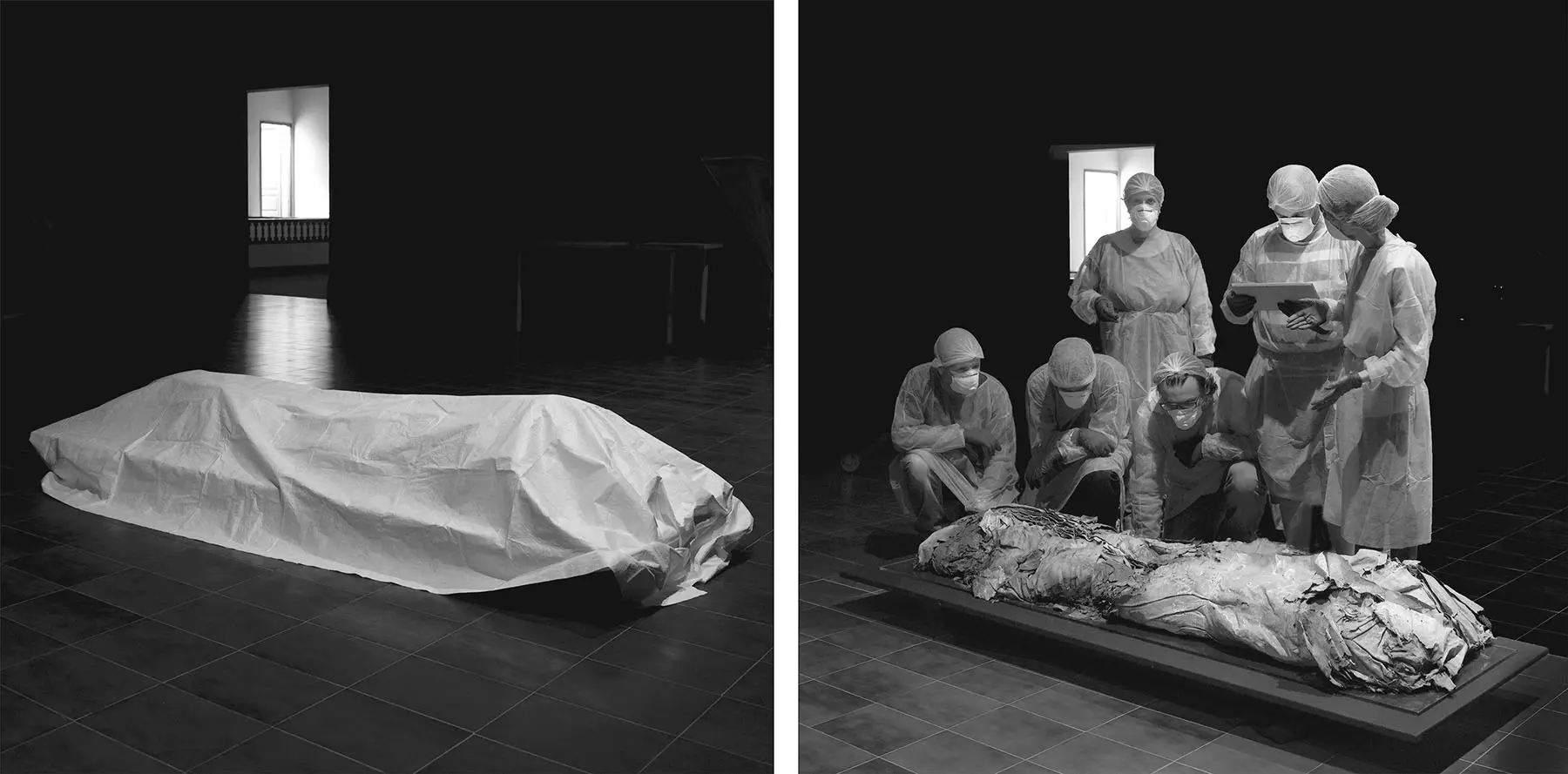
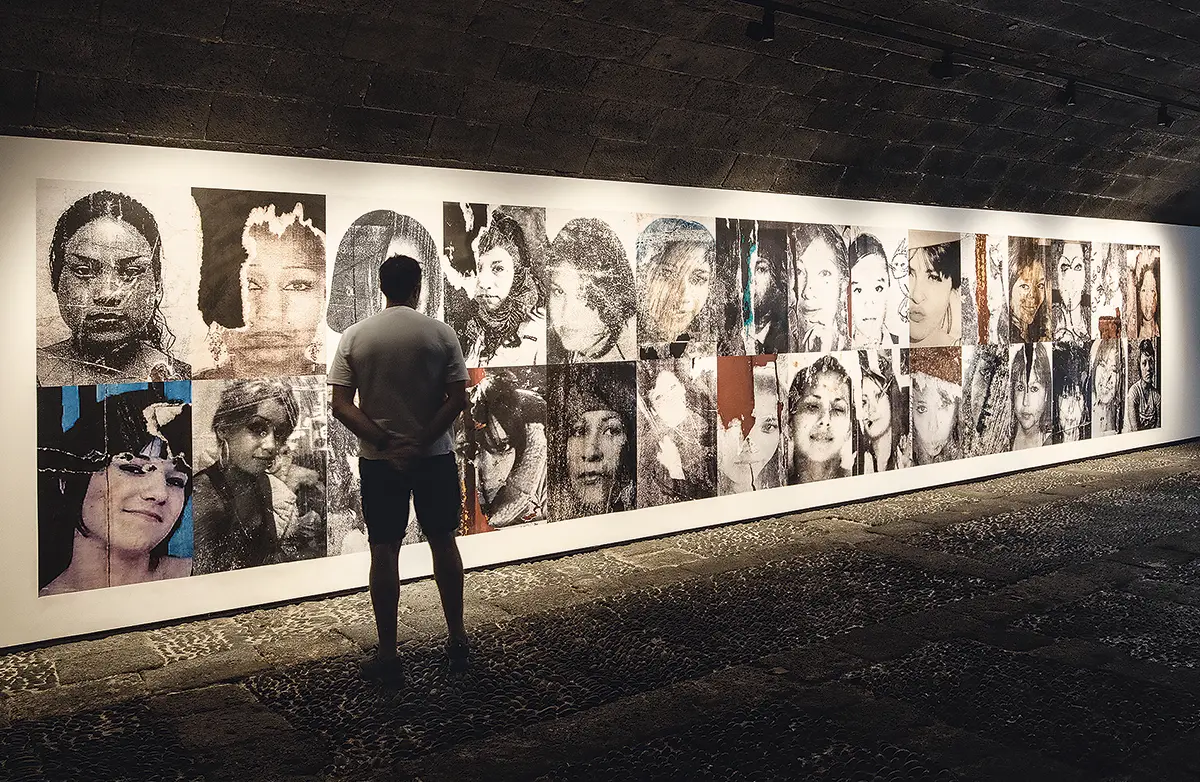
Some pieces worth mentioning are Santiago Sierra’s (Spain, 1966) video of 3,000 North Africans and sub-Saharan immigrants hired to dig their own symbolical graves: a real slap across the Mediterranean; Homage to Edvard Munch and All My Dead Children (1998), a heartbreaking autobiographical film by Tracey Emin (United Kingdom, 1963); the photographic diptych On Speculation (2016) by Teresa Correa (Spain, 1961), which points to the need to rethink our concept of memory; the installation Arribar (Arrival, 2022) by Rigoberto Camacho (Spain, 1985), featuring the word ‘migrant’ written in the naval code: as an indiscernible entity, as a problem; Isidro López Aparicio’s (Spain, 1967) actions, intensified by hanging upside down across several continents to give visibility to the victims of landmines; the documented action A Mile of Crosses on the Pavement (1979) by Lotty Rosenfeld (Chile, 1943-2020), which dislocates the principles of urban-macro rigor; Six Cubic Meters of Organic Matter (2009), by Enrique Jezik (Argentina, 1961), denouncing the crude violence of Ciudad Juárez; Julieta Hanono’s (Argentina, 1963) symbolic neon piece Disparaître (To Disappear, 2012); the impressive installation Pesquisas (Inquiries, 2016) by Teresa Margolles (Mexico, 1963), featuring photographic portraits of missing women, which under the harsh urban sun have suffered the harrowing passage of time; and The History of History (2006) by Mounir Fatmi (Morocco, 1970).
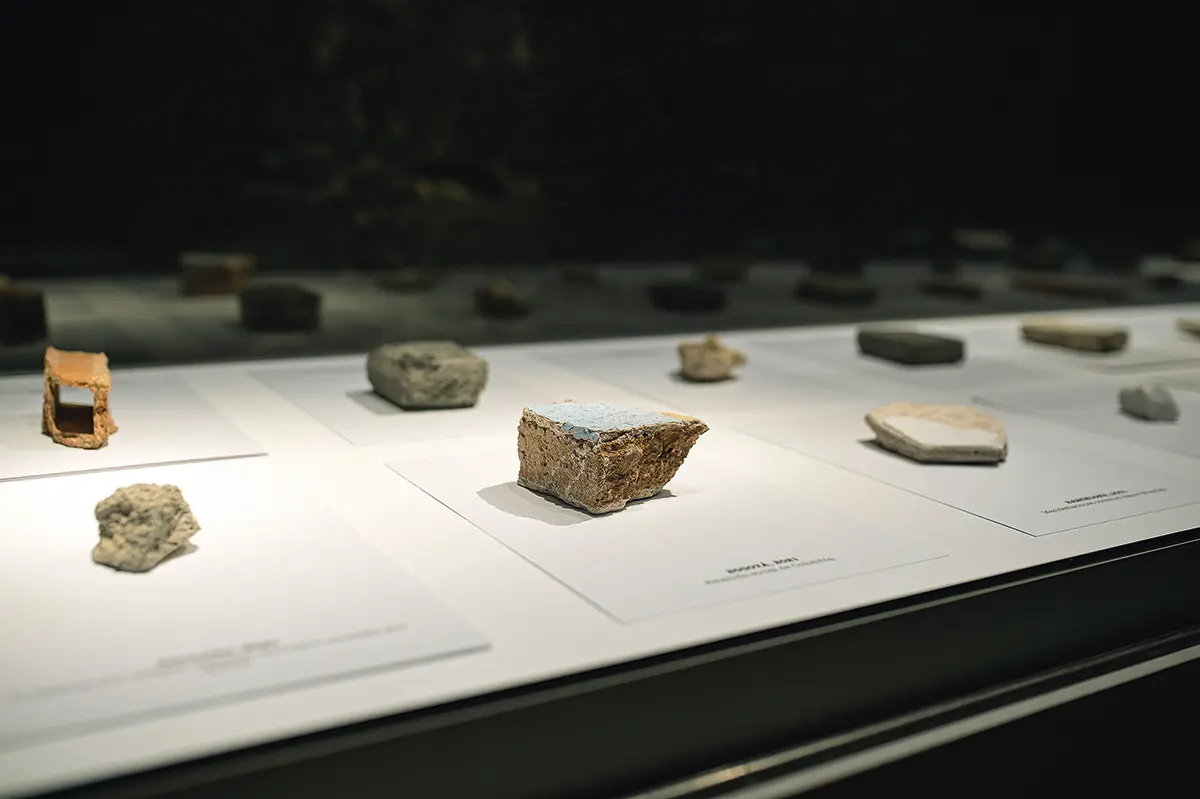
Another highlight in this first phase was Avelino Sala’s (Spain, 1972) solo show “Museo Arqueológico de la Revuelta” in MIAC’s Pancho Lasso Hall. With a gesture both ironic and forceful, the artist arranged, in a classic showcase, a collection of stones gathered from different protests around the world, each with a label indicating their origin. They were assembled in an irregular pattern to symbolize resistance in its most plural sense, since it would be impossible to discern where these stones were vigorously thrown by just looking at them without reading the labels.
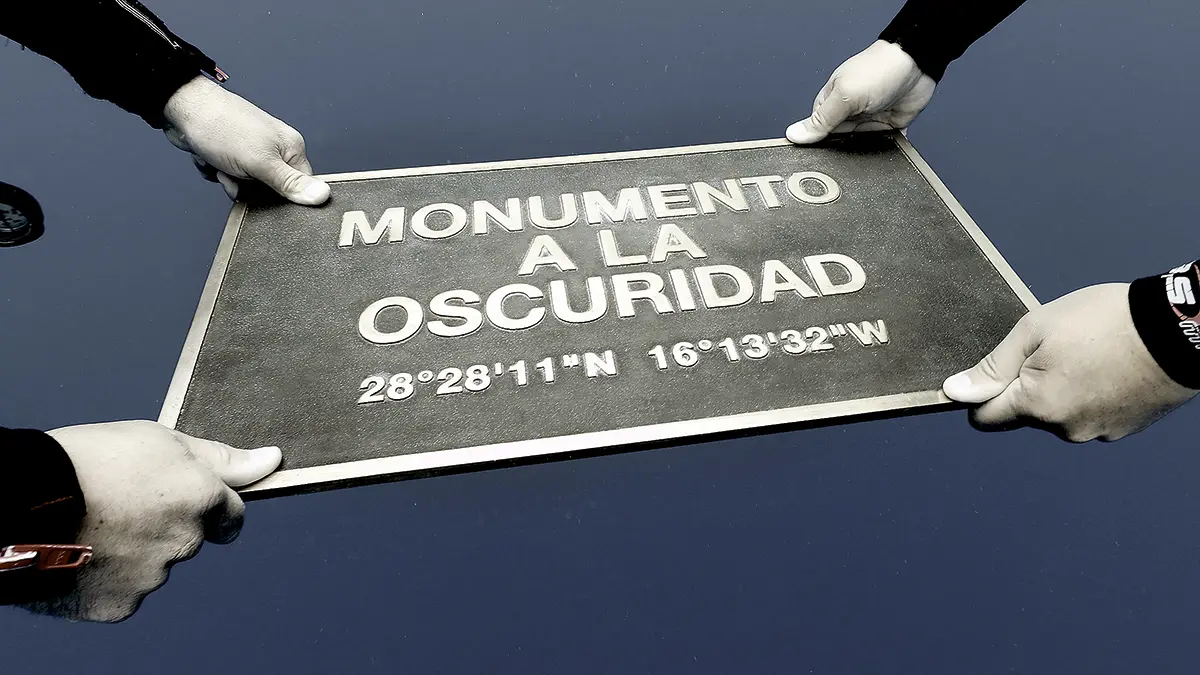
A third exhibition, “Monument to Darkness,” (Monumento a la oscuridad) was the collaborative effort of Eugenio Merino (Spain, 1975) and Miguel G. Morales (Spain, 1978) at the La Ermita de Tías Exhibition Hall, open to the public from September 3 to October 15, 2022. After a series of local investigations related to the theme of historical memory, the show produced video works, archival material, and a commemorative plaque: a tribute to the hundreds of missing persons in the Canary Islands during the Civil War and the Franco regime, which took as its central figure the Tenerife poet Domingo López Torres. The coordinates 28°28’11”N 16°13’32”W fix the point where his murder was committed, precisely where a bronze plaque (with the text “Monument to Darkness”) was placed with the help of professional divers. Its weight is equivalent to the sack where the victims were put, along with heavy stones, and then drowned. This work is a memorial, as well as a way to shed light on countless anonymous stories.
After a successful start came the second phase of the XI Lanzarote Biennial, which addressed issues related to migratory movements and borders, with a strong Latin American inflection.
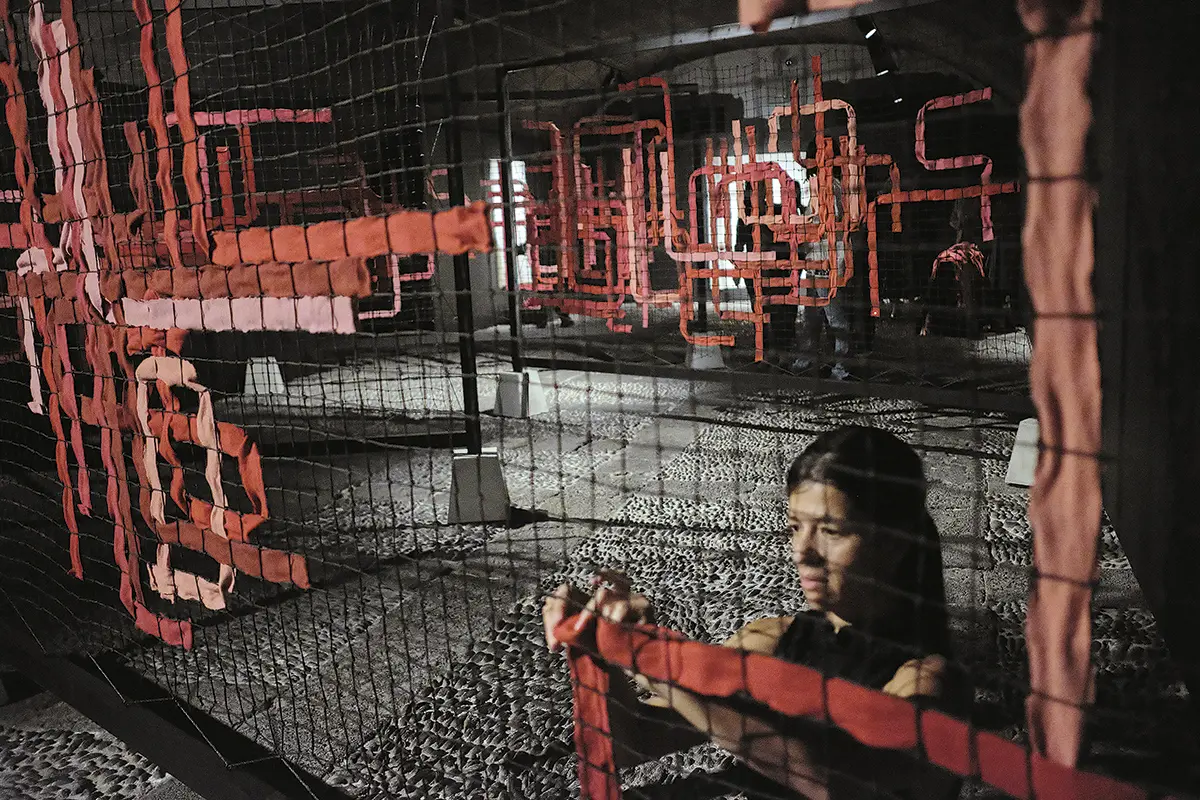
Tania Candiani (Mexico, 1974) presented “Los ojos bajo la sombra” (Eyes under the Shadow), her first solo show in Spain, hosted by the MIAC from November 17, 2022 to January 31, 2023. This important project began with Camouflage (2020): an interpretation of Dorothea Lange’s (1942) photographs of Japanese-American women imprisoned in concentration camps and forced to weave enormous camouflage nets. For the Lanzarote Biennial, Candiani invited women from the Canary Islands to recreate—with strips of cloth dyed with the red color produced by the cochineal insect—the enormous nets woven by those female prisoners. The work highlights labor force and the impact that networks of migrants exert on a given territory.
Carlos Martiel’s (Cuba, 1989) solo show, “The Mediterranean,” also at the MIAC, featured the audiovisual record of the performance where the artist got inside of a container that gradually filled up with water from the Mediterranean Sea. This action symbolizes the courage of immigrants who throw themselves into the sea in search of a better future.
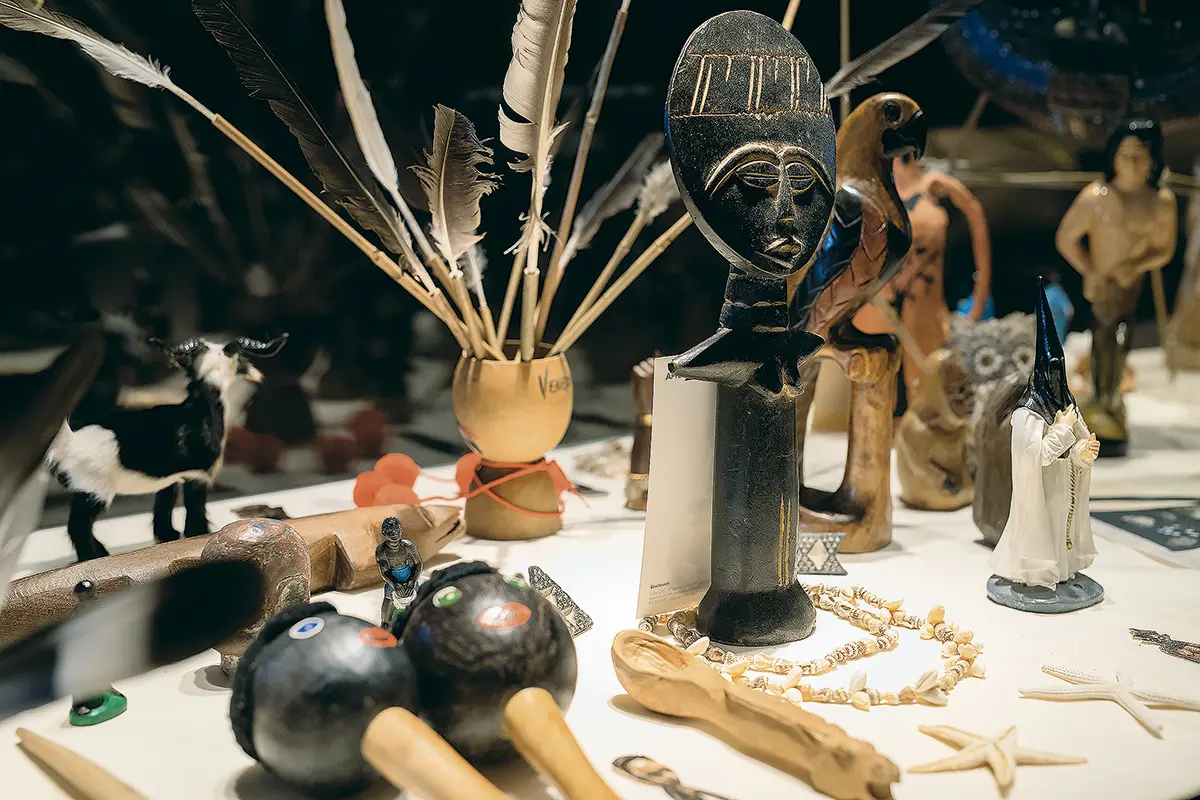
Marco Montiel-Soto (Venezuela, 1976) presented two works that interacted with each other: Tratado de maracas negras (Black Maracas Treatise, video, 13 min., 2022) and the installation Paralelismo tropical de la ausencia (Tropical Parallels of Absence, 2022), both displayed at Pancho Lasso Hall from November 17, 2022 to January 31, 2023.
In the video, the artist is at Teseguite, a village founded by freedpeople in Lanzarote (located 5 km east from Teguise, the old capital), playing maracas that mimic human beings, which he acquired in Colombia. This ceremonial sound was heard throughout the space where the installation stood. Tropical Parallels of Absence consisted of a votive display case with a mummy—a ritual practiced by the Guanches, the ancient aborigines of Tenerife—surrounded by different objects shared by the cultures of three continents. These works are the result of a series of field investigations that motivated Marco Montiel-Soto to become interested in the long migratory relationship between the Canary Islands and Venezuela.
In the same ritual vein, Marius Ionut Scarlat (Romania, 1993) presented Three Days, Eight Days, Forty Days, from January 4 to 15, at La Casa Amarilla. The Romanian artist focused on the home as symbolic space, to reflect on how emotions are channeled during orthodox funerals in his own culture.
Ximena Labra (Mexico, 1972) presented Tlatelolco Public Space Odyssey between November 18, 2022 and March 1, 2023, at CIC El Almacén, in collaboration with MUAC (Museo Universitario de Arte Contemporáneo de México). Faced with the frustrating degradation of the monument to the victims of Tlatelolco in 1968, the artist made replicas and placed them in different contexts to question the transcendence of urban art.
The project This Story Is Not Available, by Ars Magna Cultural and Artistic Association is an open, documentary, “pseudo-archive” based on text, still images, and sound, that questions the ways in which events and news quickly lose validity.
Six months after the start of the biennial, the third thematic axis was officially announced: “Women are the absolute protagonists of the XI Lanzarote Art Biennial’s final stretch.” Three solo shows —“Melons,” “Untitled,” and “A Kidnapped Motherhood”— were inaugurated, as well as the group show “Las palabras que aún no poseemos” (The Words We Don’t Yet Possess).
From March 3 until May 6, 2023, the CIC El Almacén is projecting Melons, a video by Patty Chang (USA, 1972): a raw reflection by means of a disturbing ritual that enunciates the emotional emptiness caused by the death of the artist’s aunt due to breast cancer.
“Untitled” by Jenny Jaramillo (Ecuador, 1966) explores the critical potential of performance art and the intrinsic nature of the medium: from the body’s actions to the state of being observed.
“The Words We Still Don’t Possess”— at CIC El Almacén’s Cubo Hall from March 2 to May 6, 2023, with the support of Nueva Colección Pilar Citoler, Contemporánea, and MACBA—highlights the transforming power of the image to raise awareness and denounce issues such as racism, sexism, and the canonical concept of beauty. Curated by Semíramis González, it includes works by Carmela García (Spain, 1964), Marina Vargas (Spain, 1980), Martha Rosler (USA, 1943), Julia Galán (Spain, 1963), Doris Salcedo (Colombia, 1958), Agnes Essonti (Spain, 1996), and Shadi Ghadirian (Iran, 1974).
Finally, Mónica Mayer (Mexico, 1954) is presenting at the MIAC, from March 3 to May 6, 2023, the solo show “A Kidnapped Maternity,” which compiles myriad opinions and experiences by feminist artists and activists around the concept of motherhood.
One of the most outstanding performances was La bordadora (The Embroiderer) by Costa Badía (Spain, 1980) at the CIC El Almacén, with the support of the Museo Nacional Thyssen-Bornemisza. The artist embodied the daily difficulties faced by women with disabilities.
In addition, on March 21, Semíramis González moderated the round table “We Are Not Just Bodies: Breast Cancer and Breaking the Patriarchal Canon in Art,” with Marina Vargas and Teresa Correa.
In the words of the artistic director: “We are in a position to question reality, to transform it, to propose other narratives that have been mistreated, underrepresented, or rendered invisible; to propose a kinder, fairer, more inclusive and, above all, more feminist world.”
* Photo: Bruto Studio.