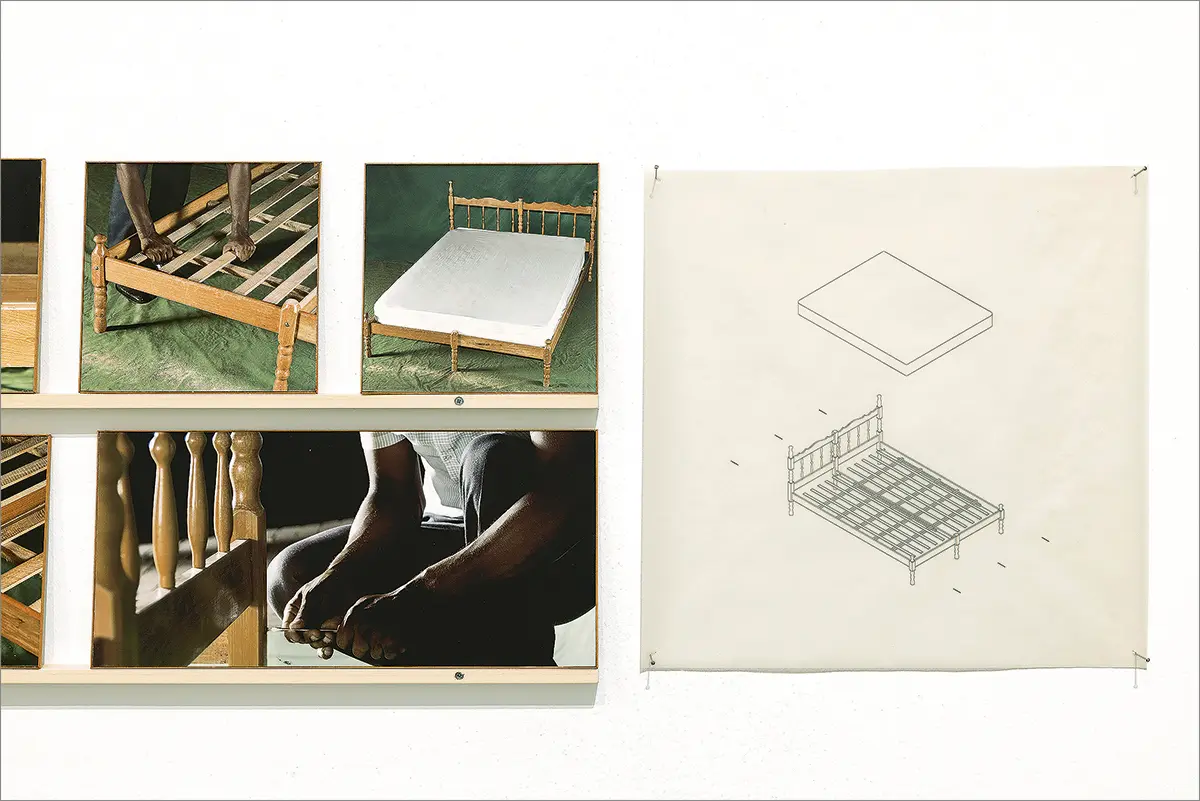
A series of small-scale images depict two young men working. They appear to be carpenters, or if not, it is clear they know how to handle woodwork. The scene is ambiguous, despite the linearity of the narrative itself. The two men are transforming two generic single beds into a double one. We are not provided with any information on the reasons why, but we get ample visual documentation on the process, with close ups of the men’s hands working the necessary tools. It is clear they are exerting themselves in order to reach their goal. A green backdrop frames the transformation and devoids the scene of any context which could further frame the narrative. Additional blueprints of the customization process, reminiscent of furniture manuals or DIY guides, intersperse the visual narrative and rhetorically suggest to the viewer that they, if willing, could also turn two small beds into a large one. While the reasons for such an effort remain unclear and ambiguous, one cannot help considering the possibility of a relationship between the two men and their need for and construction of a space for love, desire and intimacy. The piece is suggestively titled 2 em 1 (2 in 1, 2010) and is an early work of Recife-based, Brazilian artist Jonathas de Andrade (Maceió, 1982).
Jonathas de Andrade’s practice is deeply rooted in his country’s social and political history, as well as its contemporary realities. His ongoing reflection has been speculating on the shortcomings of late modernity’s utopias, ideals and world visions, especially in the Latin American context, and more specifically in Northeast Brazil, where the artist is from and where he lives and works. The resulting works tend to conjure feelings and ideas that oscillate between nostalgia, eroticism and historical and political critique in order to subjectively address themes such as class and race, labour and identity, almost exclusively through the representation of the male body.
Coming of age as an adult, I remember feeling the terror that came with realizing I was gay. The presence of my body in public space being constantly scrutinized and my desire constantly policed. Eventually, one learns strategies in order to protect oneself, to keep oneself safe from those who wanted to do one harm, while still finding ways to be able to express desire, intimacy, love and care. Walking down the street our eyes would briefly meet, we would look into each other and we would just know. A connection was instantly made. A sense of belonging, of community was established. Riding the metro, our eyes would lock. Our body language would immediately change, a simultaneous loosening and tensing up of our bodies. Undressing in the locker room of the swimming pool before a swimming lesson we would inspect each other’s naked bodies. Nothing was ever said, no words were spoken, just the language of looking and being looked at. And we all were fluent in it.
If I mention these many instances in which, as a queer male, looking was inextricably tied to a very coded way of expressing both belonging and desire, in public space, on the streets and squares, on public transit, is because such a gaze can be found in many of Jonathas de Andrade’s works, from early works such as 2 em 1 (2 in 1) to recent ones, such as Olho-Faísca (Eye—Spark, 2023). It is an ambiguous gaze, both explicit and unclear, fictional and factual, personal and romanticised. Even though the presence of the male body, and a homoerotic gaze directed towards it, has taken centre stage in de Andrade’s practice throughout the years, it has never been perceived as a research or a topic in and of itself, but rather as a tool to inquire into other issues. I have always found that surprising. Looking at men, for de Andrade, has always felt uncomfortable, somehow off-limits. The reason for that wasn’t just personal, but could also be linked to core questions surrounding the founding of Brazil as a country and the traditional Brazilian family as well as the moral principles and hypocrisies underlying those things, and that beyond that they could be linked to the legacy of colonialism in its political, social and racial dimensions. Immersing himself in these discussions driven by his own socially marginalised form of desire felt radical, and it complicated his own personal narrative by putting it in dialogue with various aspects of Brazilian history.
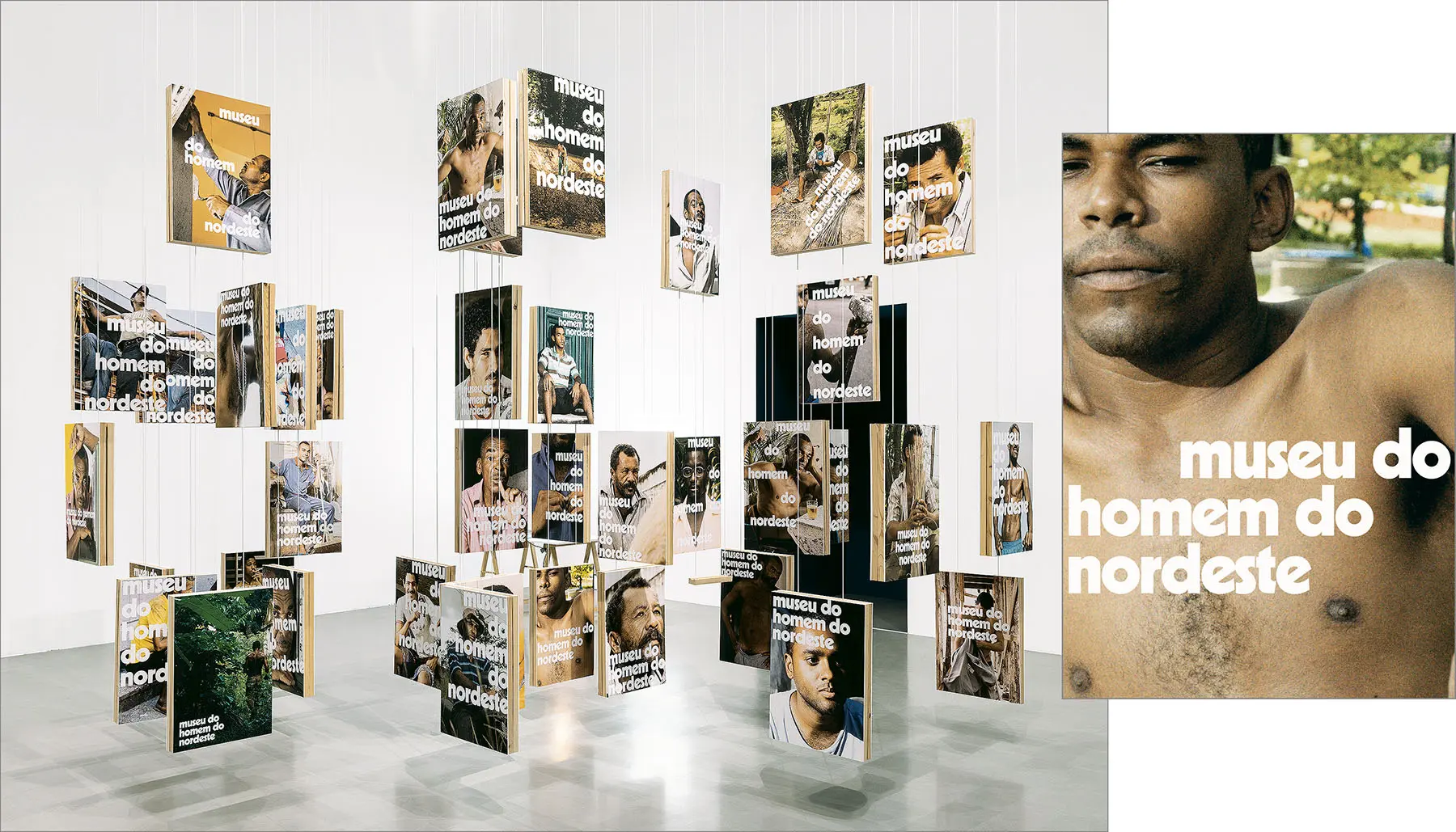
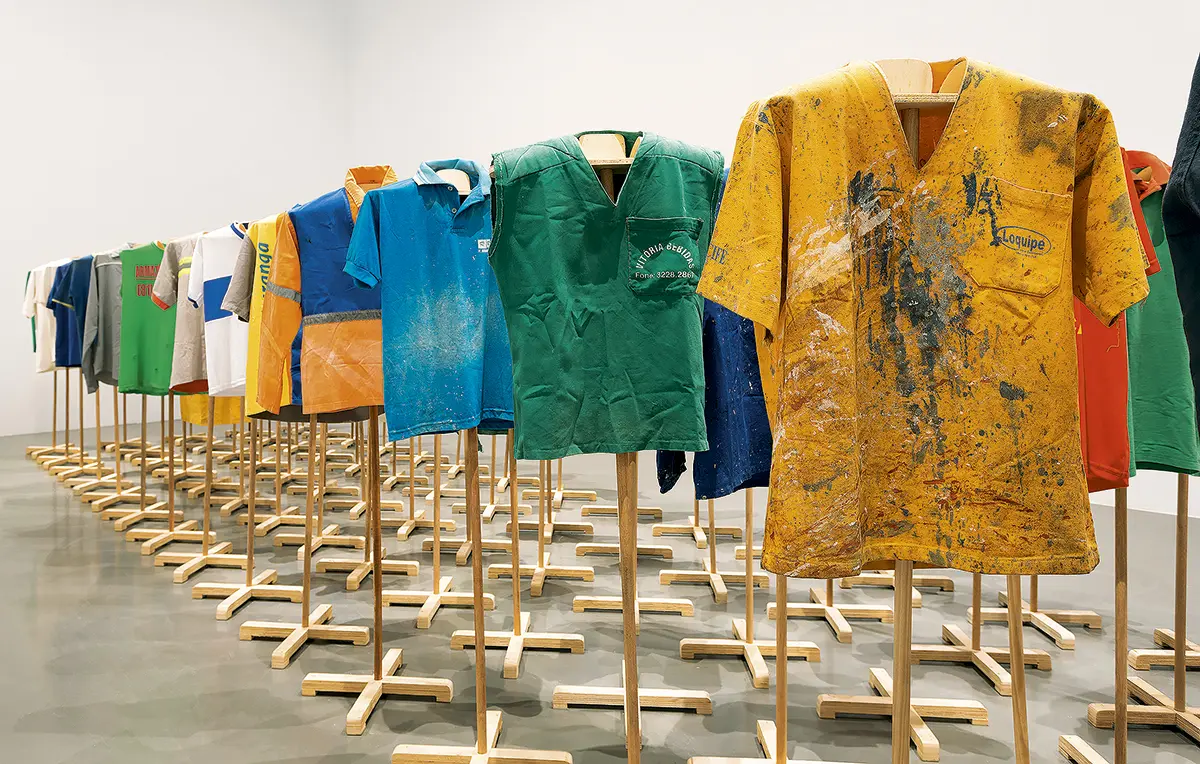
But let us focus on the homoerotic gaze: while the street is a public space, it does not belong to everyone in the same way. It is where clashes and quarrels take place. The street is also, and maybe more importantly, a place for misplaced desire. De Andrade has always felt most enthralled by those glances that seemed to challenge him, to pose a threat. Holding someone’s gaze even for three seconds is tricky. There’s a certain risk involved, a kind of embarrassment one has to overcome, the danger of an overture or a homophobic response, be it verbal or physical. Thinking about and observing these things made de Andrade realise how much his body grew into itself by learning to behave in a set way, working within particular parameters and ways of moving, and was inhibited and reserved, not wholly itself. It took a long time to unlearn all of that and teach it confidence and unreserved openness, challenge his own unconscious boundaries and social inhibitions, and put himself on the line in order to better understand what it means to be himself. Many of his projects dealt with things that made him uncomfortable, forcing him to find courage where he’d lacked them previously. They are playful excuses to look at and connect with men and their worlds, worlds he existed outside of, even if he did have some notion of them; and as part of that process enter into contact with so many other ideas that want challenging, looking at from another angle, reframing. Cartazes para o Museu do Homem do Nordeste (Posters for the Museum of the North-eastern Man, 2013), for instance, arose from this way of thinking. De Andrade wanted to use the provocation of the ‘eye-to-eye’ encounter as a starting point, using images of bodies and gazes filled with desire to create powerful mock posters for the museum Gilberto Freyre founded in the seventies. The goal was less about making a better version of the museum than to expose its own contradictions: the sexism in the name (sexism itself being a common stereotype about Northeast Brazil), the notion of identity within a chauvinistic culture, and how the homoerotic gaze might be at once seductive, hypnotic, uncomfortable, and aberrant, a gaze “out of place” vis-à-vis institutional image-making and stereotype-ridden discourse. Similarly, in Suar a camisa (Working up a Sweat, 2014) De Andrade also took to the streets of his hometown Recife and relied on chance street encounters with men. The piece presents a collection of 120 sweaty work shirts the artist got from workers he met randomly on the street, as they were about to start or finish work. Oftentimes exchanged with his own, each shirt, and the collection as a whole, is permanently imprinted with the body fluids, the smells and the remnants of the men’s bodies after a day of work. While the collection depicts an accurate image of the working class men in Recife, the shirts can’t avoid suggesting, in all their sweat, the tension inherent to a specific sense of masculinity and manhood and testify to an exchange loaded with coded meanings, violence and desire, fragility and exposure.
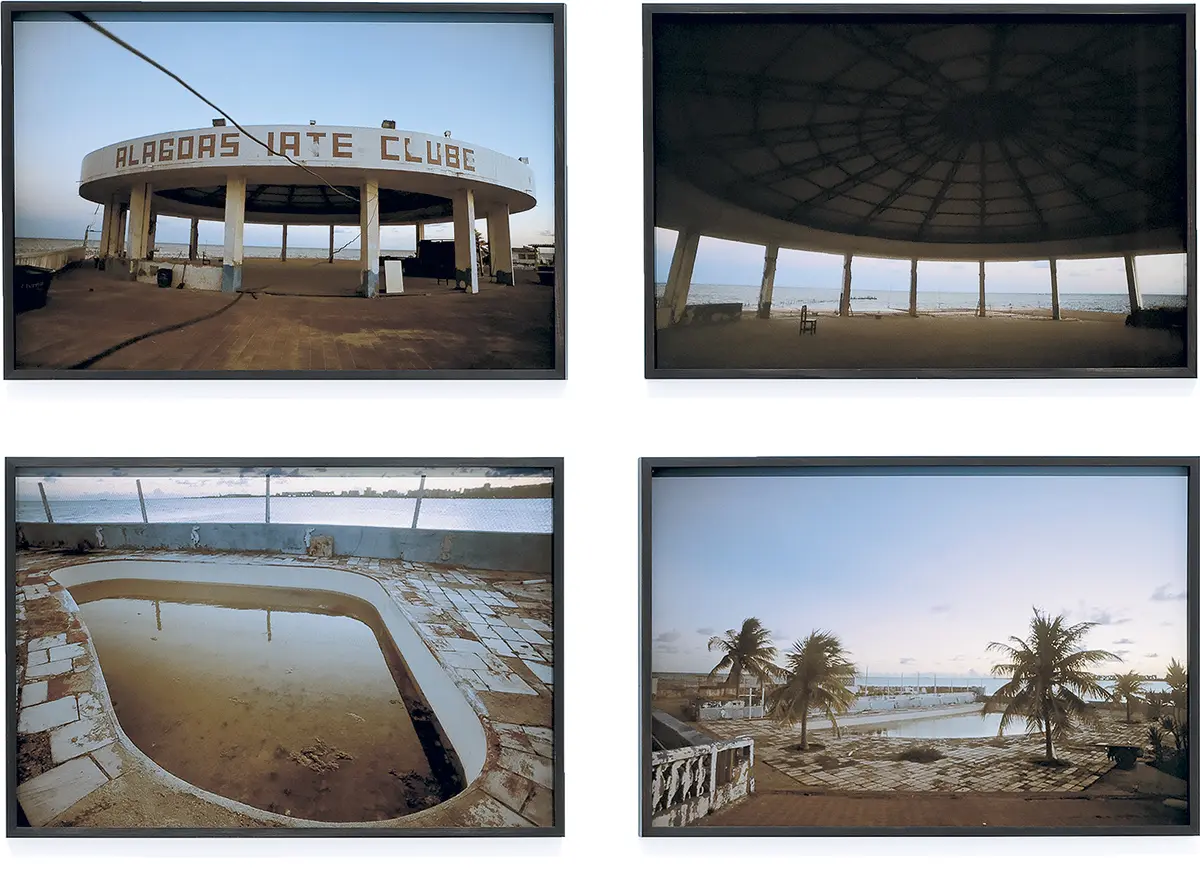
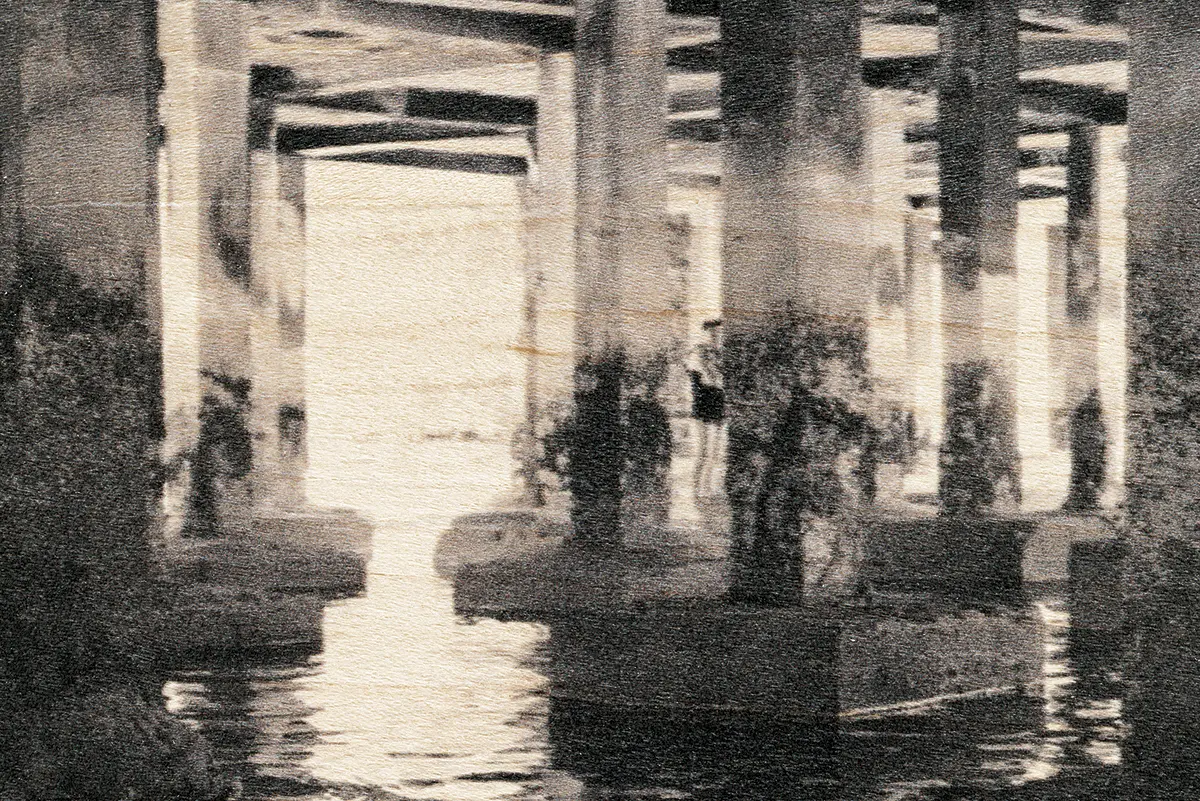
The streets are not, however the only public spaces in which homoerotic desire manifests itself. While the streets are prone to misplaced desire, there are public places in which looking is a much safer activity. Ruins and abandoned buildings tend to be places in which men seek each other. These cruising spots are clandestine, underground and, most importantly, safe spaces in which exchanges occur beyond, or despite, categories such as class or education. In the early work O Clube (The Club, 2010), de Andrade tells about a yacht club which hosted in its premises the local high society of the time, while underneath it fisherman searched for fish and men used it as a meeting point for casual sex encounters. The title of each of the four images that compose O Clube (The Club) is a reworked excerpt of Reinaldo Arena’s acclaimed autobiography Before Night Falls, further exploring the Yacht Club’s clandestine and underground activities. Maré (Tide, 2014), on the other hand, is a tide chart documenting the ebb and flow of the tides for a month, an attempt to quantify the manifestations of the desire felt by all the men that met at the same abandoned building. The piece keeps track of the number of men who used the derelict building by the sea for furtive sexual encounters, during one moon cycle of 28 days, as if they were responding to the combined pull of the moon, the sea, and their own instincts. Both O Clube (The Club) and Maré (Tide) arose from de Andrade’s fascination with that ruin and how it became both a scenic lookout point and a meeting place. The columns offered surfaces to lean on and hide behind. It became a hideout for petty thieves, somewhere you could smoke weed, but above all, it was a place where men got together for sex.
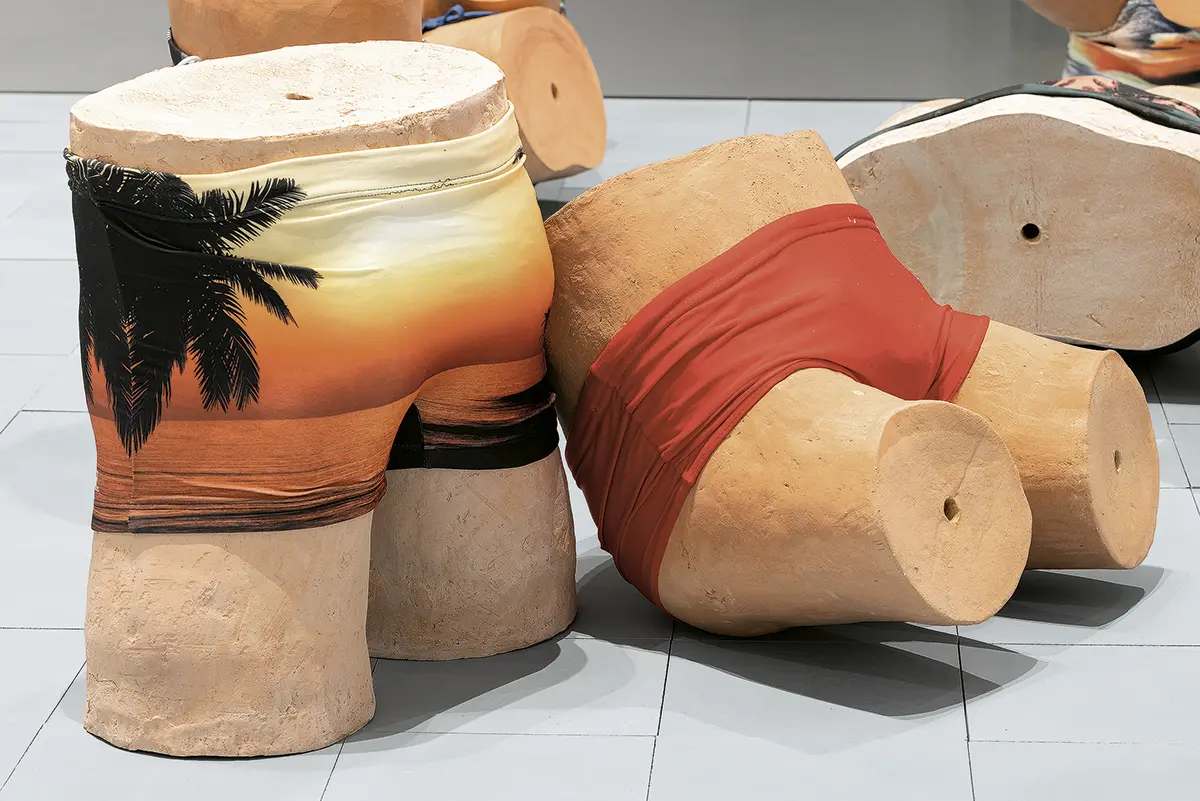
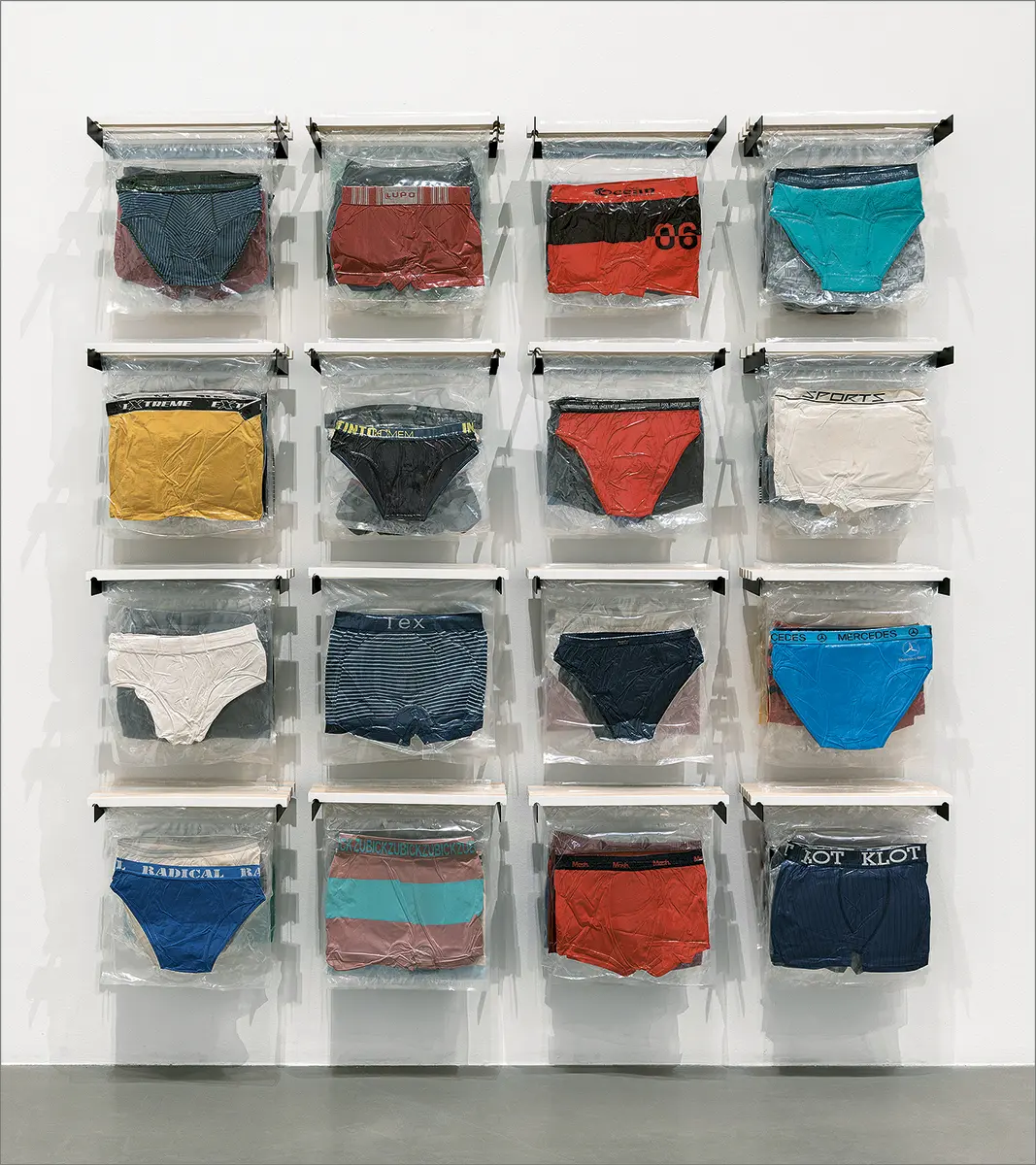
Chance street encounters has been one of de Andrade’s recurring artistic strategies, but not the only one. Collecting and archiving has served throughout his practice as a means to conjure narratives about the world, oneself, and how these two intertwine. The status of these narratives, whether fictional, true accounts, or both, remains intentionally ambiguous and always left to the viewer to make sense of. If in Suar a camisa (Working up a Sweat) the artist collected sweaty shirts of working class men he would engage with on the streets, for Achados e perdidos (Lost and Found), de Andrade collected men’s swimwear that were left or forgotten in the locker rooms of swimming clubs. The once forgotten and then collected speedos were fitted onto clay sculptures of male lower body parts in different positions. These were made by local artisans with whom de Andrade engaged in a discussion riddled with unspoken assumptions about the male body and masculinity. The sculptures were assembled in pairs and groups, sometimes suggesting closeness, other times suggesting explicit sexual encounters. While locker rooms are common places for anonymous male sexual encounters and collecting soiled underwear or sportswear is a frequent fetish, this work seems to signal de Andrade’s willingness to initiate an explicit, and sometimes tender, dialogue around issues of body image, masculinity, love and intimacy in the queer male community. Such a dialogue has continued in a poignant way in Olho—faísca (Eye–Spark, 2023), a series of 68 pairs of used men’s underwear individually vacuum-sealed, displayed in a way that is reminiscent of clothing shops. Belonging to the artist’s lovers over the years, this is probably de Andrade’s most personal collection, and places him in a previously unseen place of self-exposure and fragility, abandoning any ambiguity and signaling his need for connection, closeness and intimacy, while simultaneously allowing him to claim ownership over his own identity as a gay man and his belonging to the queer community.
While many of Jonathas de Andrade’s works revolve around the affirmation of a homoerotic gaze and how it produces desire, they don’t shy away from issues such as labour, class and education. It is by looking at men, by longing for their bodies and their touch, that a very delicate and fragile political position is put forth. Even though the works establish a relation with the men they depict which is predicated on difference, in terms of either class, race or even sexual orientation, it is desire who enables de Andrade to look these men in the eye, and subject himself to their own gaze in return, establishing a charged exchange which is both a place of fragility and exposure, defiance and courage. Who occupies each position remains uncertain and it is in such ambiguity that lies the possibility for de Andrade to trace an earnest commentary on relevant social issues as well as examining the ways in which masculinity is constructed and performed in contemporary Brazil, without ever falling prey to the trappings of cliches such as the rough and rugged, working class men.
* View of the exhibition “Eye – Spark” by Jonathas de Andrade, MAAT – Museum of Art, Architecture and Technology, 2023. Photo: Bruno Lopes. Courtesy of MAAT/EDP Foundation, Alexander and Bonin, Galleria Continua, and Nara Roesler.
LUÍS SILVA