In the last two years, with shows at the Biblioteca Luis Ángel Arango and the Museo de Arte Miguel Urrutia in Bogotá as well as touring exhibitions in other cities, Banco de la República has positioned itself as Colombia’s premier art-world institution. Despite its programing highs and lows in the previous decade, it has emerged with full complements of academic rigor, conviction, organizational capacity, technical know-how, quality, and versatility. Articulating deep, yet timely and topical historical research in some of its exhibitions, and a commitment to complex contextual and local realities in others, it presented six outstanding productions in only three years (years, moreover, of pandemic and confinement): “Esplendor barroco en el Reino de Nueva Granada” (Baroque Splendor in the Kingdom of New Granada), “Periódicos de ayer. Arte y prensa en Latinoamérica” (Yesterday’s Papers. Art and the News Media in Latin America), “Imagen regional 9. Territorios guardianes” (Regional Image 9. Guardian Territories), “Mapa Teatro 40 años. Antología de las artes vivas en Colombia” (Mapa Teatro 40 years. An Anthology of the Living Arts in Colombia) y “Huellas de la desaparición” (Traces of Disappearance). The latter, a remarkable joint proposal by Colombia’s Truth Commission and Forensic Architecture, exemplary at all levels.
“Tipo, lito, calavera. Historias del diseño gráfico en Colombia en el siglo XX” (Tipo, lito, calavera. Stories of Graphic Design in Twentieth-Century Colombia) curated by Juan Pablo Fajardo, comes now to join this roster of achievements. It is an extensive exhibition that accomplishes the difficult goal—something never before attempted, interestingly enough—of bringing to the public the history of its titular discipline and, along with it, of Colombian print culture as a whole. The exhibition’s title itself signals the difficulties involved in attempting such a vast, seemingly unrealizable task, by postulating a series of possible stories rather than a single, totalizing one.
The curator, a renowned designer and editor, displayed an interest in the history of the graphic arts in a number of earlier itinerant exhibitions for the host institution, such as “Nereo López. Un contador de historias” (Nereo López. A Storyteller) (2012), “¡Todo el poder para el pueblo! Emory Douglas y las panteras negras” (Power to the People! Emory Douglas and the Black Panthers) (2015) and “Sergio Trujillo Magnenat: Artista gráfico” (Sergio Trujillo Magnenat: Graphic Artist) (2019).
In his investigations for this show, which took years, Fajardo leaned on the collections and the expert librarians and researchers of the Biblioteca Luis Ángel Arango and Biblioteca Nacional, the Bogotá Archives, and the Instituto Caro y Cuervo. He also had the support of a large number of artists and designers who contributed works as well as ideas.
The results of this vast research project, which can also be perused in the exhibition’s exhaustive catalog, evince Fajardo’s methodological clarity, starting with the enigmatic, playful title. “Tipo, lito, calavera” refers to three extended periods in the history of twentieth-century print media, articulated around a recognition of what the curator calls “the active presence of a key creative figure.”
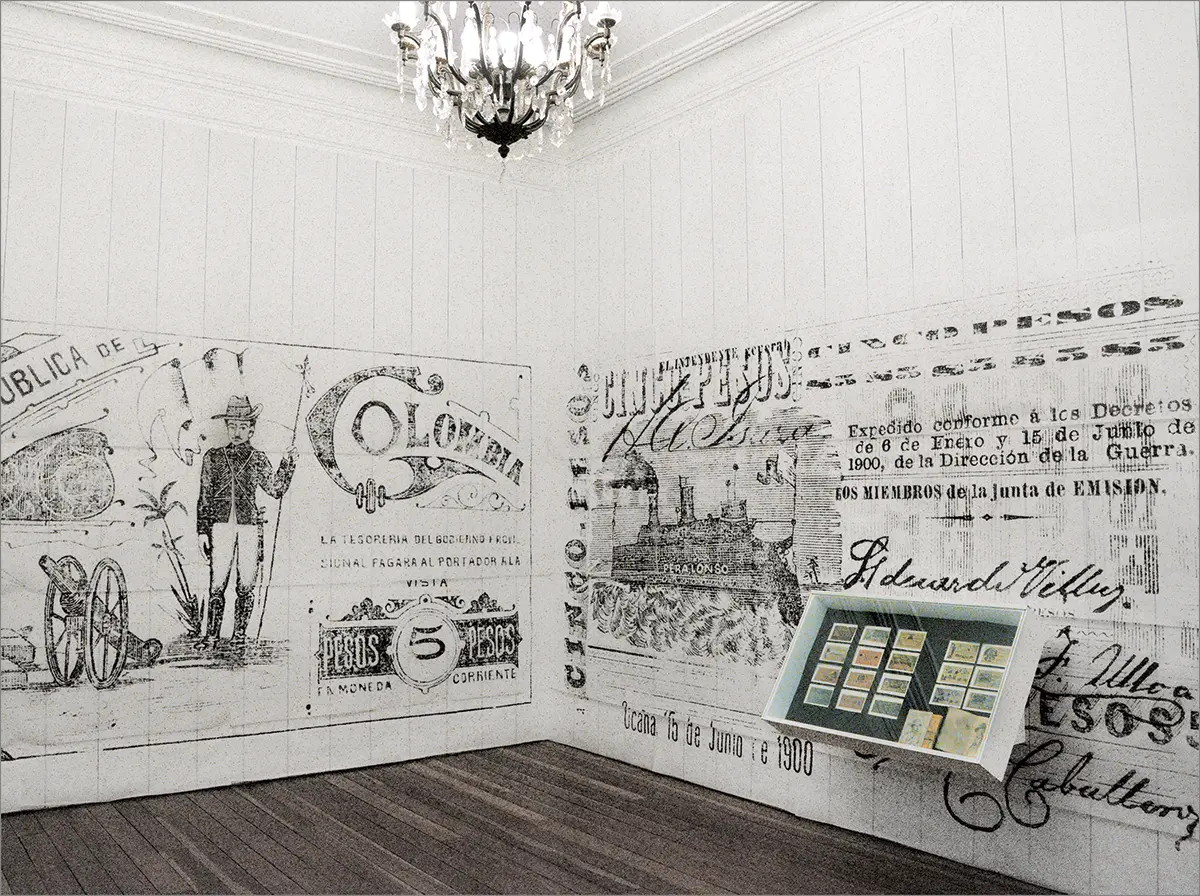
In the first case, this key figure is comprised by the artisans working in newspapers and other publications during the Thousand Day war, experts on wood and metal type-based graphic construction. “Tipo, lito, calavera” highlights the richness of regional print media during that period, giving recognition to newspapers published in intermediate, non-capital cities. The exhibition’s first accomplishment, given the large number of publications—original drawings, prints, newspapers, magazines, fanzines, and more are generously included—is its selection and presentation as posters of fifty headstock sheets for newspapers printed between 1900 and 1927. This careful selection pays homage to the ingenuity and sense of humor of newspaper editors and technicians across the country, revealing their inexhaustible critical will and their surprising visual sophistication also through the display of highly varied fonts and letters brought in from Europe and the United States to have their wood or metal matrices copied or modified in Colombia. Some of these examples of publications and graphic materials shine a spotlight on Colombia’s great tradition of caricature, including some original drawings by Manuel José Jiménez and Alejandro Gómez Leal, the artists behind Fantoches magazine. Their caricatures illustrate the acrid sharpness and intensity of political debates in the years of transition between Conservative and Liberal hegemony, demonstrating how little has the language of politics changed in the country.
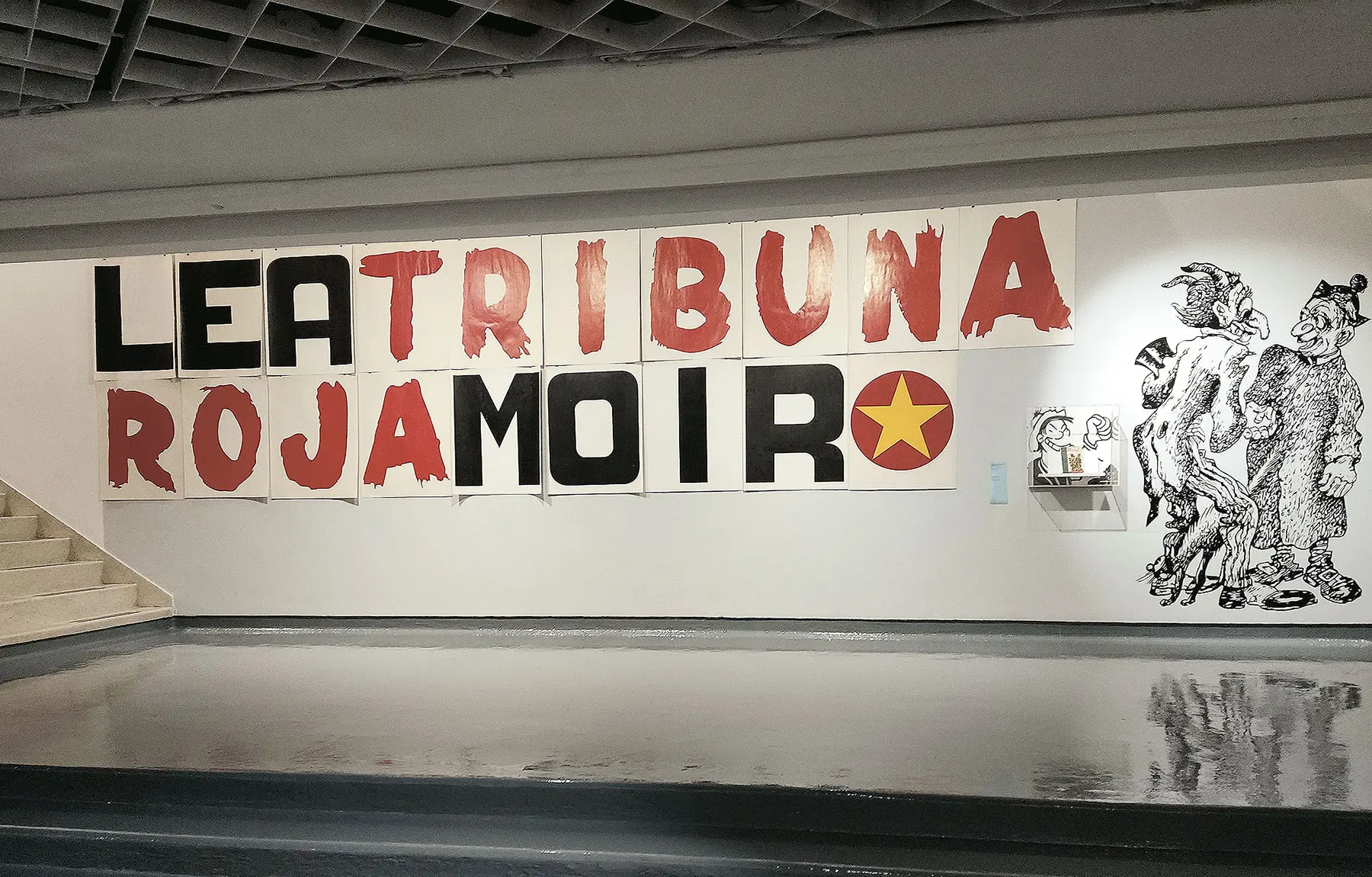
According to the curator, the second chapter, “Lito” (Litho), is devoted to the ascent of the graphic artists who replaced the artisans from the previous period, in step with the economic transformations brought about the coffee boom and Colombia’s greater insertion in the international space, which produced relative levels of industrialization and the resulting modernization of graphic-arts enterprises and publishing concerns. Special acknowledgement is made of Carvajal, a lithography shop established in Cali in 1907, as a pioneer in the development of images for the regional industries’ then-fledgling brands. A notable selection of micro-typographies for some one hundred labels produces between 1920 and 1950 serve to exemplify the work of the practically anonymous artists employed by Carbajal, in a period that Fajardo describes as “part two of three or the boom of lithography, which would later become offset printing or metal-sheet printing.” With excellent conceptual and museographic criteria, the exhibition gives an entire room to Colombia Cafetera (Coffee Colombia, 1927), a publication devoted to promoting the country in international markets. The blown-up drawings by Coriolano Leudo and Gómez Leal on display in one of the Casa Republicana galleries, from the same historical period, are a pleasure to behold. Veritable rarities such as Tierra, the journal of the Communist Party in the 1930s, or La gran mancha roja, a comic produced by the Conservative government to explain the Bogotazo in its own terms, are also exhibited in blown-up versions, allowing visitors to enjoy them in their full splendor. The same treatment, a spot-on choice, is given to drawings by Francisco Tumiñá Pillimué, an artist from the misak ethnic group, originally included in the 1949 tome Nuestra gente. These drawings signal a path of progressively greater inclusion for the original Americans in twentieth-century visual culture.
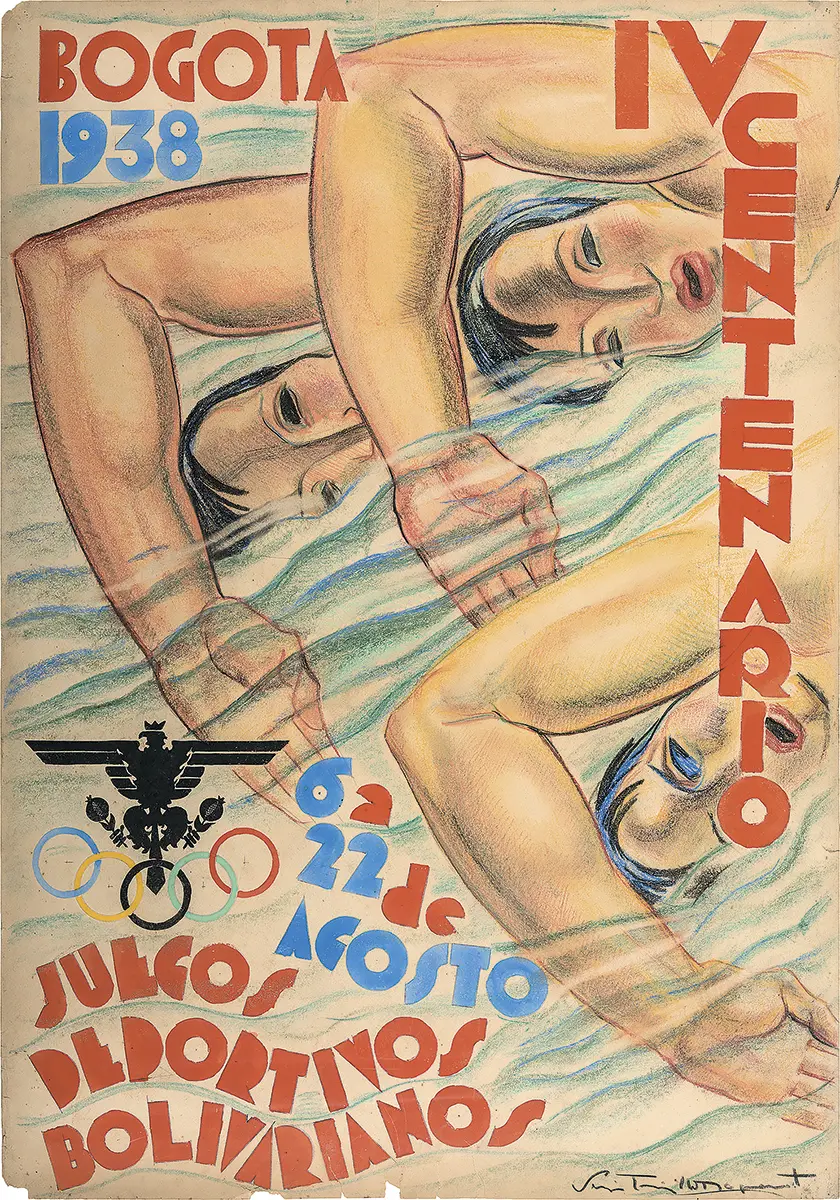
This exhibition’s second chapter includes an homage to Sergio Trujillo Magnenat in his role as graphic designer, in recognition of his large body of work: logos, posters, book and magazine illustrations, and fonts. Thanks to a large number of publications on loan from the Instituto Caro y Cuervo collection, selected by Ignacio Martínez Villalba and students from the institute’s own Master’s in Publishing program, we gain direct access to book covers designed by Colombian artists hitherto known only for their work in other genres.
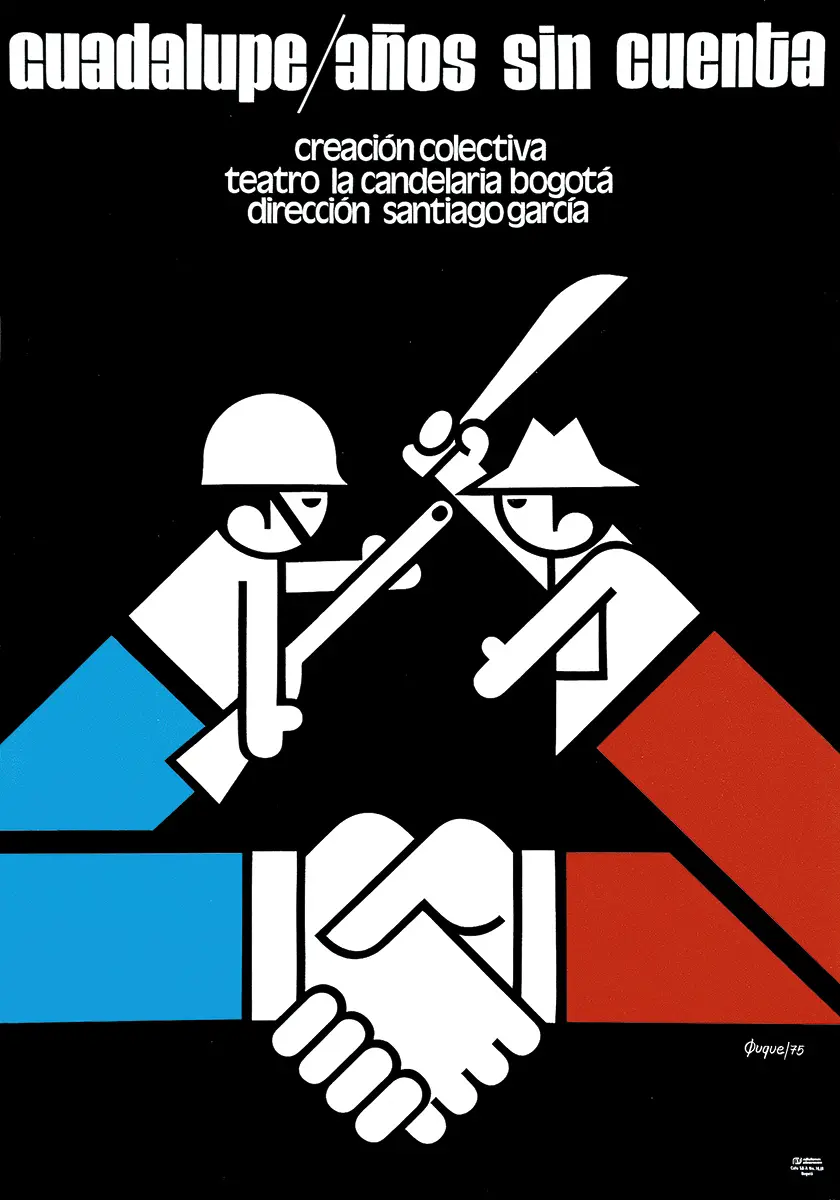
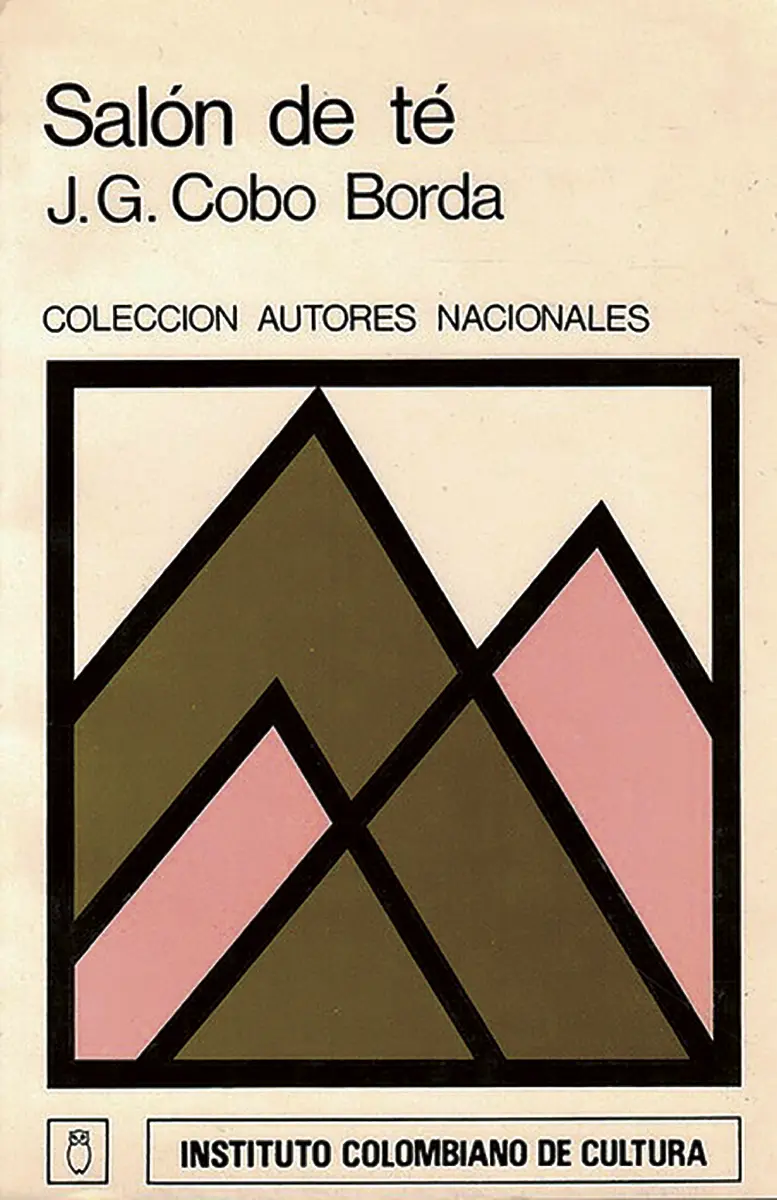
A third moment within this second chapter is the emergence, in the 1960s, of artists and intellectuals who were able to take advantage of a stronger state and educational system, all of which was reflected in the country’s visual culture. Fajardo is careful to acknowledge “the great collections published by the Colombian state, intended to reach the widest possible public, bringing out quality literature, knowledge, social science, in excellent yet eminently affordable editions with large print runs.” He credits the now defunct Colombian Cultural Institute (Colcultura) and prompts us to ponder the benefits of a possible reissue of its “Basic Colombian Library” and “Popular Series,” which included notable, now hard-to-find titles. On generous exhibit in this section are works by Marta Granados, Carlos Duque and Benjamín Villegas, and the curator traces interesting connections between artists associated with the abstract painting scene—more specifically, with geometric abstraction—by showing works by Carlos Rojas, Fanny Sanín and Édgar Silva.
“Calavera,” the third thematic block, is initially devoted to the emergence and establishment of graphic design as a profession, between the mid-1960s and the mid-1970s, a circumstance that, in the curator’s words, “gives rise to a new type of professional, with the technical transformation brought about by the advent of electric, photographic, and later electronic composition techniques.” Fajardo underscores the importance of Cali’s Graphic Art Biennial, intermittently held between 1971 and 1985, as “a key moment when a third category, graphic design, enters and begins to share museum space for the first time in an established art event devoted to printmaking and drawing.” In that context, recognition is given to the role played by various printmaking workshops established during the period, as well as to political, street-based and clandestine graphics. To a more limited degree—in comparison, for example, with the space reserved for Trujillo Magnenat—the work of two central figures in the establishment of graphic design in Colombia is also recognized here: David Consuegra and Dicken Castro, creators of memorable visual works and also truly instrumental figures in the consolidation of Design as both a university-level academic discipline and a profession. The place occupied by Castro and Consuegra suggests that they each deserve a full-blown solo exhibition, revisiting their outsize contributions to the field of design and to Colombian culture in general.
The handful of works by Castro and Consuegra on exhibit is supplemented by the inclusion of Antonio Grass and his unforgettable reinterpretation of pre-Columbian design, in his book Los rostros del pasado (The Faces of the Past); some designs by Gustavo Sorzano; and the surprising appearance of the Medellin-based curator and gallery owner Alberto Sierra, not previously known as a designer. This selection represents a truly remarkable, highly sophisticated and accomplished cohort.
“Tipo, lito, calavera” closes with a brief look at the 1990s, through a diverse sample of graphic productions: as the curator describes them, “flyers for bars, parties, discos, heavy rock bands” illustrating a “rebel graphic art,” evidently intended to connect with the new generations. Bringing into its fold the simplicity of the photocopy, of DIY printing, the exhibition circles back to its starting point: the artisanal, critical and independent character of typographical efforts from 100 years ago.
This last section has some holes in it, limited as it is to a marginal graphic production centered mainly in Bogotá and leaving out significant works made during that decade in other cities across the country. Yet, in conclusion, “Tipo, lito, calavera” undoubtedly hits its mark: via an outstanding selection of publications and works, it accurately represents an aesthetic story and explains in simple terms the technological evolution of print media, providing its audience with an opportunity to learn about and recognize important artists from a variety of backgrounds and contexts, and with diverse bodies of work.