Juan Carlos Maldonado Art Collection (JCMAC) is renowned for the quality of its pieces and the coherence of its ensemble. In its beginnings, it was oriented towards the study of Latin American modernity, focusing on the movements that defined the region’s abstract-geometric vanguard. Subsequently, inquiries into geometric art led to reconsider this profile and expanded it to incorporate works by modern artists from other latitudes and by contemporary creators who have explored and updated the geometrical languages.
In 2018, JCMAC acquired an important collection of objects made by the Ye’kwana indigenous people, which had been compiled and preserved by the renowned naturalist and Venezuelan explorer Charles Brewer-Carías. The reasons for adding these “anthropological” objects to an art collection were presented in 2019 by Ariel Jiménez, the collection’s curator, in the show “Convergences/Divergences”. More than forty Ye’kwana baskets were displayed then, along with works by Max Bill, Carmen Herrera, Sol Lewitt, and many others. For Jiménez, modern sensibility is bifrontal: it offers one face to the future in its yearning for technological progress, and the other to the past, since “primitive” sources are deemed to be the primordial stronghold of what is essentially human.
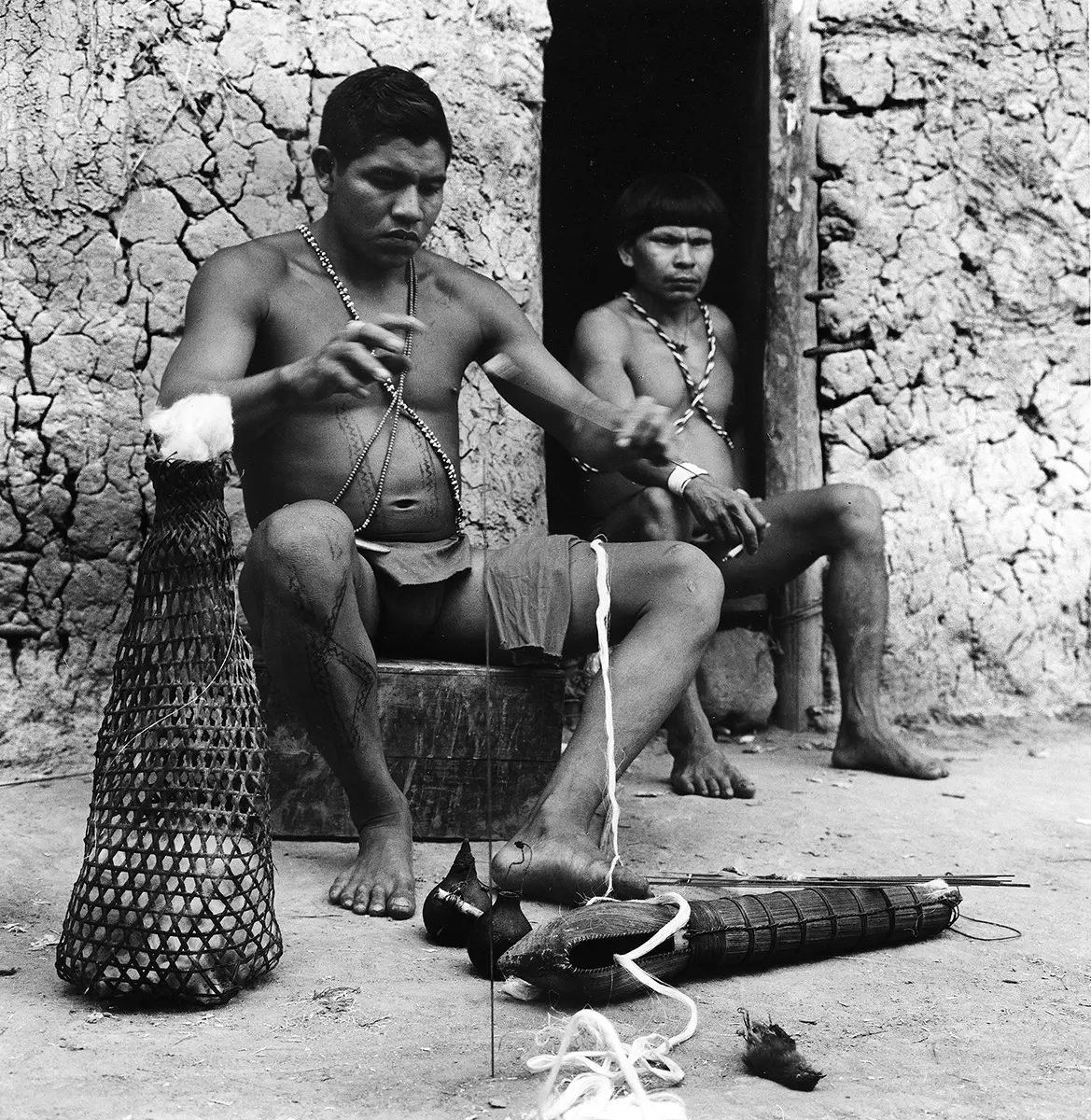
The next exhibition, entitled “The Ye’kwana Universe/ Living in the Middle of the Jungle,” delved into this recent shift in the collection’s focus, which is centered on baskets, woodcarvings, vessels, weapons, clothing, and musical instruments. The show also included a series of images by the Swiss-Venezuelan photographer Bárbara Brändli (1932-2011), who recorded aspects of the lives of different ethnic groups inhabiting the banks of the river basins of the upper Caura and the upper Orinoco in the 1960s.
The exhibition was organized in two large thematic blocks: the first displayed pieces and photographs that expose the livelihood of the Ye’kwana, who are immersed in a totally natural environment. The second block presented objects, images, and sounds related to the spiritual dimension of the Ye’kwana.
The material life of the Ye’kwana
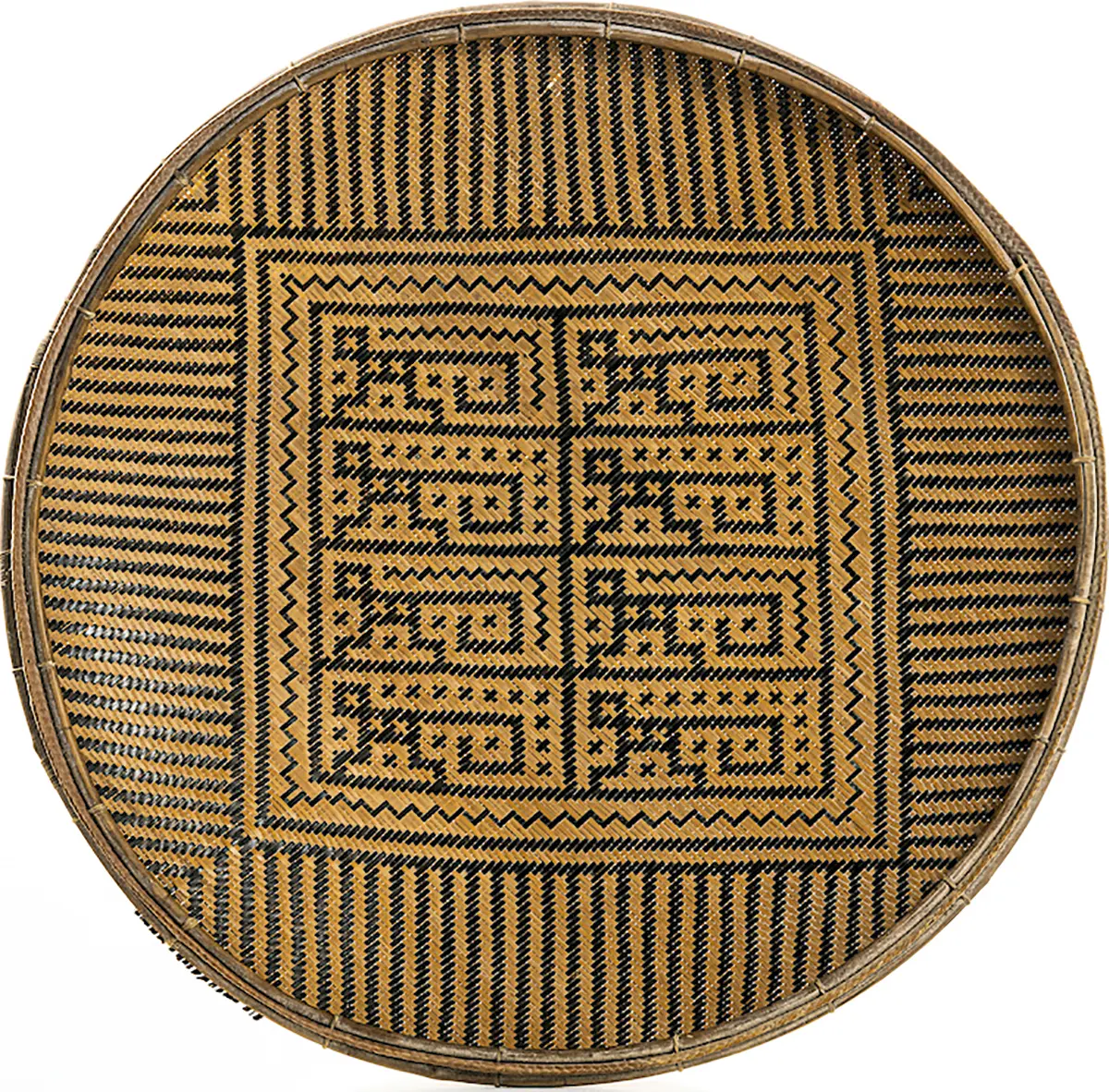
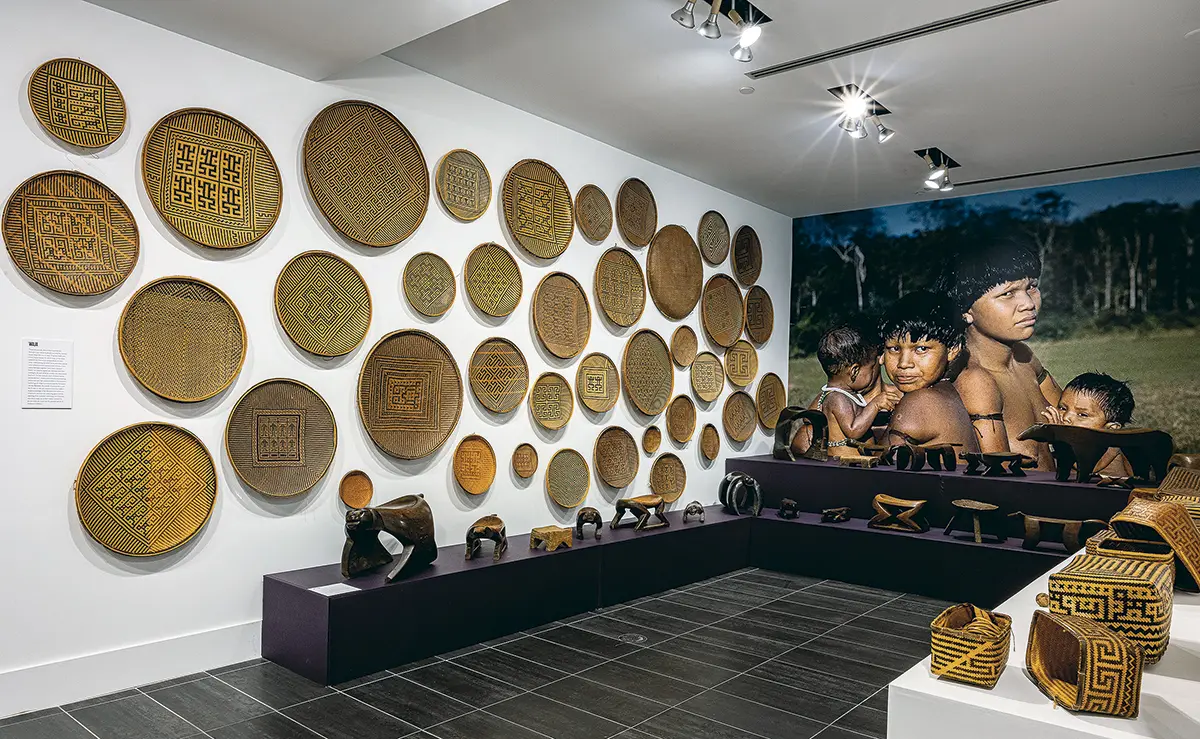
Settled in southern Venezuela and northern Brazil, the Ye’kwana are grouped in small communities that live from hunting, fishing, gathering, and the farming of some plants mainly cassava. Indeed, the “great cycle of cassava” rules their lives, since this tuber and the foods derived from it, such as casabe or the drink called yukuta, constitute their basic diet. The cycle begins with the cassava seed and follows its harvest, grating, pressing to extract its poison, sifting, and the preparation of food and drinks. All these steps were illustrated with different objects. Basketry included manádes, circular baskets used to sift the grated yuca; the wuwas, the only baskets woven by women and employed to carry the harvest; the kangwas or amatos, woven boxes used to store valuable objects such as necklaces and feathers; and the famous wájas, circular trays on which casabe is served. These have geometric designs that refer to the mythological universe of the Ye’kwana.
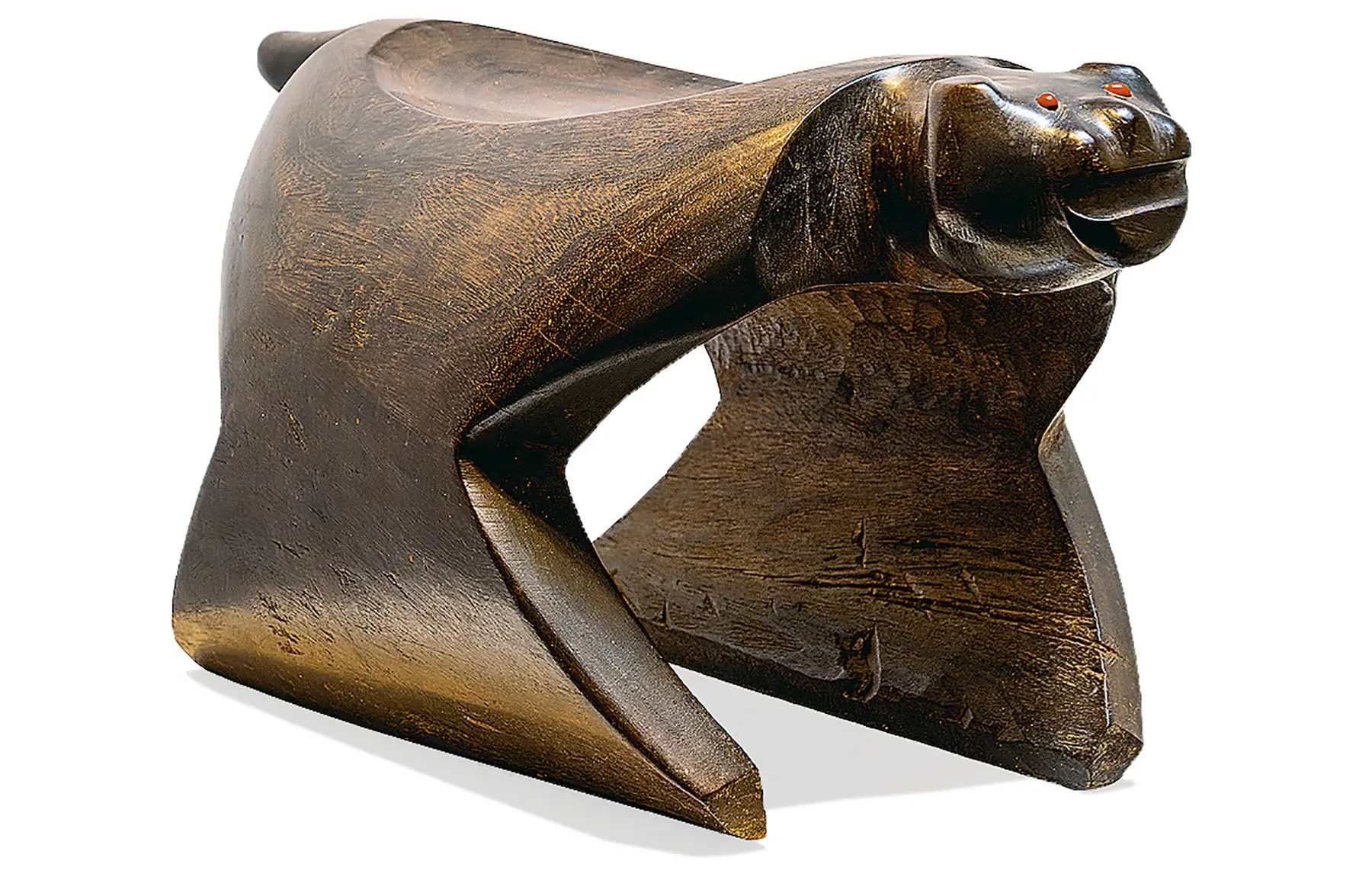
Bárbara Brändli’s photography also demonstrates this process: a finely lit woman sifts flour in a manáde; a man sits on the lever of a téngkui or sebucán. This sophisticated mechanism designed to extract the toxic components from the cassava is a cylindrical basket with a complex fabric that lengthens and stretches to press the cassava. Also on display were tarádes or graters made of wood and jasper spikes, clay vases, and a’tteis, tall wooden benches with schematically shaped animals; as well as hunting weapons, such as mallets, spears, arrows; and fishing gear, including oars, different types of baskets, nets called fhuáhis, and fish traps called mudois. Brändli’s images vividly illustrate these tasks: a child playing with a small bow, young hunters facing a majestic landscape, a hunter straining a bow that surpasses him in size.
The spiritual world of the Ye’kwana
Ye’kwana mythology or religion, referred to as Watunna, is complex and immense because this people understand that each thing, person or element is governed by a supernatural force that they must appeal to before taking any action. This permanent dialogue with the invisible beings is performed through ritual chants, magic herbs, prayers, and body painting.
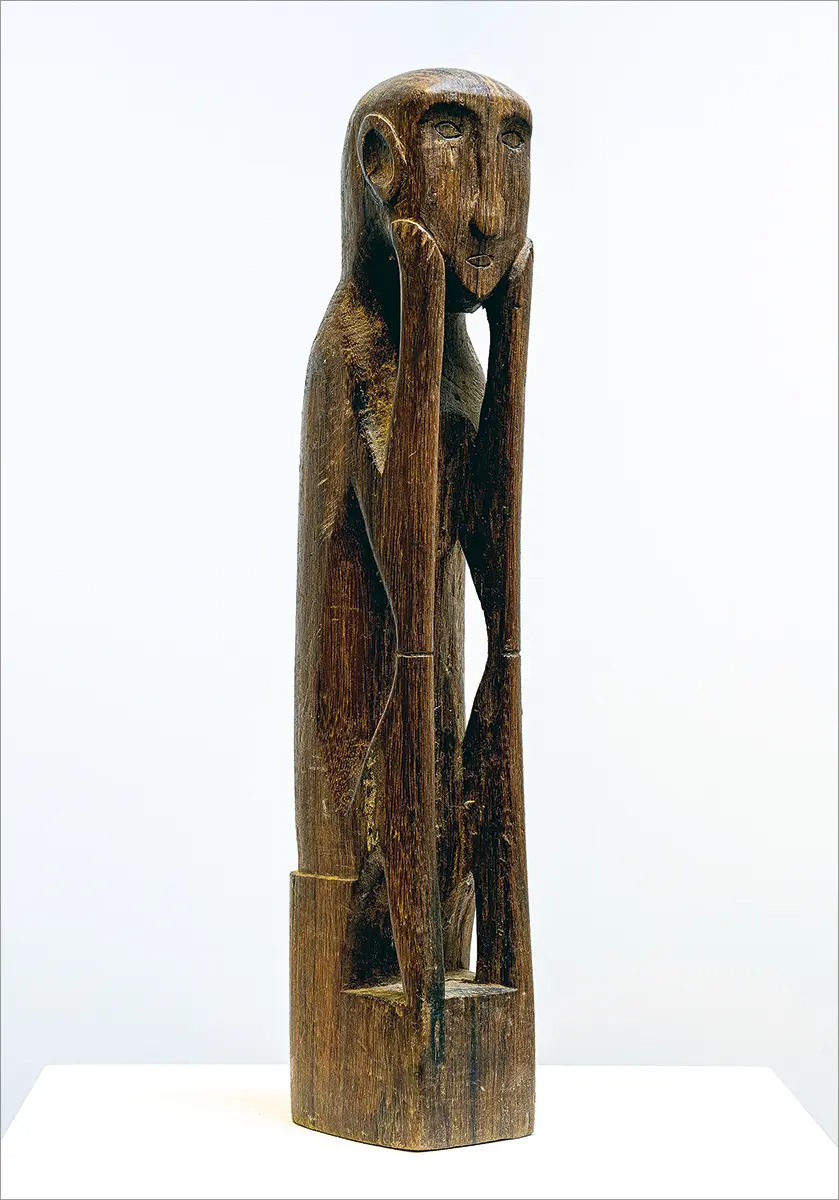
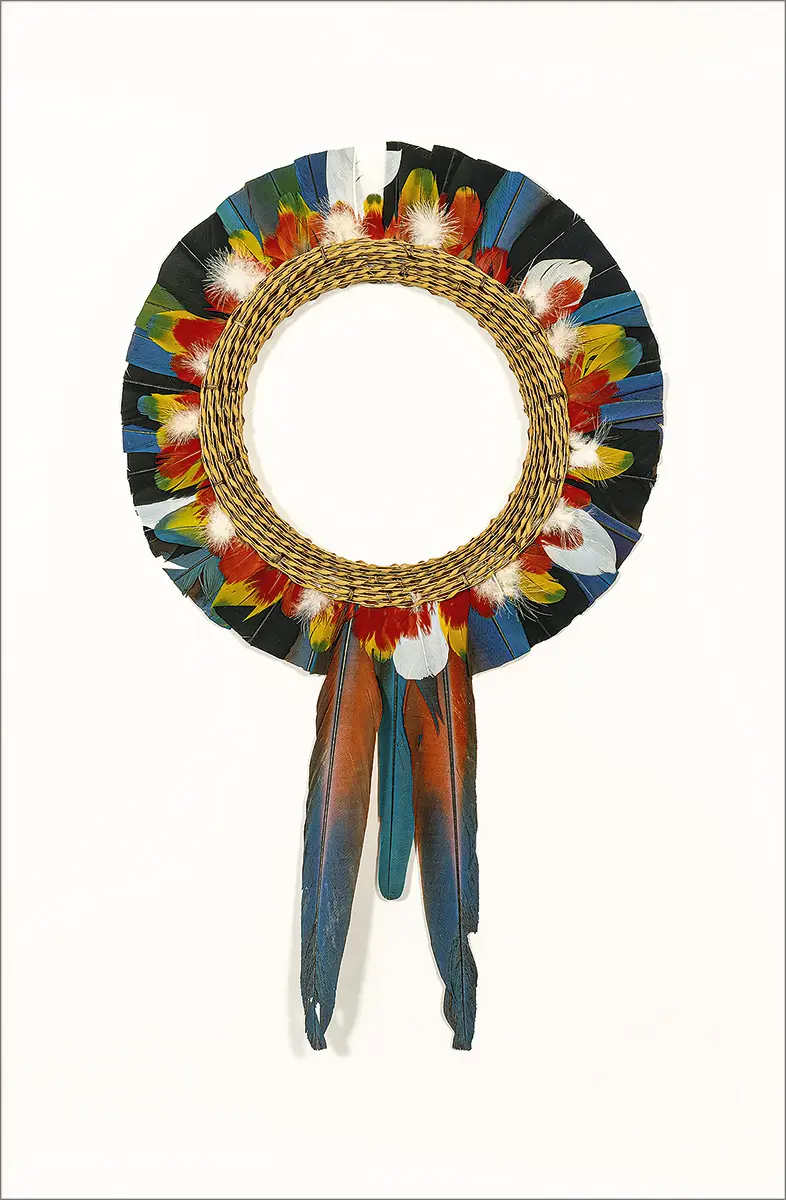
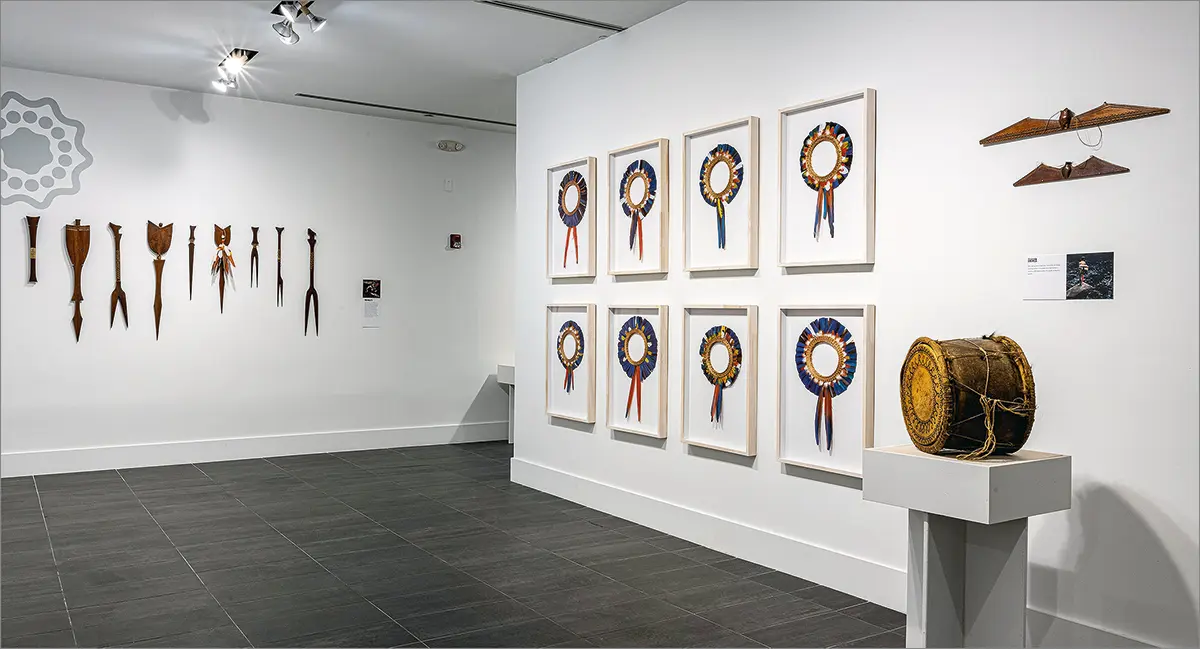
The synthetic lines of a setawa-kaliana, or “thinker”—a woodcarving that represents a crouching man—marked the entrance to this second part of the exhibition. Sounds recorded in the Venezuelan Amazon jungle sixty years ago could be heard throughout this section, reminding us that many forms of Ye’kwana music have disappeared. Musical instruments, such as bamboo flutes and small drums, accompany the songs and dances that, in their majority, narrate episodes of Watunna. Some objects belonging to the ritual clothing were impressive, such as the dukuádi-yédi-sabíya, a meter-long necklace made of peccary teeth tied to a cotton string, which belonged to a famous Ye’kwana leader, or the amazing feathered crowns or fhémis, used only by the most important people in the community.
“The Ye’kwana Universe/Living in the Middle of the Jungle” was curated by Ariel Jiménez and with Rafael Santana’s always accurate museography. It was an intelligent and sensitive exhibition, which allowed us to learn not only about these peoples’ lives, customs, and beliefs, but also about their intense connection with nature, which they respect, value, and honor in all their material and cosmic dimensions. It was also an appeal to reconsider ancestral knowledge in light of our disconnection with the planet and, consequently, the environment’s palpable deterioration.
* Photo: Rafael Guillén.