Recently there was an article in an art magazine in which its author had noted the upsurge of what he termed didactic art exhibitions. These exhibitions were considered excessively explanatory with blurbs and so forth rather than letting the artwork to collectively convey the exhibition’s thematic, and it was ostensibly proposed that this form of information overload reflected attention deficit from too much social media. While there could be some socio-psychological truth in this, it could also be that curators have incorporated social-practice art in which its didacticism is often too literal and lacking art’s inherent hermeneutic. All art, to a lesser or greater degree, is a social contract, for there is a symbiosis between the artist-producer, their creation, and its viewer/receiver in which human agency is an embodiment of a broad social purview of class, sexual and gender orientations, religious and secular outlooks, political and ideological affiliations, and racial and ethnic backgrounds. Exemplary in countering the critique of perceived didacticism of exhibitions are those that react to topical events in which the word didactic should be replaced with heuristic. For this was certainly the case with the heuristic dimension of “no existe un mundo poshuracán: Puerto Rican Art in the Wake of Hurricane Maria”.
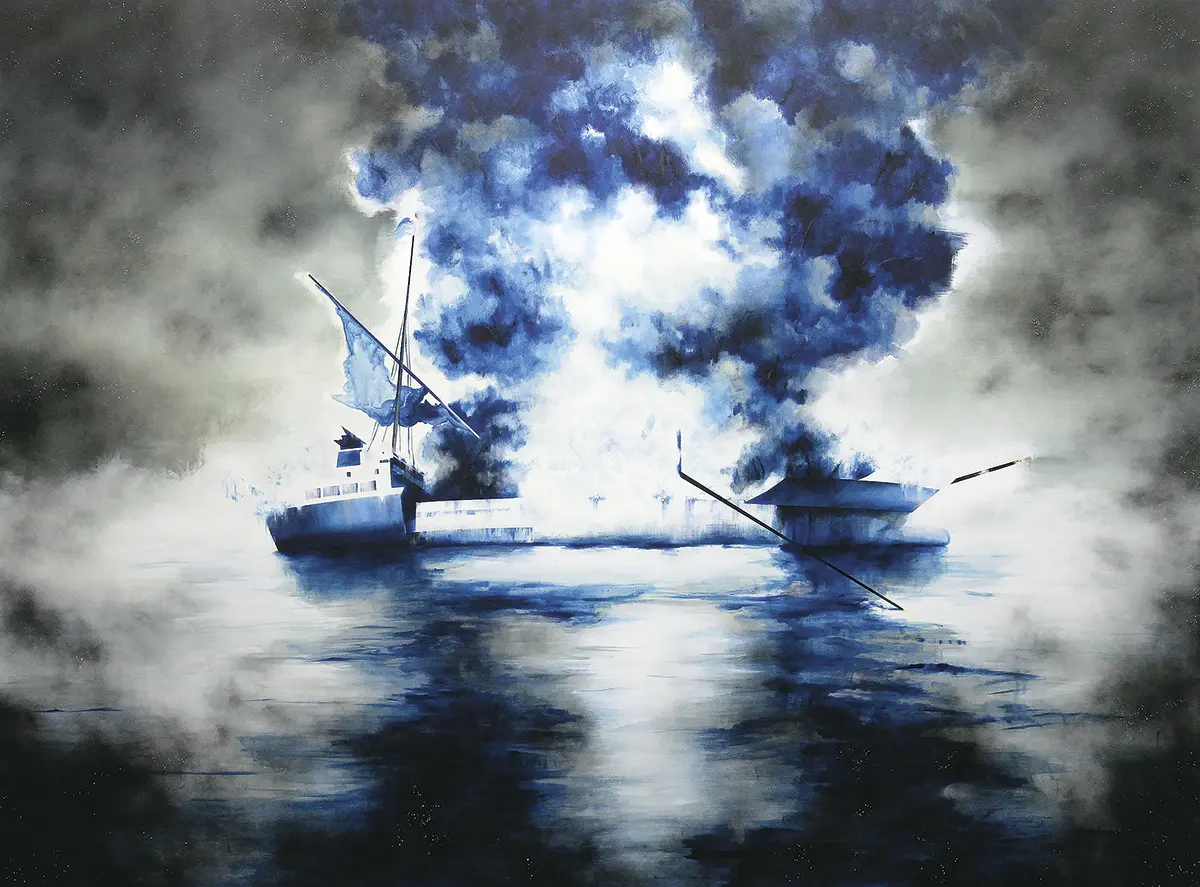
Consisting of twenty artists and more than fifty artworks in a mixed-media exhibition, the deftly organized show by Marcela Guerrero, Angelica Arbelaez, and Sofía Silva was presented at the Whitney Museum of American Art and used the devastating Hurricane Maria as curatorial foil. As one perused the exhibition, it became clear that the hurricane was just a thematic point of entry into which many narratives addressed what preceded and succeeded it, and the political machinations in impeding timely aid while it spiraled into a severe humanitarian crisis. The works exhibited were diverse in their individual subject matter that dovetailed around more general themes of (post) colonialism, gentrification mainly from a real estate market forced to sell below value for survival, austerity measures from top-down financial mismanagement, and a myriad of other issues effecting Puerto Rico before and after Hurricane Maria.
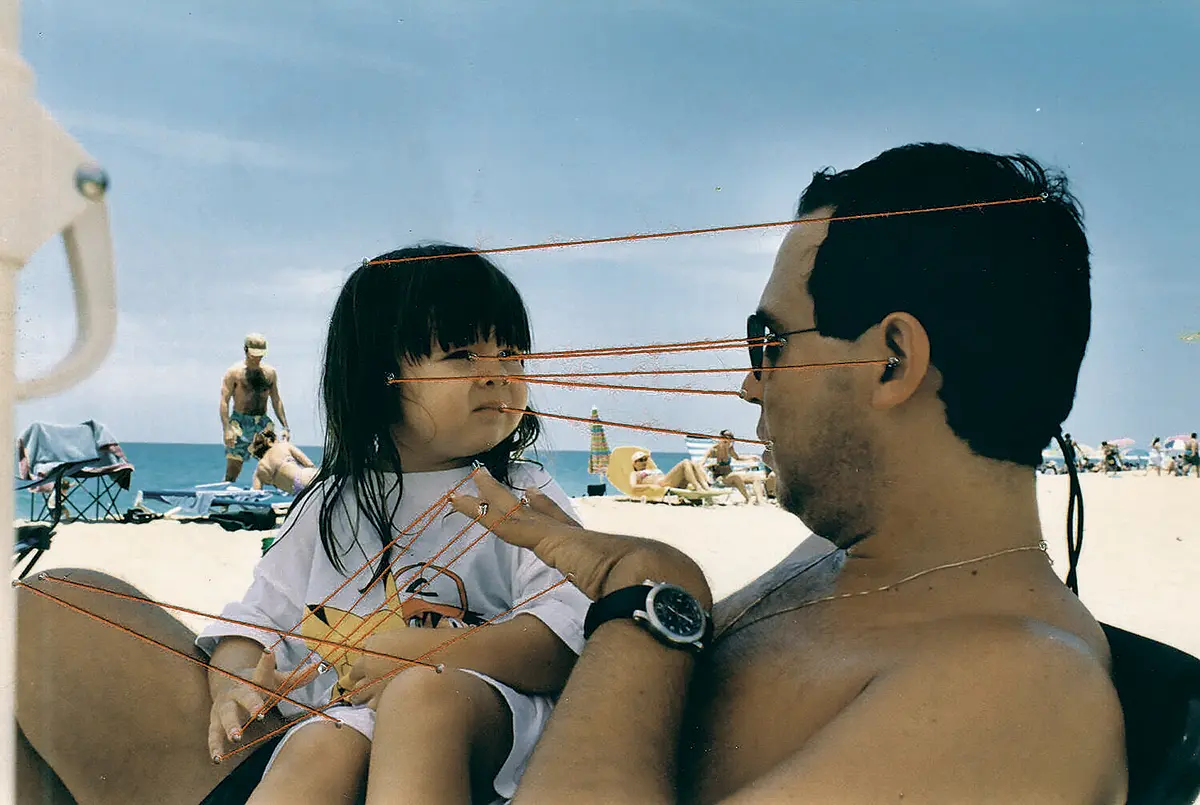
The exhibition was divided into five sections: “Fractured Infrastructures”, “Critiques of Tourism”, “Processing”, “Grieving and Reflecting”, “Ecology and Landscape”, and “Resistance and Protest”. Each section was carefully presented with a well-balanced yet varied corpus of artworks that sometimes seemed to be group shows within a group show. As one entered the exhibition on the sixth floor from the elevator, one encountered a large video projection by Sofia Cordóva titled dawn_chorus ii: el niágara en Bicicleta (crossing the niagara on a bicycle, 2018). The seating arrangement to view it felt like someone’s living room, albeit more expansive. This quasi-homey environment was offset by the seriousness of the work that was partially filmed on a cellphone by the artist’s aunt in which the opening sequence was a dark, empty screen, but not from aesthetic choice, but from the blackout caused by the hurricane. The aunt’s off-the-cuff interviews with family and friends whose shared experience of the hurricane was concomitantly fraught with pathos and tenacity, underscored Puerto Rico’s resistance and affirmation in the face of such calamity. But these responses were not solely from the natural disaster, they were also reactions to the systemic ineptitude by the US government to adequately confront the hurricane’s destructive wake exemplified by ex-President Trump’s photo-op in which he tossed rolls of paper towels to the hurricane’s victims. The experiential element germane to Cordóva’s contribution diversely manifested in many of the exhibition’s sub themes including one very cathartic mixed-media installation by Gabriella N. Báez titled Ojalá nos encontremos en el mar (Hopefully, We’ll Meet at Sea, 2018 -). The installation consisted of photographs of the artist and her father who committed suicide after the hurricane, as well as his personal items including books, record albums, family photos, letters, and other ephemera. This made the work powerful in creating empathy through quotidian objects that were like memento mori of individual death that also inadvertently evoked those who may not have been publicly commemorated in a museum exhibition. Works such as these in which human loss was recorded through what is otherwise overlooked everyday visual culture, was a careful formal and conceptual convergence of what appeared to be art and anthropology. The latter discipline is not some stylistic patina employed by either the artists or the curators but alluded to the research nature of the exhibition. This unmediated approach was sometimes more apparent as was the case with a video that commented on tourism and subsequent gentrification. B-roll (2017) was Sofía Gallisá Muriente’s excellent video that was sometimes difficult to discern what was informational pulp sourced from the Puerto Rico Tourism Company, and The Department of Economic Development and Commerce of Puerto Rico, and collaged elements downloaded from the Internet. The transformation of found elements in which a material’s context is another added layer of artistic narrativity was also intrinsic to sculptures and installations that were all astonishingly differentiated, complex, and visually rich. And in the case of an outdoor sculpture, the sense of smell became equivalent with vision in experiencing it.
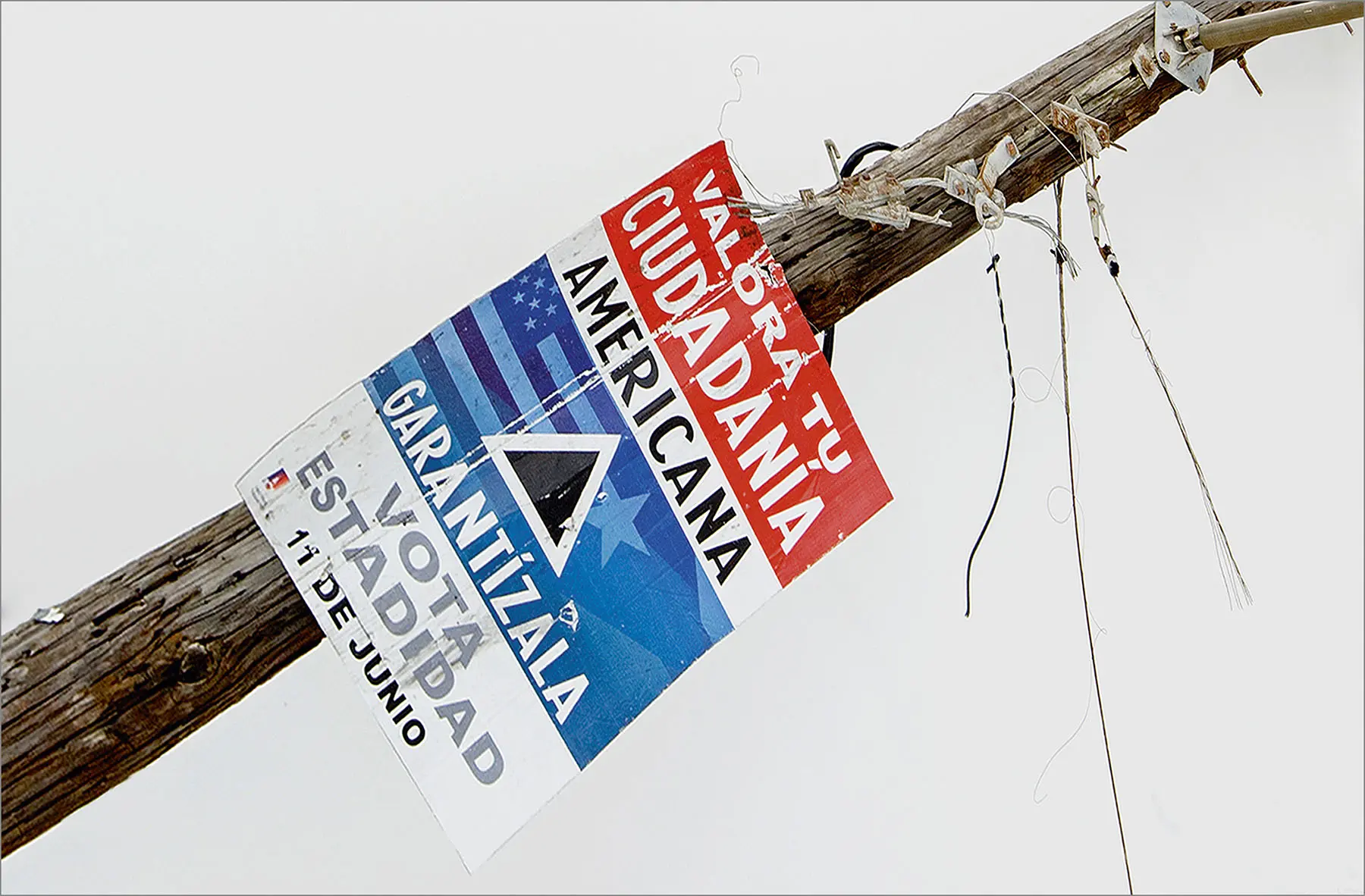
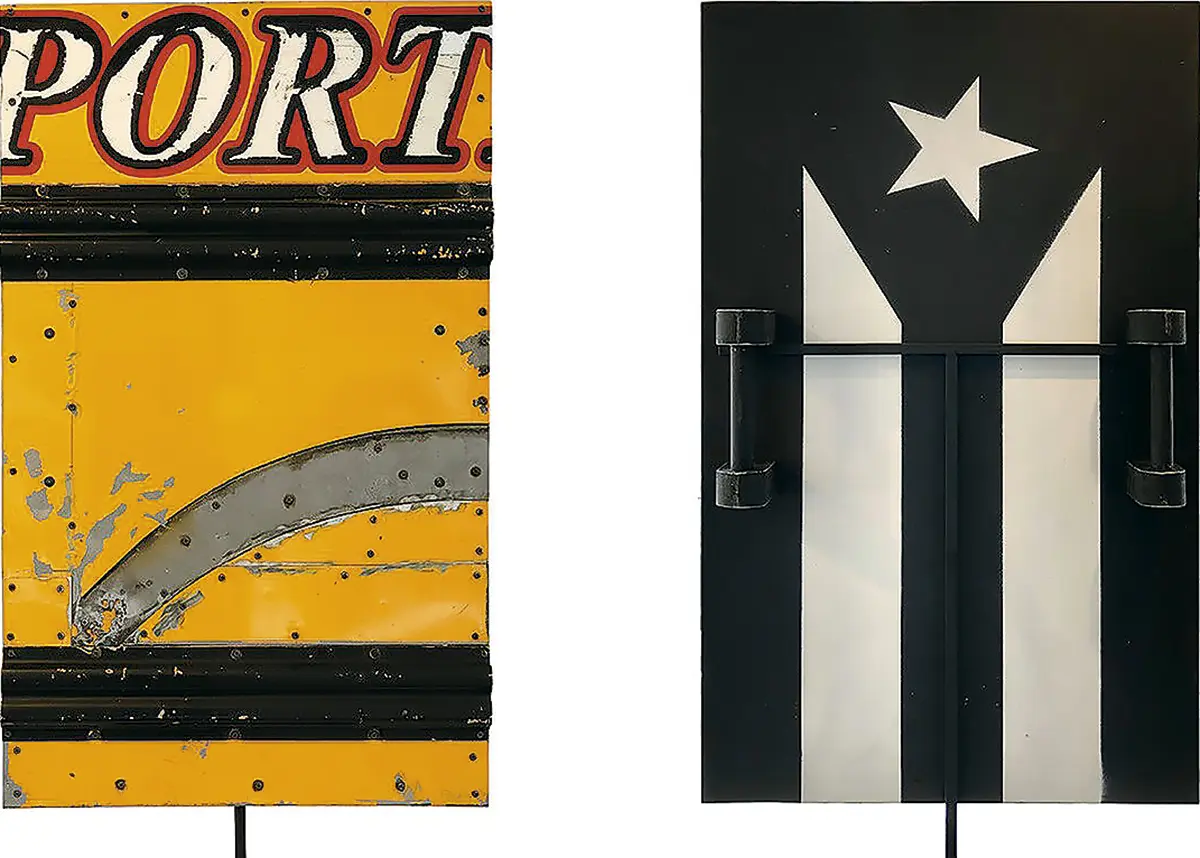
A work whose presence imposed on the viewer because of its size and verisimilitude, was a monumental readymade sculpture by Gabriella Torres-Ferrer titled Untitled (Valora tu mentira americana) (Value Your American Lie, 2018). It entailed an actual light pole with affixed political signage alerting Puerto Ricans to vote, and it was impressive as it was installed at an angle and thus appeared to have crash-landed into the museum. Large-scale works such as these often unintentionally employ their overpowering dominance to their own detriment. In other words, in art sometimes size doesn’t matter. However, that was not the case with Torres-Ferrer’s sculpture, and it was certainly a gamble that artistically paid off for her, for it was one of the strongest works in the show and should probably be donated to the Smithsonian so it can be juxtaposed with the Washington Monument. Another interesting sculpture that included pre-existing materials was by Miguel Luciano. As one approached Shields/Escudos (2020), there was something immediately recognizable about its ten precisely cut pieces and that was that they were culled from a school bus which were then carefully installed as if they were a defensive rampart. And on the recto-side of this physically assertive artwork was the Puerto Rican flag, however colored in black. The latter has become a symbol of activists who have been protesting a slew of issues imposed on Puerto Ricans who have been bearing the brunt of predatory foreign investors. Luciono’s artwork was aptly located by an amazing outdoor sculpture by Gabriela Salazar.
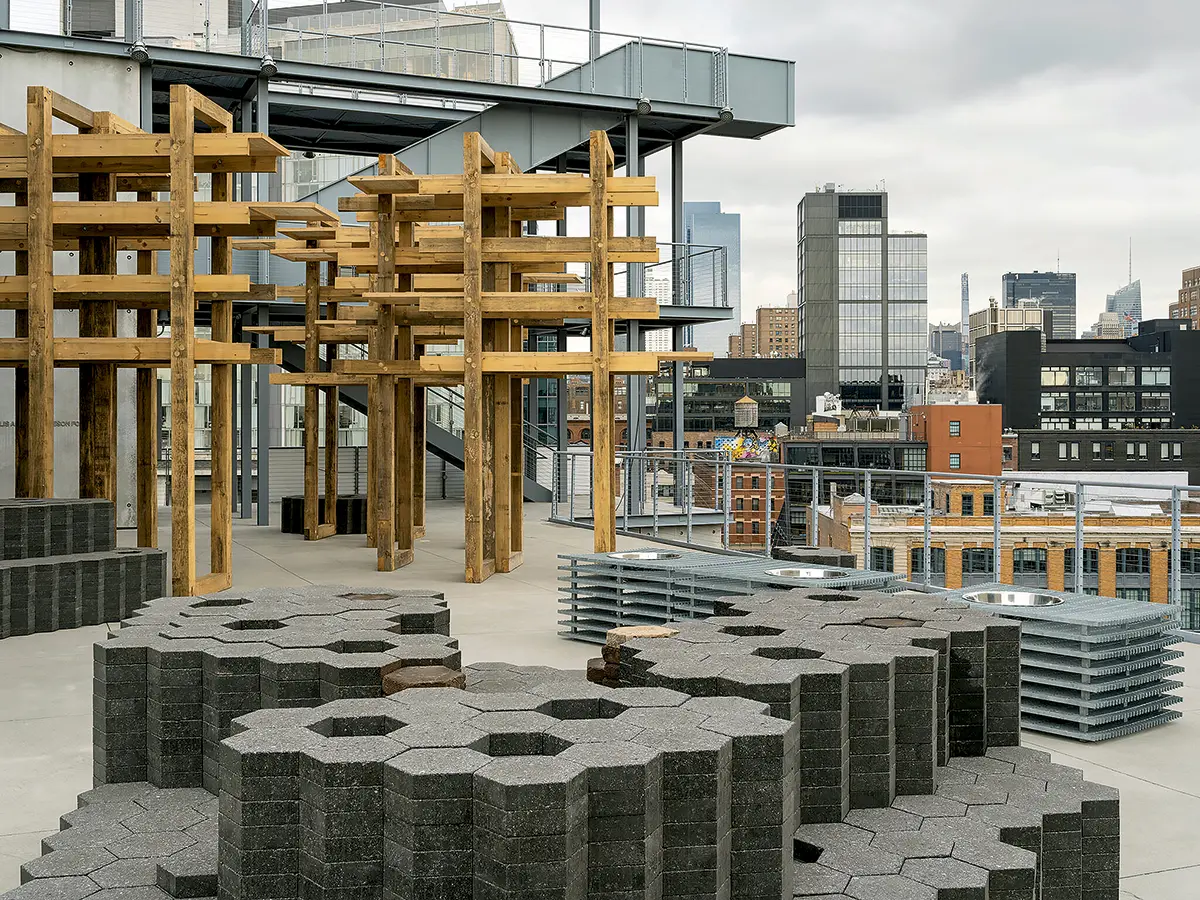
Outdoor sculptures at the Whitney Museum are a challenge because they compete with the city views. There have been many instances in which exhibited sculptures at the Whitney were created without any knowledge of their outdoor placement and somewhat became inconsequential when seen in conjunction with Manhattan’s breath-taking panorama. As such, they tend to be weakened by this, which was not the case with Salazar’s Reclamation (and Place, Puerto Rico) (2022). Specifically made for the exhibition, its modernist, serpentine-like geometric configuration was in dialogue with the museum’s architecture and more broadly with the New York cityscape. This dialogue of place and space was further complicated by the organic media that constituted Salazar’s work including wood, burlap, and a type of clay made from coffee grounds. The dichotomy between solidified urban space and the airiness of the sculpture as well as inorganic/organic was nuanced by the subtle scent of coffee. Gabriela Salazar’s work has frequently engaged with architecture, but with the expansion of her métier from the optical and tactile to encompass the olfactory was nothing short of brilliant. There were many works in the exhibition of many types of media that were very good including paintings by Gamaliel Rodriguez, Rogelio Báez Vega, and Armig Santos, and a very idiosyncratic installation by Edra Soto.
Although the exhibition conveyed many different aspects of the devastating effects of Hurricane Maria, it also poignantly addressed human loss related to it. If Covid-19 exposed at its outset that access to medical care is a political issue of inequity, then Hurricane Maria revealed how Puerto Rico became opportune for what Antony Lowenstein coined “Disaster Capitalism.” Disasters, like all aspects of human life, have a political aspect in how communities act both pre-and post the event. Readiness and preemption, for example, costs money, thus they become a political issue. The art that was presented about Hurricane Maria also made it difficult to not confront one’s own complicity from complacency towards it. And often, when such overwhelmingly traumatic events make their way into art, sometimes the art needs to be didactic, to inform us in the most basic way to collectively awaken us from our walled slumber of indifference and apathy, and the delusion that we are not responsible for each other.