Marilyn Boror Bor was born in San Juan Sacatepéquez, Guatemala, in 1984. The etymology of her place of origin is essential to understand her work’s roots and conceptual development, in which language plays a fundamental role. Most of the names of the municipalities and towns in Guatemala are made up of the name of the Catholic saint venerated on the day of their founding and a description in the Nahuatl language of the site where they were established. In the case of San Juan de Sacatepéquez, the name refers to its patron saint, Saint John the Baptist, and the place’s name “Sacatepéquez,” derived from the Nahuatl words “sacat,” in Spanish “grass”; “tepē-,” in Spanish “hill or mountain”; and “-k,” in Spanish “en,” that is to say “on the hill covered with grass.” It is important to note that the names, both in Spanish and in Nahuatl, are directly related to the invasion of Mesoamerican territories by the Spanish. On the other hand, it is worth mentioning that the municipality of San Juan Sacatepéquez is known as “the land of flowers” because a large part of its population is dedicated to their cultivation and export.
Another essential aspect in Marilyn Boror Bor’s work is the fact that she belongs to the Kaqchikel ethnic group, originally from the state of Chiapas in Mexico and from the west of what is now Guatemala, territories that during the pre-Hispanic period stood out for hosting the Mayan civilization, one of the most advanced on the continent. Her identity as an indigenous Maya-Kaqchikel woman is paramount since, from it, she addresses, among other issues, patriarchy, racism, and the abuse of power, cultural forms that define the construction of various contemporary histories not only in Guatemala but also in other Latin American countries. In this sense, “her work focuses on identifying the fissures of a system of colonial epistemological representation that maintains territorial control of language, whether spoken or graphic, to preserve power, for which reason her artistic projects focus on an analysis and constant criticism that seeks the preservation and recovery of the languages of the original peoples, coupled with the thought and feeling that translates into cosmogonies.”1
The concept of territoriality is implicit in her work from the beginning, as seen in the series ¿Mundos o Mapas? (Worlds or Maps?, 2014-2020), which begins after studying fine arts and obtaining her degree in art at the Universidad de San Carlos de Guatemala (2014) and receiving the Espira/La Espora Residency for Emerging Central American Artists scholarship on three occasions (Nicaragua, 2011-2014). According to the artist, “this work becomes a dialogue between human movements, territories, migrations, borders, and invisibility, maximized by proposing the following: Who are we? Who are the others? These questions allow the questioning of how otherness is perceived; that is, how the other person can be seen as invisible, transparent, and almost imperceptible.”2
Regarding her academic experience, it is essential to note that although she studied in Guatemala, her residencies in Nicaragua and, in particular, working with her mentor, Patricia Belli, allowed her to find her “soul” and set out in the world of contemporary art.3 From that moment, Boror Bor assumed, from her position as an indigenous woman, a vindictive attitude regarding the problems she experiences in a patriarchal, class-oriented, and racist society.
It is also important to mention three women who have played a fundamental role in her life: her mother, Tránsita Bor Jocop, and her grandmothers, Juana Bor and Cecilia Boror. According to the artist, they are her most significant source of inspiration and important references, especially for having inherited her ancestral knowledge.4
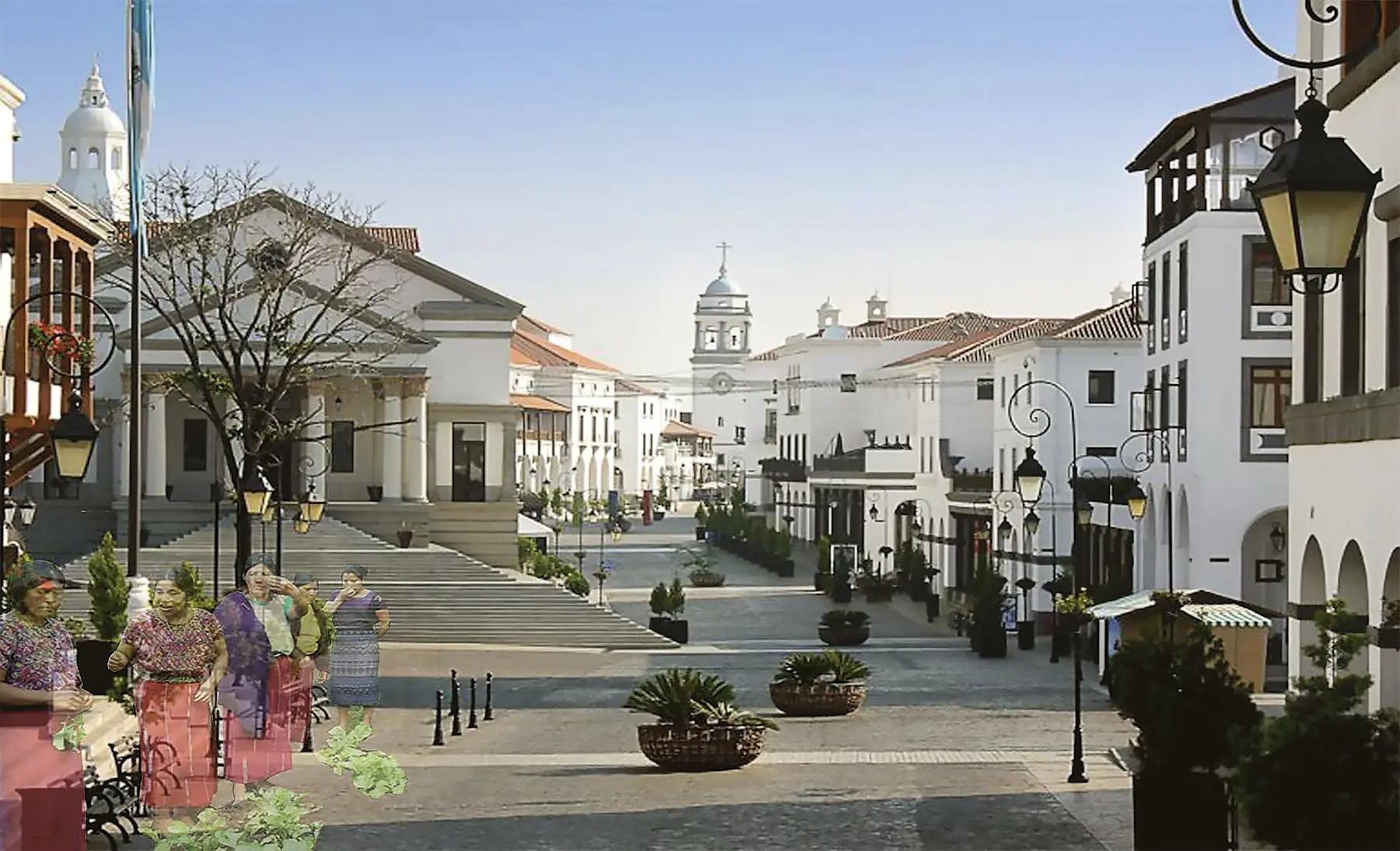
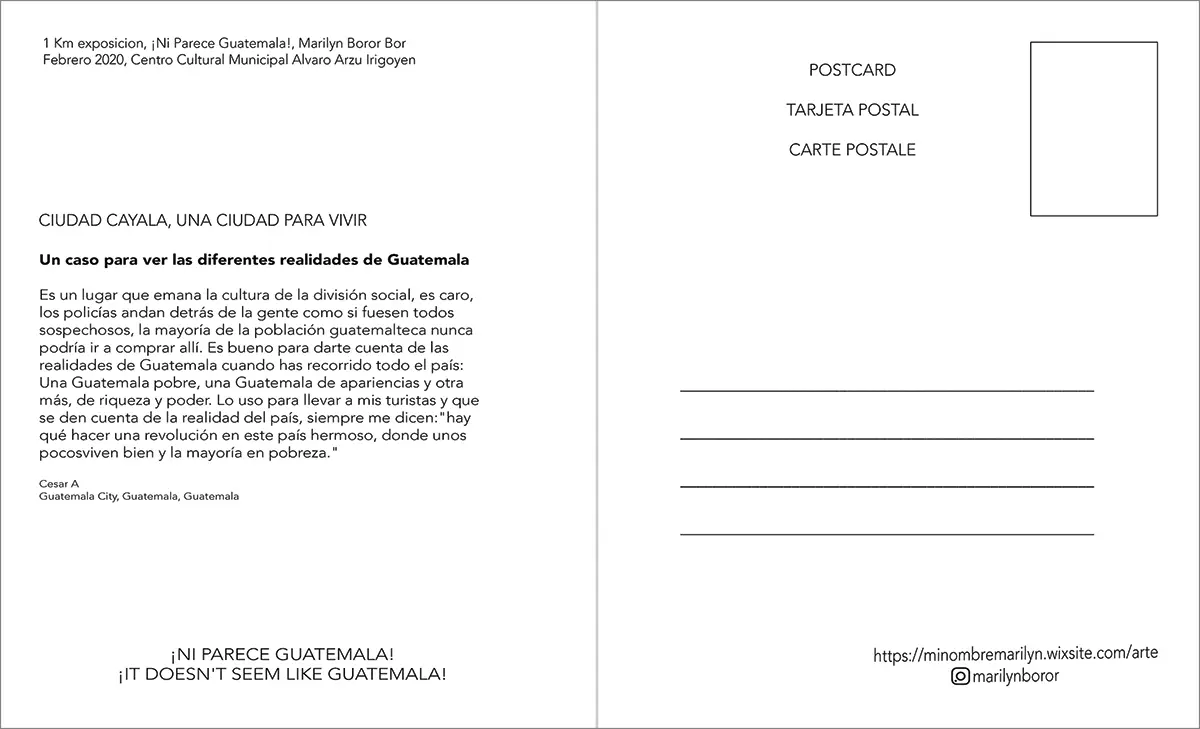
Continuing with the idea of territory, but this time delving into the theme of colonialism, Boror Bor made the series entitled ¡Ni parece Guatemala! (It Doesn’t Seem Like Guatemala!) The work comprises photographs of urban landscapes printed as postcards, representing aspects of Guatemalan cities inspired by North American or European architectural models. According to her, these images represent a somewhat fanciful urban development led by a white minority that emulates foreign models. These images can also be interpreted as a strategy to hide the harsh social reality experienced by the less privileged classes, caused, among other factors, by the civil war, genocide, and colonization.
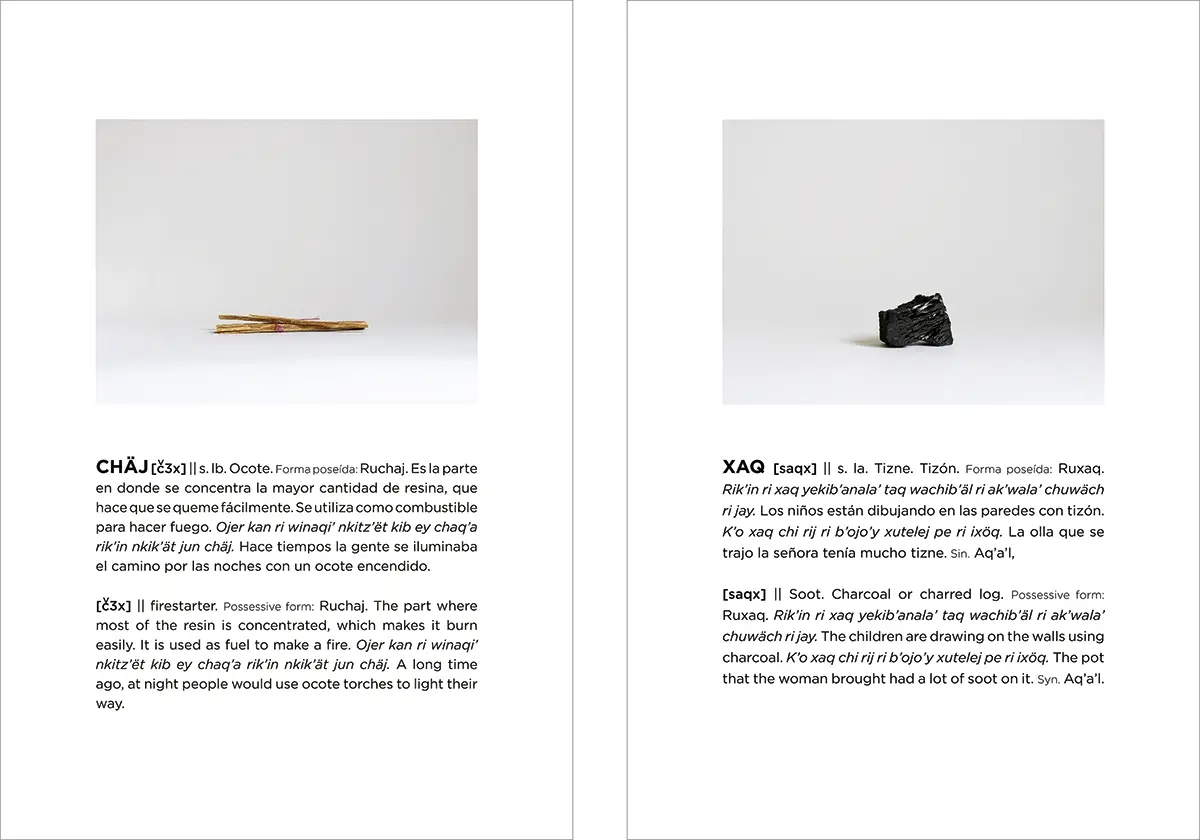
Diccionario de Objetos Olvidados (Dictionary of Forgotten Objects, 2016-2020) is one of the first series in which she expresses her interest in the word. This documentary work proposes a memory exercise for analyzing language and its administration by the original people. The dictionary includes a selection of objects related to bodies, territories, and terms made with natural materials and loaded with their own memory. As the artist explains, “for native peoples, it is necessary to produce and leave documentation for the historical context in which we find ourselves. As Mayan nations, our daily life is a permanent exercise in memory. Still, we cannot deny the inescapable influence of modernity and postmodernity for this reason.”5
It is important to note that their own language only existed orally for her grandparents’ generation. Today, the members of her community speak Spanish, a Western language. Still, they also have other languages and forms of communication. The Kaqchikel written with western characters is credited to some priests who came during the “conquest” or “invasion” carried out by the Spanish,” to mestizos and “criollos” during colonial times, and more recently to contemporary indigenous intellectuals. Kaqchikel in its written form is essential to Boror Bor because she is a visual artist because by seeing it “drawn” it is easier for her to learn it and remember it.
When making the Diccionario de Objetos Olvidados, she realized that all the objects she chose came from nature. They were made of stone, wood, fiber, or mud. Based on this fact, she made specific series for each material. In the Diccionario de barro (Dictionary of Mud, 2018-present), she focuses on objects made from mud from the earth. According to her ancestral beliefs, each object has a spirit and a soul, which, after fulfilling their objective, return to their place of origin. In this case, the mud comes from the mountain and eventually returns to it.6 For example, a jar or a clay plate will always be associated with the earth, with the mountain from which the clay they are made comes.
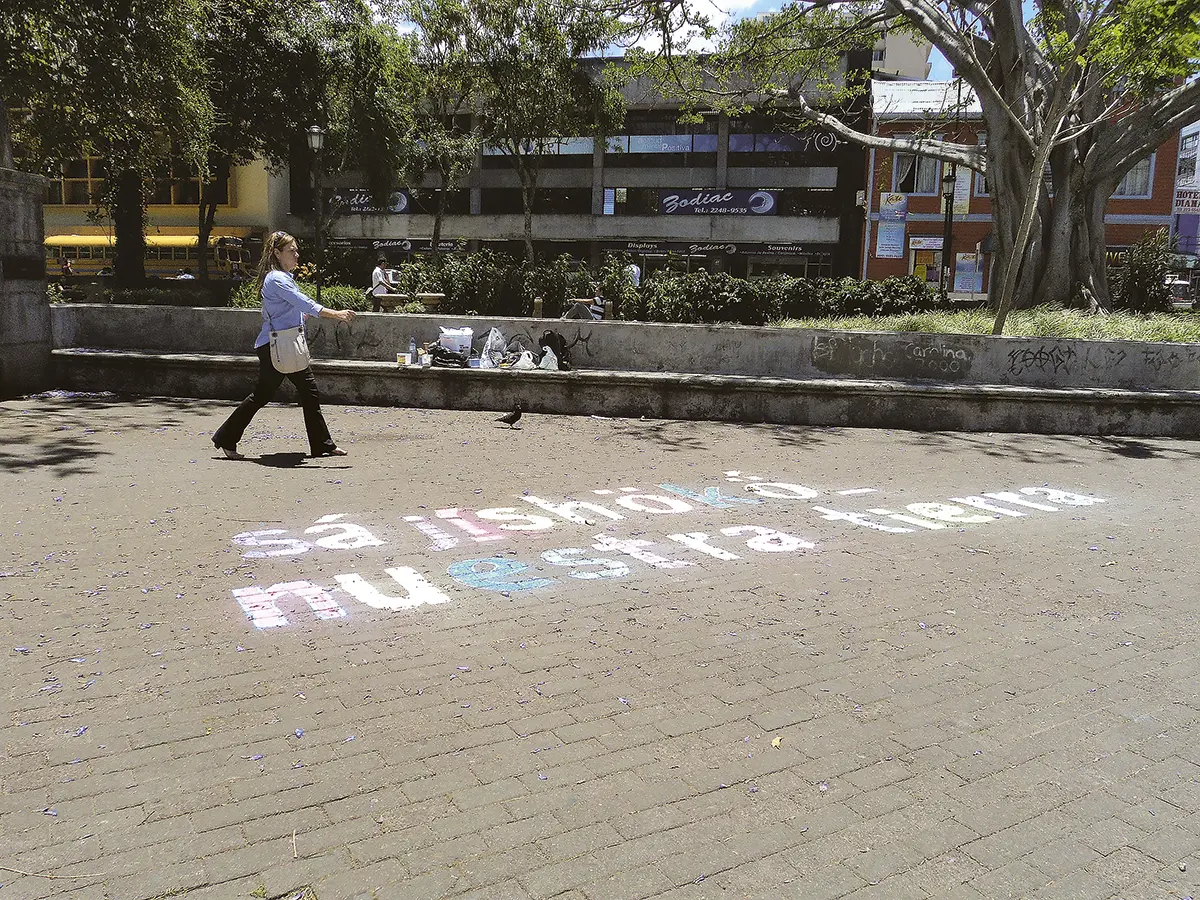
Another series in which the word plays an important role is Para no olvidar sus nombres (To Not Forget Their Names, 2013-2019). On this occasion, she carried out a series of interventions where she placed signs with the names of objects and places written in the original languages according to where they were carried out. In Nicaragua, the words were written in Nahuatl; in Costa Rica, Cabécar; in the United States and Canada, in the Ojibwa language; and in Guatemala, in Kaqchikel. Through this proposal, the artist drew attention to the importance of native languages for indigenous peoples, and she celebrated their survival despite the efforts of colonizing groups to eliminate them. On the other hand, she called on the new generations, so they do not lose this important legacy that is a fundamental part of her ancestral culture.
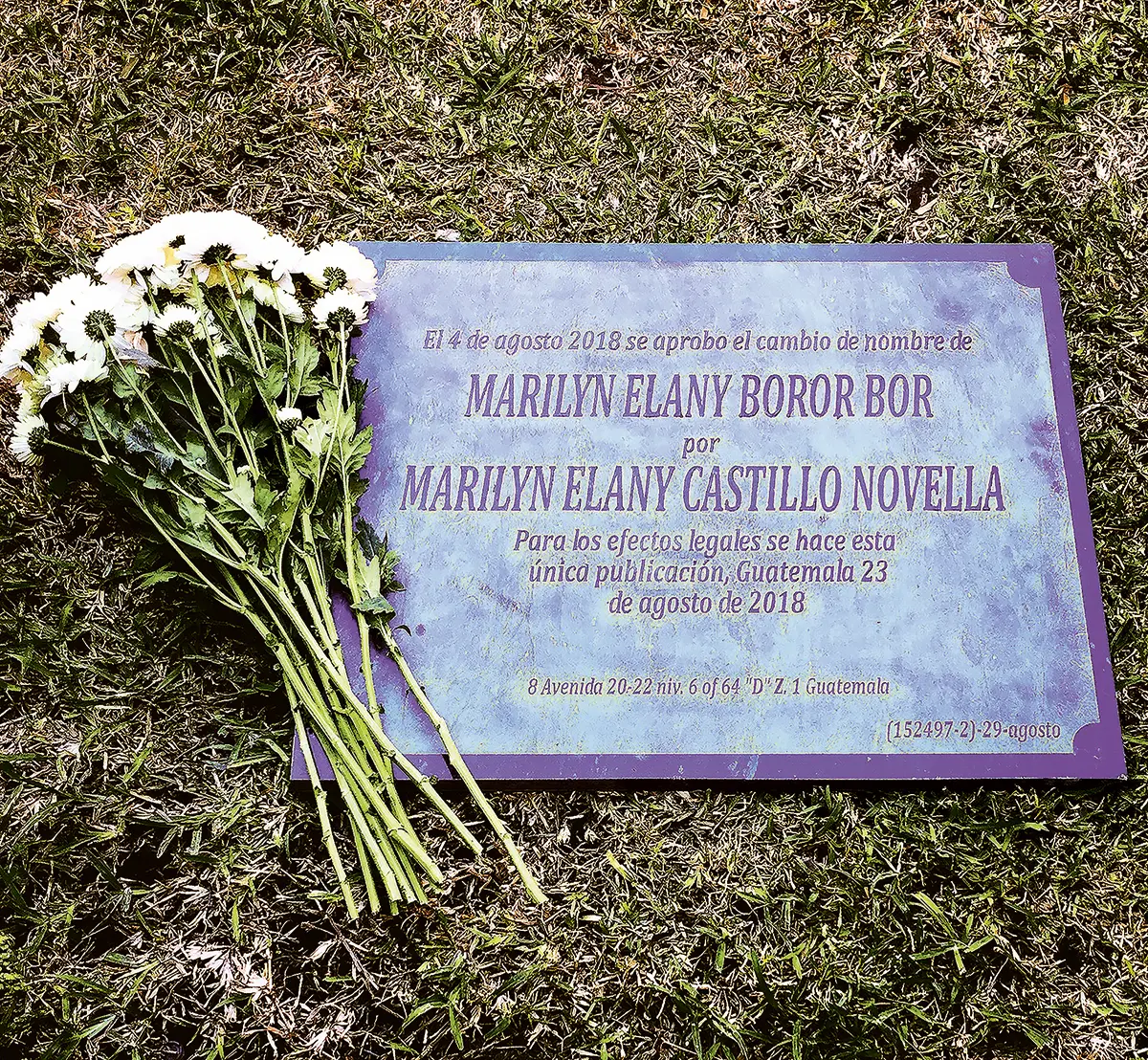
One of her most controversial works is the series titled Edicto Cambio de Nombre (Edict Name Change, 2019-2020). For this project, the artist legally changed her last name from Boror Bor, of Mayan-Kaqchikel origin, to Castillo Novella, associated with two of the wealthiest families in Guatemala. The Castillo surname comes from the Spanish conquistador and chronicler Bernal Díaz del Castillo (1496-1584). It prevails in one of Guatemala’s wealthy families, known for owning a conglomerate of more than 90 companies, including the Central American Brewery, producer of the Gallo beer, the most consumed in the country. On the other hand, the Novella family is recognized for owning the largest cement factory, Cementos Progreso, whose origins date back to the 19th century.
During her research, the artist identified more than 400 announcements in which individuals, mainly of indigenous origin, made public the resolution of their name changes. These ads prove how Guatemalan citizens can legally and symbolically escape their ethnicity to belong to a racist system. Boror Bor explains that “erasing the traces of their identity and their family membership can be interpreted as a strategy to escape the racist system that dominates and prevails, since colonial times, in the country’s public agenda.”7
Marilyn Boror Bor approached this problem through an investigation-performance that lasted around twelve months. As a Maya-Kaqchikel woman, she legally appropriated two surnames that symbolize a patriarchal system of colonial order sustained and built through family inheritance. The process culminated in a performance in which she enacted her own “burial” that included a tombstone that today is part of the Latin American Collection of the Museo Nacional Centro de Arte Reina Sofía in Madrid, Spain. The following inscription is engraved on the tombstone:
El 4 de agosto de 2018 se aprobó el cambio de nombre de Marilyn Elany Boror Bor
por
Marilyn Elany Castillo Novella
Para los efectos legales se hace esta
única publicación, Guatemala 23
de agosto de 2018
8 Avenida 20-22 niv. 6 of 64 “D” Z1 Guatemala
(152497-2) 29 agosto8
[On August 4, 2018, Marilyn Elany Boror Bor’s name change to Marilyn Elany Castillo Novella was approved. This single publication is done for legal purposes, Guatemala, August 23, 2018. 8 Avenue 20-22 niv. 6 of 64 “D” Z1 Guatemala (152497-2), August 29]
Completing the work described above coincided with opening a new Cementos Progreso plant in San Juan de Sacatepéquez in 2019. Promoted by the official press as a “pioneering plant” and “the largest and most modern in Central America,”9 its construction and operation are linked to severe accusations by indigenous groups that have denounced illegal occupations10 and the destruction of the environment.
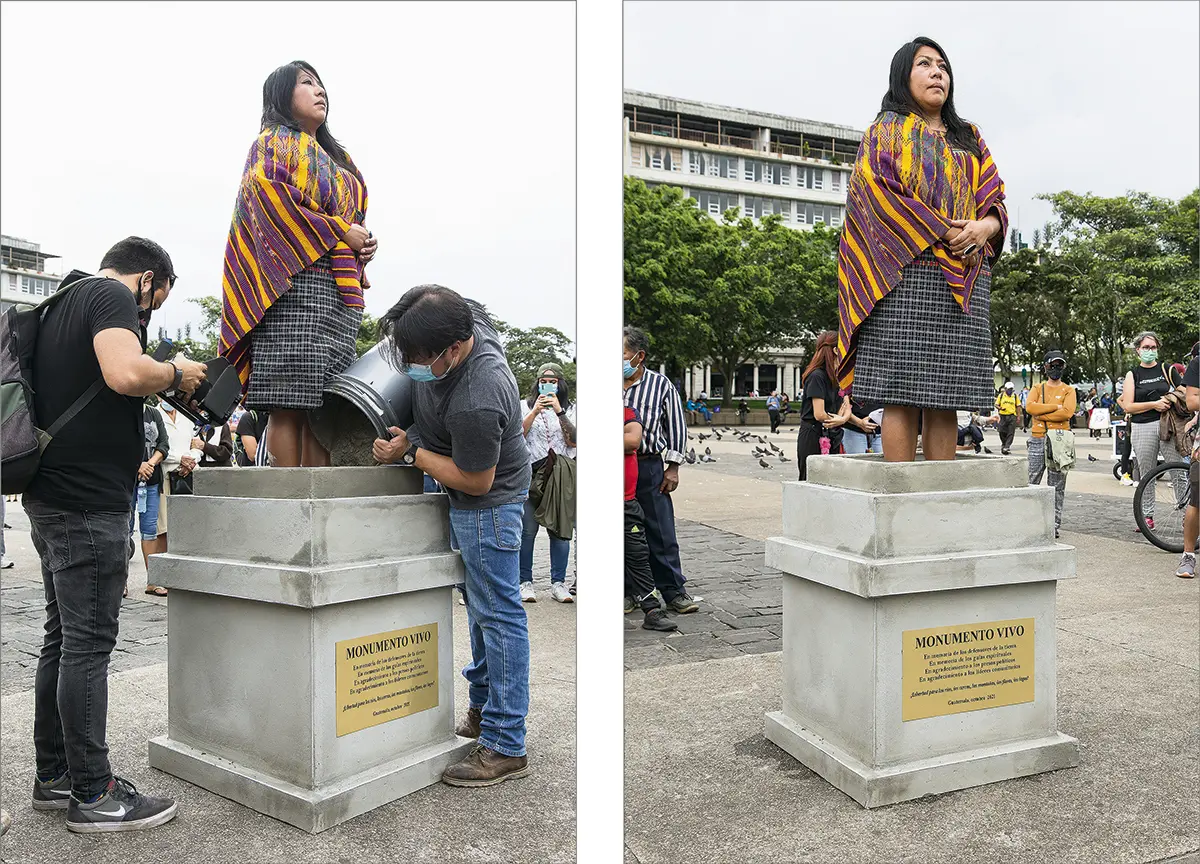
In response to this case and, in general, to how colonizers have stripped indigenous groups of their territory for more than five centuries, Marilyn Boror Bor enacted the performance titled Monumento Vivo (Living Monument, 2021). Dressed in traditional Maya-Kaqchikel clothing, she stood on a base where they poured fresh cement. As the cement dried, the artist stood motionless in the center of Guatemala City’s Central Plaza. As is traditional in commemorative statues, the artist accompanied the action with a plaque with the following inscription: “In memory of the defenders of the land, In memory of the spiritual guides, In gratitude to the political prisoners, In gratitude to the community leaders. Freedom for the rivers, the hills, the mountains, the flowers, the lakes!” Through this action, the artist denounced the consequences suffered by indigenous groups due to the destruction of the ecosystem in the name of progress and civilization.
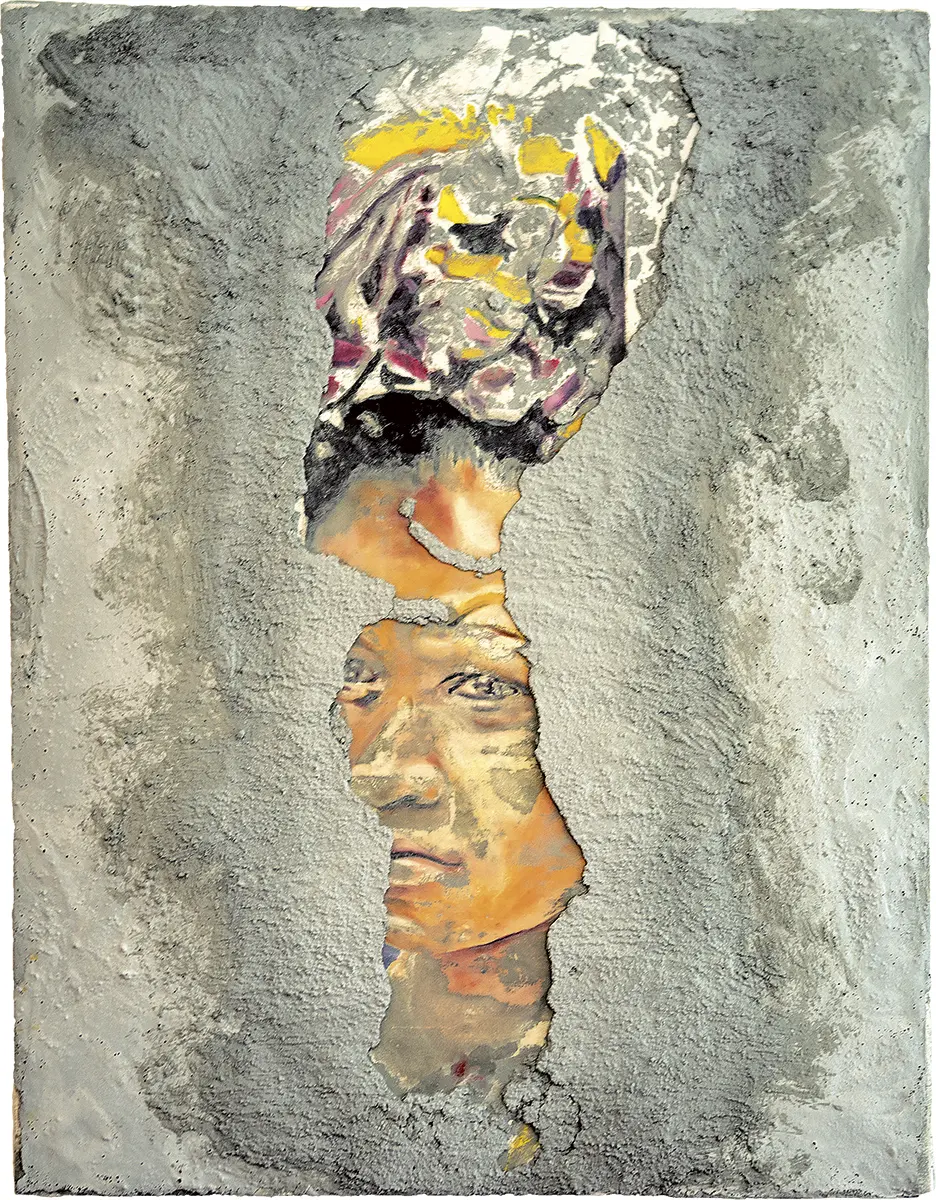
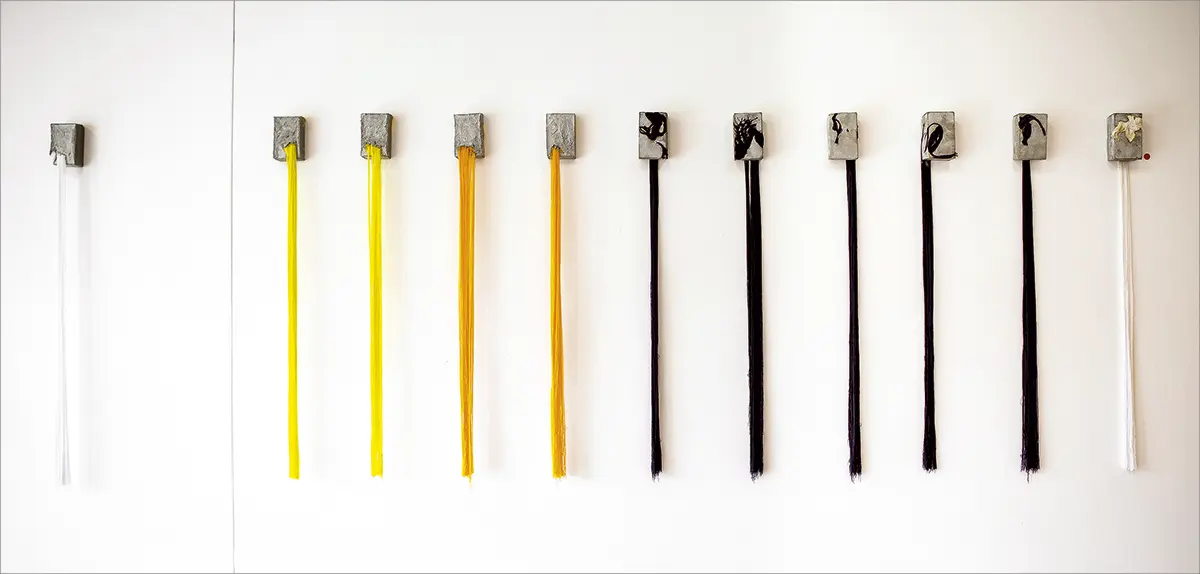
Continuing with the use of cement as a symbol of destruction and oppression, Boror Bor produces her most recent series entitled Rituales sepultados (Buried Rituals, 2022) and Nos quitaron la montaña/Nos devolvieron el cemento (They Took Away the Mountain/They Gave Us Back the Cement, 2022). In the first one, cement blocks “bury” threads dyed with the tones of Maya-Kaqchikel clothing that symbolize an ancient tradition. However, these survive by becoming visible on the surface and sometimes falling like a cascade.
According to the artist, this work is based on the study of the word “kemonel” (weaver), which in Kaqchikel means “comber of threads.” Through these works, she connects with her tradition. She honors the women of the original peoples, recovering the rituals of textile language and clothing that tend to disappear. According to Boror Bor, “these pieces reflect my hybridity; an indigenous woman who lives in the city (submerged in concrete), where she resists the takeover of her territory (San Juan Sacatepéquez), an area in which the cement companies are slowly erasing her landscape. In these sculptures, the thread sinks into the concrete; however, we see how it makes its way, forms cracks, and manifests itself as a vomit of colors (or life) that overflows from the cement. The work seeks to liberate, vindicate, and value the textile semiotics, the language, and work hours impregnated in the Mayan clothing; a practice whose tradition has been an emancipating economic source for many indigenous women.”11
In Nos quitaron la montaña/Nos devolvieron el cemento (They Took Away the Mountain from Us/They Gave Us Back the Cement, 2022), the artist takes clay pots used to store or pour water and fills them with cement. Sometimes, she uses fragments and replaces the missing pieces with hardened cement. By eliminating the functionality of these objects associated with a natural resource such as water, essential for the survival of the human being, the artist criticizes a system that not only physically destroys the natural resource but also affects socially, culturally, and spiritually the indigenous population with which it is closely linked.
Marilyn Boror Bor’s work constitutes a call to rescue and visualize the present through understanding an ancient past that has been made invisible and fragmented. To do this, she uses different media such as painting, sculpture, weaving, installation, speech, and her own body as a political space for denunciation and resistance. To understand that past, it is essential to conceive that the objects, the language, and the territory itself, to which the artist refers tacitly or literally in her works, must be seen as a living entity from which expressions full of energy and spirituality are manifested. From her position as a visual artist, she consecrates a work charged with history, memory, and spirituality by placing it on the “altar” of the so-called contemporary art.
NOTES
1. Marilyn Boror Bor, artist statement, January 2023
2. Marilyn Boror Bor, telephone conversation with the author, February 1, 2023
3. Ibid.
4. Ibid.
5. Ibid.
6. Ibid.
7. Ibid.
8. https://drive.google.com/file/d/1R7sQVKU4iXIYUEtVv8-GwRavxZRr_H-3/view?usp=sharing. Consulted on February 20, 2023
9. Rosa María Bolaños, “Esta es la planta en la que Cementos Progreso invirtió US$500 millones en San Juan Sacatepéquez” Prensa Libre 11 de marzo 2019 https://www.prensalibre.com/economia/esta-es-la-planta-en-la-que-cementos-progreso-invirtio-us500-millones-en-san-juan-sacatepequez/ Consulted on January 31, 2023
10. Nelton Rivera, “San Juan Sacatepéquez: el despojo de la tierra va de la mano de la cementera” Prensa Comunitaria KM169 septiembre 18,2019. https://prensacomunitar.medium.com/san-juan-sacatep%C3%A9quez-el-despojo-de-la-tierra-va-de-la-mano-de-la-cementera-b4c4a823ea7c Consulted on January 31, 2023
11. Marilyn Boror Bor, conversation with the author, February 1, 2023
FRANCINE BIRBRAGHER-ROZENCWAIG, PH.D.