To curate a retrospective exhibition of Mapa Teatro was no easy task given the nature of this oeuvre: theatrical productions, video installations, voices, and performances. They are works that belong to the “living arts:” performed in real time and involving spaces to create events that affect the viewer emotionally and physically. In tune with these characteristics, appropriate strategies were implemented to stage the pieces as acting entities that immerse the body and the subjectivity of the viewer in a world where myth, history, fiction and affections inhabit a shocking montage-installation shaping Colombian reality.
The show’s curator, Carolina Ponce de León, was the first critic to capture Heidi and Rolf Abderhalden’s unique forms of staging. After seeing De Mortibus. Requiem for Samuel Beckett (1989-1990), she published an article in El Tiempo, where she analyzed the Abderhalden siblings’ scenic resources and their affinities with contemporary art’s multidisciplinary character.
The works were distributed in two thematic groups and installed on the two exhibition levels. The second floor featured works that deal with the Colombian armed conflict: the triptych Anatomía de la violencia en Colombia (Anatomy of Violence in Colombia) (2010-2017) and Prometeo (Prometheus) (2002). The third floor presented, the Atlas project, which comprises various laboratory works created between 1993 and 2022, with the active participations of artists, professionals from diverse disciplines, and communities. Several performative “activations” were also carried out, one of them Las voces femeninas de Ricardo III (The Female Voices of Richard III), with extraordinary beauty and strength.
Aside from this general classification, the great challenge consisted in preserving the “live” character of the pieces. To this end, the exhibition produced and staged a new laboratory. Accustomed to working collaboratively, Mapa Teatro on this occasion invited the curator and the museum team to be part of the laboratory. Mapa Teatro’s works are always based on a motif, a myth, a reading, a story, a poem, this time they took Mapa Teatro’s very practice as the starting point. Archive material, objects, videos, and settings were arranged not as static pieces but as devices to activate the bodies, as well as the memories of those of us who are familiar with their trajectory, and to encourage every visitor to participate in a practice that moves in an “expanded scenario” that has brought art closer to life and blurred the boundaries between the arts and the social sciences.
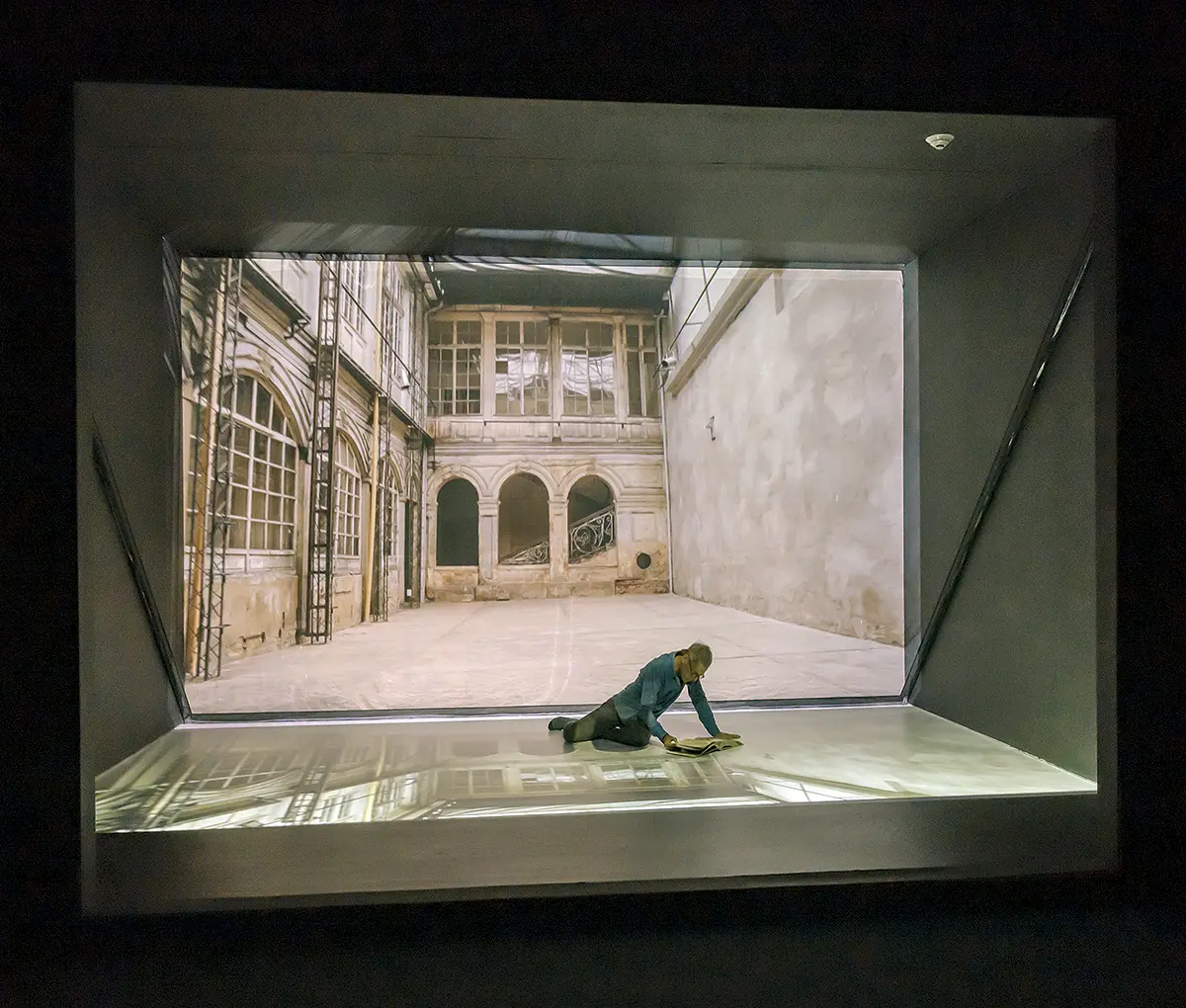
On the second floor, two objects greeted the viewer: a makeshift robot brutally whipping, and cracking, a red wall. The other was a huge projection on a sloping wooden wall, which showed an image of a beautiful but dilapidated Republican mansion: the headquarters of Mapa Teatro since 2000, and where the works on display have been created and staged. I understood these pieces, together with the curtain on the third floor, to be fundamental devices in this show: violence, ruin, and beauty. The robot evoked the masked men that, armed with a whip, beat the residents in the town of Guapi (Cauca) during a local festival. A variation of Los santos inocentes (The Holy Innocents), which is part of the triptych, this work alluded to the “whip of history”; that is, to the violence exerted on black populations. A whip that extends all the way to the armed conflict in Colombia.
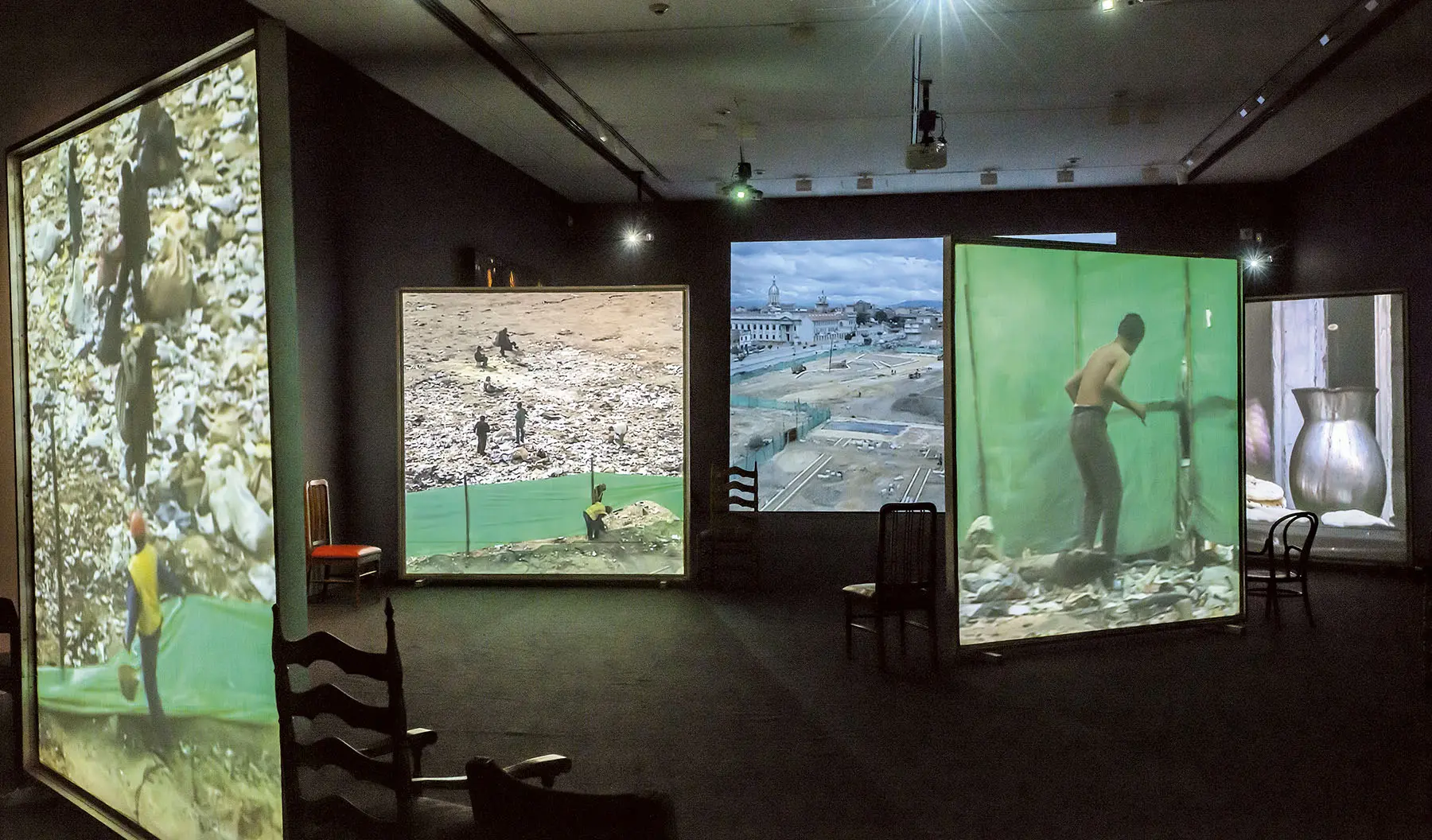
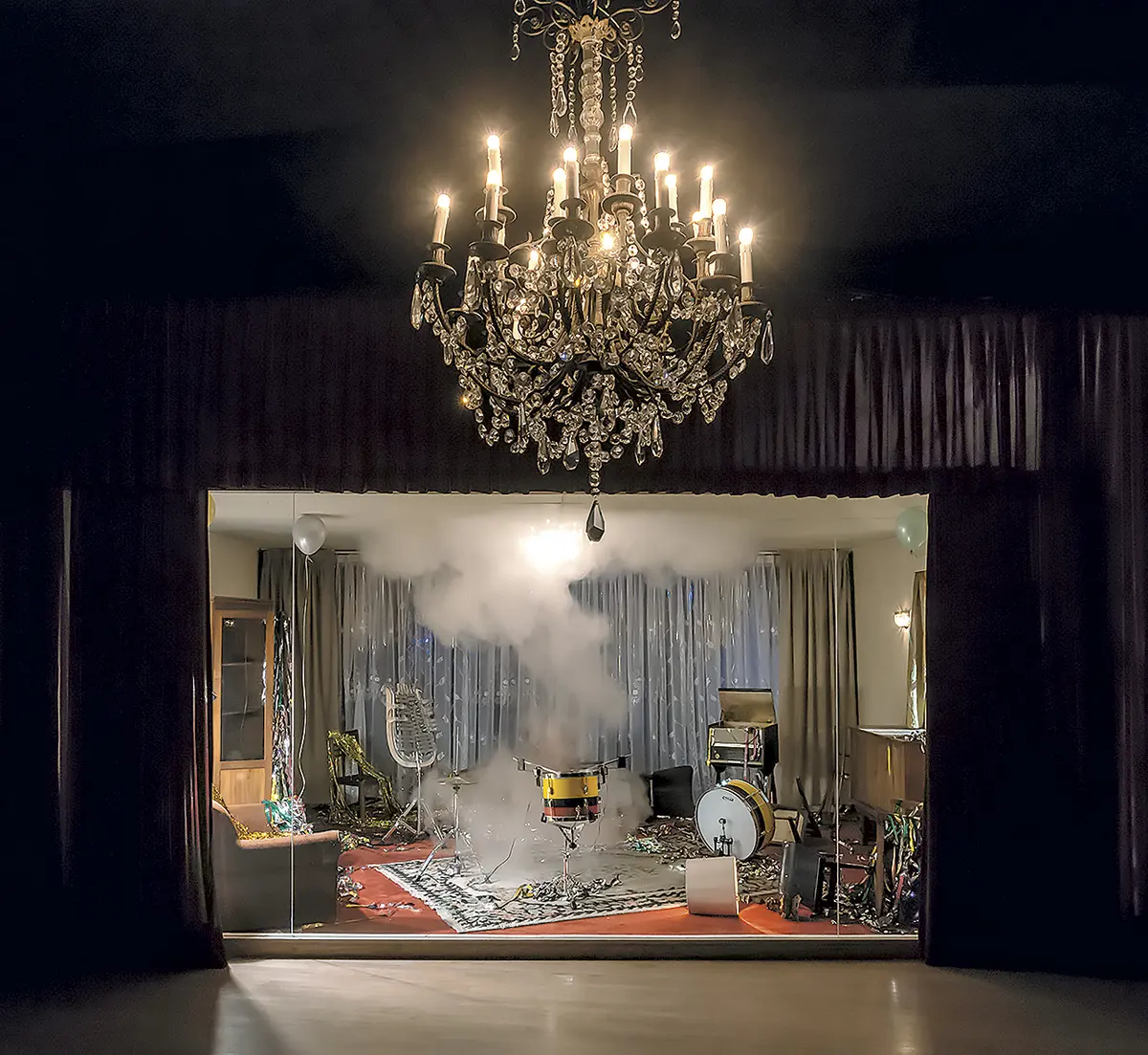
Anatomía de la violencia (Anatomy of Violence), comprised of three theatrical productions, posed another great challenge. The sudden opening of a curtain— like the customary rise of a theater curtain—unexpectedly placed the public before the setting of Los incontados (The Uncounted), marking the beginning of a feast not exempt of violence, puzzling the visitors and immersing them in an amazing world of streamers, voices, and changing images that condensed the different versions of this triptych, which have been shown in various parts of the world. The circuit ended with Prometeo, Testigo de las ruinas y La limpieza del establo de Augías (Prometheus, Witness to the Ruins and The Cleaning of the Augean Stable). A mill, indispensable tool of our gastronomy, acted as a silent witness to a sad story of resistance in still and moving images strategically distributed in the space, narrating the demolition of El Cartucho, a neighborhood in Bogotá, and presenting the statements and gestures of its old inhabitants, who fondly remember their life experiences and their homes, now turned into rubble.
On the third floor, an enormous and opulent republican-style curtain was spread along a corridor featuring one of the exhibition’s most moving works: the video recording of Horacio (1993-1994), a production based on Heiner Müller›s play and performed by inmates of La Picota prison. A series of details—such as coarse burlap clothing juxtaposed with delicate flowers, or the tender, pleading gestures of men held in solitary confinement, some of them murderers—are a shocking sight because they underscore the ambiguous boundary between good and evil. In another room, a video camera was lovingly panning across a courtyard, traversing corridors, caressing an ornate and dilapidated old staircase, and entering perfectly preserved rooms, with their wooden floors and whitewashed moldings. Hotel Atlanta, the title of this video installation, recalls the name and function that Mapa Teatro’s headquarters had years ago, by showcasing the venue that has housed this laboratory of the imagination and its tireless search for a living, poetic, and participatory art, where decay and beauty coexist.
MARTA RODRÍGUEZ