
Another Space, in New York, is currently hosting “Macho: Representing Masculinity,” a group show that explores conceptions of masculinity. It was the sequel to “The Second Sex,” which examined radical and feminist artistic practices in Latin America. With a dramatic and unforgiving humoristic tone, this exhibition weighs on the traditional heteronormative construction of male identity and heightens the performativity of the works by intersecting bodies, sexualities, and eroticisms to deconstruct forms of control that assign specific roles and characteristics within the social construction of gender. The show includes pieces by Álvaro Barrios, Hernan Bas, Alfredo Boulton, Valerie Brathwaite, Maris Bustamante, María Fernanda Cardoso, Feliciano Centurión, Detext, Paz Errázuriz, Fernell Franco, Julio Galán, Félix González-Torres, Nicolás Guagnini, Lyle Ashton Harris, Hudinilson Jr., Dorian Ulises López Macías, Antonio Manuel, Robert Mapplethorpe, Marisol, Marta Minujín, Carlos Motta, Claudio Perna, Richard Prince, Herbert Rodríguez, Miguel Ángel Rojas, Hugh Steers, Hank Willis Thomas, and Andy Warhol.
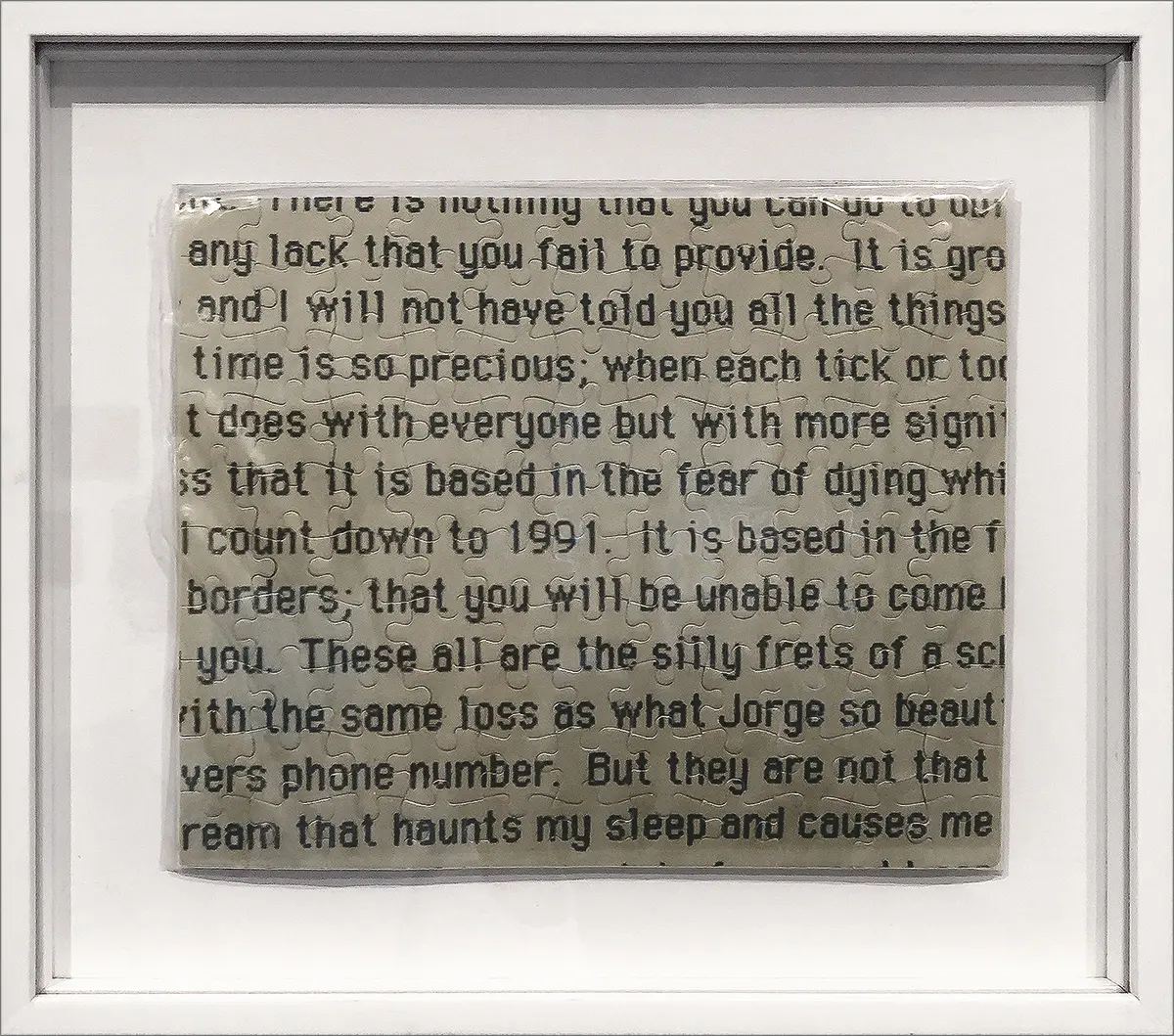
Untitled (Lover’s Letter) (1991) by Félix González-Torres plays a central role. The artist printed a section of his lover’s letter on a puzzle that he then placed inside a plastic bag. The work is a constant exercise in incompleteness. González-Torres carried out a series of actions to deny access to that which he initially seems to offer us. The cropped letter operates as a metatext that transcends meaning to diversify its possible interpretations. Intimacy, fear, death, daily life, and illusion inform our reading. The puzzle is built with the same two shapes that are repeated until reaching the linear border; the entrances and exits are like sexual organs that we could disassemble to reconstruct countless illegible texts. However, the artist wards us off once more: the letter is imprisoned in a plastic bag. The delicate actions during the production of the piece point to a series of violent, physical, and social acts. It is impossible to control who and how bodies desire, but impulses are suppressed at least to maintain the appearance of a non-existent social order.
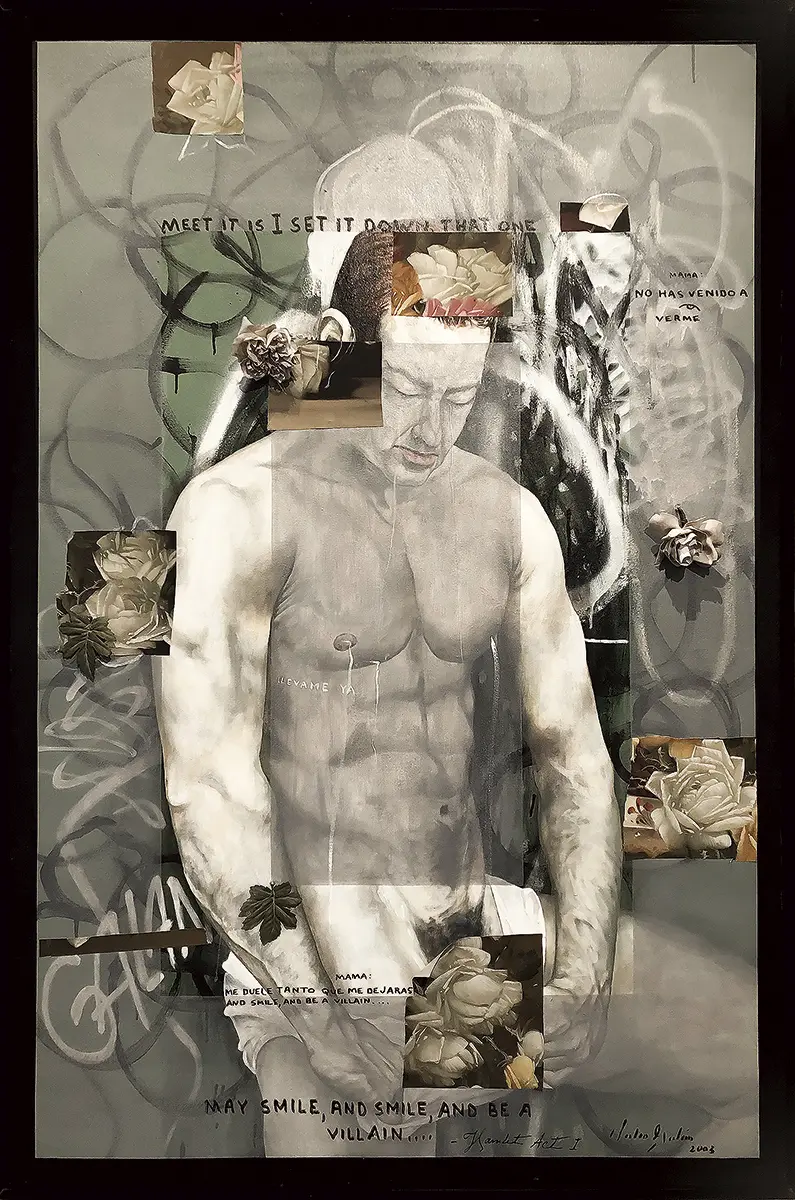
The body is made manifest and becomes experience through the techniques or mediums used by the artists. Such is the case even with pieces that function within traditional systems of representation, such as Julio Galán’s Untitled (2003), in which allusions to visual forms of Catholicism are used to enshroud his messages. This large painting centers on a mature male figure with considerable muscle mass and a skin tone that reminds us of the Christs of Diego Velázquez or José de Ribera; here, pain and nudity are transformed into an erotic carnality. The artist also carried out a performance to comment on his own sexuality: his face tilted, observing his own genitals, while unfolding and tightly holding the sheet that was covering him, he only allowed the public to see some of his pubic hair. Galán also covered the penis and other areas of his painting with images of roses and vine leaves that were also reclining as in an act of repose. These cutouts seemed to be part of a bigger picture that the viewers had no access to; like pieces of a great puzzle of which only some fragments remain.
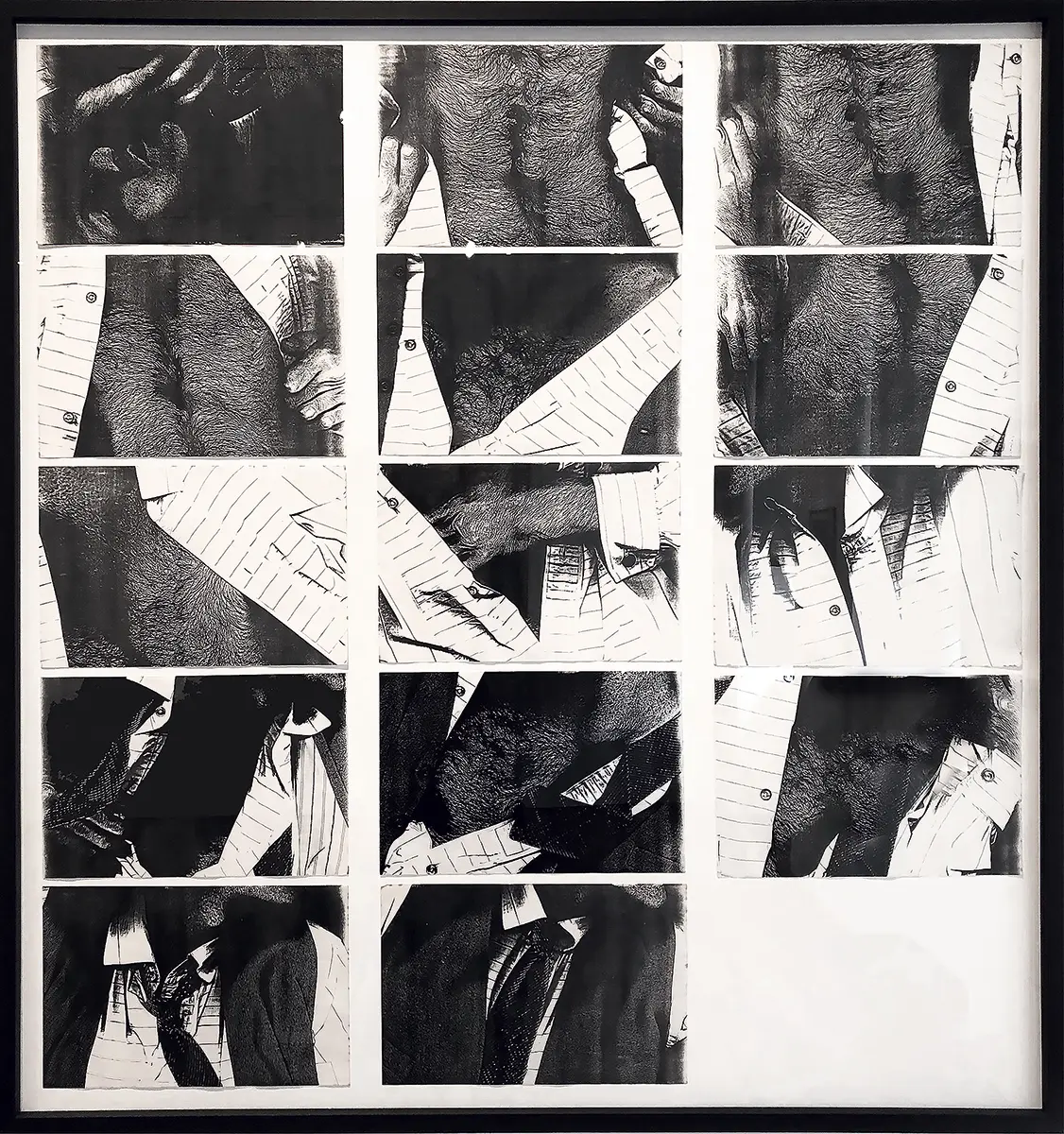
The exhibition includes five works by Hudinilson Jr., whose origin, production, and interaction with the public are defined by performative acts. Untitled (1980) consists of fourteen Xerox copies. We can almost visualize the artist climbing on top of the Xerox machine, holding on to it and pressing his body onto the glass plate. Composed of flesh, hair, and pieces of clothing—the work is a fragmented image that doesn’t exactly portray undressing as discovery: the artist becomes an object, an agglomerated and accumulated mass. The piece is, therefore, the record of the interaction between artist and machine, which amounts to a series of body parts; remnants of that materiality.
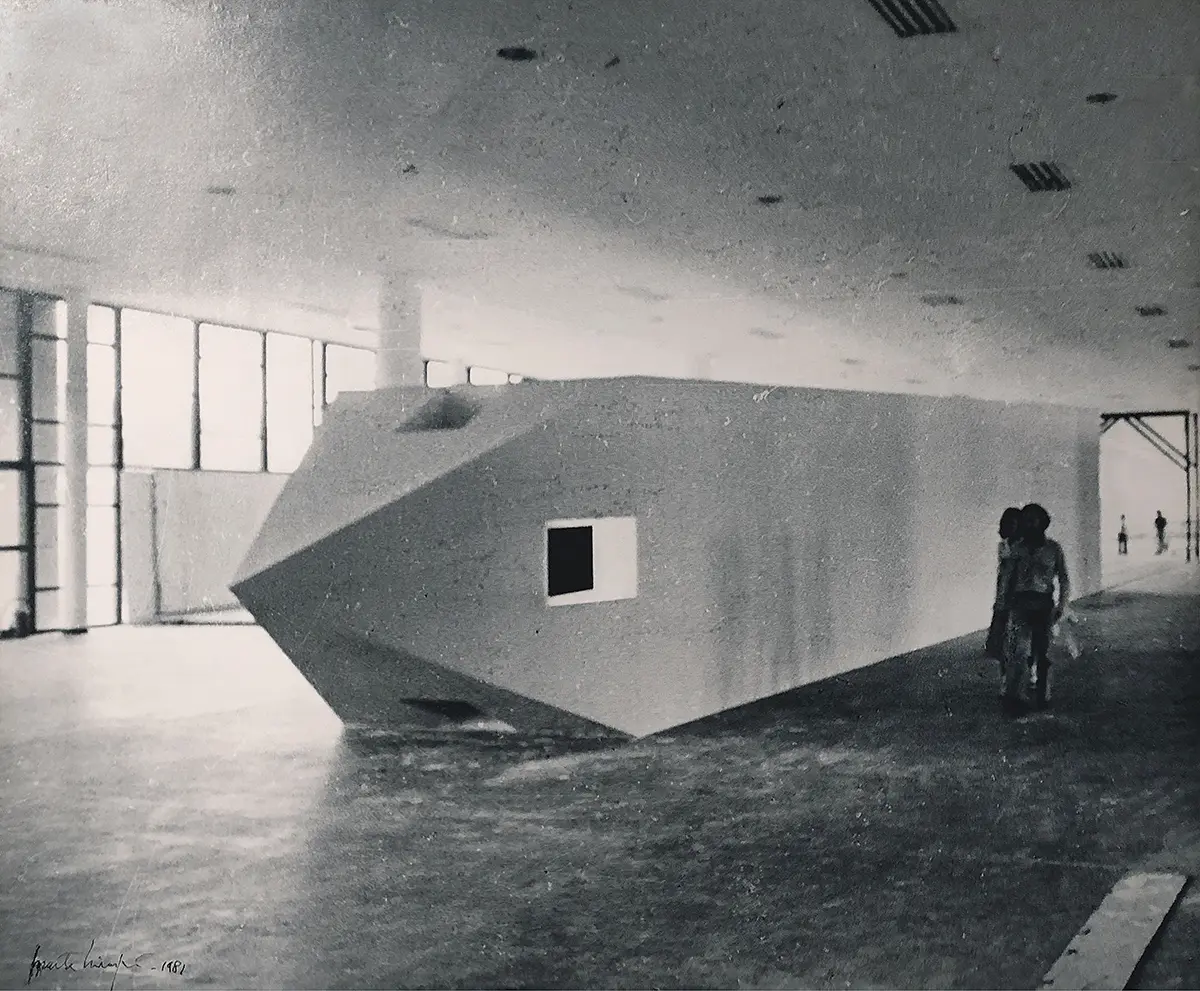
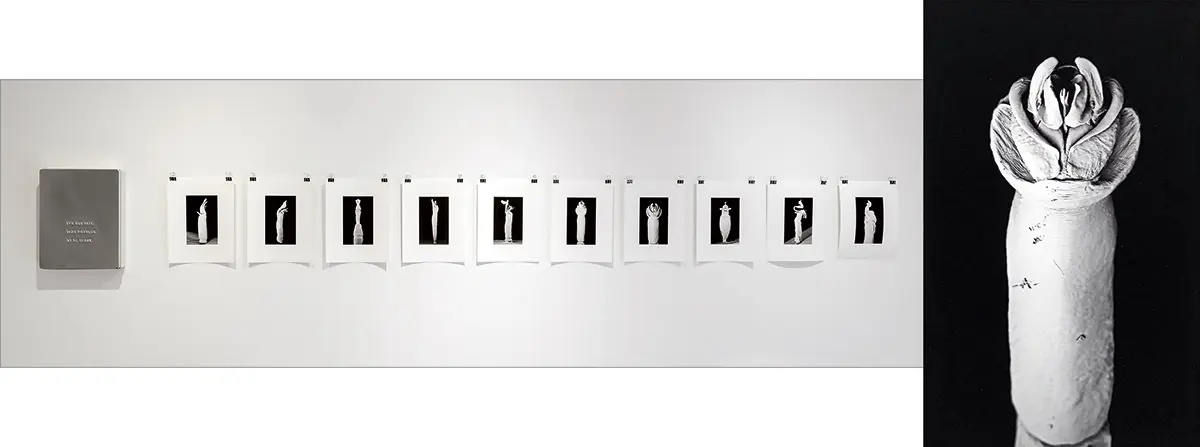
Whether as flesh, as an organ, or as an object triggering both pleasure and violence, allusions to the penis were repeated throughout the exhibition. In the documentation of The Obelisk Lying Down (1978), by Marta Minujín, an obelisk appears as a fallen giant, a defeated monument, but with a threatening tip. Dorian Ulises López Macías portrays faces and bodies that are mostly ignored by the fashion industry in his native country. As is usual in his work, the photograph Untitled (Mexico City), from 2016, is a street portrait of a dark-skinned man; standing in a vitally sensuous pose, he raises his left arm while his right hand grabs his bulging member as a sign of virility. Even the title of María Fernanda Cardoso’s work It’s Not the Size That Matters, It Is Shape (2011) challenges stereotyped perceptions of morphology and the connotations that humans give to the penis. The work consists of photographs of resin sculptures of copulatory organs from the Opiliones order of arachnids, commonly known as harvestmen, an insect related to mites and spiders. About 1mm long, these penises were enlarged to match the human scale. With deadpan humor, the artist confronts us with the obsession and social burden of size, shape, and pleasure.

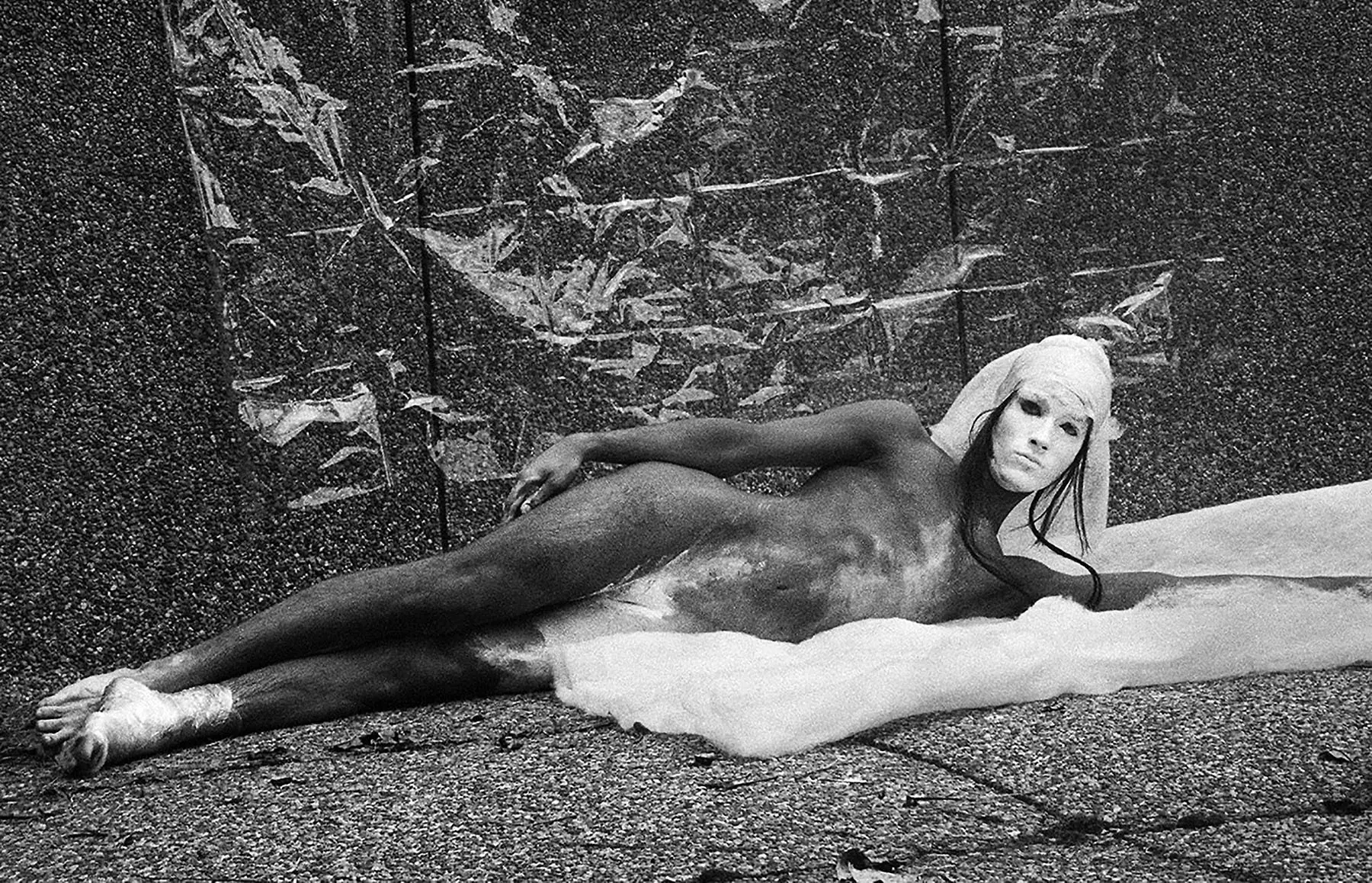
Pinga II (Cock II, 2018) is a collage by Herbert Rodríguez, whose central image, in the shape of a penis, is made with clippings from magazines and newspapers of photos of naked women, while the background is laden with news reports of femicides or violent acts against women. In Untitled (Self Portrait) (1998) Carlos Motta evokes the odalisque as a character constructed by the orientalist mentality. Motta covers his face and sex with a kind of white chalky substance to embody one of the feminized figures relegated to the lowest stratum in the harem, so as to dislocate her character and reconfigure her political and social power in historical discourse.
Another Space’s curatorial team focused on works in which intimacy equals strength and expressiveness. Artists establish intimate relationships with others and with the social structure. Even in works such as the photographic series “Billares” (Poolrooms,1985), by Fernell Franco, certain codes of camaraderie between men can be perceived in the ways they smile at each other. The show’s power resides in the contrast between longings or desires and the violence exerted against fragmented bodies: presences that haunt us to claim a space, an existence, the right to be and to represent themselves. Performance operates here as a loud laugh, with works projecting torrents of emotions and impulses of embodied experiences. “Macho: Representing Masculinity” is an exhibition where objects do not behave as they should; on the contrary, they radically dissent. Materiality and representation are used to subvert any anchorage of identity, and even to prevent the very discourse of these works to become enthroned, so as to open the door to various masculinities and to the complexities involved in the relationships between intimacy and social structure.