Some artists get lost in the nooks and crannies of art history despite their originality and their creative power, or perhaps precisely because of them. Whatever the case, the exhibition of works by Jorge Eduardo Eielson (Lima, 1924 - Milan, 2006) at Es Baluard, Palma de Mallorca’s Modern and Contemporary Art Museum, signals a true moment of discovery in Spain and also in Europe, where this artist remains insufficiently well known. This in spite of the fact that Eielson lived most of his life in Italy and met with a measure of international success at various points in his career, first in the 1970s, with participations in Harald Szeemann’s iconic documenta 5 and three editions of the Venice Biennale, and again in the early 2000s, when his work, both literary and artistic, gained renewed circulation.
Curated by Imma Prieto, director of Es Baluard, the exhibition is retrospective in character. Covering Eielson’s career from the late 1950s through his final works, it demonstrates the radicalism of his approach and his multifaceted interrogation of reality through graphic elements and cultural references that combine ancestral traditions from his native Peru, Mediterranean myths, and modern languages. The title of the show, “El nudo vertical” (The Vertical Knot), is indeed a reference to Inca cultural traditions, specifically to the quipu, a system of accounting and textual communication based on knotted cords used over a thousand years ago. “This wordless and paperless script combined tactile and visual experiences in the codification and de-codification of meaning,” notes Prieto, who traveled repeatedly to Italy to prepare the exhibition: to Sarnno, where the Eielson archive is located, and to Florence, where the artist’s executor, the poet and professor of Latin American Literature Martha L. Canfield, has established the Centro Studi Eielson, charged with preserving the works and promoting conferences, seminars, cultural events and innovative productions that foster dialog between European and Latin American cultures.
“Self-exiled in Italy because of his homosexuality, Eielson kept up throughout his career a dialog between pre-Columbian culture and Mediterranean mythology, in search of the universal place that unites all human beings,” Prieto continues, noting how “his work opens up meanings of the past that point towards a future in which the constellations and their correspondences are abstract symbioses linking memory, writing, and infinity.”
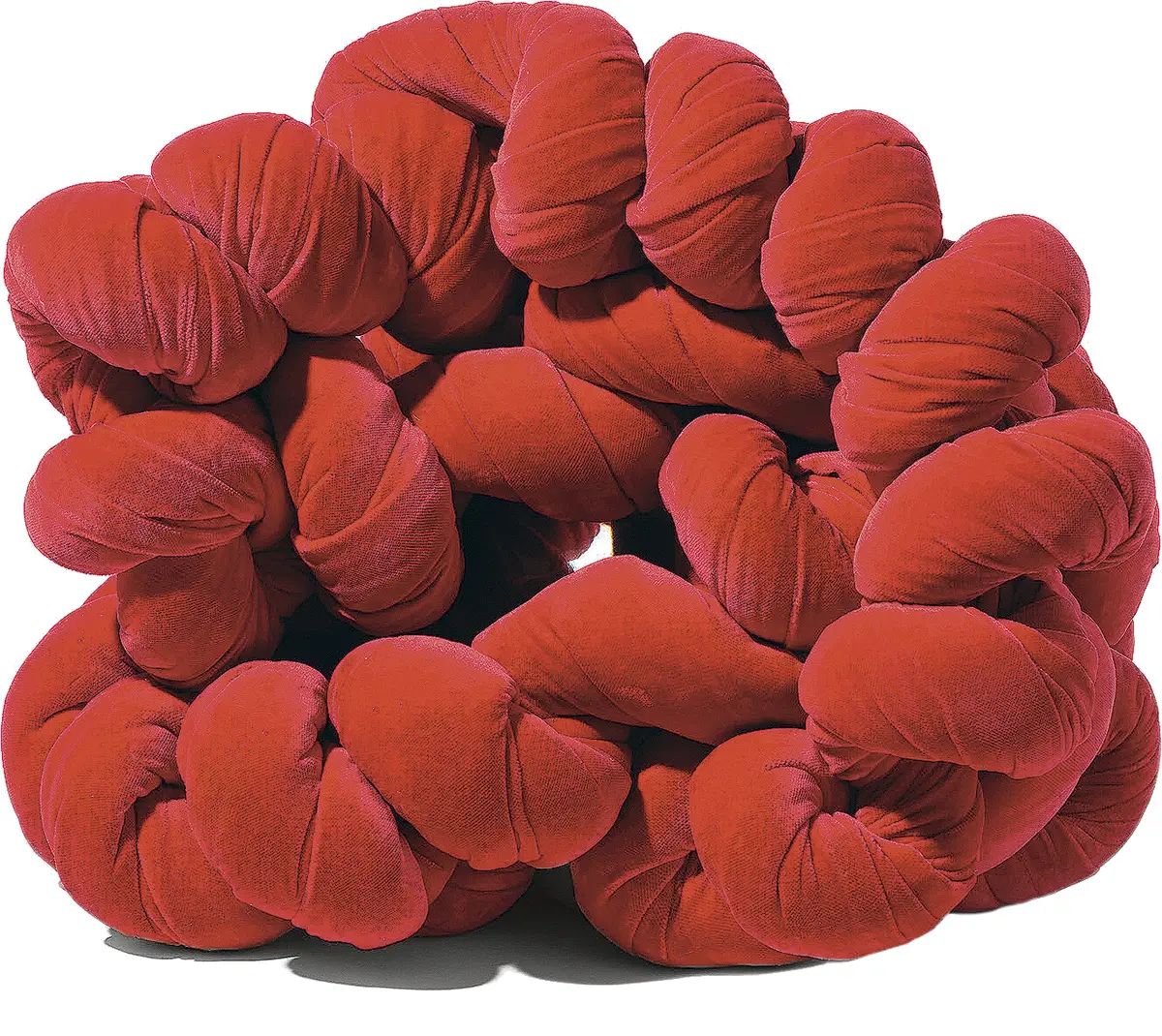
The exhibition starts with the visual poems that embody the Eielson’s relationship with literature and language, understood as a structure of graphic and narrative codes connected to both reason and intuition. Best known in Latin America as a major poet, a member of the 1950s Generation alongside such Peruvian writers as Blanca Varela and Javier Sologuren, Eielson’ complex, ever-shifting body of work regularly featured cracks as a trace of the personal and social wound that accompanied him throughout his life. “His earliest works in the visual arts start with a reflection on landscape, taken to mean the interface in which to open up cracks to understand ways of thinking,” Prieto explains. These early works, inspired by Peru’s coastal region and made in the late 1950s with materials transported from the country to represent surfaces eroded by time, water, wind and fire, slowly evolved towards matter painting, with the wound taking the shape of bodies evoked by means of fragments of shirts, slacks, or neckties. Empty clothes under tension that become central to the work, treated in every imaginable way: torn, burnt, cut, twisted, and finally knotted. In this way, step by step, Eielson’s language distilled its visual expression and abandoned the imagery represented by those clothing items, in order, through a process of synthesis and simplification, for the quipu to gain increasing prominence and greater autonomy in dialog with color. “In recent times, important scientists working in astrophysics have told us that the universe may be a knot, or, rather, an infinity of knots that come and go ceaselessly, of which we can glean neither a beginning nor an end,” Eielson once said, anticipating one of the paradigms that define contemporary art. “This I find deeply satisfactory, because it shows us how close artistic creation is to scientific discovery.” The entire second gallery of the exhibition is devoted to Eielson’s work with knots, where form and concept come together to give shape to other systems of thought, connected to shamanism and the ritual. These works demonstrate Eielson’s incessant quest for the energy contained in knots; in his own words, “a little like Fontana’s infinitely repeating cut, always marvelously charged with primordial energy, and at the same time lucid, pure, forceful, intelligent, and (why not?) elegant.”
After its run at Es Baluard, the exhibition will travel to the Canary Islands, to be housed at TEA Tenerife Espacio de las Artes from June 23 through September 17, 2023.