In a fast-tracked world crowded with images, the paintings of Alejandro Campins are a haven, and also a provocation. His work is the outcome of a unique existence that has brought together peculiarities of his local context, intellectual interests, and intersubjective practices. One way to approach his work is to examine it from the standpoint of his referents. A practitioner of Tibetan Buddhism, a reader of Carlos Castaneda, and an admirer of Giotto, Campins shows an inclination towards enigma and spirituality, which endows him with a particular artistic personality that seeks to embed his images in spaces both earthly and sacred.
Campins was born in Manzanillo (Cuba) in 1981 and studied at the Academia Profesional de Artes Plásticas “El Alba” (Visual Arts Academy) in the city of Holguín. During his student days he took an interest in oriental philosophy, while charting his particular approach to landscape: “Something very beautiful happens in Manzanillo. I remember when I used to get up for school, I’d go outside and the city was always covered in fog.”1 Over the years, that childhood fog became one of his paintings’ cornerstones, sometimes explicitly and others implicitly; the atmosphere or environment guiding their plasticity. Campins’ poetic exploration is acutely introspective and so are his landscapes: the protagonists of his work. Countryside and nature are mystified as an echo of Romanticism, not with the objectivizing gaze of Friedrich’s ambler, but with a sensibility that seeks and loses herself in telluric forces.
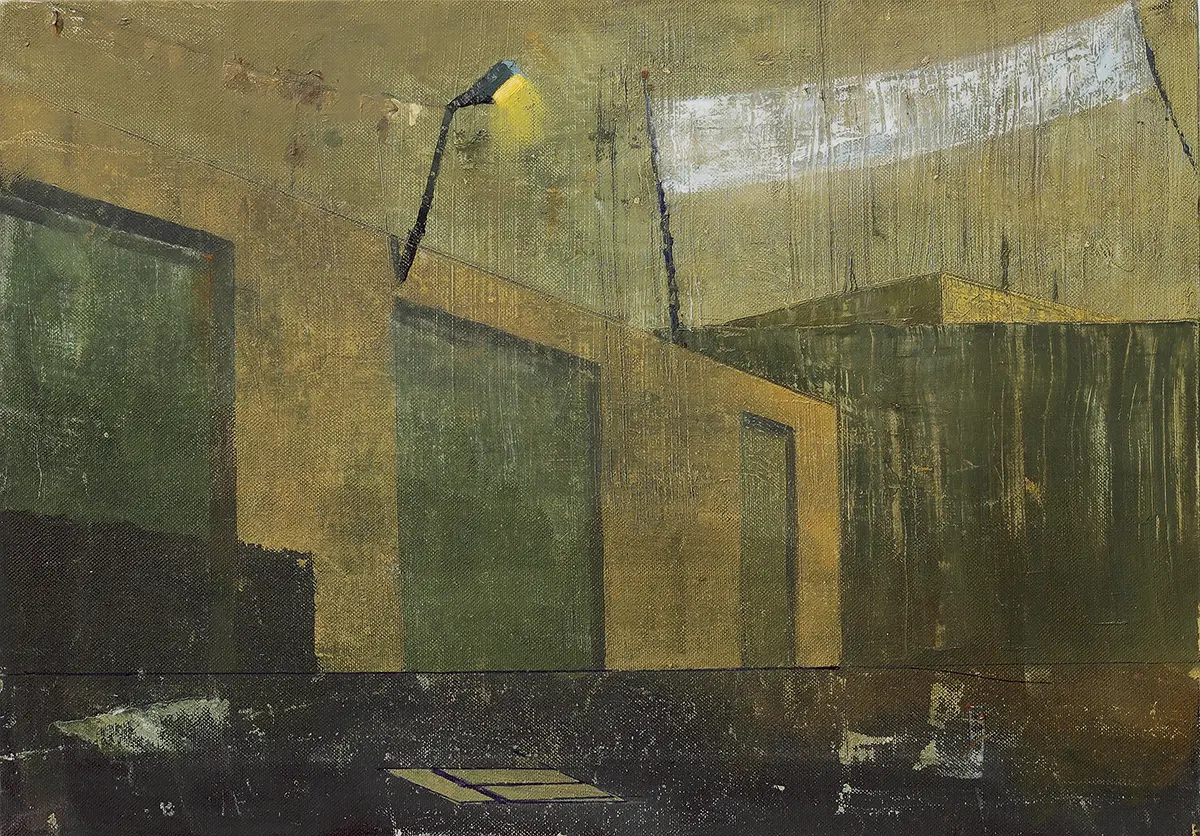
Later, in 2004–2009, he studied at Havana’s Universidad de las Artes. His drawings at the time already show him as a hunter of singular atmospheres and with great skill in line composition. As in his earlier paintings, he incorporated human or animal figures, but intriguingly these never constituted the poetic or conceptual core of his compositions. Perhaps this awareness made the artist decide to do without them altogether, endowing his later work with a uniquely mysterious mood devoid of narrative. In his “Patria” (Homeland, 2011) series, the artistic personality of Campins is already fully discernible: large formats with landscapes made up of wide chromatic zones, layers, and glazes that give depth to the palette, as well as the occasional presence of bright colors such as yellow or blue, whose glow contrasts with the opacity of other tones within the pictorial plane. It is a somber homeland, where the lively joy of a bouquet of flowers does not detract from a panorama so spectral as to be emptied of all characters.
Cuba’s insularity and especially the difficult conditions of life in the country have forged a local openness towards outsiders: for Cubans, all that is foreign is synonymous with opportunities. Until 2016, Cuban legislation required its citizens to process an exit permit to travel abroad, so leaving was part of the wide repertoire of desires that ordinary Cubans fantasized about on a daily basis. Only with this in mind is it possible to understand the process by which Alejandro Campins made traveling his central working methodology. In his early youth, obsessed with getting to know the world outside of Cuba, he began to collect brochures, magazines, postcards an entire “travel” paraphernalia that was gradually transformed into a creative and investigative archive. His first trips were domestic: Sierra Maestra, the Escambray Mountains, later came the City of the Dead in Cairo, the Arizona Desert, and Tibet, but before delving into this, we should focus on his method.
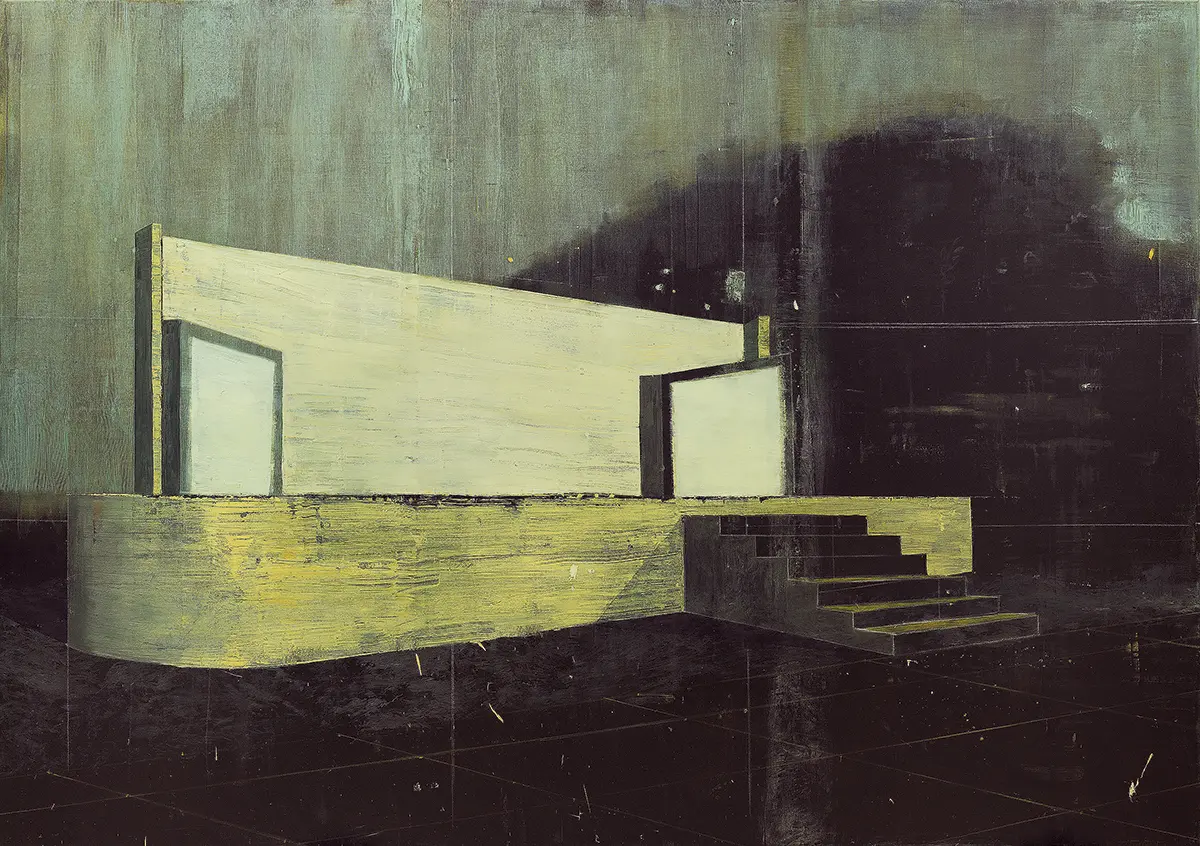
Campins’ travel journals are diametrically opposed to Instagram posts. His photographs and sketchbooks are an exercise in anti-tourism, whereby the gaze searches for deep territorial layers and atypical presences, capturing images that are diffuse and not always pleasant. Unlike the rampant consumption and processing of images governing our time, he lets his documents rest until the experience of the trip settles in. In the solitude of his studio, his series begin to take shape in the form of landscapes or strange entities that question us. Layer after layer, his paintings do not apprehend reality, but rather create a mystical time and space.
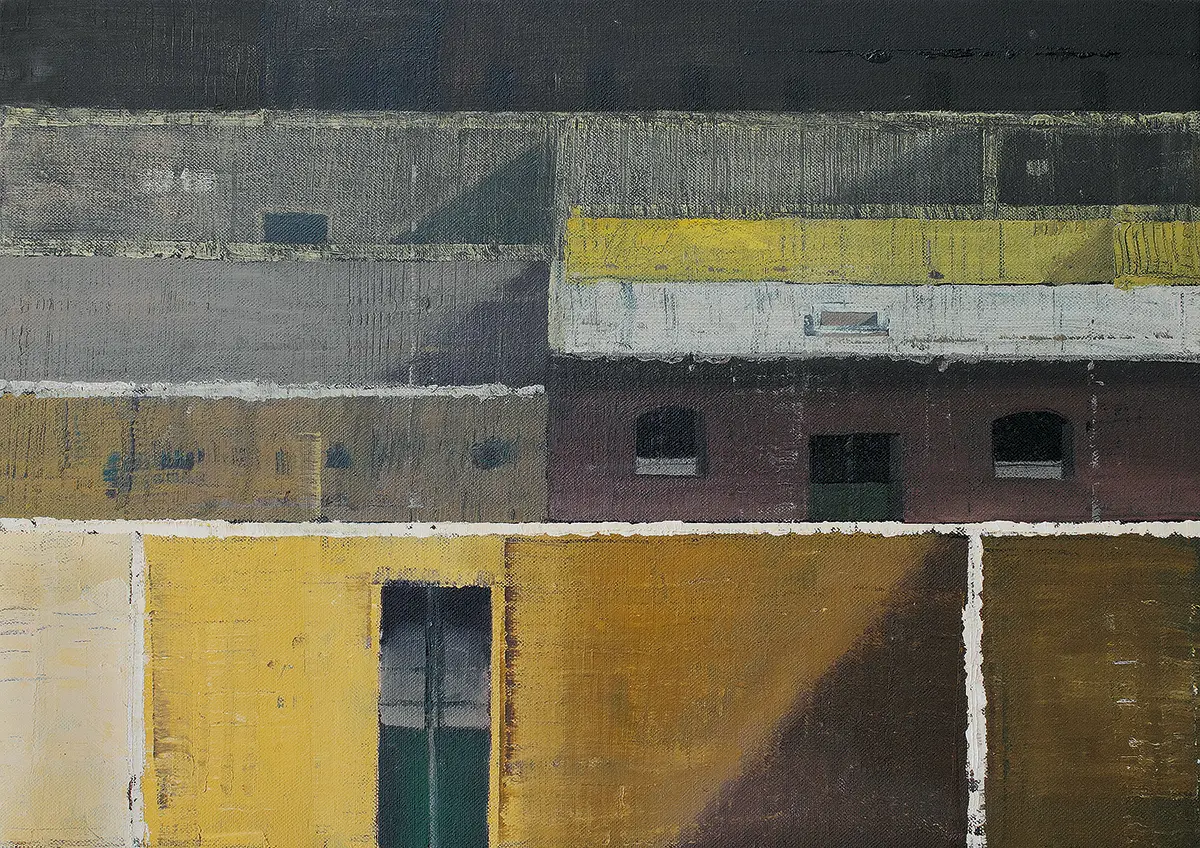
Sometimes a Campins painting makes viewers feel they are witnessing a paranormal event. And that’s just what it is, only that we are not dealing here with science-fiction literature or postapocalyptic cinema. The artist’s gaze and spirit adore strangeness, moving him to investigate beyond normality in order to find and gather images that summon the world’s most incredible dimensions. When he was invited to the Cairo Biennale in 2010, the artist was impressed by the City of the Dead, a necropolis on the outskirts of Cairo where people, impoverished or displaced by city’s hostility, have settled to form a gigantic slum. The City of the Dead, a cemetery, owes its name to the absence of life; but Egypt’s geopolitical conditions have generated an antithetical situation: the place is brimming with vital spirit given that its inhabitants are struggling to survive against all adversity. In the “La ciudad de los muertos” (City of the Dead) series (2014-2015), the artist does not capture that reality, but instead, in a semantic roundabout, he empties the spaces in order to expose them in their most disturbing nakedness. The suppression of the human figure from the pictorial plane has long given his work a metaphysical aura that has eradicated every narrative possibility. In this series, moreover, the operation expands the possibilities of meaning, since Campins has literally painted a ghost town’s invisible lives.
Critics have highlighted the metaphysical dimension as the most distinctive feature of Campins’ work. Although I believe this observation to be accurate, it runs the risk of reducing the complexity of his intellectual inclinations to a kind of self-absorbed pictorial mysticism that leaves aside the conceptual aspects, and the historical and geopolitical explorations at the base of his work. In fact, qualifiers such as ‘paranormal,’ ‘metaphysical,’ or ‘surreal’ point to the artist’s visual capacity to consign situations, atmospheres, or forms of objecthood that are beyond what we assume to be within the territory of a normalized reality, but which in fact are closer to us than we would like them to be. Campins’ images often look like antennas that connect with other worlds, but are actually grounding wires that bring to mind Paul Éluard’s famous phrase: “There is another world, but it is this one.”
Artistic practice, as it is understood in the West, collides de facto with the principles of Buddhism, where the concept of authorship has no sociocultural standing. Perhaps because he is aware of this contradiction, Campins is also interested in emphasizing the dialectics between culture and nature by exploring the circumstances in which the countryside harbors, or can harbor, human creations of various kinds, even outlandish ones.
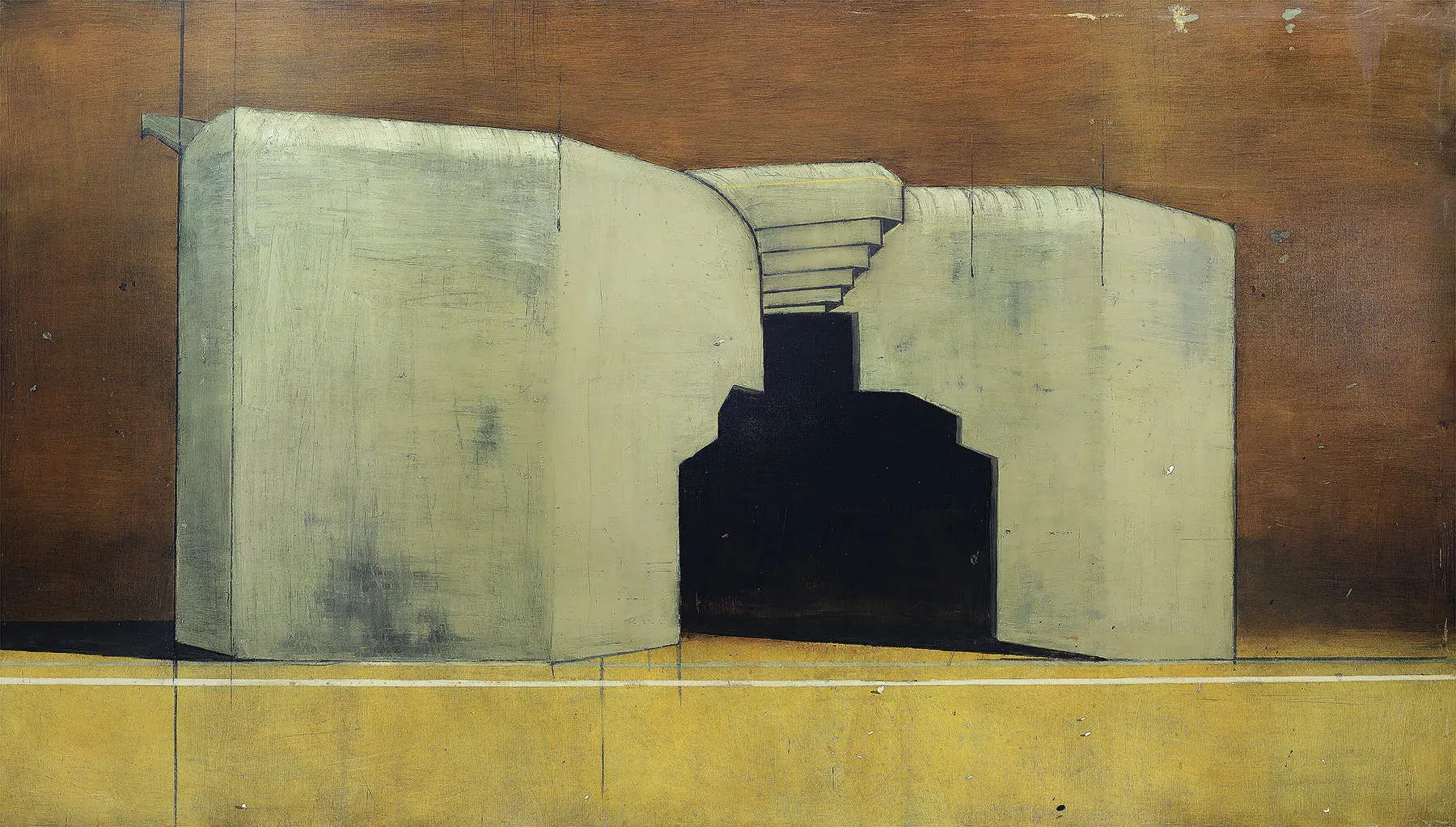
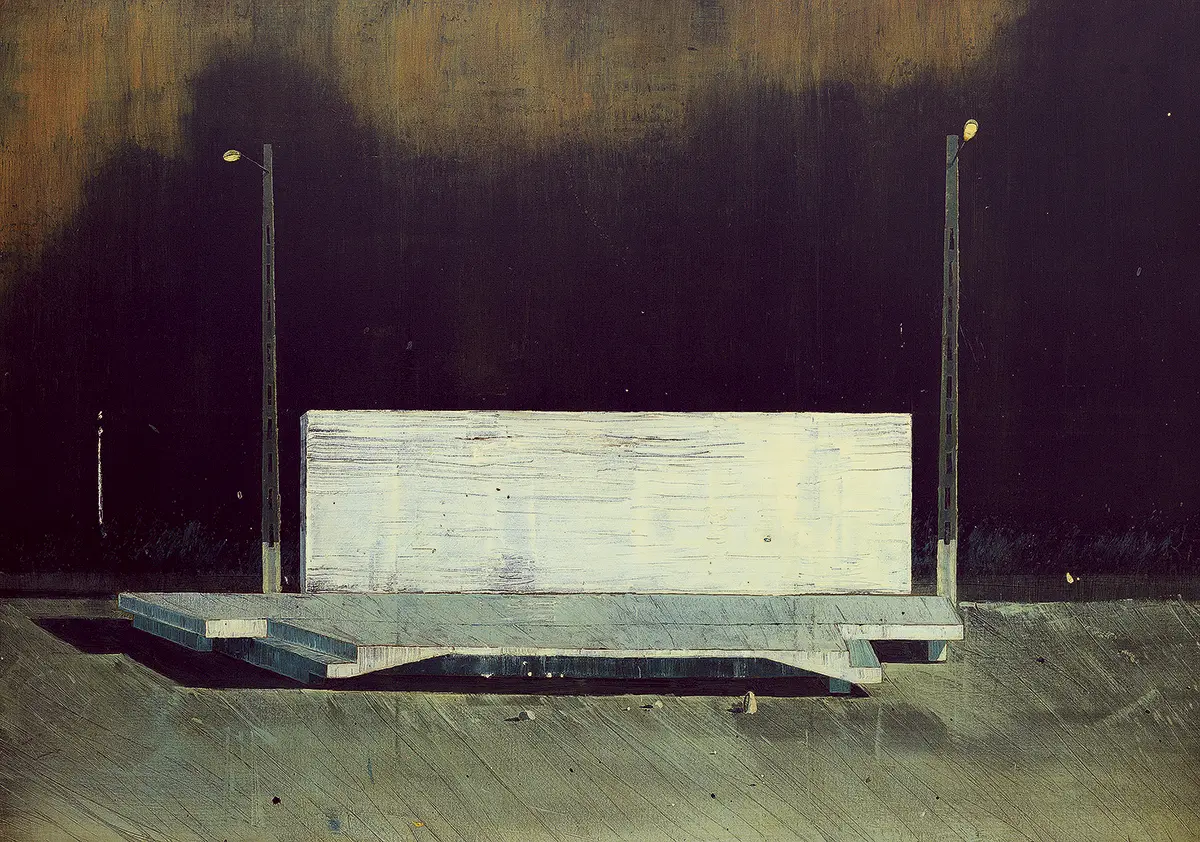
His series “Declaración pública” (Public Statement) (2015-2017) is a mapping of the amphitheaters built by the Cuban regime in each town on the island. According to Laura Salas, these “scenarios” were meant “to entertain the local population with film and theatrical spectacles, and present dazzling performances to disseminate its doctrines.”2 Today, these architectural structures have ceased to fulfill their original function and children have repurposed them as playgrounds. Once again, the artist empties the spaces of its inhabitants and underlines the irony that an architecture intended for propaganda has turned into a space for leisure. Portrayed in its most stark materiality, the collapse of an ideological project is transformed into images so diffuse they seem unreal.
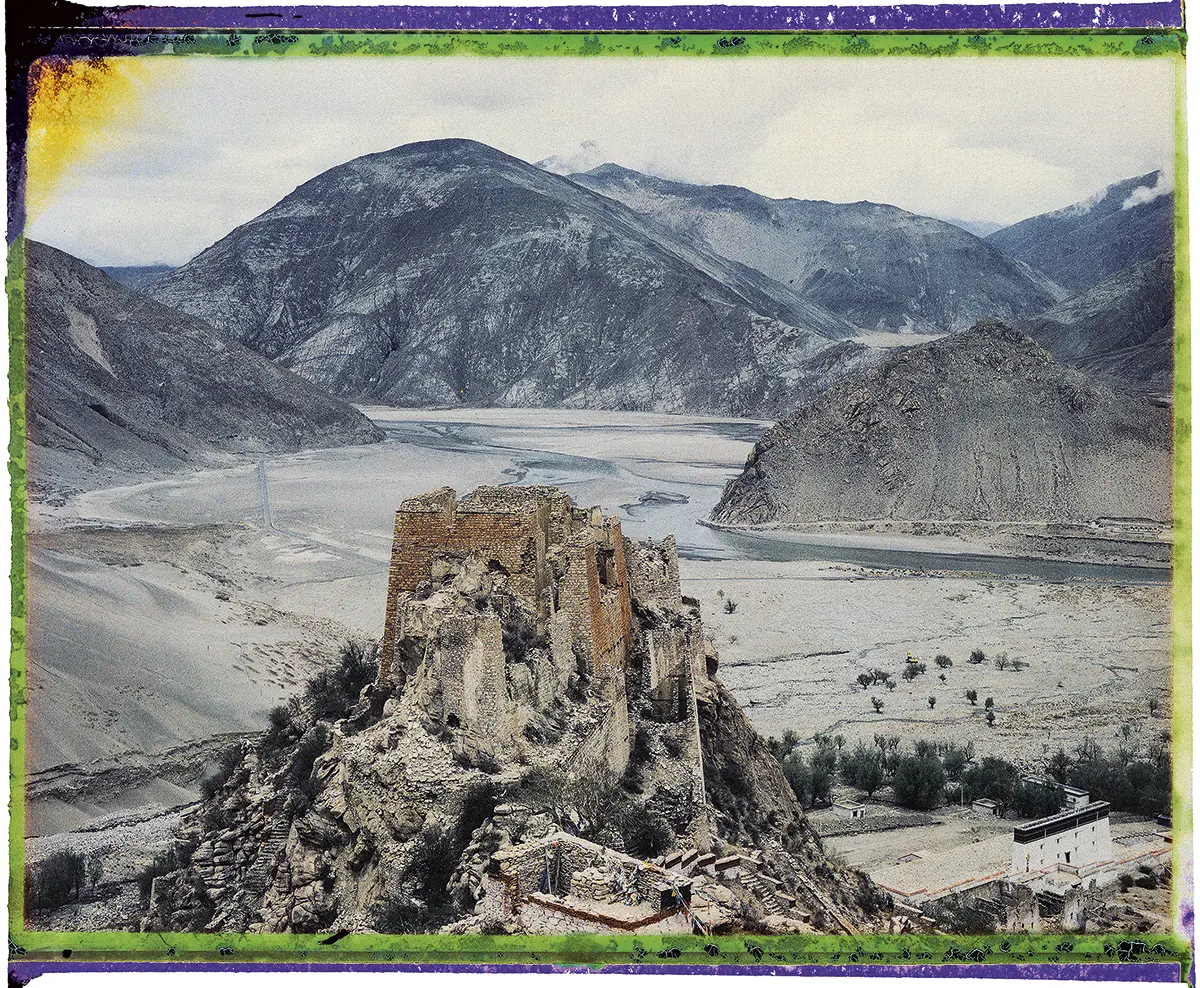
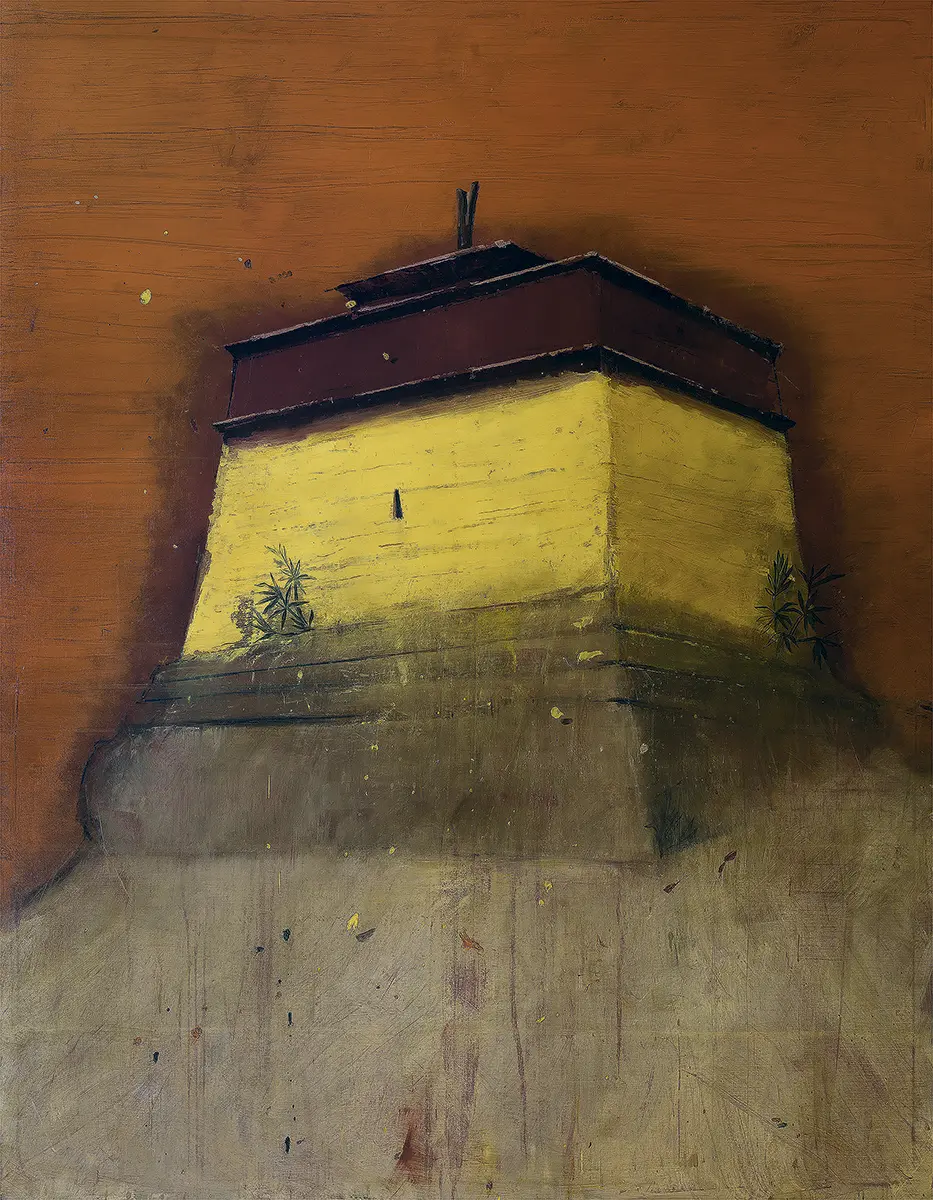
The mechanics are similar in his collection of bunkers, which the artist has presented in both photographic and pictorial formats. As an epistemic, aesthetic, and even political opposition to tourism consumption, Campins ventures into paths that experiment with alternative cartographies and travel albums. The result is once again the compilation of incredible architectures; panoramas so bleak that they strike one as bizarre or hallucinating. Now that the nuclear crisis is threatening us once more, this series proves to be the portrait of an eternal ghost haunting us as if we were children. In his most recent work, Campins records his journey through the northern Himalayan plateau, portraying stupas (Buddhist temples) that have been dilapidated and abandoned due to the Chinese Cultural Revolution’s persecution of Tibetan Buddhism. Alternating between small and large formats, the paintings capture something more than just a historical episode: the artist has perfected his technique to enable his glazing to render atmospheres that resemble mental states.
I don’t think it’s a coincidence that Alejandro Campins cites the Al Fayum portraits as one of his highest references in the history of art. Like his own work, they respond to the human obsession to give symbolic expression to spirituality, permanence, and the mystery of death. They were painted, moreover, in a historical context of cultural, religious, and material multiplicities. This is beautifully described by John Berger in an essay on the exhibition of thirty of these portraits at the Louvre in 1998.3 At the time they were made, during the first century BC, Egypt was a Roman province, so the subjects’ clothes, hairstyles, and jewelry followed the imperial fashion. The portrait painters, however, were Greeks (who had settled in Egypt since the conquest of Alexander the Great), and so they practiced a naturalistic pictorial technique, very different from the Egyptian style. Nonetheless, the portraits were sacred objects for the deep-rooted Egyptian funerary ritual, since they were placed on the sarcophagi to identify the deceased on their journey to the kingdom of Osiris. During the seventy days it took to embalm the mummies, they also served as a memorial for their families.
These small temperas on wood, Berger explains, question us in their fragility because they speak to our present of migrations and multiculturalism. An environment of hybridity similar to the one in which they were made could very well define Cuba towards the end of the last century and the dawn of hyperglobalization: A Caribbean island and a secular epicenter of international geopolitics given its strategic location in the Atlantic, with a rich demographic makeup, and a natural and urban landscape defined by fifty years of communist rule. What spiritual horizon did young subjectivities seek, or could have sought, in this context? Alejandro Campins’ subjectivity has not been defined by Tibetan Buddhism or Castaneda’s shamanic stories, though it may seem so at first, but by an artistic retraction that allows the image to once again reclaim its liturgical potential.
NOTES
1. Marcelo Morales, “El horizonte y la niebla de Campins” (interview), in ART OnCuba, August 1, 2018.
2. “Los paisajes metafísicos de Alejandro Campins,” in ArtNexus 106, September-November, 2017.
3. “El enigma de El Faiyum,” in El País, December 20, 1998.
DIANA CUÉLLAR LEDESMA