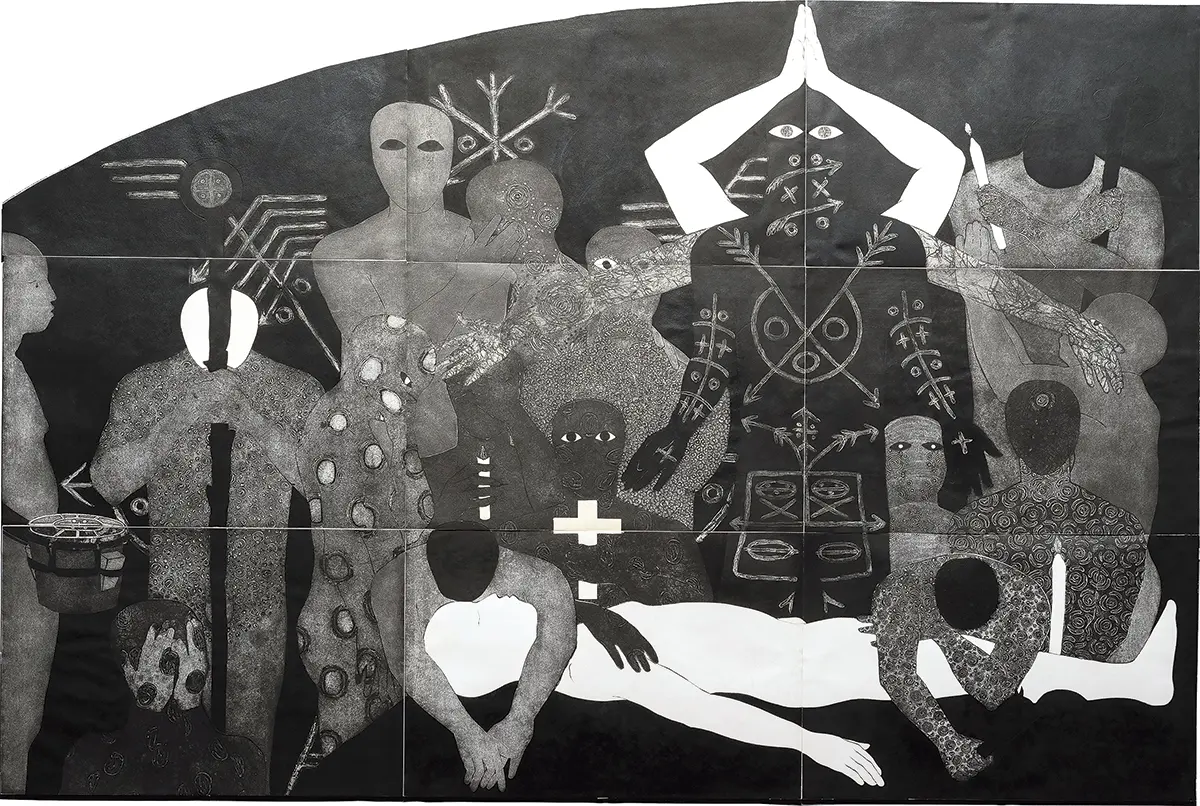
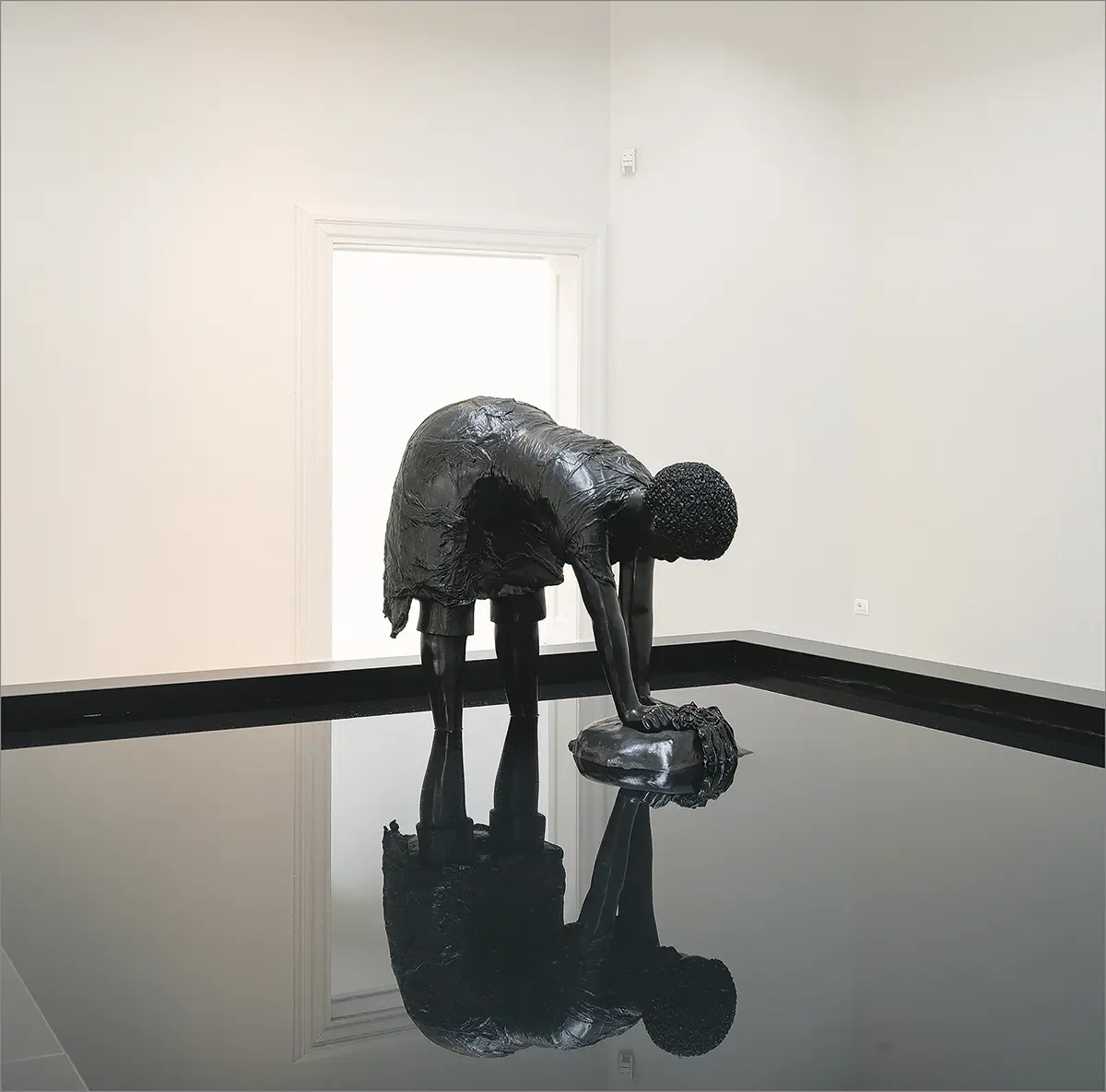
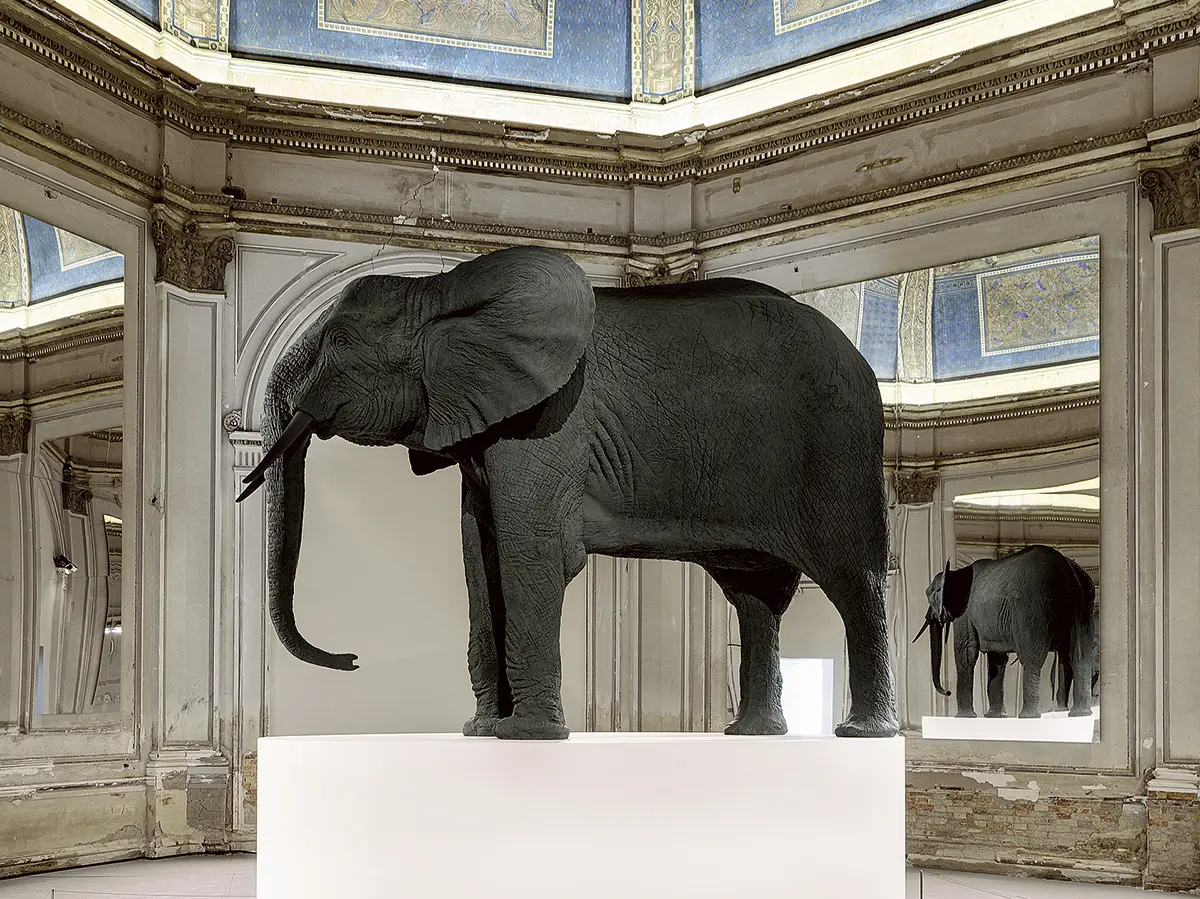
This edition of the more than one hundred-year-old Venice Biennale will go down in history as the biennale of women and the definitive consecration of multiculturalism. “The Milk of Dreams,” curated by Cecilia Alemani, brought together works by 213 artists at the Central Pavilion and the Arsenale. One hundred eighty (80%) were women and many from the Third World. A true record and a clear break with the historical predominance of male artists in the event, reinforced by the many national pavilions that also granted an unprecedented space to female artists from both the First and the Third World, and to marginalized minorities. The resolute stance taken by the Italian curator based in New York was convincingly signed by the works heading the route of the two large sections of the exhibition: the life-sized Elephant, by German artist Katharina Fritsch, at the foyer of the Central Pavilion, and Brick House, a powerful bronze sculpture by Afro-American Simone Leigh, accompanied by the prodigious collagraphs of Belkis Ayón, dedicated to gods and rituals of the Afro-Cuban religion Palo Monte. The Biennale awarded the Golden Lion for Lifetime Achievement to Chilean artist Cecilia Vicuña.
Time Capsules
Alemani’s feminist vindication did not have a purely quantitative importance. On the contrary, her exhibition went beyond the simple sum of names and works by women, to become a formidable visual essay articulated by five “time capsules” that offered both a feminist review of art history in the 20th century and a reinterpretation of issues that are crucial to this century’s cultural and political debates. It was a round trip between the past and the present, significantly transforming the image and perception that we have of both. The Biennale’s title or motto was eloquent in this sense. It’s also the title of a short book of children’s stories by artist Leonora Carrington. Although written and illustrated in Mexico City in the 1950s, it inspired Alemani’s curatorial work. In an interview granted to Micaela Zucconi and published in exibart 116, she stated: “It’s always interesting to read the writings of creative artists… as for Carrington, I began with her interesting stories, and only much later discovered her fresh and endearing The Milk of Dreams, which accurately and visually summarizes many of the guidelines of the exhibition, from posthuman thought to surrealism.”
It is consequently not surprising that the Biennale owes its title to Carrington and that her works were featured in ‘The Witch’s Cradle,’ the first time capsule. Located in the basement of the Biennale’s Central Pavilion, it was a kind of sancta sanctorum that, with a montage inspired by surrealist exhibitions, brought together works by a plethora of historical avant-garde artists, including Eileen Agar, Gertrud Arndt, Josephine Baker, Claude Cahun, Ithell Colquhoun, Jane Graverol, Baya Mahieddine, Meret Oppenheim, Dorothea Tanning, and Mary Wigman. An impressive list enhanced by surrealist artists Leonor Fini, Alice Rahon, and Remedios Varo, who, like Leonora Carrington, took refuge in Mexico to escape the Second World War.
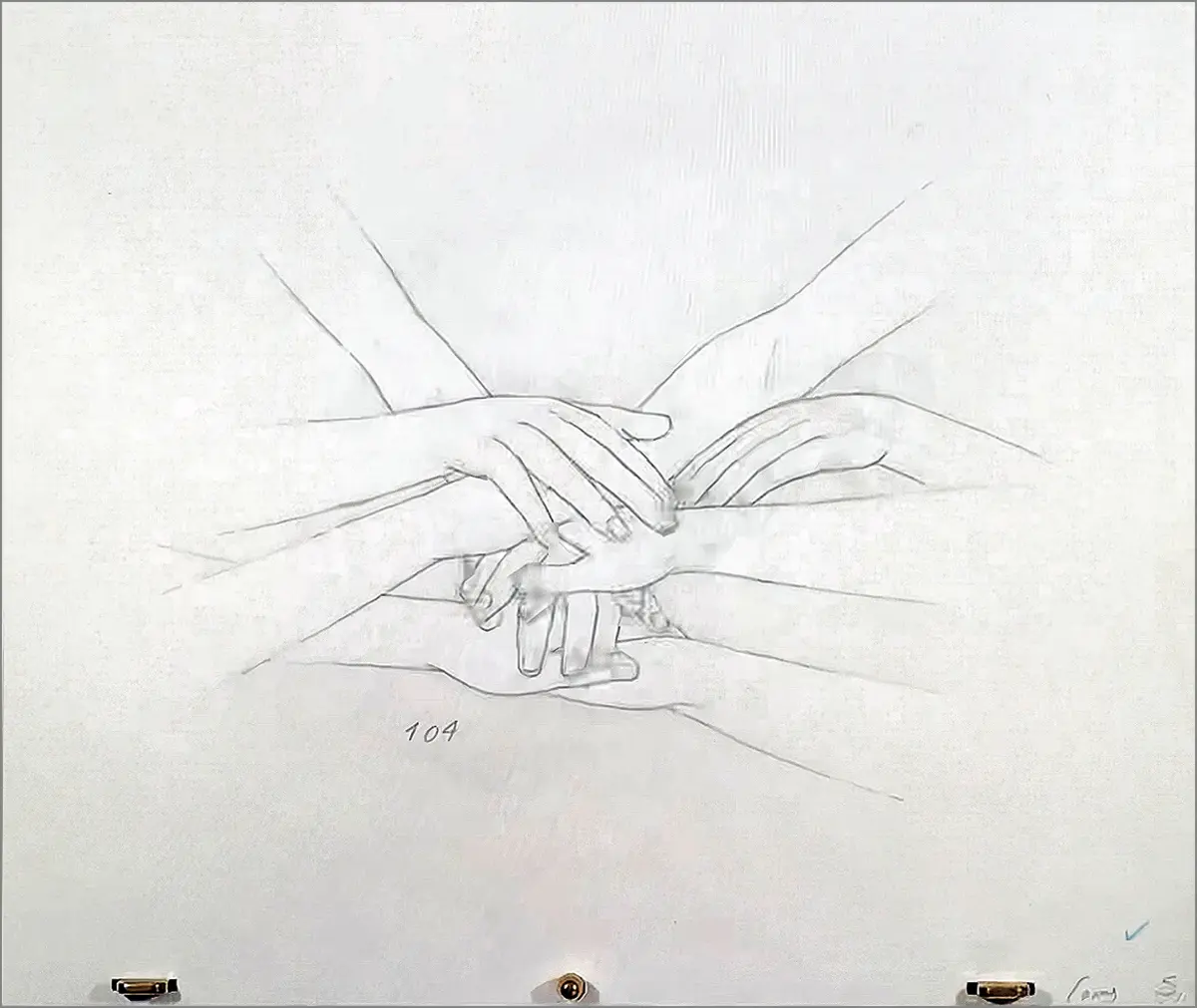
The title of this time capsule is equally eloquent, taken from Maya Deren’s unfinished film made with Marcel Duchamp in New York in the 1940s. She is another fascinating artist who, assisting choreographer Katherine Dunham, repeatedly traveled to Haiti, filmed African dances, was introduced to voodoo, and, as a result of these unusual experiences, wrote the book Divine Horsemen: The Living Gods of Haiti.
The second time capsule, ‘Technologies of Enchantment,’ also at the Central Pavilion, responded to other historical claims: those of concrete poetry and the first artistic experiments with generative and reproductive techniques. It included works by Italians Grazia Varisco, Laura Grisi, Nanda Vigo, Dadamaino, and Marina Apollonio, who worked in fruitful dialogue with the innovative ideas of Bruno Munari during the 1950s and 1960s.
The third capsule, ‘Orbit Body,’ pointed in another direction, incorporating artists from the 19th and 20th centuries who used expanded forms of language as instruments of liberation. In this case, the vindication revolved around the exhibition “Materialization of Language”, held at the 1978 Venice Biennale and curated by Mirella Bentivoglio, with works by eighty women and dedicated to sui generis modalities of written, oral and visual poetry. This capsule displayed works by Mirella Bentivoglio herself and by Tomaso Binga, Ilse Garnier, Giovanna Sandri, and Mary Ellen Solt, along with creative pieces of automatic writing and communication with spirits by Eusapia Palladino, Georgiana Houghton, and Josefa Tolrà, as well as other forms of “feminine writing,” such as tapestries by Gisèle Prassinos and micrographs by Unica Zürn.
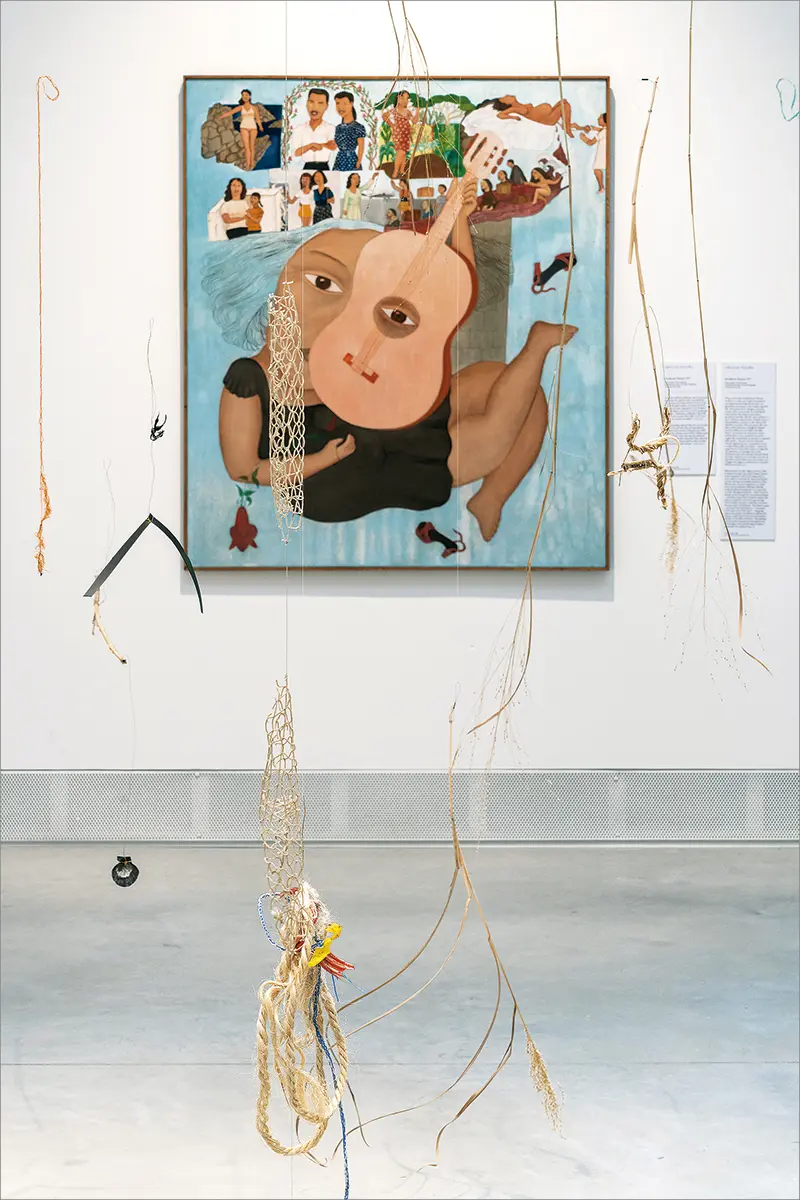
The two remaining time capsules were exposed at the Arsenale. ‘A Leaf a Gourd a Shell a Net a Bag a Sling a Snack a Bottle a Pot a Box a Container’ took its title from the thesis presented by writer Ursula K. Le Guin, who linked the birth of civilization with inventions destined to provide sustenance and care, activities associated with women in different societies. It included works by Ruth Asawa, Máría Bartuszová, Aletta Jacobs, María Sibylla Merian, Sophie Taeuber-Arp, Toshiko Takaezu, Tecla Tofano, Maruja Mallo, and Bridget Tichenor. Mallo, a prominent figure of the historical avant-gardes in Spain, went into exile in Argentina at the end of the Civil War. Tichenor, British by birth, moved to Mexico in the late 1940s and joined the aforementioned group of Surrealist artists, which also included Kati Horna.
The fifth time capsule, Seduction of the Cyborg—the title of a work by Liner Sharmlison, who in turn was inspired by the well-known Donna Haraway manifesto—brought together works by artists who since the beginning of the last century imagined fusions of organisms and machines, offering versions of a posthuman or postgender future. Among the artists included were Elsa von Freytag-Loringhoven (now credited with masterminding Marcel Duchamp’s Fountain), Marianne Brandt, Karla Grosch, Alexandra Exter, Regina Cassolo Brachi, Louise Bourgeois, Rebecca Horn, Kiki Kogelnik, and Anna Coleman. Ladd.
The Latin Americans
The participation of Latin American artists in “The Milk of Dreams” stood out for its number and quality in an exhibition that also gave exceptional importance to artists from Africa, Asia, and the Middle East. In choosing artists from these continents, and from Europe and North America, Alemani favored painters, sculptors, and weavers over photographers, video artists or digital image and virtual reality researchers. This represented a romantic vindication of the human body and its specific skills, at times when its centrality is questioned both by the impetuous expansion of robotics and virtual reality, as well as by insistent calls to recognize its inexcusable links with nature, animals, and non-living forms: “the central theme of our times,” as Alemani has stated.
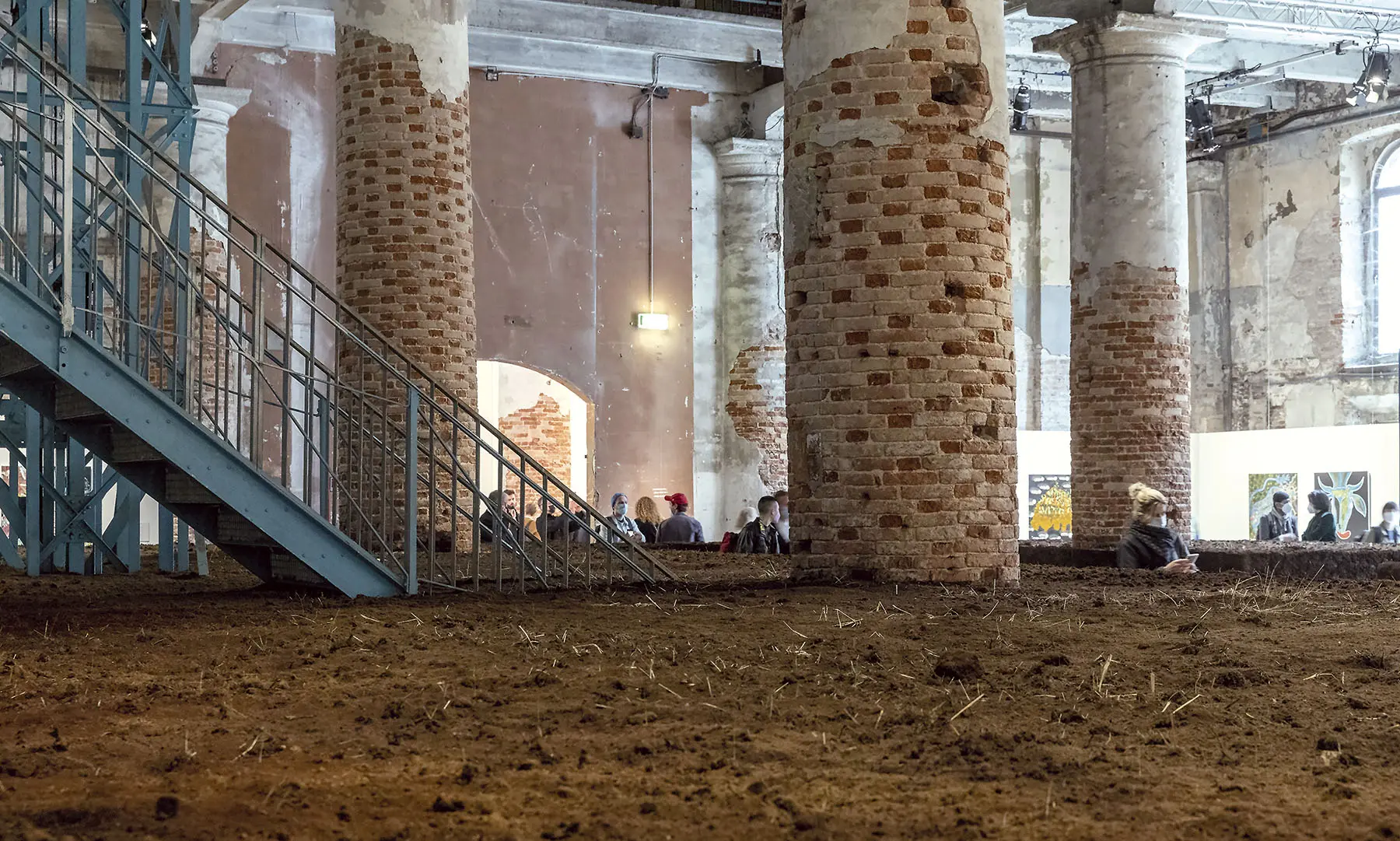
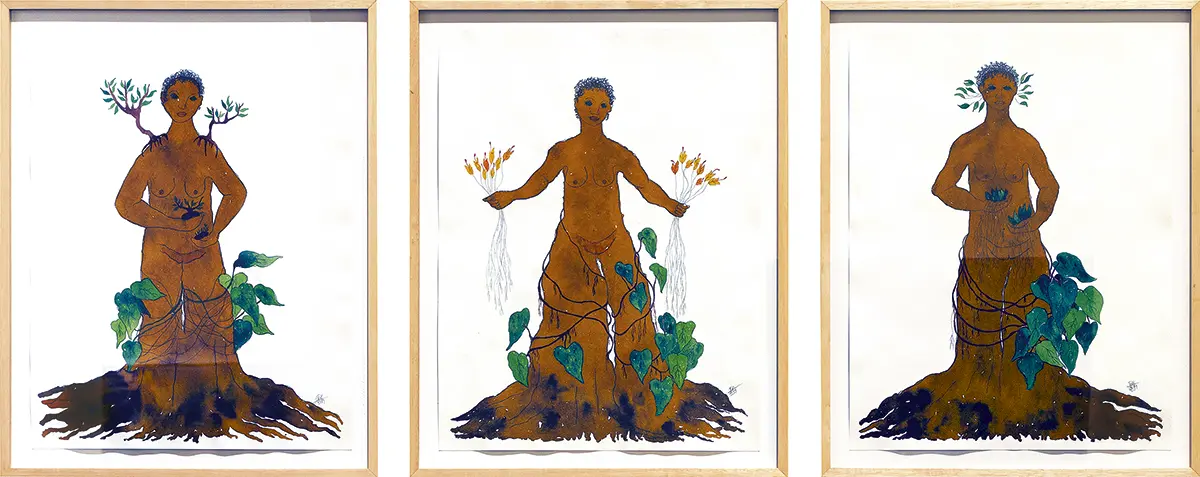
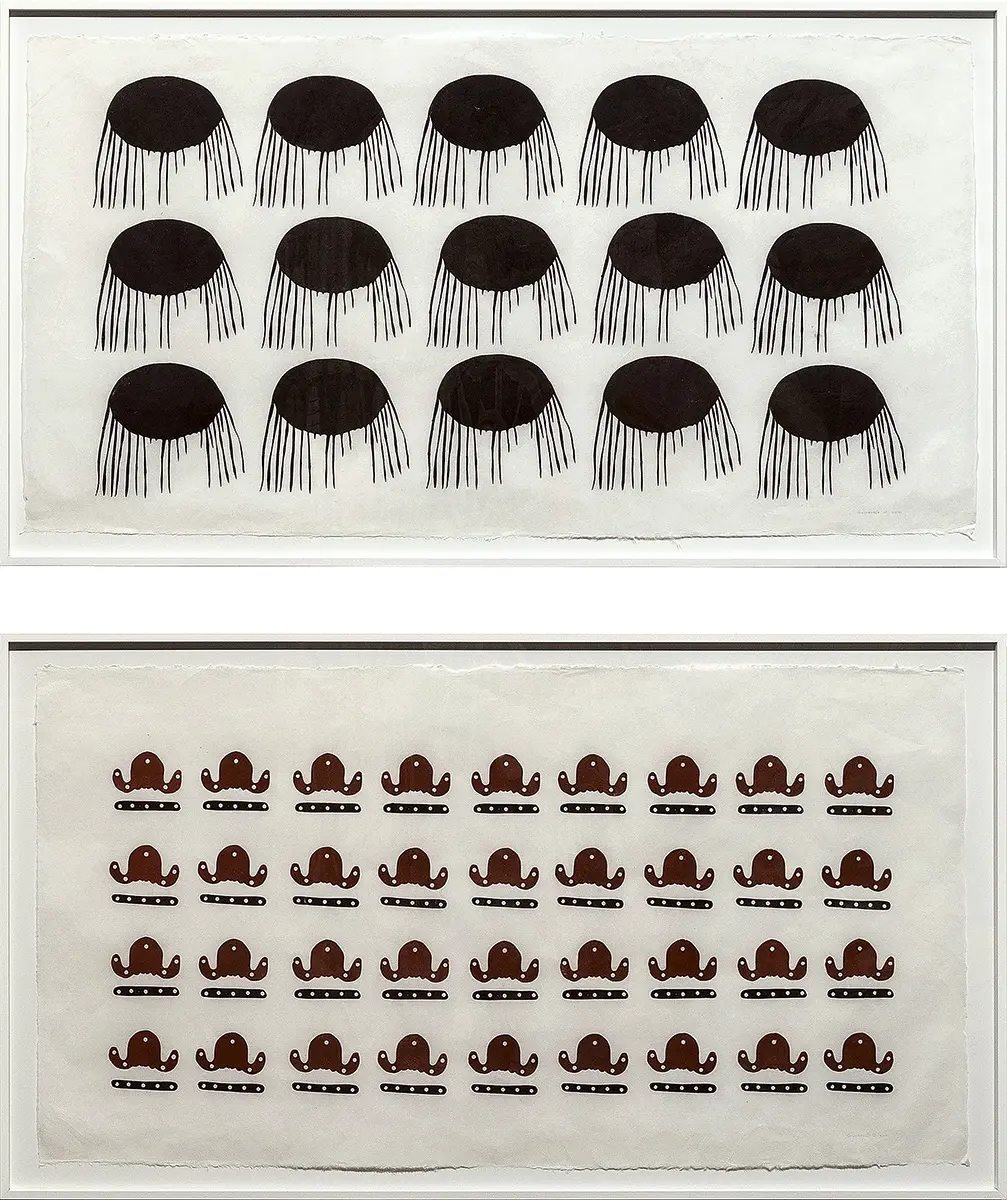
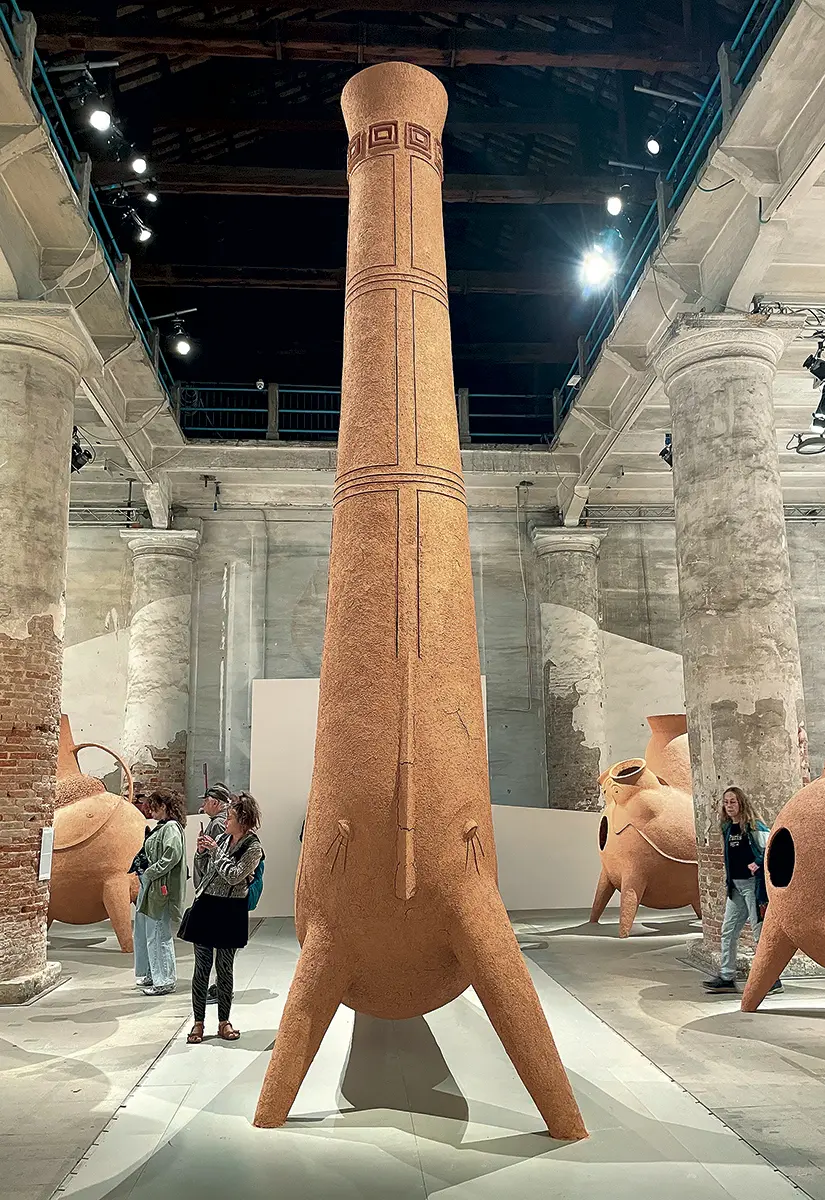
I already made reference to Belkis Ayón, and must also mention the Argentinian artist Gabriel Chaile and his cyclopean clay-and-metal sculptures inspired by traditional Andean ceramics; the Chilean artists Cecilia Vicuña, with her installation NAUfraga, and Sandra Vázquez de la Horra, with her sophisticated installation Las cordilleras encontradas (Mountain Ranges Intersected), and Colombian Delcy Morelos with her impressive installation Terrestrial Paradise: tons of earth embedded in a metallic labyrinth. Along with these large-format works, it is equally important to mention those Latin American artists whose small or medium-sized paintings and drawings were no less interesting. The geometric drawings by Sheroanawe Hakihiiwe were probably the most surprising inclusion, both because he is a Yanomami artist and because his works derive not from the successful history of geometric abstraction in Venezuela, but from the ancient geometric tradition of his own people. The paintings of Frantz Zéphirin and Myrlande Constant confirmed Haitian artists’ enduring fidelity to the ever-renewing African heritage. The figurative paintings of Brazilian Rosana Paulino pay homage to the wise women who know about plants and their properties better, or differently, than modern pharmacy. Her compatriot Jaider Esbell’s vibrant paintings illustrate popular fables and legends, often following the logic of patchwork. And the naïve paintings by Mexican Roberto Gil de Montes contrasted with those by his compatriot Felipe Baeza, which represent plant and human entanglements with their environment. Violeta Parra’s paintings reveal a little-known facet of this great Chilean artist.
The Pavilions
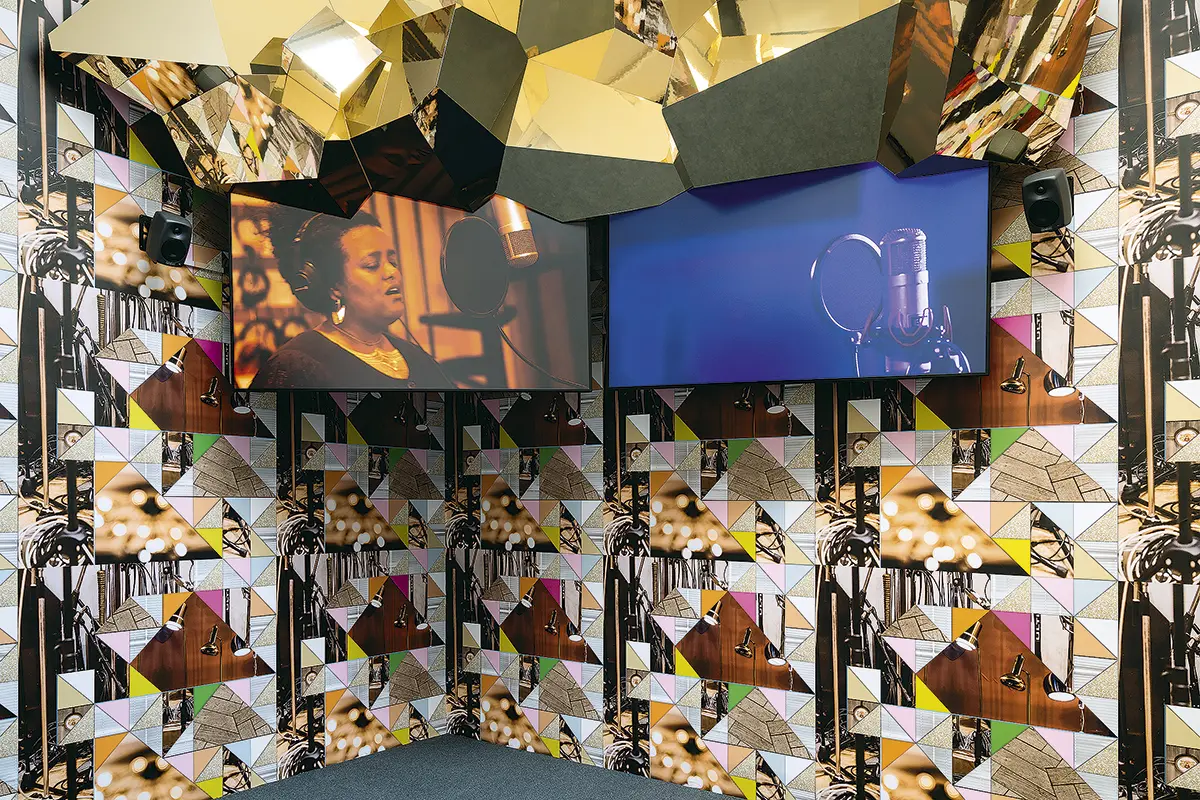
On this occasion, the Biennale had eighty national pavilions, located both at the Giardini and the Arsenale, as well as different venues in the rest of the city, some as far as the island of San Servolo, where the Cuban pavilion displayed metallic sculptures by Kcho and the refined reinterpretations of maps and geology by Rafael Villares. Great Britain’s pavilion at the Giardini won the Golden Lion thanks to Feeling Her Way, a project by Afro-British artist Sonia Boyce, subdivided into six chapters that staged the performances of singers and musicians who, in her opinion, best represent the impact of African musical roots on British popular culture. The United States pavilion stood out because artist Simone Leigh was awarded the Golden Lion for her striking African-inspired sculptures and because its Jeffersonian architecture was clad in a thatched roof and wooden pillars, which gave it the appearance of a hut.
The Belgian Pavilion offered a singular version of this biennale’s predominant multiculturalism. The chosen artist was Francis Alÿs, a Belgian from Flanders who has been living in Mexico for decades. Under the title The Nature of the Game, he presented a series of videos that were filmed in troubled areas around the world, where children have found in play a means to survive extreme situations.
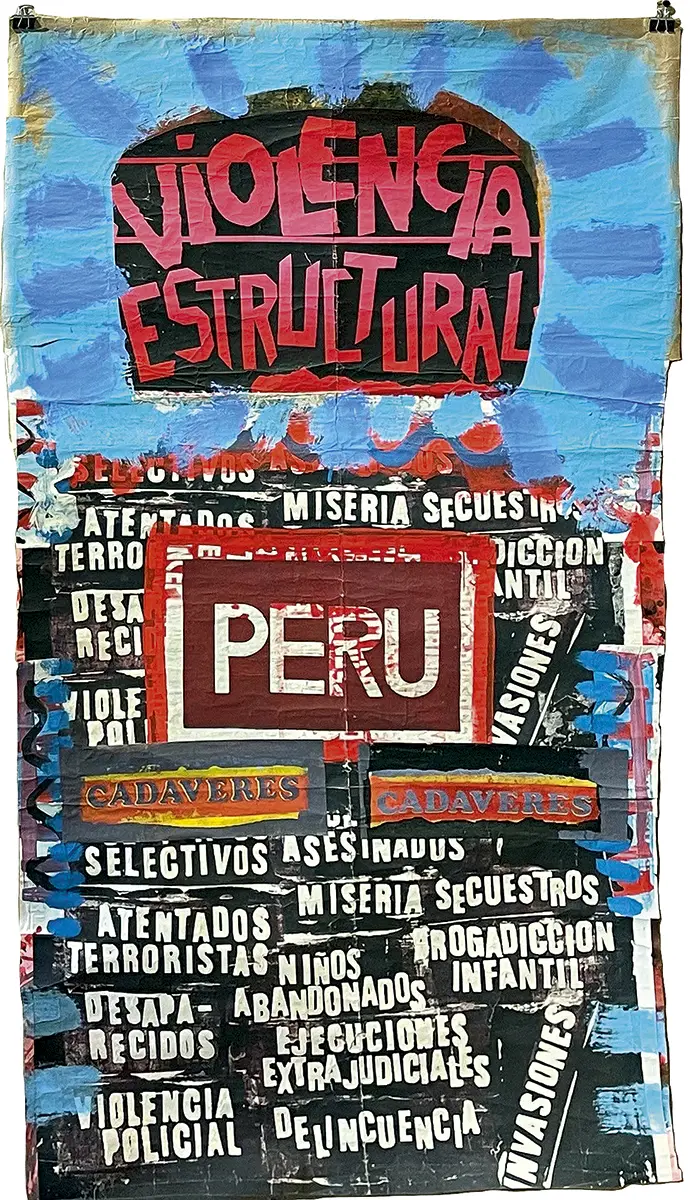
At the Arsenale, the pavilions of Argentina and Peru were in counterpoint. At the former, Mónica Heller literally occupied the entire space with the installation The Origin of Substance and the Importance of Origin. The unique ambient lighting enhanced the futuristic character of digitally generated animations. In Peru’s pavilion, on the other hand, graphic arts prevailed: posters, magazine and newspaper covers, and photographs shed light on the career of Herbert Rodríguez, a prominent cultural activist of the 1980s. Under the title of “Hasta que los cantos broten” (Until the Songs Bloom), Mexico opted to display works by Mariana Castillo Deball, Naomi Rincón Gallardo, Fernando Palma Rodríguez and Santiago Borja Charles, which frankly did not make a good match. Jonathas de Andrade’s overflowing neo-Pop installation reserved a surprise for unsuspecting spectators. Among the four artists at the Venezuelan pavilion, the naive paintings by Palmira Correa stood out. Uruguay’s pavilion was literally taken over by Persona, an installation by Gerardo Goldwasser.
The Russian pavilion was closed because the Biennale joined the European boycott of cultural activities in that country. And Ukraine, apart from a pavilion, was granted a piazza at the Giardini.
CARLOS JIMÉNEZ