Sonia Gutiérrez (Cúcuta, 1947) produced important works during the seminal decades for art in Colombia: between the late 1960s and the 1990s. Her art has been characterized by a pop style that unifies the various stages and the various thematic contents of her work, and there are two main themes that characterize her contribution; on the one hand, a pop style centered on women, and on the other, a work of political nature. Women artists have been rendered invisible in the Colombian context (1), either because their art deals with feminine issues, i.e., the role and situation of women in society and the art world (2), or simply because they are women (3). However, in a country where violence is a major subject in art and culture, why Gutiérrez is not more widely recognized is incomprehensible.
Gutiérrez studied drawing, painting, and ceramics for two years at the Visual Arts School of the Casa de la Cultura in Cúcuta, and in 1963 she attended the Fine Arts School at the National University in Bogotá (4). In 1968, she was invited to participate in the I Coltejer Ibero-American Painting Biennial in Medellín, and was given a scholarship by the Colombian Institute of Culture (Colcultura) to study in Paris, where she undertook postgraduate studies until 1970 at the Atelier 17, the international engraving workshop led by British master Stanley William Hayter (5). Upon her return to Colombia, she set up a painting and engraving workshop in Bucaramanga; the artist explains that this city was the epicenter of massive peasant displacements from Magdalena Medio and southern Santander, caused by the “scorched-earth” tactics of the counterinsurgency war: “This new reality of my social context moved me and was represented in my painting and my graphic work. From the 1970s onwards, the particular issues of young people and women, which had predominated in the first stage of my work, gave way to the theme of repression.” (6) At the end of 1997, the artist left Colombia for Switzerland, where she still resides
From the very start, Gutiérrez's work has been identified with Pop art. Colombia has an important chapter in the history of Pop art, which has not been sufficiently studied (7) and of which Gutiérrez is undoubtedly one of its most important representatives. In an article on Pop art in Colombia, the influential critic Marta Traba established the difference between Gutiérrez’s work and more traditional Pop art: “The passion that Sonia Gutiérrez feels for things is very different from what we find in the works of North American artists; while they document the common vocabulary of commodities in consumer society, what appears in Sonia Gutiérrez’s large canvases is more intimate and personal.”(8) Gutiérrez herself states that “the subject matter of my work, far from Pop art’s banality, has turned it into an alternative Pop.”
Her works are characterized by the use of a thick black line defining her figures and objects, the absence of perspective, the dislocation of her compositions, and the use of flat colors and shapes. Although she sometimes employs contrasting colors, in general her palette is one of rather somber pastel colors, which the artist describes as “a chromatic modality that is removed from the range of warm and cool colors on the chromatic scale.”
When combined with each other, her colors create subtle compositional dissonances and atmospheres that reject optimism and vitality, and generate an existential tension. For her first solo exhibition, held in 1967 at the Sala Gregorio Vásquez de Arce y Ceballos of the Biblioteca Nacional in Bogotá, the artist exhibited “works intimately related to aspects of the urban youth and feminine life.” A sense of irony and self-reflection is evidenced by titles such as Hagamos el amor no la guerra (Let’s Make Love, Not War), 1967; Viaje a la peluquería, (A Trip to the Beauty Salon), 1967; Yo no soy sexy, (I'm Not Sexy), 1967; No me parezco a Marilyn en nada, (I Don't Look Like Marilyn at All), 1967; and Con este tipo y sin dinero quién me va a querer a mí (With This Look and No Money Who’s Going to Love Me?,1967.
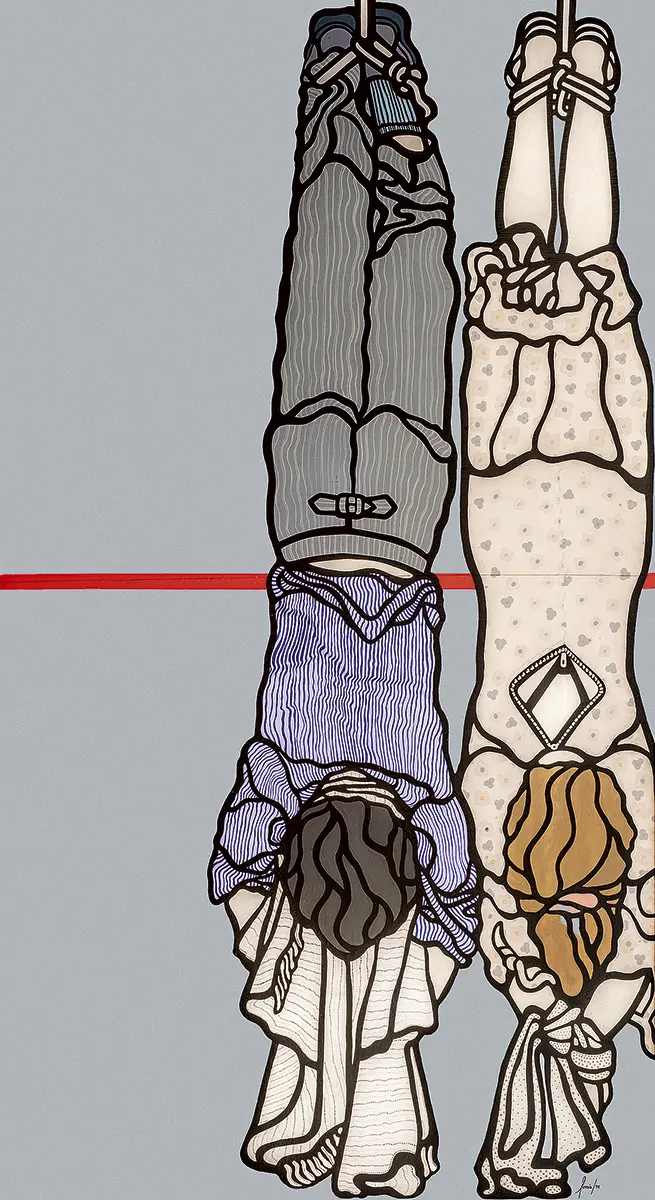
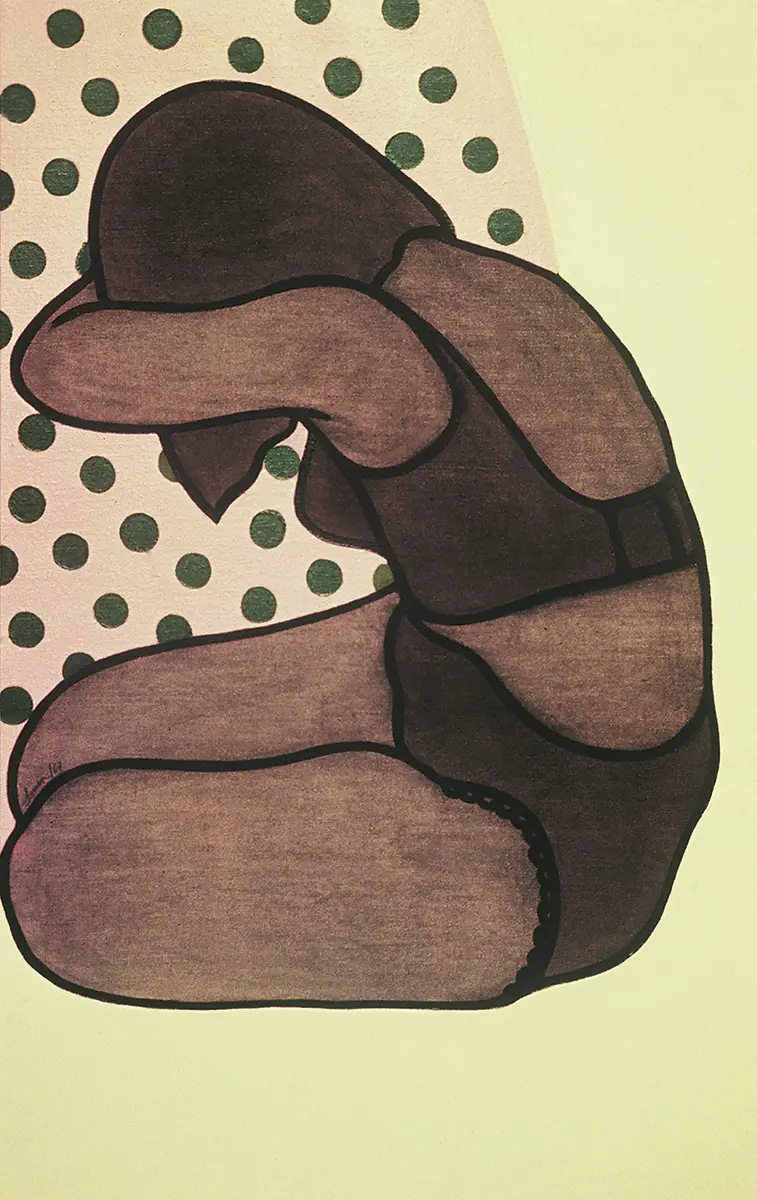
This series is quite enigmatic, not only because the women are faceless, a characteristic of all the artist's figures, but also because it represents the particular beauty and femininity of women in a state of alienation. Bodies appear to be floating, often downcast and suspended in time and space, their heads inclined as in I Don't Look Like Marilyn at All, which depicts a woman alone, in her underwear, and covering her face with her arm while crying or grieving. Although she is only wearing her intimate garments, we have no access to her body as she’s not exposing herself nor does she exist for our gaze or desire. It is worth pointing to the artist’s audacious monumentalizing of the female figure, painted in the inescapable format of 190 x 120 cm, whereby the existential reality and loneliness of a woman is formidably represented; a condition that society normally ignores or represses in favor of a model of perfection and unconditional feminine availability. The picture’s tension and power lie in the way it represents an invisible aspect of women’s reality, while at the same time dignifying them without stirring in us the easy feelings of pity or pretended empathy.
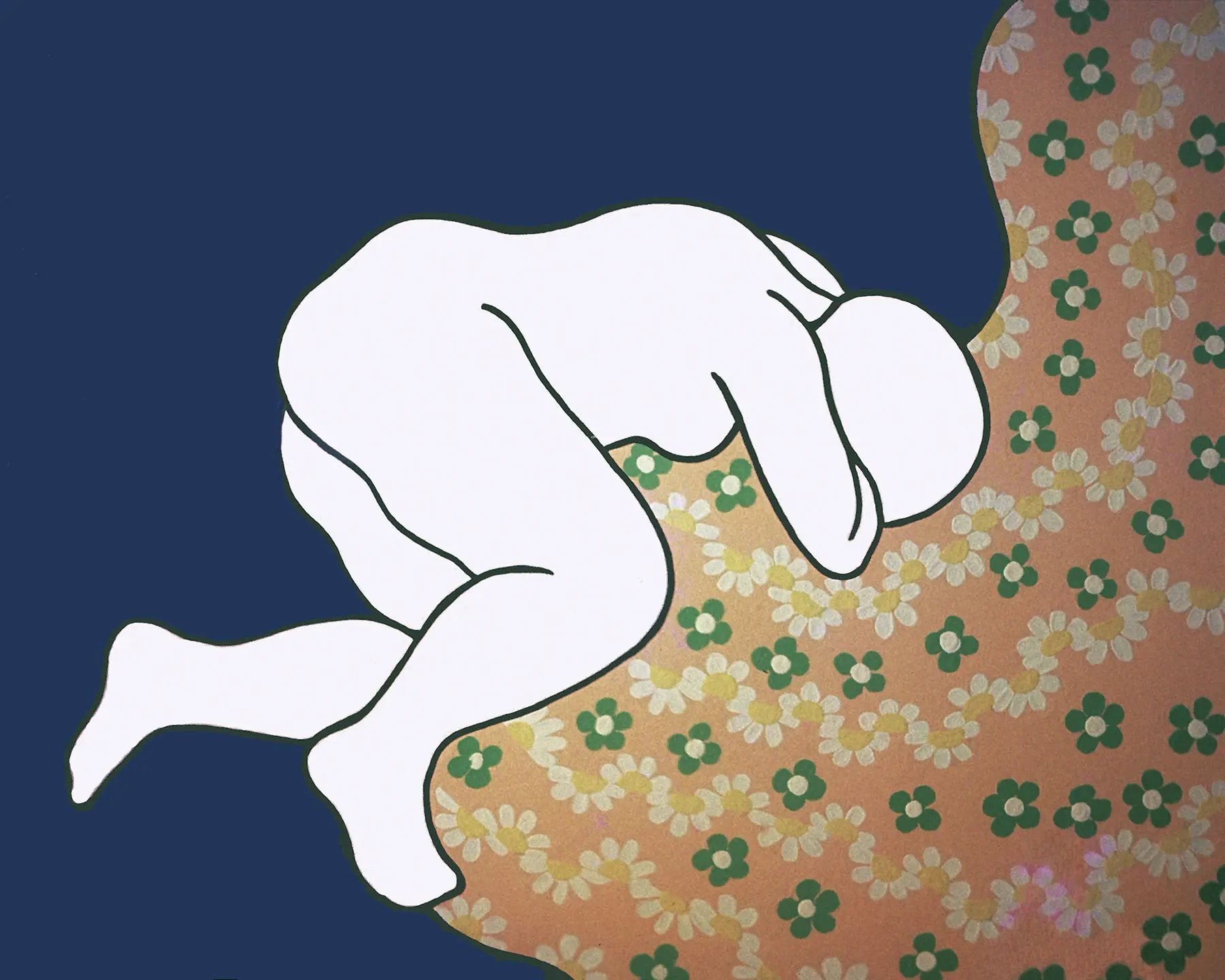
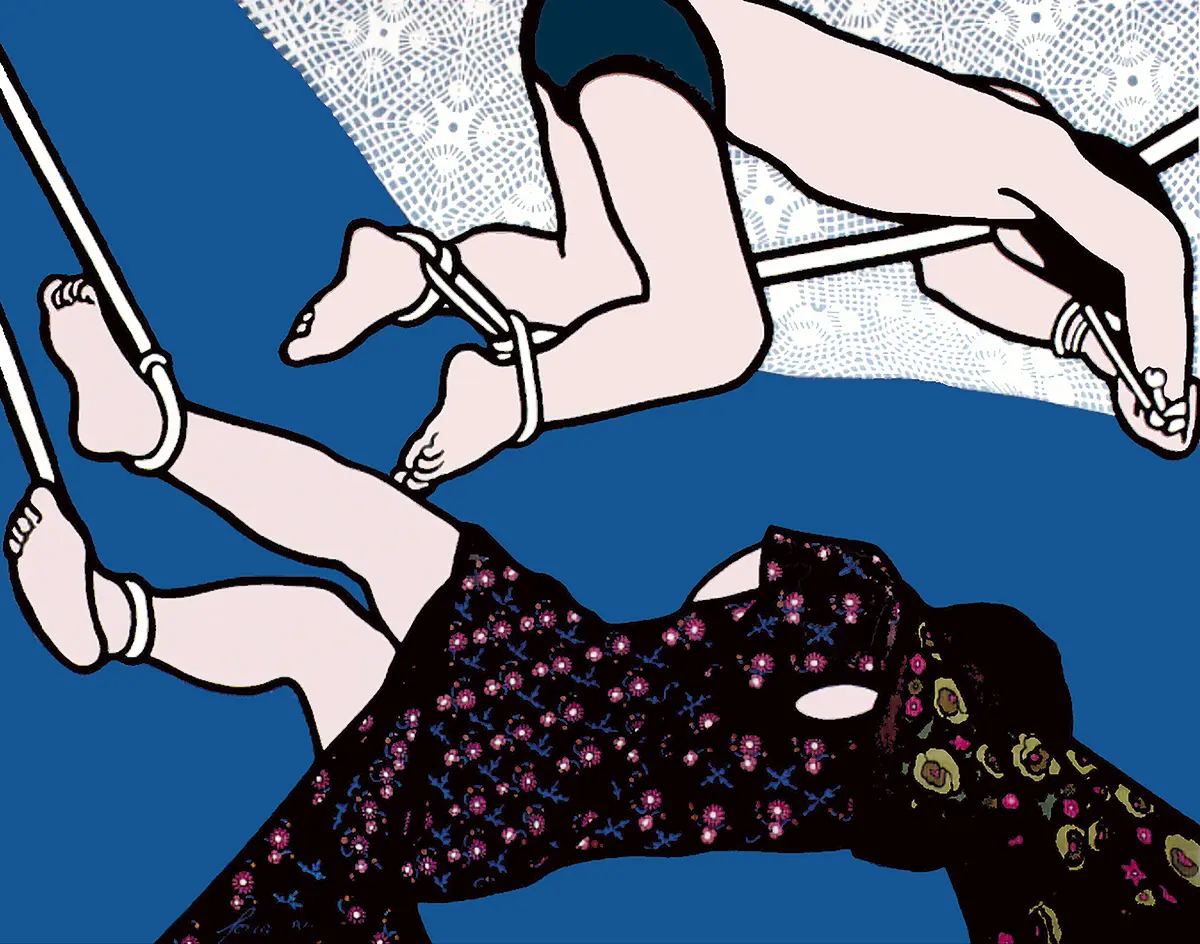
During this early stage of her career, women occupy a central place, appearing alone, at rest, or in the company of other women. In works such as the one above, the figures seem to experience loneliness, alienation, or sadness, and are immersed in a dense atmosphere of intimacy that gives them an existential and mysterious air, as can also be detected in I Love Myself a Lot, a Little, Nothing (c. 1967). The naked, pale skin, completely flat silhouette is lying on a floral-patterned fabric that stands in contrast to the black background. While the canvas echoes the feminine, the darkness denotes a hostile world for women due to their lack of status and bleak opportunities for their future. It is important to stress that although these works focus on women, they are not autobiographical. The artist has remarked that “their downcast attitude and solitude represent the domination which women are generally subjected to in Colombian society, with its patriarchal, macho cultural values.”
Gutiérrez has never been a militant feminist, but she does feel solidarity towards “the struggles for women’s social emancipation from our patriarchal and sexist regime, for their individual and collective rights—both socioeconomically, politically, culturally, and at the workplace—for equality, and for the free development of their personality against all forms of oppression and slavery. The feminist struggle is, in short, inseparable from all grassroot struggles to gain the overall democratic transformation of society. In a way, this attitude is also reflected in my work.” In this sense, the artist's work possesses a unique singularity, for it links the social causes of women to those of society in general, and does not separate them; contrary to the binary position of, say, the Maoist and Trotskyist left-wing movements that rejected feminism in favor of the general cause of the proletariat. We can infer, therefore, that Gutiérrez's transition from the topic of women to the issues of violence does not represent a before and an after, but should be understood as the continuity of an artistic project committed to the struggle against oppression and for the social emancipation of everyone, including women, with whom she is in solidarity and who will always be central to her work.
When the artist moved to Bogota in 1963 to study at the National University, she found herself immersed in “a climate of great ideological and political turmoil after the triumph of the Cuban Revolution and the rise of the legendary Che Guevara. The Catholic priest Camilo Torres Restrepo—then chaplain of the National University—and his Liberation Theology were also very influential. Moreover, the events taking place in the country were echoed in university life and the student movement.” The Armed Conflict in Colombia erupted in 1964 and lasted until the signing of the peace agreement in 2016. Gutiérrez also lived through the events of May 1968 in Paris and the emergence of countercultural movements such as feminism, pacifism against the Vietnam War, and the struggle for civil rights.
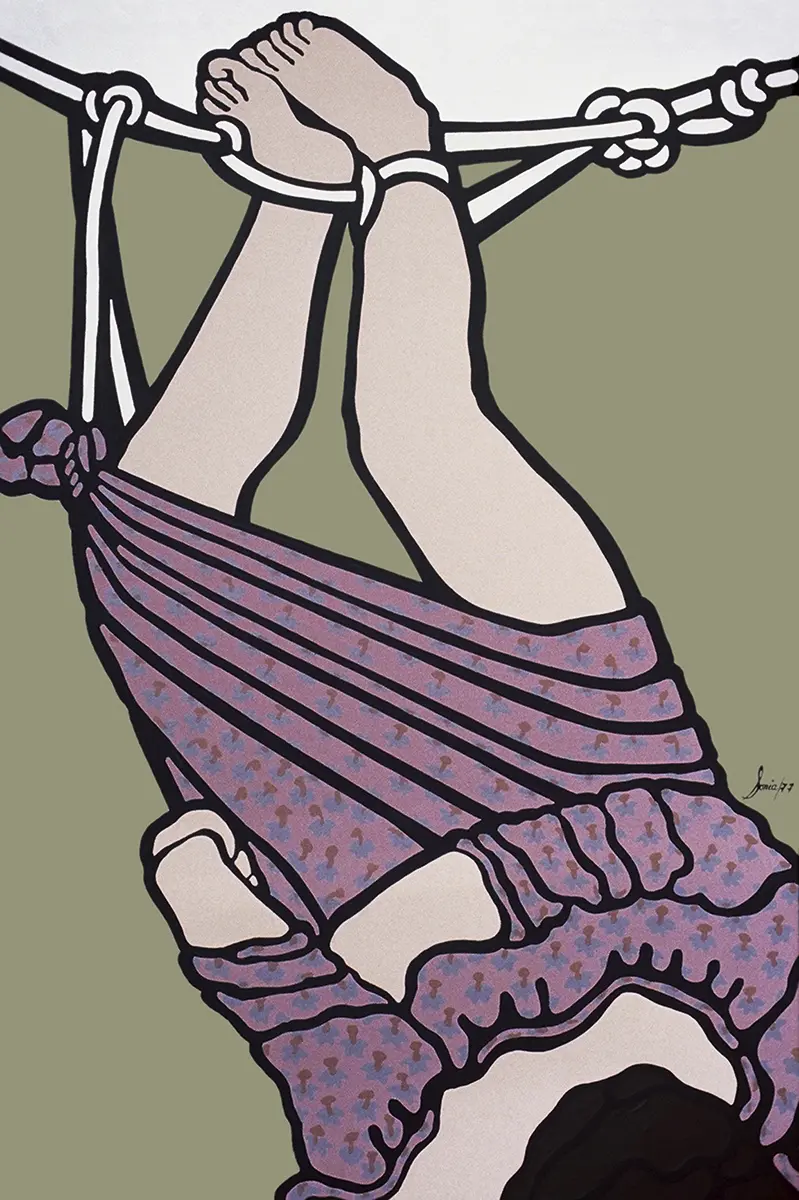
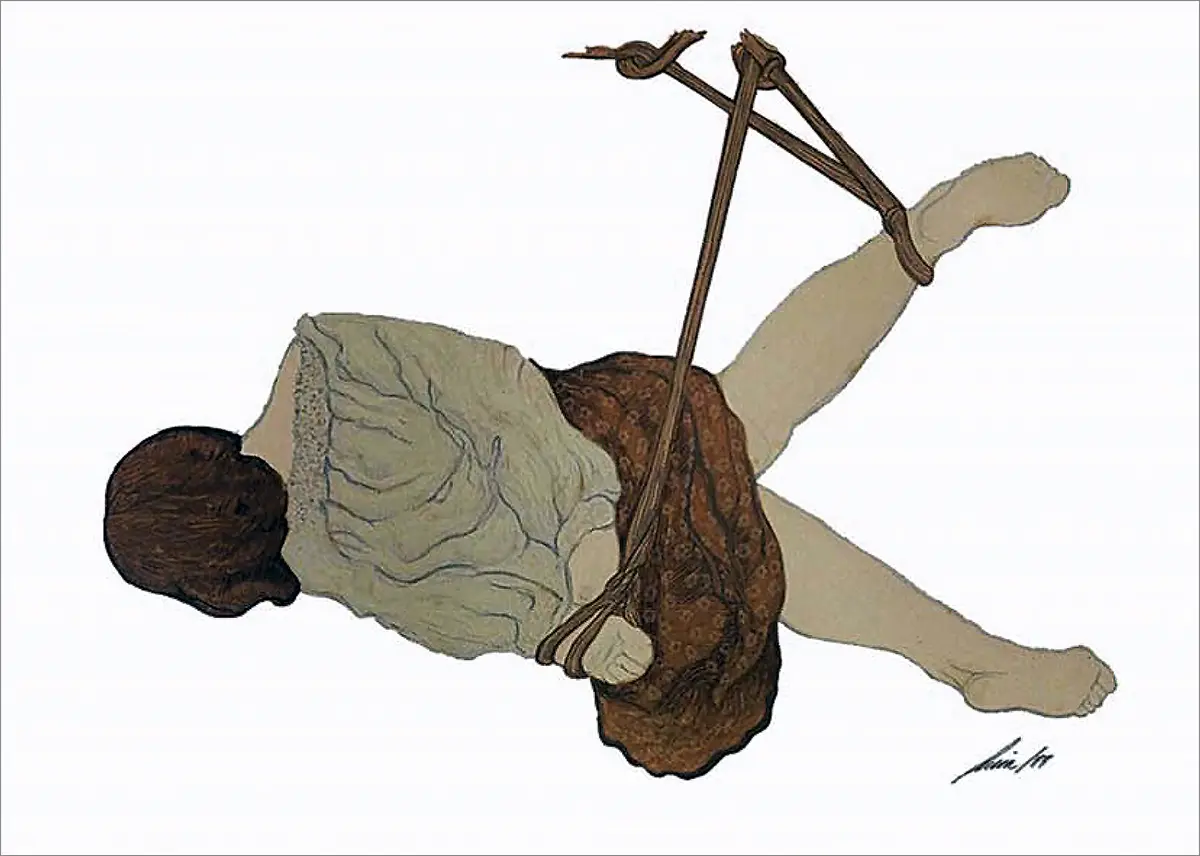
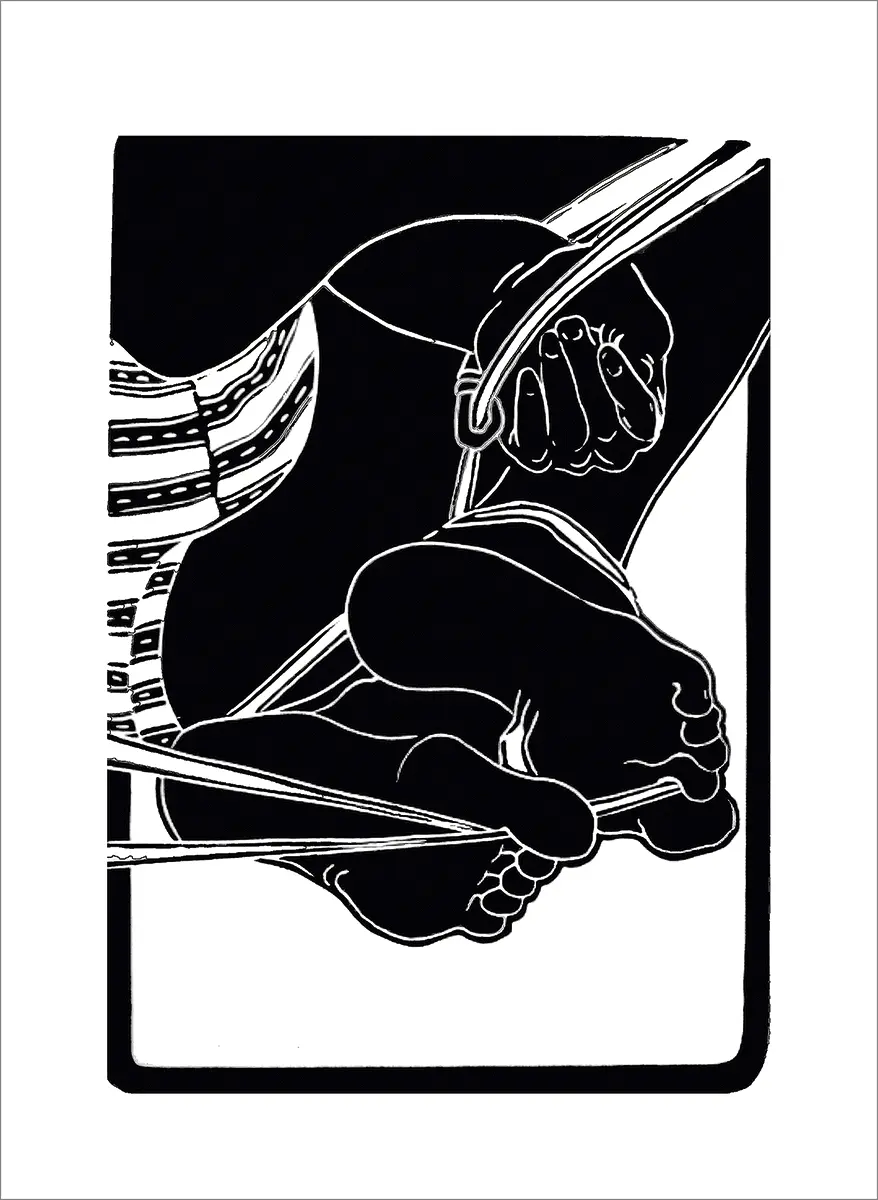
“My awareness of the repression of freedoms and the rise of social and democratic struggles contributed to forge my own conscious sensitivity to injustice and to express it in my works.” During the official repression in peasant regions and urban centers in the 1970s, Gutiérrez was teaching at the Drawing Department of the Universidad Industrial de Santander, in Bucaramanga, and she began to work intensely on the theme of repression and in particular on institutional torture, especially against the most vulnerable people, such as the youth and women. Many of her works refer to specific events or conflict sites, like her silkscreen Magdalena Medio (1977), included in the Graficario (Graphic Album of the People's Resistance in Colombia), published by the Taller Pro Gráfica in Cali and prefaced by the writer Gabriel García Márquez. The body depicted in Magdalena Medio refers directly to the region where the government authorities brutally repressed peasant and civilian mobilizations. “My works are documentary in nature, meaning that they are based on events that occurred in real life, denounced by their victims or by human rights organizations, and recorded in their reports or in the press.” The figurative style of this piece, characteristic of her work over the years, communicates a deep truth, but it's not a realistic representation. Despite, and, at the same time, thanks to her Pop tendencies, her works are neither descriptive nor overtly expressive; however, they have the ability to move us in profound ways. In Magdalena Medio, the body of a young woman floats with her head hanging down, dislocated by the ropes that bind her tortured body against a white background; the void representing the huge lack of civil rights during that period.
One of the most striking works of this time is Y con unos lazos me izaron (And They Lifted Me Up with Rope), from 1977, which refers to the case of Colombian Dr. Olga López Jaramillo de Roldán, detained in her apartment with her five-year-old daughter and imprisoned for two years without evidence in the Brigada de Institutos Militares prison, and—both under the threat of rape—after being accused of providing medical assistance to an M-19 guerrilla fighter. The doctor remained blindfolded and tied up for fourteen days, while being tortured and subjected for hours to hangings with her hands tied behind her back. During the trials against the military, the doctor described her experience: “… they wrapped my wrists in fabric, and they lifted me up with rope.” Hence, the title of Gutiérrez’s piece. As always, there is no face, since “anonymity takes on greater significance when dealing with the victims’ dignity in works on repression.” Again, the body floats in the void, face down, contorted in an insufferable position, and restrained by ropes tied to her feet, without us being able to see her head because the composition is cut off, symbolizing the impossibility and horror of survival faced with torture and injustice (9).
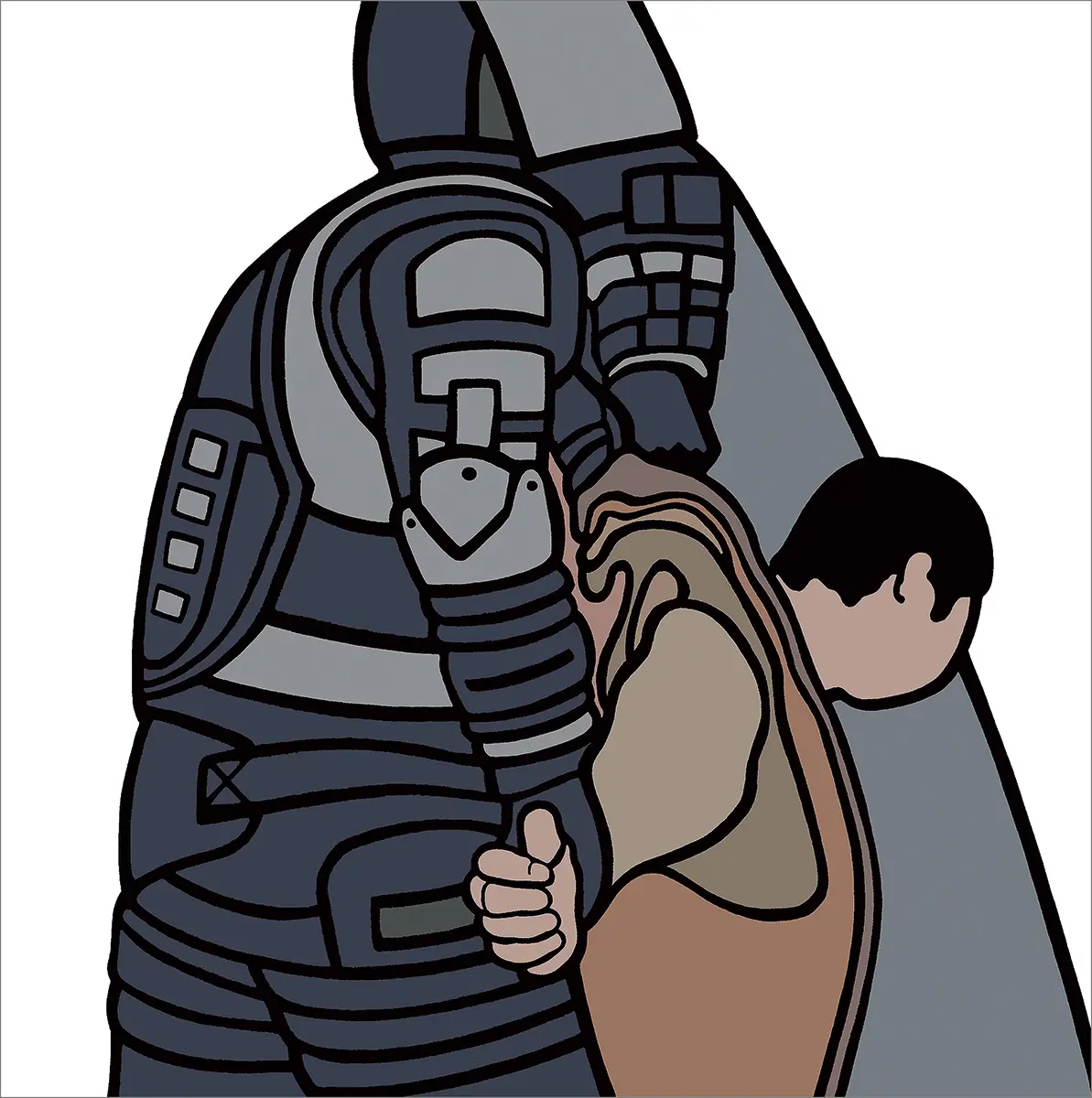
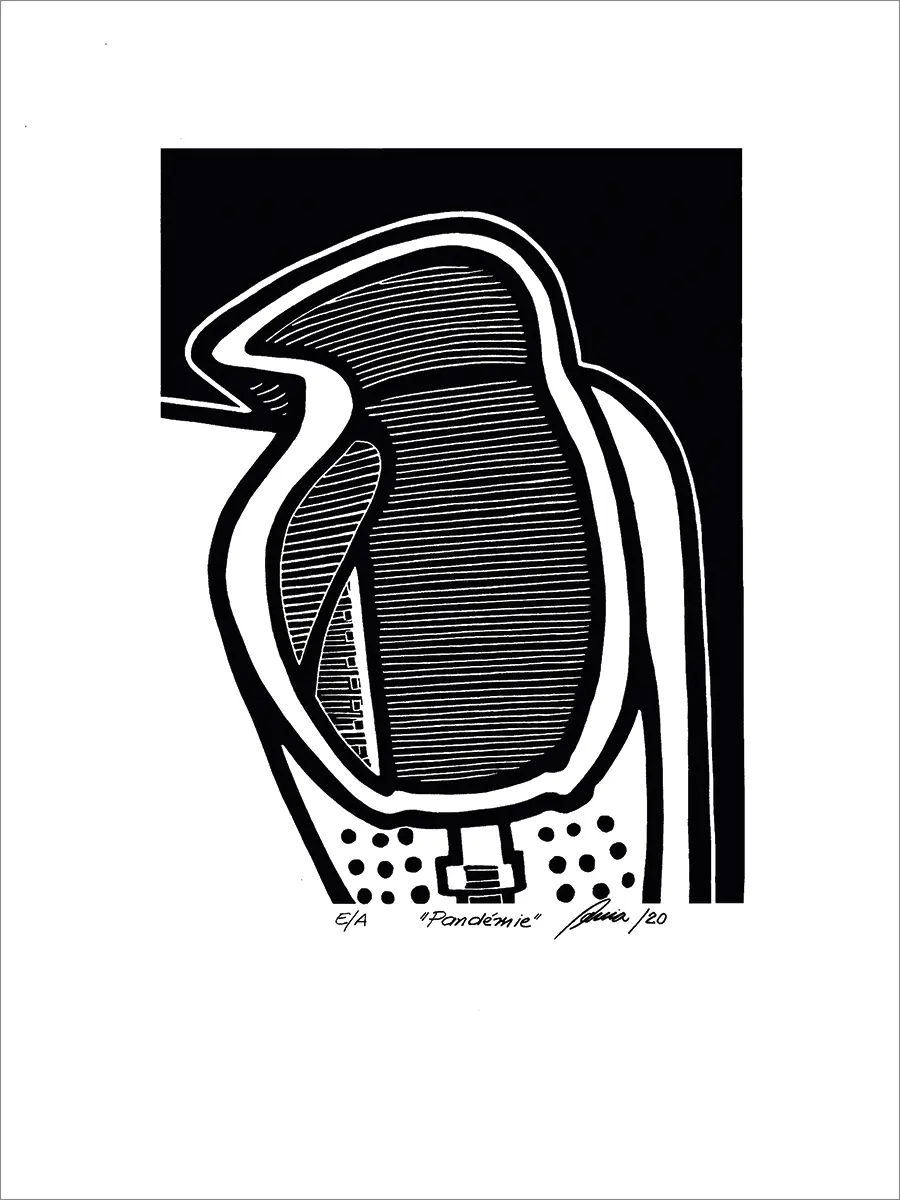
Evidencing the continued relevance of her art, Gutiérrez—deeply moved by the pandemic and its devastating effects, as well as by the ensuing social protests in Colombia (10) and the world—decided to create a series of linocuts, which she presented at the 11th World Triennial of Contemporary Printmaking in Chamalières, France, in 2021. The artist explained that this series alludes to the medieval iconography of doctors during the black plague, represented as a character with a bird's face, leather gloves, a suit that shields his body, large glasses, and a huge curved beak as protective mask. “That image served me as a starting point to symbolize the drama on a planetary scale. When viewed vertically, the prints evoke the figure of the medieval healer, and when viewed horizontally, they represent the protected face of the contemporary healer, thus intertwining centuries of pandemic histories.” (11) In this way, the artist has created a dialogue between past and present, which denounces the present and yet hints at a possible future. Sonia Gutiérrez, always relevant, deeply affects us with an artistic project that was born in the 1960s and continues to grow to this day, insistently seeking to create an emancipatory Pop art.
NOTES
1.An important group of women artists have played a leading role in Colombia, including Feliza Bursztyn, Olga de Amaral, Beatriz González, and Ana Mercedes Hoyos. The late 1980s and early 1990s witnessed a new generation of prominent artists, such as Johanna Calle, María Fernanda Cardoso, Consuelo Gómez-Soto, María Teresa Hincapié, Luz Lizarazo, and Doris Salcedo. In recent years, a process of recovery of artists such as María Evelia Marmolejo, Karen Lamassonne, and Flor María Bouhot has begun. Researchers like Carmela Jaramillo have proven the importance of artists of the stature of Cecilia Porras and Beatriz Daza. Since the 1990s, women have enjoyed a more sustained visibility in Colombian art.
2. Julia Acuña, Delfina Bernal, Patricia Bonilla, María Teresa Cano, Maripaz Jaramillo, Karen Lamassonne, María Evelia Marmolejo, Sandra Llano-Mejía, Clemencia Lucena, and Rosa Navarro stand out in this field.
3. Sara Modiano, Freda Sargent, and Nirma Zárate come to mind.
4. Among her teachers, Gutiérrez mentioned Jorge Ruiz Linares in drawing, Luis Ángel Rengifo and Augusto Rendón in metal engraving, Manuel Hernández and Carlos Granada in painting, Edgar Negret in sculpture, Ignacio Gómez Jaramillo in fresco painting, Jorge Pinto in photography, Eugenio Barney Cabrera in art history, and Francisco Posada Díaz and Isabel Sánchez in aesthetics and humanities. (Interview, August 31, 2021.)
5. Between the 1960s and 1970s, the artist participated in numerous exhibitions in Colombia, such as several editions of the Salón Nacional de Artistas; the III Croydon National Painting Contest, Museum of Modern Art, Bogotá, 1966; Coltejer Ibero-American Biennial of Painting, Medellín, 1968; “Colombian Painting, Sculpture, and Tapestry,” Biblioteca Luis Ángel Arango, Banco de la República, Bogotá, 1968; “Ten Years of Colombian Art,” Museum of Modern Art La Tertulia, Cali, 1971; “Pan-American Exhibition of Graphic Arts,” 1970, and the ensuing 1970-1976 American Biennial of Graphic Arts, Museum of Modern Art La Tertulia, Cali.
6. Between the 1960s and 1970s, the artist participated in numerous exhibitions in Colombia, such as several editions of the Salón Nacional de Artistas; III Concurso Nacional de Pintura Croydon, Museo de Arte Moderno, Bogotá, 1966; Bienal Iberoamericana de Pintura Coltejer, Medellín, 1968; “Pintura, escultura y tapicería de Colombia,” Biblioteca Luis Ángel Arango, Banco de la República, Bogotá, 1968; “10 años de arte colombiano,” Museo de Arte Moderno La Tertulia, Cali, 1971; “Exposición Panamericana de Artes Gráficas”, 1970; and Bienal Americana de Artes Gráficas, Museo de Arte Moderno La Tertulia, Cali, 1970-1976.
7. Unless otherwise noted, all of the artist’s quotes belong to a written interview that took place on August 31, 2021.
8. In recent international Pop art exhibitions that propose global revisions accounting for political works and contributions by women, Latin American presence is centered on artists from Brazil and Argentina. From Colombia, only Antonio Caro and Beatriz Gonzalez are usually referenced. Some examples are: “The World Goes Pop,” Tate Modern, London, 2015; “International Pop,” Walker Art Center, Minneapolis, 2015; and “Pop America: 1965-1975,” Nasher Museum of Art, Durham, 2019. The exhibition “Seductive Subversion: Women Pop Artists, 1958-1968” at the University of the Arts, Philadelphia, 2010, only included the Venezuelan artist Marisol. Fundación Proa organized the exhibition “Art and Contradictions. Pop, Realism, and Politics. Brazil-Argentina 1960” in 2012, but much Latin American Pop art still needs to be needs to be properly studied.
9. Marta Traba, Historia abierta del arte colombiano, Bogotá: Instituto Colombiano de Cultura, 1984, pp. 243-44. The exhibition “Los que son” (The Ones), curated by the influential Marta Traba in 1968, included works by Gutiérrez on this same theme, which was particularly significant since it brought together the ten Colombian artists Traba considered to be the most important at the moment. A harsh critic of North American Pop art, she considered Gutiérrez to be an artist with a valuable local perspective: “Sonia Gutiérrez: Among the latest generation of painters, she has been the one able to better embody an innocence of conception (ironic and fresh designs, uproarious colors), revealing a new vision in Colombia, which coincides with the world of the Beatles, the hippies, and the fraternal youth bent on distributing flowers among anthropophagi.” See Marta Traba, Los que son, Bogotá: Antares Tercer Mundo, S. A., 1968.
10. Gutiérrez’s work on the theme of violence is extensive, and includes the linoleum print series “Cimitarra, vivo o muerto al aeropuerto” (1976) and “Operación rastrillo” (1976), focused on body fragments; and works such as Seguiremos diciendo Patria (1972) and her series “Paso a la vida” (1985). Many other pieces merit a detailed study and their inclusion in a retrospective exhibition of the artist.
11. In her new series “Protests” (2020), about the recent popular mobilizations in Colombia, the vulnerability of civilians once again comes to the surface and brings to mind her series “Blindados” (1992), and her works on oppression in Colombia during the 1970s and 1980s. Space limitations make it impossible to discuss these works here. (Written correspondence with the artist, February 26, 2022).
*© Courtesy of Sonia Gutiérrez.
CECILIA FAJARDO-HILL