One
In 1952, the U.S. experimental musician John Cage produced his celebrated composition 4’33” to demonstrate that silence—an interval between two sounds—can also be heard. Almost four decades earlier, in 1913, the Italian painter and precursor of electronic music Luigi Russolo challenged the traditional precepts of harmony, melody, and rhythm in his manifesto The Art of Noise. He argued that we needed to “break the restricted circle of pure sounds and conquer the infinite variety of sound-noises.”
Two decisive questions arise from these precedents: What lies beyond the zone of supposed acoustic “emptiness”? Can art be made with noise? Adriana Herrera and Willy Castellanos, of the Aluna Curatorial Collective, took up the issue with their exhibition “Beyond the Sounds of Silence: Latin American Artists Connecting Sound, Art, and Society,” on view at the Lowe Art Museum in Coral Gables from July 21 through October 2, 2022.
Made up of a selection of sound propositions fusing acoustics, installation, performance, and the moving image, the exhibition brought together nineteen Latin American artists that work in different frequencies of the sound spectrum, from the human voice to everyday noises, including sounds generated by musical instruments, machines, objects, and electronic devices. With such a singular repertoire, the exhibition space functioned as a sort of sounding board for the works to be “seen with the ears” and “heard with the eyes.”
Visitors were enveloped by a continuous flow of all kinds of sounds: a piano covered in wax and fading progressively into silence, anonymous voices from Berlin, Buenos Aires or La Paz, the random beating of metal rods and spheres, the intermittent murmur of rain, vibrations of a cymbal played by no one, a mixture of dialects, the high-pitched tinkles of percussion triangles, the stern peals of Tibetan bells, the mating song of frogs in Caracas, the hum of whistling bottles, the indescribable timbre of cat hair, the soft smack of a stray kiss, and even the sound of a tweet transformed by a beatboxer.
In short, it was a polyphonic, multimedia, and synesthetic journey where sounds took on variable intensities, with areas of greater sonic concentration and spaces where the auditory signals were attenuated or mingled with each other.
Two
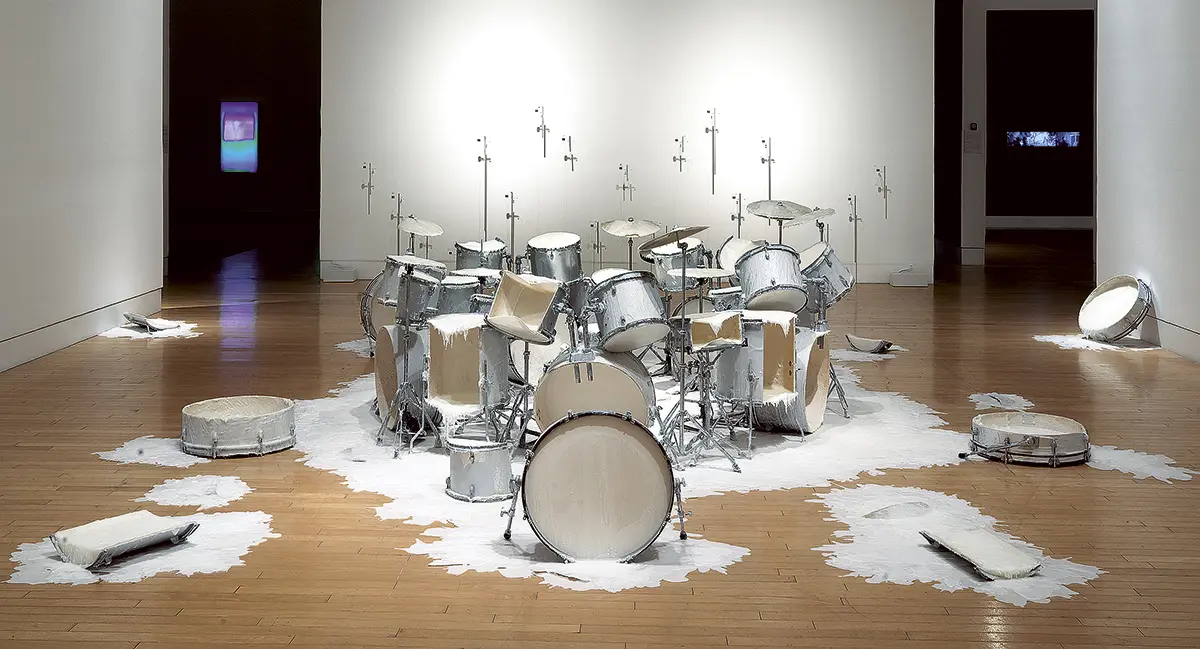
The curators structured the exhibition into three large conceptual nuclei (sound instruments that were audible or not, experimental sound art, and works that use sound to connect art and society), which were not necessarily separated in different spaces. The show began with various mnemonic devices that evoke sounds, such as those by Cuban María Elena González. Solitary confinement was central to Brazilian Tatiana Blass’ video performance Half of the Speech on the Ground. Deaf Piano (2011)—where one performer plays a piano while others pour buckets of hot wax over the instrument—and to her monumental installation Half of the Speech on the Ground. Drums (2010), made up of drums, cymbals, and bass drums covered in wax or split in two. In the background, an electromagnetic structure with spheres and aluminum rods titled Delirious Fields-Ensemble (2018), by Colombian Alba Triana, explored the relationship between chance and organization.
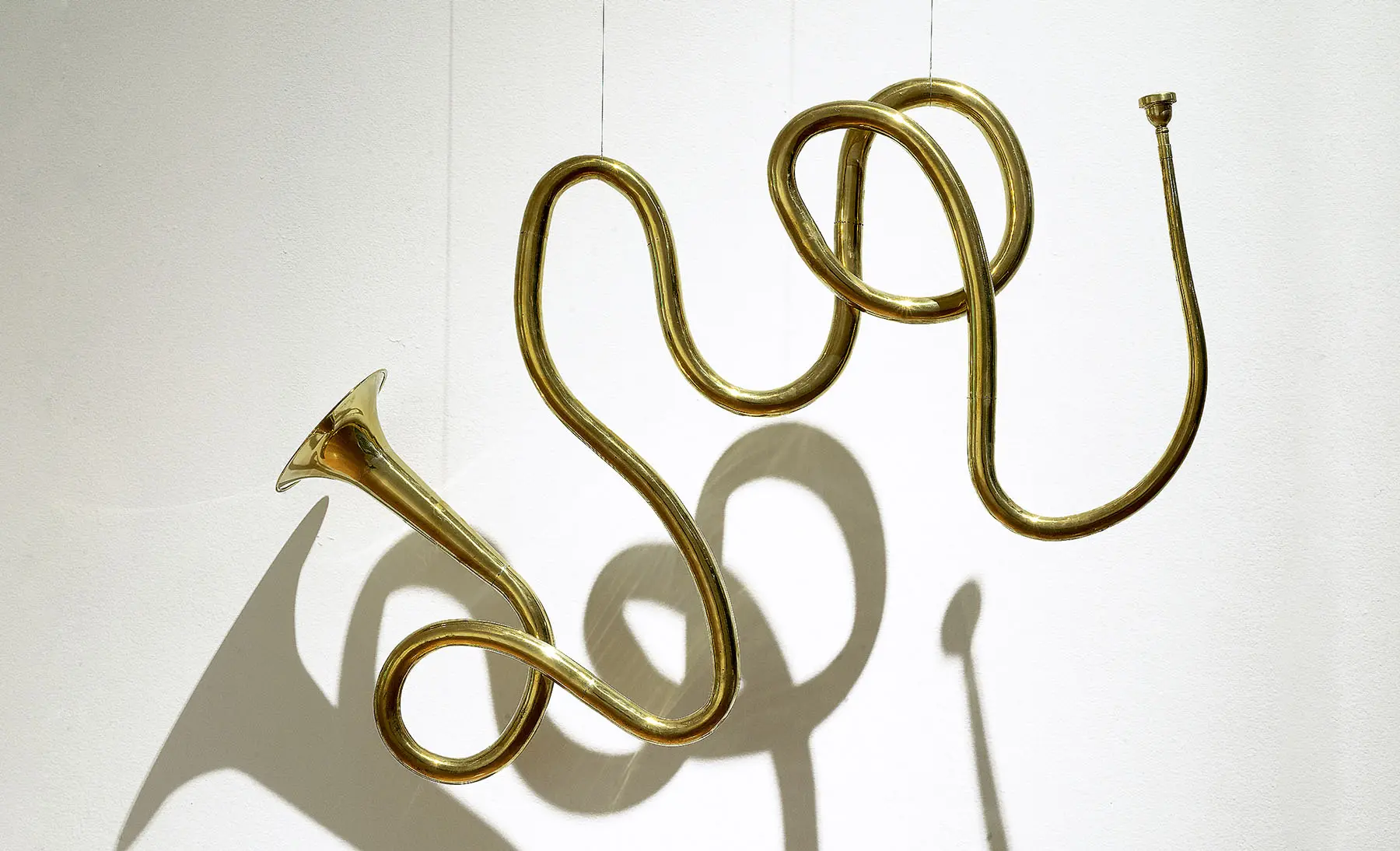
They were followed by works that recreated instrumental and sonorous aspects of indigenous memory. Peruvian Cecilia Paredes presented works in this direction: Ucayali (2021), with rain sticks and an electric motor, and Trumpet (2019), an “aphonic” instrument with a sinuous morphology evoking impossibility and lament. Ecuadorian whistling bottles served as the starting point for Lament of the Inverted Sailboat, a video by Chilean Enrique Ramírez, reminding us of the need to preserve resources as essential as water. The superposition of African and European sounds in popular fiestas in Brazil is the core of the video loop It’s Not a Wall, It’s an Abyss (2017) by Brazilian Iván Grilo. This segment also displayed Argentinian Nicolás Varchausky’s Archivo P.A.I.S. (2019), a collective-listening exercise made with sounds and vocals.
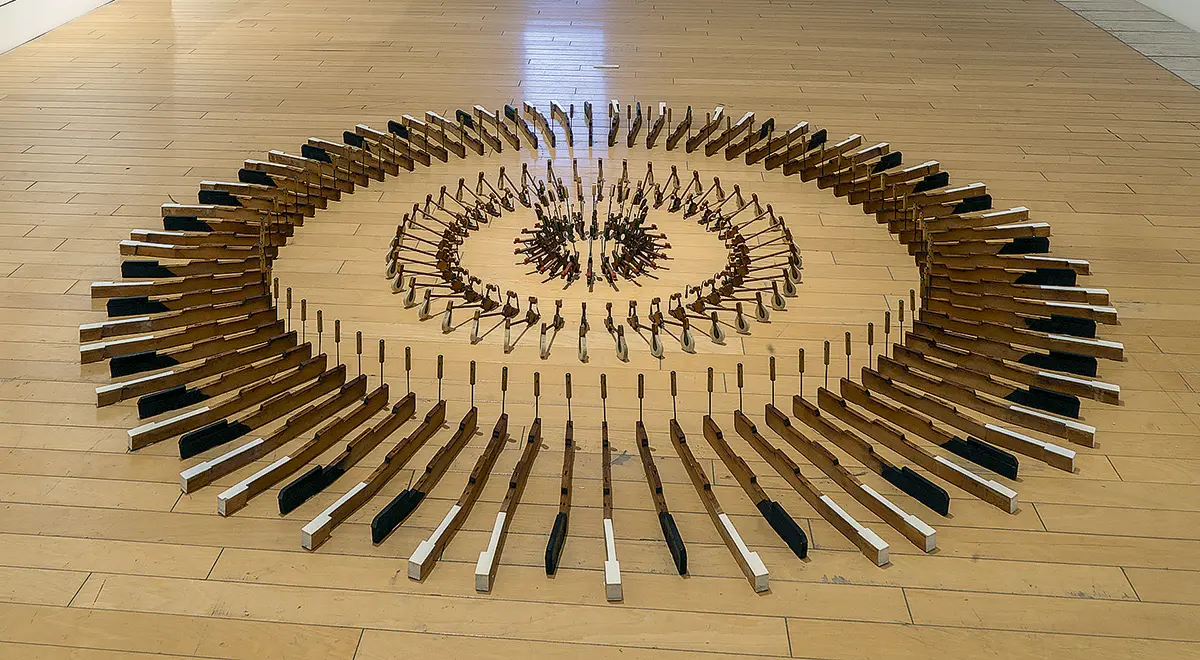
A contiguous room exhibited unstable geometries activated by the kissing sounds (5vaAB018, from the series “Video Notes,” 2018) and amphibious songs (1dm004 Eleutherodactylus coqui, from the series “Mobile Drawings,” 2004) by Venezuelan Magdalena Fernández; free scores, along with the deconstruction of a piano, by Mexican Manuel Rocha Iturbide; a pentagram without notes pointing to the value of silence, by Cuban Glenda León; a multichannel video of a female choir vocalizing the six distinctive sounds of the Polish language, by Mexican Tania Candiani; and a small room with a lunar hologram and binaural voices in Aymara, by Bolivian Sonia Falcone.
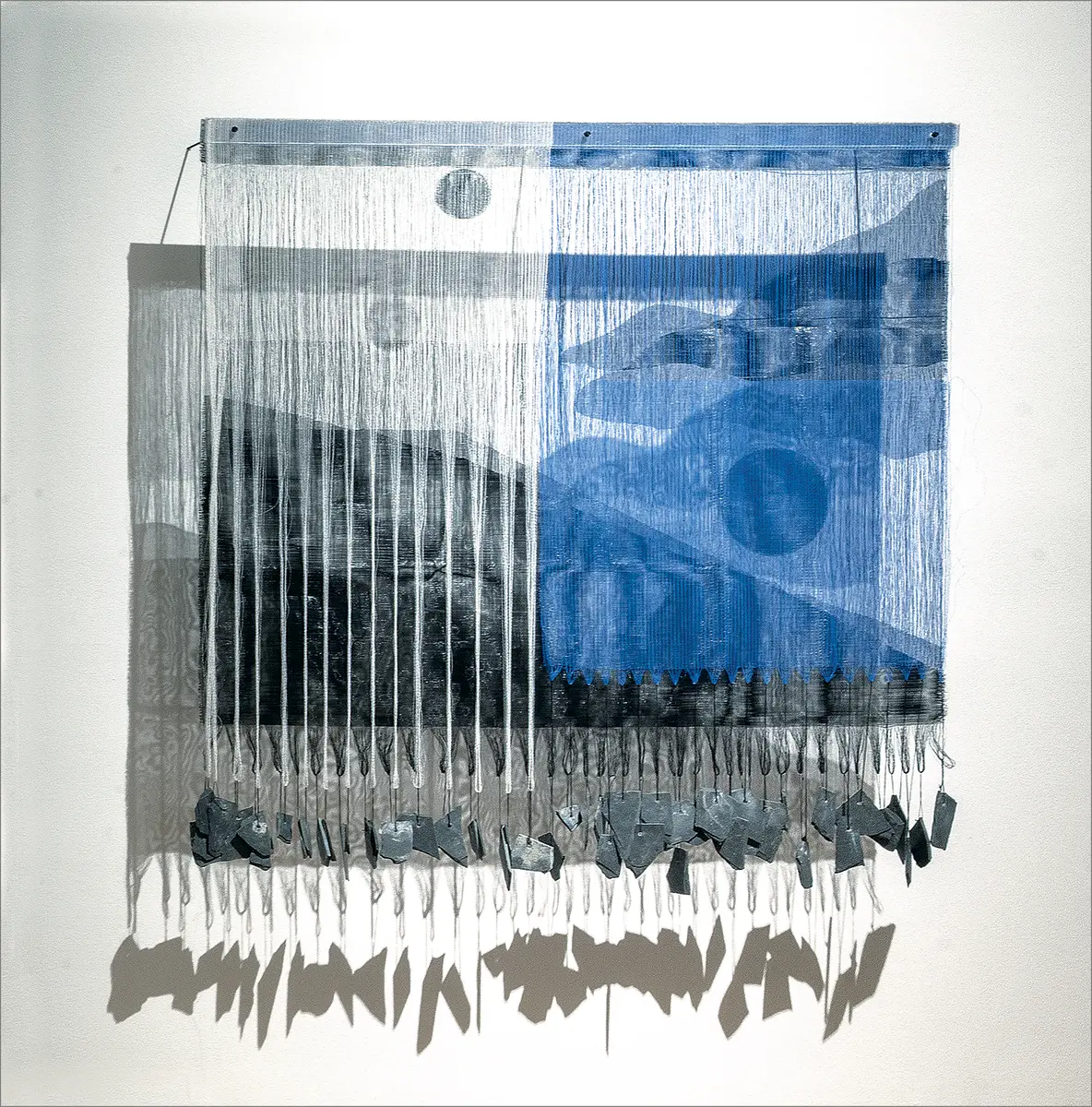
Then there was a section with works by Vivian Caccuri, from Brazil, alluding to the sonorous syncretism and symbolic tensions that underlie popular urban culture, through the use of ropes, percussion triangles, rocks, safety nets and belts, among other elements. Further on, there were two projects by Uruguayan Richard Garet: the “Perceptual” series (2015), visualizing sound, and Sonochrome (2015), where projected kinetic light translates into sound. There was also the sound installation Small Sounds from a Tabletop (2009-2022), by Gustavo Matamoros, and the video Less is More. Homage to John Cage (2019), about fragmentation and chance, by Rolando Peña, both from Venezuela.
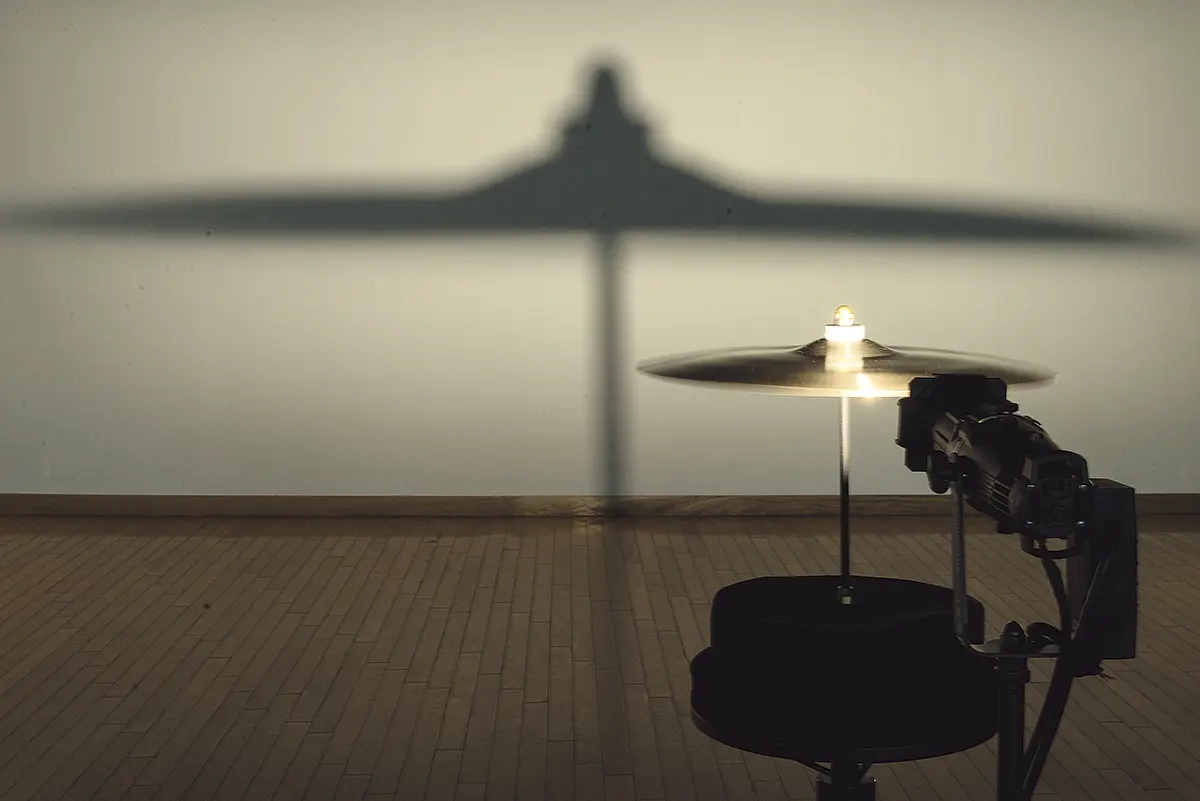
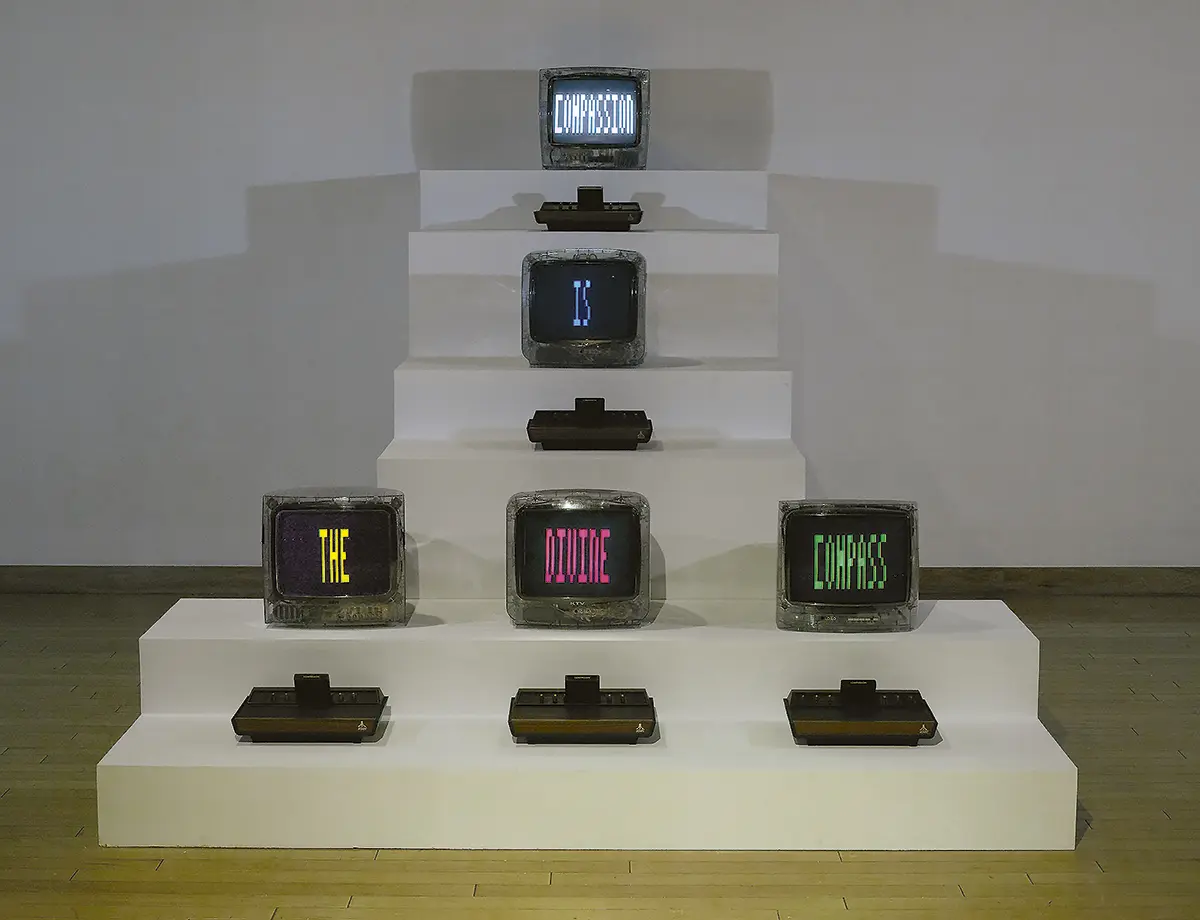
The show concluded with Tania Candiani’s Reverence (2019), a monumental video projection inspired by an ancestral dance; Compassion, an installation by Venezuelan Yucef Merhi, made with Atari consoles, TV monitors, and sound; a soundscape of Berlin, by Muu Blanco, also from Venezuela; the vibrational sculpture with cymbal and microphone, by Colombian Alba Triana; and The Serenade of the 104 Kilobytes (2019), a video-loop about the impact of bots on public life, by the Mexican artist Antonio Vega Macotela.
Three
Beyond audience expectations and preferences, it’s worth highlighting some of the challenges that the curators and the institution had to overcome in order to undertake a project demanding such unconventional reception conditions.
I the first place, there was the challenge of “amplifying” the presence of sound works, which already possess a century-old history that nonetheless has often been “silenced” or subordinated to visuality. In fact, sound art as a mixed practice continues to float in an undefined limbo between music, the visual arts, and performance. This makes it permeable, voluble, and also difficult to place in a specific taxonomy, at least for the time being.
Secondly, there’s the physical expansiveness of sound, whose vibrations cannot be framed or placed on a pedestal to demarcate its presence in space. Sound works destabilize the ritual “quietness” of conventional exhibitions, designed to be observed “in silence.”
It is neither common nor easy to turn the rooms of a visual arts museum into a listening venue that lacks a setting or comfortable benches. Here, listening takes place literally on the move. Sounds come from everywhere at the same time and from different sources. It’s up to the viewers to decide whether to follow the order suggested by the curators, or to make their own itinerary.
Thirdly, the objective was to offer the U.S. public a representative selection of Latin American sound artists whose explorations stand out for their conceptual relevance and aesthetic consistency. From this perspective, “Beyond the Sounds of Silence” worked as a compendium of sound documents, carefully “orchestrated” to produce an auditory experience that was rich in cultural nuances and meanings. What happens with sound is what happens with any kind of language in terms of performative capacity and hypertextual potential. In this sense, the exhibition highlighted the communicative, ethno-social, and political dimensions of sound practices as carriers of submerged and emerging contents that refuse to be silenced.
* Courtesy of Aluna Curatorial Collective