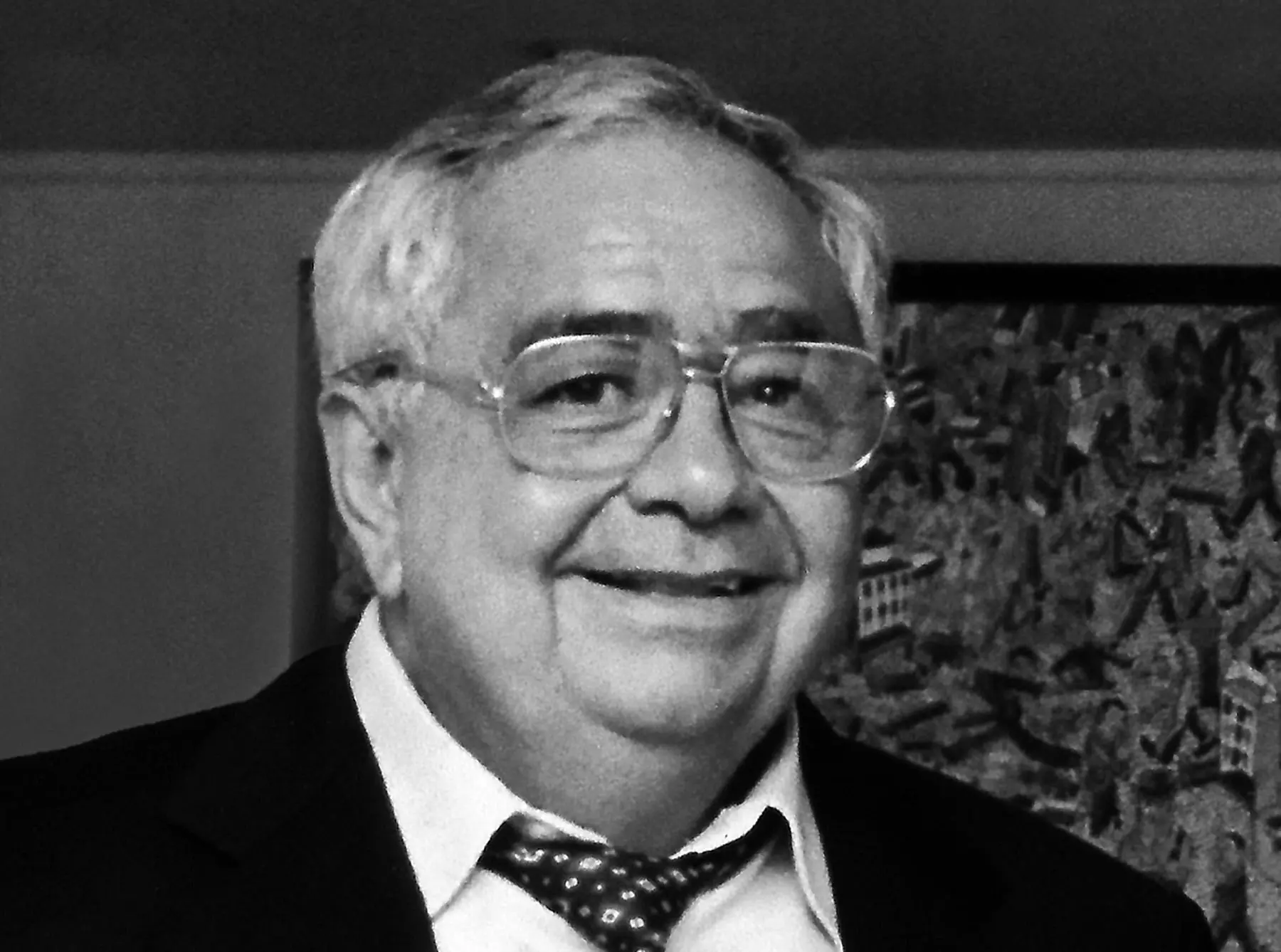
César Segnini Villareal was born in Maracaibo (state of Zulia, Venezuela), and died on August 29, 2022 in Miami. Widely renowned in intellectual, political and cultural milieus in Venezuela, he was a man of action, empathetic and generous in all the professional and human activities he undertook in various domains. He engaged in a variety of aspects of culture, not only in Caracas, where he opened the famous Galería Durbán in 1970, but also in cities of the interior into which he expanded the activity of said exhibition space.
Possessed of decisive and intrepid qualities of leadership, César developed an interest in the visual arts early on in his life, and after a period of intense activity and the acquisition of ample experience, with criteria of excellence, respect, and professionalism, he began his work in a gallery destined to become a pioneering icon in the country’s art scene, as an important artistic and cultural center.
From its beginnings, Galería Durbán was an intensely active participant in the Venezuelan and Latin American arts field. César was an initiator of professional “gallerism”, which meant more than simply opening a space for hanging paintings, placing sculptures, and selling stuff. It was not merely “a room with nails, carpets, and lights,” in the words of a journalist at the time.
That story began at a grand and powerful scale in accordance with an idea, and César’s efforts for the gallery to operate a symbiosis between its commercial aspect and its cultural activism were an attempt to imbue the project with public value. His desire was fulfilled, as Galería Durbán became a veritable center of ebullient, effervescent activity.
By then, César was not a newcomer to the country’s visual arts and intellectual scenes. He had lived through a complex existential tangle that combined politics, culture, and intellectual work, as well as the fullness of 1960s art with geometric abstraction, informalism, kinetic art, and the evolution of drawing and others proposals for aesthetic renewal. There was room for it all, but also a life of guerrillas, twist music and night clubs, tango-fueled gatherings, and the convergence of writer and poet friends in la Durbán—as we lovingly called it (with the name that was retained in its Miami site)—for animated get-togethers and discussions of literature and art. During all the years it remained open in Caracas, it was a friendly space for acquainting ourselves with creative work, opening exhibitions, launching books in joyful celebrations that often included the presence of Venezuelan Presidents, always sponsored by César, some published by the publishing house he financed in support of poets and artists. Academics, professionals in various disciplines, and even psychiatrists, the protagonists of a creative bohemia anchored in the new space, offered lectures and conferences about their disparate areas of expertise.
But César, an effective manager and gallery director in the context of a Venezuela then opening up towards a fertile developmentalism and a splendid democracy, organized it all painstakingly. The gallery had to function like a well-oiled machine. He planned activities in accordance with a strict program and schedule, and recruited a stable team of artists and art critics to collaborate with the success of the project—a success soon acknowledged in Venezuela and beyond.
César brought to the country exhibitions by important Latin American and European artists, and established himself at the cutting edge of the international art scene. At the same time, he was the first gallery manager to recognize the value of folk art, and he opened his doors to a sizable group of young artists later enshrined by the historiography of Venezuelan art. He was also a pioneer in the exhibition of works by ceramists who successfully explored sculpture in ceramic materials, and had a hand in supporting the increased visibility gained by works on paper as part of Venezuela’s well-known drawing boom.
In summary, César Segnini was a man of his time, able to adjust to the needs of the country and to offer greater opportunities to promote Venezuela’s artistic production within its borders and beyond. Charismatic and sincerely jovial, he displayed great generosity as a person and a gallery owner towards friends, clients, and all who needed him. At bottom, he was a patron of the arts who happened to own a history-making commercial gallery.
His figure and his personality are those of an emblematic professional who will not be forgotten, because he is a part of the projection of Venezuelan art. His story continues to this day at the Durban Segnini Gallery, helmed by his wife Sulay—César’s confederate and ally since 1975—and his son Gonzalo, companions in his life journey.
BÉLGICA RODRÍGUEZ