Projects: Carolina Caycedo and David de Rozas, at MoMA, is a multimedia exhibition (sculpture, drawing, and film) in which the artists articulate the memory of the past with present realities in order to illuminate environmental and social problems that merge from the imposition of a colonial-capitalist thought structure on the territory of Somi S’ek, the land of the Carrizo/Comecrudo people, in West Texas. The works, commissioned by Ballroom Marfa, are the result of a lengthy research process involving both fieldwork in the region and archival work at the University of Texas in Austin.
In the course of the Fifteenth Century, with the humanistic revolution in the West, a space opened for the evolution of a variety of areas of study not subordinated to the religious and political discourses of the era. At the same time, however, nature itself was made subordinate to the human gaze, which resulted in its privatization for the production of economic resources. Humans were posited as a substantial center; in terms of the natural space, we have built and transformed the landscape, ignoring the fact that we ourselves are a part of it. Methodologically, Caycedo and De Rozas structure a decolonial aesthetics as a pathway towards the production of critique, wherein the relationship between art and the body plays an anti-catastrophic role; the interaction between human body, nature body, and landscape body points towards and interrogates structures of power and domination. Made in collaboration with Juan Mancias, chairman of the Carrizo/Comecrudo, the single-channel film The Teachings of the Hands gives voice to the territory, allowing for human and non-human agents to be taken into account as participants in a life system. The film gives visibility to the environmental violence that has historically impacted the territory of Somi S’ek. It focuses on the McDonald Observatory, in Fort Davis, the Amistad Dam, on the Rio Grande; and the Permian Basin oil fields, illuminating the way in which a variety of social agents, among them industry, science, and politics, have worked together to exert power and control over exploitation, with no regard for the tragic consequences on the life of the community of for any global effects.
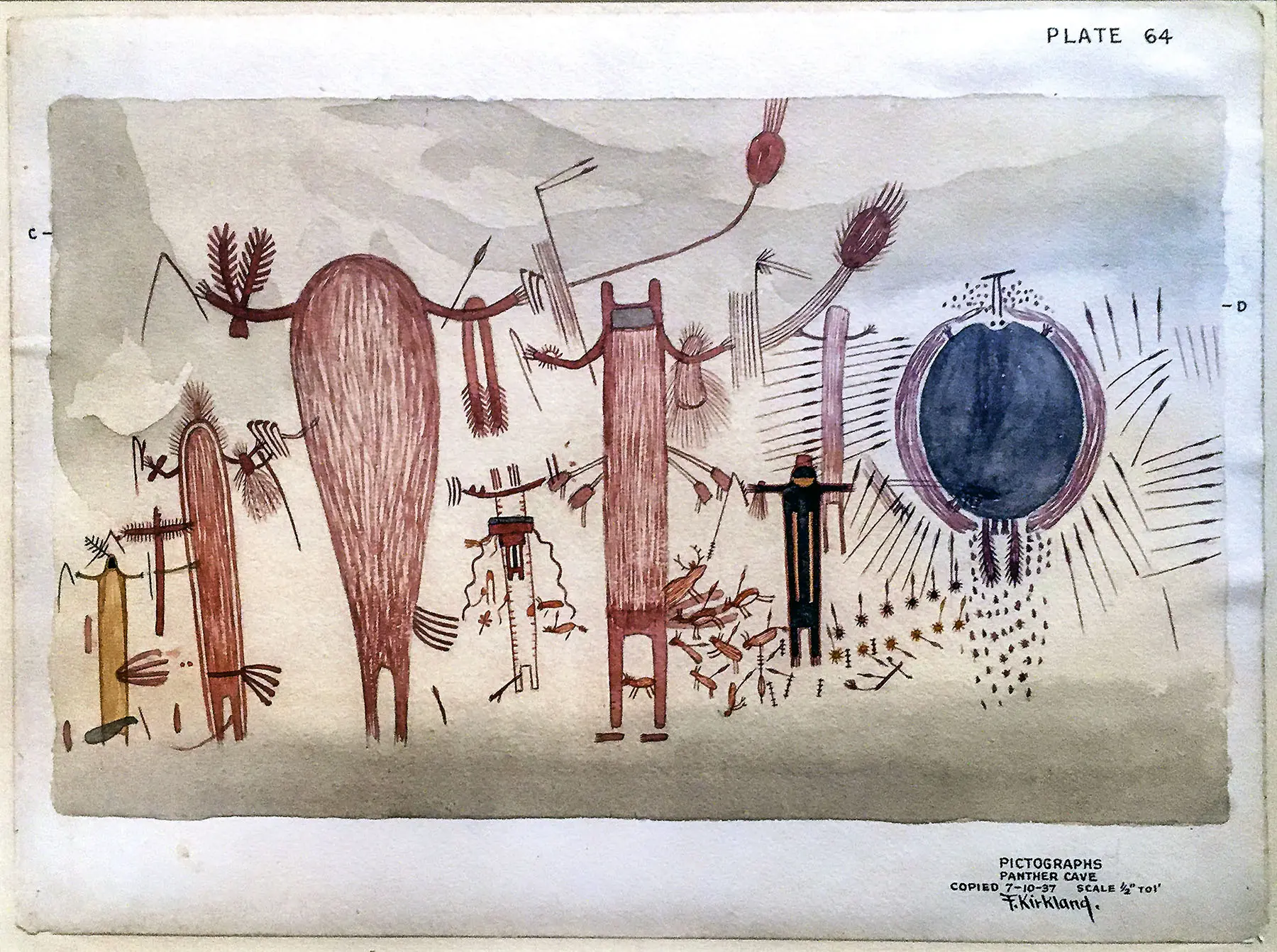
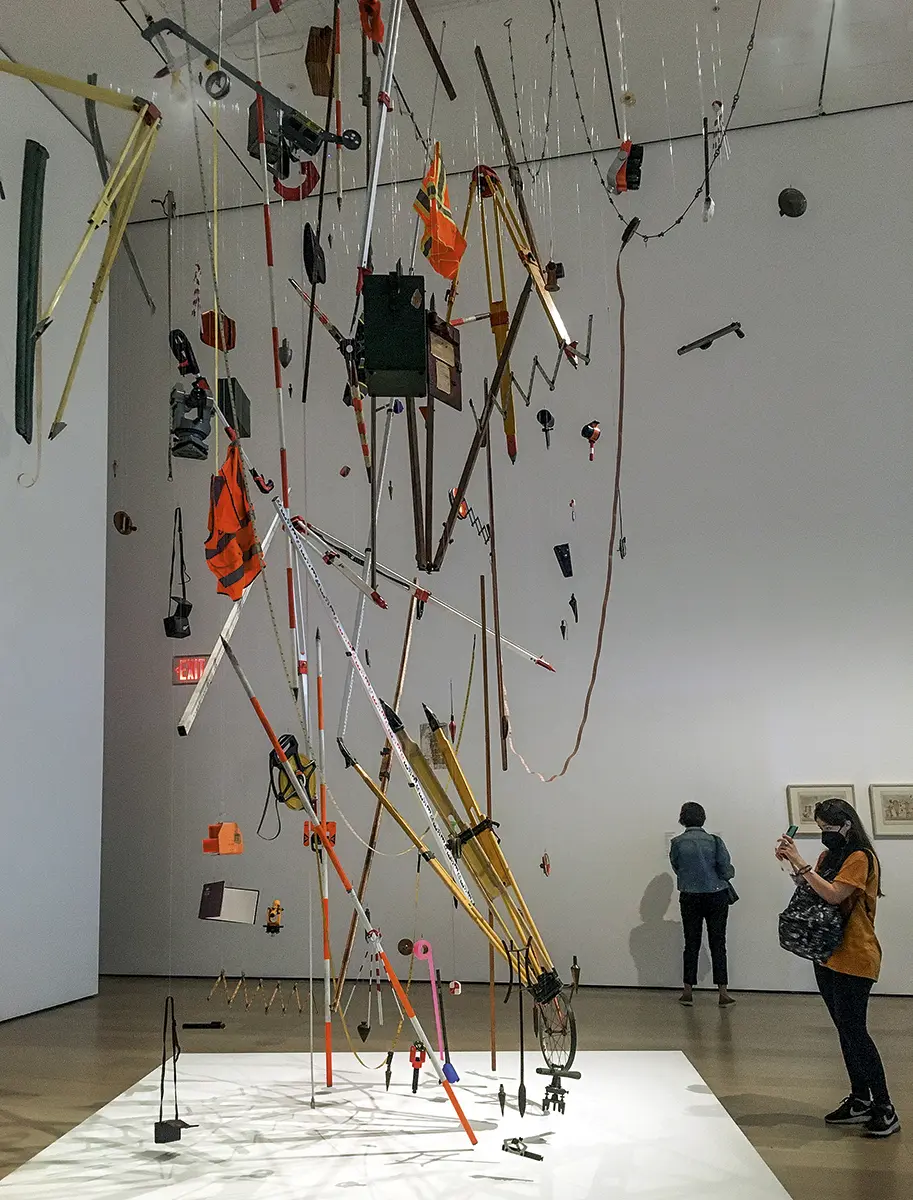
As part of its decolonial aesthetics, the exhibition explores the way in which scientific knowledge has also been used, by means of systems for the capture, processing, and validation of information, in the search for better forms of exploitation. Included in the show is Measuring the Immeasurable, a site-specific sculpture comprised of surveying instruments used to measure and produce the geometric grids that in turn make the economic calculation of the exploitation of nature possible. This large-scale sculpture is accompanied by four watercolors by Forrest and Lula Kirkland, who, on conserving them, in the 1930s copied West Texas’ pictographic sites. Many of the ancient murals have vanished or have suffered great damage due to the privatization of the territory and climate conditions that cause natural erosion. In some cases, the only remaining vestige of those sacred images are their reproductions through the Kirkland’s gaze. Caycedo and De Rozas use as decolonial tools archival and archaeological documents, originally produced as instruments for study, or for the validation of the ethnographic method or of anthropology, highlighting the need to debate issues of sovereignty over the land and bringing to the fore the fact that the concepts and laws concerning property upon which contemporary nations have been built, often ignore millennia of history as well as other ways of organizing society and inhabiting the landscape.
Caycedo and De Rozas interrogate our destiny as a civilization on the basis of a dialogue that renders it necessary, from the standpoint of the present, to review the historical pathways that resulted in an understanding of the landscape as a potential producer of capital. At issue is the need to dislodge the idea of the human as essential to existence, and to take up the presence and the thought systems of different historical and cultural traditions, traditions that persist like those of the Carrizo/Comecrudo, in order to confront the decisions we are making and assume responsibility for the future we are building. The works on display in this exhibition clamor for a revision of territorial sovereignty, and that demands the recognition of indigenous rights and a transformation of how the natural environment is seen, with an acknowledgment that its decline is also ours, as we are also part of it.
YOHANNA M. ROA