The Cuenca Municipal Biennial Foundation celebrated its fifteenth version (December 10, 2021-February 28, 2022) by inaugurating the first “sustainable edition,” whose chief curator, the Spaniard Blanca de la Torre, gave the title of “The Biocene Biennial. Change from Green to Blue.”
As a pertinent alternative to the Anthropocene, the concept of Biocene was posited as the central axis of this biennial, signaling a new era. The Biocene Biennial aimed to displace the voracious human behavior and its axes of power to focus on deep concern for our natural resources and other living beings on the planet. This international project integrated traditions, materials, and local cultural manifestations requiring an interesting collaboration with Cuencan artisans.
The Biocene Biennial contemplated the biosphere as a whole and sought to give a forceful response, from contemporary art, to highly topical issues such as action in the face of climate emergency, resistance to extractive policies, the preservation of biodiversity, and empathy with other living beings.
Cuenca, nestled in a natural environment supplied by five main rivers, granted water the leading role in this great narrative. The biennial’s general discourse also included the preservation of the seas, ecosystems, and natural habitats, demanding a greater socioenvironmental commitment and the adoption of a renewed vision for a world of social, gender, and ecological justice.
The Cuenca Biennial is the only international artistic event in Ecuador that has lasted three decades. Founded in 1987, three years after the Havana Biennial, and a member of the International Association of Biennials (IBA), the Cuenca Biennial has become increasingly professionalized, overseeing doctoral theses and theoretical practices. It has signed agreements with other important biennials in the region and, since its 12th edition, has assumed a policy of equal conditions in local and international participation as an integral part of the global pulse of contemporary artistic practices.
This fifteenth edition hinged on three main thematic axes: Ancestral Knowledge and Other Epistemologies focused on the defense and rescue of traditional practices by local artisans and peasants; Ecofeminisms, as its name indicates, focused on the interdependence of female knowledge and mother earth, the Pachamama, for the care and protection of the environment; and Escenarios futuribles (Speculative Scenarios) dealt with ways in which a better tomorrow can be imagined and manifested through art: an optimistic message inviting us to envisage a better future. Only awareness and actions taken today will bring well-being to future generations.
The Cuenca Biennial Collection is made up of an important compilation of contemporary art consisting of more than sixty pieces in different languages and formats acquired through prizes awarded since its first edition, in 1987, as well as various donations. Under Katya Cazar’s direction and honoring the foundation’s statutes (which specify three acquisition prizes of twenty-thousand dollars each and two honorable mentions), this edition resumed the prizes that had been suspended in the two previous biennials. Likewise, together with a team of art restorers, the biennial’s heritage has been reconditioned. The Biennial House now guards all the works and presents sporadic exhibitions to bring the collection closer to the public. No doubt, it’s an important heritage comprising 34 years of Ecuadorian, Latin American, and international art production: works by 1206 artists from 65 countries, and overseen by 113 national and international curators.
The 15th Cuenca Biennial gave three equal-category acquisition awards to Fabiano Kueva from Ecuador, Tania Candiani from Mexico, and (the “Eudoxia Estrella” Award) to Cristina Lucas from Spain. Likewise, Amor Muñoz, from Mexico, and Ursula Biemann, from Switzerland, received honorable mentions. The Paris Prize, consisting of a scholarship in France, was awarded to the Ecuadorian Pamela Cevallos.
The Biocene Biennial left behind demagogic models entrenched in greenwashing, which has so discredited the issue of sustainability. In this way, the color blue was postulated as a banner for a possible change.
The biennial produced a decalogue structured in a circular-shaped infographic that conveyed a “positive discourse” based on art as a generator of new narratives. In general terms, the biennial proposed an eco-social discourse encouraging artists to use their imagination to promote a better understanding of the Biocene, with life at the center of everything.
Ecofeminisms had a 70% female staff and a record of 67% female artists. Few artists were included in the Less is more section, with utmost attention given to each project. The proposed route to the different venues of the biennial allowed people to weave interesting frictions with the historic center of Cuenca, a world heritage site. The enjoyable route could literally be done on foot.
Reduction of the Ecological Footprint: in accordance with its principles, the Cuenca Biennial chose to minimize the carbon footprint and avoid wasting the enormous amounts of resources and energy that these massive art encounters typically entail. For example, transportation was reduced to a minimum, with only two works brought from abroad.
In a pioneering initiative named Local Production/Zero Mileage, participating artists were invited to hire artisans and work with local materials and suppliers for the production of their installations. This interesting synergy stimulated the economy of small and valuable regional producers.
Reduction of the ecological footprint: foreign artists visited Cuenca only once to fine-tune their projects, in coordination with a small but efficient local staff.
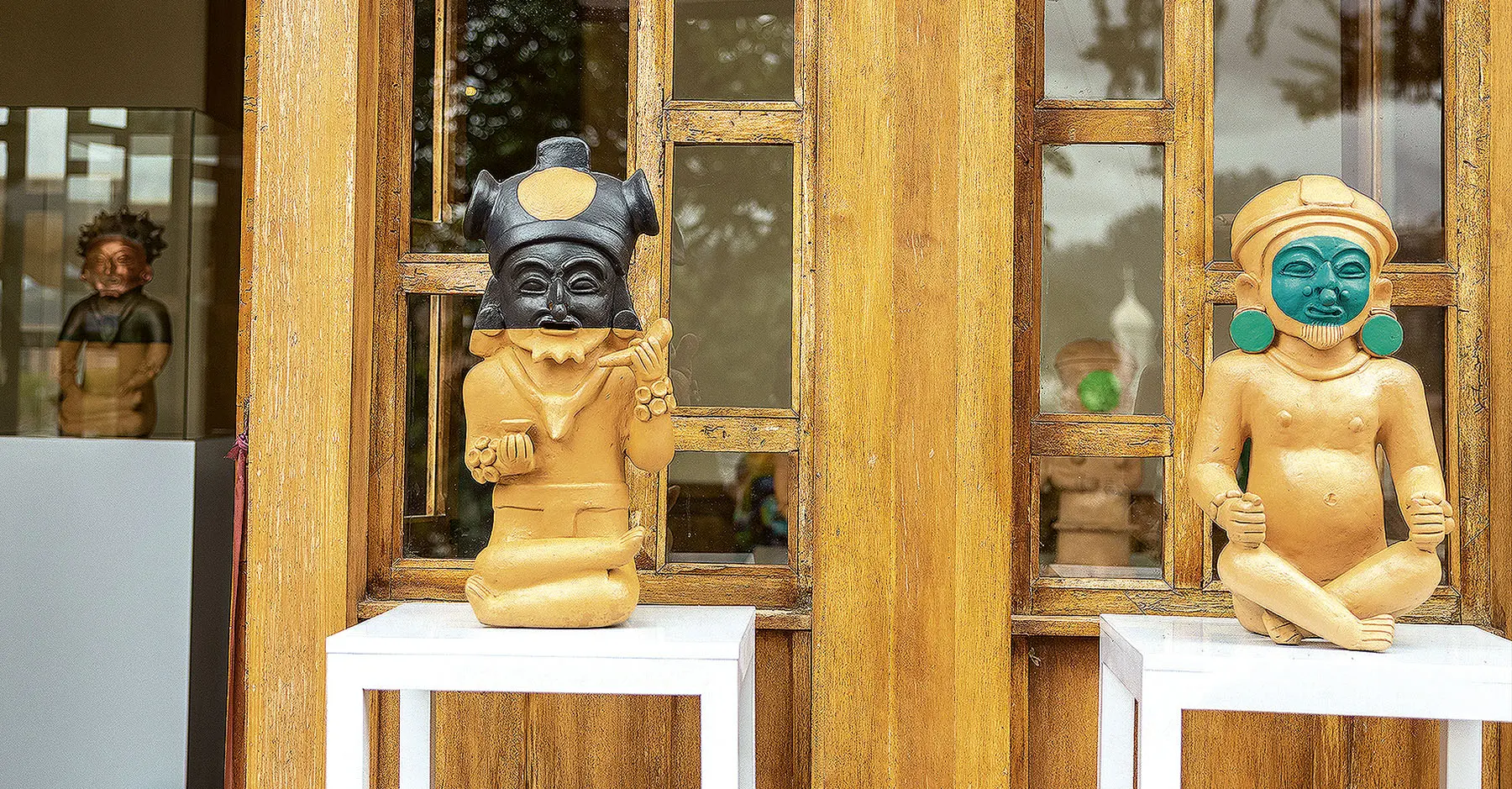
In this sense, a fascinating bet on the use of Natural and Biodegradable Materials allowed artists to rethink their projects and enrich them with local materials and traditional methods that demand to be valued, defended, and transmitted to other spheres, such as the fertile contemporary art scene.
A clear example of this biennial’s resolve to empathize with other species was Eugenio Ampudia’s work Concert for the Biocene, filmed and dedicated to “the distinguished and lush public” of Cuenca’s Parque Municipal, to be later projected at the Sucre Theater. Plants and spectators alike enjoyed a traditional Ecuadorian musical piece performed by the Cuenca Symphony Orchestra.
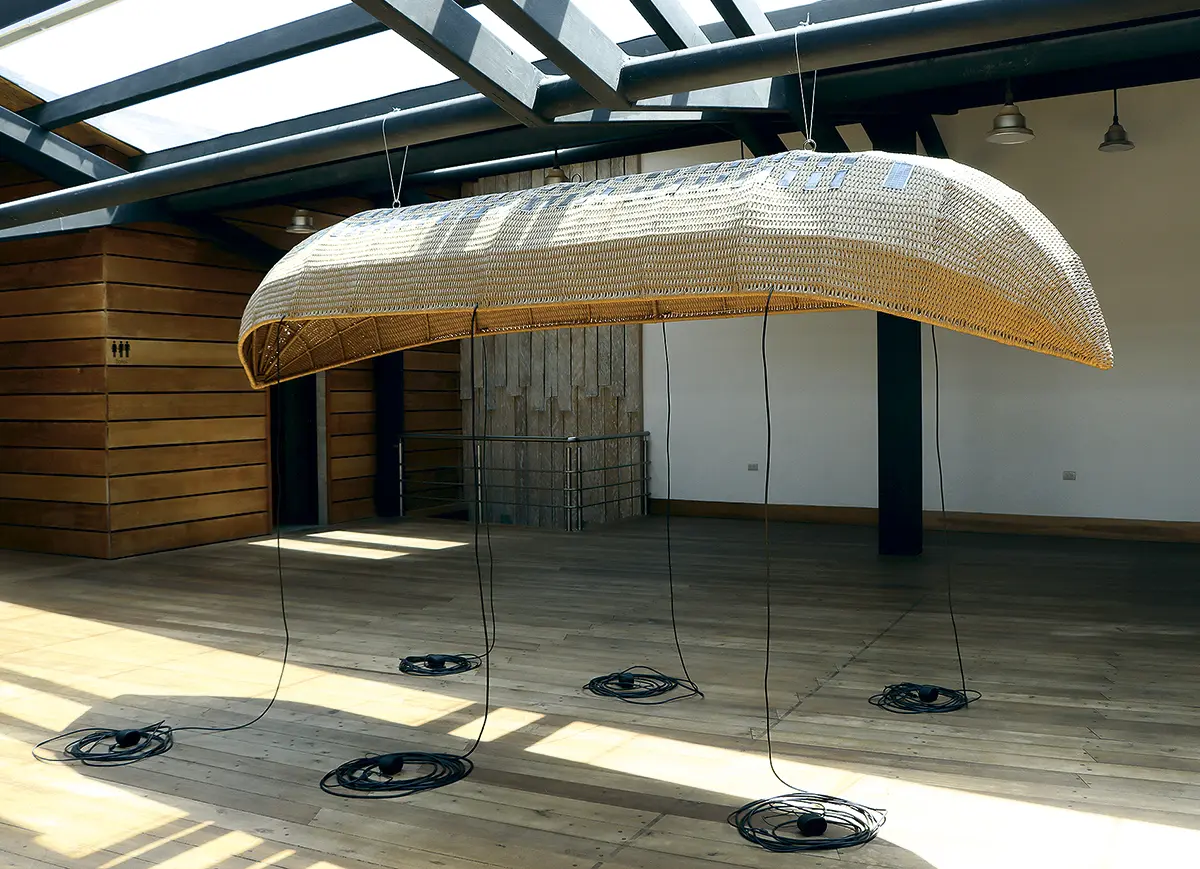
Amor Muñoz, the recipient of an honorable mention, presented her installation Flujo (Flow, 2021), a sound sculpture made of rattan fiber (from sugar cane), flexible solar cells, conductive thread and electronics. This piece—an inverted canoe woven in one piece by Cuencan artisans—allowed us to think about the local sphere in relation to our technological future.
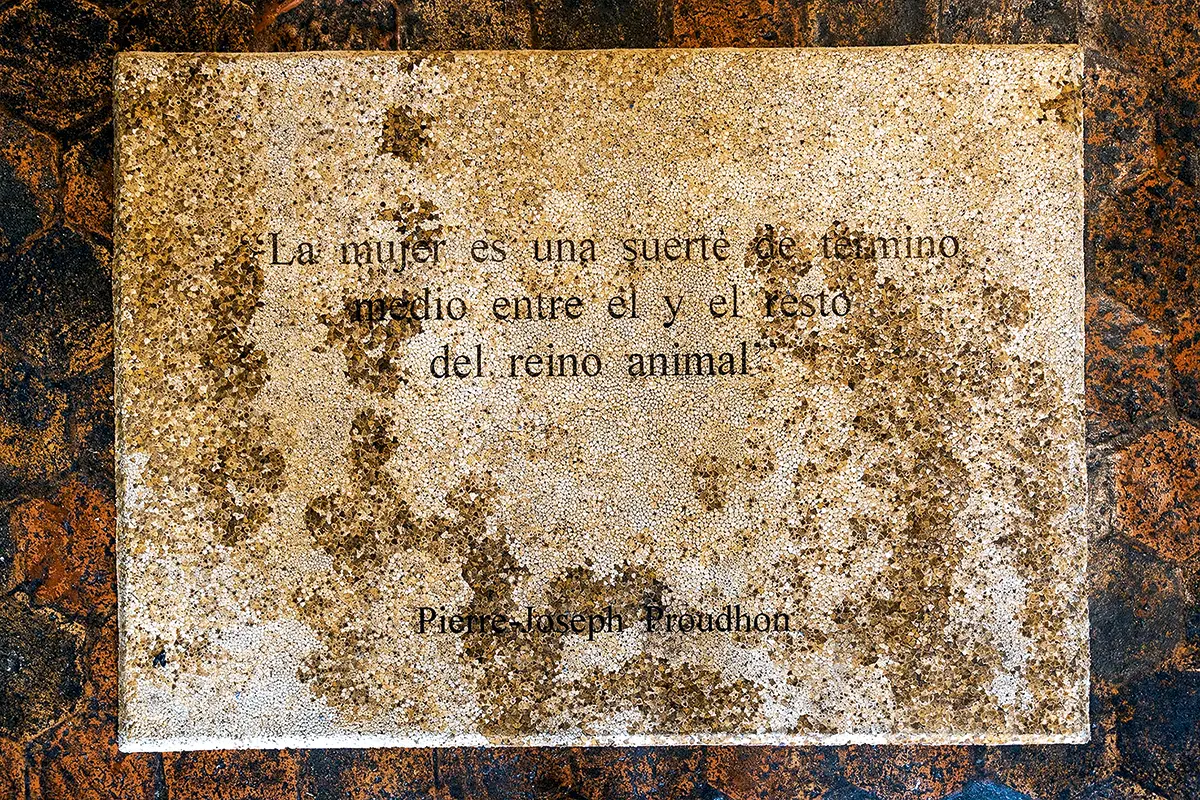
Part of the amazing research conducted to work with materials from the area led to the use of totora fiber, obtained from a local aquatic plant. With this material, the artists Avelino Sala and Eugenio Merino remade their series Carpets, printed with misogynistic phrases and presented at the entrance of each of the biennial’s venues.
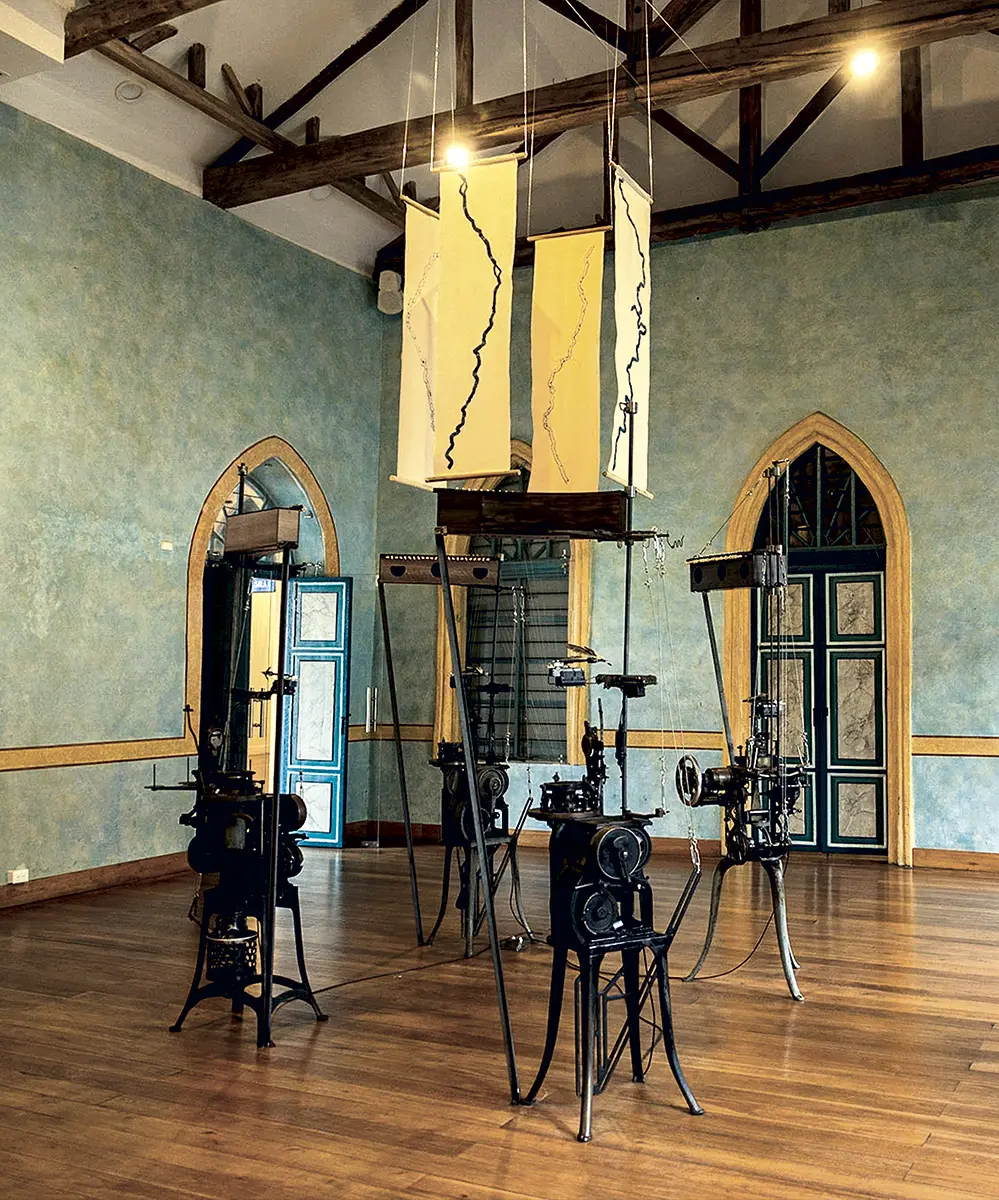
Tania Candiani, recipient of one of the acquisition prizes, carried out a sound visualization exercise in collaboration with a luthier from Cuenca. For her installation Water Harps, she altered industrial looms to create four harps. Above them hung four hand-embroidered cotton fabrics related to the geography of Cuenca. The four harps played endlessly as a metaphor for the abundant sound that rivers should always maintain.
The biennial also designed a zero-waste plan, avoiding single-use graphic and promotional materials, which, failing that, were recycled as biennial merchandising, a clear example of the circular economy. Decrease in consumption and moderation in production, coined as Degrowth and Good Living, were also part of the philosophical decalogue of the 15th Cuenca Biennial. Another of its mandates was related to Cuenca’s sense of belonging to this art event. The inclusion of different communities and local artisans was key in incorporating the concept of Community into the “ecosystem” championed by the biennial. Likewise, the curatorial discourse incorporated a glossary of ten words, the 10 R’s, which summarized the tenets of this event: Reduce, Reuse, Recover, Repair, Recycle, Redistribute, Reflect, Reject polluting materials, Reclaim environmental justice, and Redesign/Reinvent a possible world.
According to Katya Cazar, executive director of this 15th edition, the Biocene Biennial is “consistent with the times we live in… an efficient, concrete and aesthetic biennial, in keeping with the scale of this city and its characteristics. A biennial in tune with who we are, with its own technical and professional structure, which is open to globality… With a curatorial thesis that calls for action and change.”
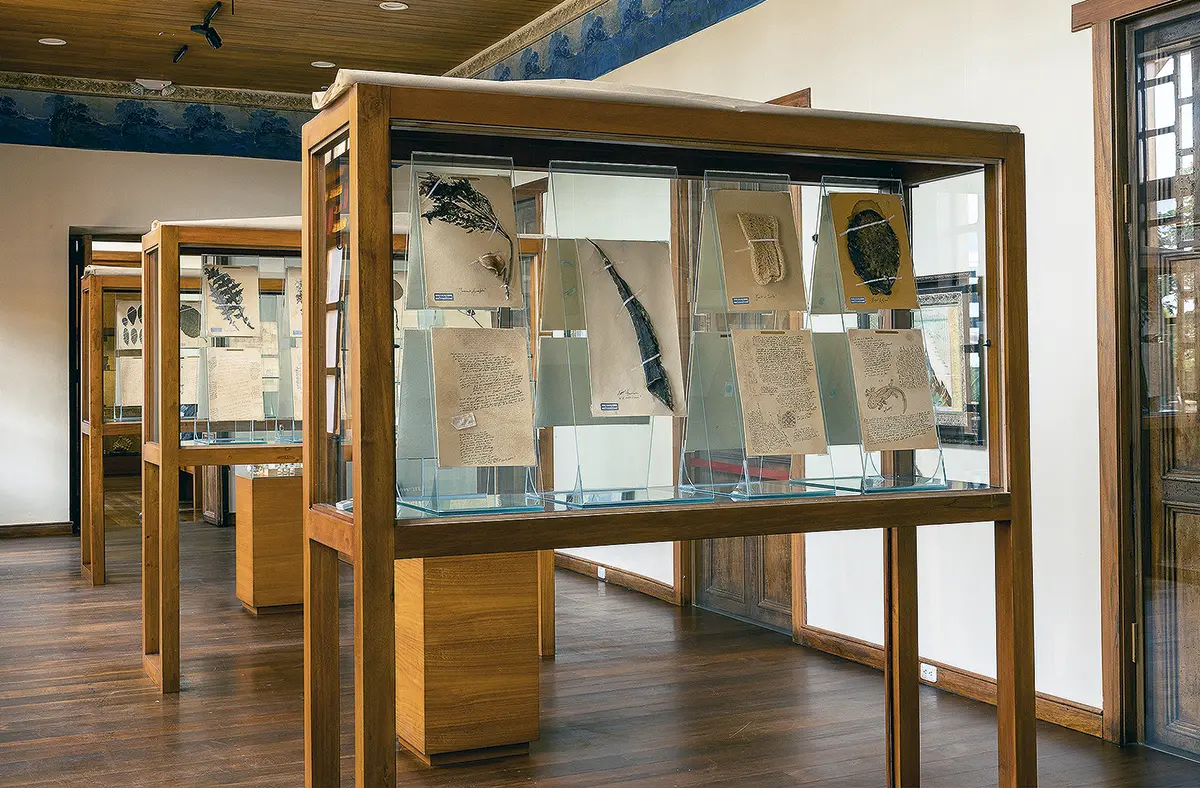
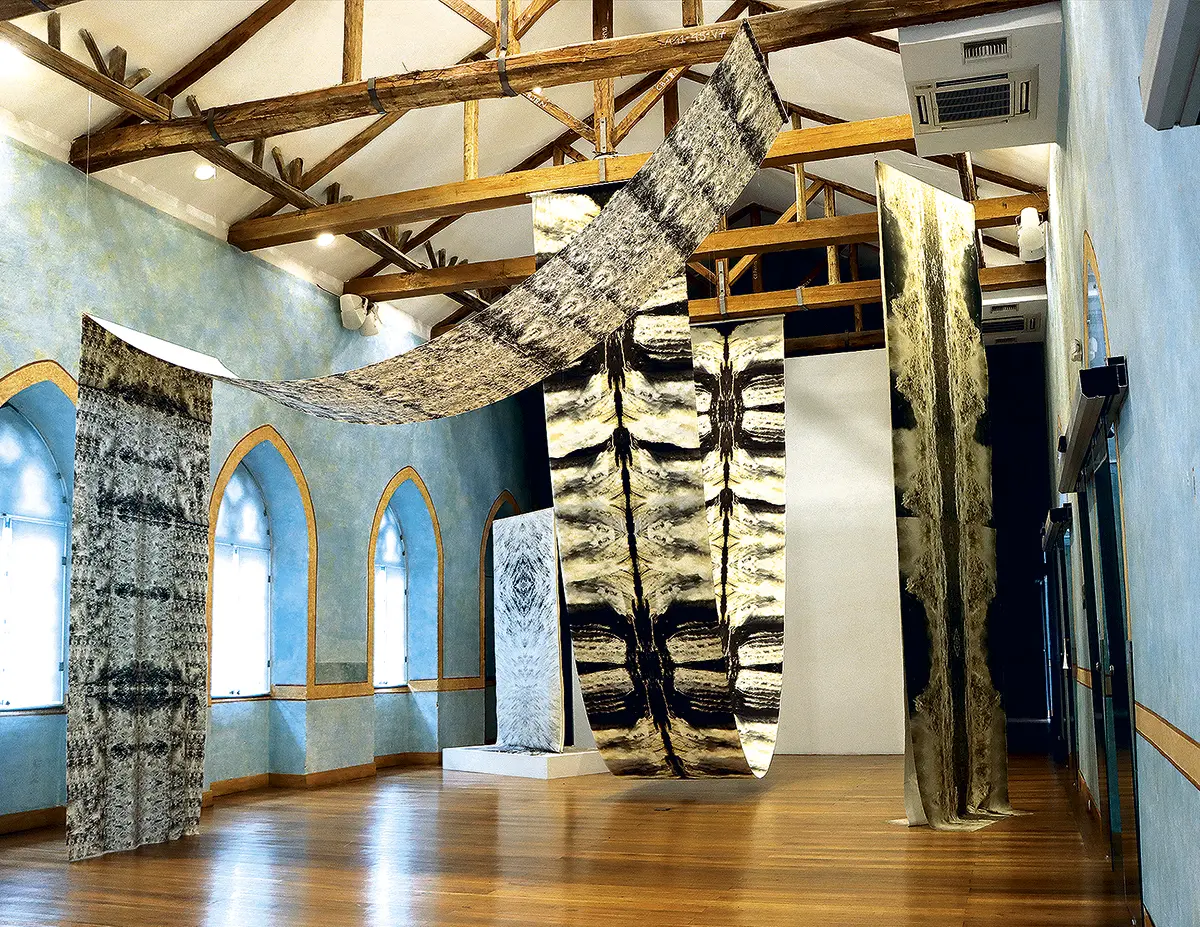
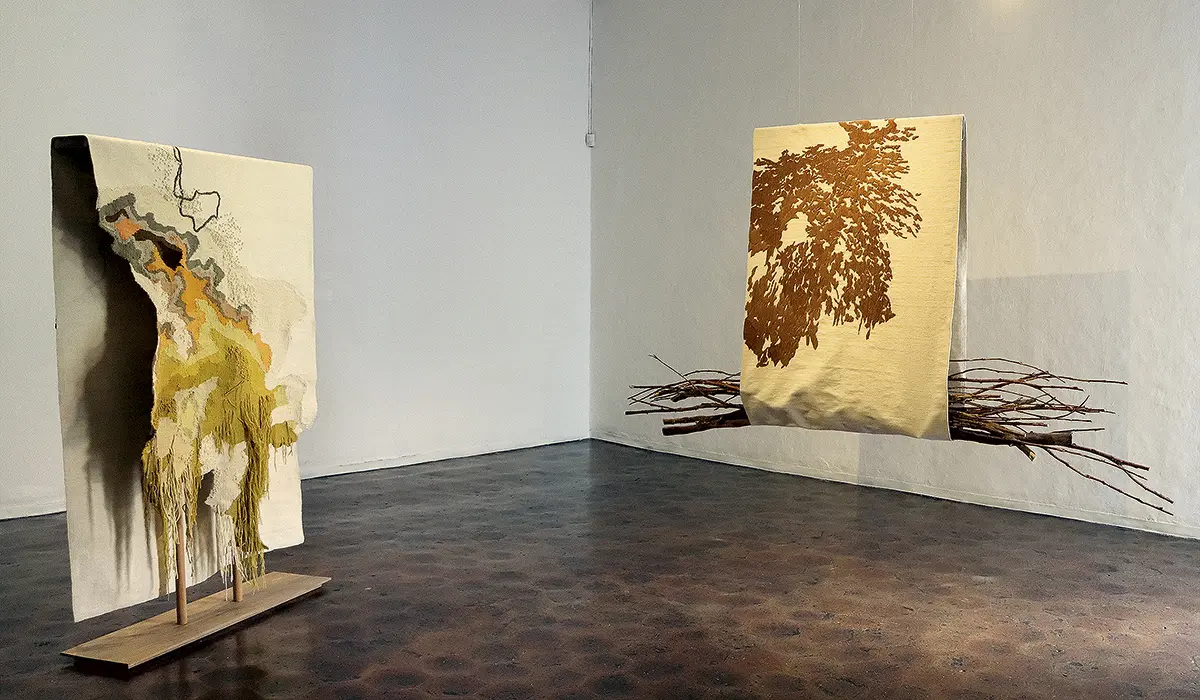
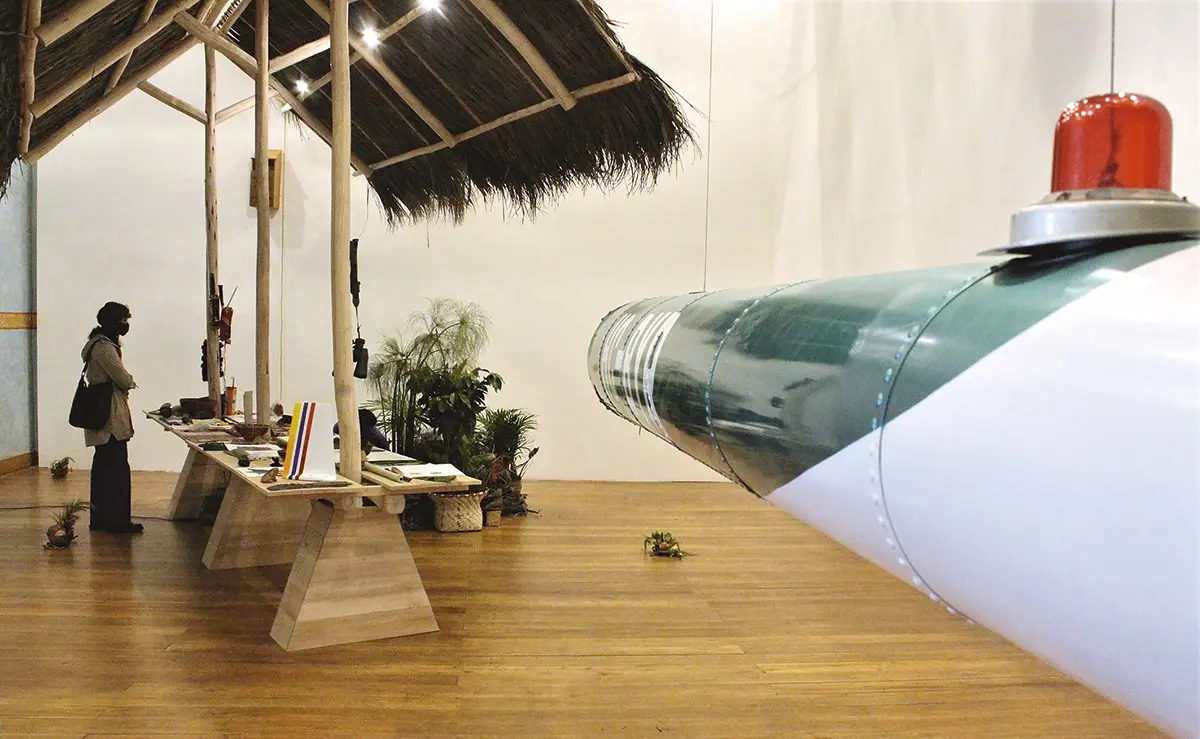
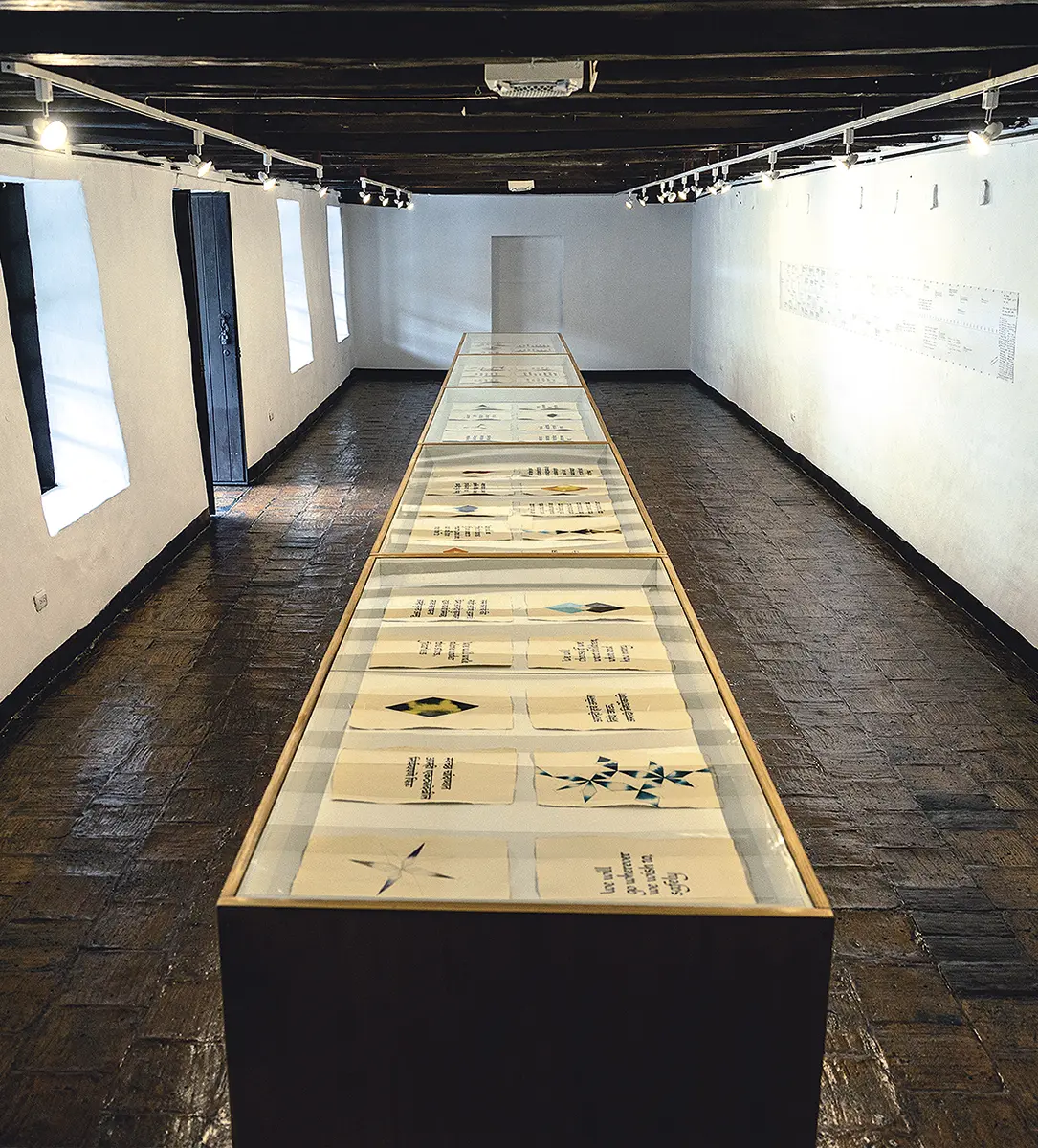
The numerous participating artists included: Karina Aguilera Skvirsky, with How to Build a Wall and Other Ruins, a multi-screen installation of video and seats-sculpture made of recycled materials; Augusto Ballardo with the collective rebuilding of a maloka, according to the “Panamazonia-living archeology” worldview model, using endemic wood and toquilla straw; Carolina Caycedo with Simulacrum, Another Simulacrum, Maligna II, and Yacumama (2015-2016), beautiful photocollages printed on cotton canvas, from her “Water Portraits” series; Basia Irland with photographs of frozen-book sculptures (2007-2021); Marie Velardi with her Book of Possible Futures, a series of watercolor drawings and texts in English and Marathi (a language spoken in Bombay) centering on the conversations she held with local women during her residency in India, about their hopes for the future; and Ana Teresa Barboza with her delicate Plant Records, for which she used traditional weaving processes to record the relationship with our habitat.
A few days before closing, the biennial had a record participation of 27,000 visitors, with a high percentage of young audiences of all educational levels. This social contribution is one of the raisons d’être of the biennial, as it strengthens art and culture conceived as citizens’ rights.
Cuenca is empowered and defends its region. In step with Ecuador’s 2021 general elections–at the behest of Cuenca–a public consultation resulted in 80% of votes in favor of protecting the surrounding moors and important water sources of Ecuador’s southern highlands, where this city—the third largest in the country—is located.
Three decades have passed before the Ecuadorian Constitutional Court finally accepted the legal validity of this consultation, setting a precedent to guarantee the human right to water protected by Ecuador’s Constitution. All of these local actions are aimed at convincing the government to call for a national referendum to reject metal mining throughout the country. In this joint effort, the Cuenca Biennial took a step forward by keeping the struggle alive through contemporary art.
* Courtesy: Fundación Municipal Bienal de Cuenca.
ELISA RODRÍGUEZ