From September 16, 2021 to January 10, 2022, the group show “Yesterday’s Newspapers, Art and the Press in Latin America” was hosted by the Museo de Arte Miguel Urrutia (MAMU) in Bogotá. The goal was to review the many ways the printed media has been appropriated by art, through the works of 41 Latin Americans from Argentina, Brazil, Colombia, Chile, Ecuador, Mexico, and Peru. The exhibition brought together different perspectives on newspapers, seeming to nostalgically recognize its inevitable disappearance while going against that inevitability. The show’s title is a direct reference to Héctor Lavoe’s famous song, which highlights the ephemeral nature of the news and the inexorable oblivion that plagues everyday life.
The “social uses” of the printed press in Latin American contemporary art respond to different types of sociopolitical agendas, giving rise to highly heterogeneous projects. In some cases, the press is interpreted as a fleeting documentation of events that sustain the continuum of daily life, while others see it as a powerful source that often distorts or falsifies reality. The printed press can be either analyzed as giving relevance to events that marked a historical turning point or as a sign of the insignificance of our existence. Vulnerabilia by Mexican artist Jonathan Hernández is a meaningful example that combines both dimensions.
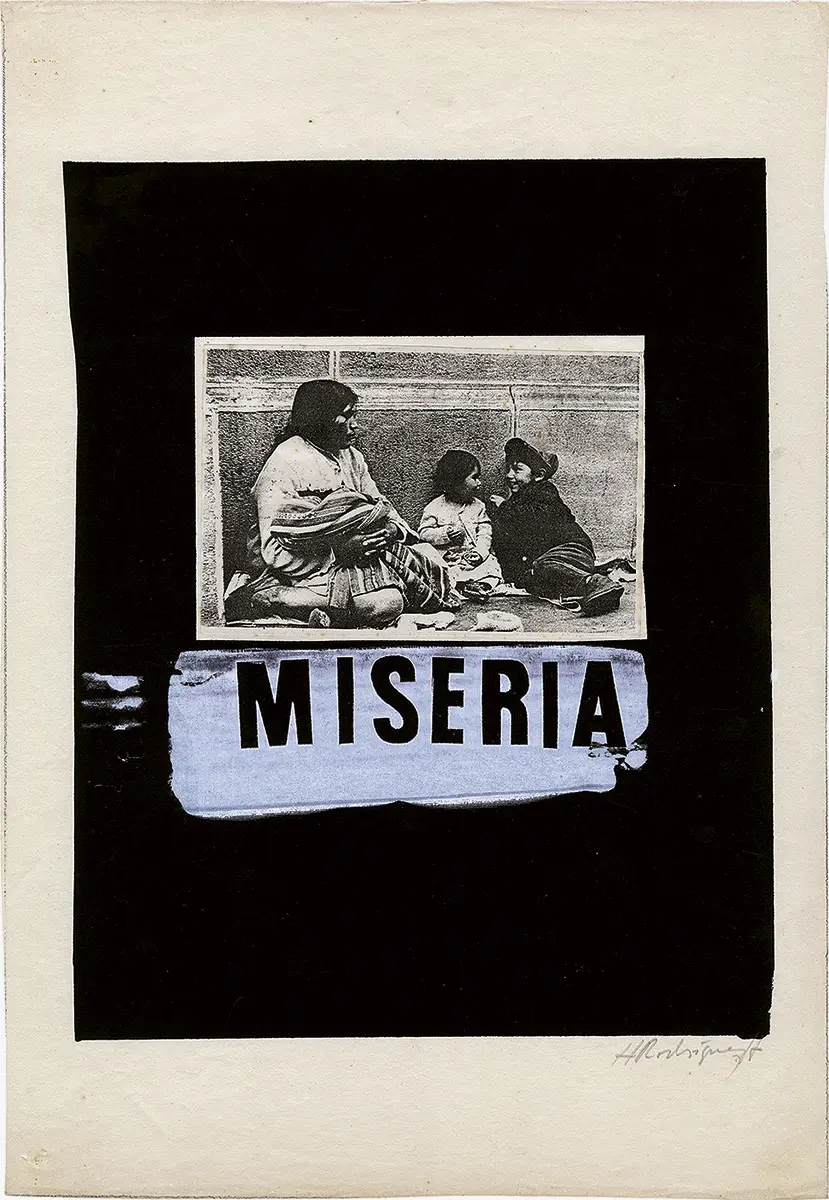
Most of the pieces in the show were made over the last forty years, and although a significant number came from the troubled 1970s, there were also works made between the 1940s and the 1960s. The use of the newspaper as creative material in itself was omnipresent, but there were also other types of appropriations associated with its functions and forms of circulation. Various artists dealt with its power, assuming a critical stance and a direct political position. For Never Again, León Ferrari chose an article from the conservative newspaper La Nación, which reviewed the Catholic Church’s position on the abuses perpetrated during the Argentinian dictatorship—one of the most brutal in the history of the American continent—and overwrote his own opinion about of these events and their institutional responses, generating two different and overlapping versions of the same subject. In a similar vein, Peruvian Herbert Rodríguez’s Structural Violence analyzes the abuse of power, both legitimate and illegitimate, in relation to daily life in his country.
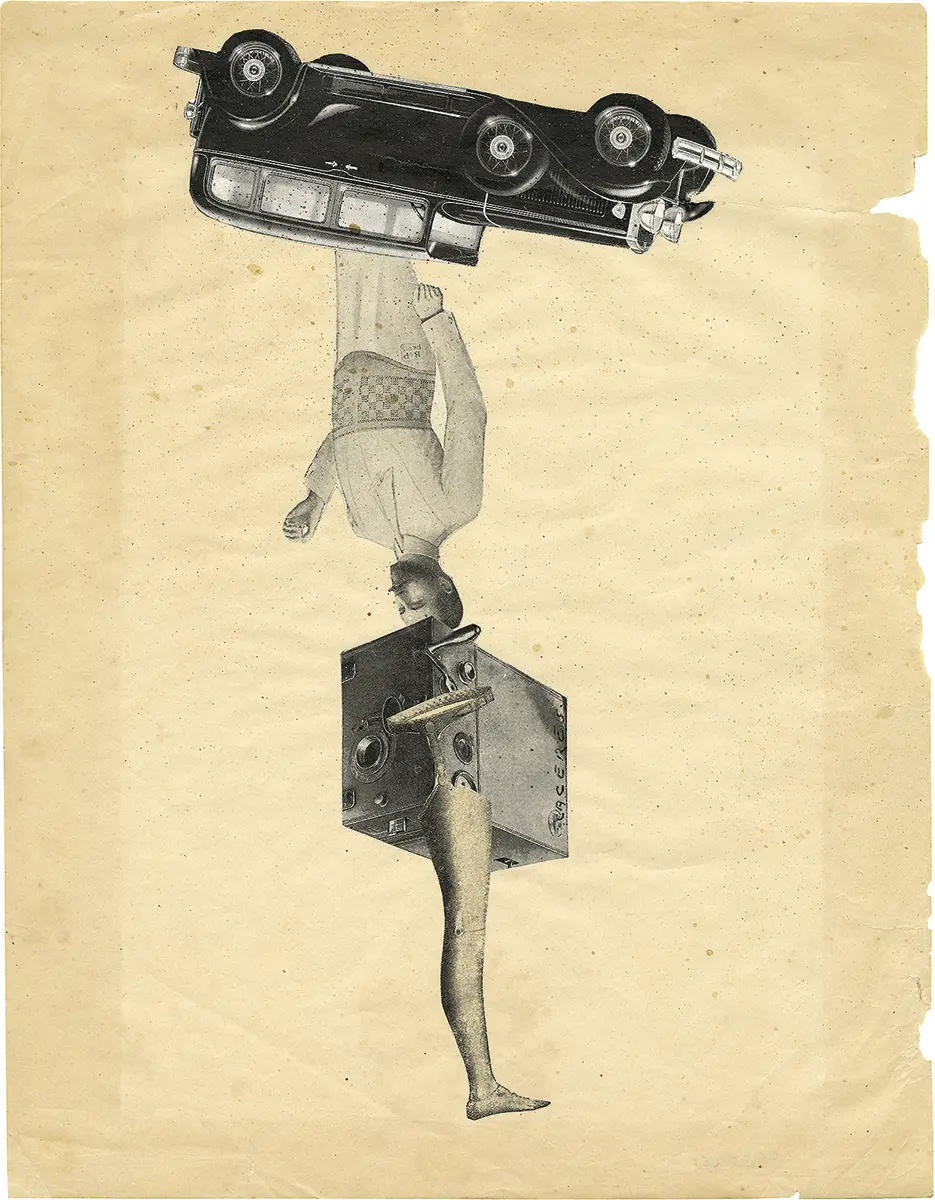
Perhaps the oldest piece in the exhibition was an untitled collage (1947) by the Chilean Jorge Cáceres, who was also a surrealist poet that used newspapers less for their communicative function than for their bond with the materiality of the world. In this collage he juxtaposed the cutout of a male head with the image of a machine: a South American version of surrealist automatism. This use of newspapers, or parts of it, as direct traces of reality is connected to other works in the exhibition, such as those of the Peruvian Anselmo Carrera or the Mexican Ernesto Molina, who draw attention to how fragmentation generates violence in people’s daily lives.
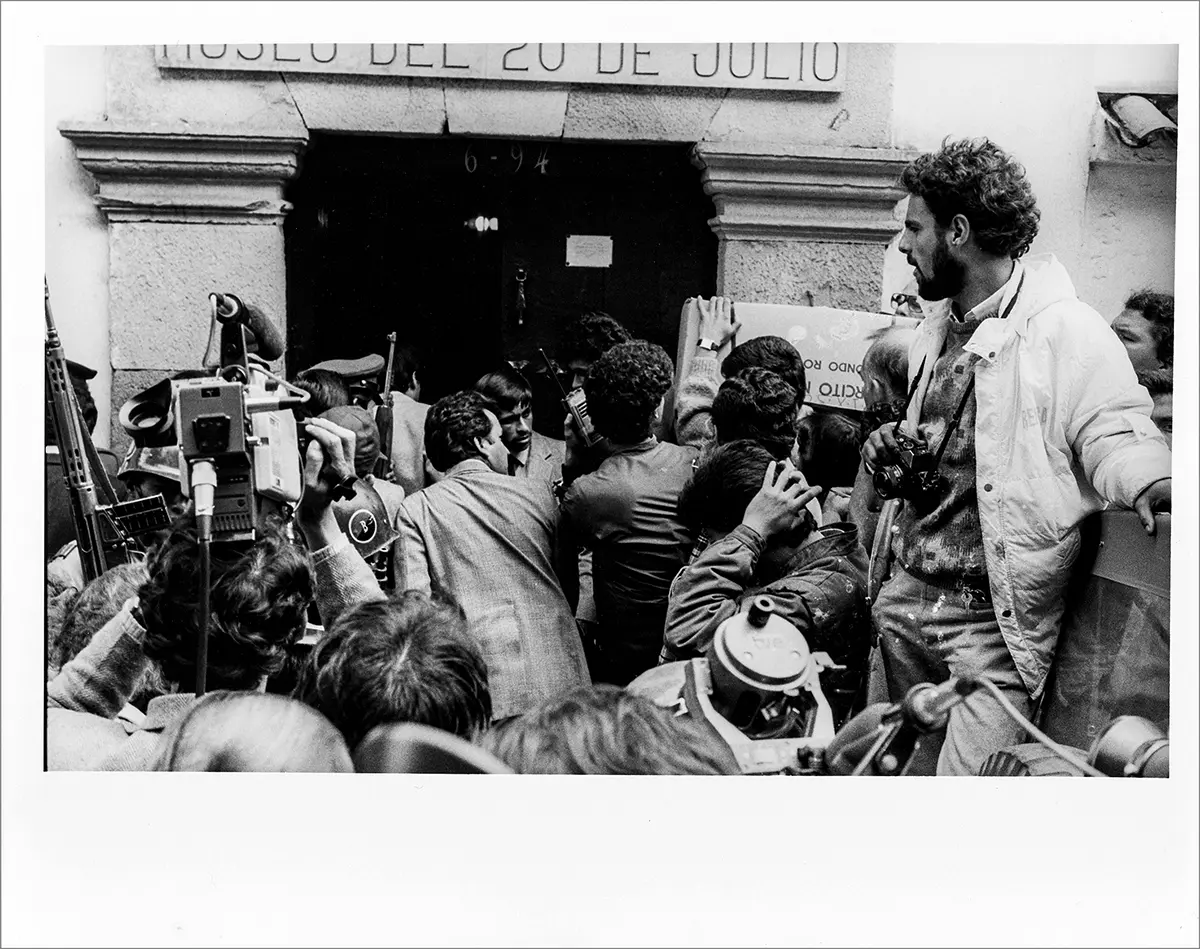
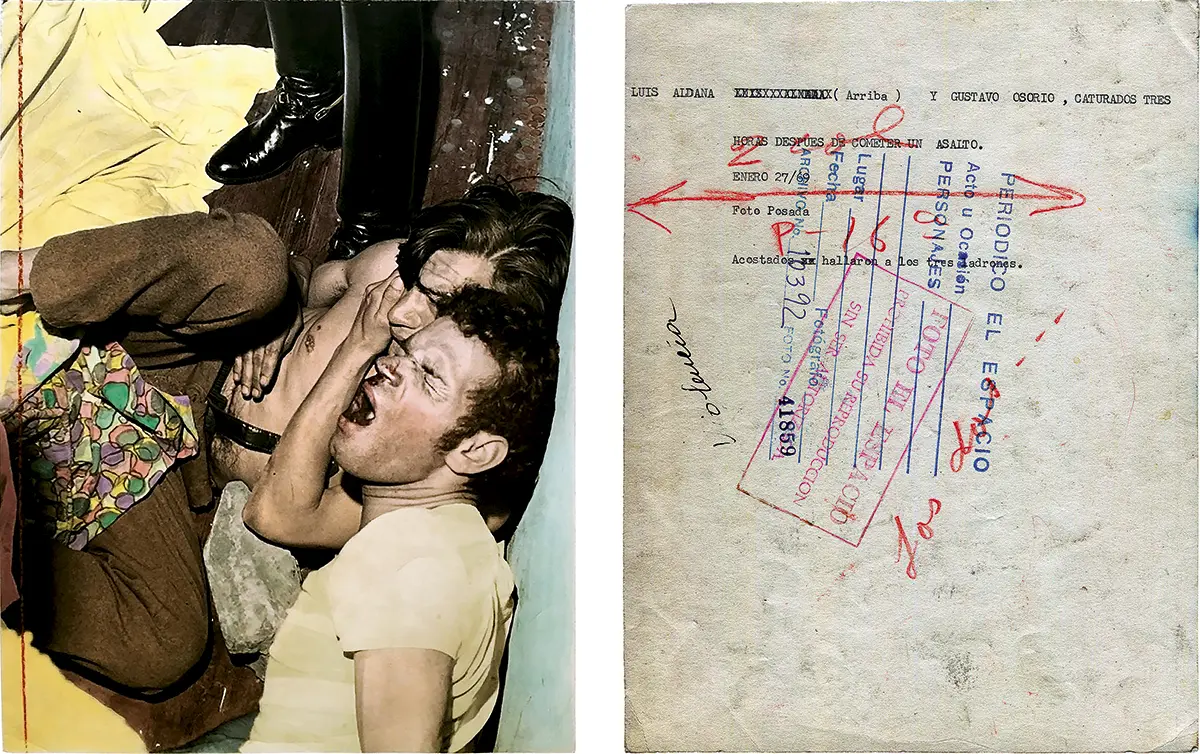
Another set of works were based on graphic reporting, which has fueled journalism throughout its history, and either deal with it directly or by other means. Worthy practitioners of the former are Colombians Sady González, who documented the events of the Bogotazo, on April 9, 1948, and Vicky Ospina, who covered for Reuters the armed takeover of the Palace of Justice in Colombia in 1985. As for the appropriation of graphic reporting, Cuadro de honor (Honor Roll) by Mexican Agustín Martínez Castro show copies of photographs taken from his country’s newspaper Alarma, of socially marginalized people due to their sexuality, their defiance of the status quo, or their disobedience of the law. Similarly, Colombian Andrés Orjuela providentially stumbled upon part of the photographic archive of El Espacio, a Colombian red-chronicle newspaper comparable to Alarma, from which he extracted images associated with the harsh life in Colombia. He then enlarged and painted several of these negatives (as was done with early 19th-century photographs) to resignify their latent subjectivities and give other dimensions to those portrayed.
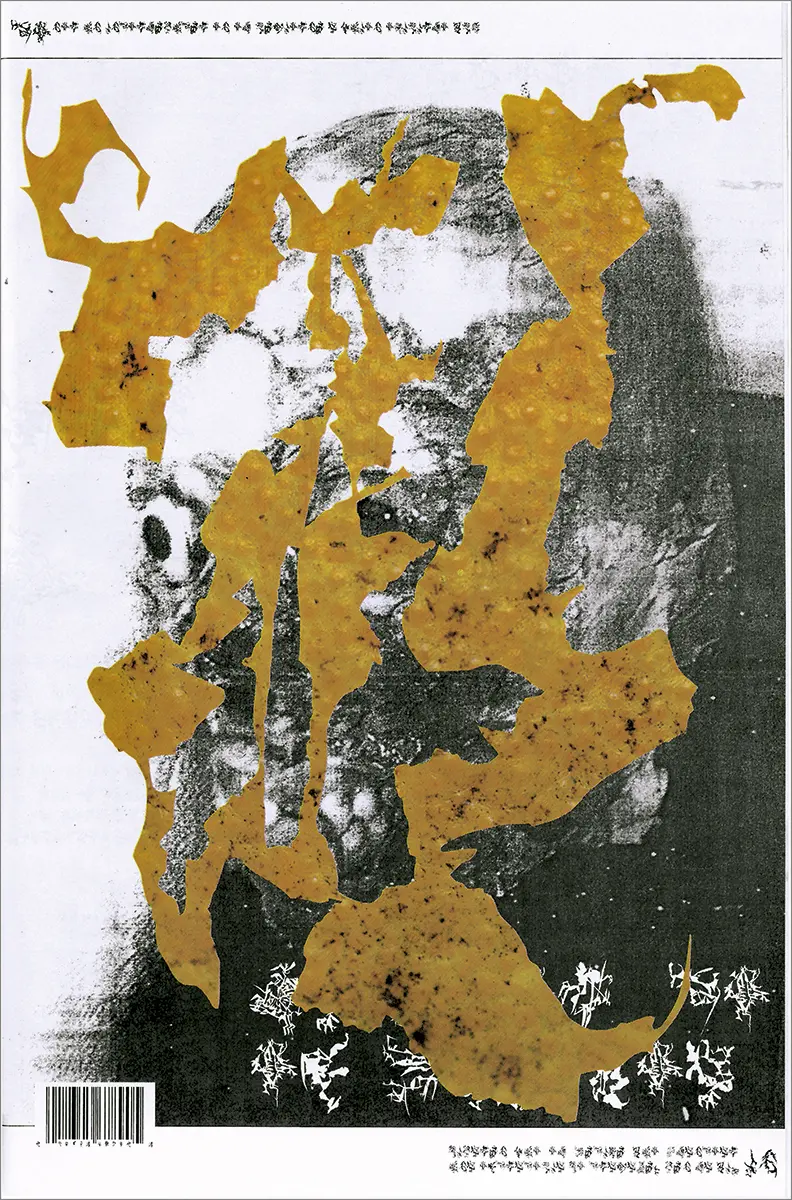
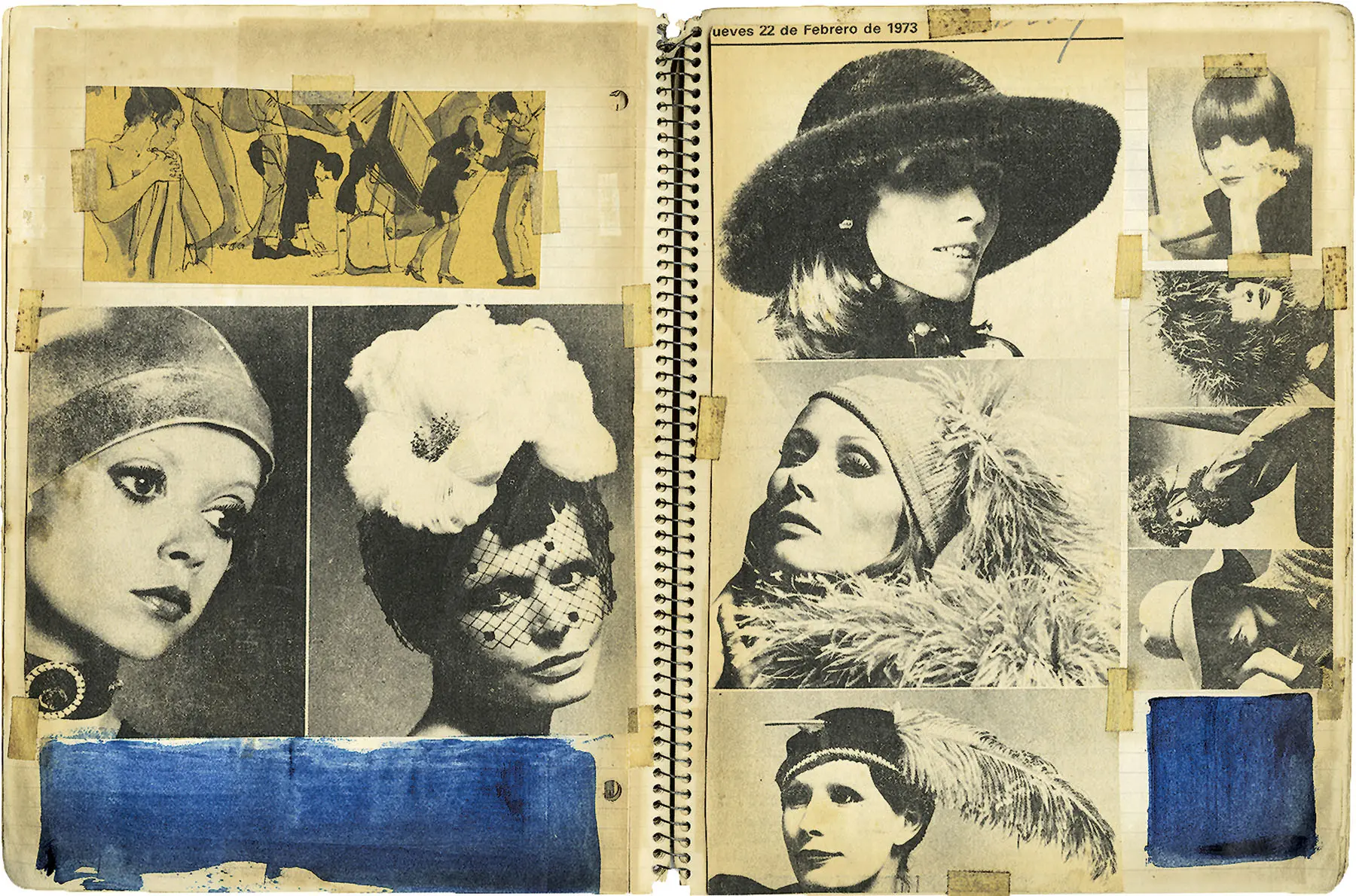
The other side of the newspaper’s function is its distribution: repetition or seriality as a strategy to highlight newspapers’ inherent technical reproducibility and their sequentiality was very evident in this exhibition. Éver Astudillo’s Scrapbooks propose an unusual dimension of sequentiality, and Juan David Laserna’s Hemeroteca (Newspaper Library) adopts that same tactic to replace part of the information in newspapers with an abstract interpretation of their contents. Both Colombians remind us that newspapers are never unique, but vast serial reproductions.
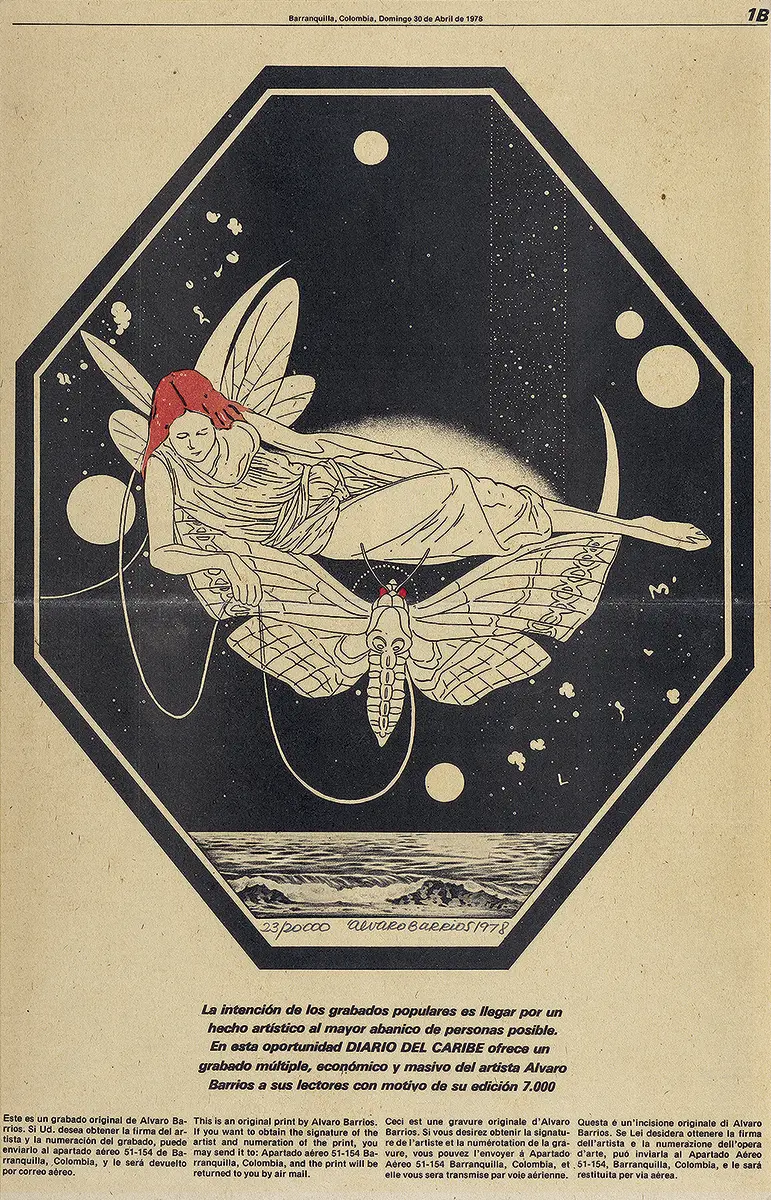
As a counterpart, some artists use the press as a platform to circulate their projects. In fact, their main creative strategy is the insertion of graphic pieces in newspapers. An early example is Colombian Álvaro Barrios’ Popular Engravings, a long-term project undertaken since the end of the 1960s and one of the pioneering practices of this type of artistic intervention, now considered a career option for many artists in the region. Barrios’ first three pieces formed a set of advertising illustrations commissioned by a coffee brand to be published in three different media. By actively participating in the technical process to reproduce his own images in these publications, he realized that it was almost identical to the one used by artists and graphic workshops to make prints. He then began to understand the value of newspapers as an artistic medium and decided to appropriate these reproductions by signing them free of charge to anyone who brought him a printed copy of the newspaper or magazine. This would become the circulation strategy for almost all of his future projects.
This idea was also put into practice by the Peruvian group Paréntesis by publishing a classified ad in El Comercio. But the more complex and critical project was Mexican Carlos Amorales’ interventions, or rather the infiltrations, in different local media, by altering or falsifying cultural news with the help of a fictitious news agency. Based on the “insignificance” that cultural activity has for the mass media, Amorales managed to mobilize highly subversive information of historical and political nature.
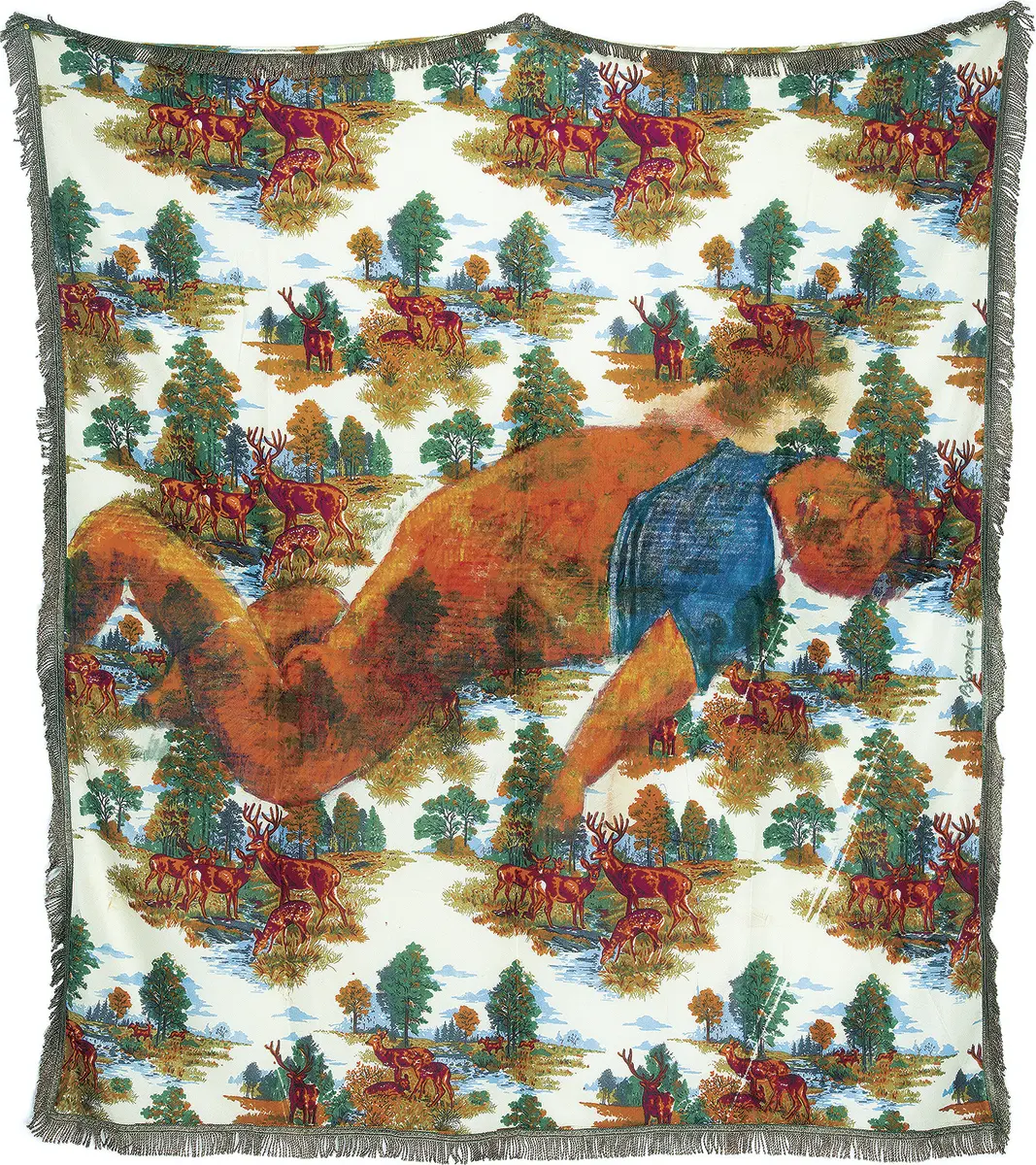
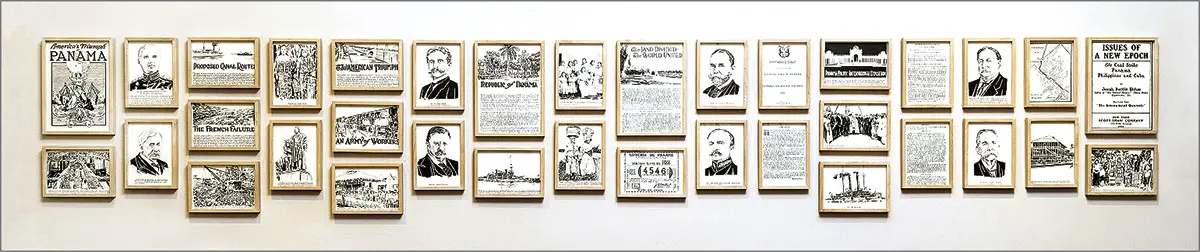
A final group of outstanding artists in this show have appropriated the formal or functional aspects of newspapers to carry out projects with different procedures, mediums, or formats. A very significant piece is Catalino Díaz Izquierdo (1985) by Colombian Beatriz González, based on a photograph printed in a red-chronicle newspaper, which González had previously used in the 1960s and 1970s. For this piece she returned to her starting point by using the “primordial scene” and, as its support, a quilt that reminded her of the mattress on which the body was found and photographed by the newspaper reporter. In this case, the cultural document was the quilt bought by the artist in a popular store and on which she stamped the journalistic image of the corpse. Another work that replaces the newspaper, but in a very different sense, is Panama, by the Peruvian Fernando Bryce. His drawings simulate the pages of a newspaper and point out how the media is a faithful mirror of power. Finally, for his project Paístiempo, another Colombian, Óscar Muñoz, manipulated the dots of the printing plot and reproduced the first pages of the newspapers El Tiempo from Bogotá and El País from Cali, which become increasingly illegible as we turn its pages, evidencing the obsolete nature of the information consigned in the papers, day after day.
* Courtesy of Banco de la República. © All rights reserved.