Jean Mouton wrote in the 1950s: “From silence to mutism in painting.” What to write about painting? How to escape illusion so as to properly separate the orders of discourse form the work as an irreducible referent? There was even talk about the death of painting and only a few escaped the ruse. Painting turned into discourse; and graffiti, at the margins of these discussions, was evolving just at the time when those paradoxes led to an expansion in the artistic system. Certain names kept faith in the values and codes of street art thanks to the work of Pop artists, who had already been legitimated by museums, auctions, and fairs. Meanwhile, the most attractive virtue of the genre appeared to be its flexibility and adaptability. Some “writers,” as practitioners of this art are called, shifted into a chameleonic existence between exhibitions—the place of legitimation where the work is surrounded by a protective aura—and the street—the place of difference, where opposition is unpredictable.
Such is the case with OSGEMEOS, the code name for twin brothers Otávio and Gustavo Pandolfo. The duo began to gain notoriety in 1999, when their work, displayed on the walls of the São Paulo megalopolis, was discovered by urban artist McGee, who introduced them to a magazine from the United States. A year later, they had their first show at New York’s Deitch Projects. The give-and-take between street art and consecratory art has expanded the breadth of their work. However, they keep a neat boundary between both worlds: “In the streets,” one of them explains, “art deals with transformation, transference, anonymity, the unexpected, laws, hurrying, people passing by.” When a graffiti artist migrates to the gallery and museum: “in the closed space there is a curator, a public, expectation, time, permission.” 1 It is clear that these generalizations about the transit from near anonymity to the institution are part of the global processes in which they are immersed.
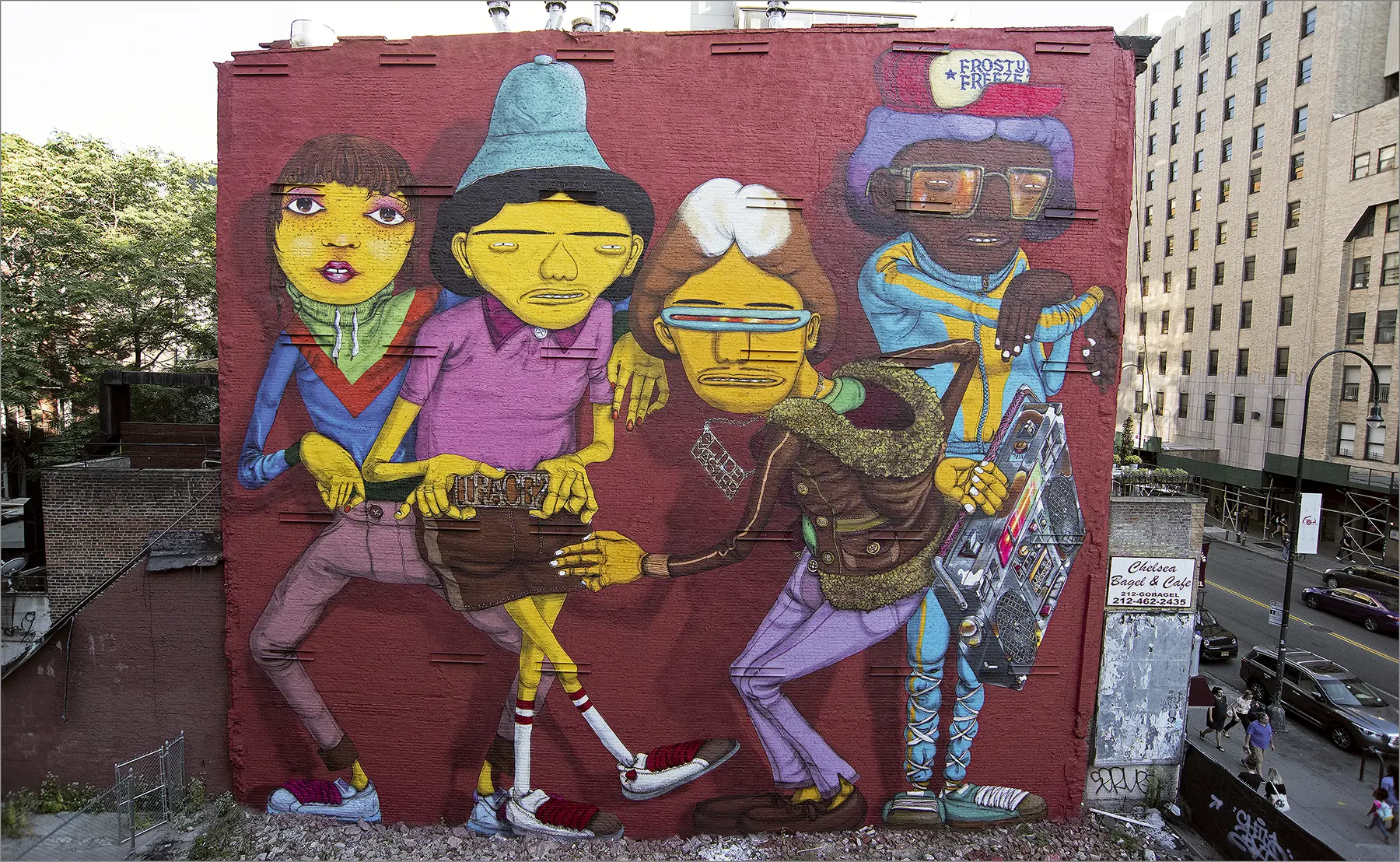
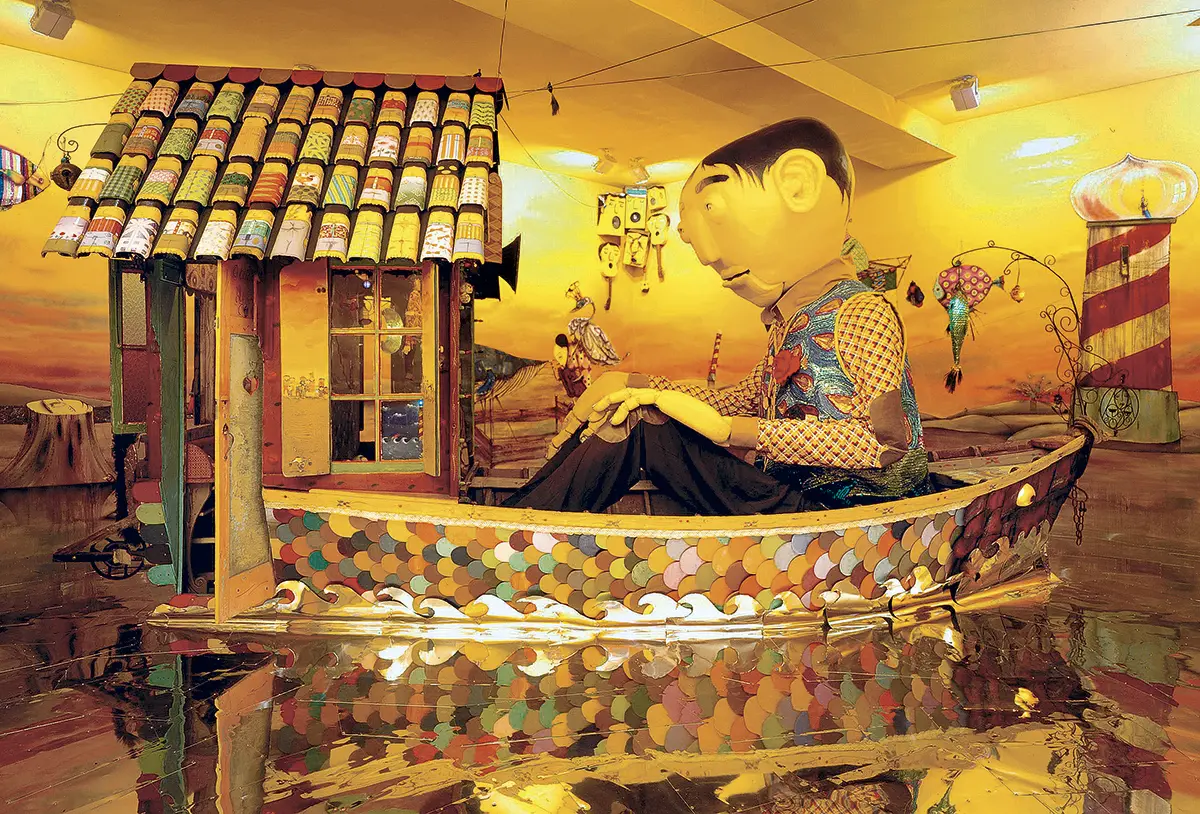
In the work of the Pandolfo brothers there are codes taken from foreign graffiti: aerosol techniques, dialogues with hip-hop related topics, anonymous heroes, street dancers…. However, these characters are digested and processed with a Brazilian vernacular aesthetic. The unmistakable characters of yellow skin, thin extremities, and rich prints are on par with the playful coloring of carnivals, popular art, and the feverish productions of Bispo do Rosário2. That is precisely the most explicit quality of their work: making graffiti an expression both interconnected with original urban niches and at the same time resolved through components that explore the interstices of their culture.
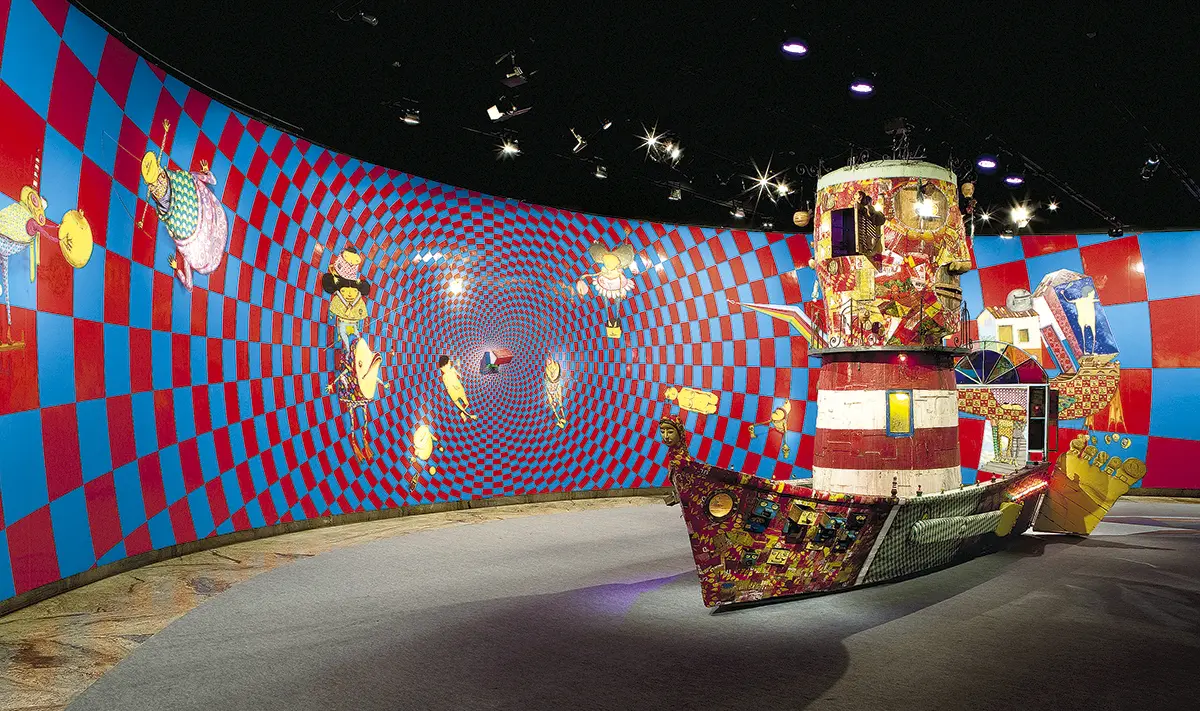
Since they started showing in galleries, the twins’ work bears a spatial anxiety in bringing objects and characters to physical spaces. They sometimes even integrate surfaces, ceiling, and walls. In 2006, their exhibition in Fortes Vilaça gallery, “O peixe que comia estrelas candentes” (Fish that Ate Shooting Stars), was the second time they exercised this spatial anxiety, with sensorially complex pieces. This sculpturing reached an apex in exhibitions such as “Vertigem” (Vertigo, 2009), which traveled to important Brazilian museums (Museu Oscar Niemeyer, Centro Cultural do Banco do Brasil, and Museu de Arte Brasileira da FAAP). The large installation was composed of a chessboard in fuchsia and blue, from which emerged characters torn between a tangible and a hidden dimension.
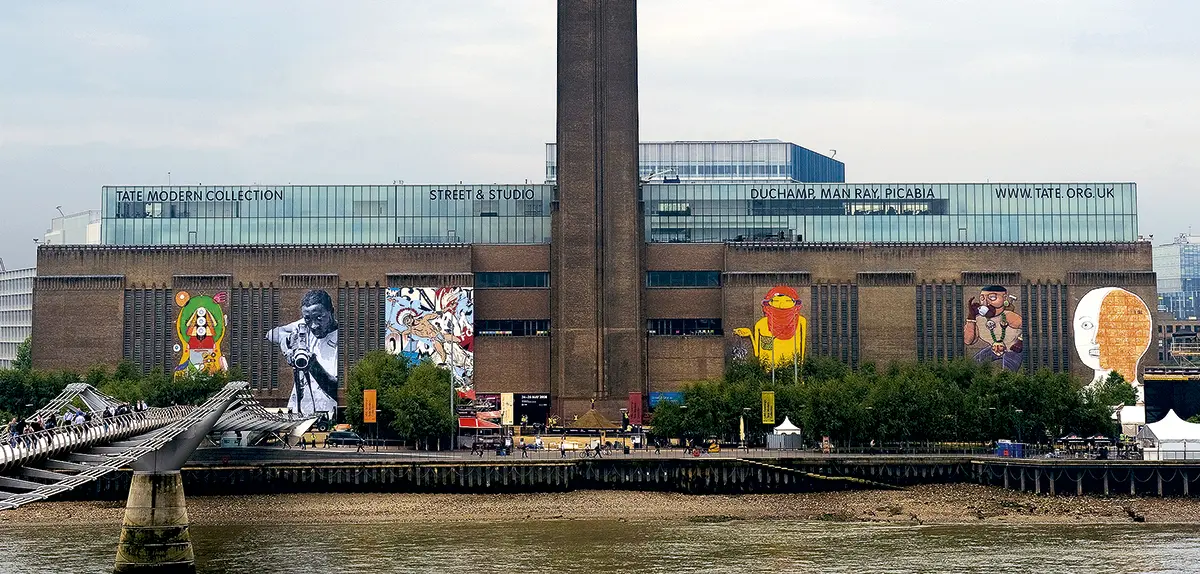
In the summer of 2008, the artists were included among the six participants of a show dedicated to urban art at the Tate Modern. In one of the museum’s 20-meter facades, they painted a masked character holding a bunch of surveillance cameras. “He is a giant that goes around the city collecting cameras to play with the idea of being watched all the time,”3 comments Otávio. It’s impossible not to associate that market symbol of synthetic sight machines—as Paul Virilio describes them—with the path followed by a contemporary society that must endure the omnipresence of perceptions and gazes. This graffiti, it can be said, confronts its own relationship to mass culture. It becomes an art that connects to the folds in the center: its nature as a closed circuit, its own laws, its nihilistic character.
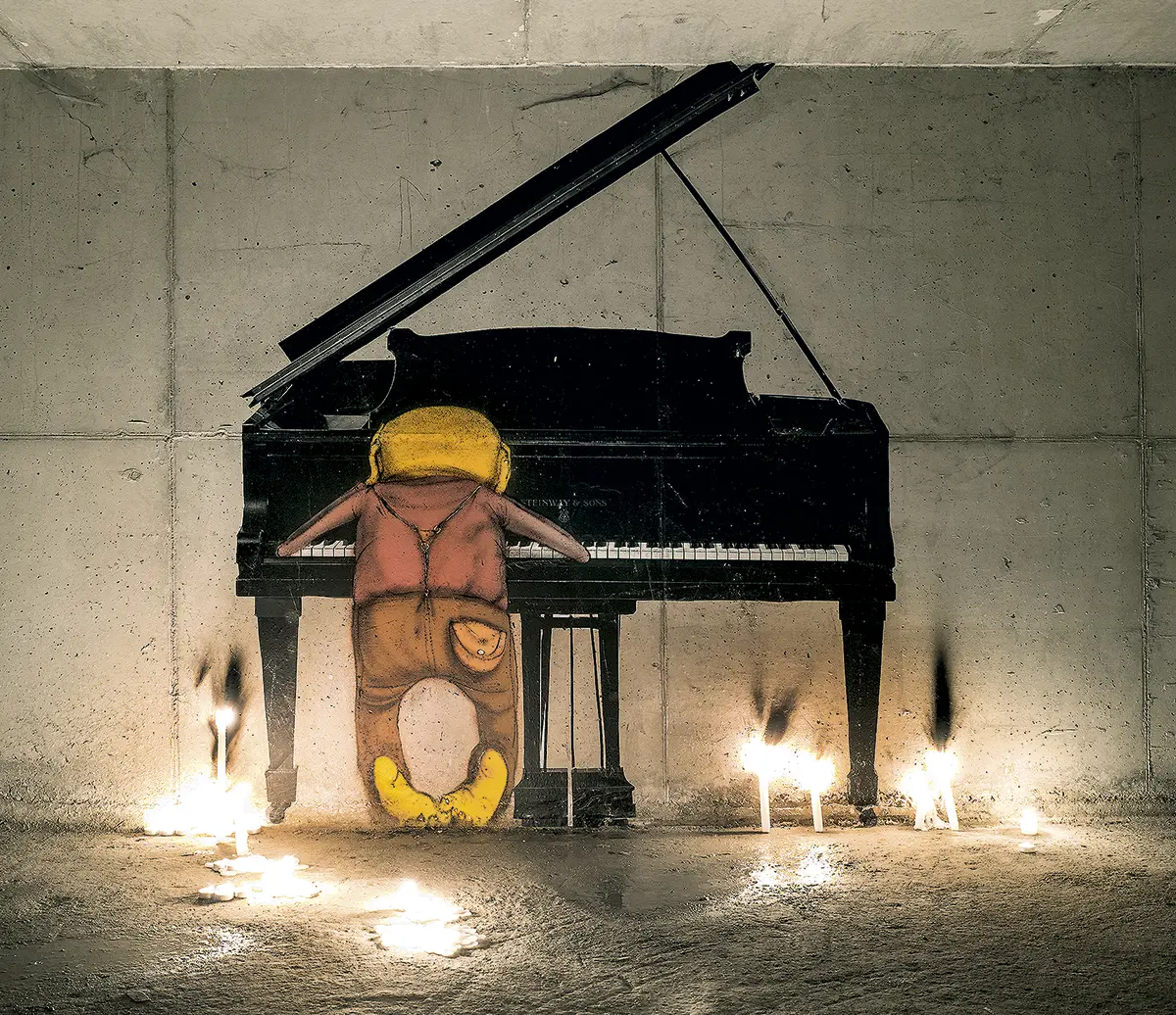
A year later, OSGEMEOS inaugurated a mural in the iconic corner where a Keith Haring had stood in the ‘80s, at the intersection of Houston and the Bowery in New York City. In a review on the cover of The New York Times, art critic Roberta Smith wrote that OSGEMEOS had brought “graffiti art to its Rococo phase. Which is to say that their fantastic, epic mural… is light and frothy, a dream of happiness with an underlying chord of melancholy.”4 Here they evoke a universe that is only theirs and which to they have given the title of Tritez: “The why of things, why are we here, why the two of us are making the same drawing, why we were born twins.”5. Tritez is a sort of atemporal symphony that OSGEMEOS have been perfecting since 1993, when they decided to dedicate themselves exclusively to painting and open their first atelier. After concluding their studies in Design and Communication, they formed the group of graffiti artists called Pincel Atómico (Atomic Paintbrush). Tritez, a made-up word, point to a concatenation of scenes that unfold on polyptych planes, where perceptual artifices abound along with characters such as tightrope walkers, the enlightened, or sensual women dressed in floral and geometric prints in a profusion of prismatic colors. Though they tend to be succinct when speaking of their work, they often mention the myth of “synchronic twin vision” and narrate a personal story: when they were seven years old and studying in separate classes, they presented very similar works for a painting competition without having agreed on it. Their perfectly synchronic act was revealed then and there, and to this day remains the equation of their work.
It’s not surprising that OSGEMEOS’ creative prodigality has been continually conquering new and unusual places. In 2004, they painted a mural for the Athens Olympics. Two years later, they exhibited at the Havana Biennial. In 2007, they daringly covered the Kelburn Castle in Scotland, along with Nina Pandolfo and Rodrigues da Silva (known as Nunca). They participated in the seventh edition of the textile Kanuas Biennial, in Lithuania, in 2009, and painted a wall of the Mykolas Žilinskas National Art Museum. Lithuania was important for being the birth place of their maternal grandfather, who taught them their first lessons in drawing. Soon after, in 2010, the São Paulo Modern Art Museum invited them to create a permanent work for its entrance wall. As a result, eighteen square meters of Tritez contemplate the enclosure nestled in the famous Ibirapuera Park. With similar hyper-illuminated scenes, they have painted murals in Sevilla, Coney Island, Barcelona, and their giant characters have reached Tilburg, Munich, Vancouver, Milan, and Lisbon.
The duo’s work has kept pulsating: in 2010, they created a mural in mixed media for the important exhibition “Viva la Revolución”, held at San Diego’ Museum of Contemporary Art, and two years later, together with an exhibition at the Institute of Contemporary Art in Boston, they inaugurated a mural that has caused controversy. A masked man in shabby clothes painted in a downtown area of the city was frowned upon. A year after that thunderous appearance, they performed an action with Banksy, who during the month of October 2013 exhibited a series of works in New York. Their intervention was disseminated on social networks and attracted a good amount of public. The work, exhibited for a day under the High Line, consisted of two canvases centered on the concepts of authority and power. In the first one, as in a decorative pattern, the repetition of Banksy’s unmistakable stencil-art policemen is interrupted by the figure of a protester or a “writer” painted by OSGEMEOS. In the second one, the opposite occurs: a masked choir of the brothers is intervened with a stamp made in stencil by the British artist. All they did was display their clichéd images, essential for the appeal of graffiti to multiply. This led them to manufacture a communication game, a sign that, after delivering their verdict, makes them effective by the way they are re-signified. Banksy’s signature on the one hand, and OSGEMEOS’ signature on the other, in unison make this work a true dialogue that sublimates both.
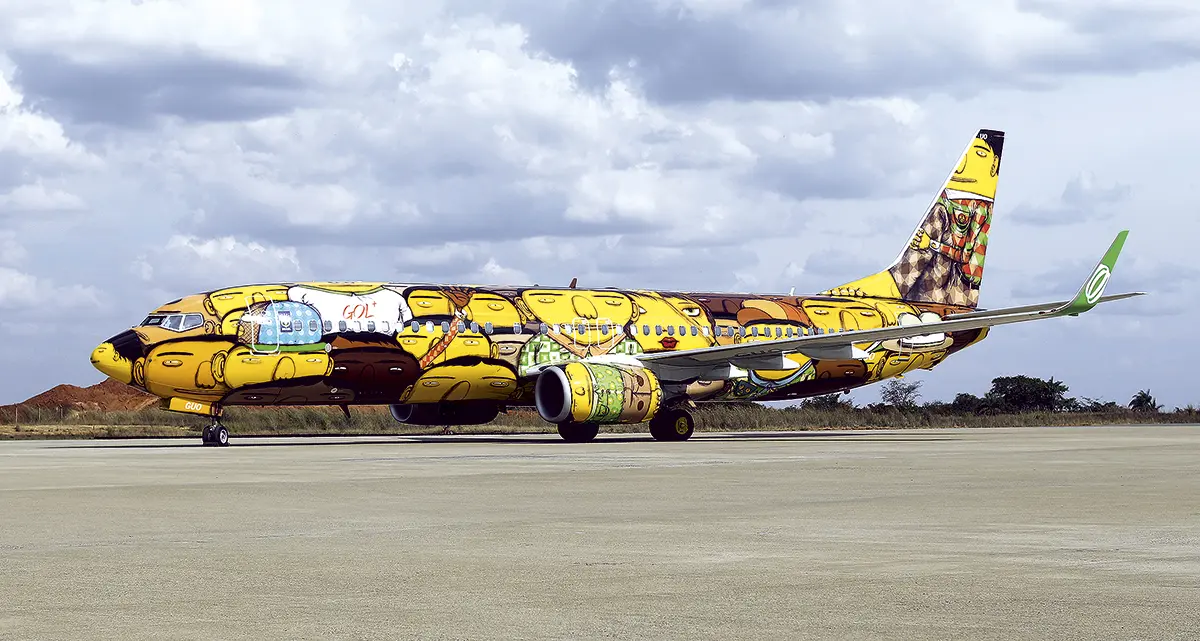
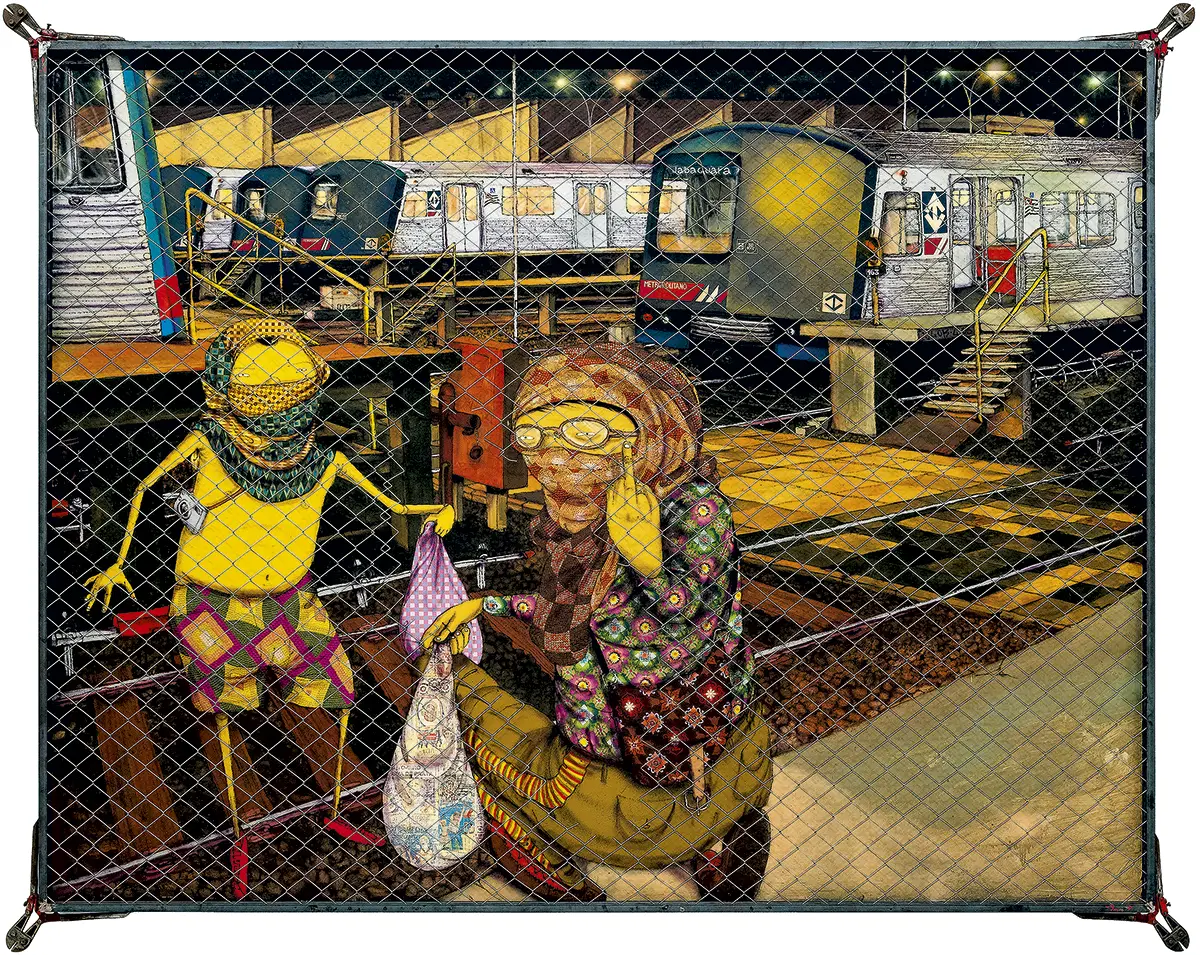
Graffiti has an old love affair with trains and subways. It was on the surfaces of urban transport that street artists saw the ideal medium for their works to be seen by a greater number of people. In one of the paintings dedicated to the subject, Jabaquara, from 2011, the brothers painted two street artists who are about to enter the subway terminal to intervene with their paintings and signatures. Its reduced palette reinforces the dimness of the night. This cast is repeated in Playground, from 2016 (spray and sequins over photography on canvas), but the scene here takes place in broad daylight. Its background registers a work by photographer Martha Cooper, who is emblematic for portraying the effervescence of urban movements in the 1970s and 1980s. This collaboration with the New York activist confirms the existence of a network between the undisputed capital of the medium and peripheral centers such as São Paulo. Persistent in this idiosyncrasy of painting large moving vehicles, they conceived the Whole Train project, where they invited prominent national and international “writers” to paint the wagons in Brazil’s Super Vía train network. In 2014, with the World Cup based in their country, they made another dream come true: to paint an airplane. It was the Boeing 737-800 of Gol Airlines, which transported the soccer delegations on domestic flights. The work, taking almost one-hundred hours and more than five-hundred cans of spray-paint, reproduced hundreds of the twins’ characteristic yellow and brown faces.
In 2016, together with the French photographer JR (1983), they made a graffiti commissioned by the Palais de Tokyo. In the underground tunnels of Paris, they rescued the memory of the very place that served as a storage for objects that the Nazis confiscated from the Jews during the Second World War. A year later, they painted two huge murals on 14th Street, in Manhattan, where they paid tribute to the urban movement of the 1980s.
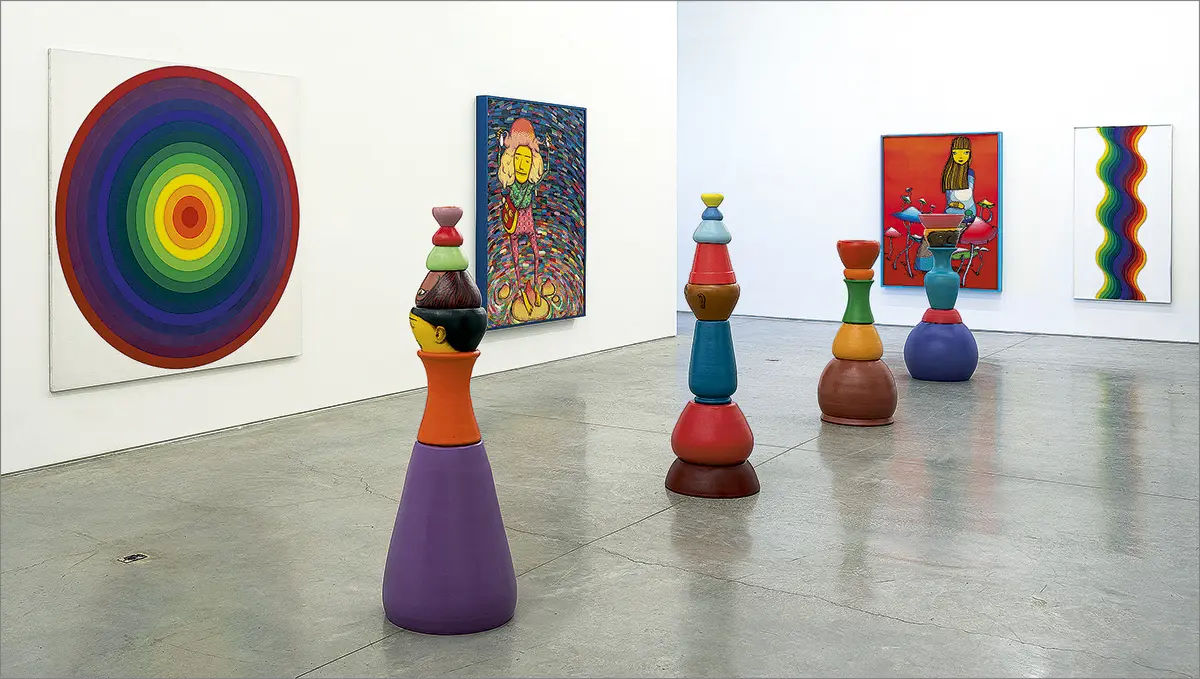
In 2019, with the dance group Flying Steps, they were part of the cast of Flying Pictures, a multimedia show that premiered at the Hamburger Bahnhof Museum in Berlin. To close the year, they opened an exhibition at the Fortes D’Aloia & Gabriel Gallery in Rio de Janeiro, together with kinetic artist Julio Le Parc (1928). Despite the differences, one could appreciate the similarity between the orbits displaying the color spectrum and hypnotic devices, even if it served as a pretext for the duo’s kaleidoscopic backgrounds, and as moving optics for the Argentinian artist.
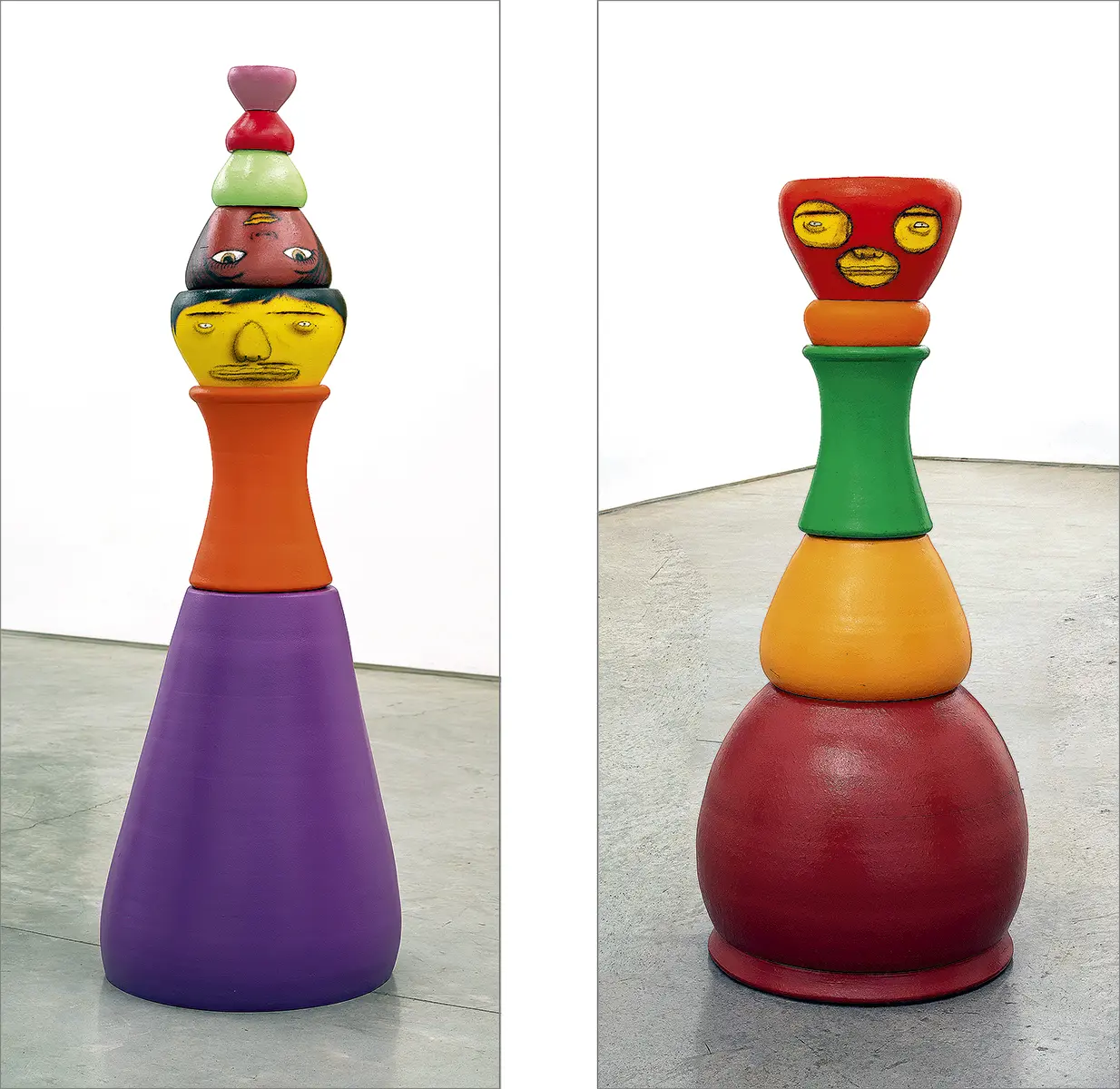
In 2020, the Pinacoteca inaugurated a great traveling retrospective that will be seen in some of the main museums in Brazil. Easel works coexist with new sculptures that magnify their versatile gifts. In little over two decades, the public continues to admire their works. Memories, photographs, and experiences will remain with each single appreciation. The constant interchangeability of the works and their far-reaching registers, which are impossible to encompass, settle down for a moment. In conclusion, according to the region and its needs, each intervention ends up being monumental and explicit in the face of a strong motivation: balancing between two worlds, those of high and low culture.
NOTAS
1. Interview with Iara Crepaldi. Serafina magazine, São Paulo, October 2010.
2. Bispo do Rosário was schizophrenic and lived a large part of his life in a mental hospital in Rio de Janeiro. At one point, he began producing diverse works integrating embroidery, pennants, and found objects. After being discovered, they were classified as vanguard works and associated with the ready-made.
3. Otávio Pandolfo, cited by Pedro Leite; Bruna Bittencourt, “Brasileiros modificam fachadas da Tate Modern”, Folha de São Paulo, 10 June 2008.
4. Roberta Smith, “The World Springs to Life on an Urban Wall”, The New York Times, 4 August 2009.
5. Segredos, documentary, Pinacoteca de São Paulo, 2020.
XENIA BERGMAN